
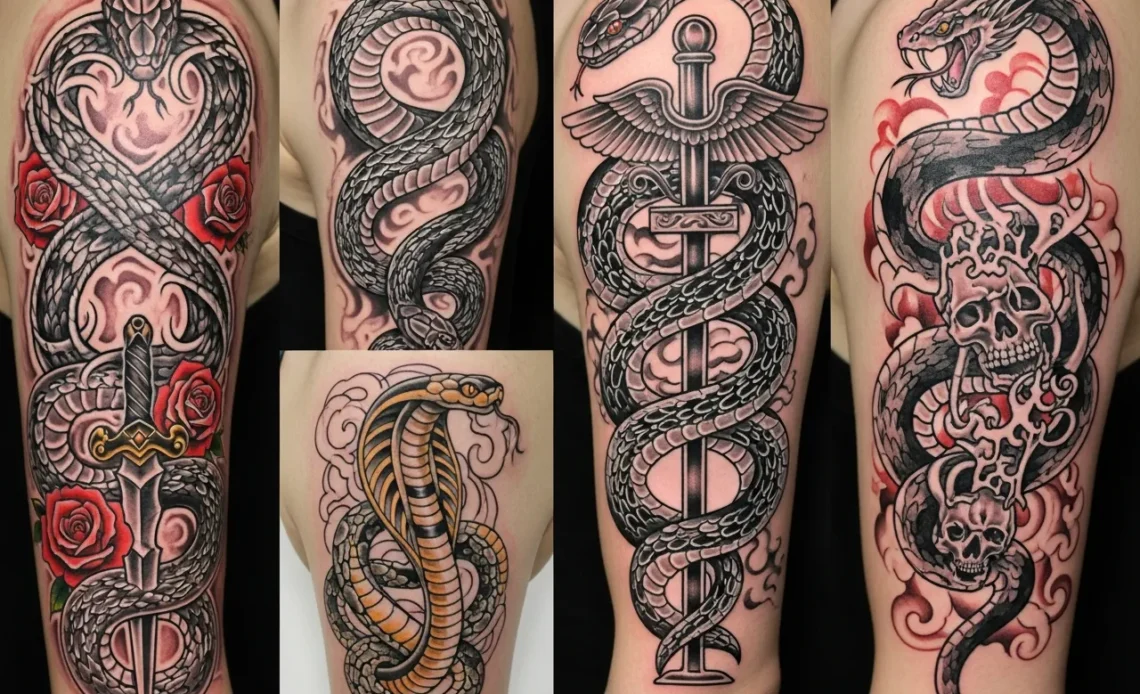
Snake tattoo meaning encompasses far more complexity than simple association with danger or evil. This ancient symbol carries profound significance across cultures, religions, and philosophical traditions spanning thousands of years. The serpent represents transformation, wisdom, power, and the eternal cycle of life and death, making it among the most versatile and meaningful tattoo choices available. Understanding the rich symbolism behind snake tattoos helps individuals select designs resonating with personal experiences and spiritual beliefs.
The enduring popularity of snake tattoos stems from their visual adaptability and layered interpretations. A single serpent image can simultaneously represent opposing concepts like creation and destruction, healing and venom, knowledge and temptation. This duality creates space for deeply personal meanings while maintaining universal recognition. Modern snake tattoo meaning continues evolving while honoring millennia of symbolic tradition.
Understanding Snake Symbolism Across Cultures
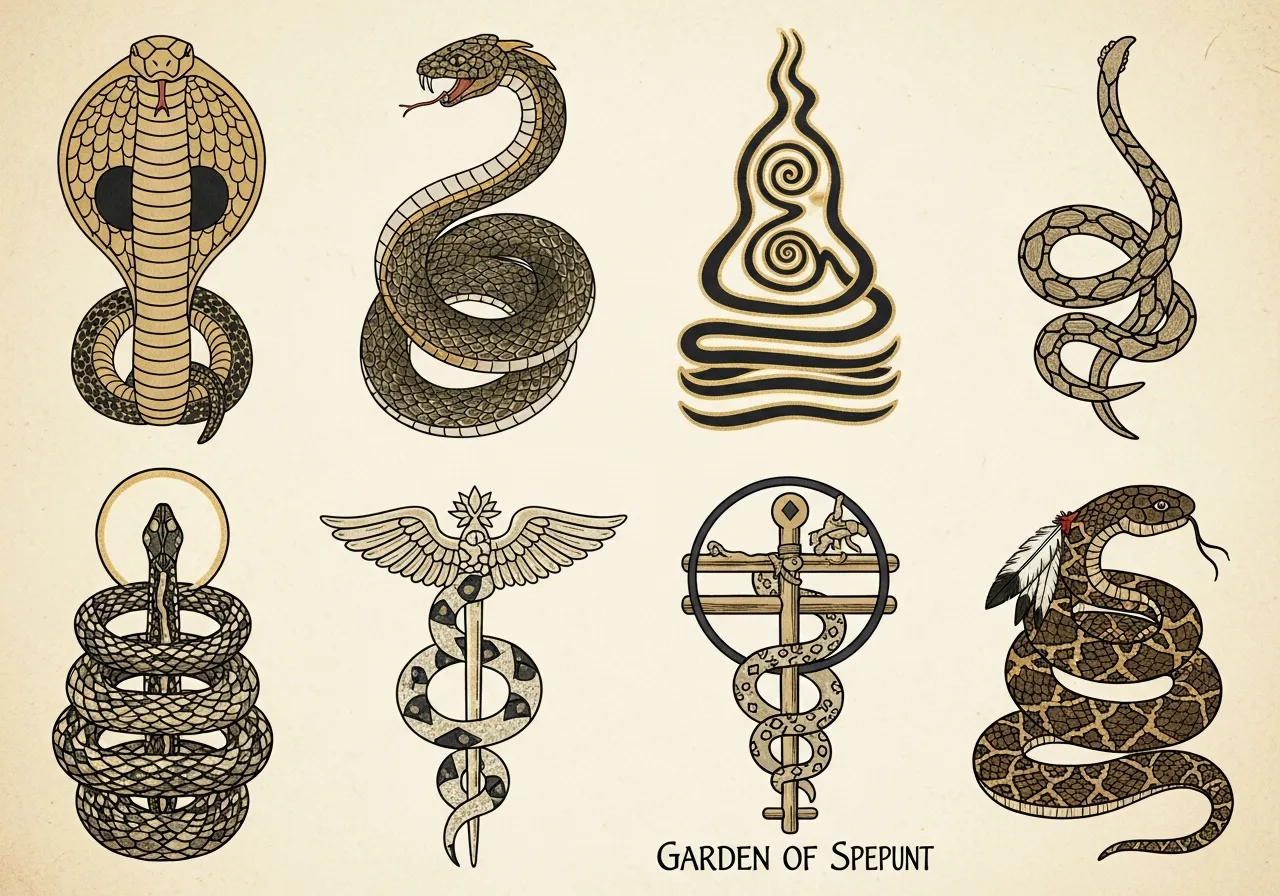
Snake symbolism varies dramatically across geographical regions and historical periods, creating rich tapestries of meaning. Eastern philosophies generally view serpents positively as symbols of wisdom, protection, and good fortune. Japanese culture particularly reveres snakes as bringers of prosperity and guardians against misfortune. Hindu tradition features kundalini energy represented as a coiled serpent at the spine’s base, embodying spiritual awakening and divine feminine power.
Western interpretations often contrast sharply with Eastern perspectives. Christian teachings cast the serpent as tempter and deceiver based on the Garden of Eden narrative. This association with sin and forbidden knowledge permeates Western art and literature. However, ancient Greek and Roman civilizations viewed snakes more favorably, connecting them with healing through the Rod of Asclepius that remains the medical profession’s symbol today.
1 Transformation and Rebirth
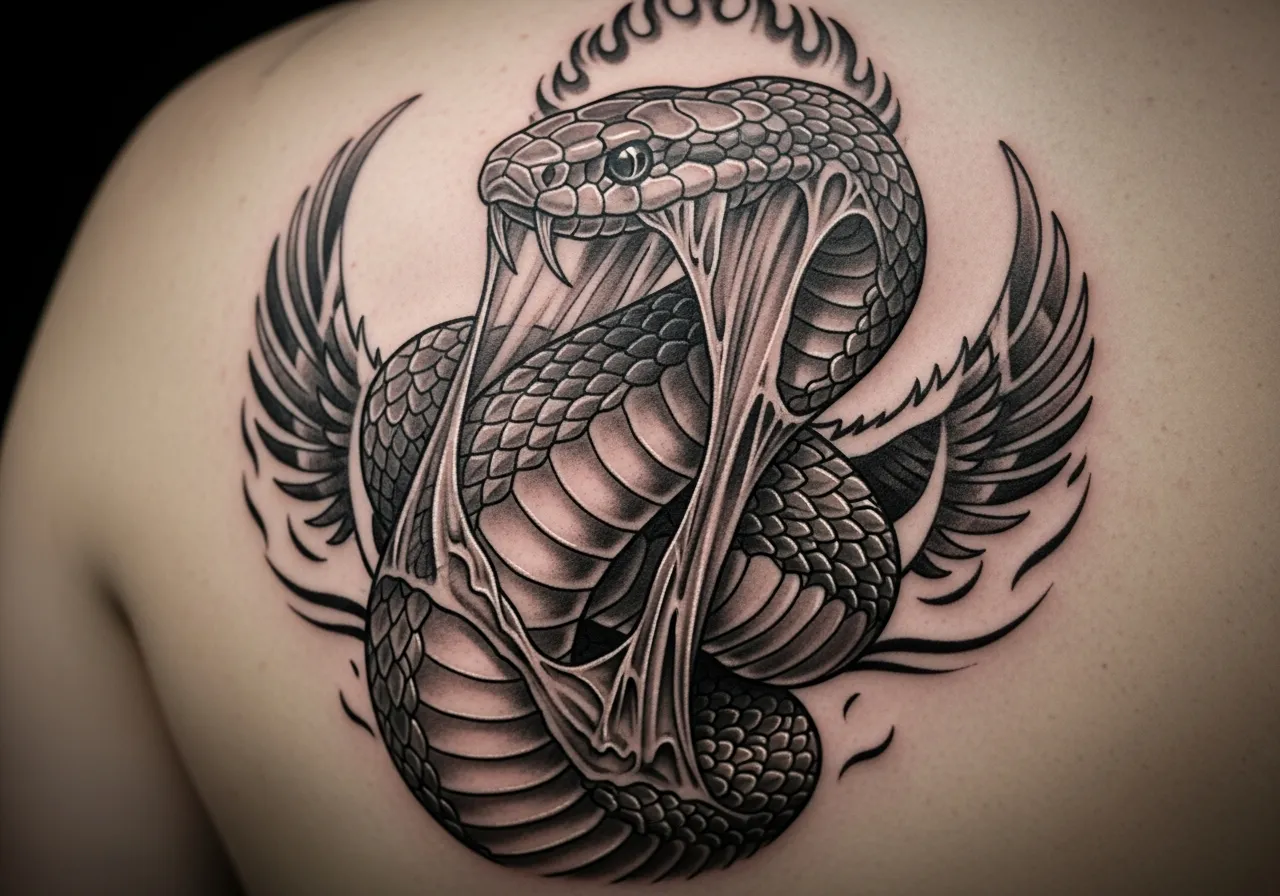
The most universally recognized snake tattoo meaning centers on transformation and personal rebirth. Snakes periodically shed their skin in natural molting processes, symbolizing the ability to release old identities and embrace new beginnings. This powerful metaphor resonates deeply with individuals experiencing major life transitions, recovering from trauma, or consciously evolving their personalities and beliefs.
People often choose snake tattoos to commemorate overcoming adversity, completing addiction recovery, leaving toxic relationships, or emerging from grief. The shedding skin represents leaving behind what no longer serves while the fresh scales beneath symbolize renewed strength and clarity. This meaning proves particularly popular among those viewing their lives as continuous journeys of growth rather than static states.
2 Wisdom and Ancient Knowledge
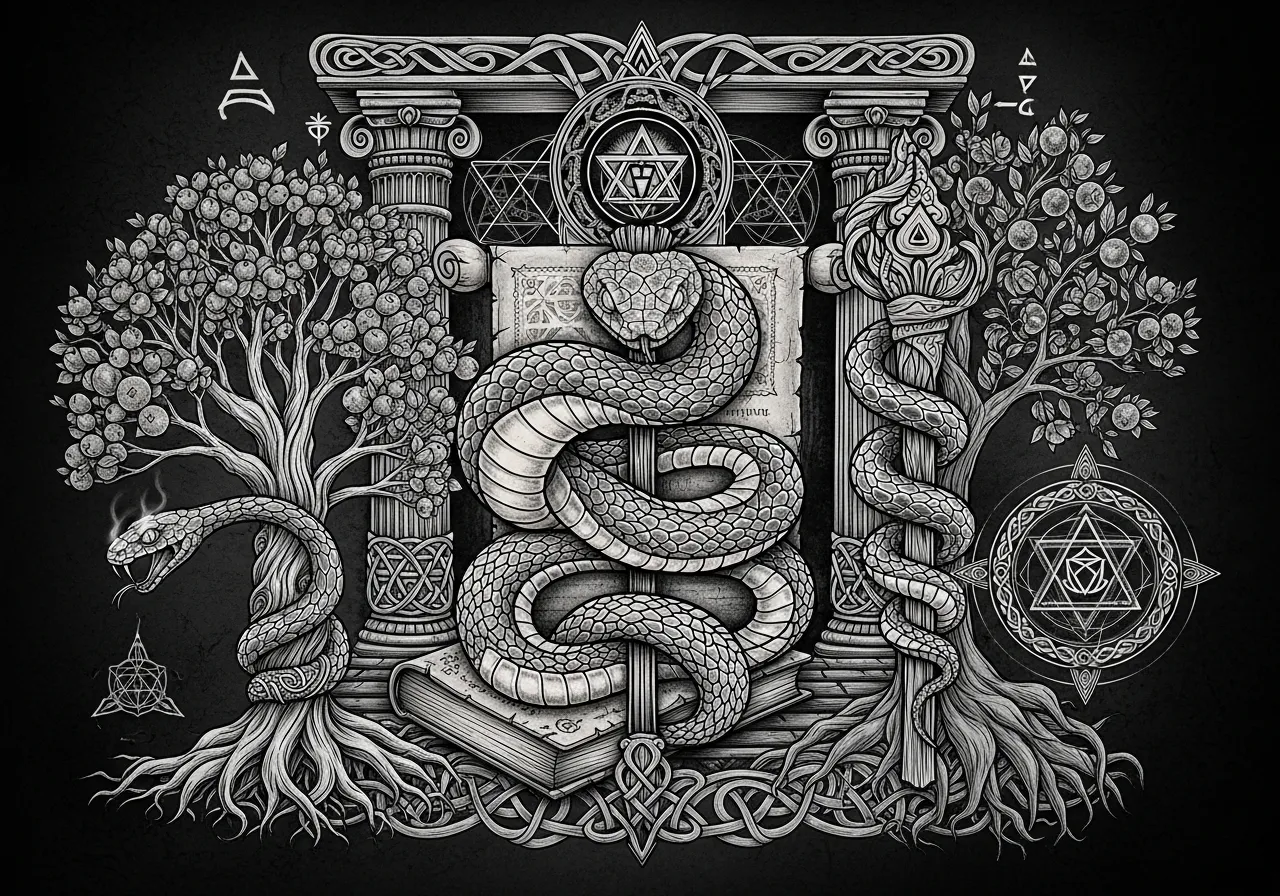
Throughout mythology and religious traditions, serpents serve as keepers of sacred wisdom and forbidden knowledge. The Biblical serpent offered Eve knowledge of good and evil, forever linking snakes with the pursuit of understanding despite potential consequences. Ancient Greek traditions associated snakes with Apollo’s Oracle at Delphi, where priestesses received divine wisdom.
Celtic mythology features snakes as symbols of secret knowledge and connection to Earth’s mysteries. This association makes snake tattoos meaningful for scholars, philosophers, and seekers of hidden truths. The ouroboros specifically represents infinite wisdom through its circular form showing a serpent consuming its own tail, symbolizing eternal cycles and self-contained completeness.
3 Healing and Medicine
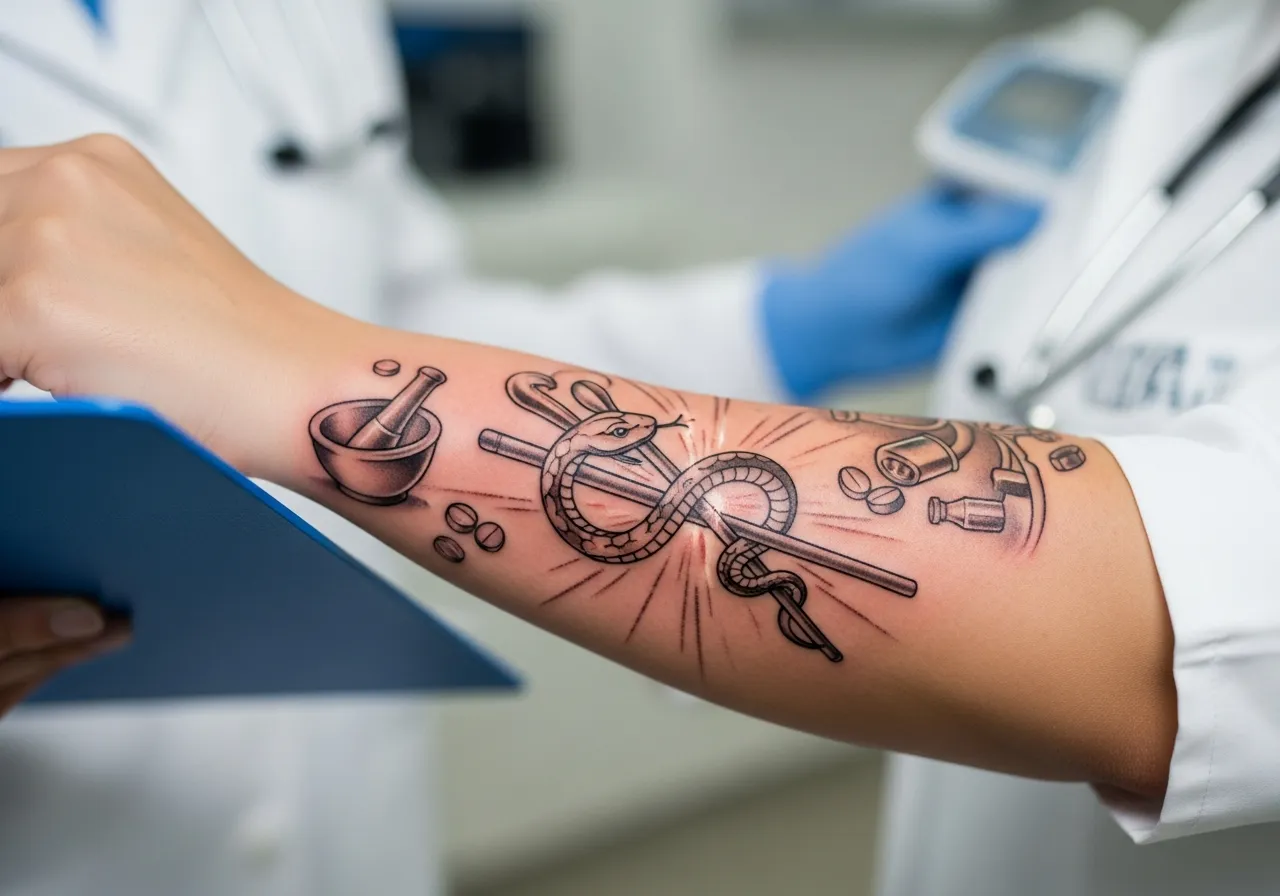
The Rod of Asclepius featuring a single snake wrapped around a staff remains medicine’s universal symbol. This association dates to ancient Greek healing temples where non-venomous snakes moved freely, believed to possess curative powers. The snake’s venom paradoxically holds both poison and medicine, representing the thin line between harm and healing.
Medical professionals frequently choose snake tattoos acknowledging their healing vocations and commitment to saving lives. The symbolism extends beyond physical medicine to emotional and spiritual healing. Snake tattoos can represent personal healing journeys, recovery from illness, or dedication to helping others through healthcare professions.
4 Power and Protection

Snakes embody primal power through their predatory nature, lightning-fast strikes, and potent venom. Ancient Egyptian pharaohs wore uraeus symbols depicting reared cobras on their crowns, signifying divine authority and protective power. The cobra’s defensive hood expansion when threatened represents standing strong against adversaries.
This protective symbolism makes snake tattoos popular among those valuing personal strength and the ability to defend themselves and loved ones. The coiled snake poised to strike communicates readiness and vigilance. Many view their snake tattoos as spiritual armor or talismans against negative energies and harmful influences.
5 Fertility and Life Force
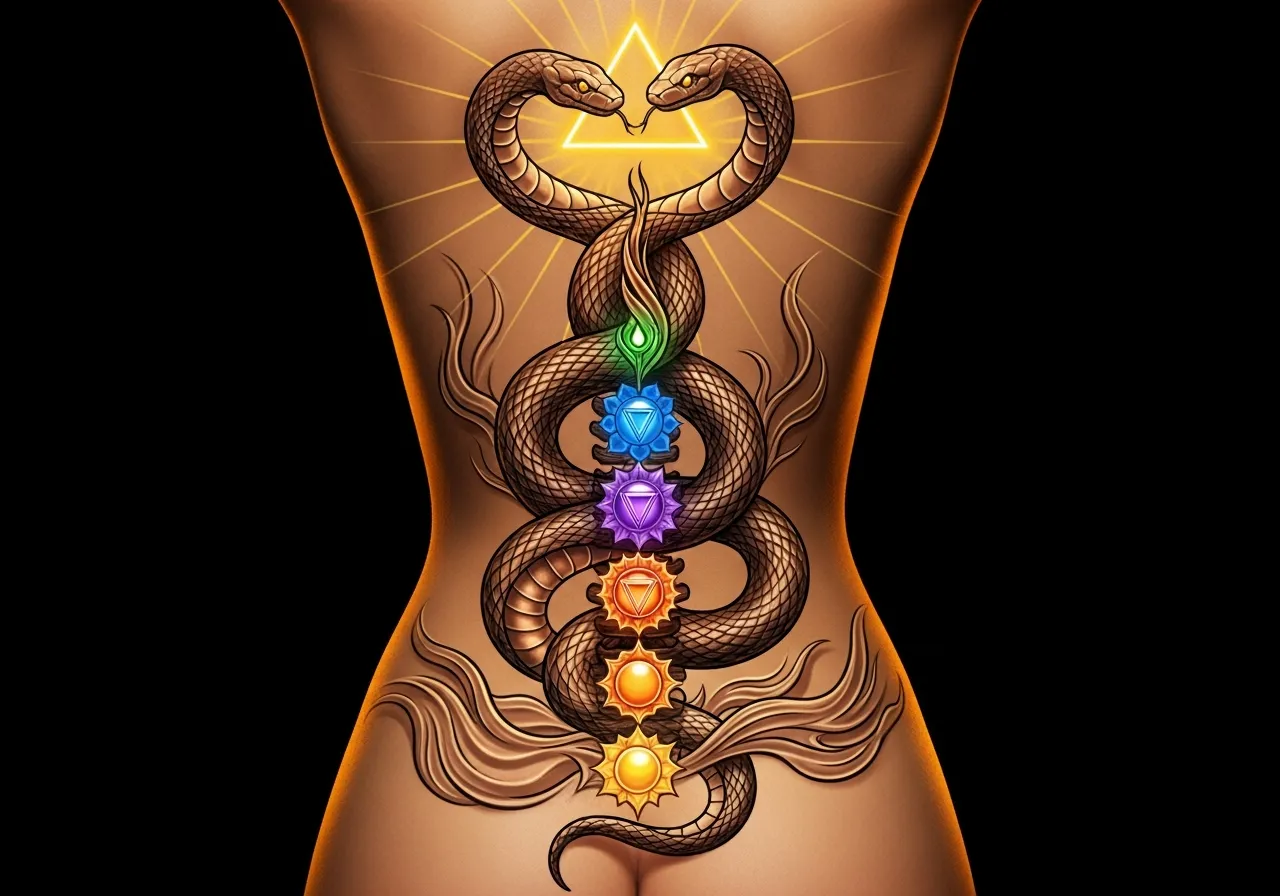
Many ancient cultures connected serpents with fertility, sexuality, and creative life force. The phallic shape combined with regenerative abilities created associations with reproduction and vitality. Hindu kundalini energy represents dormant creative potential waiting for awakening. When properly channeled, this serpent energy flows through spiritual centers bringing enlightenment and creative power.
Snake goddess figures across Mediterranean and Middle Eastern cultures guarded fertility and childbirth. Modern interpretations connect snake tattoos with embracing sensuality, celebrating creative powers, and honoring the sacred feminine. This meaning particularly resonates with individuals reclaiming their sexuality or celebrating creative pursuits.
6 Eternity and Life Cycles
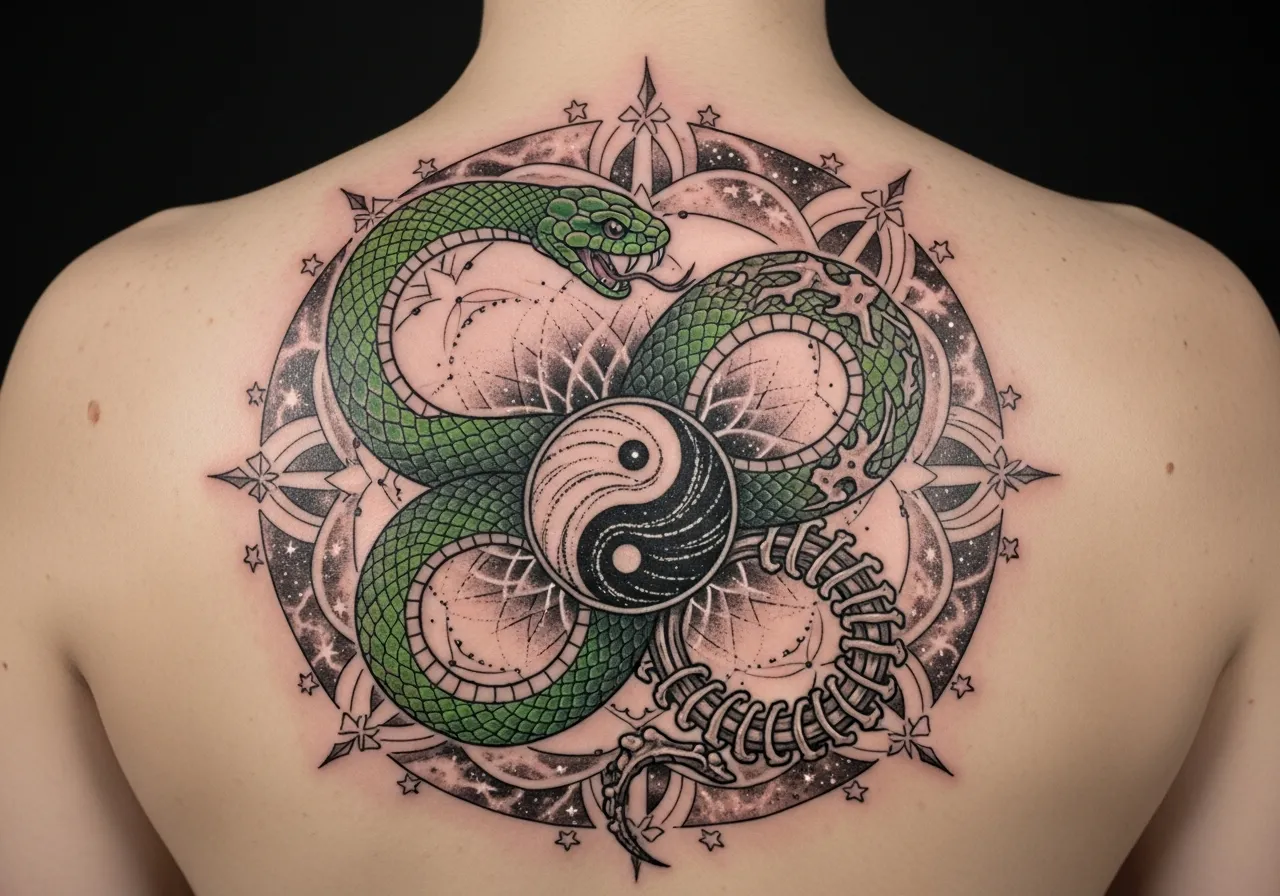
The ouroboros presents perhaps the most philosophically profound snake tattoo meaning. This ancient symbol showing a serpent eating its own tail represents infinite cycles, eternal return, and the interconnectedness of beginnings and endings. The circular form suggests completeness, wholeness, and the unity of all existence.
This symbolism appeals to those contemplating mortality, infinity, and their place within cosmic patterns. The ouroboros acknowledges that death feeds life, endings enable new beginnings, and destruction precedes creation. People choose this design when seeking reminders of life’s cyclical nature or their connection to something larger than individual existence.
7 Temptation and Duality
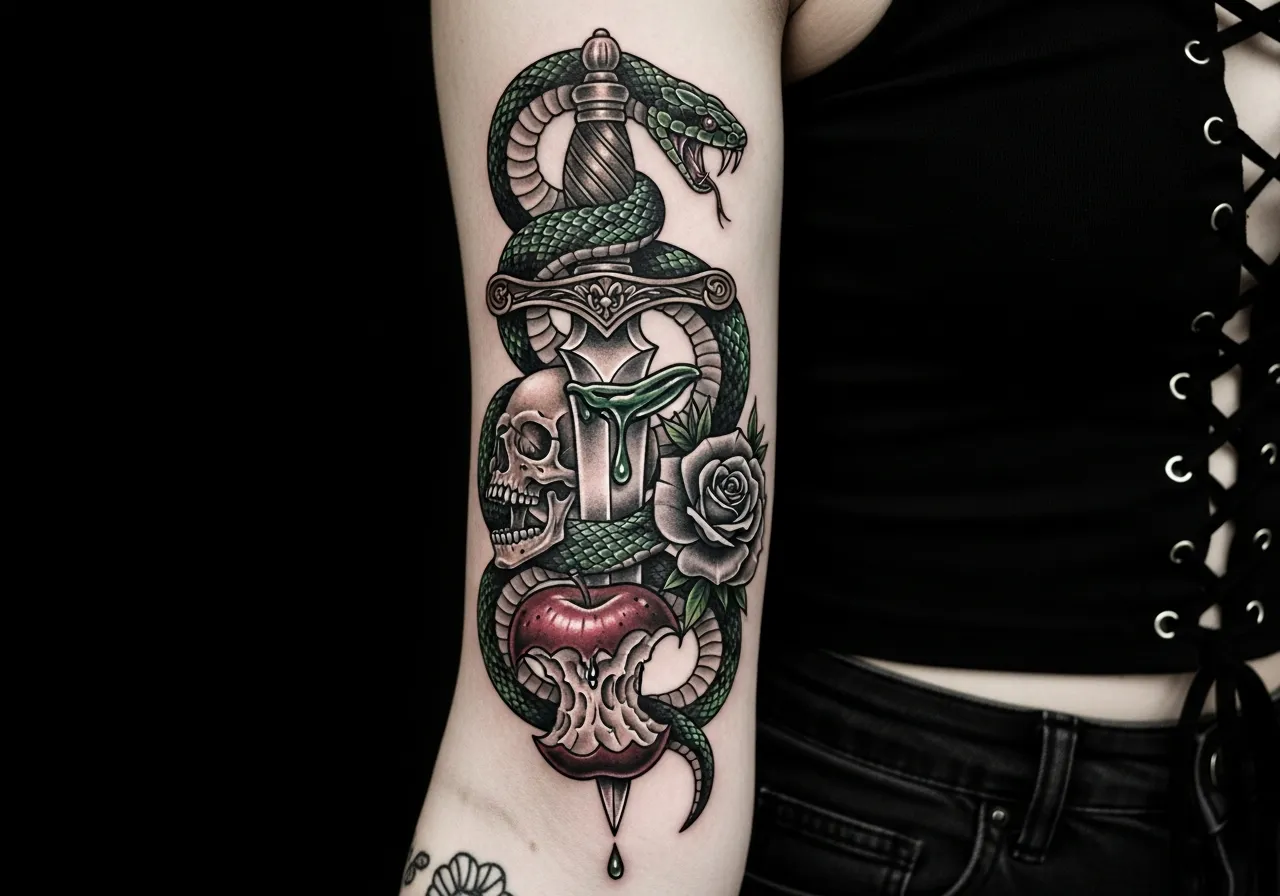
The snake’s association with temptation, particularly through Christian teachings, creates another layer of meaning. Some individuals embrace this darker symbolism, acknowledging their struggles with desire, addiction, or moral complexity. The serpent represents human nature’s shadow side and the constant negotiation between higher aspirations and base impulses.
This interpretation recognizes that growth often requires confronting uncomfortable truths and forbidden knowledge. The snake becomes a symbol of accepting one’s complete nature rather than denying difficult aspects. Pairing snakes with other symbols like daggers or skulls emphasizes this darker, more dangerous symbolism.
Popular Design Combinations and Their Meanings
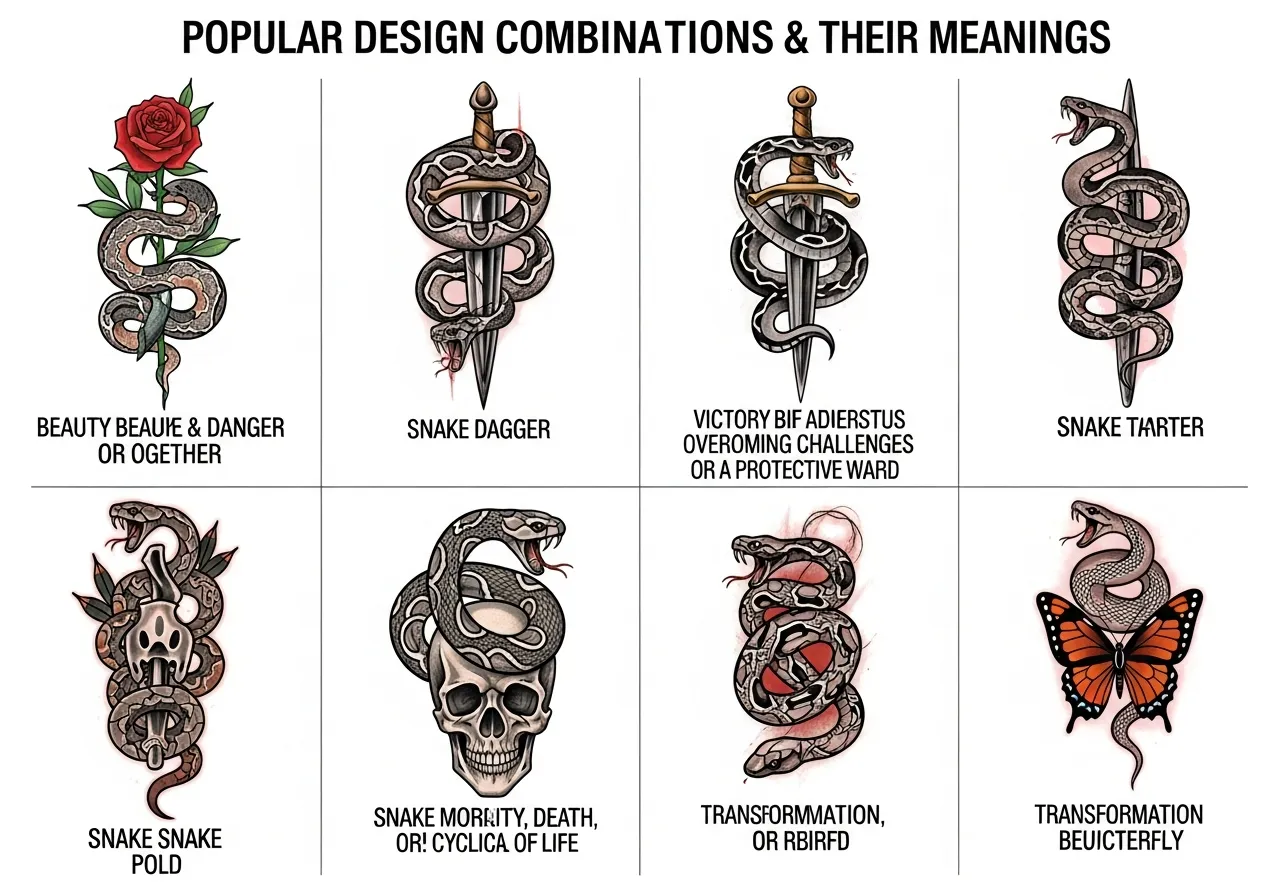
Snake tattoos frequently incorporate complementary symbols creating nuanced meanings. Snake and rose combinations represent the coexistence of beauty and danger, passion and pain. This pairing particularly appeals to those who have loved intensely and learned difficult lessons. Snake and dagger designs symbolize overcoming adversity, fighting through danger, and emerging victorious from battles.
Snake and skull combinations highlight mortality awareness and the delicate balance between life and death. Butterflies paired with snakes create powerful transformation narratives combining metamorphosis with rebirth. Each combination allows personal customization while building on established symbolic foundations.
Placement Considerations
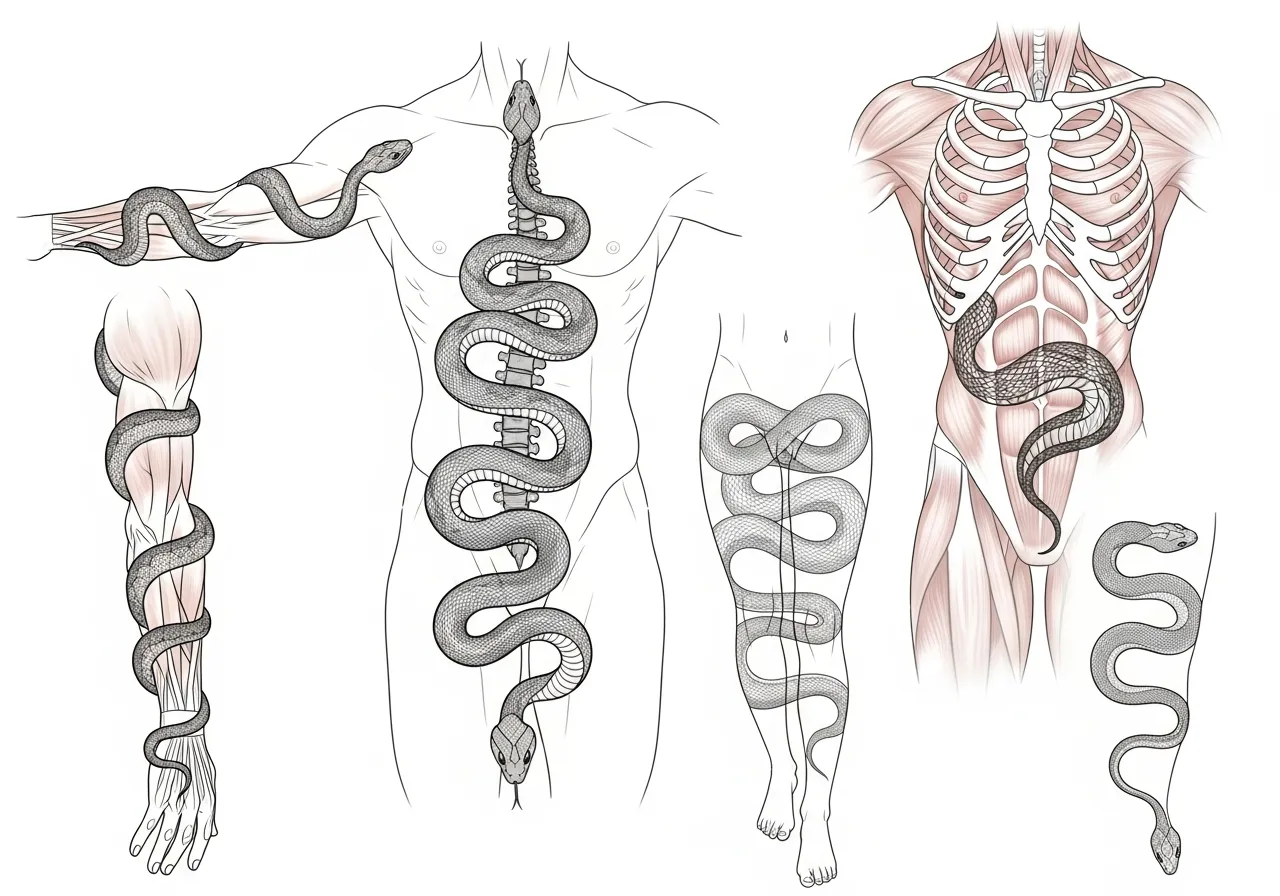
Snake tattoo placement significantly impacts visual effect and personal significance. The serpent’s sinuous form adapts beautifully to body contours, making it ideal for arms, legs, ribs, and spine. Wrapping designs around limbs emphasize the snake’s coiling nature while vertical placements along the spine suggest kundalini energy rising through spiritual centers.
Smaller, discreet snakes work behind ears, on wrists, or fingers for subtle expressions. Larger elaborate designs require substantial canvas like backs, chests, or full sleeves. Consider visibility preferences, professional requirements, and pain tolerance when selecting placement alongside symbolic considerations.
Conclusion
Snake tattoo meaning proves remarkably multifaceted, encompassing transformation, wisdom, power, healing, fertility, eternity, and temptation across various cultural contexts. This symbolic richness allows deeply personal interpretations while connecting wearers to ancient traditions spanning human history. Whether representing personal rebirth after hardship, commitment to healing professions, or philosophical contemplation of life cycles, snake tattoos carry profound significance.
The serpent’s enduring appeal in tattoo art stems from its ability to simultaneously embody opposing forces and complex truths. By understanding the diverse meanings available, individuals can select snake designs resonating with their unique experiences and spiritual beliefs. The snake remains among tattooing’s most powerful symbols, offering timeless relevance and endless interpretive possibilities.
Choosing a snake tattoo represents more than aesthetic preference. It connects wearers to millennia of human symbolic expression while creating space for intimate personal meaning. Whether drawn to transformation, protection, wisdom, or darker temptation symbolism, the snake offers rich metaphorical territory for those seeking meaningful body art.
You may also like this: 17 Stunning Gothic Floral Tattoo Designs to Inspire You
Frequently Asked Questions
What does a snake tattoo symbolize in different cultures?
Snake tattoo symbolism varies significantly across cultures. Eastern traditions including Japanese and Hindu view snakes as symbols of good fortune, protection, and spiritual power. Western Christian traditions often associate snakes with temptation and sin. Ancient Greek and Egyptian cultures connected serpents with healing, wisdom, and divine authority. Native American traditions see snakes as symbols of transformation and connection to earth.
Are snake tattoos considered good or bad luck?
Snake tattoo luck interpretations depend entirely on cultural context and personal belief. Japanese culture considers snake tattoos symbols of good fortune and prosperity. Some Western traditions view them negatively due to Biblical associations. However, modern interpretations focus more on personal meaning than superstition. Many believe snake tattoos bring protective energy and symbolize positive transformation regardless of traditional luck associations.
What does the ouroboros snake tattoo mean?
The ouroboros depicting a snake eating its own tail represents eternity, infinite cycles, and the unity of life and death. This ancient symbol suggests that endings create beginnings, forming continuous renewal. It represents completeness, self-sufficiency, and the interconnected nature of existence. People choose ouroboros tattoos when contemplating mortality, seeking reminders of life’s cyclical patterns, or expressing philosophical perspectives on infinity.
Do snake tattoos have different meanings for men and women?
Snake tattoos carry universal symbolism not inherently gendered, though personal interpretations may differ. Men often emphasize power, strength, and protection aspects while women may connect more with transformation, healing, and creative life force. However, these are generalizations and individual meaning depends on personal experience rather than gender. The snake’s versatility allows anyone to find personally resonant symbolism.
Where is the best placement for a snake tattoo?
Best snake tattoo placement depends on design size, desired visibility, and personal pain tolerance. The serpent’s sinuous form wraps beautifully around arms, legs, and torso. Spine placements suggest rising kundalini energy. Larger elaborate designs suit backs, chests, or full sleeves while smaller minimalist snakes work on wrists, ankles, or behind ears. Consider professional requirements and how placement affects the overall design flow.