
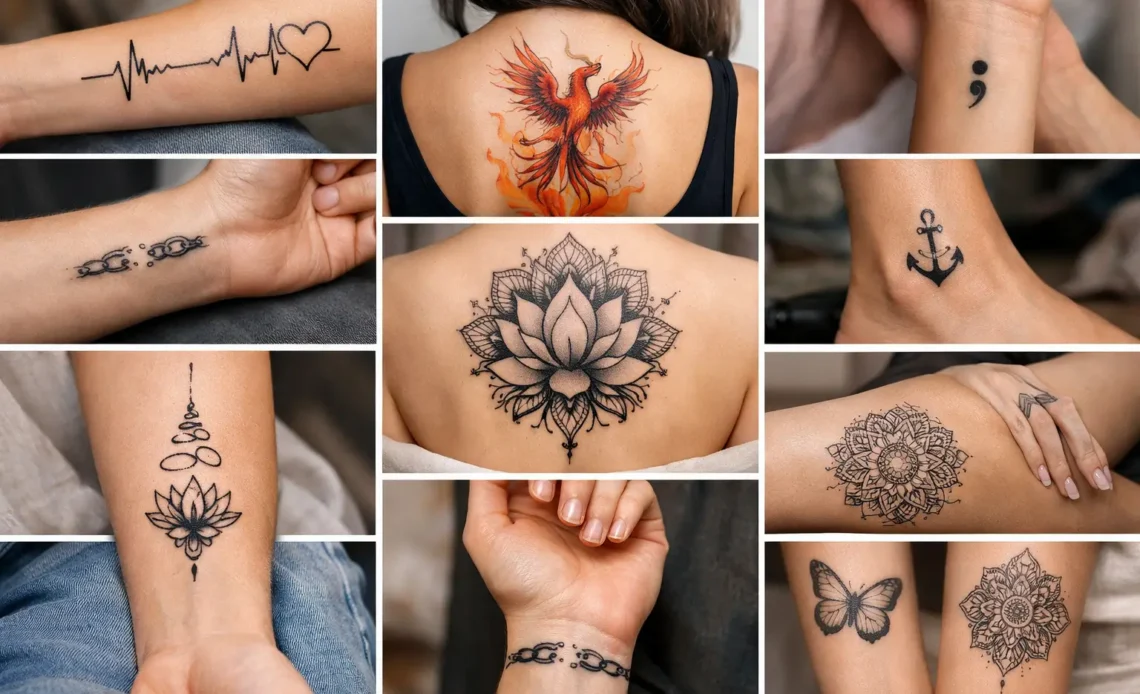
A tattoo that represents healing holds profound significance for those who have walked through darkness and emerged stronger. These permanent marks serve as visual reminders of resilience, transformation, and the courage to continue despite overwhelming challenges. Whether commemorating recovery from physical illness, emotional trauma, addiction, or mental health struggles, healing tattoos become intimate companions in the ongoing journey toward wholeness.
The beauty of healing tattoos lies in their deeply personal nature. Each symbol carries universal meanings while simultaneously representing individual stories of survival and growth. From ancient spiritual icons like lotus flowers to contemporary symbols like semicolons, these designs speak to the common human experience of suffering and the remarkable capacity for renewal. Understanding the rich symbolism behind various healing symbols helps individuals choose tattoos that authentically reflect their unique journeys while connecting them to broader communities of survivors and seekers.
H2 1 Lotus Flower Healing Tattoos
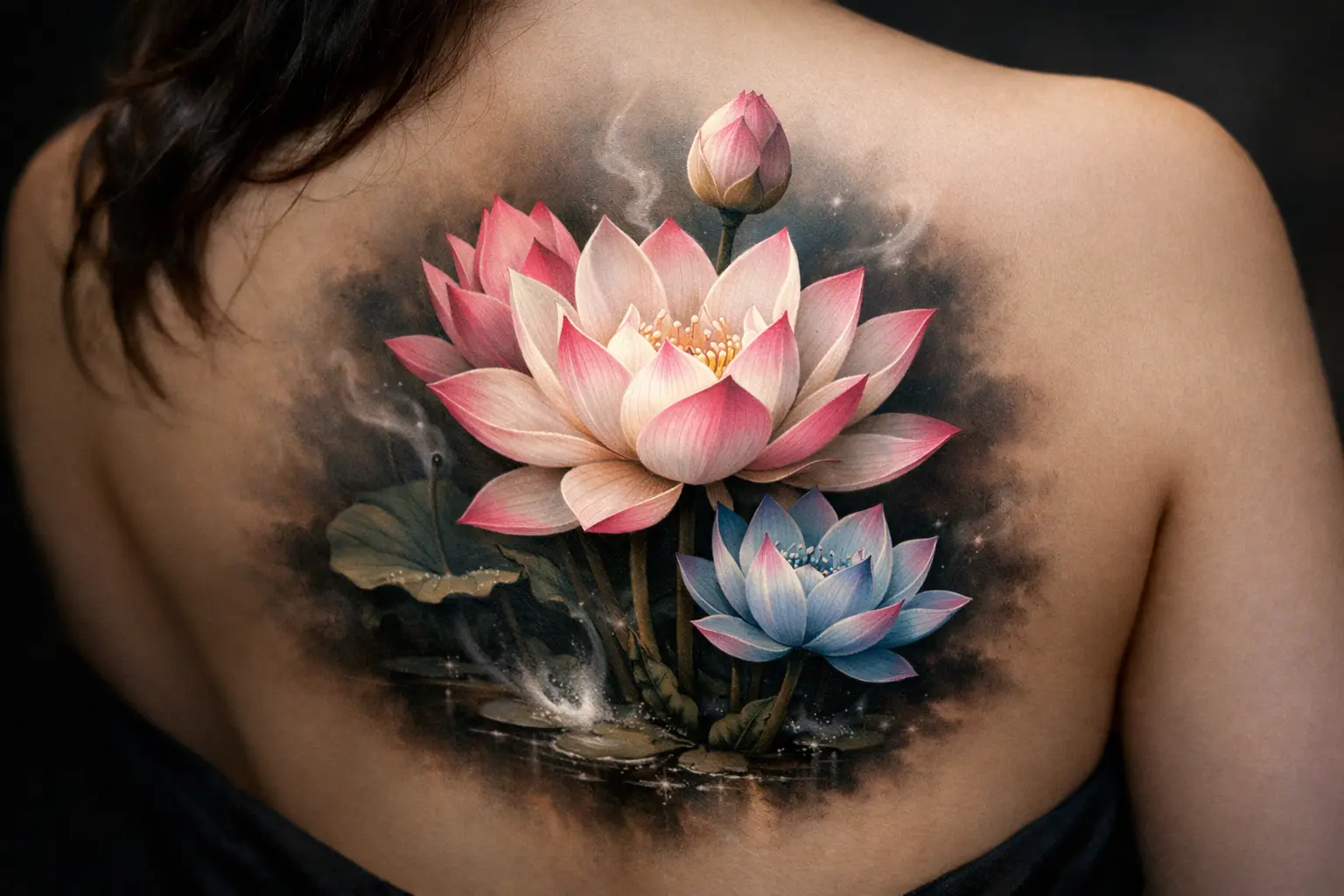
The lotus flower stands as perhaps the most universally recognized symbol of healing and spiritual transformation. This sacred bloom grows in muddy waters yet emerges pristine and beautiful, making it a perfect metaphor for rising above difficult circumstances while maintaining inner purity. The lotus represents the journey from darkness into light, from suffering into peace, and from confusion into clarity.
Different colored lotus flowers carry distinct meanings within healing contexts. White lotuses symbolize mental and spiritual purity, perfect for those healing from trauma or seeking mental clarity. Pink lotuses represent the supreme reality and spiritual awakening. Red lotuses embody love, compassion, and heart healing, resonating with those recovering from emotional wounds or relationship pain. Blue lotuses signify wisdom gained through suffering, while purple varieties connect to spiritual enlightenment and mystical experiences.
Lotus tattoo placements vary based on size and personal preference. Small minimalist lotus designs work beautifully on wrists, ankles, or behind ears as constant reminders of resilience. Larger detailed pieces suit backs, thighs, or shoulders where intricate petals and shading can be fully appreciated. Many people choose spine placements for lotus tattoos, symbolizing spiritual alignment and growth along the body’s central axis.
H2 2 Phoenix Rising Tattoos
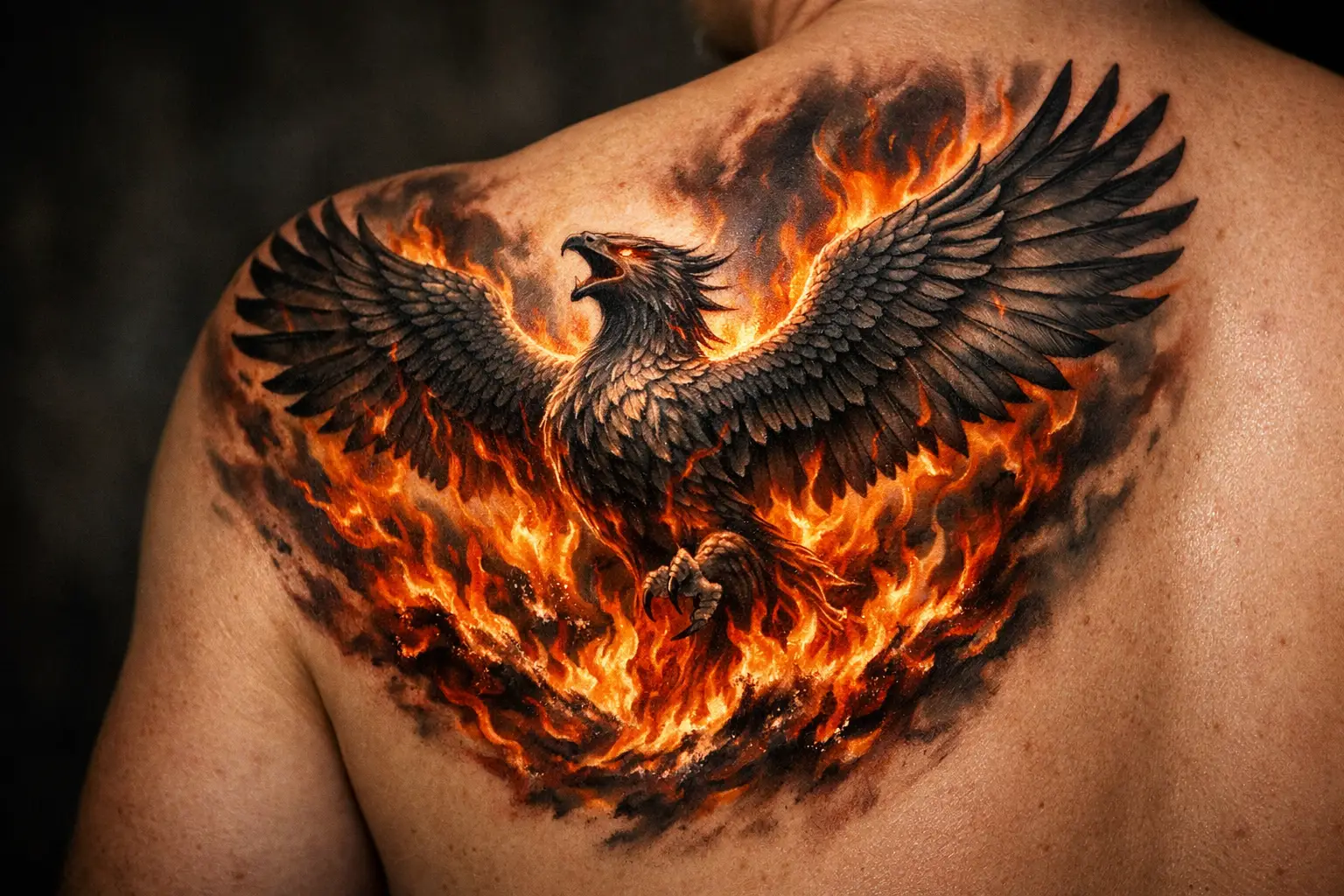
The phoenix represents one of mythology’s most powerful symbols of death and rebirth. This mythical bird burns itself to ashes only to rise again stronger and more magnificent, perfectly embodying the experience of healing after devastating loss or trauma. Phoenix tattoos speak directly to those who have survived abuse, overcome addiction, lived through life changing illness, or rebuilt themselves after complete destruction.
The transformative nature of phoenix symbolism resonates particularly with individuals who feel fundamentally changed by their healing journeys. These tattoos acknowledge that healing is not about returning to who you were before, but about becoming someone entirely new through the fire of experience. The phoenix reminds wearers that they are defined not by their lowest moments but by their capacity to rise from ashes into renewed life.
Phoenix designs range from bold traditional pieces featuring dramatic flames and widespread wings to minimalist line work emphasizing the bird’s elegant form. Color choices significantly impact meaning, with traditional reds and oranges representing fire and passion, while blue and purple phoenixes suggest spiritual transformation. Black and grey approaches create timeless elegant tattoos focusing on symbolic weight rather than vibrant display.
H2 3 Semicolon Mental Health Tattoos
The semicolon has become the universal symbol for mental health awareness and suicide prevention. In writing, a semicolon represents a pause where the author could have ended the sentence but chose to continue. In life, it symbolizes moments when individuals could have ended their stories but courageously chose to keep living despite depression, anxiety, or suicidal thoughts.
Semicolon tattoos typically appear small and minimal, often placed on wrists, fingers, behind ears, or other visible locations where they serve as gentle yet powerful reminders to persevere. The visibility of these tattoos also creates opportunities for connection, as fellow survivors recognize the symbol and understand its profound meaning without words. This shared recognition builds community among those fighting mental health battles.
Many people personalize semicolon tattoos by incorporating additional elements that enhance personal meaning. Hearts alongside semicolons represent choosing self love and compassion. Butterflies emerging from semicolons symbolize transformation through mental health recovery. Words like breathe, hope, or stay integrated into semicolon designs create complete affirmations supporting continued healing and growth.
H2 4 Butterfly Transformation Tattoos
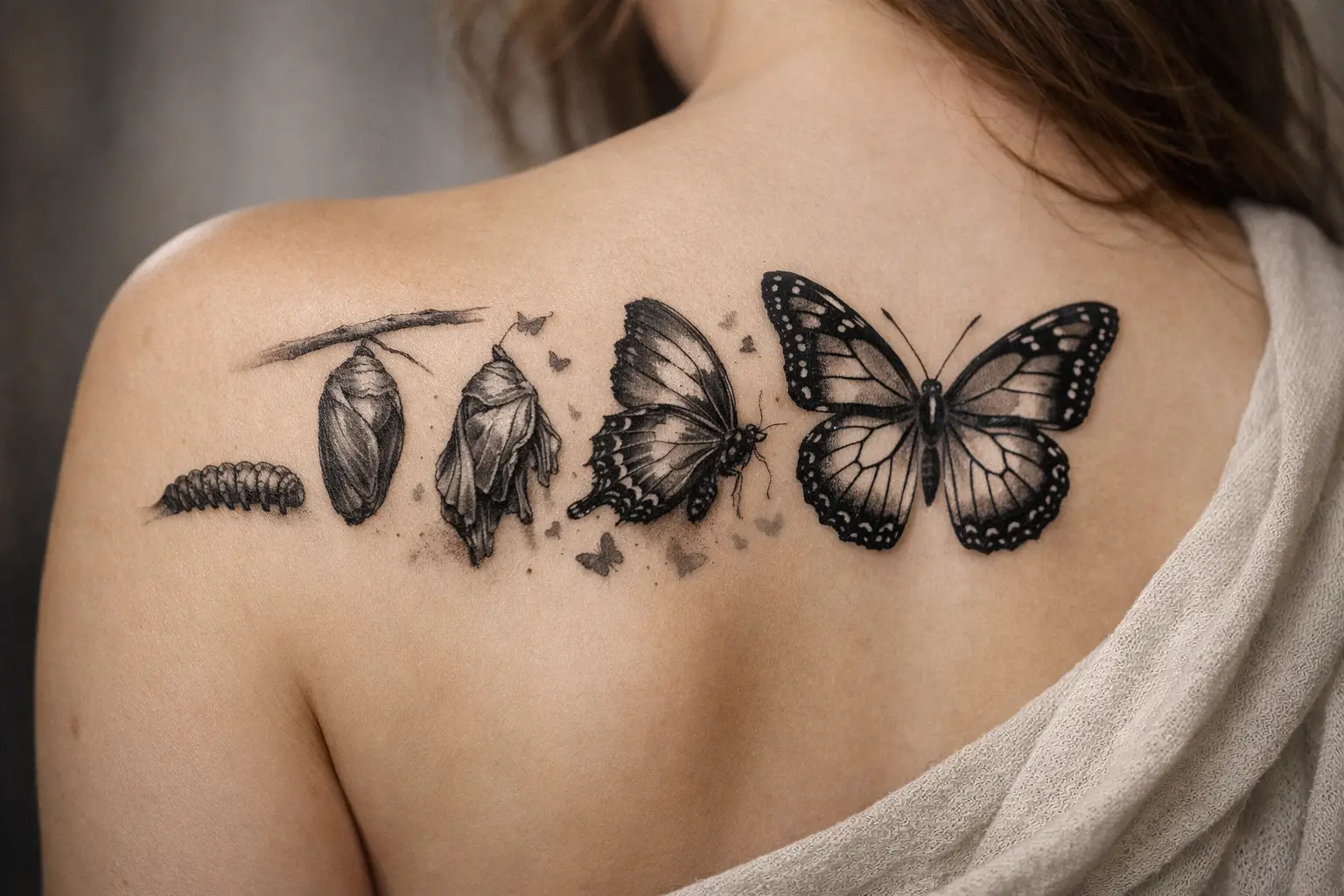
Butterflies undergo one of nature’s most dramatic transformations, beginning as caterpillars, dissolving completely inside cocoons, and emerging as entirely new creatures with wings. This metamorphosis creates perfect symbolism for healing journeys involving profound personal change. Butterfly tattoos celebrate the beauty that emerges after enduring deep transformation.
The stages of butterfly development parallel healing processes. The caterpillar represents the self before trauma or illness. The cocoon symbolizes the difficult healing period when everything feels dark, confusing, and uncertain. The emerged butterfly embodies the transformed self, fundamentally changed yet more beautiful and free than before. This progression acknowledges that healing requires patience through uncomfortable transition phases.
Butterfly tattoos also commonly represent loved ones who have passed, making them meaningful for those healing from grief and loss. The butterfly’s flight suggests the soul’s journey beyond physical death, offering comfort and connection to those mourning. Colors carry additional symbolism with blue butterflies representing spiritual transformation, orange symbolizing enthusiasm for new beginnings, and black butterflies honoring deep transformation through shadow work.
H2 5 Heartbeat and EKG Line Tattoos
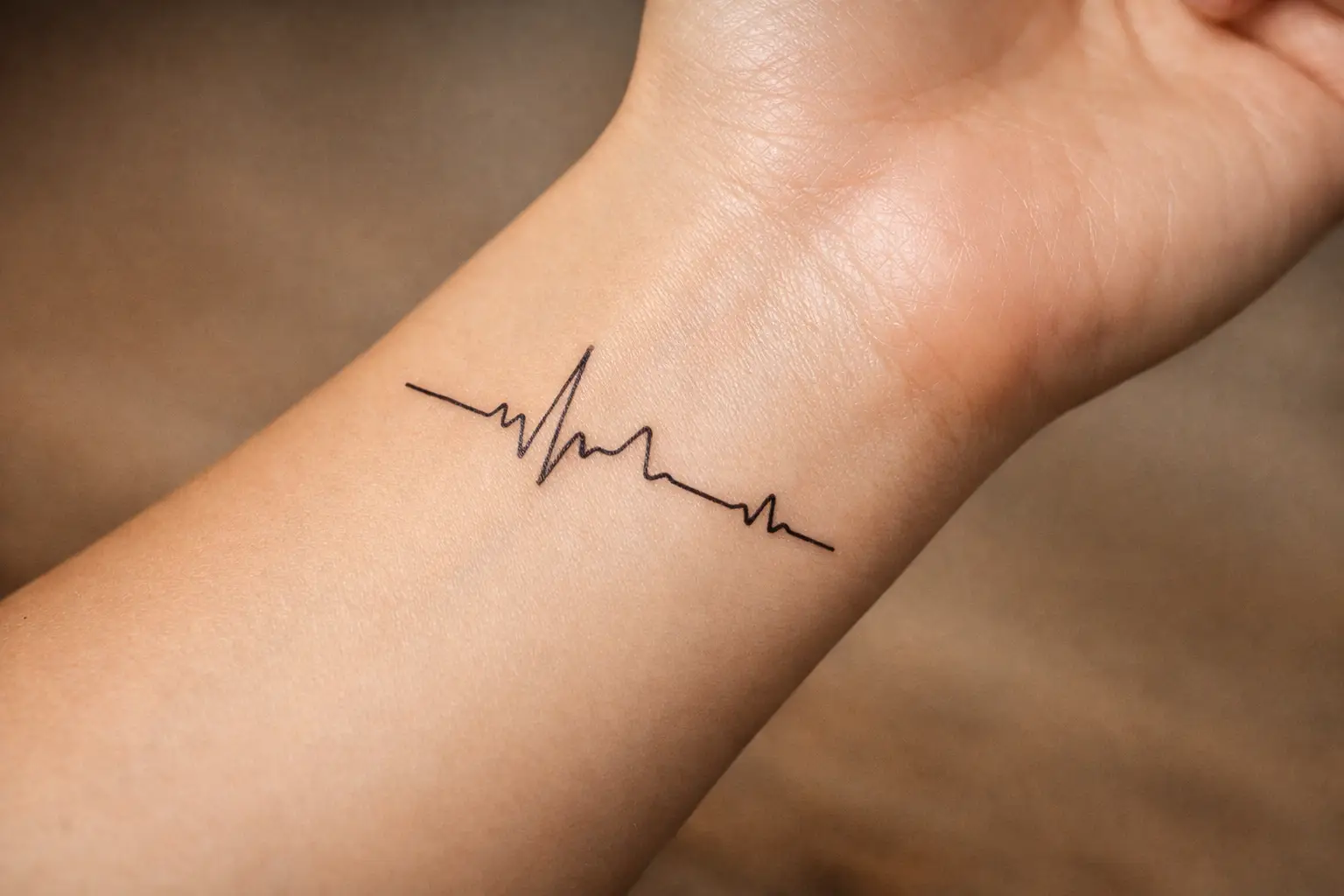
Heartbeat or electrocardiogram tattoos represent life’s fragility and the precious gift of survival. These designs feature the distinctive peaks and valleys of heart rhythm monitors, creating simple yet powerful imagery about endurance and vitality. Heartbeat tattoos particularly resonate with those who have survived serious health scares, heart conditions, or chronic illnesses.
Beyond physical health, heartbeat tattoos symbolize emotional survival and the determination to keep going despite overwhelming circumstances. The continuous line represents persistence through difficulties, the ups and downs inherent in any healing journey, and the will to maintain life’s rhythm even when it feels easier to give up. These tattoos remind wearers that as long as there is a heartbeat, there is hope.
Many people personalize heartbeat tattoos by incorporating names, dates, or meaningful words into the design. A heartbeat line forming the word hope creates powerful affirmations. Dates marking survival milestones, sobriety anniversaries, or lost loved ones’ birthdays add deeply personal significance. Some designs show multiple heartbeat lines representing family members or loved ones whose presence supports the wearer’s healing.
H2 6 Anchor Stability Tattoos
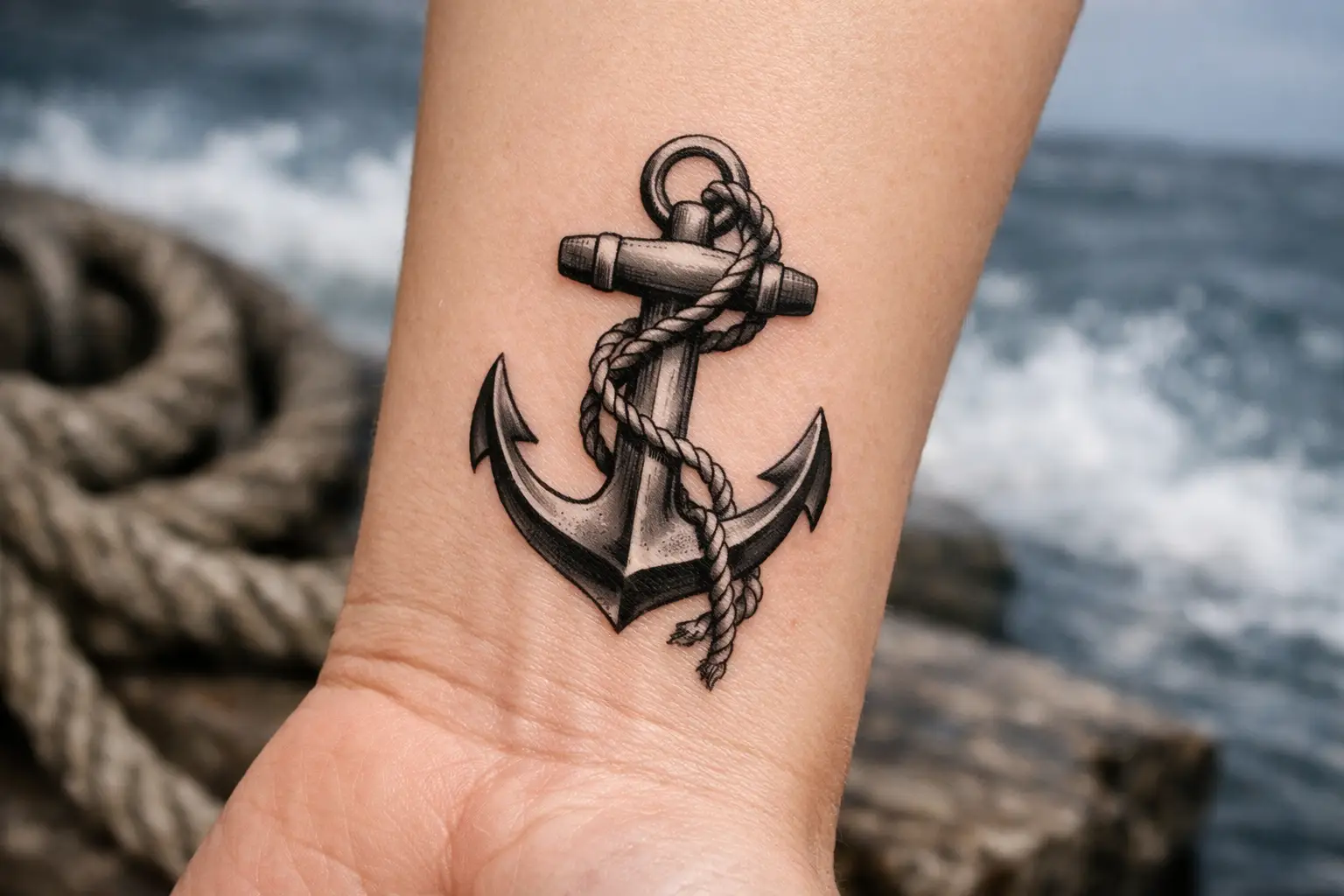
Anchors hold ships steady during storms, making them fitting symbols for emotional stability, resilience, and finding safety after periods of turmoil. Anchor tattoos represent being grounded, maintaining stability despite life’s chaos, and having something or someone to hold onto during difficult times. These designs appeal to those who have felt lost and needed anchoring forces to survive.
Some people get anchor tattoos to honor internal strength that kept them grounded, while others commemorate external supports like therapists, partners, or friends who provided stability during healing. The anchor acknowledges that we all need grounding forces, whether found within ourselves or provided by caring others. This symbol celebrates both self reliance and the courage to accept help.
Anchor designs vary from traditional nautical imagery with ropes and chains to minimalist outlines emphasizing simple symbolic form. Adding elements like flowers growing from anchors represents finding beauty and growth while remaining grounded. Hearts incorporated into anchor designs symbolize love as the stabilizing force. Words like strength, hope, or family integrated into rope details personalize the grounding concept.
H2 7 Mandala Balance Tattoos
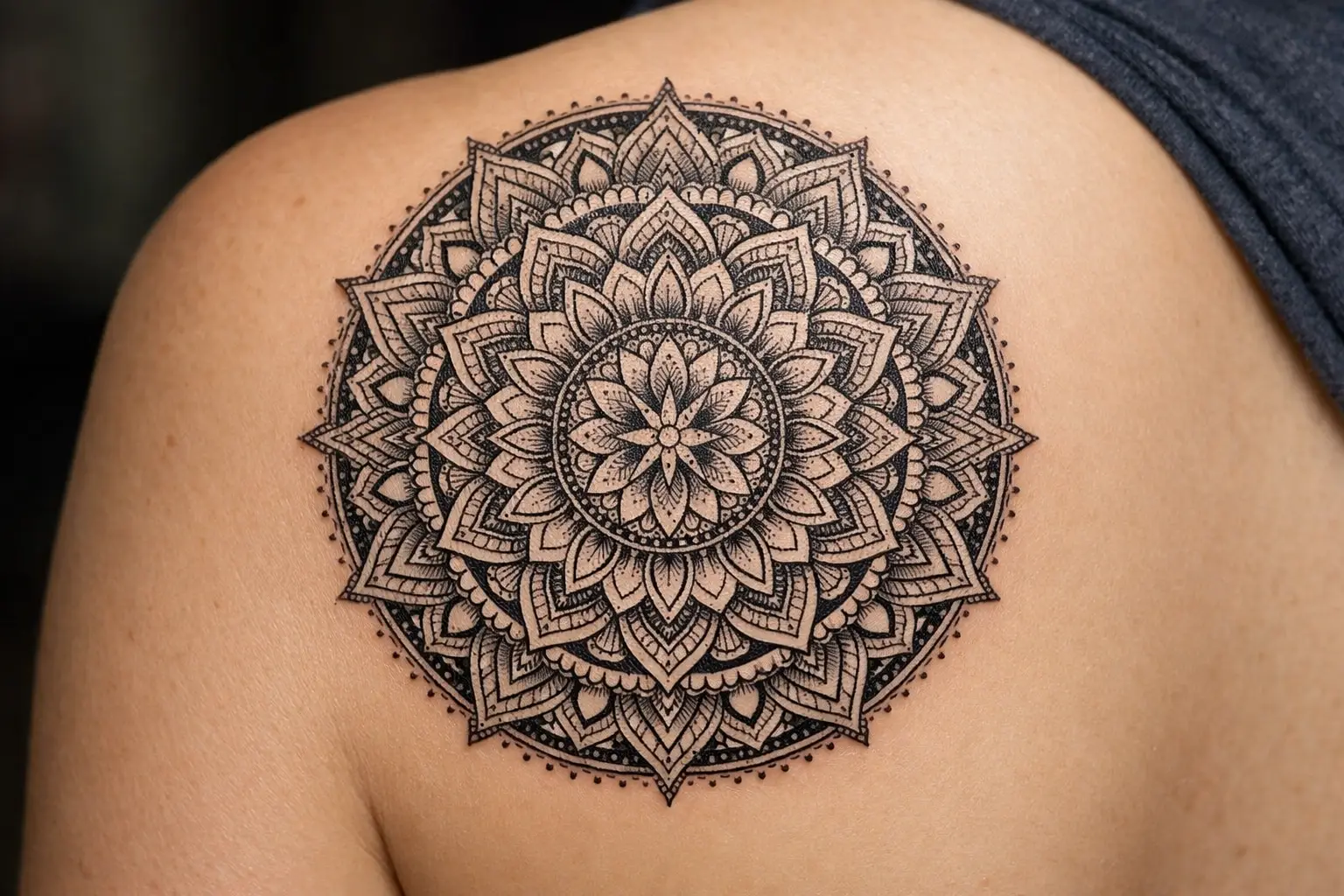
Mandalas are intricate circular designs representing balance, wholeness, unity, and the interconnection of all things. In spiritual practices like Buddhism and Hinduism, mandalas serve as meditation tools and symbols of the journey inward toward peace and completeness. Mandala tattoos represent the healing path toward inner balance and integration of all life aspects.
The circular form of mandalas suggests cycles, eternal return, and the continuous nature of healing work. The symmetrical patterns represent order emerging from chaos, balance achieved through intention, and the beauty created when all pieces come together harmoniously. Creating or viewing mandalas promotes meditative states that support emotional regulation and stress reduction, making these tattoos particularly meaningful for anxiety and trauma survivors.
Mandala tattoos work beautifully in various sizes and placements. Large detailed pieces on backs, thighs, or shoulders allow for intricate patterns showcasing the design’s complexity. Smaller mandalas on wrists or ankles provide portable meditation focal points. Some people choose mandala tattoos specifically positioned over chakra points, enhancing the design’s spiritual healing properties and creating energetic alignment.
H2 8 Unalome Spiritual Path Tattoos
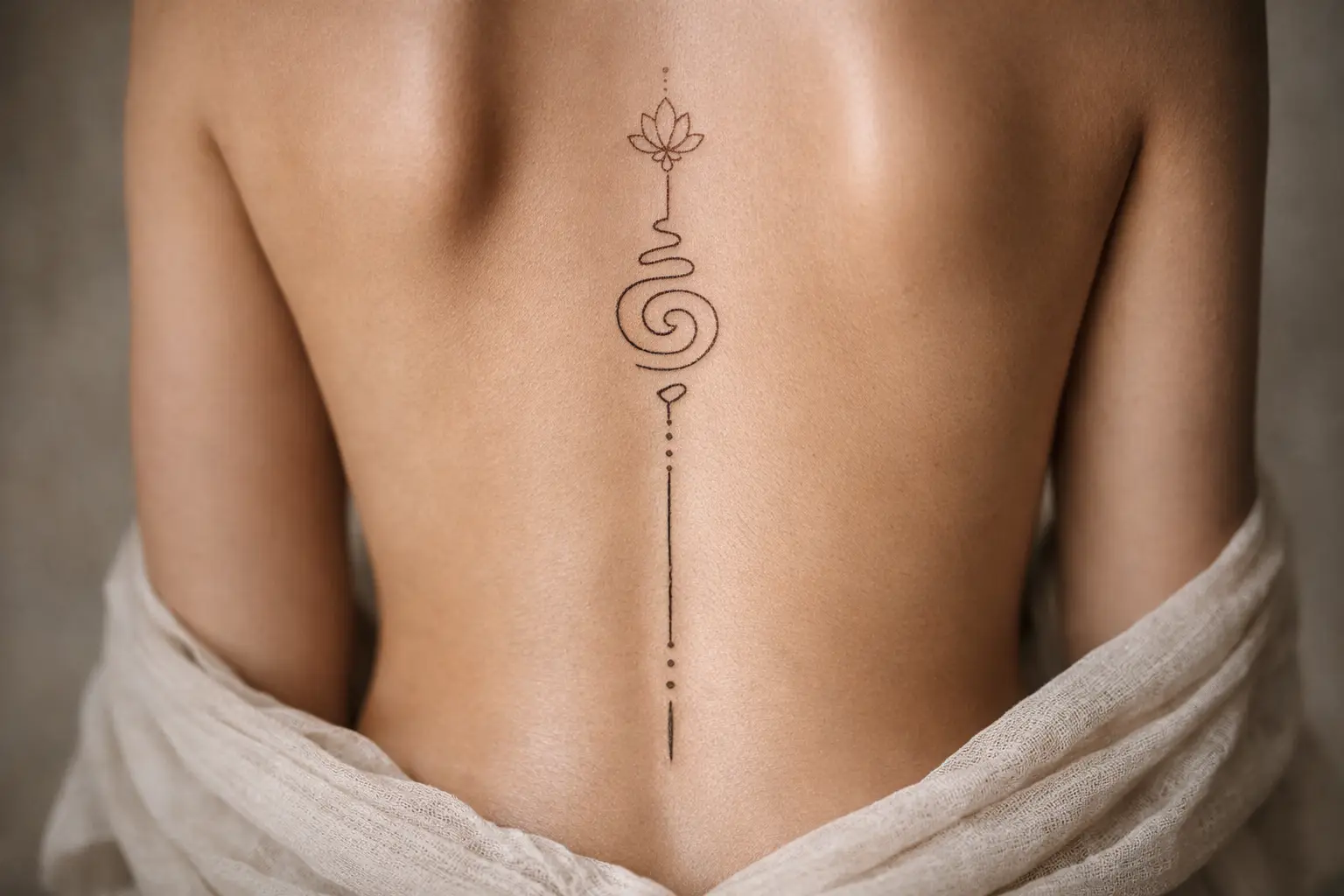
The unalome symbol originates in Buddhist tradition, representing the path to enlightenment with its spirals signifying life’s twists and turns while the straight line shows moments of clarity. This design perfectly captures the nonlinear nature of healing, acknowledging that recovery rarely follows straight paths but instead winds back on itself, takes unexpected turns, yet ultimately progresses forward.
The unalome begins with tight spirals representing confusion, struggle, and the chaotic feelings accompanying trauma or crisis. As the symbol continues, spirals gradually loosen and straighten, symbolizing growing clarity, peace, and direction found through healing work. The final straight line represents enlightenment or the achievement of healing goals, though some interpretations suggest the journey continues infinitely beyond what the symbol shows.
Unalome tattoos typically appear along vertical spaces like spines, sternums, or forearms where the upward progression can be fully displayed. Many people personalize unalomes by incorporating lotus flowers at the top representing blooming after the journey, or adding dots representing stages of healing. The symbol’s elegant simplicity makes it suitable for those wanting meaningful tattoos without elaborate imagery.
H2 9 Broken Chain Freedom Tattoos
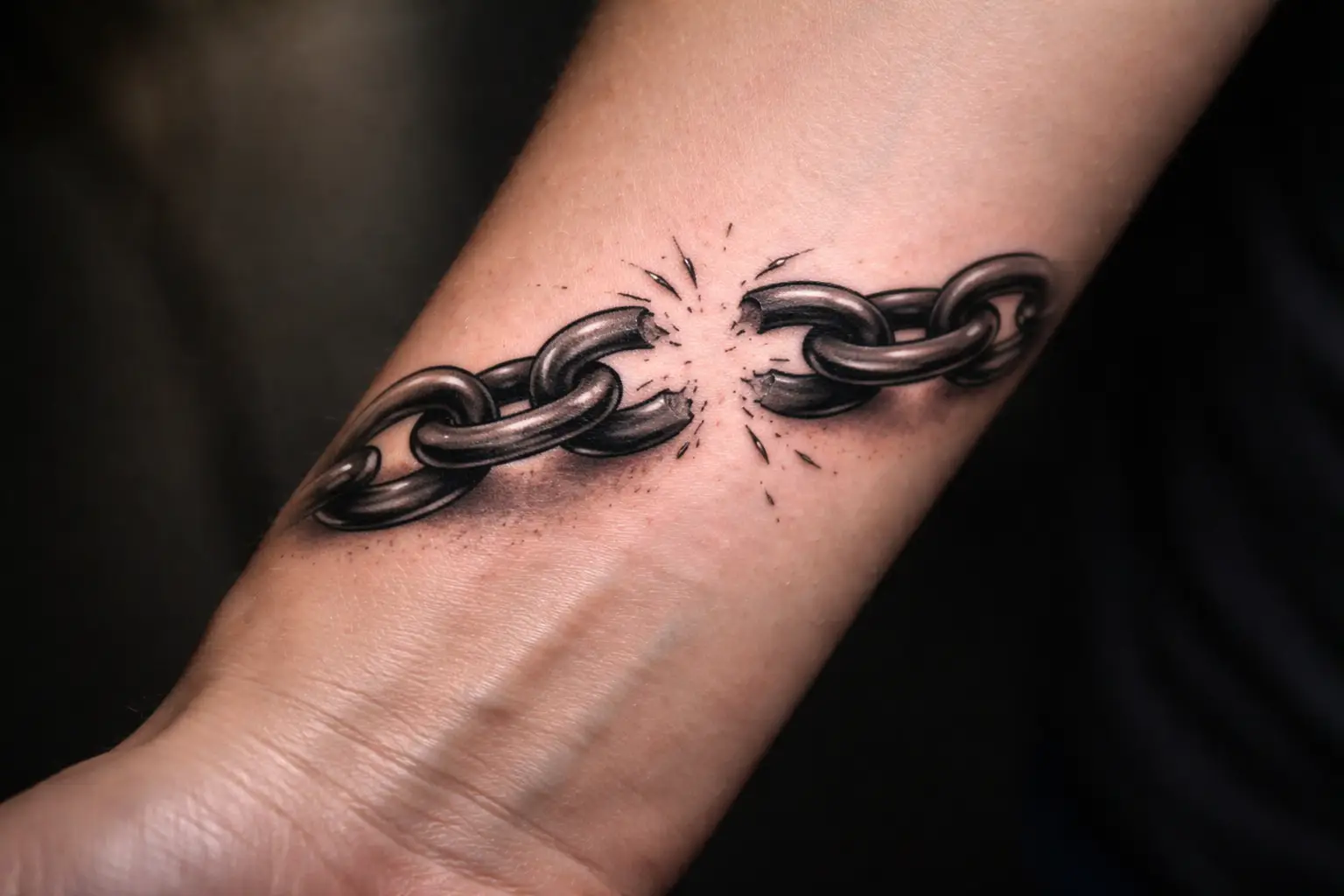
Broken chain tattoos symbolize liberation from bondage, freedom from trauma, and breaking free from what held you captive. These powerful designs represent moments of choosing freedom over captivity, whether escaping abusive relationships, overcoming addiction, leaving toxic situations, or breaking internal patterns of self harm and negative thinking.
The simplicity of broken chain imagery makes it perfect for small discreet tattoos on wrists or ankles serving as personal reminders of liberation. Just a few links with one clearly broken conveys the complete message of freedom achieved. Some people add dates within chain links marking their personal independence day, creating permanent celebrations of the moment they broke free.
Broken chains also symbolize releasing burdens carried too long, letting go of past pain, and choosing not to be defined by suffering. These tattoos acknowledge the weight of what was carried while celebrating the courage required to set it down. Adding birds flying from broken chains creates imagery of freedom taking flight, while flowers growing through links suggest new life emerging from endings.
H2 10 Tree of Life Grounding Tattoos
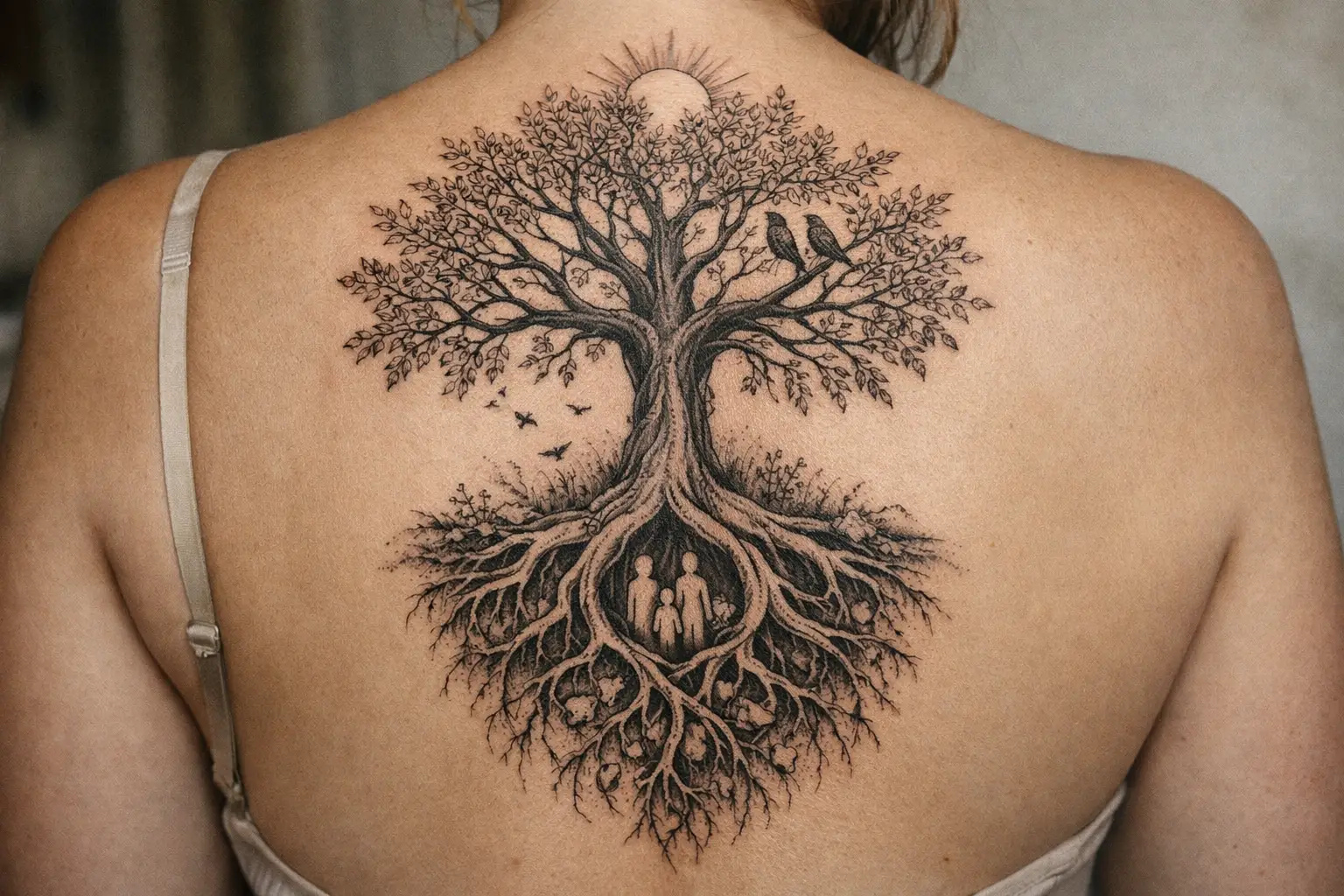
Trees represent strength, growth, resilience, and the deep connections between all living things. Tree of life tattoos particularly symbolize being rooted and grounded while simultaneously reaching upward, finding nourishment from both earth and sky. These designs resonate with those seeking to honor family connections, personal growth, or the journey toward wholeness through healing.
The extensive root systems in tree tattoos represent foundation, ancestry, and the unseen support that sustains visible growth. Strong trunks symbolize core strength and resilience through storms. Branches reaching skyward suggest aspirations, spiritual seeking, and continuous growth. Seasonal variations in tree imagery add layers of meaning, with bare winter trees representing dormancy and loss, spring blossoms suggesting renewal, and full summer foliage celebrating abundance.
Tree of life tattoos accommodate various artistic styles from realistic renderings to abstract interpretations. Celtic tree designs incorporate knotwork emphasizing interconnection and eternal cycles. Some people integrate family member names into roots or branches, creating family trees honoring support systems. Others add elements like birds in branches representing freedom or fruit symbolizing the rewards of growth and healing work.
H2 11 Kintsugi Gold Repair Tattoos
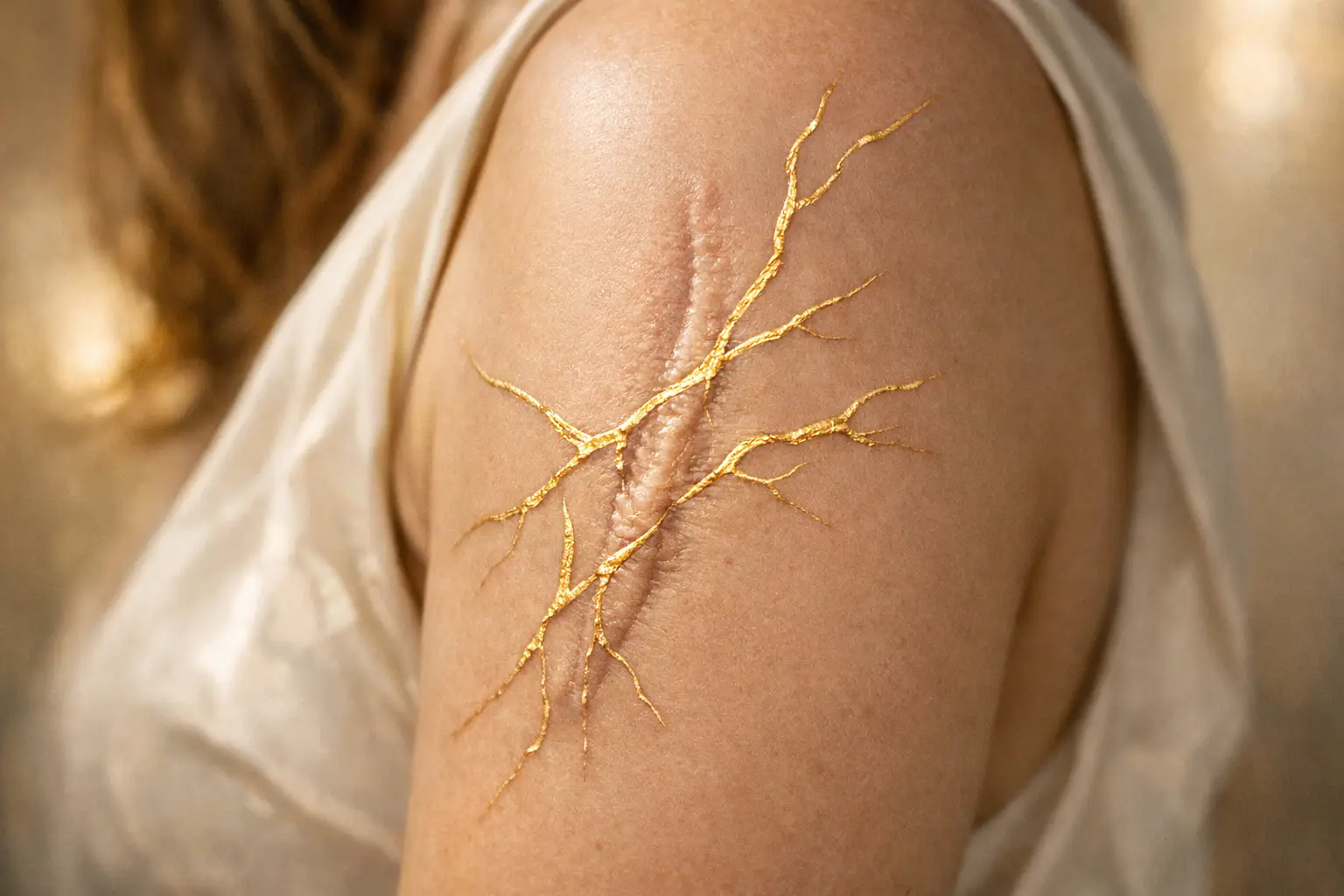
Kintsugi is the Japanese art of repairing broken pottery with gold, treating breakage and repair as part of an object’s history rather than something to disguise. This philosophy creates profound healing symbolism, suggesting that we are not damaged by our wounds but made more beautiful through the process of mending. Kintsugi tattoos celebrate scars as part of our stories.
These designs typically feature delicate gold or yellow lines resembling cracks or breaks, representing healing and strength found through trauma. The golden repair suggests that our broken places, when healed, become our most precious parts. This reframes suffering not as something shameful to hide but as integral to our unique beauty and value.
Kintsugi inspired tattoos work particularly well for covering or incorporating actual scars from self harm, surgery, or injury. The design transforms scars into deliberate artistic elements, reclaiming narrative control over marks that might otherwise carry painful associations. These tattoos declare that you are whole not despite being broken, but because you chose to heal and integrate all your experiences.
H2 12 Compass Direction Tattoos
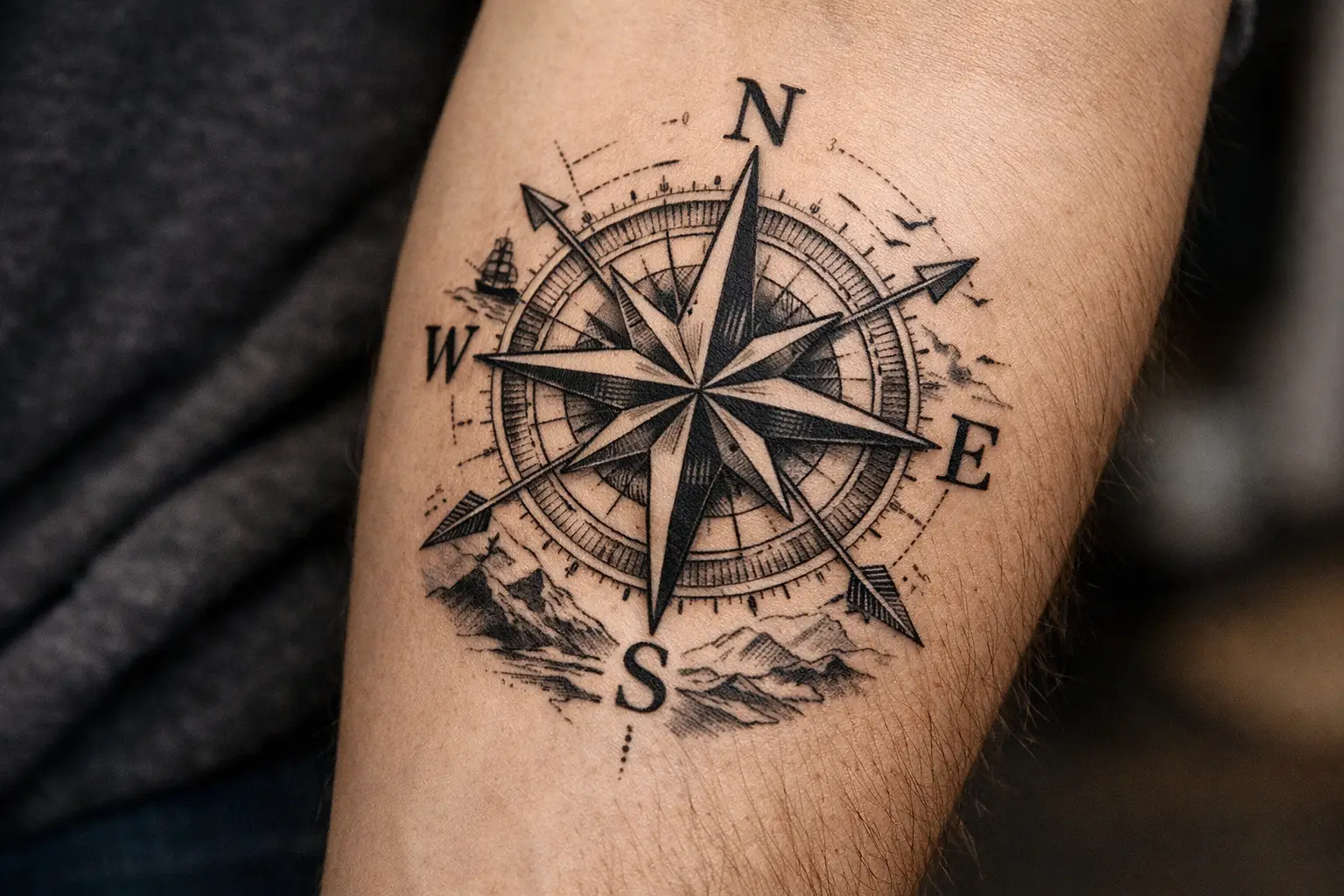
Compass tattoos symbolize finding direction, navigating life’s journey, and staying true to your path even when circumstances change. These designs particularly resonate with individuals who have felt lost and worked to find their way back to themselves. The compass represents the internal navigation system guiding us toward authentic lives aligned with our values.
The four cardinal directions carry symbolic meanings that enhance compass tattoos. North represents home and grounding, south suggests warmth and passion, east embodies new beginnings and enlightenment, while west symbolizes introspection and letting go. Some people customize compass designs to point toward specific meaningful directions, perhaps toward hometowns, places where healing occurred, or symbolic destinations representing future goals.
Combining compasses with other healing symbols creates comprehensive designs. Compass roses with lotus centers merge direction finding with spiritual growth. Arrows integrated into compass designs add momentum and forward movement. Words like wander, explore, or find yourself woven into compass elements personalize the navigation theme while maintaining the symbol’s core meaning about trusting internal guidance.
H2 13 Lavender Calm and Peace Tattoos
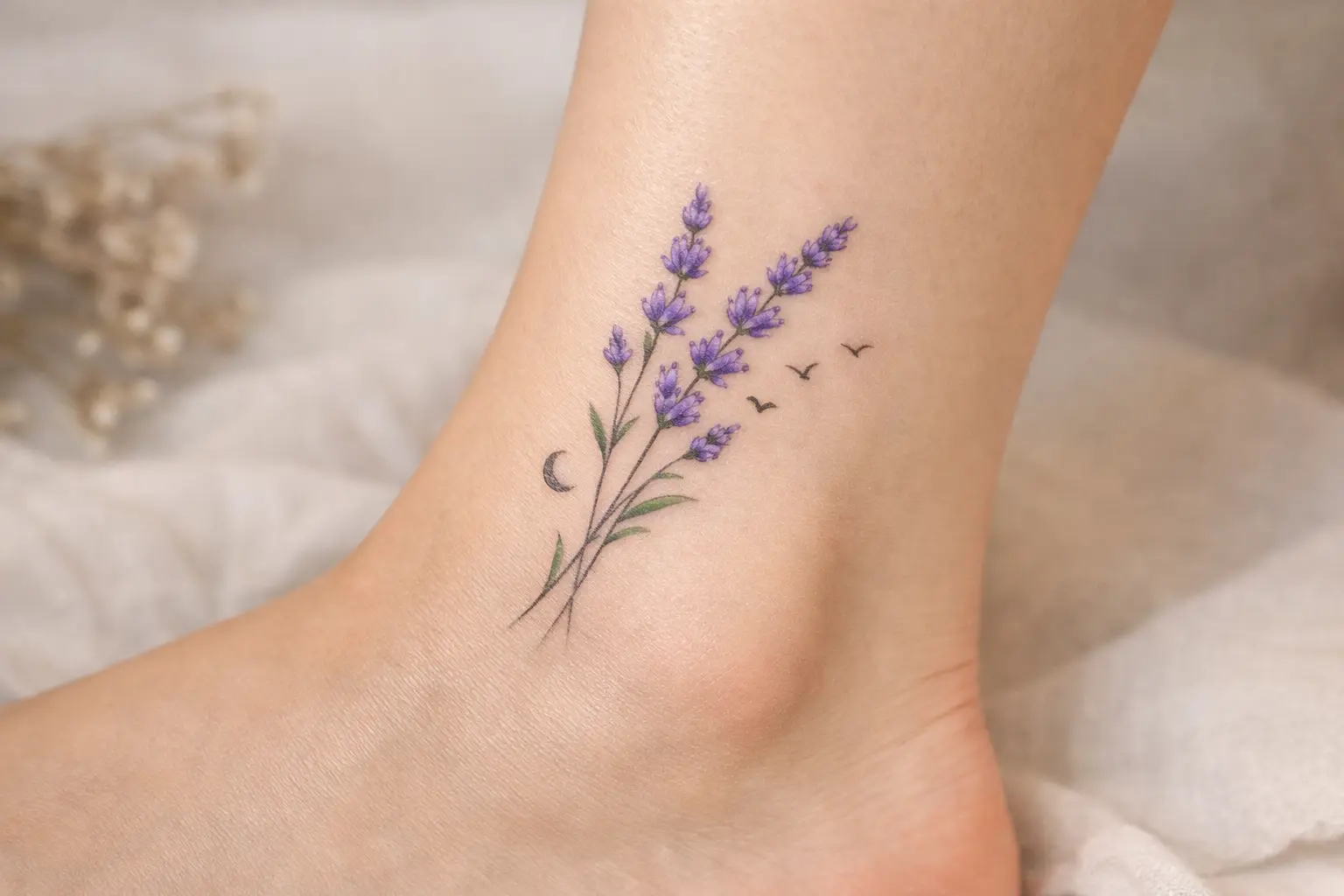
Lavender represents calmness, tranquility, peace, and relief from anxiety. These delicate purple flowers have been used throughout history for their soothing properties, making lavender tattoos particularly meaningful for those healing from anxiety disorders, PTSD, or chronic stress. The gentle beauty of lavender imagery creates visual reminders to seek peace in daily life.
Lavender tattoos typically feature elegant simple line work with purple and green accents, though black and grey approaches also work beautifully. The flowing stems and delicate flowers suit various placements from wrists and ankles to shoulders and ribs. Some designs show single lavender sprigs while others create fuller bouquets, with stem count potentially representing years of sobriety, months of recovery, or other healing milestones.
Pairing lavender with other calming symbols enhances the peaceful message. Lavender with butterflies suggests finding peace through transformation. Lavender combined with moon imagery connects to feminine energy and emotional cycles. Adding words like breathe, peace, or rest alongside lavender sprigs creates complete affirmations supporting continued healing and self care practices.
H2 14 Paper Crane Hope Tattoos
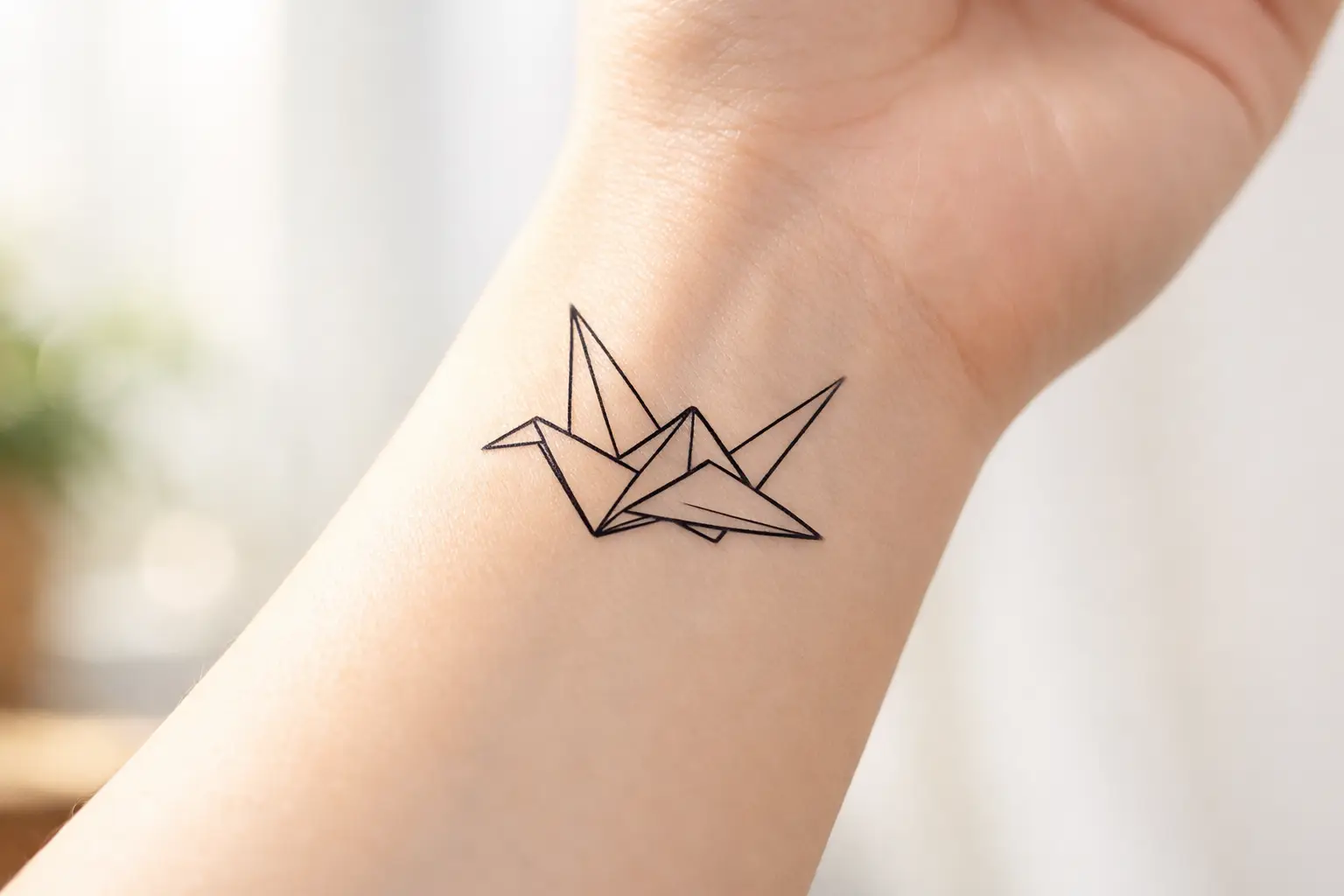
Originating from the Japanese tradition of folding one thousand paper cranes to grant a wish, paper crane tattoos symbolize hope, healing, perseverance, and the power of sustained effort toward goals. The crane itself represents longevity and good fortune across many cultures, making it a universally recognized symbol of resilience and optimistic determination.
The simple outline of a paper crane’s distinctive forked tail and folded wings creates clean minimalist designs suitable for any body placement. Despite visual simplicity, these tattoos carry profound meaning about faith in better futures and belief that persistent effort creates positive change. The origami aspect adds layers of meaning about transformation, as flat paper becomes three dimensional art through patient careful folding.
Some people get multiple crane tattoos representing progress toward symbolic thousand crane goals, adding new cranes to mark healing milestones or recovery anniversaries. Others incorporate rainbow colors into crane designs celebrating diversity, hope, and the full spectrum of human emotion. Cranes in flight suggest freedom and moving forward, while resting cranes represent peace found after long journeys.
H2 15 Forget Me Not Remembrance Tattoos
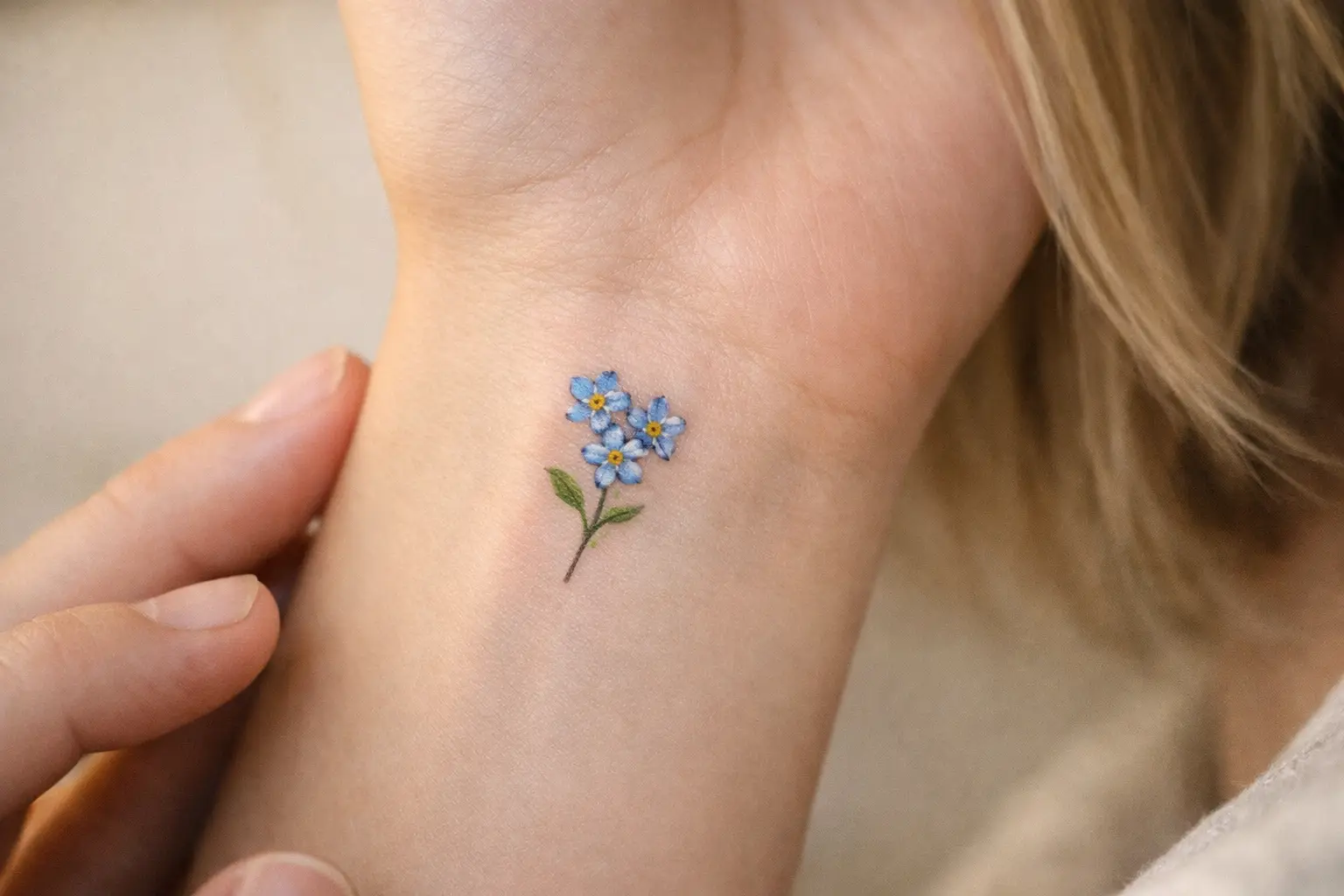
Forget me nots are tiny blue flowers carrying deep symbolism for trauma survivors, representing remembrance and the promise to never forget personal journeys while still moving forward. What makes these flowers particularly meaningful is their ability to grow and thrive in difficult conditions, much like the human spirit after trauma. They symbolize both honoring what was survived and commitment to continued growth.
The five petaled simplicity of forget me not flowers makes them perfect for discreet placements on wrists, ankles, or behind ears while still carrying profound significance. Some survivors choose single blooms while others prefer small scattered clusters, symbolizing how healing often comes in stages rather than all at once. The gentle blue color suggests peace, loyalty, and faithful remembrance.
Forget me not tattoos work particularly well for commemorating lost loved ones or traumatic events requiring remembrance without being consumed by grief. These designs acknowledge that we carry our experiences forward while choosing not to be defined solely by suffering. Adding dates, initials, or brief words alongside forget me nots personalizes the remembrance while maintaining the symbol’s gentle hopeful quality.
Conclusion
Tattoos that represent healing transform personal pain into permanent art, creating visual narratives of survival, strength, and transformation. From ancient spiritual symbols like lotus flowers and mandalas to contemporary mental health markers like semicolons, these designs offer countless ways to honor individual healing journeys while connecting to universal human experiences of suffering and renewal. Whether choosing delicate minimalist symbols or bold elaborate pieces, healing tattoos become intimate companions in the ongoing work of recovery, serving as constant reminders that you have survived, you are growing, and your story continues. By understanding the rich symbolism behind various healing symbols and thoughtfully considering placement, size, and personal meaning, individuals can create tattoos that authentically represent their unique paths while celebrating the remarkable human capacity for healing and hope.
You may also like this: 15 Butterfly Tattoo Inspiration ideas That Capture Freedom and Femininity
Frequently Asked Questions
What tattoo symbolizes healing?
The lotus flower most commonly symbolizes healing, representing growth through adversity and beauty emerging from difficult circumstances. Other powerful healing symbols include the phoenix representing rebirth after destruction, semicolons for mental health survival, butterflies for transformation, and unalomes showing the nonlinear healing path. The best healing symbol varies individually based on personal journey and what resonates most deeply.
Where should I place a healing tattoo?
Placement depends on whether you want constant visibility or private reminders. Wrists, forearms, and ankles provide regular visibility serving as ongoing encouragement. Ribs, back, and chest offer more private placements for intimate personal symbols. Many people choose locations where they can easily see their healing tattoos during difficult moments. Consider professional requirements and how placement affects the tattoo’s personal significance.
Can healing tattoos help with mental health recovery?
While tattoos are not therapeutic treatments, many people find them psychologically helpful as tangible reminders of progress, commitments to continued healing, and symbols of survival during difficult moments. Healing tattoos can reduce feelings of isolation by connecting wearers to communities of survivors. They serve as permanent affirmations supporting recovery work, though they should complement rather than replace professional mental health treatment.
How do I choose the right healing symbol for my tattoo?
Research various healing symbols to understand their meanings and cultural origins. Notice which designs create emotional responses or feel personally resonant. Consider your specific healing journey and what aspects you most want to commemorate or reinforce. Consult with tattoo artists about translating chosen symbols into designs matching your aesthetic preferences. The right healing symbol will feel meaningful beyond visual appeal, connecting authentically to your experience.
Should I wait until I am fully healed to get a healing tattoo?
Healing is typically an ongoing process rather than a destination, so waiting for complete healing may mean never getting your tattoo. Many people find value in marking specific healing milestones even while acknowledging continued work ahead. Others prefer tattoos commemorating survival of acute crisis periods. Consider whether the tattoo represents where you are, where you have been, or where you are going in your healing journey, and choose timing that feels authentic to your process.