
Introduction
Few symbols in the world of body art carry as much depth, beauty, and cultural weight as the lotus flower. Rooted in muddy waters yet rising to bloom in perfect, unblemished elegance, the lotus has captivated human imagination for thousands of years. Across Buddhist temples in Southeast Asia, ancient Egyptian carvings, and Hindu scriptures, this remarkable flower appears as a universal emblem of transformation, purity, and spiritual awakening.
Today, the lotus flower tattoo remains one of the most requested designs in tattoo studios worldwide, and for good reason. It is not merely decorative. It tells a story. It speaks of personal battles overcome, of spiritual paths walked, of a soul committed to rising above difficulty and blooming regardless of circumstances. Whether you are drawn to its spiritual roots or simply love its layered, graceful petals, a lotus tattoo offers an extraordinary canvas for self-expression.
Before choosing a design, it helps to understand what the lotus represents. The flower grows from the bottom of ponds and lakes, pushing upward through dark, murky water before surfacing and opening into a bloom that shows no trace of the mud below. This journey from darkness into light is the heart of the lotus symbol. It reminds anyone who wears it that where you begin does not determine where you bloom.
This article explores 16 stunning lotus flower tattoo design ideas, each with its own character, meaning, and visual appeal. Whether you are getting your first tattoo or adding to an existing collection, these ideas will help you find the design that resonates most deeply with who you are.
Minimalist Line Art Lotus
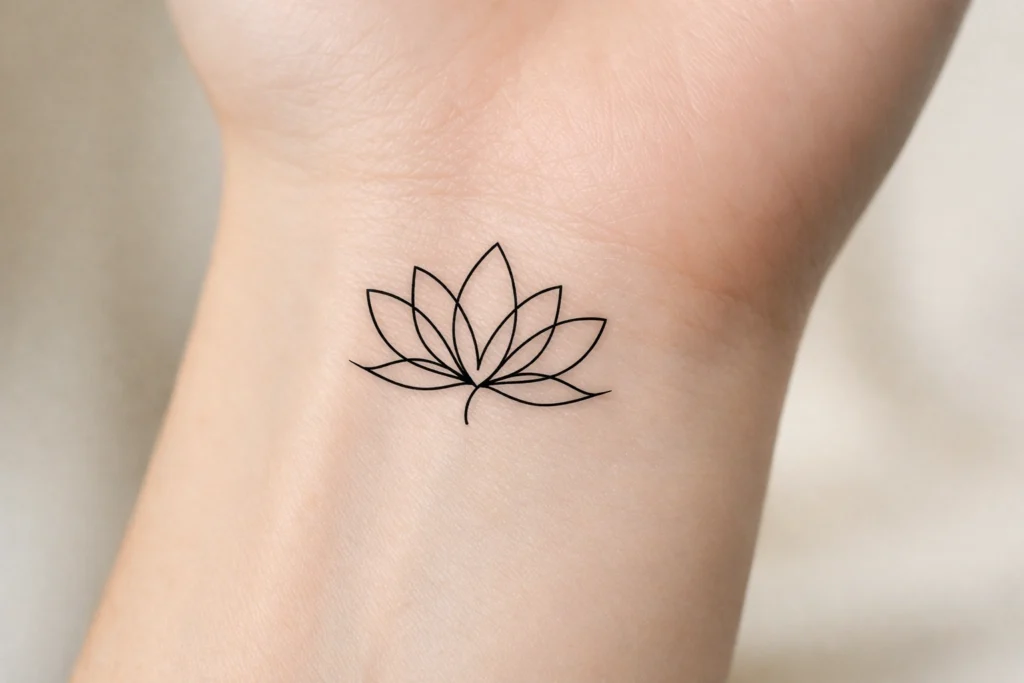
The minimalist line art lotus is one of the most sought-after styles in contemporary tattooing. Using a single continuous line or a few clean, deliberate strokes, the tattoo artist captures the essential form of the lotus without any shading or filler. The result is elegant, modern, and deeply personal.
This style works beautifully on the wrist, collarbone, ankle, or behind the ear. It suits people who prefer understated art that still carries powerful meaning. Because the design is small and uncomplicated, it is an excellent choice for first-time tattoo recipients who want something meaningful without committing to a large piece. The simplicity of the lines does not reduce the symbol’s significance. If anything, it amplifies it, allowing the lotus shape to speak for itself without distraction.
Lotus Mandala Tattoo
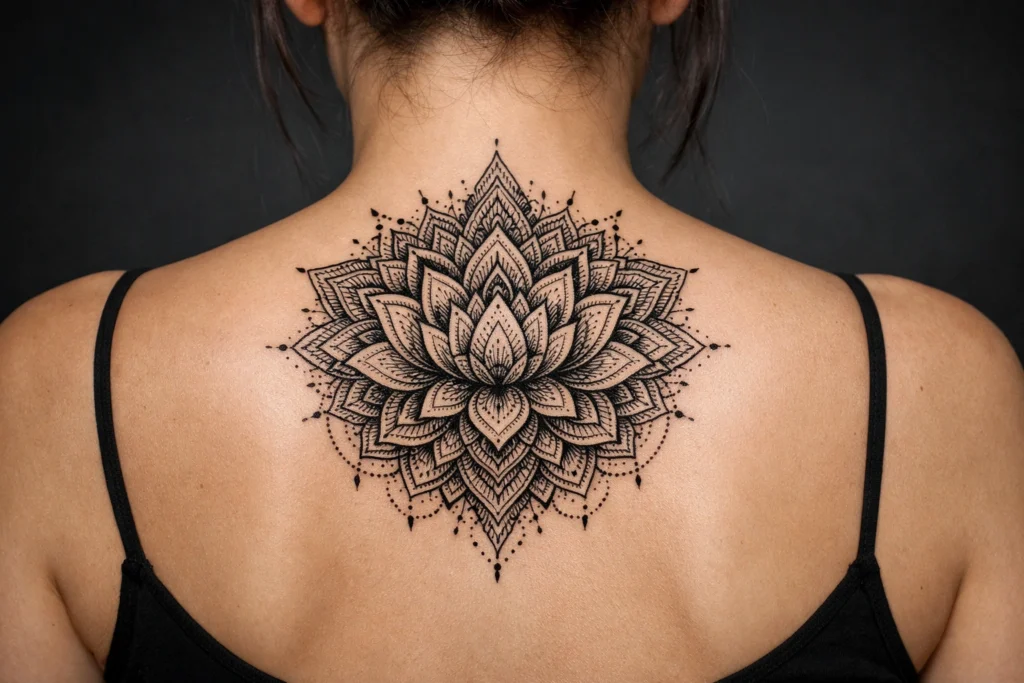
The lotus mandala tattoo merges two of the most spiritually significant symbols in Eastern philosophy. A mandala, with its perfectly symmetrical circular design, represents the universe, wholeness, and the infinite cycle of existence. When combined with the lotus, the resulting tattoo becomes a meditation in visual form.
Artists typically place the lotus at the center of the mandala, with intricate geometric patterns radiating outward from its petals. The design can be rendered in fine black ink for a dramatic, high-contrast look, or filled with soft watercolor tones for a dreamlike effect. This tattoo works exceptionally well on the back, sternum, thigh, or shoulder blade, where there is enough surface area to honor the detail the design demands.
Watercolor Lotus Tattoo
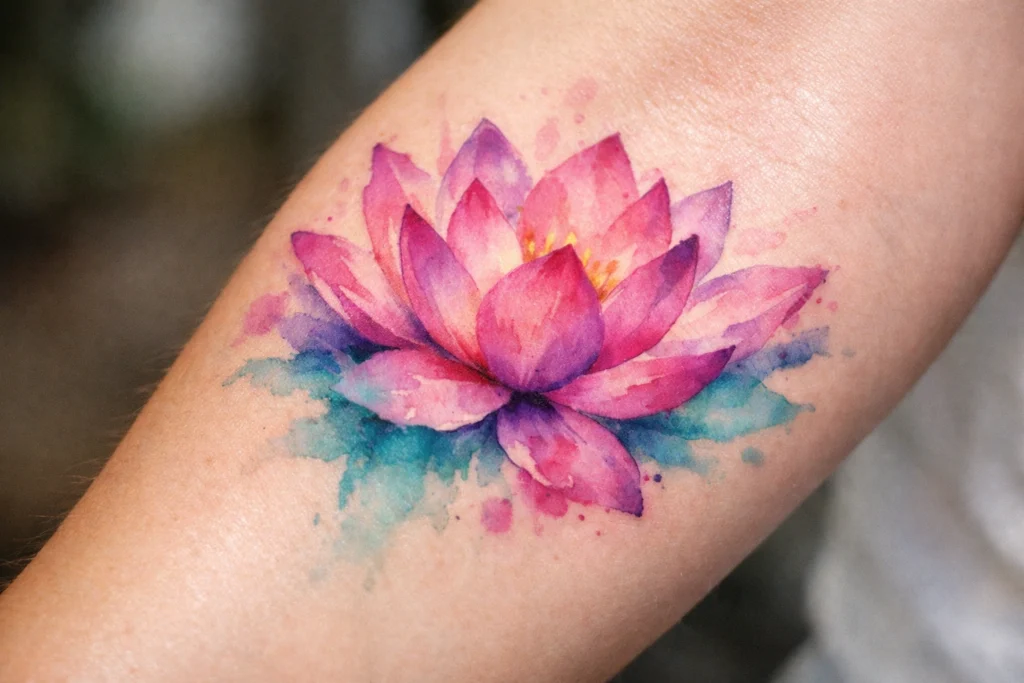
The watercolor lotus tattoo brings the flower to life with vibrant, flowing pigments that mimic the appearance of paint bleeding across paper. Unlike traditional tattoos with defined black outlines, the watercolor style allows colors to blend and bleed into one another, creating an impression of spontaneous artistic beauty.
Popular color combinations include pink and purple, blue and teal, or a warm spectrum of orange and gold. This style appeals to people who want their tattoo to feel more like wearable fine art than a conventional design. Placement on the forearm, upper arm, or ribcage gives the colors room to breathe and spread in a way that maximizes their visual impact. It is worth finding an artist who specializes in this technique, as watercolor work demands a level of control and skill that not every tattooist possesses.
Geometric Lotus Tattoo
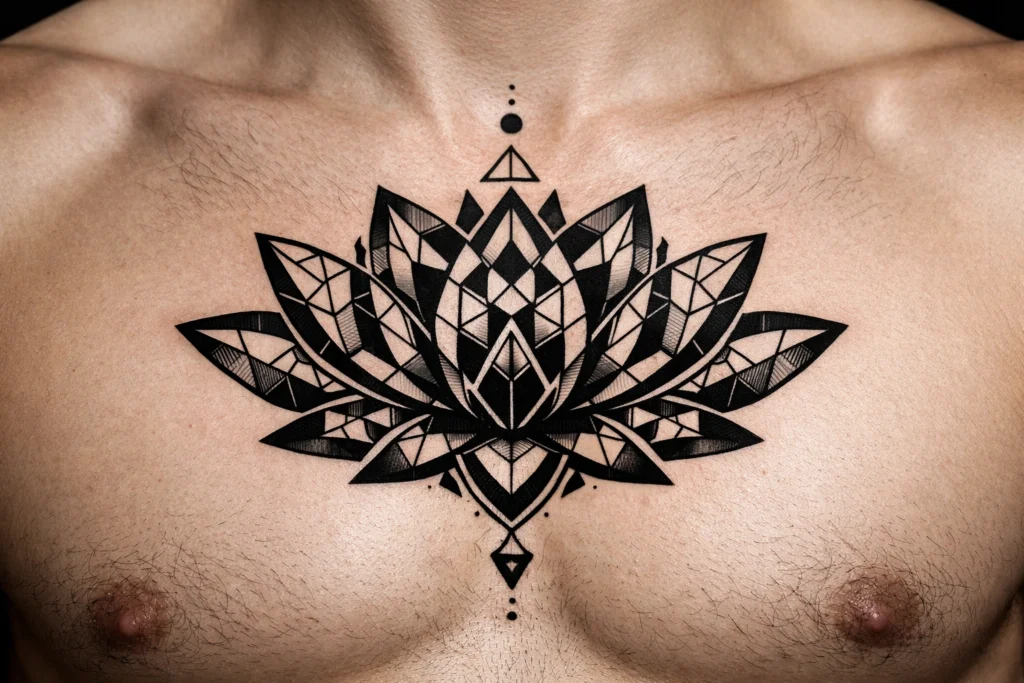
The geometric lotus tattoo replaces the soft curves of natural petals with clean lines, sharp angles, and precise shapes. Triangles, hexagons, and diamond forms are woven together to create a stylized version of the flower that feels modern and architectural.
This design appeals strongly to those who appreciate structure and precision in art. The symmetry of the lotus lends itself naturally to geometric interpretation, as the flower’s petals are already evenly spaced in real life. Adding sacred geometry elements deepens the spiritual significance of the piece. The geometric lotus looks striking in solid black ink, though adding fine color accents to specific shapes can elevate the design further. This style is a strong choice for forearm or chest placement.
Blackwork Lotus Tattoo
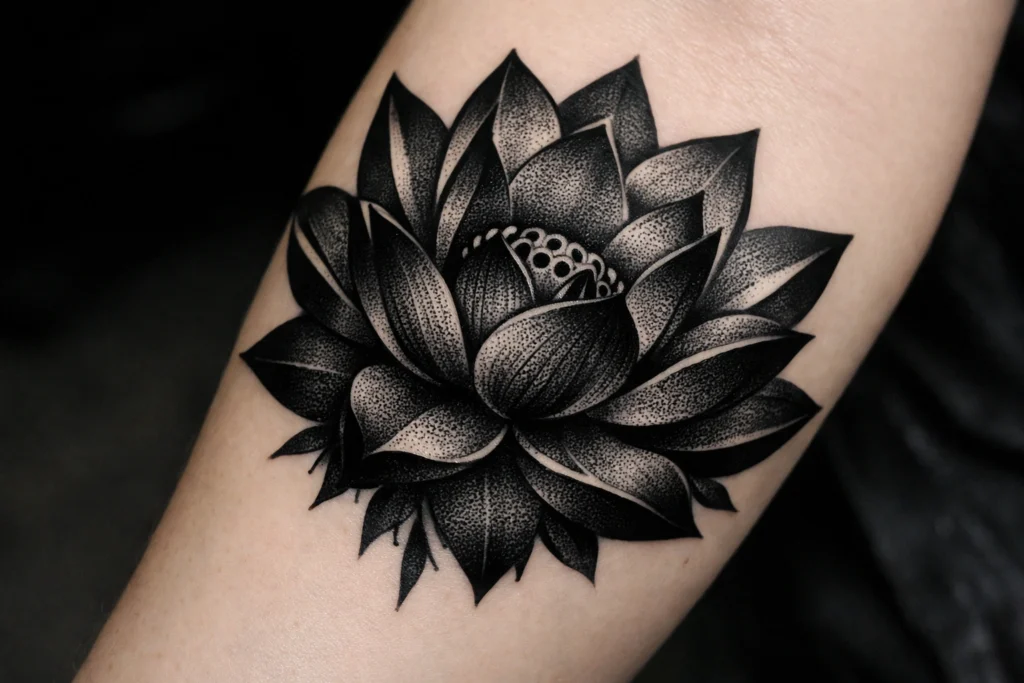
Blackwork tattooing relies entirely on bold, solid black ink to create impact. No color, no subtle gradients, just pure contrast between ink and skin. When applied to the lotus, this technique produces a tattoo that is visually commanding and timeless.
The blackwork lotus can range from a simple solid silhouette to a highly detailed design with intricate patterning inside each petal. Dotwork, a technique where thousands of tiny dots create the illusion of shading and depth, is often used within the blackwork style to add dimension without introducing color. This style is ideal for people who want a bold statement piece that will retain its sharpness and legibility for decades. Blackwork ages particularly well, maintaining contrast and clarity long after softer color tattoos have begun to fade.
Unalome Lotus Tattoo
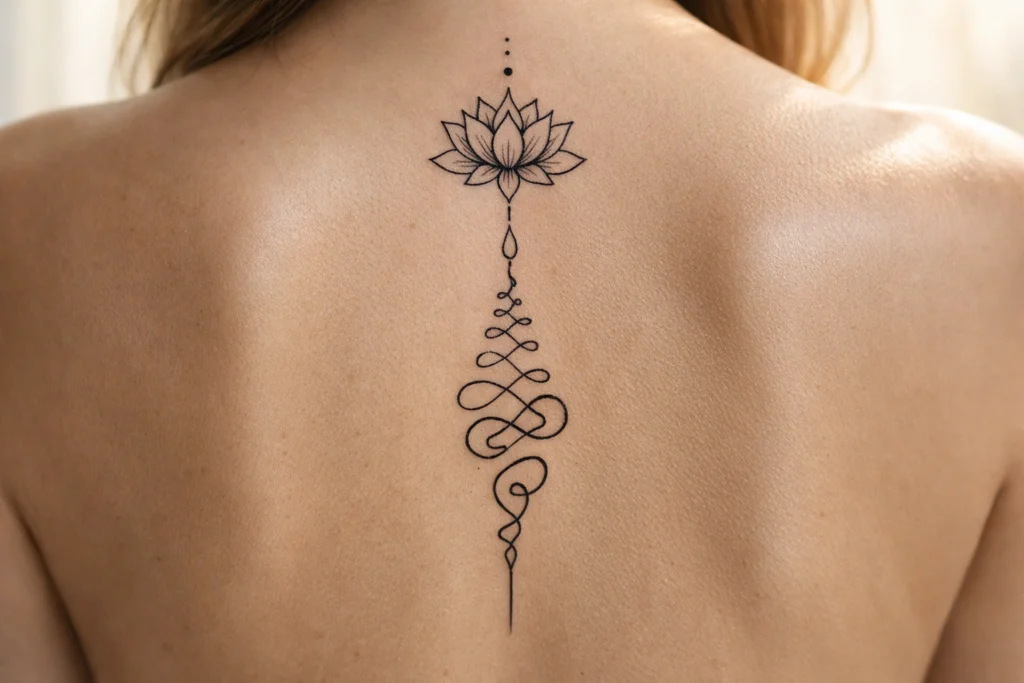
The unalome is a Buddhist symbol representing the path to enlightenment. It begins as a spiral, symbolizing the confusion and struggle of early life, then moves into a winding path that gradually straightens, representing the growth of wisdom and clarity. When this symbol is combined with the lotus, the result is a deeply spiritual tattoo that tells a complete story of the human journey.
The unalome typically forms the stem of the lotus, rising upward before the flower blooms at the top. This placement is intentional. The flower represents the destination, the moment of awakening and clarity that follows a long and winding road. This design is particularly popular among those with a connection to Buddhist philosophy or anyone who has navigated significant personal transformation and wants a permanent reminder of how far they have come.
Lotus with Om Symbol Tattoo
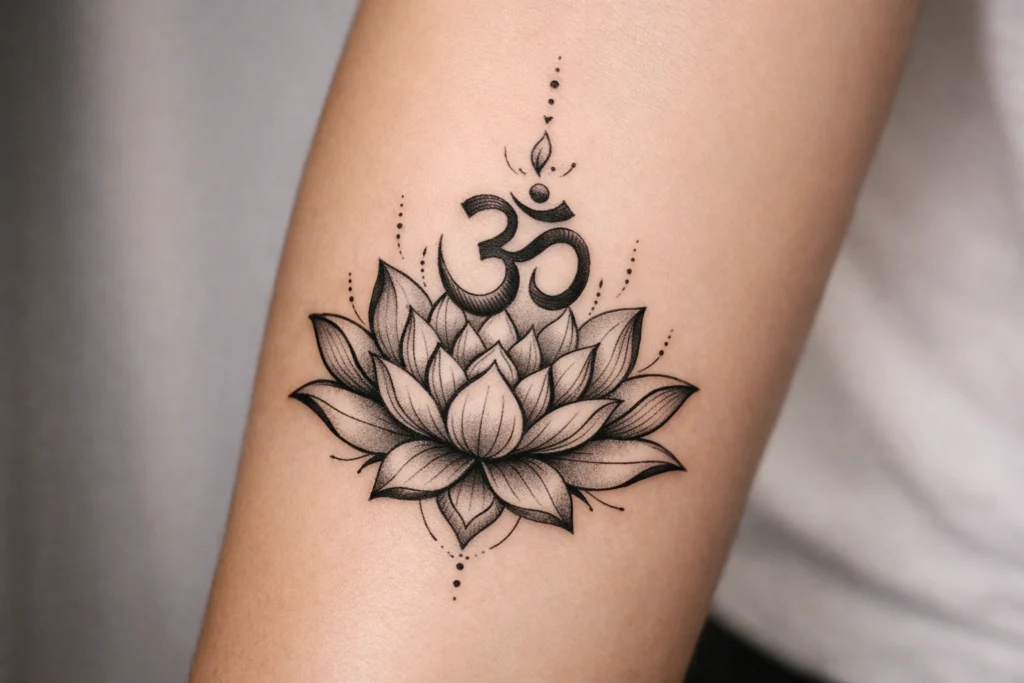
The Om symbol, known in Sanskrit as Aum, is one of the most sacred sounds and symbols in Hinduism, Buddhism, and Jainism. It represents the vibration of the universe, the primordial sound from which all existence emerged. Pairing it with the lotus creates a tattoo that is rich in spiritual meaning and visually balanced.
In most interpretations of this design, the Om symbol sits above or within the lotus flower, sometimes surrounded by petals or incorporated into the mandala pattern that frames the bloom. This combination is a popular choice among practitioners of yoga, meditation, or anyone who feels a deep connection to Eastern spirituality. Placement on the forearm, chest, or upper back is most common. The design can be kept minimal and clean or expanded into a larger, more elaborate composition depending on personal preference.
Lotus and Koi Fish Tattoo

In Japanese and Chinese art, the koi fish symbolizes perseverance, determination, and the courage to push against the current. When paired with the lotus, the two symbols reinforce each other beautifully. Both the koi and the lotus emerge from murky water. Both represent the journey from difficult beginnings to triumphant beauty.
This design is typically larger in scale, often covering the forearm, upper arm, or back. The koi fish can be depicted swimming around or beneath the lotus, with water ripples connecting the two elements into a unified composition. The design can be rendered in vivid Japanese traditional style with bold lines and rich color, or interpreted in a more fluid, painterly manner. For someone whose personal story involves pushing through adversity, this combination carries extraordinary resonance.
Lotus and Crescent Moon Tattoo
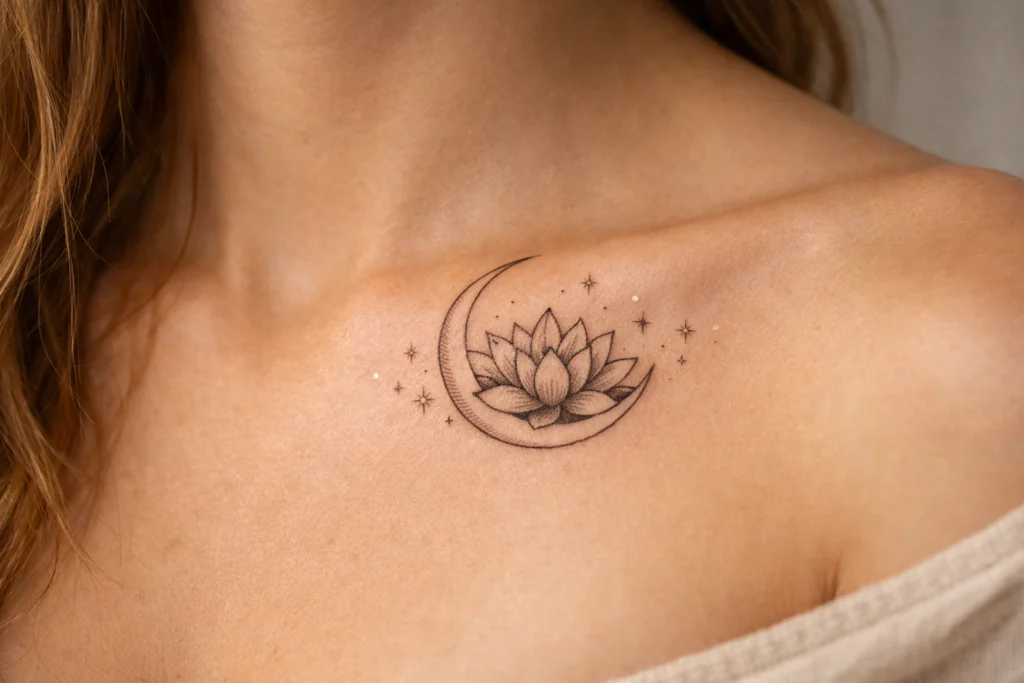
The crescent moon adds a layer of cosmic symbolism to the lotus tattoo. The moon governs cycles, intuition, and the passage of time, while the lotus represents renewal and spiritual growth. Together, they create a design that speaks to feminine energy, inner wisdom, and the constant rhythm of change that defines human experience.
This combination often features the lotus cradled within or beneath the crescent moon, with fine line detailing connecting the two elements. Delicate stars or dot work can be added around the composition to heighten the celestial atmosphere. This design is especially popular among women and looks stunning on the collarbone, wrist, ribcage, or ankle. The pairing of these two symbols creates a tattoo that feels both intimate and expansive.
Traditional Japanese Lotus Tattoo

Drawing from the rich visual language of Irezumi, traditional Japanese tattooing, the Japanese lotus tattoo features bold black outlines, flat areas of vivid color, and a graphic quality that makes it instantly recognizable. The petals are rendered with confident, sweeping lines, and the colors, typically deep pink, red, or white, are filled in with deliberate, saturated brushwork.
Japanese lotus tattoos are often incorporated into larger sleeve or back pieces, combined with elements like waves, koi fish, dragons, or clouds. They carry the visual weight and enduring craftsmanship that the Japanese tattoo tradition is celebrated for. This style is built to last and continues to look sharp over decades, making it an investment in quality body art that only improves with age.
Fine Line Lotus Tattoo
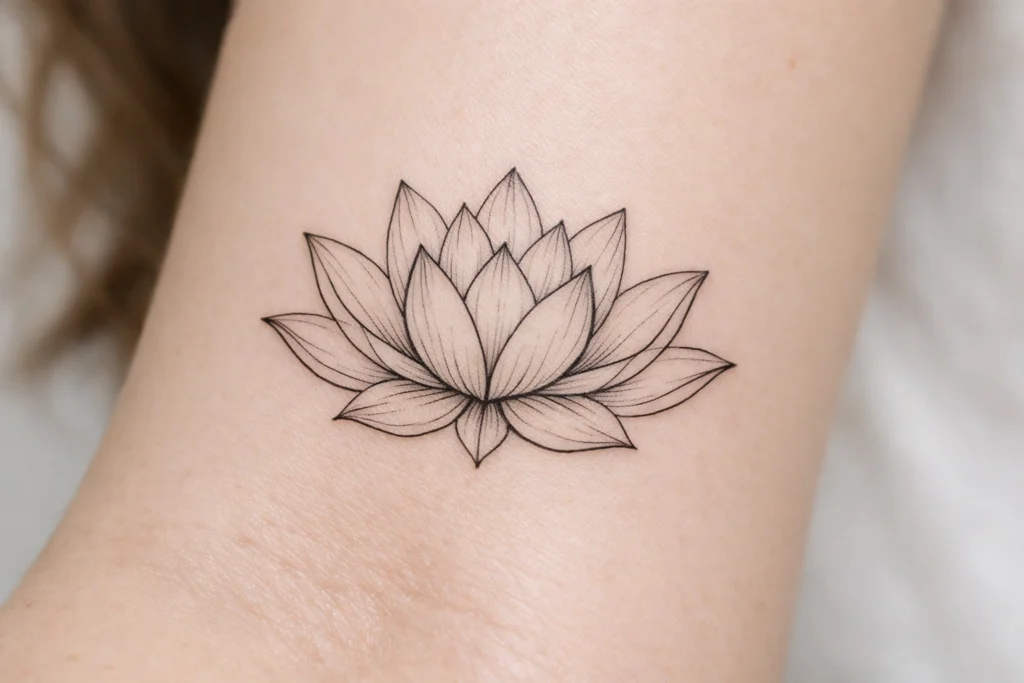
The fine line lotus tattoo is executed with the thinnest possible needle, creating delicate, hair-like lines that give the design an almost illustrative quality. Every petal is rendered with precision and care, resulting in a tattoo that looks as though it was drawn with a fine-tipped pen directly on the skin.
This style has surged in popularity among younger tattoo enthusiasts who favor soft, refined aesthetics over bold, traditional designs. Fine line work suits small to medium placements on the inner arm, finger, neck, or ankle. It is worth noting that fine line tattoos require an experienced artist, as any imprecision in the linework is immediately visible at this scale. When done well, the result is breathtaking in its delicacy and sophistication.
Pink Lotus Tattoo
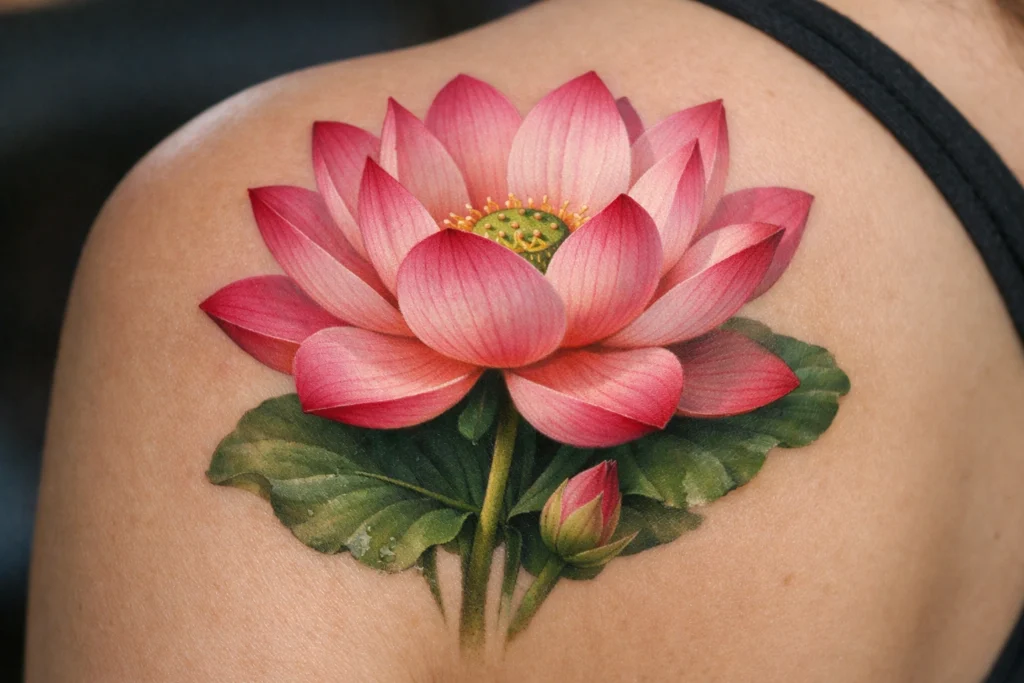
The pink lotus holds a special place in Buddhist tradition, where it is closely associated with the historical Buddha himself. It represents the highest spiritual attainment and the compassion that comes with true enlightenment. In tattoo art, the pink lotus is celebrated for its warmth, femininity, and graceful beauty.
A pink lotus tattoo can be rendered in realism, with subtle gradients from deep rose at the base of each petal to soft blush at the tips, or in a more stylized manner with flat, graphic color fills. Adding green leaves and stem elements grounds the design and makes the pink tones pop even more dramatically. This is a versatile color choice that works across nearly every placement and style, from small wrist tattoos to large back pieces.
Blue Lotus Tattoo
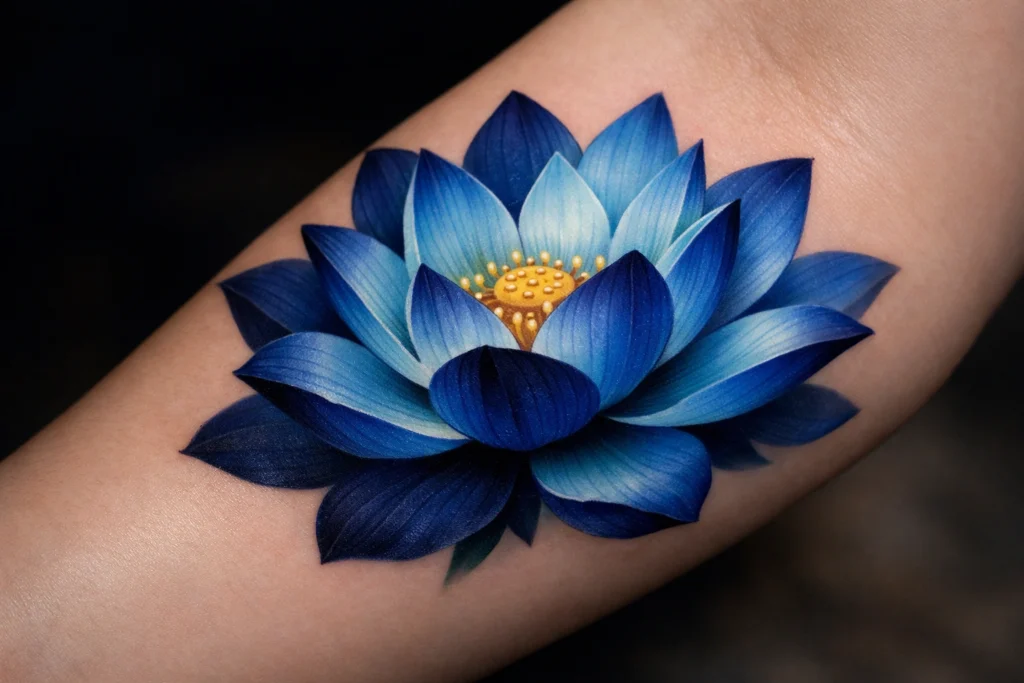
The blue lotus is one of the rarest and most symbolically potent lotus varieties. In ancient Egypt, it was associated with the sun god Ra and the concept of rebirth. In Buddhist iconography, it represents wisdom, knowledge, and the victory of spirit over the senses.
A blue lotus tattoo can be rendered in shades ranging from soft sky blue to deep navy, sometimes blending teal and indigo tones for a richer effect. The color depth that skilled artists can achieve with blue ink makes for a tattoo that appears almost luminous on the skin. This design suits people who are drawn to the intellectual and spiritual dimensions of the lotus symbol and want a color that feels both rare and deeply evocative.
Lotus with Butterfly Tattoo
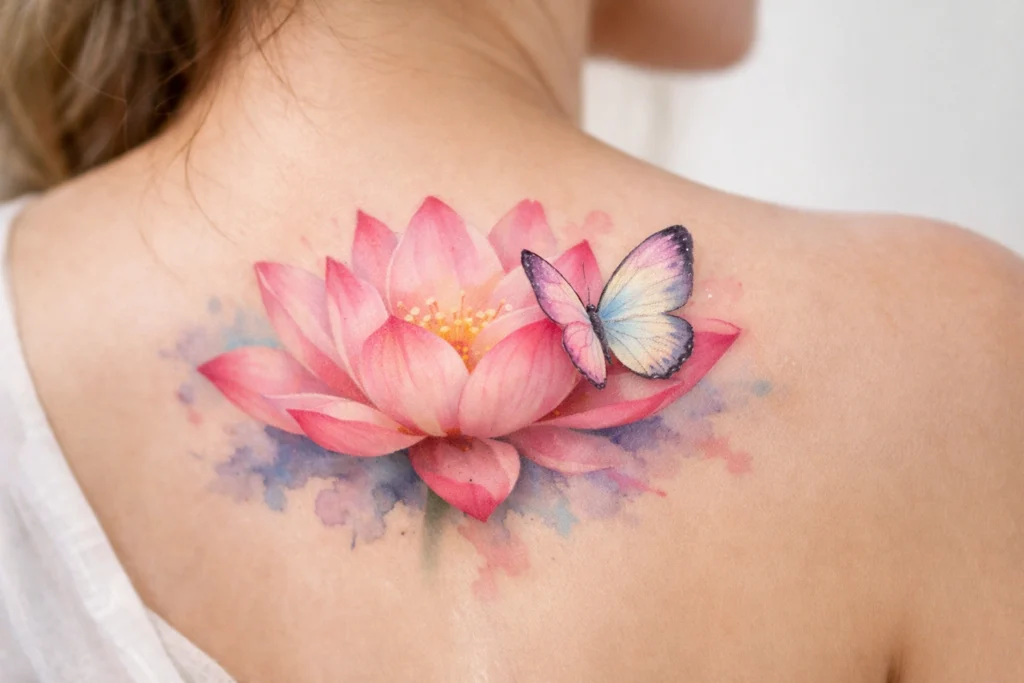
The butterfly, like the lotus, is a universal symbol of transformation. Both undergo a profound journey from one state of being to another, and both emerge in a form more beautiful than where they began. Combining them in a single tattoo creates a design layered with meaning about change, growth, and the courage to become something entirely new.
The butterfly can be depicted resting on a lotus petal, emerging from the flower, or hovering nearby with wings fully spread. The interplay between the delicate structure of the lotus and the symmetrical wings of the butterfly creates an aesthetically balanced composition. This design is especially popular in soft watercolor tones or gentle illustrative styles and suits placement on the forearm, shoulder, or upper back.
Lotus Back Tattoo
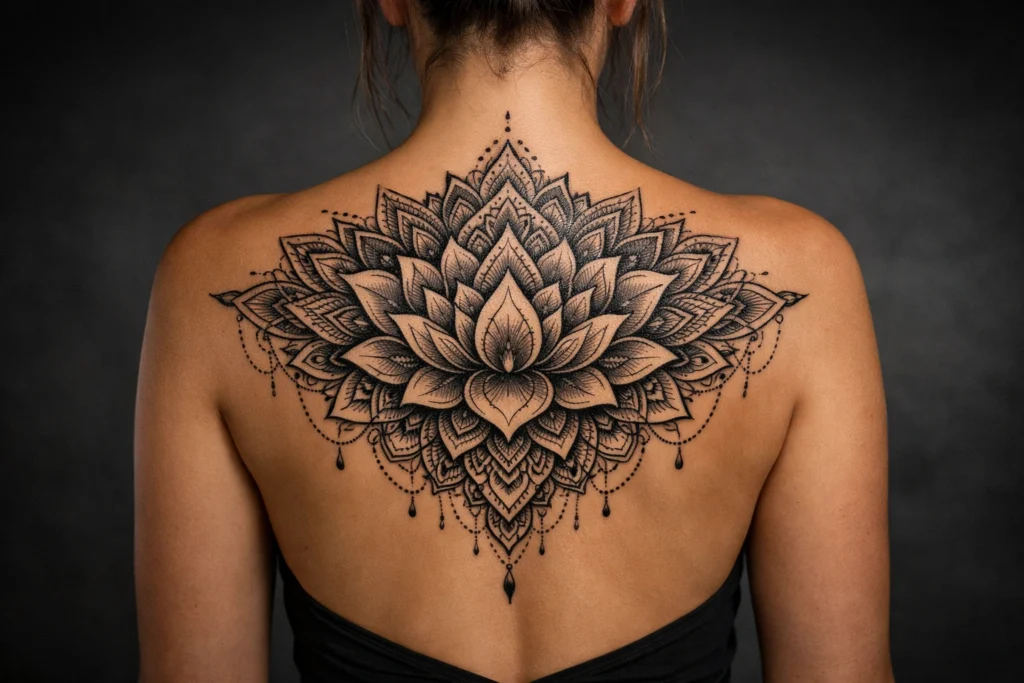
The back offers the largest canvas on the human body, and a lotus back tattoo takes full advantage of that space. Whether centered between the shoulder blades or spanning the entire back as part of a larger composition, the lotus back tattoo is a statement piece that commands attention.
Large-scale lotus designs on the back can incorporate extraordinary detail, including intricate mandala patterns, sweeping watercolor backgrounds, or dense dotwork shading. The spine can be used as a natural vertical axis, with the lotus blooming at the center and supporting elements radiating outward symmetrically. This is a design for those who are fully committed to their vision and willing to invest the time and care a large piece requires. The results, when executed by a skilled artist, are genuinely spectacular.
Lotus Sleeve Tattoo
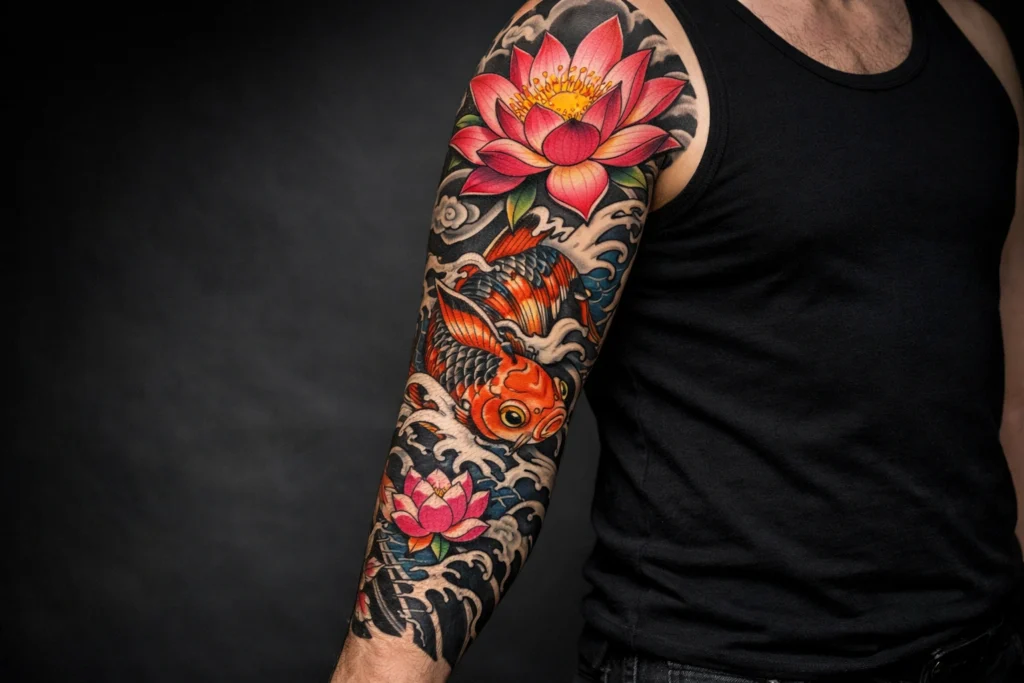
A lotus sleeve tattoo weaves the flower into a larger narrative that covers the arm from shoulder to wrist. The lotus can serve as the focal point of the sleeve, surrounded by complementary elements such as flowing water, koi fish, geometric patterns, clouds, or botanical details.
Sleeves can be designed in a consistent style throughout, such as full Japanese traditional or entirely blackwork, or they can incorporate multiple influences for a more eclectic, personal result. The sleeve format allows the lotus to be explored from multiple angles and in various stages of bloom, creating a story that unfolds as the eye travels down the arm. Planning a sleeve requires close collaboration with an experienced artist and multiple sessions to complete, but the finished work becomes one of the most striking forms of personal expression available in tattoo art.
Conclusion
The lotus flower tattoo endures as one of the most meaningful and visually captivating choices in body art because it speaks to something universal in the human experience. The idea that beauty can arise from difficult conditions, that growth is possible even in murky waters, and that the spirit can bloom regardless of circumstance resonates across cultures, generations, and deeply personal histories.
Whether you choose a delicate minimalist line on your wrist or a sweeping mandala across your back, the lotus you carry will be a reflection of your own journey. Take time to research artists whose style aligns with your vision, discuss the meaning you want your tattoo to carry, and choose a placement that feels right for your body and your life. Consider the color carefully, as each shade carries its own symbolic weight. Think about how the design will grow with you over time, because the best tattoos are the ones that still feel true years after the ink has settled.
A well-chosen lotus flower tattoo is not just art. It is a commitment to what you believe you are capable of becoming.
You may also like this post: 17 Stunning Gothic Floral Tattoo Designs to Inspire You
Frequently Asked Questions
What does a lotus flower tattoo symbolize?
A lotus flower tattoo most commonly symbolizes purity, spiritual growth, resilience, and transformation. Because the lotus grows through muddy water to bloom in beauty, it represents the ability to rise above adversity and emerge stronger. Different colors and styles can shift the meaning, but the core idea of personal and spiritual growth remains central to virtually every lotus tattoo design.
What is the best placement for a lotus flower tattoo?
The best placement depends on the size and style of your design. Small, minimalist lotus tattoos work well on the wrist, ankle, finger, or behind the ear. Medium designs suit the forearm, shoulder, or ribcage. Large or highly detailed lotus tattoos are best placed on the back, thigh, chest, or as part of a sleeve. Consider how visible you want the tattoo to be in professional and everyday settings when making your decision.
Does the color of a lotus tattoo change its meaning?
Yes, color carries significant symbolic weight in lotus tattoo design. Pink is associated with the Buddha and spiritual compassion. White represents purity and innocence. Blue symbolizes wisdom and knowledge. Purple reflects spirituality and enlightenment. Red conveys passion and love. Understanding these associations can help you choose a color that aligns with the personal meaning you want your tattoo to carry.
Is a lotus flower tattoo culturally appropriate?
The lotus holds deep significance in multiple cultures, including Buddhist, Hindu, and ancient Egyptian traditions. Approaching the symbol with respect and genuine understanding of its meaning is important. Many people from diverse backgrounds wear lotus tattoos with appreciation for its universal themes of growth and renewal. Taking the time to learn about the symbol’s origins before getting the tattoo demonstrates cultural awareness and personal integrity.
How much does a lotus flower tattoo typically cost?
The cost varies widely depending on the size, complexity, style, and the experience level of the artist. A small, simple lotus tattoo might range from 80 to 150 dollars. Medium designs with moderate detail can cost between 200 and 500 dollars. Large, intricate pieces such as back tattoos or sleeves can run from 500 dollars into the thousands. Investing in a skilled, reputable artist is always worthwhile when getting a tattoo you intend to carry for a lifetime.