
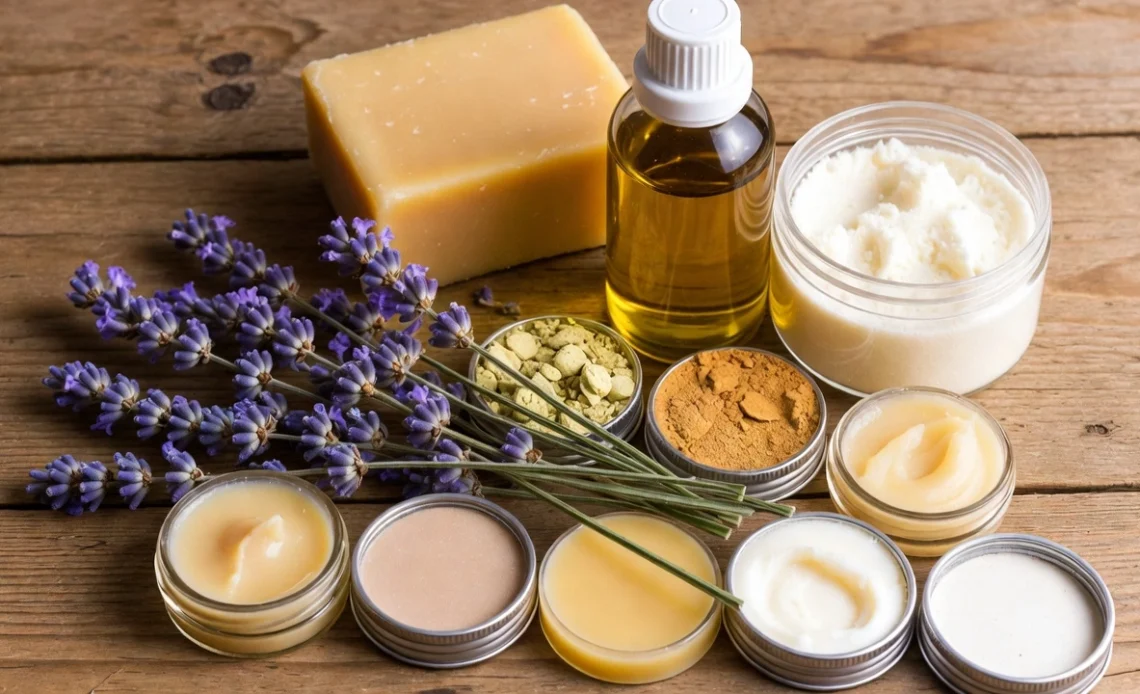
Getting a new tattoo is an experience that combines personal expression with a real commitment to skin care. The hours spent in the chair are only the beginning. What happens in the days and weeks that follow determines how well your tattoo heals, how vibrant the ink stays, and how comfortable your skin feels throughout the recovery process. While your tattoo artist will always provide aftercare instructions, many people are turning to natural, homemade solutions to support the healing process. A good diy tattoo balm recipe gives you full control over what goes onto your freshly tattooed skin, free from synthetic preservatives, petroleum derivatives, or harsh fragrances.
This guide covers 15 natural formulas and practical aftercare tips to help your tattoo heal beautifully while keeping your skin nourished and protected at every stage.
Understanding Why Tattoo Balm Matters
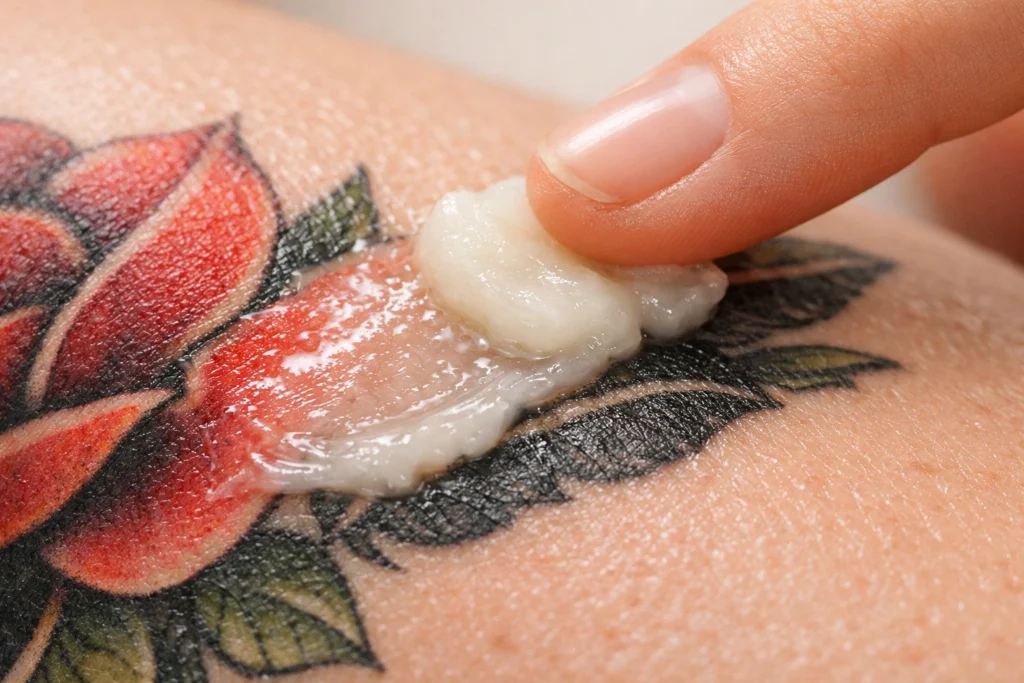
When a tattoo needle punctures the skin, it creates thousands of tiny wounds. The skin responds by initiating a healing cascade that involves inflammation, scabbing, peeling, and finally regeneration. During this process, the skin becomes vulnerable to dryness, infection, and irritation. Applying the wrong product can lift ink, cause allergic reactions, or slow the healing timeline significantly.
A well-formulated tattoo balm creates a semi-occlusive barrier over the skin, meaning it allows the skin to breathe while retaining moisture and protecting the area from environmental exposure. Unlike a lotion, which contains water and therefore requires synthetic preservatives to stay shelf stable, a balm made from oils, butters, and waxes is inherently resistant to microbial growth and stays effective for months without additives.
Core Ingredients Found in Every Good Tattoo Balm
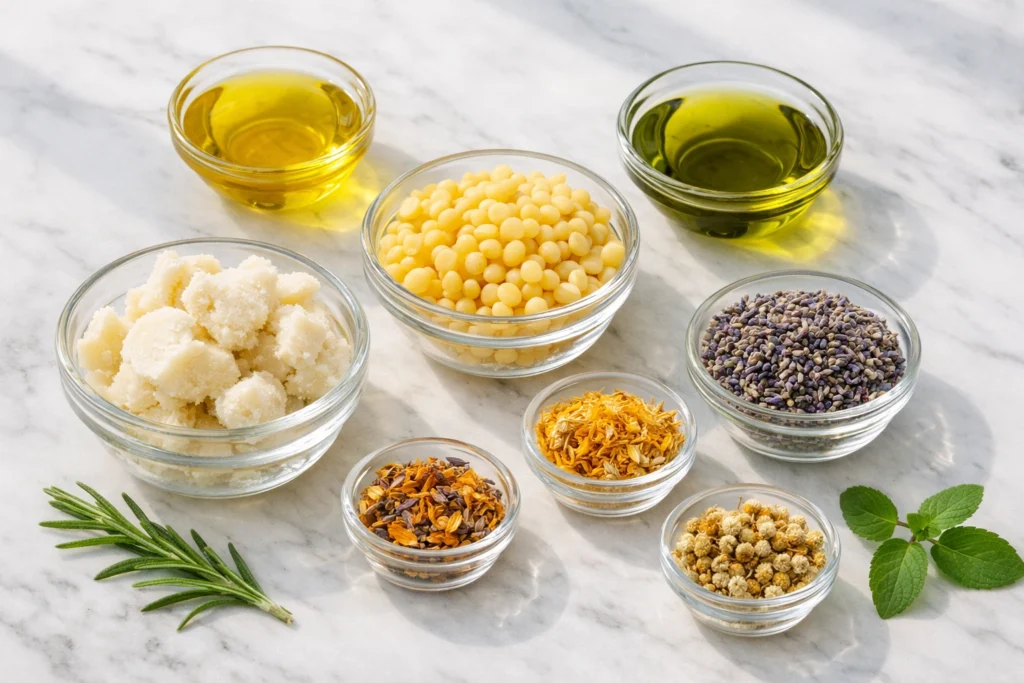
Before exploring specific formulas, it helps to understand the building blocks that make a diy tattoo balm recipe effective. Most natural balms share a foundation of three ingredient categories.
The first category is carrier oils. These are plant-derived oils that form the moisturizing base of any balm. Jojoba oil is particularly prized because its molecular structure closely resembles the skin’s own sebum, making it highly absorbable and unlikely to clog pores. Coconut oil brings well-documented antimicrobial properties that help keep the healing area clean. Sweet almond oil, sunflower oil, grapeseed oil, and rosehip oil each offer unique fatty acid profiles that nourish and protect skin at different stages of healing.
The second category is natural butters such as shea butter and cocoa butter. These add richness, long-lasting moisture, and a creamy texture that makes application smooth and comfortable.
The third category is waxes, most commonly beeswax. Beeswax sets the texture of the balm, holding it solid at room temperature while melting gently upon skin contact. It creates the protective barrier that keeps moisture locked in. Candelilla wax serves as an excellent vegan alternative.
Classic Calendula and Jojoba Balm
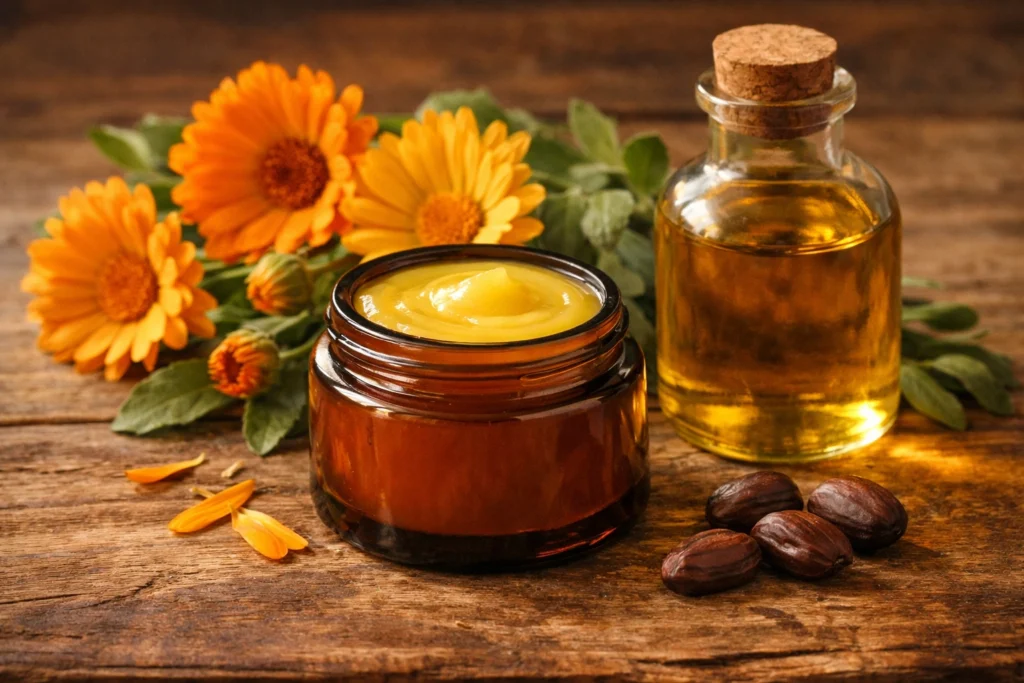
Calendula is arguably the most celebrated skin-healing herb in natural medicine. Its anti-inflammatory, antifungal, and tissue-regenerating properties make it an ideal companion for freshly tattooed skin. When infused into jojoba oil, it produces a base that is both deeply healing and exceptionally gentle.
To prepare this formula, combine four tablespoons of calendula-infused jojoba oil with one tablespoon of unrefined shea butter and one tablespoon of beeswax pellets. Melt these together in a double boiler over medium-low heat, stirring until fully combined. Remove from heat and allow to cool for two minutes before adding ten drops of lavender essential oil. Pour into a clean glass jar and allow to solidify fully before sealing. This formula suits all skin types and is an excellent choice for a first-time balm maker.
Coconut Oil and Beeswax Healing Salve
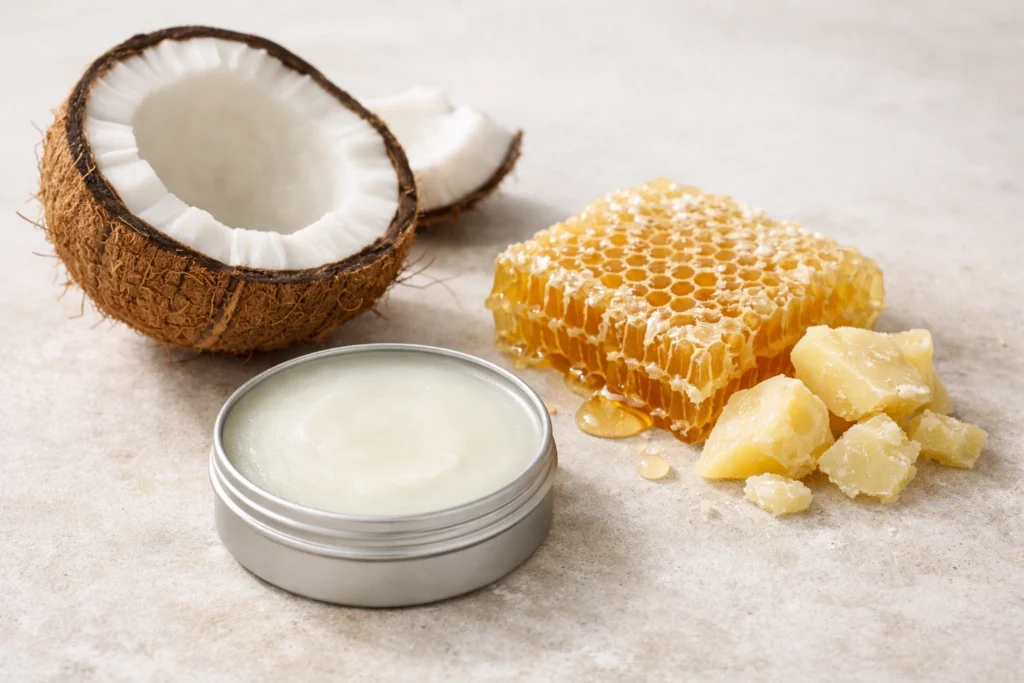
For those who prefer a simpler approach, a two-ingredient base of coconut oil and beeswax produces a highly effective healing salve. Coconut oil’s lauric acid content gives it natural antimicrobial activity, making it a practical first-line moisturizer during the early days of tattoo healing when the risk of infection is highest.
Melt together three tablespoons of unrefined coconut oil and one tablespoon of beeswax in a double boiler. Once melted and smooth, add eight drops of frankincense essential oil, which supports cellular regeneration, and six drops of tea tree oil for additional antimicrobial action. Pour into small tins and allow to cool. Apply a thin layer two to three times daily during the first week of healing.
Shea Butter and Vitamin E Nourishing Balm
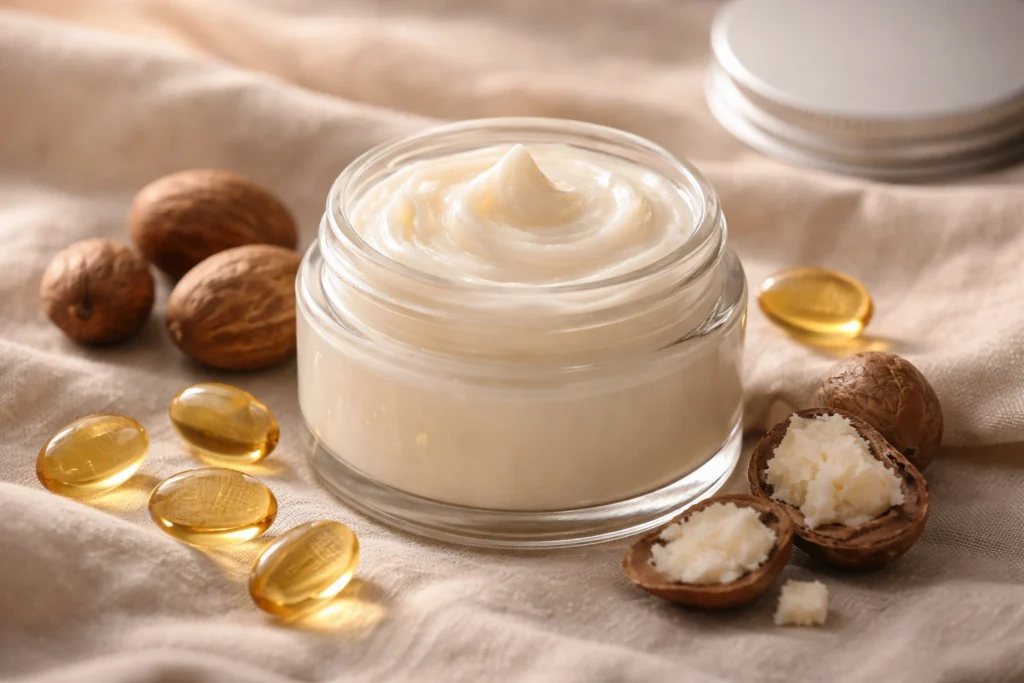
Vitamin E is a fat-soluble antioxidant that protects skin cells from oxidative damage and supports the skin’s natural repair process. When combined with shea butter, which is rich in triterpenes that reduce inflammation, the result is a deeply nourishing balm that helps minimize scarring and supports ink retention.
Combine three tablespoons of shea butter with one tablespoon of beeswax and two tablespoons of sweet almond oil. Melt in a double boiler, cool slightly, then stir in the contents of four vitamin E capsules and ten drops of chamomile essential oil. Pour into a jar and seal once cooled. This formula is particularly suited to skin that tends toward dryness or that has a history of slow healing.
Herbal Infusion Balm With Lavender and Chamomile
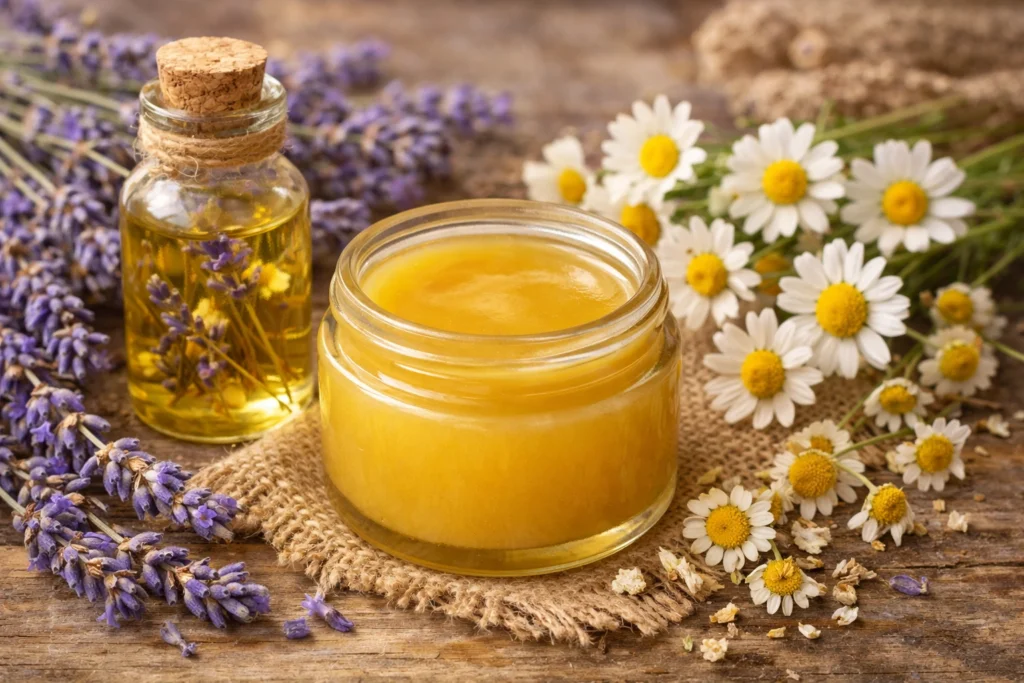
Lavender and chamomile are two of the most broadly applicable herbs in natural skin care. Lavender essential oil is antiseptic and analgesic, which means it can help reduce both the risk of infection and the discomfort of a fresh tattoo. Chamomile, particularly in its infused oil or essential oil form, is one of the most potent anti-inflammatory botanicals available.
To make this herbal balm, begin by infusing one cup of sunflower oil with dried lavender flowers and dried chamomile for two to four weeks, or warm them gently in a slow cooker on low for six hours as a faster alternative. Strain the infused oil and use three tablespoons of it as your base. Add one tablespoon of beeswax and two tablespoons of shea butter, melt together, cool slightly, then add ten drops of lavender essential oil and six drops of Roman chamomile essential oil. Pour and seal.
Vegan Tattoo Balm With Candelilla Wax
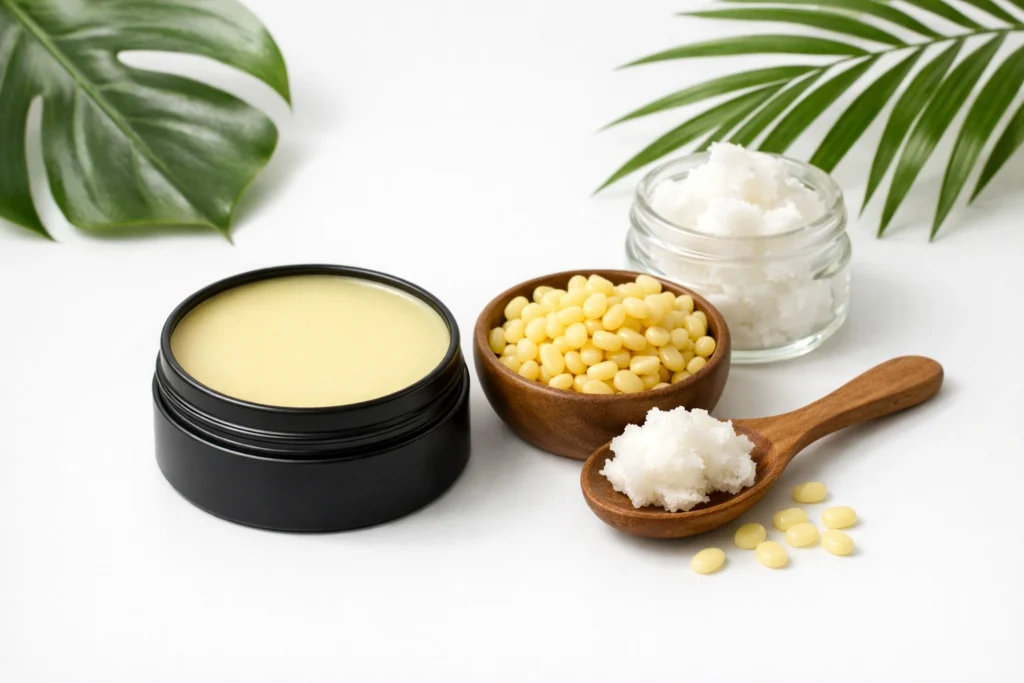
Many tattoo enthusiasts prefer entirely plant-based products, and a vegan diy tattoo balm recipe is simple to create by substituting candelilla wax for beeswax. Candelilla wax is derived from a shrub native to northern Mexico and works similarly to beeswax in creating a firm, protective barrier. Because candelilla wax is harder than beeswax, it should be used at roughly half the quantity to achieve the same texture.
Combine two tablespoons of coconut oil, two tablespoons of jojoba oil, one tablespoon of shea butter, and one and a half teaspoons of candelilla wax. Melt in a double boiler, cool slightly, then add ten drops of lavender essential oil and six drops of peppermint essential oil for a cooling, soothing finish. Pour into tins and allow to set fully before use.
St. John’s Wort and Rosehip Balm for Deep Healing
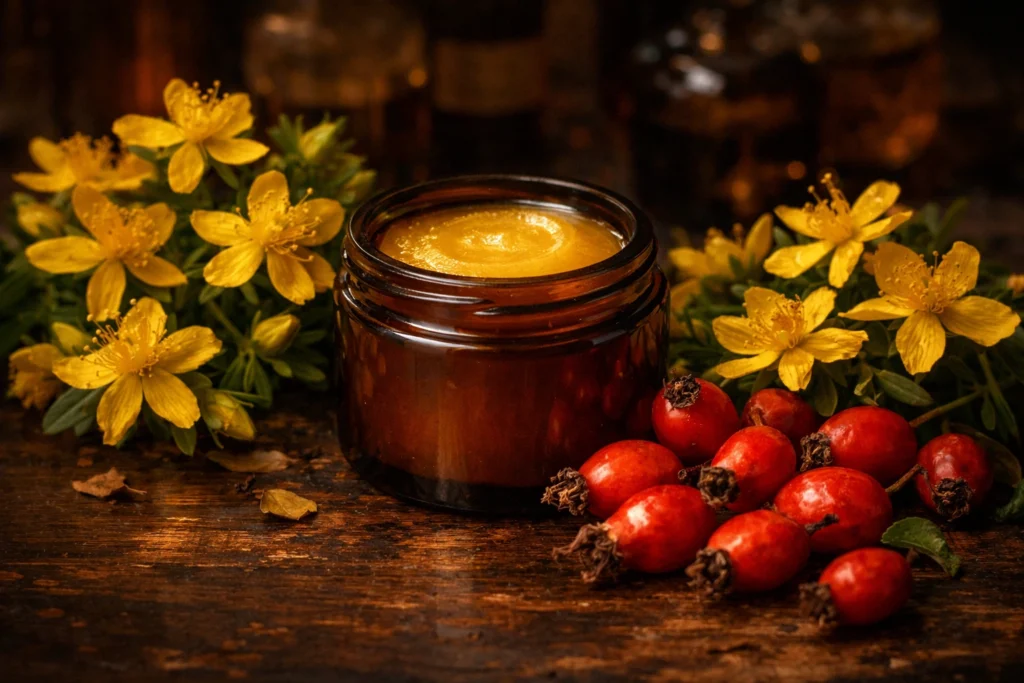
St. John’s Wort has been used for centuries as a wound-healing herb. Its active compounds, particularly hypericin and hyperforin, demonstrate notable anti-inflammatory and antibacterial activity. Rosehip oil is one of the most nutrient-dense carrier oils available, packed with vitamin C, vitamin A, and essential fatty acids that support collagen synthesis and skin regeneration.
Infuse dried St. John’s Wort flowers in sunflower oil using the slow infusion method described above. Strain and use two tablespoons of the infused oil alongside two tablespoons of rosehip seed oil. Add one tablespoon of beeswax and one tablespoon of cocoa butter. Melt, combine, cool slightly, and add eight drops of helichrysum essential oil, which is among the most powerful skin-regenerating essential oils. This formula is ideal for use during the later stages of healing when the skin is peeling and rebuilding itself.
Whipped Cocoa Butter and Almond Oil Balm
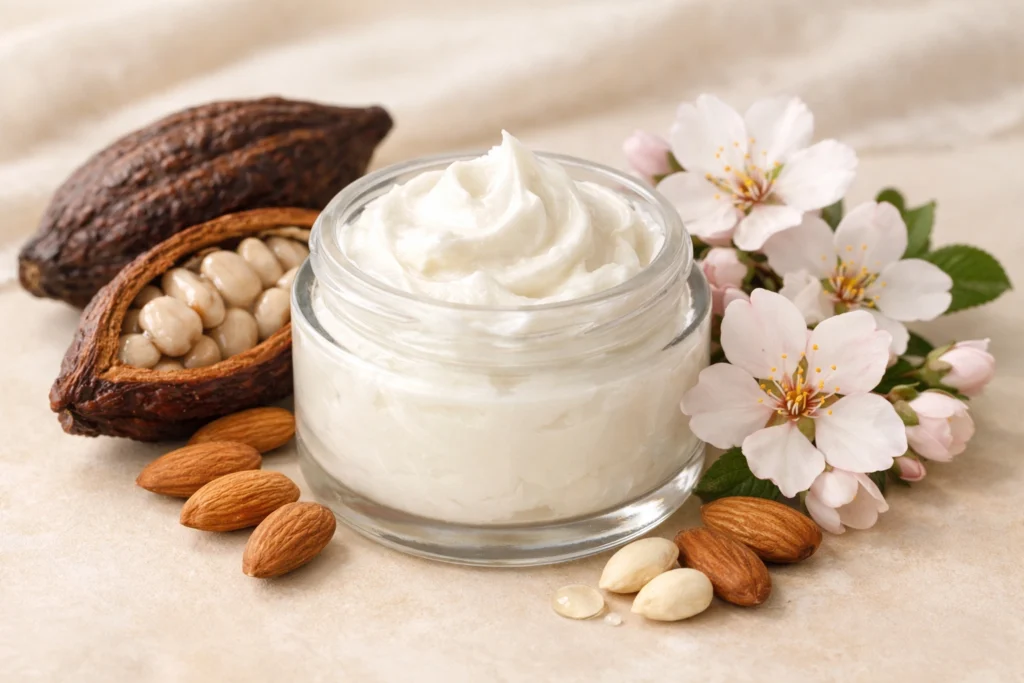
A whipped tattoo balm has a lighter, airier texture that absorbs into the skin more readily than a dense solid balm. This makes it particularly pleasant for use once the initial raw healing phase is complete and the skin is entering the peeling and regeneration stage.
Melt together two tablespoons of cocoa butter and two tablespoons of shea butter over gentle heat. Add three tablespoons of sweet almond oil and stir well. Allow the mixture to cool in the refrigerator until solid but still soft enough to dent with a finger. Remove and whip using a hand mixer or fork until fluffy and pale. Fold in ten drops of lavender essential oil and transfer to a jar. The resulting texture is light, luxurious, and easy to spread over large tattooed areas.
Aloe Vera and Jojoba Cooling Balm
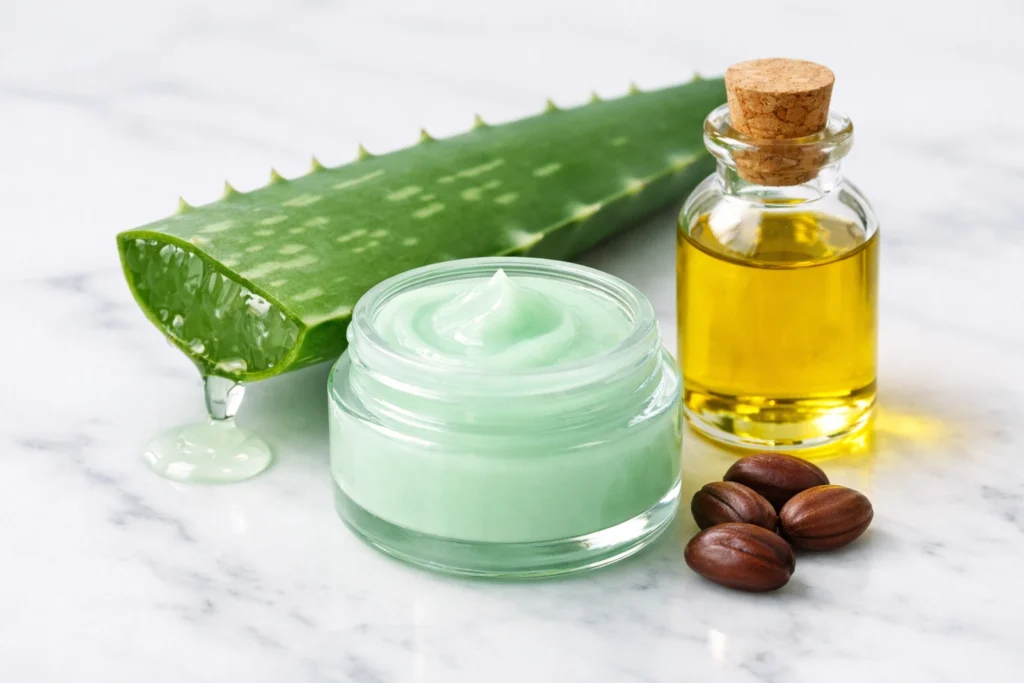
Aloe vera is widely recognized for its cooling, anti-inflammatory, and wound-healing properties. Incorporating stabilized aloe vera gel into a balm adds a layer of soothing relief that is particularly welcome during the first few days of healing when the tattoo feels hot and inflamed.
Because aloe vera contains water, any balm that includes it requires careful formulation to prevent spoilage. Keep quantities low and store the finished product in the refrigerator. To make this cooling balm, melt two tablespoons of beeswax and three tablespoons of jojoba oil together. Cool to room temperature, then stir in one teaspoon of pure aloe vera gel and eight drops of peppermint essential oil. Whisk vigorously as it sets to prevent separation. Use within two to three weeks and keep refrigerated between applications.
Hemp Seed and Shea Butter Tattoo Balm
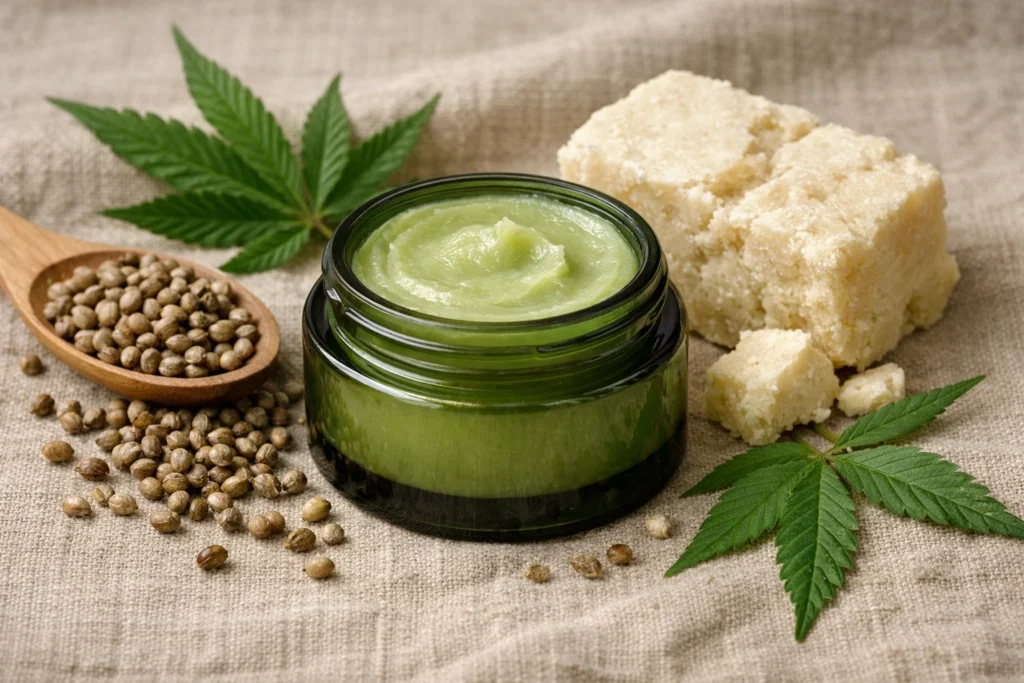
Hemp seed oil is a nutritional powerhouse for the skin. It contains a nearly ideal ratio of omega-6 to omega-3 fatty acids, closely matching the lipid composition of healthy skin. This makes it extraordinarily effective at restoring the skin barrier, reducing inflammation, and supporting rapid healing. It is also non-comedogenic, meaning it will not clog pores over the healing tattoo.
Combine two tablespoons of hemp seed oil with two tablespoons of shea butter and one tablespoon of beeswax. Melt gently, noting that hemp seed oil should never be overheated as it can degrade. Add six drops of frankincense essential oil and six drops of lavender essential oil once the mixture has cooled slightly. Pour into a glass jar. This formula is especially well suited to sensitive skin and to skin that tends to react to conventional aftercare products.
Antimicrobial Tea Tree and Eucalyptus Balm
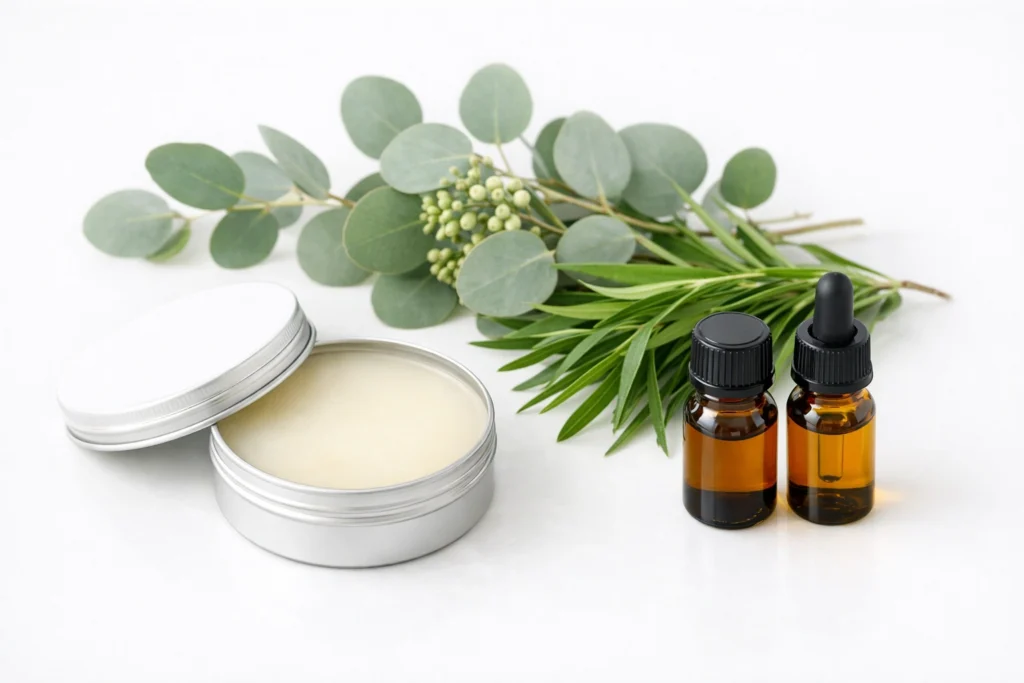
For those concerned about infection risk, particularly after large or heavily worked tattoos, an antimicrobial balm formulated with tea tree and eucalyptus essential oils provides meaningful additional protection. Both oils are well supported by research for their antibacterial, antifungal, and antiviral properties.
However, essential oils should always be used at appropriate dilution rates on healing skin. A safe dilution for a fresh tattoo is no more than one percent, which equates to roughly six drops of essential oil per tablespoon of carrier. To make this balm, melt three tablespoons of coconut oil, one tablespoon of shea butter, and one tablespoon of beeswax. Cool slightly then add five drops of tea tree essential oil and five drops of eucalyptus essential oil. Pour into tins and allow to set. Apply only after the first 24 hours have passed post-tattoo.
Frankincense and Myrrh Regenerative Balm
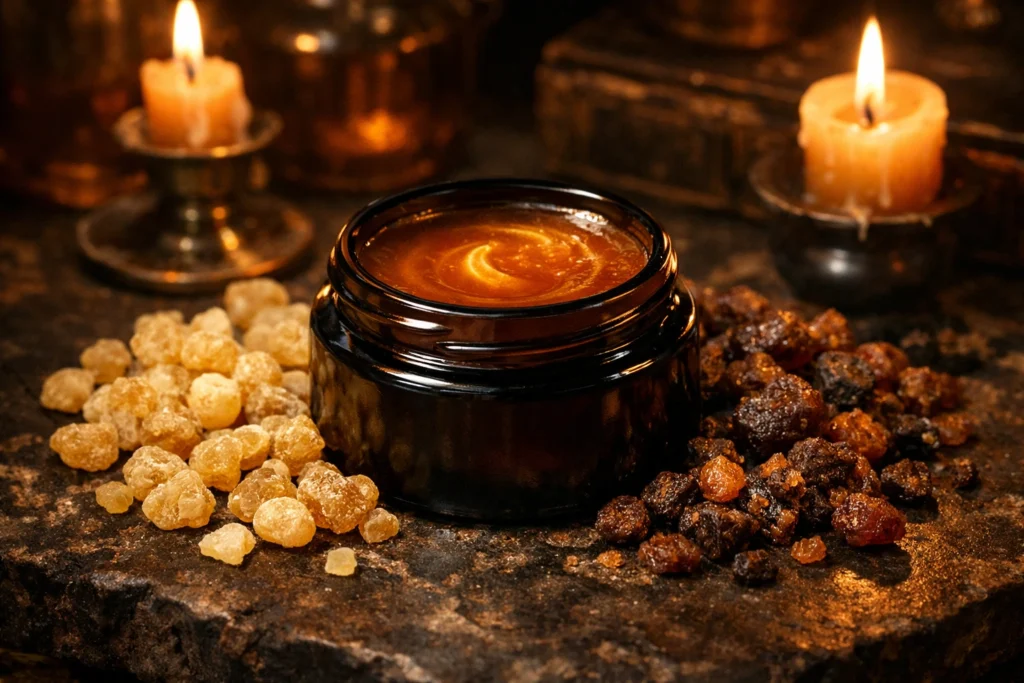
Both frankincense and myrrh have been used for thousands of years across multiple cultures for wound healing, infection prevention, and skin regeneration. Modern research has confirmed that these resins contain compounds with anti-inflammatory and antimicrobial properties. Together, they make a deeply effective addition to a tattoo healing balm.
Melt two tablespoons of jojoba oil, two tablespoons of shea butter, and one tablespoon of beeswax in a double boiler. Cool to about 40 degrees Celsius, then add eight drops of frankincense essential oil and six drops of myrrh essential oil. Pour into a small glass jar. Because both oils are on the heavier side aromatically, this balm carries a rich, resinous scent that many people find grounding and pleasant, particularly during the reflective period following a meaningful tattoo.
Brightening and Color-Enhancing Balm for Older Tattoos
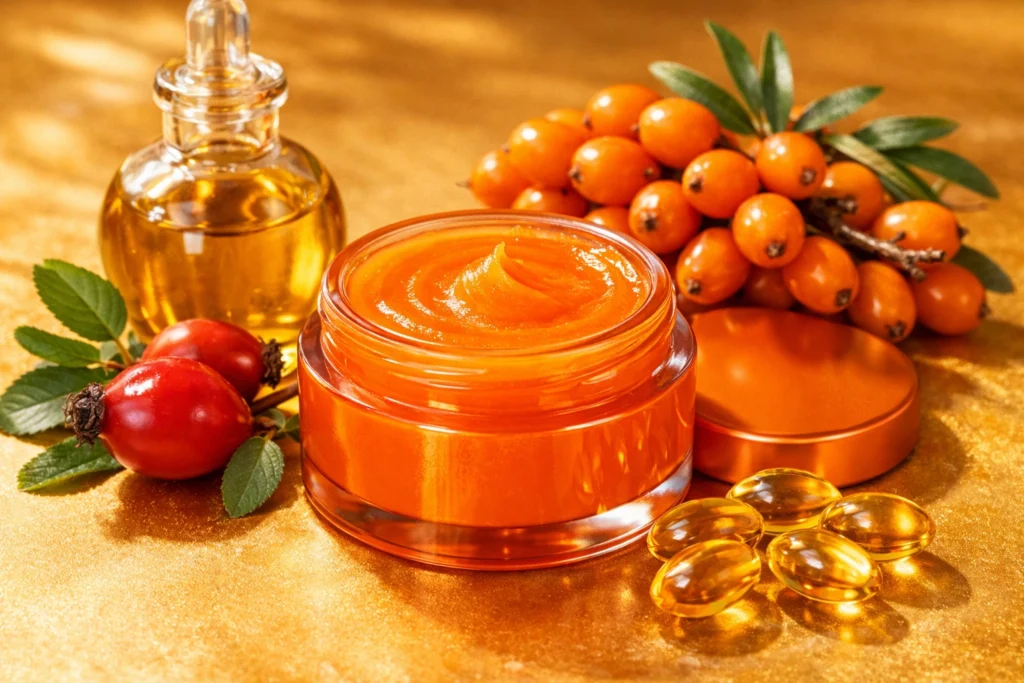
A diy tattoo balm recipe is not only useful during the healing phase. Older tattoos benefit enormously from regular moisturization, and certain ingredients can help restore the vivid appearance of faded ink. Vitamin E, rosehip oil, and sea buckthorn oil are particularly effective at brightening the skin and enhancing the visual clarity of tattoo pigment.
To make this brightening balm, combine two tablespoons of rosehip seed oil with one tablespoon of jojoba oil, one tablespoon of shea butter, and one tablespoon of beeswax. Cool slightly and add the contents of two vitamin E capsules and four drops of sea buckthorn oil. Sea buckthorn is extremely concentrated, so a small quantity is sufficient. The resulting balm will have a warm orange tint from the sea buckthorn. Apply to well-healed tattoos two to three times per week to maintain vibrancy.
Essential Aftercare Tips to Maximize Healing
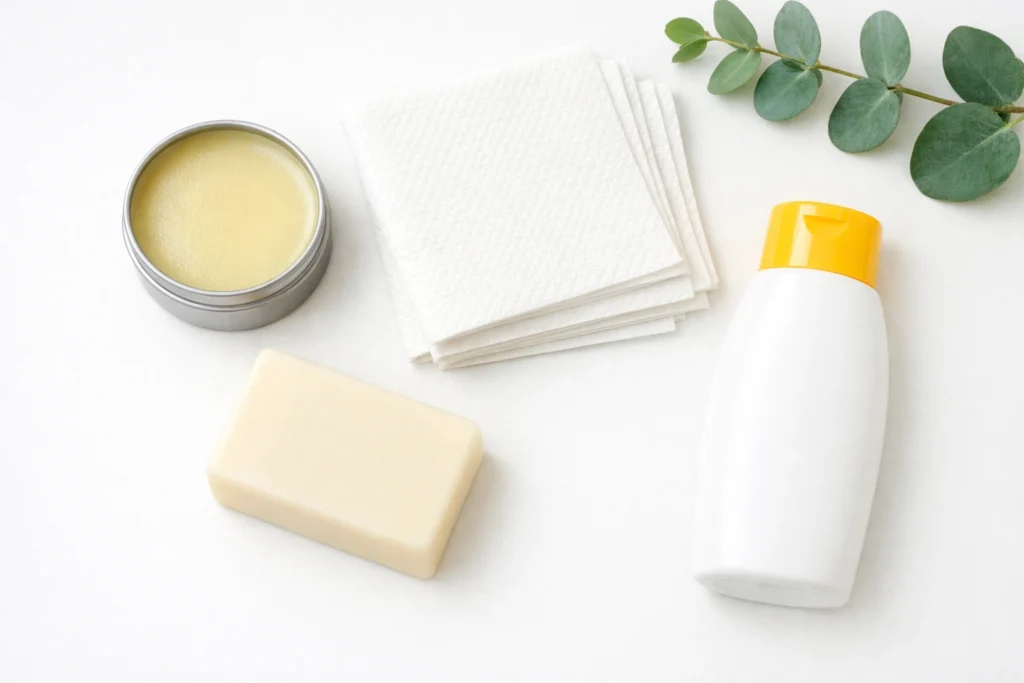
Even the most carefully formulated diy tattoo balm recipe will only deliver its full benefit when used as part of a complete aftercare routine. The following practices are widely recommended by professional tattoo artists and skin care specialists alike.
Keep the tattoo clean by washing it gently with fragrance-free antibacterial soap two to three times daily during the first week. Pat dry with a clean paper towel rather than a cloth towel, which can harbor bacteria. Apply your balm in a thin layer rather than a thick coating. The skin needs to breathe, and over-applying any product can trap moisture and slow healing.
Avoid submerging the tattoo in water, including baths, pools, and bodies of water, for at least three weeks. Avoid direct sun exposure during healing and apply a high-SPF sunscreen to fully healed tattoos whenever they will be exposed to UV light. Never pick or scratch the peeling skin. This is perhaps the most repeated and most ignored piece of tattoo aftercare advice, yet it is critical. Picking disrupts the healing skin layer and can pull ink from the dermis, resulting in patchiness and loss of detail.
Stay hydrated, support your body’s healing from the inside with adequate protein and zinc intake, and get enough sleep. These foundational health habits support skin regeneration at a cellular level that no topical balm, however well formulated, can replace on its own.
Conclusion
Making your own diy tattoo balm recipe is one of the most rewarding and practical things you can do as a person who values natural skin care. The formulas in this guide span a range of skin types, healing stages, and ingredient preferences, from the simplest two-ingredient coconut oil salve to the more sophisticated herbal infusion balms rich in botanical actives.
What all 15 formulas share is a commitment to working with the skin rather than against it. Natural oils, butters, waxes, and botanicals respect the skin’s biology and support its remarkable capacity to heal. Whether you are caring for a fresh tattoo or maintaining the brilliance of work done years ago, a well-made natural balm will always be your most trustworthy companion in that process.
You may also like this post: 18 Empowering Dragon Tattoo With Flowers Ideas
Frequently Asked Questions
When should I start applying tattoo balm after getting a new tattoo?
Most tattoo artists recommend waiting 24 hours before applying any balm to allow the initial wound response to begin naturally. After the first day, apply a thin layer of balm two to three times daily. Always follow your specific artist’s aftercare instructions as they know best how your particular piece was executed and what your skin may need.
Can I use coconut oil alone as a tattoo balm?
Coconut oil can be used on its own as a basic tattoo moisturizer, and many people do so with good results, particularly for its antimicrobial properties. However, a properly formulated balm with beeswax and additional botanical ingredients offers a more complete level of protection, longer-lasting moisture, and greater skin-healing support than plain oil alone.
How long does a homemade tattoo balm last?
An oil-only balm without water-based ingredients will typically stay stable for six months to one year when stored in a sealed glass container away from direct heat and sunlight. Balms that include water-based ingredients such as aloe vera gel should be kept refrigerated and used within two to three weeks to prevent microbial growth.
Are essential oils safe to use on fresh tattoos?
Essential oils can be used safely on fresh tattoos when properly diluted in a carrier oil or balm base. The recommended dilution rate for sensitive or healing skin is no more than one percent, which is approximately six drops of essential oil per tablespoon of carrier. Avoid using essential oils neat or at higher concentrations on healing skin, as this can cause irritation or sensitization.
What ingredients should I avoid in a tattoo balm?
Avoid petroleum-based products such as Vaseline, which can draw ink out of fresh tattoos. Avoid synthetic fragrances, artificial colors, and alcohol-containing products, as these can dry and irritate healing skin. Ingredients with high comedogenic ratings such as heavy mineral oils may also be best avoided as they can trap bacteria over an open wound. Always perform a patch test on healed skin before applying any new ingredient to a fresh tattoo.