
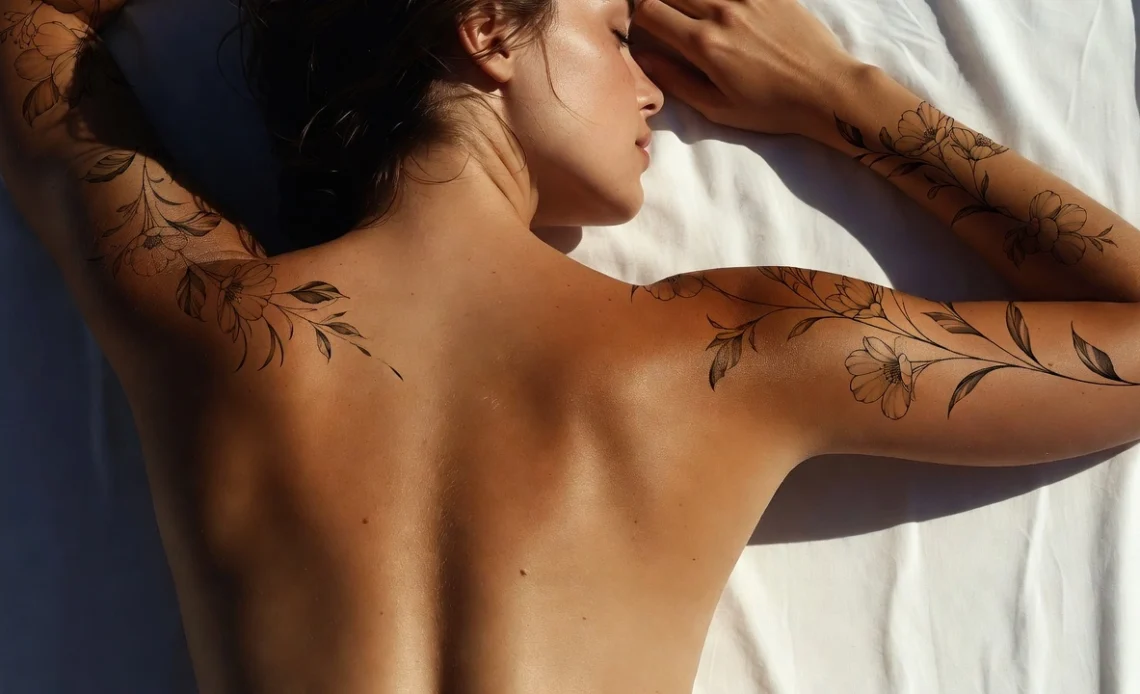
There is something deeply personal about the decision to get a tattoo. It is not only about choosing a design you love or finding an artist whose style speaks to you. Where you place that tattoo on your body is an equally important part of the process. The placement shapes how the tattoo looks, how it moves with your body, how visible it is, and how it ages over the years. For women especially, the right placement can transform a simple design into something that feels like a natural extension of who you are.
Whether you are getting your first tattoo or adding to an existing collection, this guide walks you through 15 of the most beautiful, versatile, and meaningful tattoo placement ideas for women. Each one has been chosen for its aesthetic appeal, its ability to complement the female form, and its suitability for a wide range of design styles. From subtle and secretive spots to bold and expressive canvases, there is something here for every woman and every vision.
The Wrist
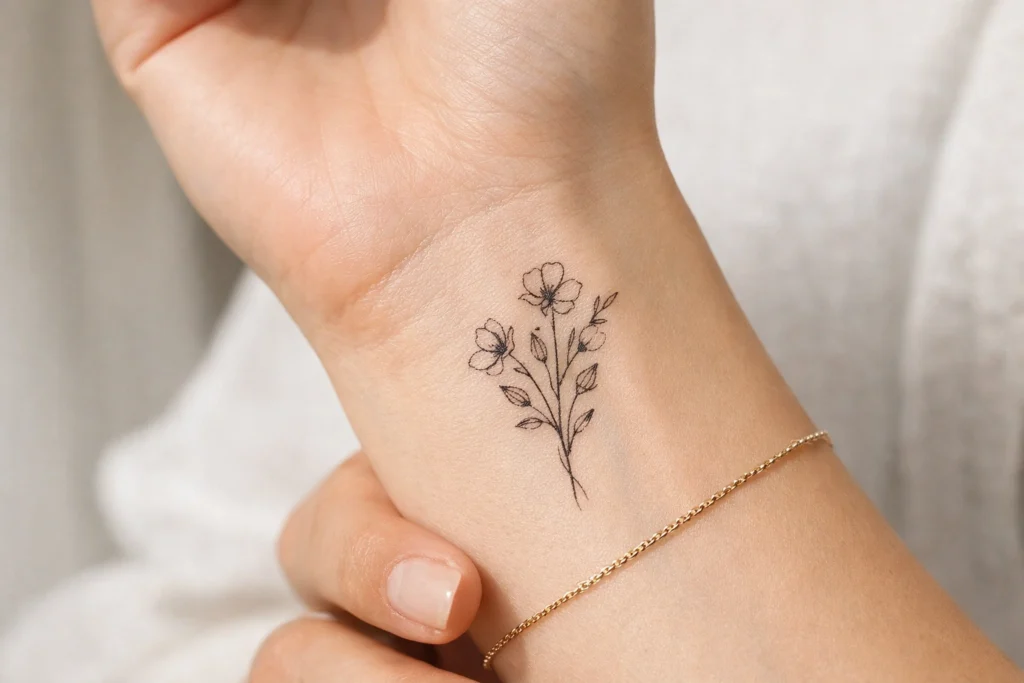
The wrist remains one of the most enduringly popular tattoo placements for women, and for good reason. It sits in a naturally visible spot, making it easy to admire your own ink daily. At the same time, a long sleeve or a stack of bracelets can cover it completely when the occasion calls for discretion.
Wrist tattoos work best with small to medium designs. Fine line florals, single words, simple symbols, dates, and delicate geometric shapes all translate beautifully here. Because the wrist is associated with the pulse and movement, many women choose designs that carry personal meaning, something they want close to them at all times.
Keep in mind that the inner wrist has thinner, more sensitive skin, so the tattooing process can feel more intense compared to fleshier areas. That said, the discomfort is brief, and most women find the result well worth it.
The Collarbone
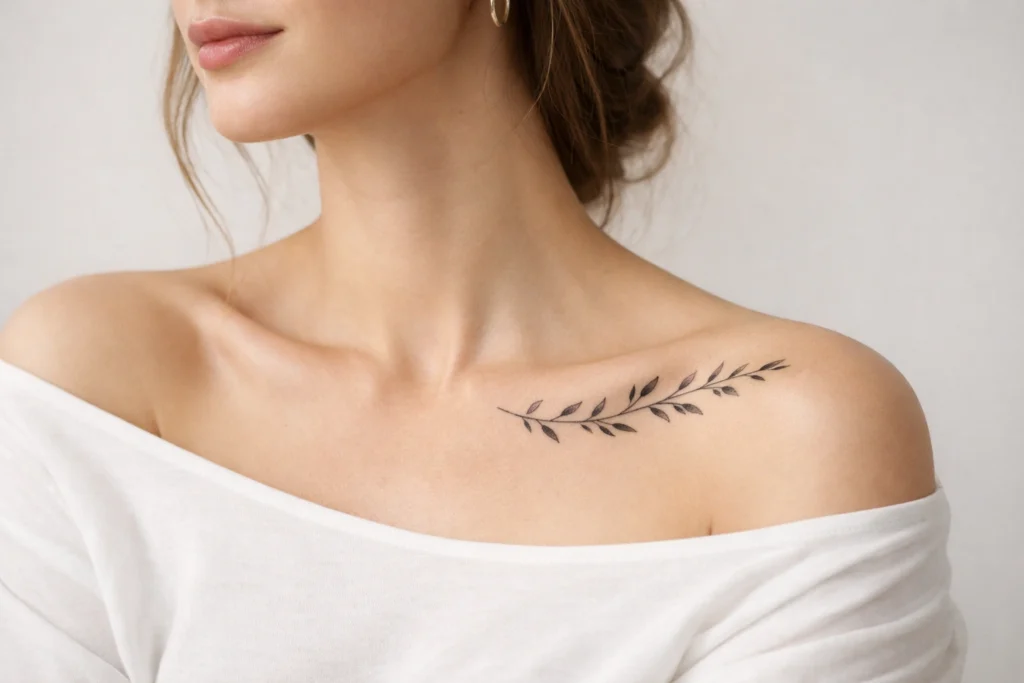
A collarbone tattoo has an effortless elegance that few other placements can match. When you wear a scoop neck, an off-the-shoulder top, or a summer dress, the design catches the eye in the most understated way. It works almost like permanent jewelry, draping across one of the most graceful lines of the female body.
This placement is ideal for script tattoos, botanical illustrations, thin branches, constellations, and flowing designs that follow the natural curve of the bone. Because the collarbone area is relatively flat and elongated, artists can work with both horizontal and diagonal compositions.
Pain levels here can be moderate due to the proximity to bone, but the collarbone is not among the most painful placements. The visual payoff makes it a consistently popular choice among women who want something feminine, visible, and quietly striking.
The Sternum
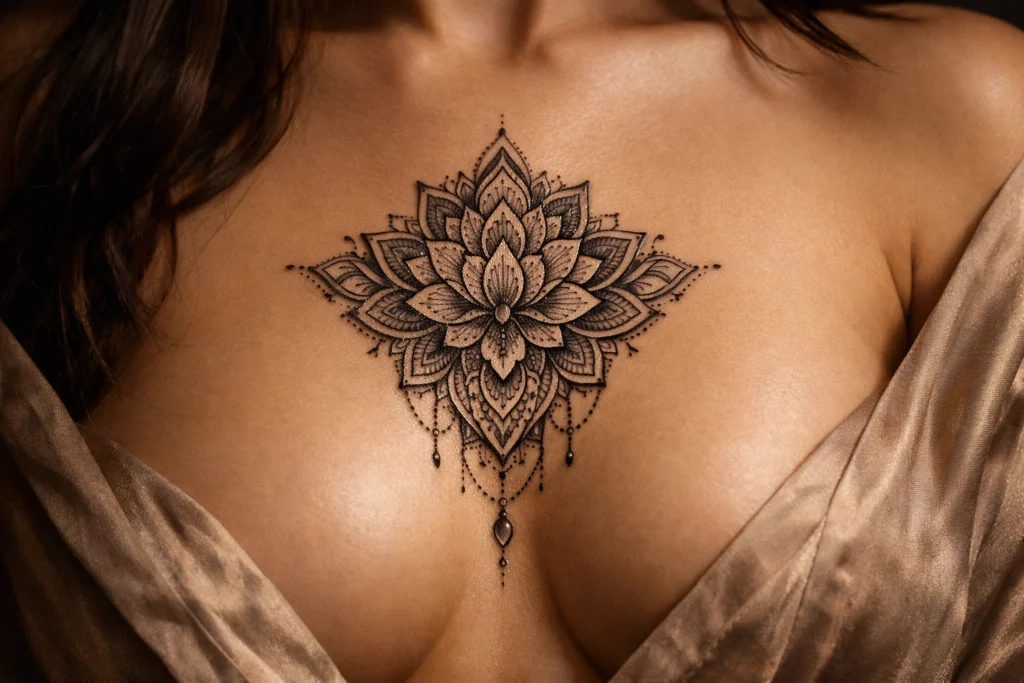
The sternum sits at the center of the chest, directly between the breasts, and it has become one of the most sought-after placements in modern tattooing. There is an intimacy to this placement that appeals to many women. It stays hidden under most clothing, making it a private statement that you choose to reveal.
Designs that work exceptionally well on the sternum include mandalas, ornamental patterns, fine-line florals, and elongated compositions that flow downward toward the stomach. The central positioning of the sternum naturally lends itself to symmetrical designs, which can create a stunning visual effect.
The sternum is one of the more sensitive areas to tattoo, registering higher on most pain scales due to thin skin over bone. However, women who choose this placement consistently describe the experience as deeply worth it. The result feels personal, beautiful, and powerful.
The Ribcage
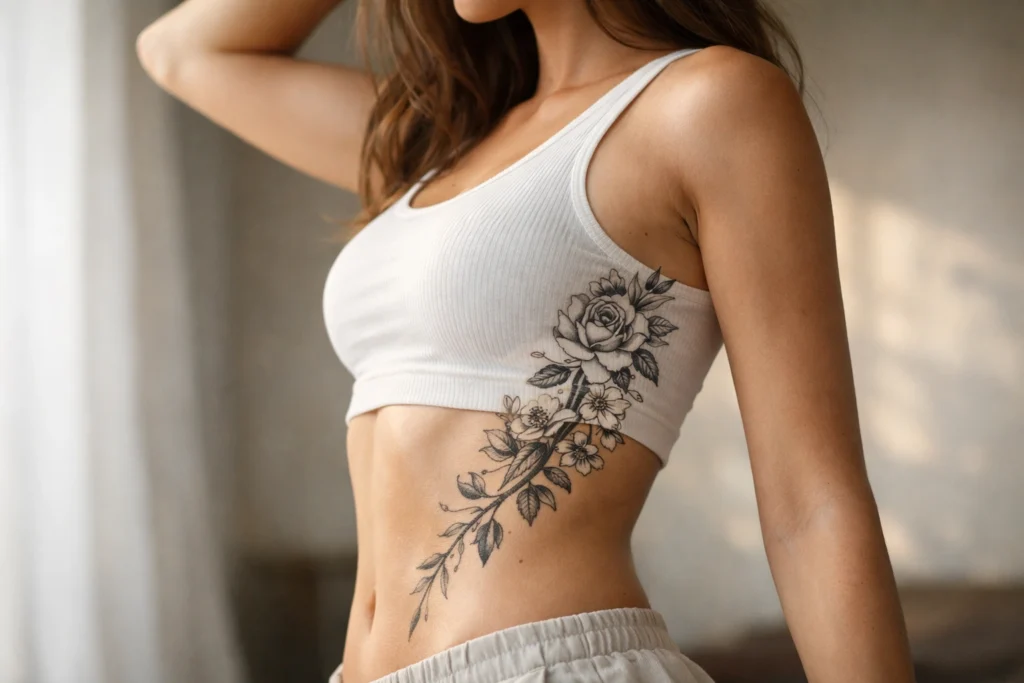
Few placements are as dramatic and intimate as the ribcage. Running along the side of the torso, this area offers a long, curved canvas that follows the natural contours of the body. It is one of the most feminine tattoo placements available, particularly when the design follows the flow of the ribs rather than working against it.
Popular ribcage tattoo designs include vertical quotes or poetry, flowing botanical illustrations, single stems with blooms, feathers, and abstract line work. The curvature of this area means that designs with movement, such as vines or waves, look especially striking.
The ribcage does rank among the more painful placements due to thin skin, minimal muscle coverage, and the sensation of the needle vibrating near bone. Women who have gotten ribcage tattoos often recommend going in well-rested, staying still, and focusing on breathing steadily. The end result, however, tends to be breathtaking.
The Shoulder

The shoulder has been a classic tattoo placement for decades, and it continues to hold strong appeal for women. It offers a generous, relatively flat surface that can accommodate everything from small, simple designs to large, intricate pieces. The shoulder is also easy to cover or reveal depending on what you are wearing.
For women, the shoulder works particularly well with floral compositions, portrait work, geometric designs, and nature-inspired imagery. The rounded shape of the shoulder cap suits designs that have a natural arc or curve to them, while the back of the shoulder offers a flatter surface for more structured work.
Pain levels on the shoulder are generally mild to moderate, making it a solid choice for those who want a more comfortable tattooing experience. It also tends to age well, as the skin in this area experiences relatively little stretching over time.
The Upper Back
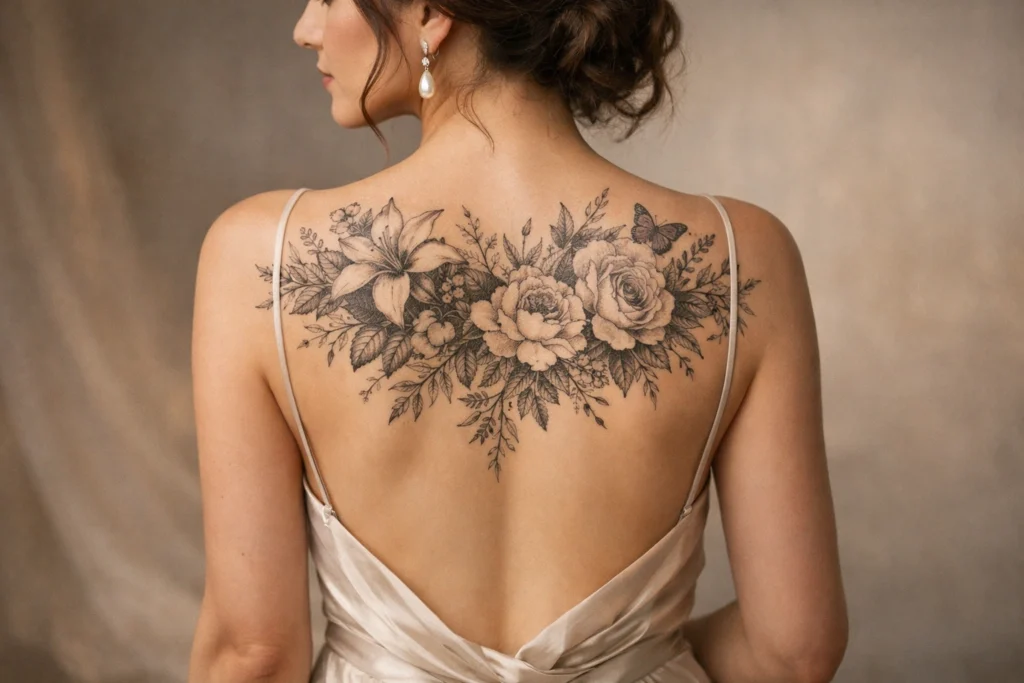
The upper back, particularly the area between and below the shoulder blades, is one of the most powerful tattoo placements for women who want to make a statement. When you wear a backless dress, a halter top, or a low-back swimsuit, an upper back tattoo becomes a central feature of your look.
This placement works beautifully for large, intricate designs. Floral arrangements, wings, mandalas, botanical scenes, and symmetrical ornamental pieces all translate well here. The spine running through the center of the upper back also provides a natural anchor for vertical compositions.
The upper back is among the less painful areas to tattoo, thanks to the relatively thick skin and substantial muscle coverage. It is a great choice for those who want a larger, more ambitious piece without the intensity of a ribcage or spine tattoo.
The Spine
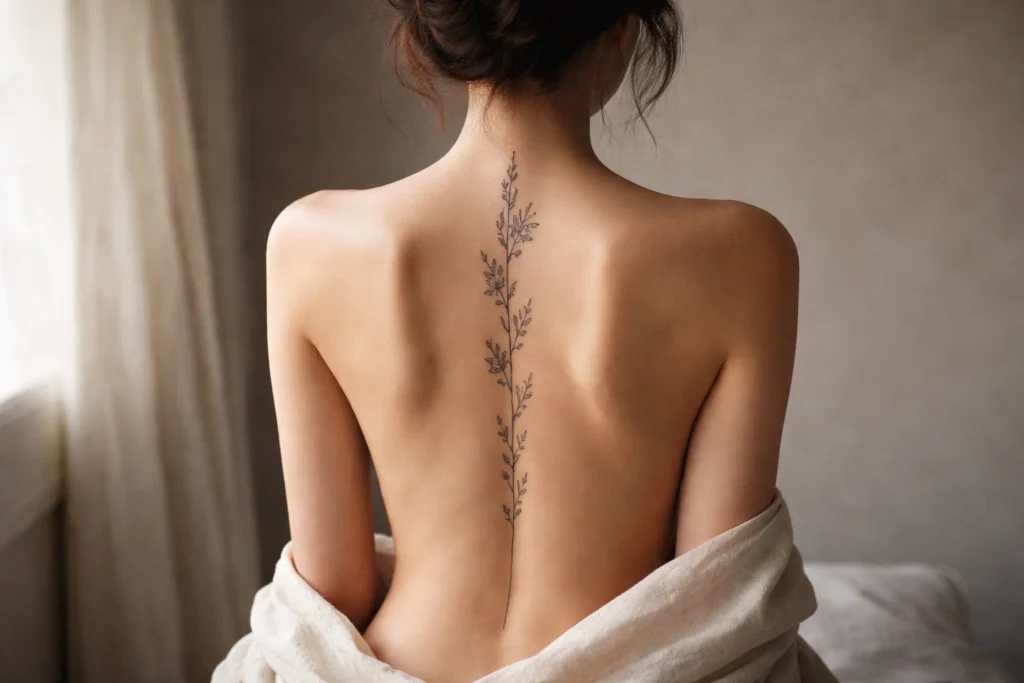
A spine tattoo is one of the most visually arresting placements a woman can choose. Running down the center of the back, a spine tattoo follows one of the most elegant lines of the body. When revealed, it creates a striking focal point that draws the eye from the nape of the neck downward.
Designs that suit the spine include long botanical compositions, a sequence of symbols or words, a single vertical quote, stacked geometric shapes, and flowing abstract line work. The narrow, linear nature of the spine means that designs need to be relatively slim and vertically oriented to look their best.
The spine is a sensitive placement due to the proximity of bone and the concentration of nerve endings in this area. The vibration of the needle along the vertebrae can be quite intense, particularly in the lower back. Choosing an experienced artist who works efficiently can make a significant difference in the overall experience.
The Hip
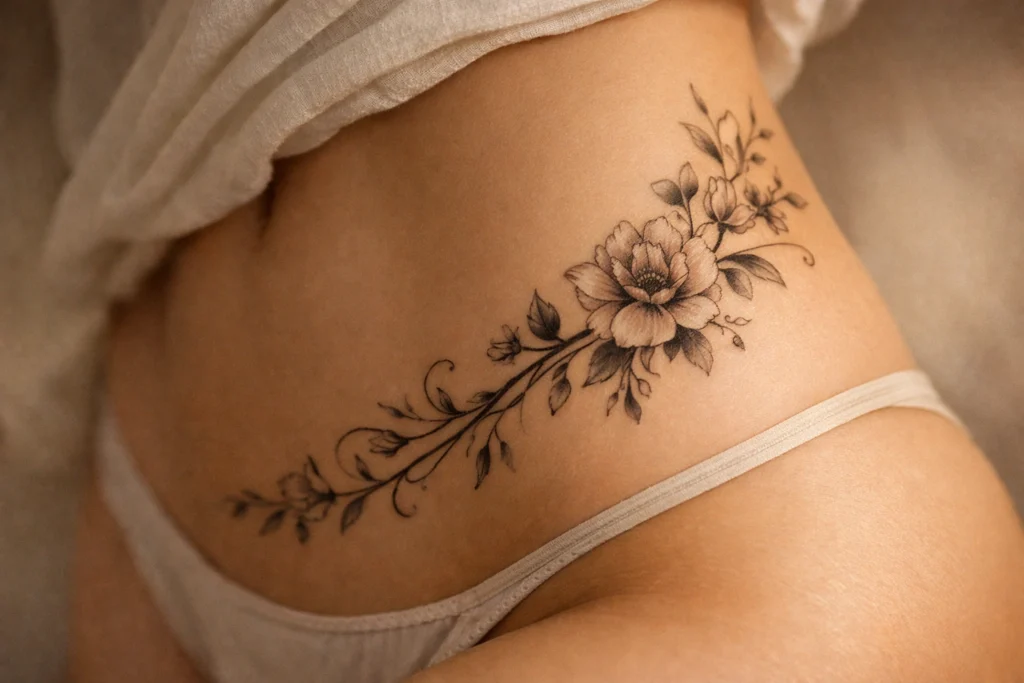
The hip is a placement that combines sensuality with versatility. It sits in a naturally curved, intimate area of the body, and it can remain hidden beneath most clothing or revealed with a swimsuit, low-rise jeans, or a crop top. This combination of discretion and occasional visibility gives hip tattoos a uniquely personal quality.
Flowing designs work particularly well on the hip because the curvature of this area naturally enhances anything that moves with the body. Floral arrangements, abstract botanical pieces, mandala compositions, and designs that start on the hip and wrap around to the lower back or thigh are all popular choices.
The hip area experiences moderate pain levels. The outer hip has more flesh coverage, making it relatively comfortable, while areas closer to the hip bone can be more sensitive. Overall, the hip is a placement that ages well and holds its detail beautifully over time.
The Thigh
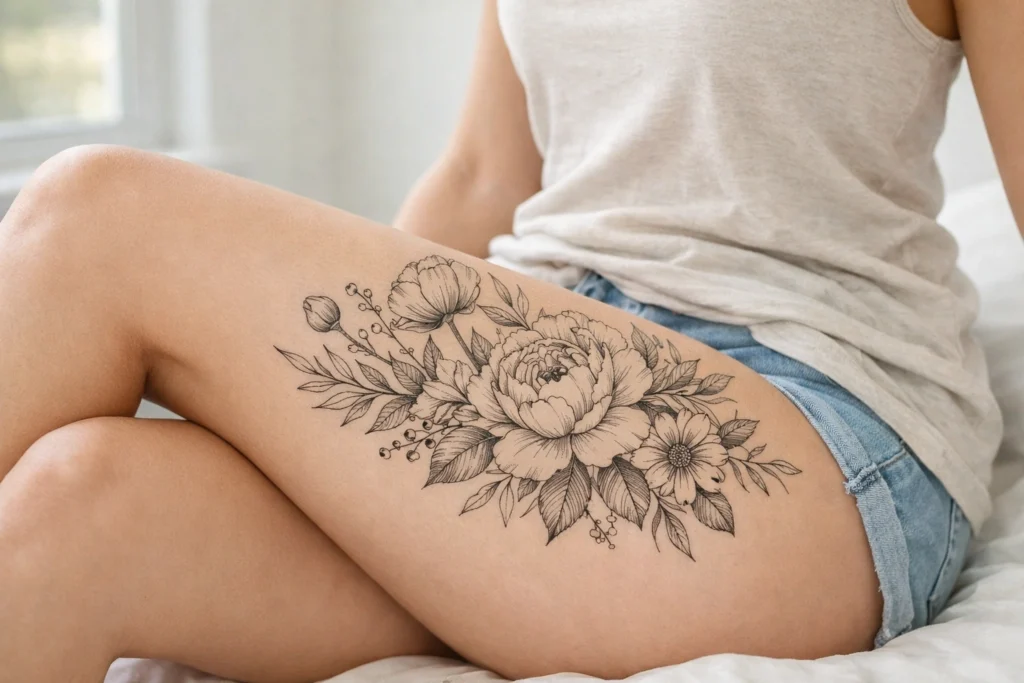
The upper thigh is one of the most generous and versatile tattoo placements available for women. It offers a large, relatively flat canvas that is ideal for detailed, ambitious designs. At the same time, it remains hidden under skirts, dresses, and most shorts, giving the wearer full control over when and how to reveal it.
Thigh tattoos can range from small, delicate pieces placed on the inner thigh to large-scale compositions covering the outer thigh. Popular designs include botanical illustrations, portrait work, geometric patterns, mandalas, and detailed floral arrangements. The thigh also works exceptionally well for designs that wrap around the leg, creating a dynamic, three-dimensional effect.
The outer thigh is among the least painful tattoo placements on the body due to substantial muscle and fat coverage. The inner thigh is more sensitive but still manageable for most people. The generous size of this canvas makes it a top choice for women who want something truly detailed and expressive.
Behind the Ear
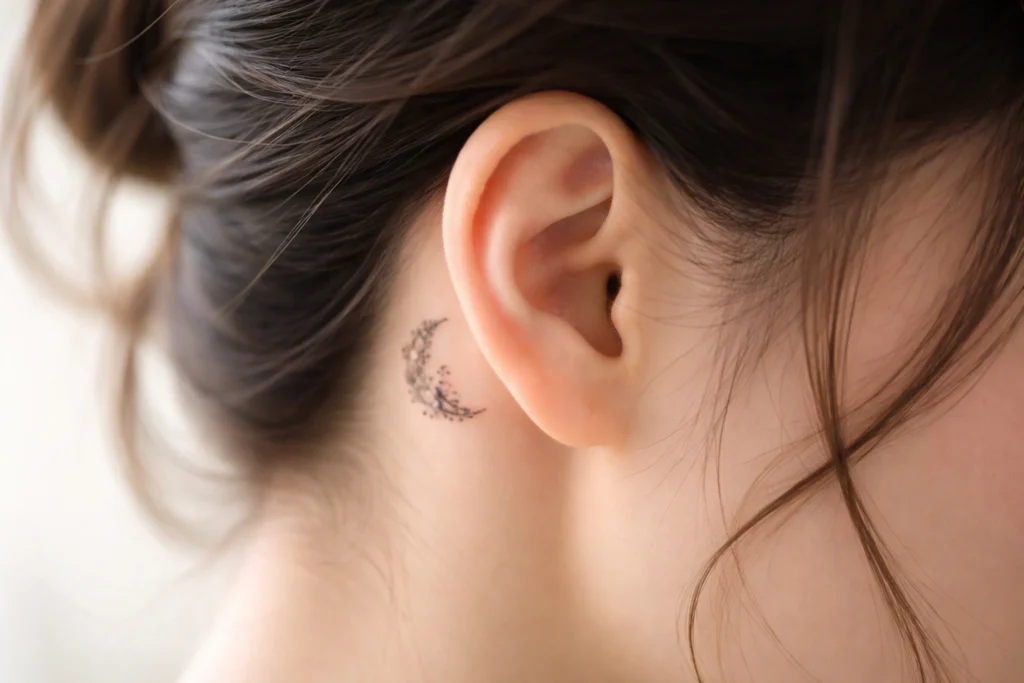
A behind-the-ear tattoo is the definition of understated elegance. Small, delicate, and easily concealed by hair, this placement feels like a quiet secret that you carry with you. It is one of the most popular choices for women who want their first tattoo or who prefer minimalist designs.
Because the space behind the ear is limited, designs here need to be simple and clean. Tiny florals, stars, crescent moons, small symbols, single letters, and fine geometric shapes all work beautifully. The skin in this area is thin and close to the skull, which means tattooing here can feel quite sharp. However, the size of most behind-the-ear designs means the session is typically brief.
This placement is also one of the most durable in terms of fading, as it experiences minimal sun exposure and very little physical friction. With proper care, a behind-the-ear tattoo can maintain its clarity for many years.
The Ankle
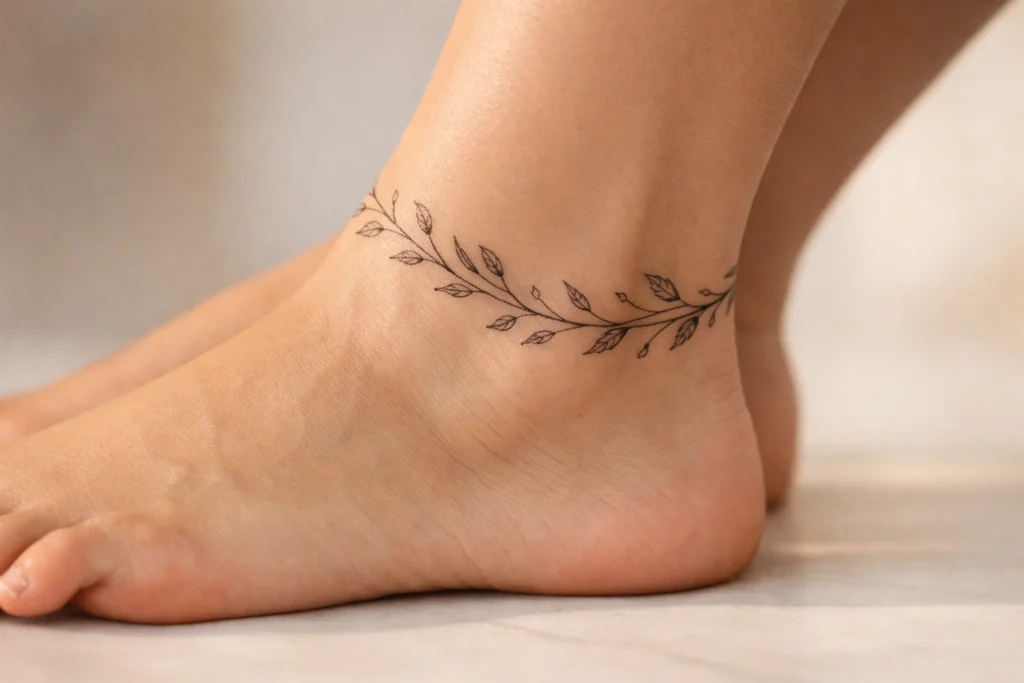
An ankle tattoo is soft, subtle, and effortlessly feminine. It works like a permanent piece of jewelry, wrapping around the ankle the way a delicate chain anklet might. This placement is particularly beloved by women who want something visible but not overwhelming.
Small to medium designs suit the ankle best. Thin botanical stems, delicate wave patterns, simple script, small mandalas, and fine-line symbols all look beautiful here. The ankle also works well for designs that wrap around the entire circumference of the joint, creating a bracelet-like effect.
The ankle is a bonier placement, which can make the tattooing process more intense than fleshier areas. It is also an area where tattoos can fade more quickly due to friction from footwear and frequent movement. Regular moisturizing and sun protection can help preserve the sharpness of an ankle tattoo over the years.
The Forearm
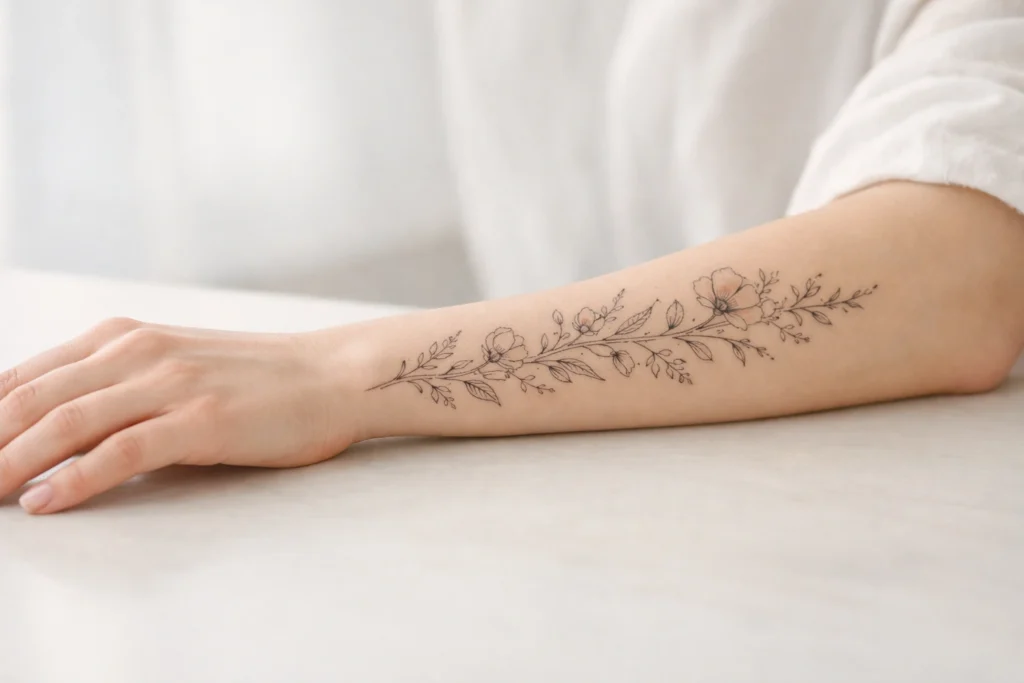
The forearm is a practical, highly visible, and beautifully proportioned tattoo placement. Its long, relatively flat surface accommodates a wide range of designs, from small and minimalist to large and detailed. The forearm is also one of the most moderate areas in terms of pain, making it a go-to choice for first-time tattoo recipients.
Women often use the forearm for botanical illustrations, fine-line portraits, script passages, geometric compositions, and abstract designs. The outer forearm is slightly less sensitive than the inner forearm, where the skin is thinner and more delicate. Both sides of the forearm hold ink well and tend to age gracefully.
One consideration with the forearm is visibility. Because it is one of the most exposed areas of the body, a forearm tattoo is difficult to conceal, particularly in warmer months. For women who work in environments where visible tattoos are restricted, this is worth factoring into the placement decision.
13. The Nape of the Neck
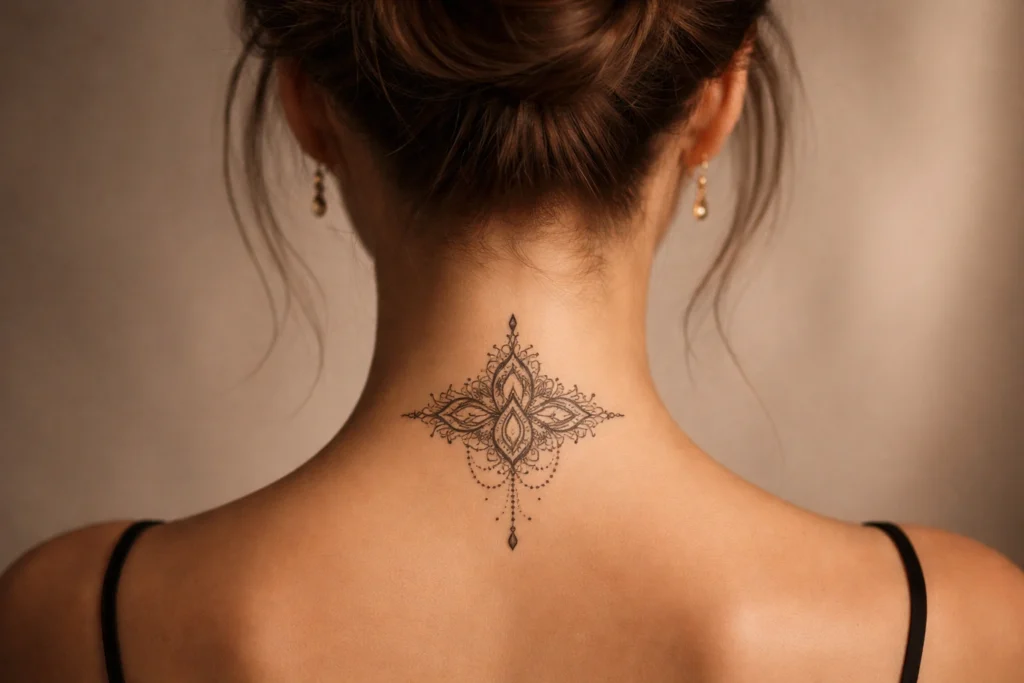
The nape of the neck, situated just below the hairline at the back of the head, is an intimate and sensual placement. It is hidden effortlessly when you wear your hair down, and revealed beautifully when you wear an updo or a high ponytail. This duality gives nape tattoos a quietly magnetic quality.
Small to medium designs work best here. Delicate florals, ornamental patterns, small symmetrical symbols, fine line word work, and abstract geometric designs are all popular choices. The nape has a slight curve to it that artists can use to their advantage when designing pieces that follow the natural shape of the neck.
Pain levels at the nape can be moderately high due to proximity to the skull and the concentration of nerve endings in this area. Choosing a small, clean design helps keep the session short and manageable.
The Inner Arm
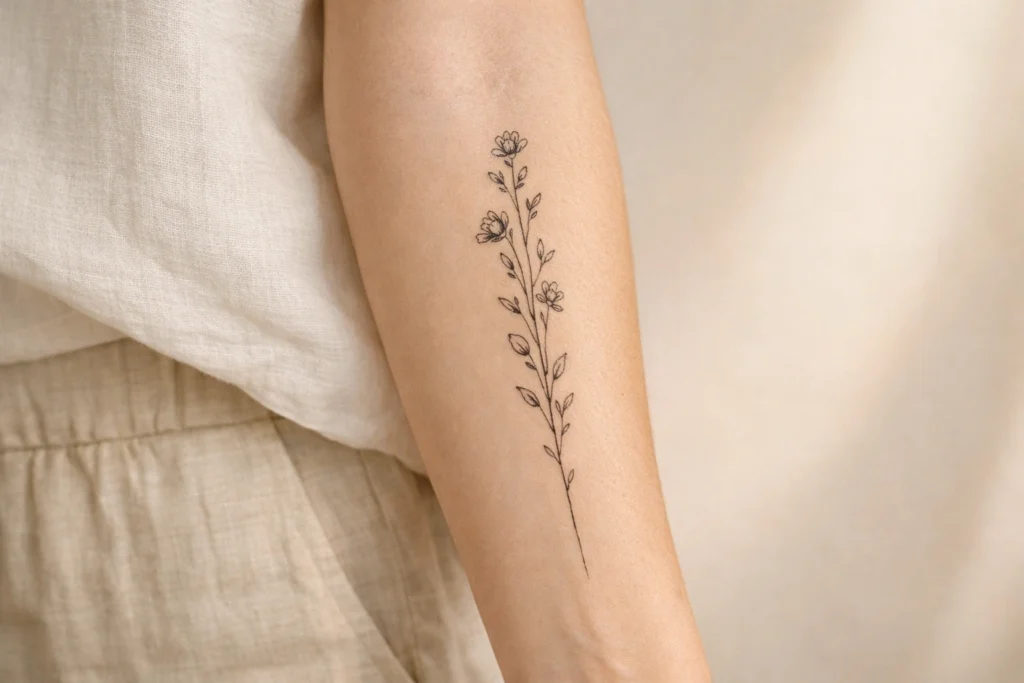
The inner arm, running from just above the elbow crease to the wrist, offers a long, elegant surface that has become increasingly popular for fine-line and botanical work. This placement has a quiet intimacy to it. It faces inward, visible to the wearer during daily life but not immediately obvious to others at first glance.
Script tattoos work exceptionally well along the inner arm, as do long botanical compositions, feather designs, and single-stem florals. Because the inner arm is relatively narrow and follows a clear directional line, designs that have a strong vertical or diagonal orientation tend to look most natural here.
The inner arm is a moderately sensitive area due to thinner skin and visible veins. The inner elbow crease in particular can be quite sensitive. However, with a skilled artist and a clear, well-proportioned design, the inner arm yields some of the most elegant tattoo results possible.
The Finger
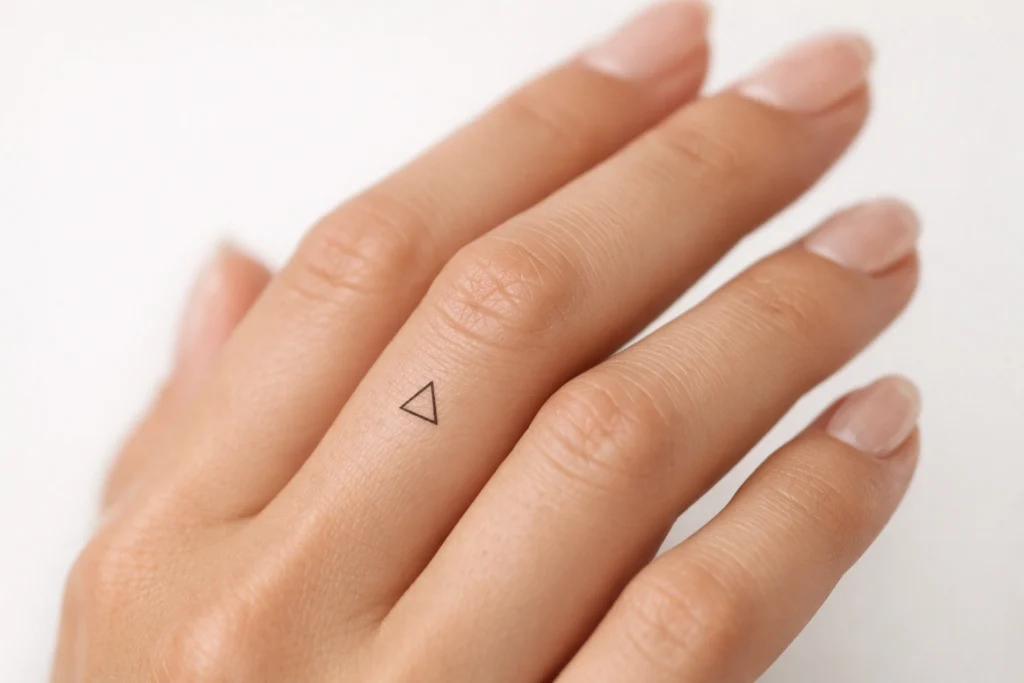
Finger tattoos have grown in popularity significantly over the past several years, and they carry a particular charm that few other placements can replicate. Small, intimate, and often symbolic, a finger tattoo can function like a permanent ring or a quiet declaration that sits right at the tip of your hand.
The most common finger tattoo choices include thin bands, small symbols, tiny florals, initial letters, and fine-line geometric marks. The ring finger is especially popular for minimalist band designs, particularly as an alternative to or complement of a traditional ring.
It is important to note that finger tattoos fade more quickly than tattoos in other locations. The skin on the fingers is subject to constant movement, frequent washing, and regular exposure to the sun. Touch-ups are often necessary to keep finger tattoos looking sharp. Choosing simple, bold designs over highly intricate fine-line work can help them hold up better over time.
Choosing the Right Placement for You
With so many beautiful options available, the decision comes down to a few personal factors. Think about your pain tolerance and how much discomfort you are comfortable experiencing. Consider your lifestyle, including whether your workplace has policies around visible tattoos, and whether you want to be able to cover your ink on certain occasions. Think about the size of the design you have in mind, and whether your chosen placement can accommodate it comfortably.
It is also worth thinking about how the placement interacts with the natural shape of your body. The best tattoos feel like they belong exactly where they are, as though they grew there naturally. An experienced tattoo artist can be an invaluable guide in this process. They understand how skin behaves in different locations, how ink ages in various placements, and how to design a piece that truly works with your anatomy rather than against it.
Take your time, ask questions, and trust the process. The right placement is the one that feels like it was always meant to be yours.
Conclusion
Tattoo placement is one of the most personal decisions in the entire tattooing process. The 15 placements covered in this guide represent a range of aesthetics, visibility levels, pain tolerances, and design possibilities, each one chosen for its particular ability to complement and celebrate the female form. Whether you are drawn to the quiet intimacy of a sternum tattoo, the bold visibility of an upper back piece, or the delicate charm of an ankle design, the right placement is ultimately the one that resonates with who you are and the story you want to tell through your ink. Choose thoughtfully, work with a skilled artist, and wear your tattoo with the confidence it deserves.
You may also like this post: 18 Tattoo Ideas Starter Kit: Everything You Need to Begin Tattooing Like a Pro
FAQs
What is the least painful tattoo placement for women?
The outer thigh is widely considered one of the least painful tattoo placements due to its substantial muscle and fat coverage. The outer shoulder and upper back are also relatively comfortable options for those with lower pain tolerance.
Which tattoo placements are easiest to hide at work?
The sternum, ribcage, upper thigh, hip, and upper back are all placements that remain hidden under standard professional attire. Behind-the-ear tattoos are also easily concealed when hair is worn down.
What tattoo placements age the best over time?
Placements that experience minimal sun exposure and low levels of stretching tend to age most gracefully. The upper back, shoulder, and thigh are known for holding their detail well. Placements like fingers and ankles tend to fade faster due to friction and movement.
What size design is best for a first tattoo?
For a first tattoo, a small to medium design in a moderately sensitive placement such as the forearm, outer shoulder, or outer thigh is a practical choice. It keeps the session manageable and allows you to gauge your pain tolerance before committing to a larger piece.
Should I consult my tattoo artist about placement before booking?
Absolutely. A skilled tattoo artist brings valuable knowledge about how designs translate to specific body parts, how skin behaves in different locations, and how to adjust a composition so it sits naturally on the body. Many studios offer consultations before the tattooing session, and taking advantage of that conversation can make a significant difference in the final result.