
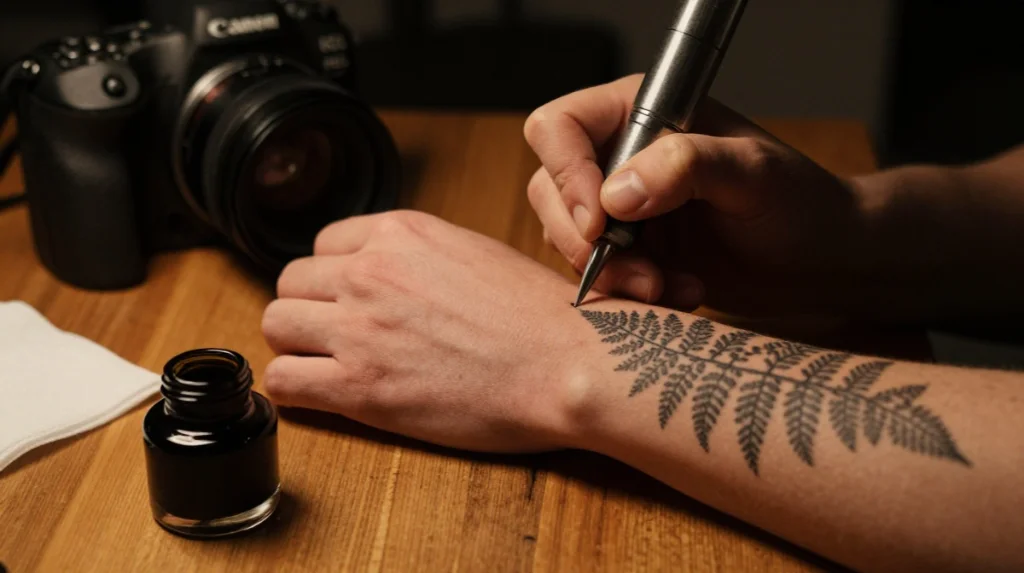
There is something categorically different about a tattoo made without a machine. The process is slower. The result carries a specific visual texture — a slight irregularity of line, an organic quality in the dot clusters — that no electric rotary can replicate no matter how skilled the operator. Stick and poke tattoos aren’t a lesser version of machine tattooing. They’re a different discipline entirely, with their own technical demands, their own aesthetic vocabulary, and a cultural lineage that stretches back to the earliest documented marks on human skin. This guide covers everything — technique, safety, design, history, and the questions that actually matter before you sit for one.
The Ancient Practice Behind the Modern Underground Tattoo Revival
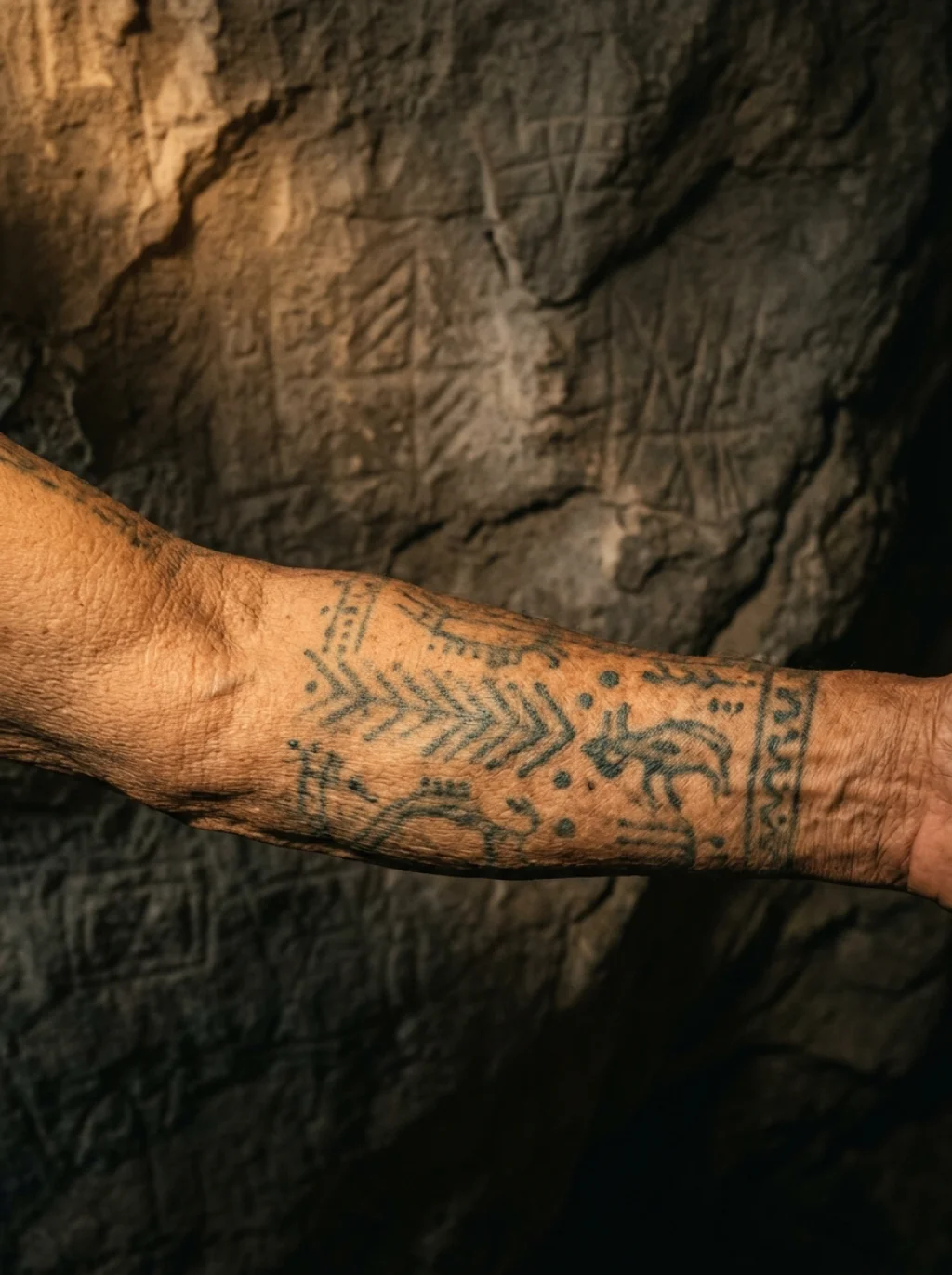
Folk tattooing history didn’t begin in a studio. It began with bone, ash, and intention — marked onto skin by people who had no electric equipment and no apology for that fact. Archaeological evidence from Ötzi the Iceman — the 5,300-year-old Alpine mummy — shows 61 tattoos made by incising the skin and rubbing charcoal into the wounds. Egyptian mummies from 2,000 BCE show similar marks. The primitive tattoo method was humanity’s first and it remained dominant across most of the world’s tattoo traditions until the invention of the electric tattoo machine in the 1890s.
The contemporary revival of stick and poke tattoos in the United States gained visible momentum in the late 2000s and accelerated dramatically through the 2010s as social media platforms gave underground tattoo culture a global audience. Reddit r/sticknpoke community grew to hundreds of thousands of members. TikTok stick and poke tattoo tutorial content accumulated billions of combined views. The aesthetic — raw, intimate, deliberately imperfect — resonated with a generation that had grown up in a world of algorithmic perfection and found genuine beauty in the handmade. This wasn’t nostalgia. It was a principled rejection of the industrial in favor of the personal.
Stick and Poke Tattoos and the Artists Who Made Them Legitimate Art
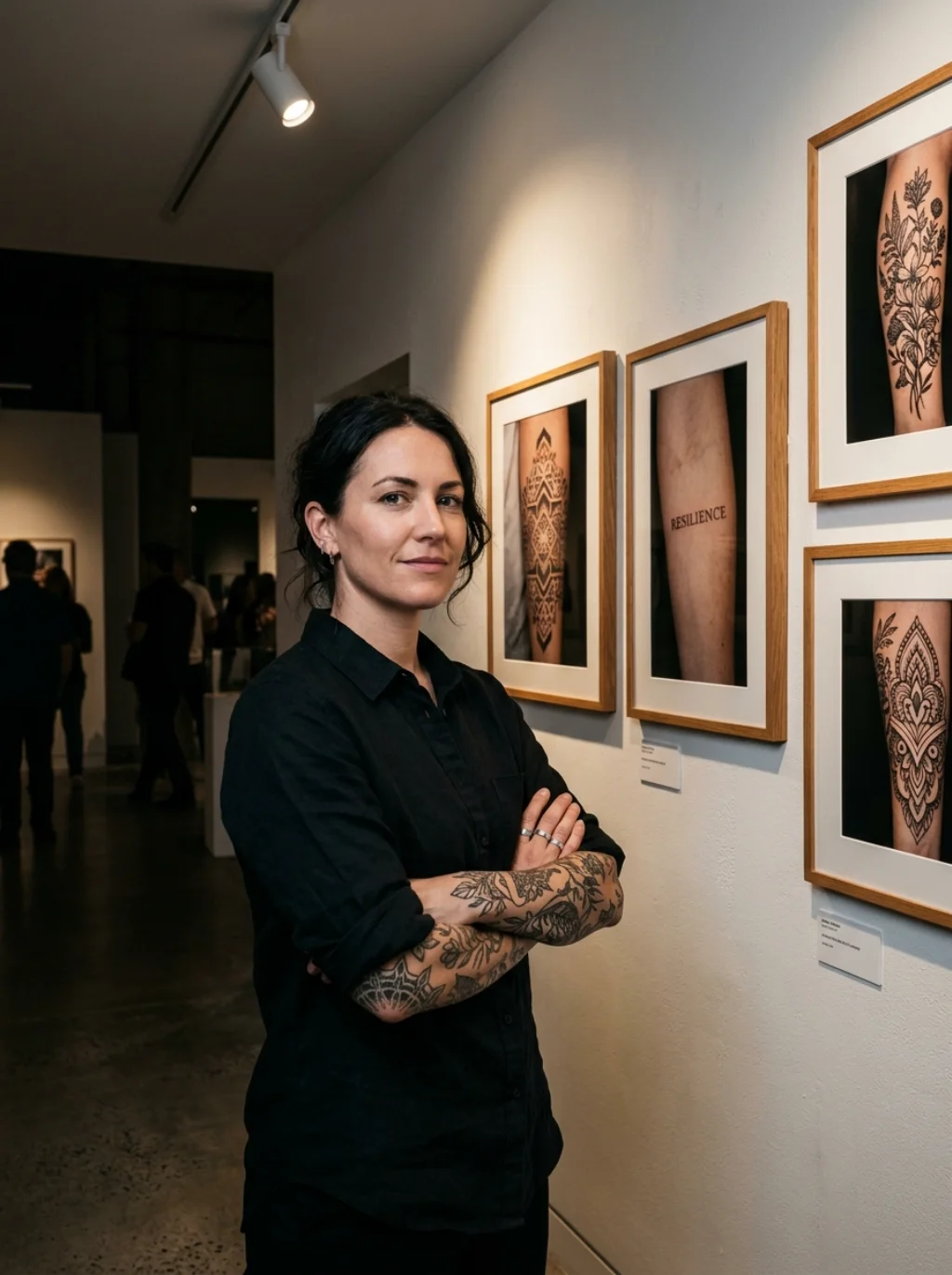
Stick and poke tattoo artists who specialize in hand poke work have built careers and devoted followings on the back of a technique that the mainstream tattoo industry dismissed for decades. Simone Racheli stick and poke artist is one of the most internationally cited practitioners — his work demonstrating that hand poke tattoo technique can achieve levels of compositional sophistication and fine detail that challenge the most accomplished machine artists. The argument that hand poke work is inherently crude collapsed under the weight of evidence these artists produced.
Inked Magazine hand poke feature coverage and Juxtapoz Magazine tattoo art editorial placements through the 2010s gave hand poke work the critical legitimacy that underground scenes rarely receive from establishment publications. Tattoodo hand poke gallery built an archive of professional hand poke work that demonstrated the method’s full aesthetic range — from the deliberately raw and primitive to the intricately refined. Instagram hand poke tattoo community documented this evolution in real time across thousands of artists’ accounts, creating a self-reinforcing ecosystem of technique sharing and aesthetic development that accelerated the entire field’s growth faster than any previous tattoo movement had managed.
Needle Ink and Skin: The Minimal Tools That Demand Maximum Respect
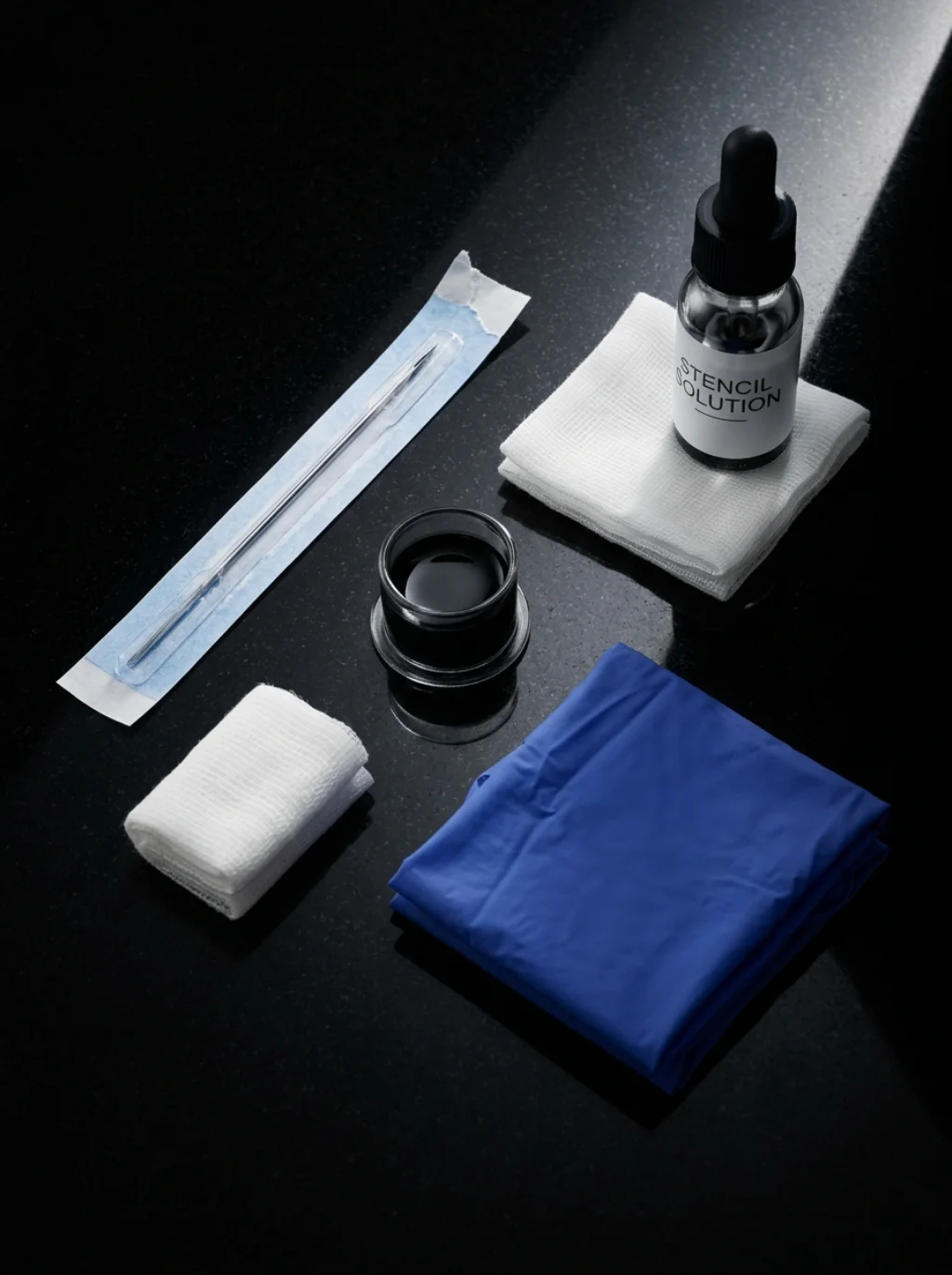
Stick and poke tattoo kit what is included in a proper professional setup comes down to four essentials: the needle, the ink, sterilization supplies, and skin preparation materials. The needle is not optional in its quality. A disposable needle stick and poke configuration — a single pre-sterilized tattoo needle or a 3RL (3-round liner) cluster — is the only acceptable starting point. Never use a sewing needle tattoo approach. Sewing needles aren’t designed for skin penetration at tattoo depth, they’re not shaped correctly for controlled ink dispersion, and they create unnecessary trauma to the dermis. This distinction matters enormously and the internet’s enduring promotion of sewing needles as an accessible alternative has caused significant preventable harm.
Stick and poke tattoo ink selection is the second critical variable. The ink that goes into your skin needs to be specifically formulated for dermal use — not india ink from an art supply store, not pen ink, not printer ink. India ink stick and poke safety is a persistent myth: india ink is not sterile, contains compounds not intended for dermal application, and has caused infections and allergic reactions in documented cases. Intenze tattoo ink brand and Kuro Sumi tattoo ink brand produce professional-grade formulations specifically engineered for controlled ink dispersion in skin — these are the starting points for any conversation about stick and poke tattoo ink that is safe to use.
Sterilization Is Not Optional: The Non Negotiable Safety Standard
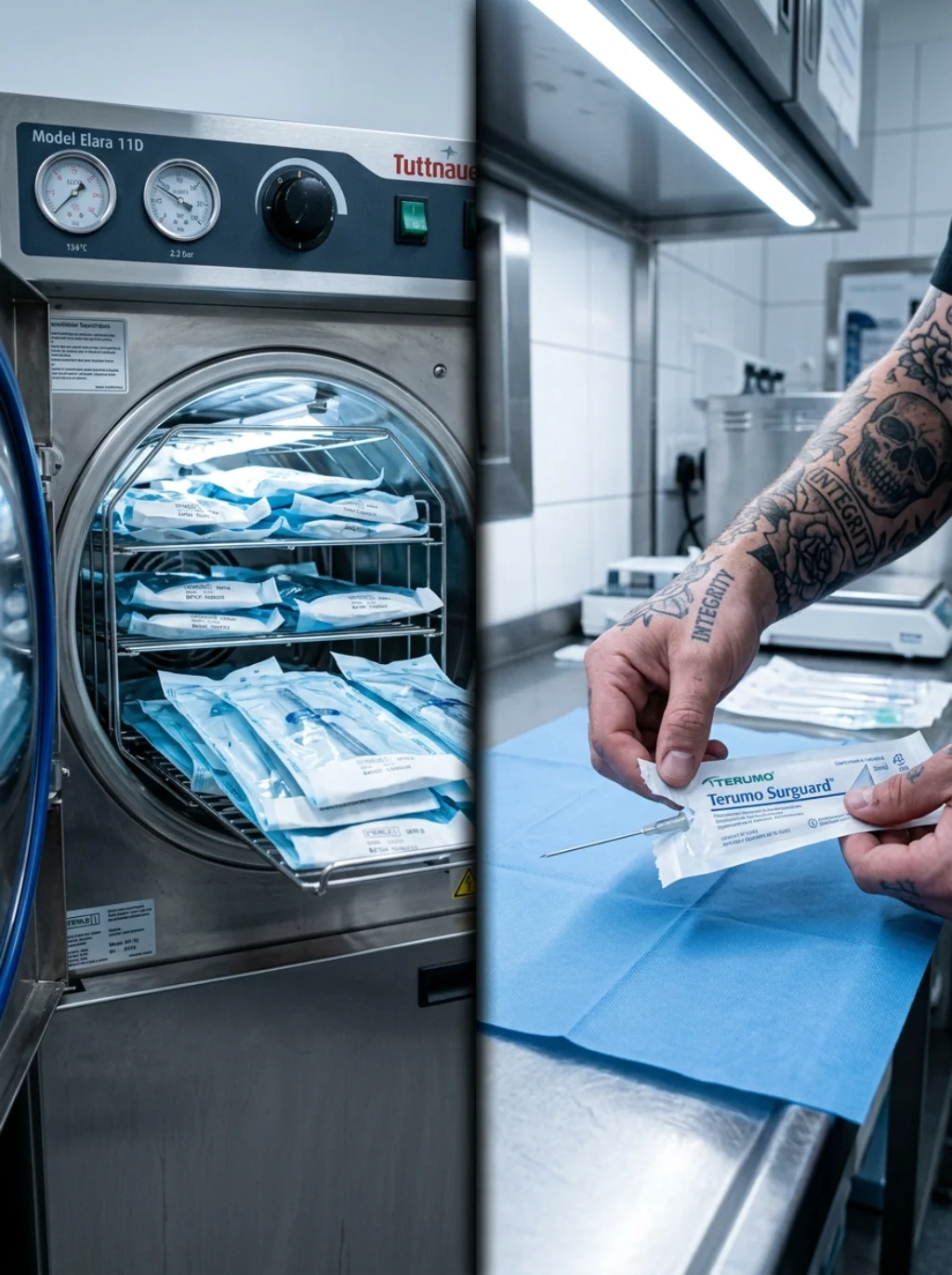
Stick and poke tattoo safety begins with a principle that no amount of technique skill can compensate for: everything that contacts the skin or the ink must be sterile. A single contaminated needle in an unsterilized work environment creates a vector for hepatitis B, hepatitis C, MRSA, and HIV transmission — infections whose consequences range from permanently debilitating to fatal. Stick and poke tattoo infection signs and prevention education must precede any hands-on practice. The learning sequence is sterilization first, technique second. Always.
Stick and poke sterilization method for professional practitioners involves autoclave sterilization of reusable metal tools and exclusively single-use disposable needles — opened in front of the client from sealed sterile packaging. DIY tattoo at home practitioners who skip autoclave access should use pre-sterilized single-use disposable tattoo needles purchased from Alliance Tattoo Supply or Hildbrandt tattoo supply — never attempt to sterilize needles with flame, alcohol wipes, or boiling water, all of which are insufficient for achieving true sterility. Alcohol wipes clean but do not sterilize. This distinction is not semantic. It is the difference between a safe session and a serious medical event.
The Technique Beneath the Tap: Mastering Depth Angle and Pressure
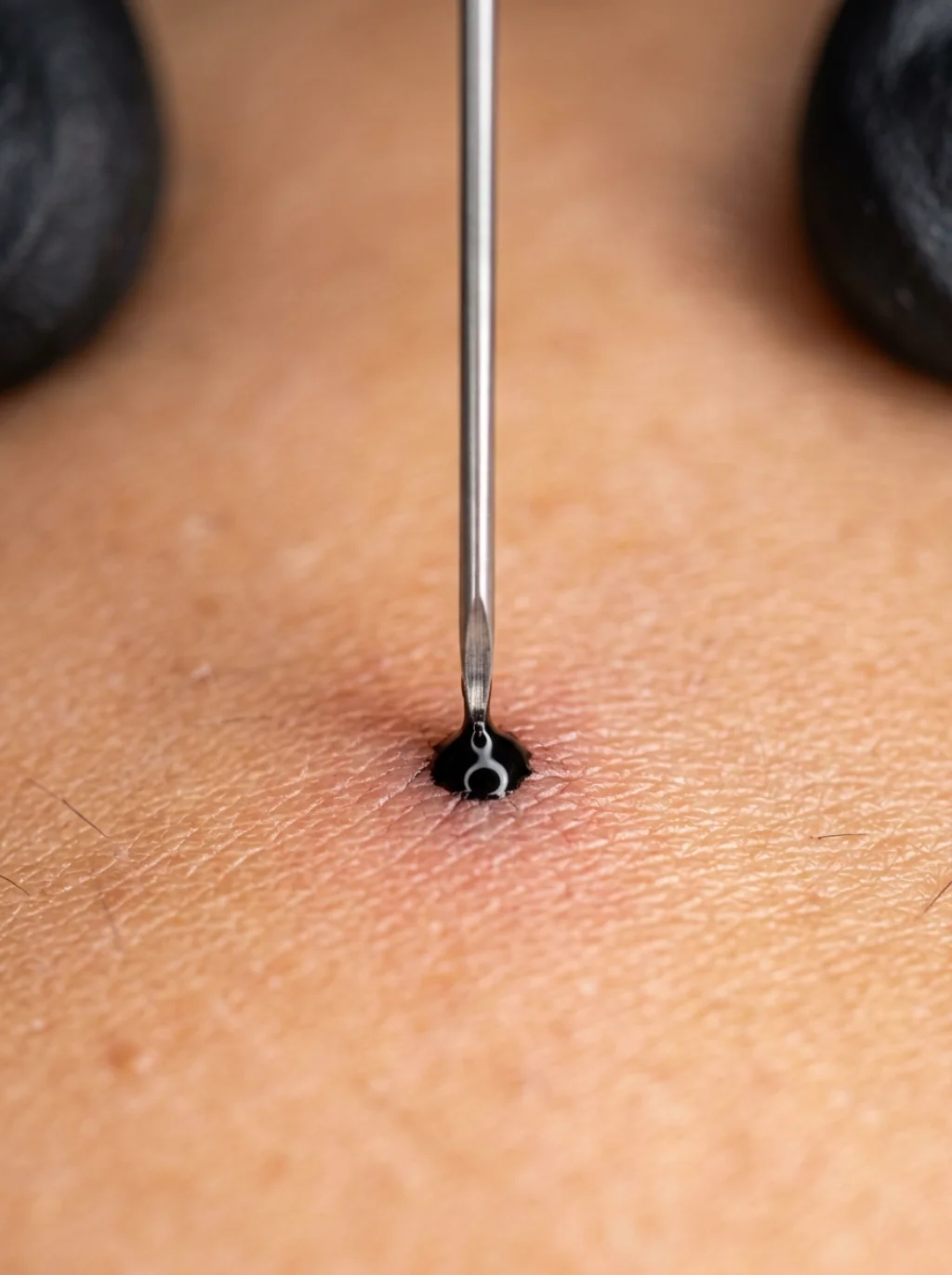
Stick and poke tattoo depth technique is the single most consequential technical variable in hand poke work. Too shallow and the ink sits in the epidermis — the outermost skin layer — and falls out completely during healing as the skin regenerates. Too deep and the ink disperses into the hypodermis below the dermis, causing blowout — the blurred, bruised appearance that indicates ink has spread beyond its intended position. The target is the dermis: the layer approximately 1 to 2 millimeters below the skin surface. Reaching it consistently, across different body locations with different skin thicknesses, is the core technical challenge that separates competent hand poke work from inadequate work.
Stick and poke tattoo depth technique for controlled application uses the needle at a 90-degree angle to the skin surface for straight lines and dot work. The entry should be firm but not forceful — you’re not stabbing, you’re placing the needle tip into the dermis with controlled downward pressure and immediately withdrawing. The characteristic sound and feel of correct dermis contact is subtle but learnable. Hand poke tattoo line quality improves dramatically once the practitioner develops tactile awareness of depth — the slight resistance change as the needle passes through the epidermis into the dermis. Single needle tattoo technique at this depth level produces lines with a specific softness at the edges that stick and poke fine line tattoo collectors specifically seek.
Why Hand Poke Lines Hit Different Than Any Machine Can Produce
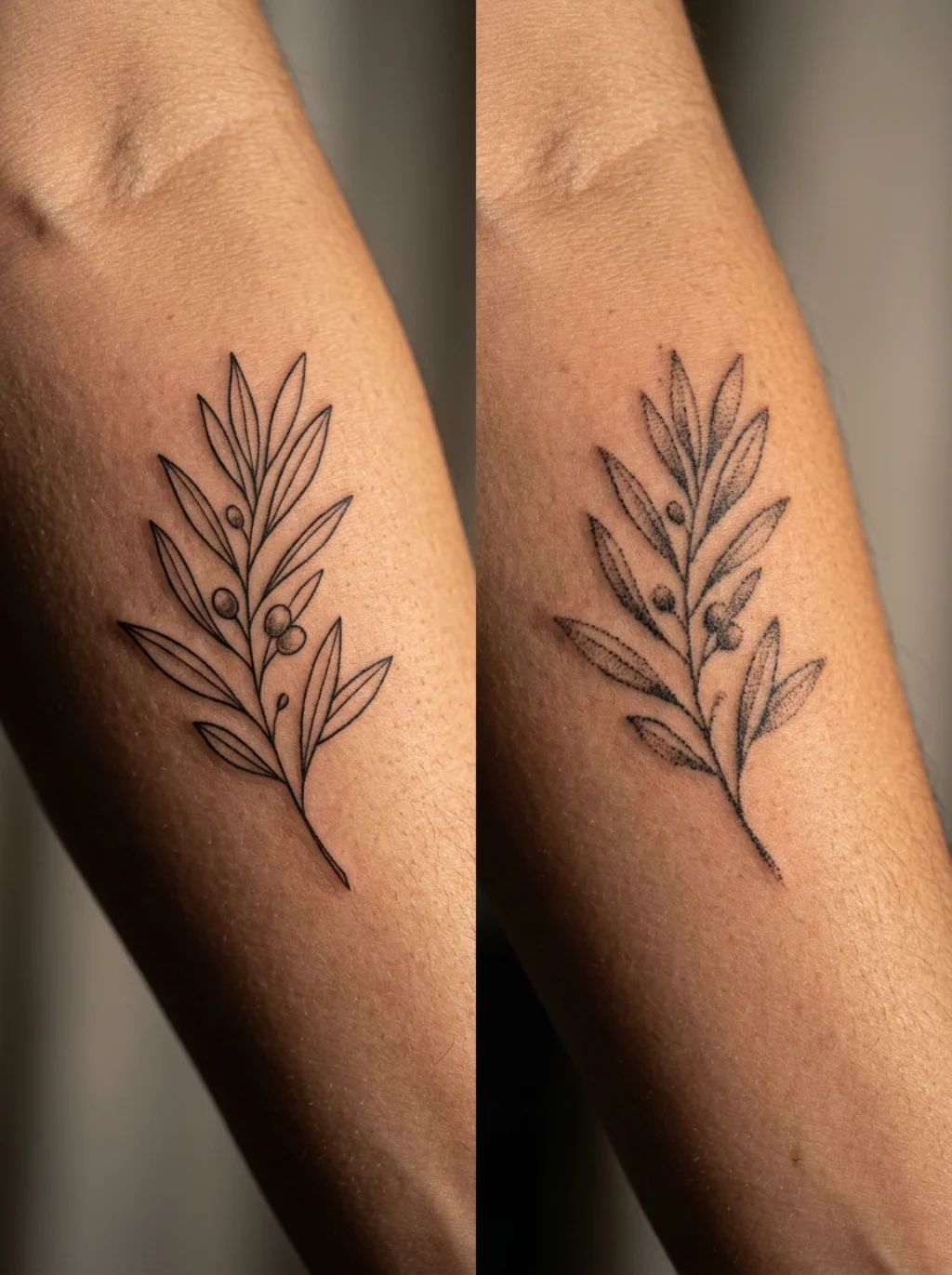
The organic tattoo line quality that hand poke produces isn’t an accident of lesser skill — it’s a direct result of the technique’s fundamental mechanics. A machine needle vibrates at 50 to 150 cycles per second, driving ink into the skin through rapid mechanical repetition. A hand poke needle enters the skin once per intentional tap, depositing ink in individual controlled points. The accumulation of these individual points, each slightly varied by the natural micro-tremor of the human hand, creates a line quality with genuine biological character — the mark of a human making something by hand rather than a machine executing a program.
Stick and poke vs machine tattoo difference in line quality is most visible in fine line botanical work, lettering, and geometric designs where the edge quality of every line is central to the design’s legibility and beauty. Hand poke tattoo lines in fine work show a slight softness at the edges — not blurriness but a gentle transition from full density to skin — that photographs with extraordinary sensitivity and reads on healed skin with a quality that experienced collectors describe as “alive.” Analog tattooing revival culture has built its entire aesthetic around this specific quality. Machine tattooing achieves its own perfections but this particular quality — the organic, imperfectly perfect line — is exclusively the hand poke’s domain.
Stick and Poke Tattoo Designs That Work and Those That Absolutely Don’t
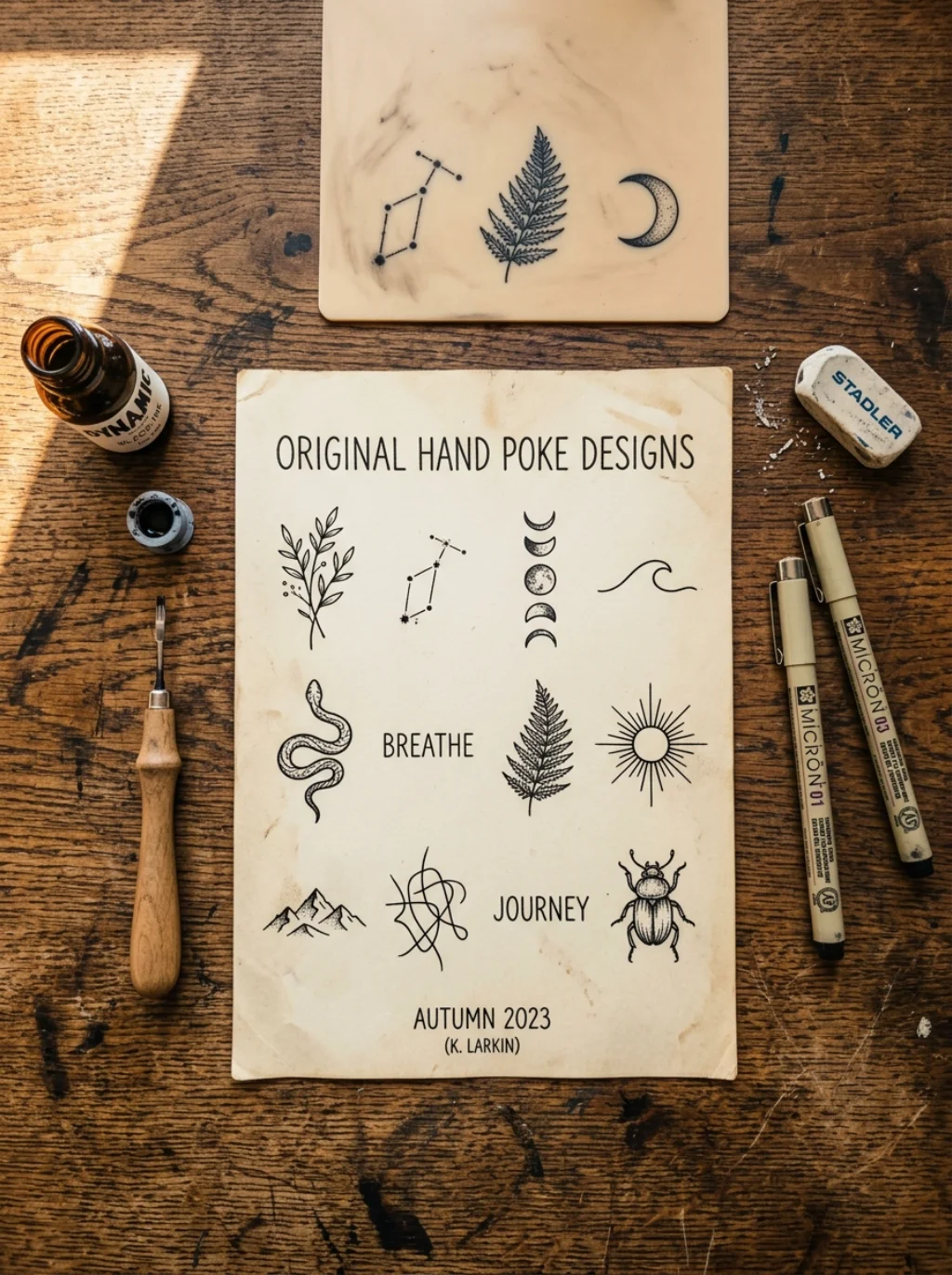
Stick and poke tattoo designs simple and small succeed because the technique’s fundamental character — controlled dot placement building line and tone — aligns naturally with minimalist design vocabulary. Stick and poke botanical tattoo design, geometric patterns, constellation maps, single-element minimal figures, and text in clean typefaces all perform exceptionally in hand poke execution. Stick and poke flash tattoo designs built around these categories are the bread-and-butter of professional hand poke studios precisely because they play to the method’s genuine strengths rather than fighting against its inherent constraints.
you may also like this:22 Ankle Bracelet Anklet Tattoo Ideas for a Delicate Look
Designs that struggle in hand poke execution include large areas of solid fill, complex photorealistic portraiture, and any composition requiring precisely even gradient shading across a large surface. The same dot-placement mechanic that creates beautiful fine line work produces slow, laborious results when filling a large black area — a task that a machine completes in minutes can take hours of hand poke work, creating significantly more trauma to the skin without necessarily producing a superior result. Stick and poke tattoo ideas for beginners should sit at the simpler end of this spectrum — a single botanical element, a constellation, a short word — where the method’s strengths are fully expressed and its limitations are irrelevant.
Ink Selection Decoded: The Only Products Safe Enough for Your Skin
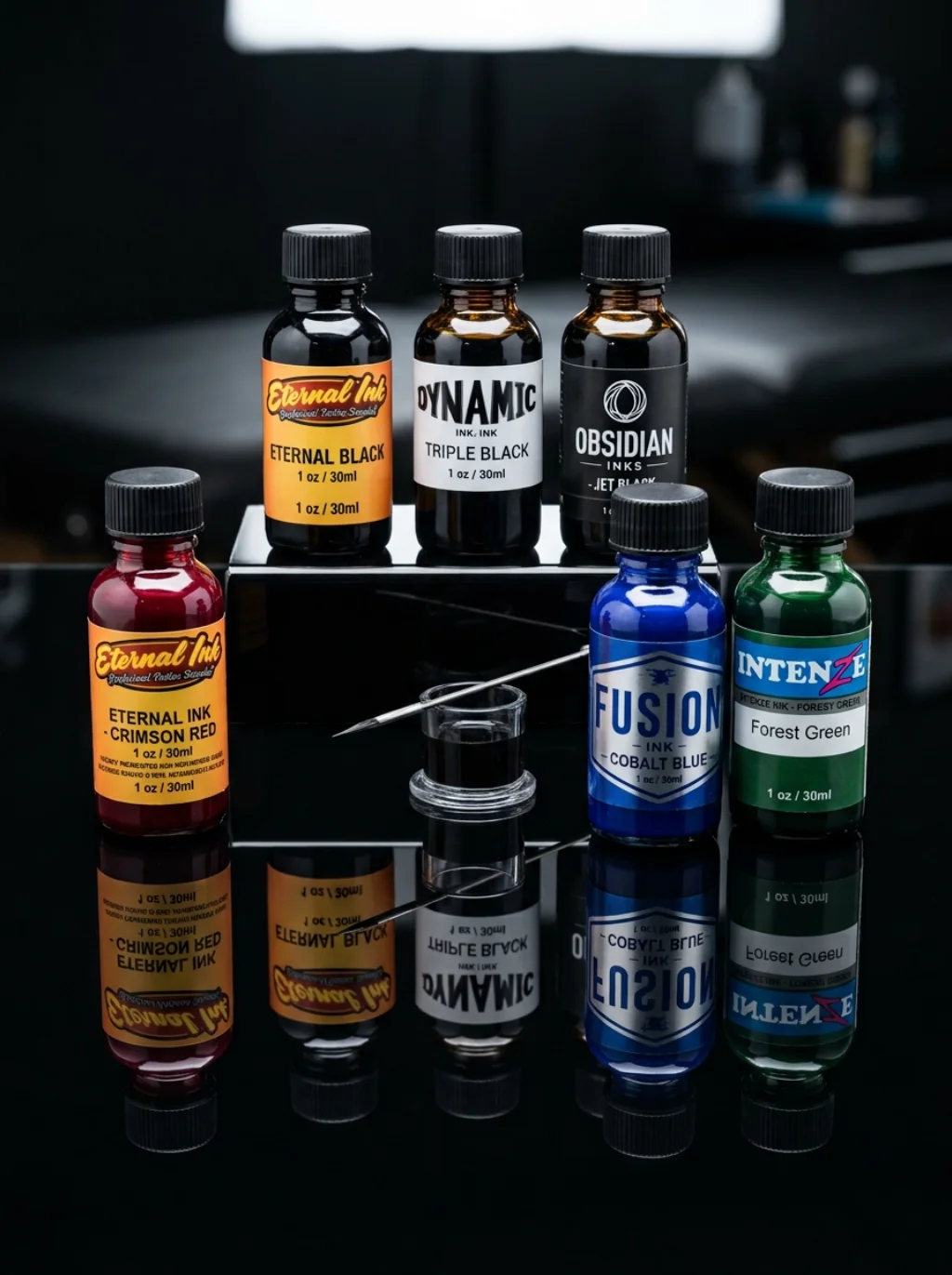
Stick and poke tattoo ink that is safe to use narrows quickly when you apply proper criteria: sterile formulation, dermal compatibility testing, stable pigment chemistry, and professional manufacturing standards. Intenze tattoo ink brand and Kuro Sumi tattoo ink brand lead the professional recommendation list for black ink specifically — both produce formulations with high carbon particle concentration that sits well in the dermis, heals cleanly, and maintains its density over time without spreading or fading disproportionately. Stick and poke color tattoo work introduces additional complexity because color pigments have historically contained compounds — certain red pigments, blue pigments — that trigger delayed allergic reactions in sensitized individuals.
Stick and poke color ink saturation presents a specific technical challenge beyond safety. Color ink in hand poke application requires significantly more passes over the same area to achieve the saturation that machine tattooing accomplishes in a single efficient pass. Stick and poke tattoo color vs black ink comparison across healed results consistently shows that black ink outperforms color in longevity and clarity in hand poke work — the carbon particles in black formulations are smaller and more uniformly shaped than most color pigments, making them more precisely placed by the individual tap method. Color can be done beautifully in hand poke — it simply demands more technical experience and more patient session management than black work does.
The Pain Truth: Does Hand Poking Actually Hurt More Than a Machine
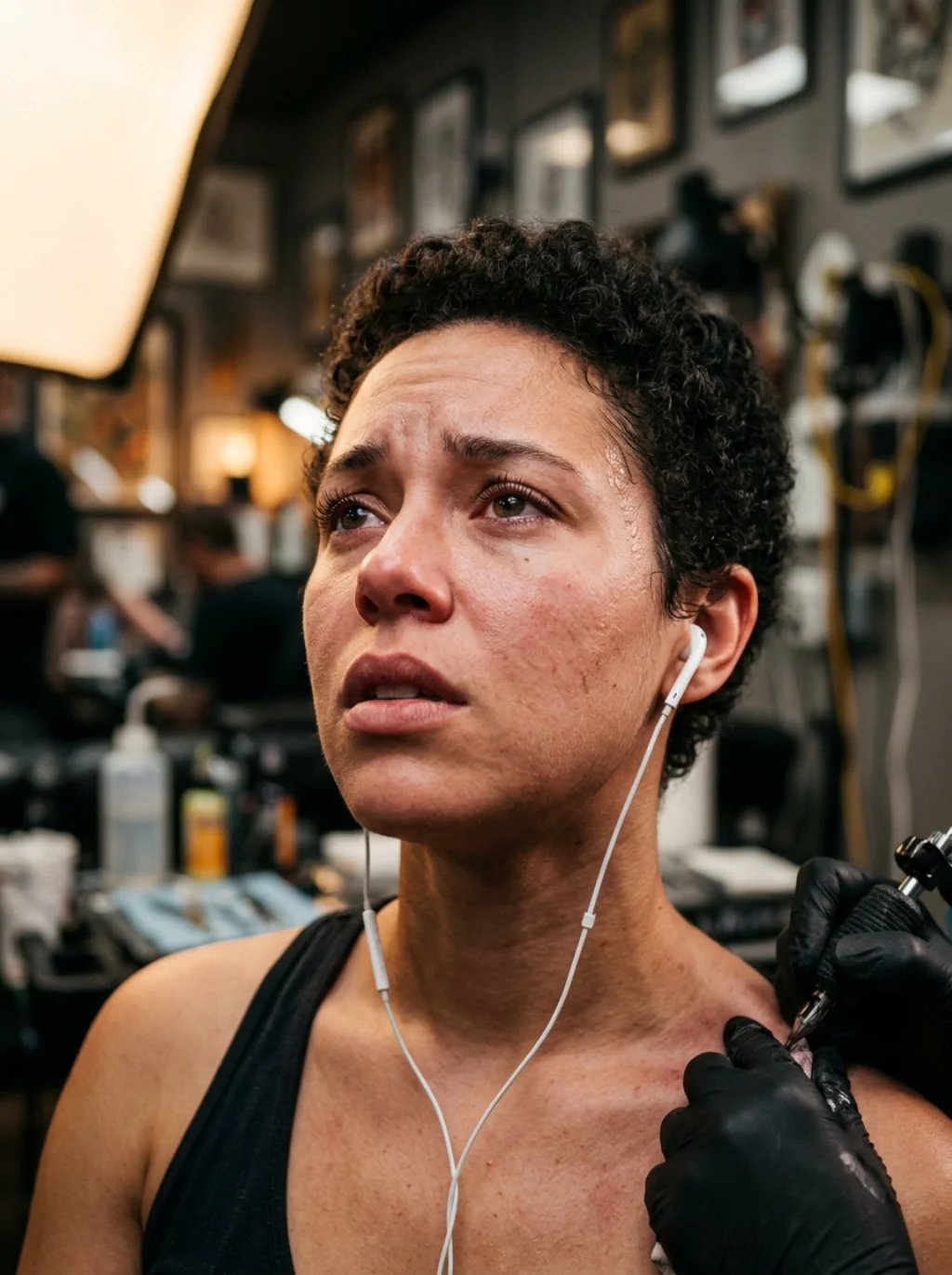
Does stick and poke tattoo hurt more than machine is one of the most genuinely contested questions in the entire field and the honest answer is: it depends on the specific location, the specific artist’s technique, and the individual’s pain perception. Machine tattooing delivers rapid continuous sensation — a buzzing, scratching quality that the nervous system tends to adapt to over time. Hand poke tattoo delivers individual discrete sensations — each tap is a separate event — which some people find more manageable and others find more difficult because there’s no sustained stimulus to adapt to.
Stick and poke tattoo numbing cream options are available and appropriate for anyone who wants to reduce the sensory experience of the session. EMLA cream applied 60 to 90 minutes before the session under plastic wrap occlusion creates effective topical anesthesia. Stick and poke tattoo numbing with TKTX or Hush Gel offers similar results with shorter application times. The numbing effect creates one complication worth noting: numbed skin changes texture slightly, becoming slightly more rubbery — experienced hand poke practitioners adjust their tapping technique accordingly because the haptic feedback that tells them they’ve reached dermis depth changes when the skin is anesthetized. This adjustment is manageable with experience but worth noting for first sessions.
Placement Strategy: Surfaces That Reward Hand Poke and Those That Don’t
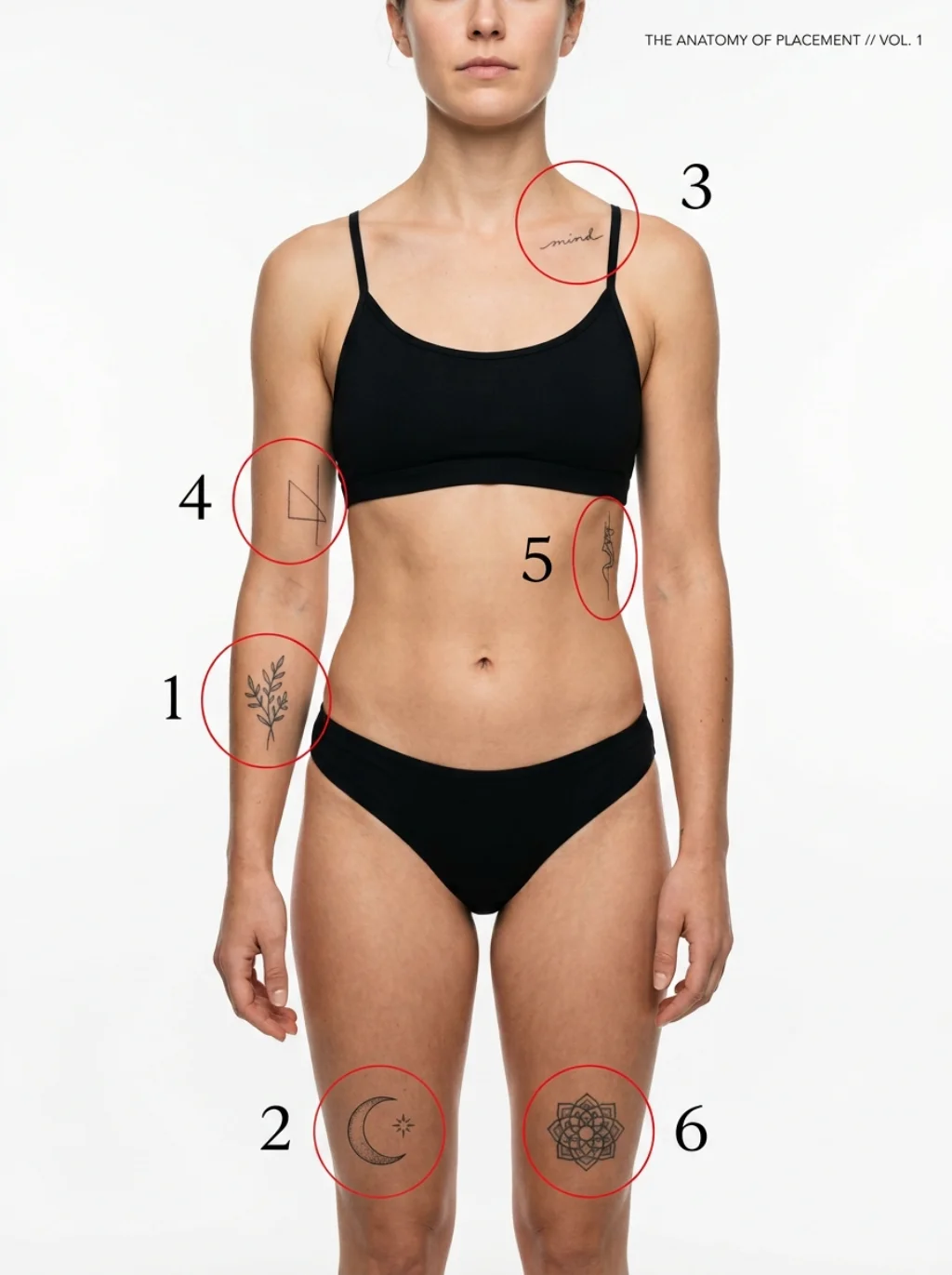
Stick and poke tattoo placement ideas that work most consistently are flat-to-slightly-curved body surfaces where skin thickness is moderate and there’s sufficient subcutaneous tissue to stabilize the skin during tapping. The outer forearm, the upper arm, the calf, the thigh, and the shoulder blade are the most reliably excellent hand poke locations — they offer stable working surfaces, moderate skin thickness, and healing environments that favor clean ink retention. Stick and poke on wrist placement on the inner wrist works well for small designs but the skin there is thin and the healing environment is challenging because the wrist flexes constantly.
Stick and poke tattoo on fingers and hands represents the most challenging placement category for any tattoo method and particularly for hand poke. Finger skin is thin, experiences constant movement-induced friction, is exposed to regular hand washing and UV light, and heals notoriously poorly for ink retention. Do stick and poke tattoos fade faster on fingers — the answer is yes, significantly, and this applies to machine tattoos as well. Any artist who tells you that a finger tattoo will hold its quality for more than a few years is either optimistic or uninformed. Design accordingly — small, simple, and bold enough to remain legible even after significant fading.
Stick and Poke Tattoos on Dark Skin: The Visibility and Technique Shift
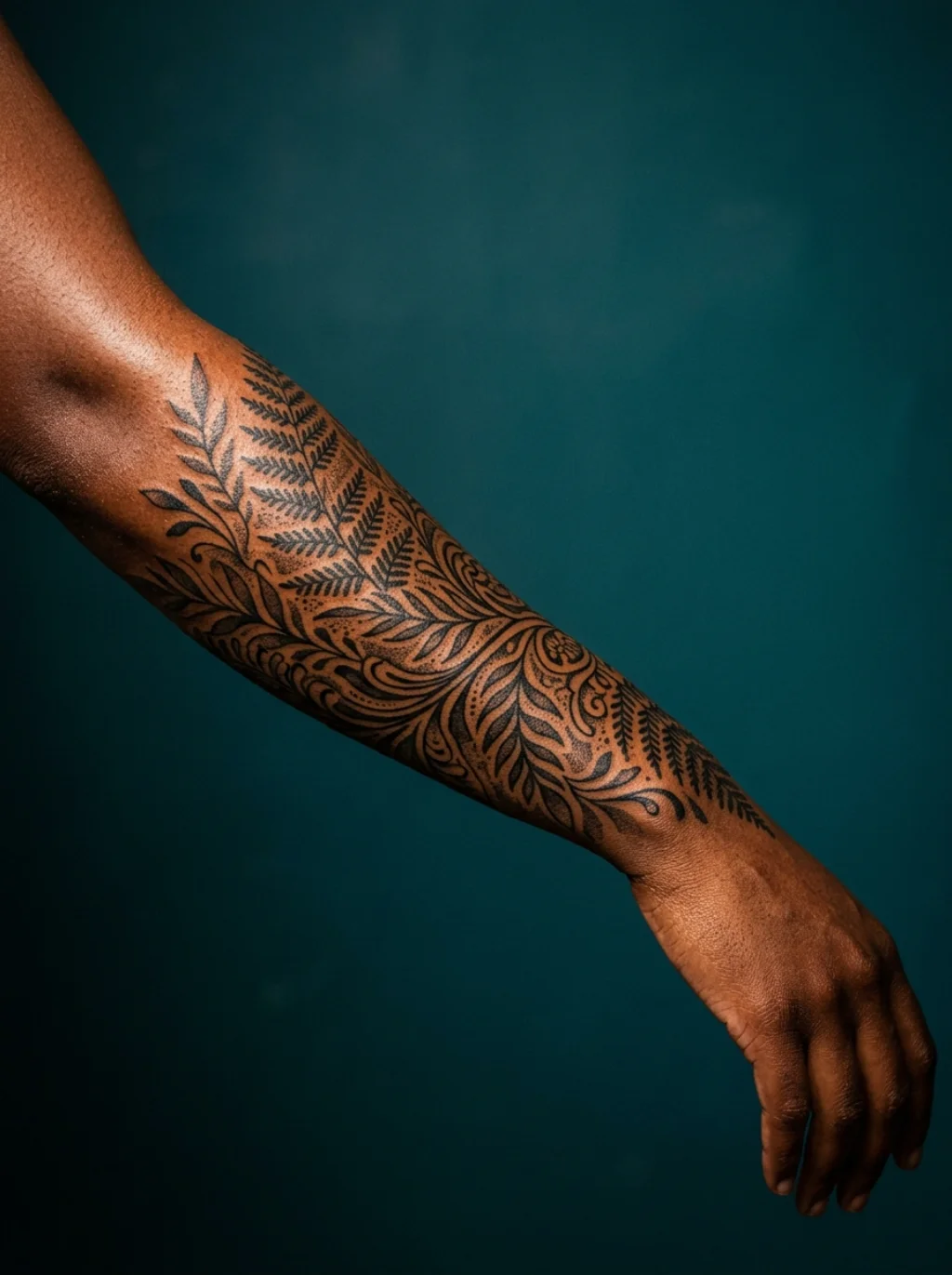
Stick and poke tattoo on dark skin tones requires both technical adjustment and design strategy recalibration. The fundamental principle — black ink on darker skin tones requires higher contrast design choices to maintain visibility — applies to hand poke work with particular intensity because the method’s characteristic fine lines and soft edges can become difficult to read on skin with higher melanin concentrations unless the design accounts for this from the beginning. Hand poke tattoo designs on darker skin should favor bolder line weights, higher design density, and motifs that read clearly at reduced contrast rather than fine line minimalism that disappears against darker epidermis.
Stick and poke tattoo on dark skin tones additionally requires attention to ink depth because darker skin tones don’t visually telegraph the depth landmarks that lighter skin shows. The slight redness that appears around correctly placed ink on light skin — a useful real-time depth indicator — is less visible on darker skin, requiring the practitioner to rely more heavily on tactile depth feedback and more conservative initial tapping to avoid going too deep and causing unnecessary blowout. Stick and poke tattoo ink formulations with higher pigment concentration perform better on darker skin — the denser carbon particle saturation in premium professional inks creates more visible contrast against melanin-rich epidermis than diluted or low-quality ink formulations.
Healing Timelines That Differ Radically From Machine Tattoo Recovery
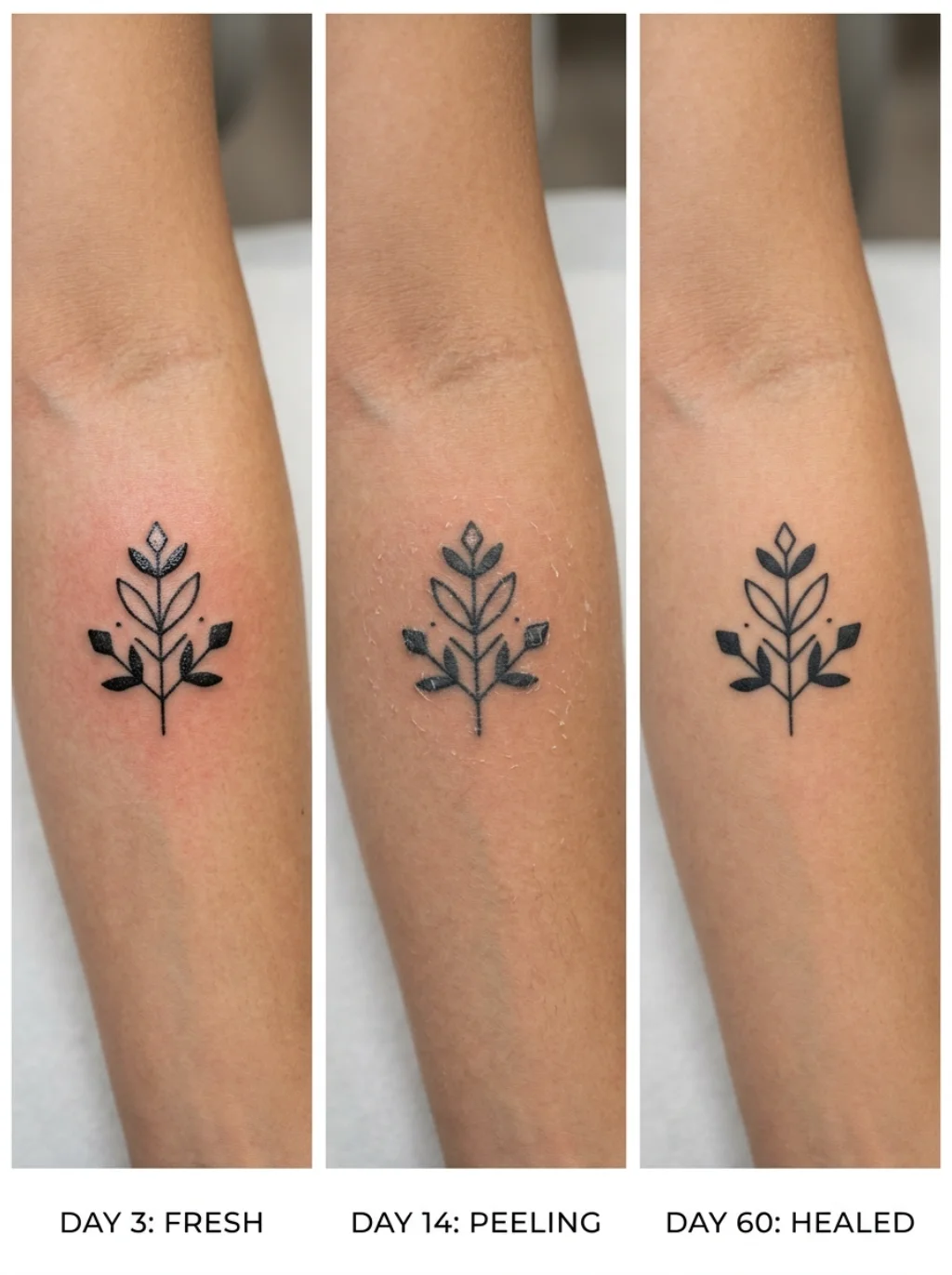
Stick and poke tattoo healing time and process unfolds differently from machine tattoo healing in ways that catch many first-time hand poke collectors off guard. The initial surface healing — the period of weeping, redness, and skin tightening — typically completes within five to seven days for hand poke work compared to three to five days for equivalent machine work on the same placement. This slower initial healing reflects the different tissue trauma profile: machine tattooing creates a large number of needle entries over a short time period while hand poke creates fewer entries over a longer period, but with each individual entry creating slightly more controlled puncture trauma.
Stick and poke tattoo aftercare instructions follow the same fundamental logic as machine tattoo aftercare — keep clean, keep moisturized, avoid sun exposure, don’t pick the peeling skin — but the peeling phase in hand poke healing often shows more visible ink loss than machine healing does. This apparent ink loss is normal and expected. Much of what appears to peel away is surface-layer ink that sat in the epidermis rather than the dermis — the dermis-seated ink remains permanently. Stick and poke tattoo healing completes its deep dermal phase at approximately six to eight weeks, after which the true healed appearance becomes visible. Many hand poke collectors report that their tattoos look better at six months than they did at six weeks — the settling process that machine tattoos undergo applies equally here.
The Blowout Problem: Preventing the Mistake That Ruins Hand Poke Work
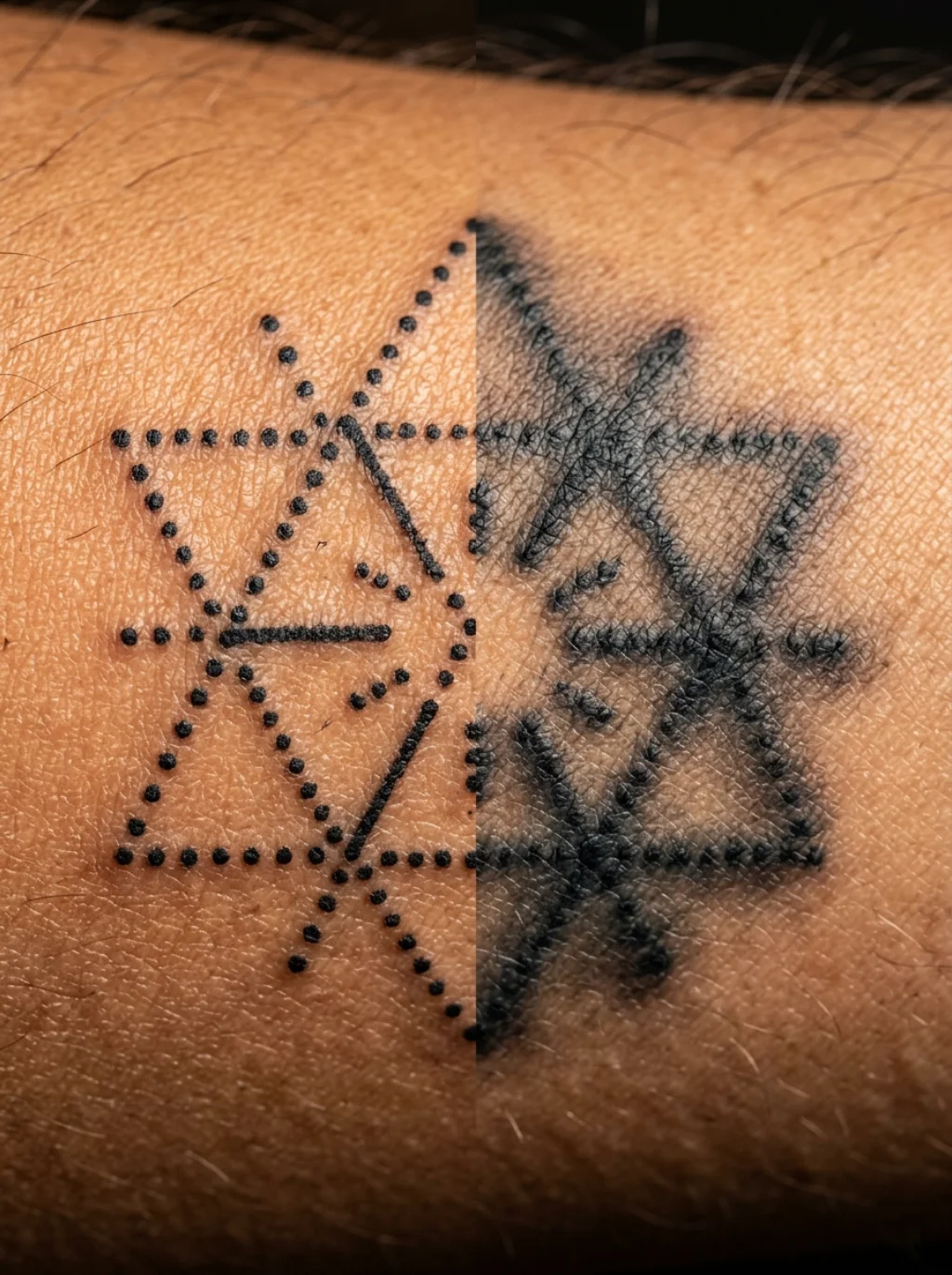
Stick and poke tattoo blowout prevention starts with understanding what blowout actually is — not just technically but mechanically. When the needle penetrates past the dermis into the hypodermis, the ink disperses into fatty subcutaneous tissue that has no structure to contain it. The ink spreads outward from the entry point in an irregular pattern, creating the characteristic blurred, bruised halo around a line or dot that defines blowout. In hand poke work, blowout results most commonly from excessive tapping force, incorrect needle angle, or insufficient skin stretch during application.
Hand poke tattoo line quality with zero blowout requires three simultaneous correct practices: appropriate skin stretch with the non-dominant hand, consistent 90-degree needle angle, and tapping force calibrated to the specific skin thickness of the location being tattooed. Thinner skin — inner arm, inner wrist, top of foot — requires lighter force. Thicker skin — outer thigh, upper arm, calf — tolerates more pressure without risk. The artist’s tactile awareness of when they’ve reached dermis depth — developed through practice on artificial skin before approaching real skin — is the most important blowout prevention skill. Stick and poke tattoo skin stretch with two to three fingers of the non-dominant hand creating firm lateral tension on the working surface keeps the dermis at a consistent accessible depth and significantly reduces blowout risk on any placement.
Flash Sheets Botanicals and Geometry: Design Categories That Excel Here
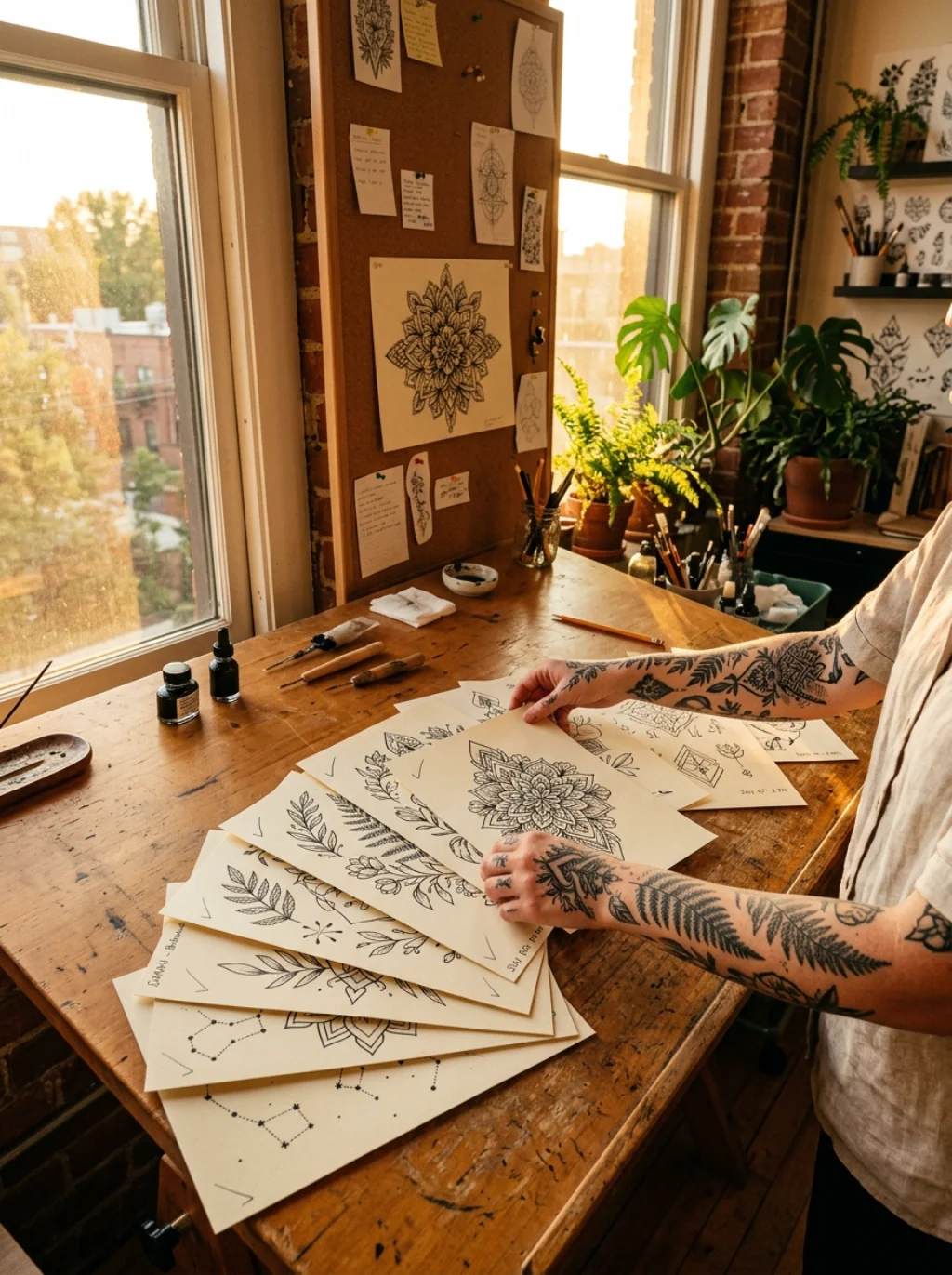
Stick and poke flash tattoo work has developed a specific aesthetic vocabulary that distinguishes it from machine flash in ways that go beyond mere technique. The best hand poke flash designs account for the method’s characteristic line quality in their construction — they use dot work rather than solid fills for tonal areas, they embrace slight irregularity in supposedly straight lines as a feature rather than fighting it as a flaw, and they scale their complexity to the technique’s optimal output range rather than attempting to replicate machine-appropriate designs at a smaller scale.
Stick and poke botanical tattoo design excels in hand poke execution because botanical forms are inherently organic — slight variations in line weight and the natural micro-tremor of the hand actually enhance the biological character of plant illustrations rather than detracting from it. Stick and poke geometric tattoo work produces results that many collectors consider superior to machine geometric at small scale — the individual dot-placed corners and the slight softness of the joined lines create a quality that reads as handcrafted in the most valued sense. Stick and poke moon phase tattoo designs have become something of a genre emblem for the contemporary hand poke movement — a design category so well-suited to the technique that it’s become the hand poke flash equivalent of the traditional machine flash rose.
Stick and Poke Tattoo Lettering: The Craft That Requires Real Patience
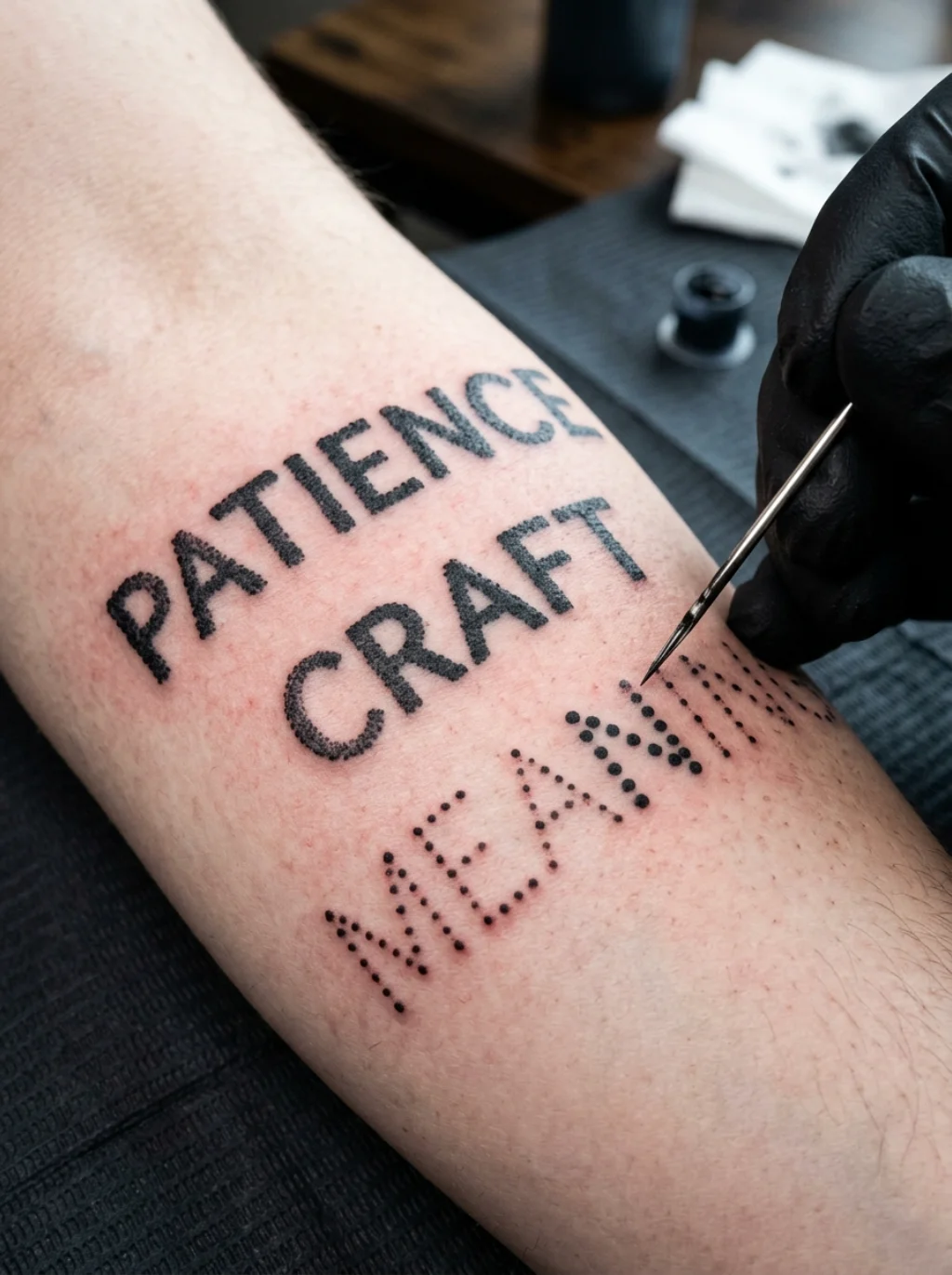
Stick and poke tattoo lettering ideas represent one of the most technically demanding applications of the method and one of the most rewarding when executed well. Lettering in hand poke requires that every letter be constructed from individual dot placements that collectively build readable characters — there’s no continuous line that you can modify mid-execution the way a machine linework pass allows. Each dot goes where it goes and the cumulative accuracy of hundreds of individual placements determines whether the final word reads cleanly or collapses into illegibility.
Stick and poke lettering technique best practice involves pre-mapping each letterform — either with a skin-safe transfer pen marking or a careful mental plan — before beginning any ink placement. The spacing between letters is established first, then each letter is built from its defining points outward. Stick and poke tattoo lettering in serif typefaces is particularly challenging because the serifs require precise dot placement at the letter terminators — a millimeter of error at the serif tip creates visible misalignment in the finished letterform. Sans-serif typefaces are more forgiving. Script and handwritten styles are more forgiving still because their organic character absorbs minor placement inconsistencies rather than exposing them.
Color Ink in Hand Poke Work: The Saturation Challenge Nobody Warns You About
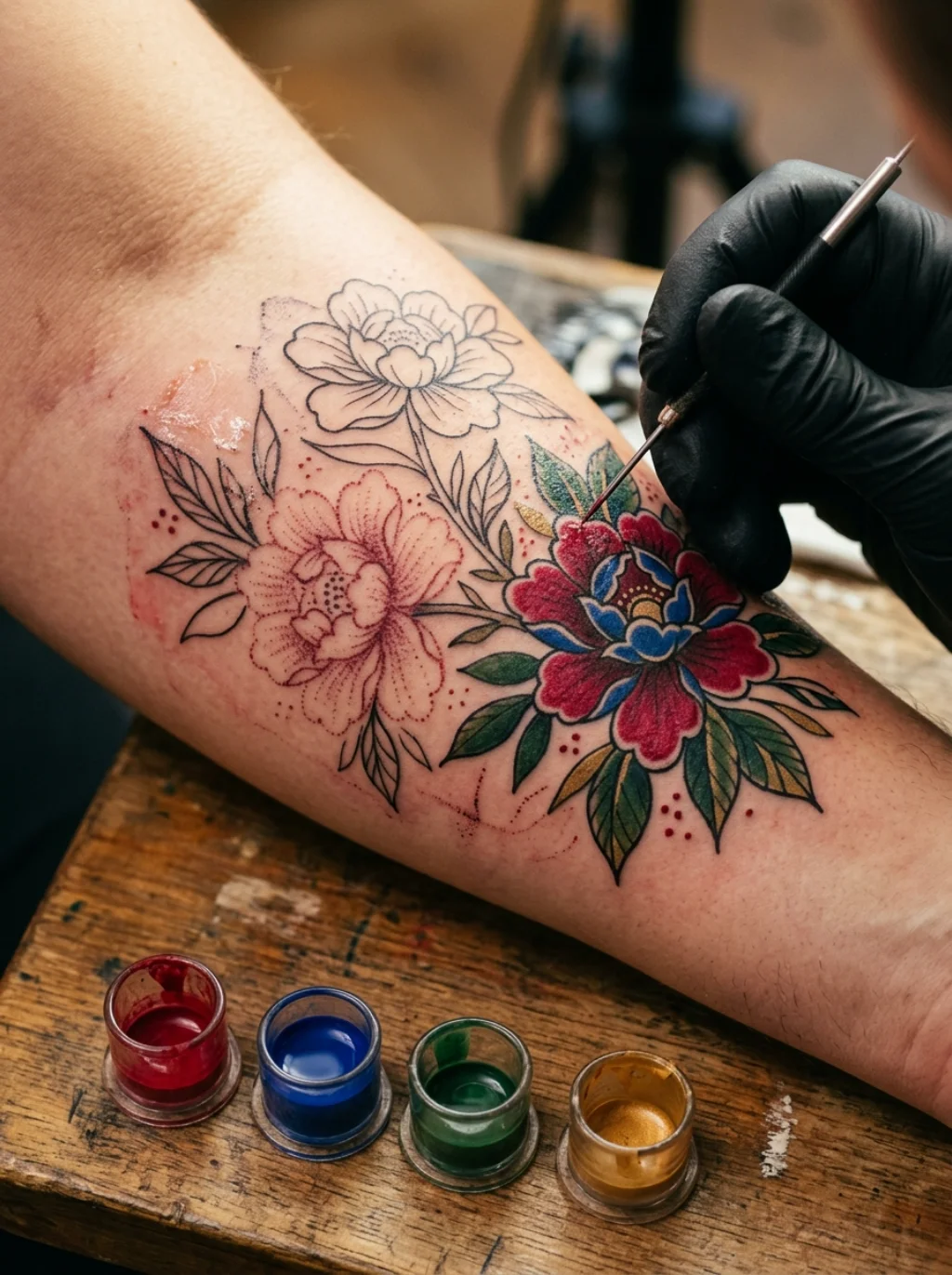
Stick and poke color tattoo application requires understanding that color pigment particles are physically larger and less uniformly shaped than carbon-based black pigment particles. This physical difference means that color ink disperses differently in the dermis — less predictably, with more tendency toward edge blurring at individual tap sites — and requires significantly more passes to achieve the same apparent saturation that black achieves in fewer taps. Stick and poke tattoo color vs black ink comparison in healed results consistently shows a larger quality gap with hand poke application than with machine application, because machine tattooing’s mechanical efficiency compensates for color’s inherent challenges.
Stick and poke color ink saturation strategy for professional hand poke artists involves working in systematic layers — completing the outline and black elements first, then building color in overlapping tap grids that gradually increase saturation with each pass. The skin needs rest between passes: continuing to tap over skin that’s already been worked recently in the same session creates trauma accumulation that reduces ink retention rather than increasing it. Stick and poke tattoo color vs black ink advice from experienced practitioners consistently recommends that beginners work exclusively in black for their first year of practice — mastering the depth and consistency fundamentals before adding the additional variable of color pigment behavior.
DIY Culture Versus Professional Studio: An Honest Risk Comparison
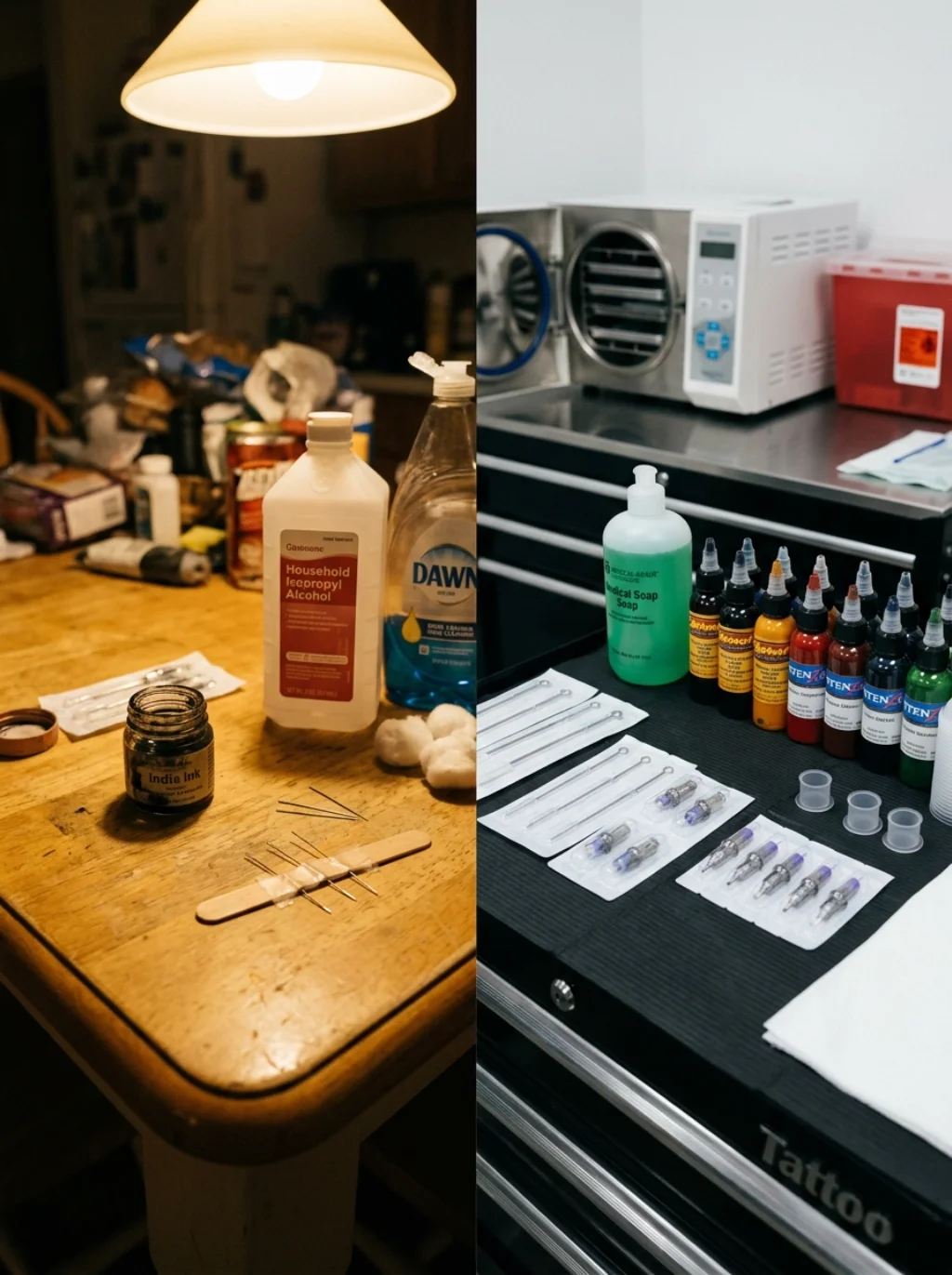
How to make a stick and poke tattoo at home safely versus visiting a professional hand poke studio aren’t equivalent options regardless of how the DIY community frames the choice. A professional hand poke tattoo artist operating in a licensed studio works in an environment with autoclave sterilization, regulated ink sourcing, professional cross-contamination prevention protocols, and liability insurance that incentivizes safety at every step. DIY tattoo at home practice operates without any of these structural safety guarantees regardless of the individual practitioner’s personal commitment to care.
Stick and poke tattoo vs machine tattoo difference in the DIY risk context is that the lower equipment cost of hand poke supplies makes unsanctioned home practice more accessible — and therefore more common — than machine tattooing at home. Vice tattoo culture documentary coverage has documented both the genuine community and cultural value of DIY tattoo culture and the genuine medical risks that it creates. The honest risk comparison looks like this: home practice with professional-grade supplies, proper sterilization, and genuine technique knowledge carries lower risk than home practice with improvised materials — but both carry meaningfully higher risk than professional studio practice. The choice between them is ultimately about informed autonomy.
The Prison Tattoo Legacy That Shaped Stick and Poke Aesthetic Forever
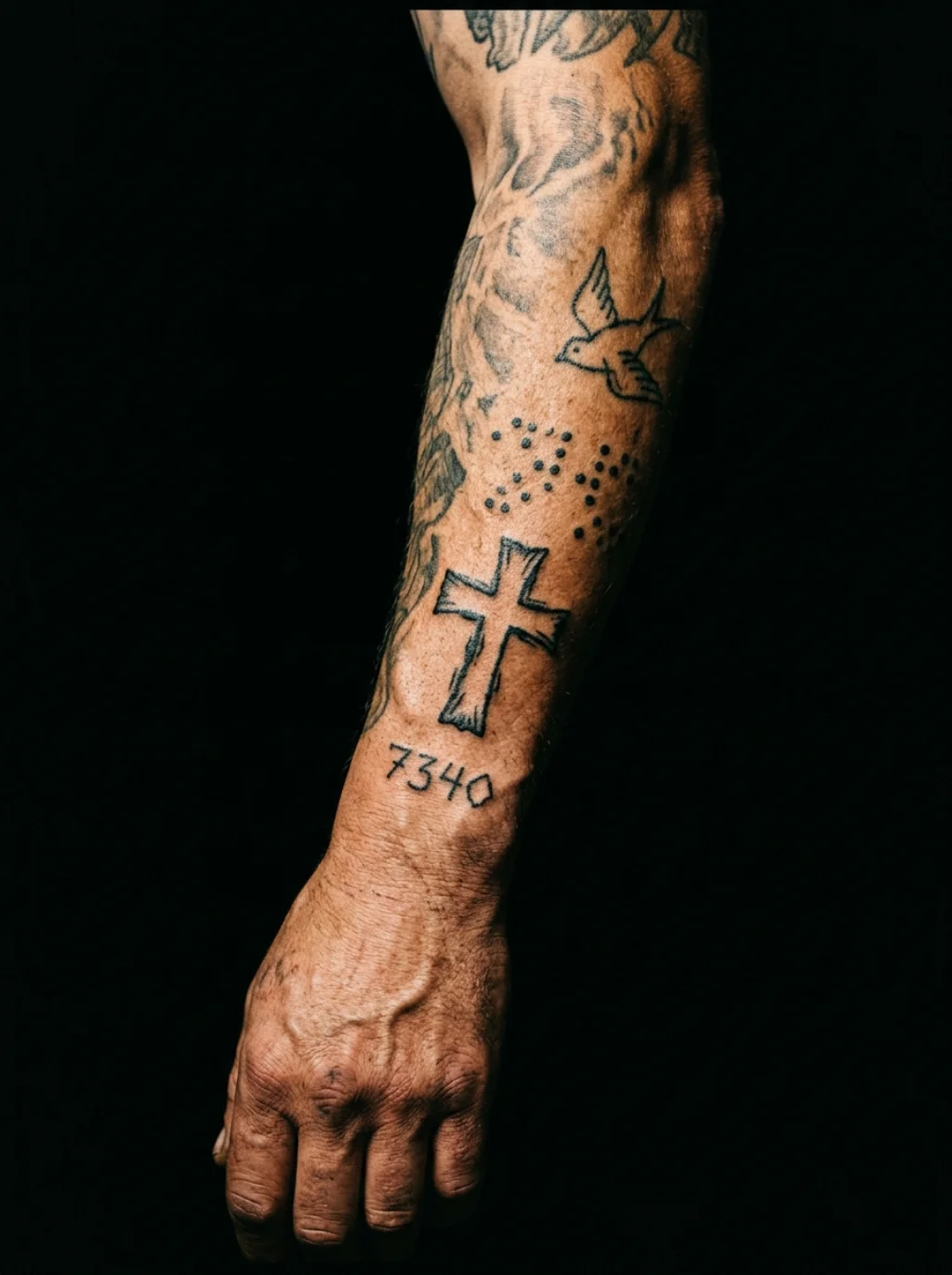
Stick and poke tattoo in prison history is the most direct link between the contemporary hand poke movement and the primitive body modification tradition it descends from. Prison tattooing — practiced across virtually every incarceration system in the world, from American penitentiaries to Soviet gulags to Japanese detention facilities — developed its visual vocabulary specifically in response to extreme material scarcity. A guitar string, a sharpened staple, a broken pen — these were the needles. Burnt plastic, pen ink, soot — these were the pigments. The designs that emerged from these constraints developed their own powerful aesthetic: dense, direct, high-contrast, frequently symbolic.
Stick and poke tattoo in prison history created design conventions — the simple cross, the teardrops, the spider web, the five dots — that carry specific meanings within incarceration subcultures and have subsequently migrated into mainstream tattoo aesthetics through a process of cultural diffusion that has simultaneously amplified and complicated their original significance. Counterculture tattoo identity in the contemporary hand poke movement engages with this legacy explicitly — the “made with nothing by someone who had nothing” aesthetic carries a particular authority that luxury studio tattooing can’t access. Outsider tattoo tradition remains central to the hand poke aesthetic even as the method has moved into sophisticated studio practice.
Removing a Hand Poke Tattoo: The Methods That Work and Their Limits
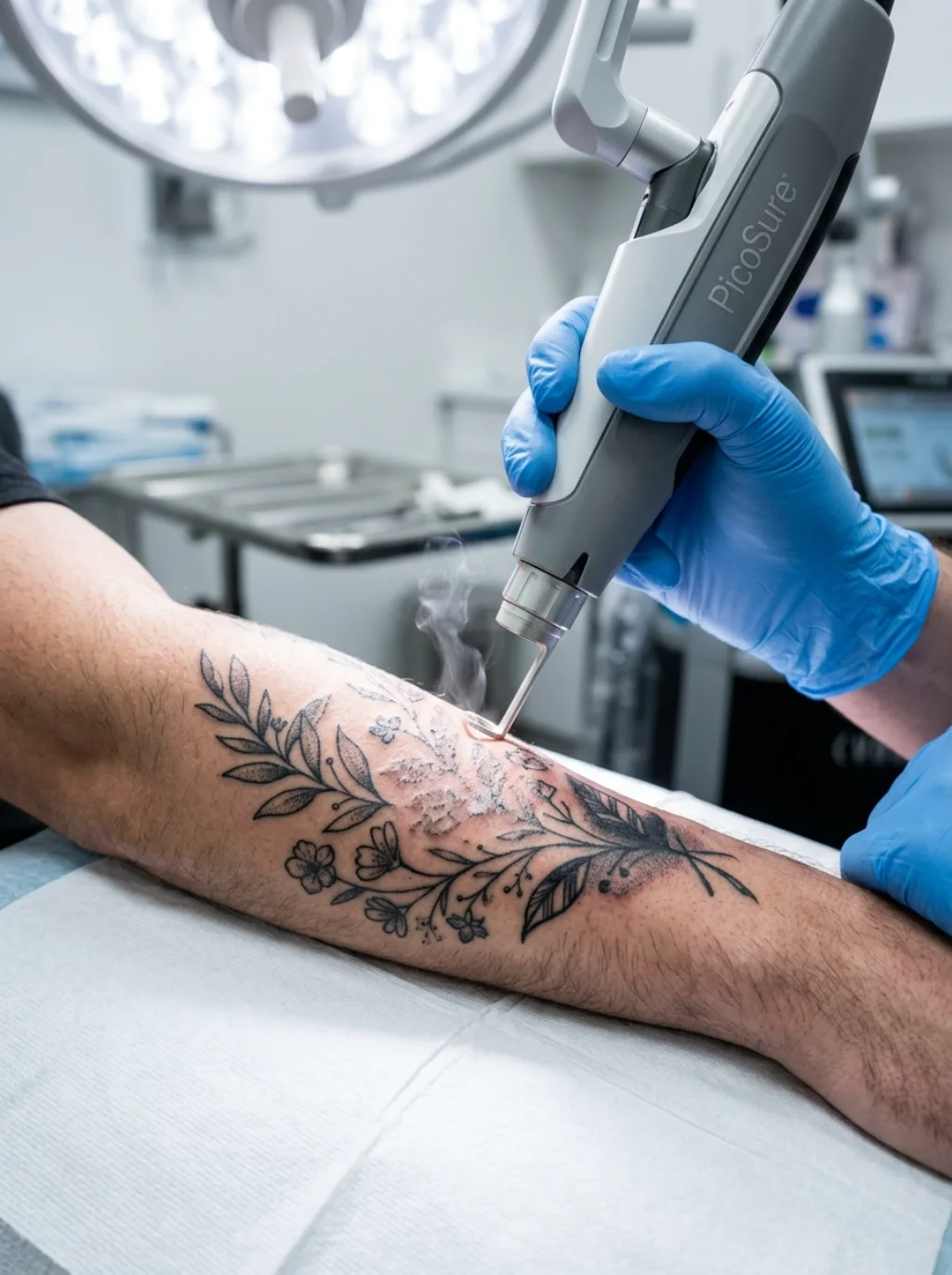
Stick and poke tattoo removal methods available to hand poke collectors are the same ones available for machine tattoos — primarily laser removal, with surgical excision and dermabrasion as less common alternatives. The relevant question for hand poke collectors is whether hand poke ink responds differently to laser removal than machine-applied ink. The answer is modestly yes: hand poke tattoo work tends to respond more readily to laser removal than equivalent machine work because the ink distribution is less uniform and the dermal placement is often slightly shallower. Fewer sessions may be required for equivalent clearance in many cases.
Stick and poke tattoo removal methods using Q-switched Nd:YAG lasers or the newer PicoSure technology work by delivering concentrated light energy to the ink particles, causing them to fracture into smaller pieces that the body’s immune system can absorb and eliminate. The process requires multiple sessions spaced six to eight weeks apart for skin healing between treatments. Black ink responds most effectively to laser removal. Color inks — particularly green and blue — respond less readily and may require more sessions or different laser wavelengths. Inkbox temporary tattoo alternative and similar products offer a genuinely risk-free way to test a design before committing to permanent ink — worth considering before any permanent session on a new or uncertain design.
The Meditative Quality That Machine Tattoos Simply Cannot Replicate

Meditative tattooing process is a phrase that appears frequently in hand poke practitioner accounts and it describes something genuinely distinct from the machine tattooing experience. The silence is part of it — no machine buzz, just the room’s ambient sound and the soft tap of needle on skin. The pace is part of it too. Hand poke proceeds at a fraction of machine speed, which means both artist and client spend significantly more time in the same shared space, in the same physical and mental relationship to the mark being made. Intimate tattoo ritual is the accurate description.
Therapeutic tattooing experience in the hand poke context has been described by practitioners and clients alike as a form of embodied presence — the slow, deliberate nature of the process creates a quality of attention to the body and the moment that faster processes don’t generate. Intentional mark making at this pace resembles other slow craft practices — bookbinding, letterpress printing, throwing clay — in the way it demands and rewards patience. Several practitioners have described their sessions as resembling meditation practice more than any other tattooing experience they’ve had. The machine’s efficiency is genuine and valuable. But efficiency and contemplation are different experiences and they produce different kinds of meaning.
Stick and Poke Tattoos Across Cultures: Polynesia Prison Punk and Beyond
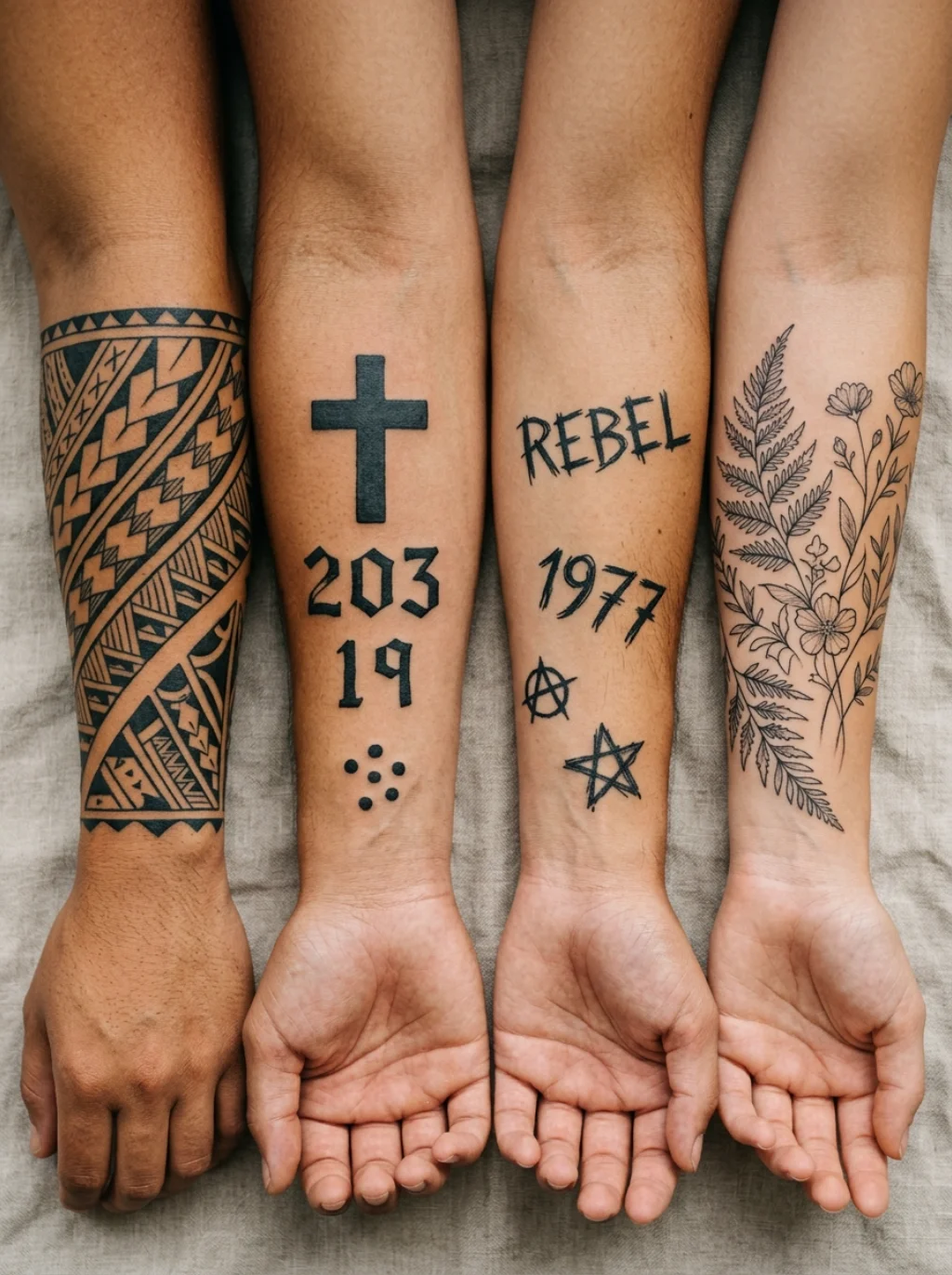
Stick and poke tattoo Polynesian influence represents one of the most technically sophisticated pre-industrial tattooing traditions ever developed. Polynesian tattooing — practiced across Hawaii, Samoa, Tahiti, New Zealand, and the broader Pacific — used tools made from bone, shell, and tusk, driven into the skin by tapping with a mallet in a process that bears direct technical relationship to contemporary hand poke practice. Tebori tattoo influence from Japan — the wooden handle and metal needle hand-poked technique that predates any electric tattooing in Japan — similarly demonstrates the global parallel development of hand-driven skin marking techniques across cultures that had no contact with each other.
Stick and poke tattoo tribal origin research reveals that virtually every human culture with a tattooing tradition developed some version of the hand-driven puncture method before access to electric equipment made machine tattooing possible. The punk tattoo aesthetic adopted hand poke in the 1970s and 80s as a deliberate countercultural choice — a refusal of the professional studio and its commercial relationships in favor of DIY community practice. Artisanal tattoo tradition connecting these diverse cultural threads is not a comfortable or straightforward narrative — the journey from sacred Polynesian ritual to punk DIY to contemporary studio aesthetic involves cultural appropriation, commercial exploitation, and genuine artistic evolution in complicated proportions.
Building a Stick and Poke Portfolio: The Path From Practice to Professional
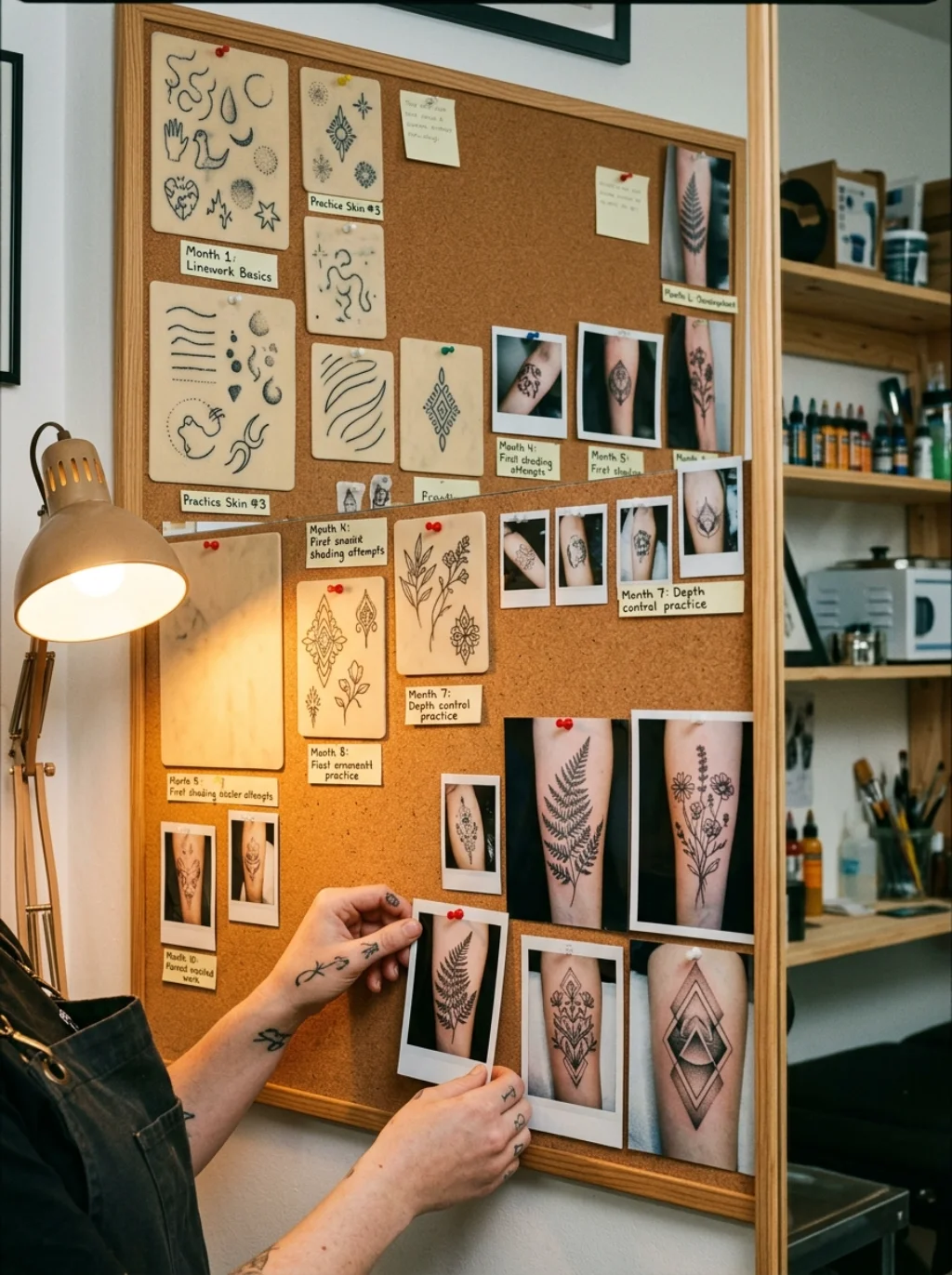
Stick and poke tattoo for first timers practitioners who want to move toward professional practice need a realistic development timeline and a clear understanding of what professional standards actually require. Practice on artificial skin — the silicone practice skins available through Amazon stick and poke supplies and Hildbrandt tattoo supply — should constitute at least the first six months of serious learning before any human skin is approached. Non electric tattoo practice on artificial skin develops the depth sensitivity, tapping consistency, and design execution capability that protects real people from the mistakes that are inevitable in early practice.
Stick and poke tattoo artists who specialize professionally recommend apprenticeship with an established hand poke practitioner as the most reliable path to studio-ready competence. The apprenticeship model — watching, assisting, and eventually practicing under direct supervision — transmits not just technique but the professional judgment that no amount of solo practice develops: when to stop a session, how to recognize problematic skin reactions in real time, how to manage a client’s discomfort, and how to decline commissions that exceed your current capability. Building a hand poke portfolio for professional purposes means documenting healed work specifically — fresh photographs are useful for process documentation but healed photographs at six months are what demonstrate genuine competence to discerning clients.
The Legal and Ethical Questions Every Hand Poke Practitioner Must Face
Diy tattoo at home and unlicensed tattooing practices exist in genuinely complex legal territory across the United States. Tattooing regulations are determined at the state level and vary dramatically — some states explicitly permit hand poke tattooing under specific conditions and with specific licensing, others classify all tattooing as requiring a license regardless of method, and some have regulatory frameworks that simply don’t address hand poke work explicitly. Practicing without a license in a state that requires one exposes practitioners to fines, business closure, and in some jurisdictions criminal misdemeanor charges.
Autonomous body modification and the right to make permanent marks on one’s own skin occupies philosophically contested space in American legal culture — the state’s interest in regulating body modification for public health reasons conflicts with individual liberty claims that have partial but not complete legal recognition. Community based tattoo culture that operates outside licensed frameworks — the DIY network, the friend-of-a-friend session, the collective work party — has always existed alongside regulated studio practice and continues to do so. The ethical obligations that practitioners in this context carry — informed consent, genuine skill disclosure, proper material safety — don’t diminish because the legal framework is absent. If anything, the absence of external regulatory accountability makes the individual practitioner’s internal ethical standard more rather than less important.
Frequently Asked Questions
Q1. Are stick and poke tattoos safe to do at home without professional training?
Stick and poke tattoo how to do it safely at home requires three non-negotiable conditions: professional-grade sterile supplies from licensed vendors, genuine understanding of sterilization protocols, and real technique knowledge developed through practice on artificial skin before approaching human skin. Home tattoo method without all three conditions creates genuine medical risk. Stick and poke tattoo infection signs and prevention education must come before any hands-on practice. The barrier to safe practice is knowledge and discipline rather than equipment — but that barrier is real and must be genuinely cleared rather than rationalized around.
Q2. What is the best ink to use for stick and poke tattoos?
Stick and poke tattoo ink that is safe to use is professional-grade tattoo ink specifically formulated for dermal application. Intenze tattoo ink brand and Kuro Sumi tattoo ink brand are the most widely recommended options among professional hand poke practitioners for black work. India ink stick and poke safety is a false proposition — india ink is not formulated for skin use, is not sterile, and has caused documented infections and allergic reactions. Never substitute art supply inks, pen inks, or printer inks for professional tattoo formulations regardless of what DIY resources online suggest.
Q3. Do stick and poke tattoos last as long as machine tattoos?
Stick and poke tattoo how long does it last depends almost entirely on placement, ink quality, and depth accuracy rather than the method itself. Do stick and poke tattoos fade faster than machine tattoos on equivalent placements with equivalent ink — the honest answer is sometimes slightly, particularly in early professional practice where depth consistency hasn’t been fully developed. Professionally executed hand poke work on appropriate placements with quality ink lasts comparable to machine tattoo work. Placements that challenge any tattoo — fingers, hands, inner lip — fade faster regardless of method. UV protection and moisturization are the primary longevity variables post-healing.
Q4. How deep should the needle go for a stick and poke tattoo?
Stick and poke tattoo depth technique targets the dermis — approximately 1 to 2 millimeters below the skin surface. Too shallow means ink sits in the epidermis and peels away during healing. Too deep means ink disperses into the hypodermis causing blowout. Best needle for stick and poke tattoo use in developing depth awareness is a single 3RL (3-round liner) tattoo needle — the cluster provides slightly more ink flow than a single needle while maintaining precision appropriate for line work and dot work. Depth awareness develops through practice on silicone skin before approaching real skin — there’s no shortcut.
Q5. Can stick and poke tattoos be removed with laser treatment?
Stick and poke tattoo removal with laser treatment is both possible and effective — in many cases more effective than equivalent machine tattoo removal because hand poke ink distribution is less uniform and often slightly shallower than machine-applied ink. Stick and poke tattoo removal methods using modern PicoSure or Q-switched Nd:YAG lasers typically require fewer sessions than comparable machine tattoos for equivalent clearance. Stick and poke tattoo removal of black ink responds best to laser treatment. Color pigments — particularly green and blue — require different wavelengths and may need additional sessions. Cost runs $200 to $500 per session depending on size and location.
Conclusion
Stick and poke tattoos carry something that no machine-applied tattoo can replicate: the literal record of a human hand making a deliberate mark, one tap at a time, with nothing between the intention and the skin except a needle and a choice. That directness is both the method’s greatest strength and its most demanding requirement. There’s nowhere to hide in hand poke work. Every depth decision, every spacing inconsistency, every moment of lost concentration shows permanently in the result.
The hand poke tattoo community in the United States in 2024 contains everything from teenagers with sewing needles and india ink to internationally exhibited artists with decade-long portfolios of technically flawless professional work. The method accommodates this range because its barriers to entry are primarily educational rather than financial — you don’t need expensive equipment to begin but you absolutely need genuine knowledge before touching another person’s skin. Approach it with appropriate respect for what it actually is: a permanent mark on a human body, made by hand, that deserves every bit of care and preparation that implies.
1 Comment