
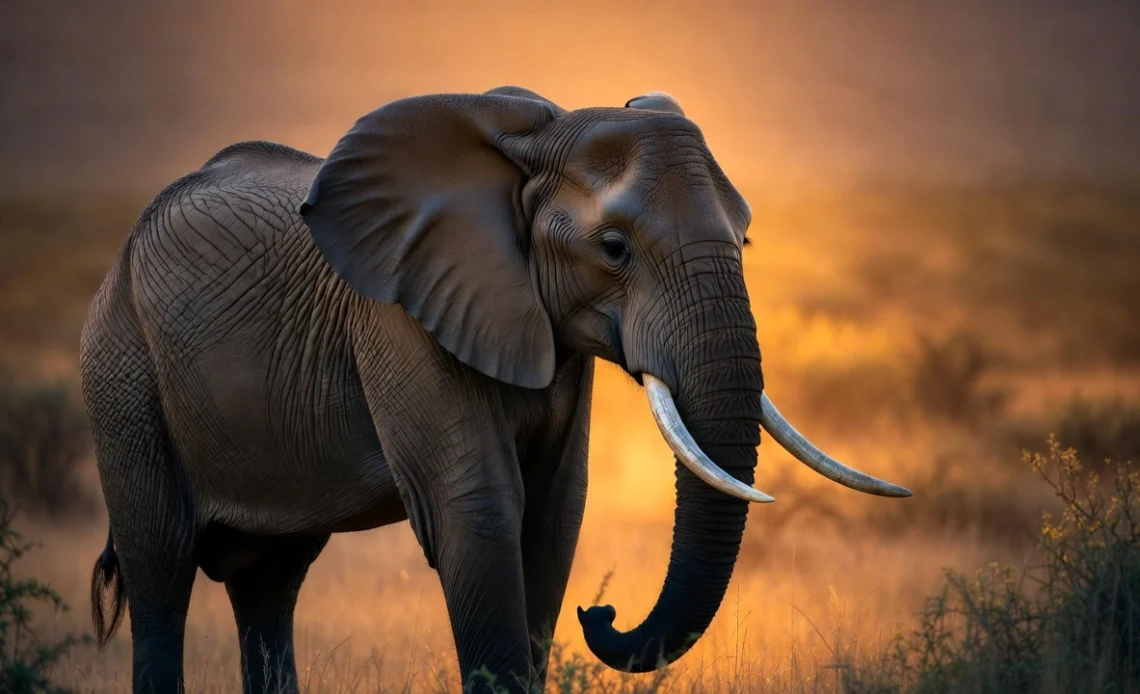
Few tattoo subjects carry the weight of history, culture, and personal significance quite like the elephant. Across thousands of years and dozens of civilizations, this animal has stood as one of the most powerful symbols in human storytelling. Today, elephant tattoo meaning rank among the most requested designs in tattoo studios worldwide, chosen by people who want more than a beautiful image on their skin. They want meaning. They want a symbol that speaks to who they are, what they have survived, and what they hold dear.
Whether you are drawn to the elephant’s legendary intelligence, its fierce devotion to family, or its spiritual significance in cultures from South Asia to sub-Saharan Africa, there is an elephant tattoo idea that fits your story. This article explores the deep symbolism behind this majestic animal and presents sixteen meaningful design ideas to inspire your next piece of ink.
Before choosing a design, it helps to understand what the elephant represents at its core. That foundation shapes every decision, from style and size to placement and accompanying elements.
Strength and Stability
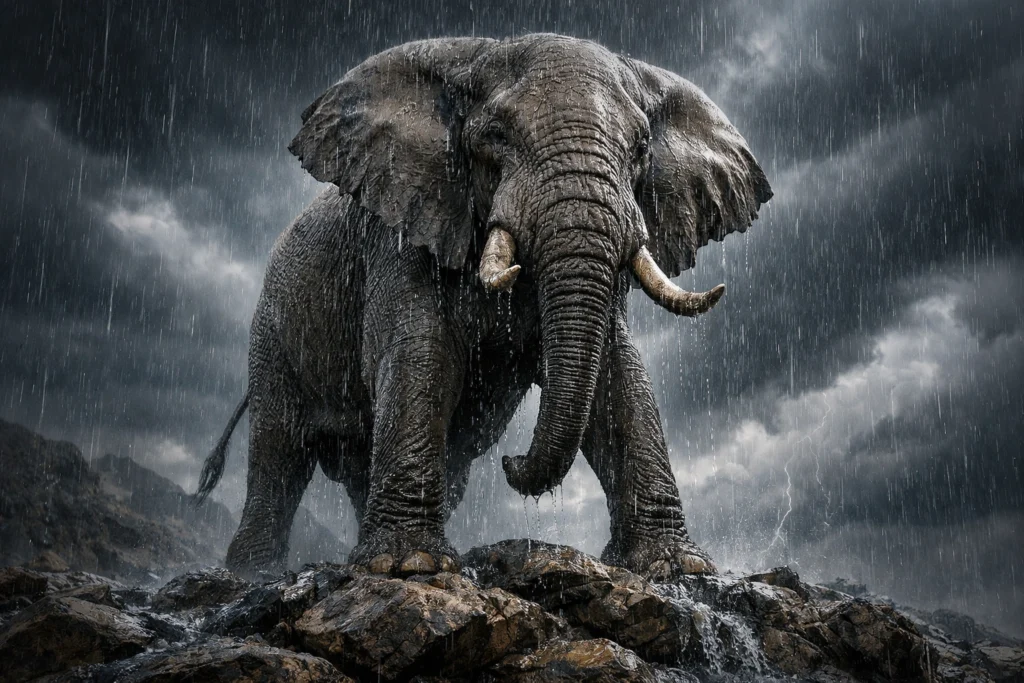
The most universal meaning behind an elephant tattoo is raw, enduring strength. These animals are the largest land creatures on Earth. They push through dense jungle, navigate scorching savannahs, and carry burdens that would break lesser creatures. An elephant tattoo serves as a daily reminder that you possess that same capacity for endurance.
This interpretation resonates especially with people who have faced serious adversity. A survivor of illness, loss, or hardship often chooses an elephant to mark their journey. The elephant does not shy away from difficult terrain. It moves through it steadily and arrives on the other side. That quiet, unshakeable power is what many wearers want permanently etched into their skin.
Wisdom and Intelligence
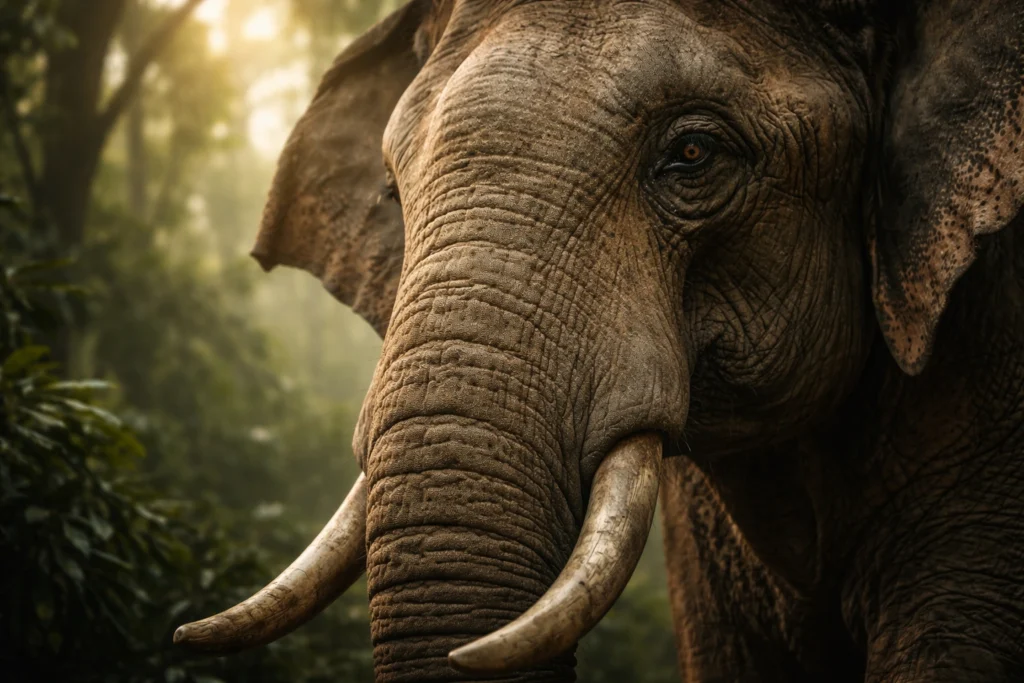
Elephants are among the most intelligent animals ever studied. They demonstrate problem-solving, tool use, complex social communication, and even apparent grief when a herd member dies. The phrase “an elephant never forgets” is grounded in scientific reality. These animals retain detailed memories of watering holes, migration routes, and individual faces spanning decades.
In tattoo culture, the elephant frequently symbolizes the kind of wisdom that only comes from lived experience. It is not book knowledge but earned understanding. People who value lifelong learning, self-reflection, and thoughtful decision-making gravitate toward elephant tattoos for this very reason.
Family Bonds and Loyalty
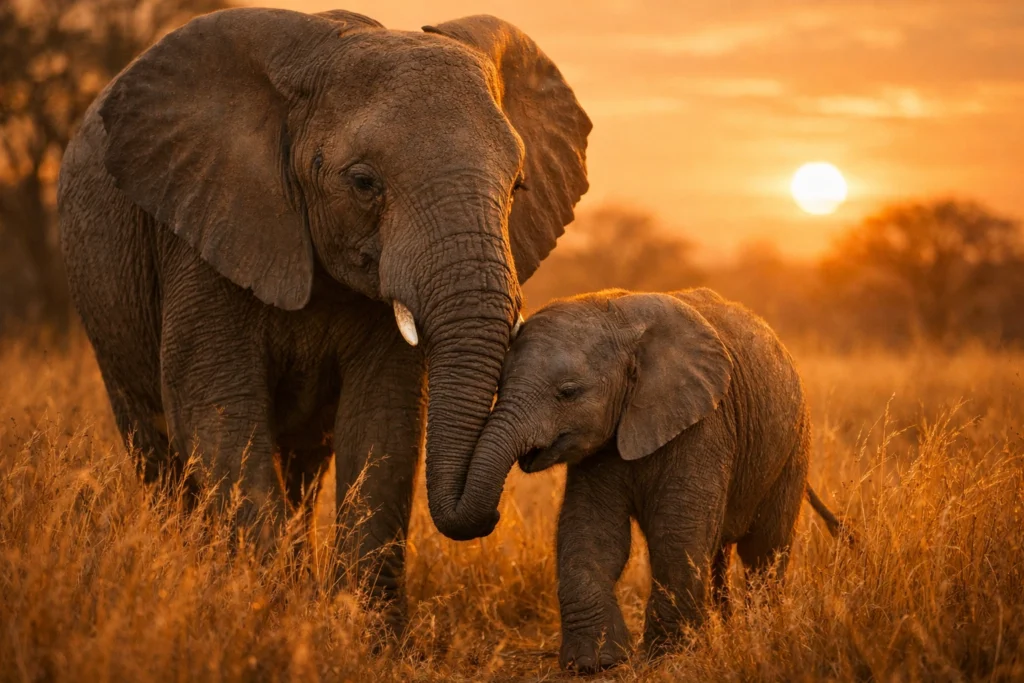
Elephants live in tightly bonded matriarchal herds. The eldest female leads the group, passing down knowledge to younger generations. When a calf is born, the entire herd participates in raising and protecting it. When one member is in distress, others respond immediately. This extraordinary social structure mirrors what many humans hold most sacred: family.
An elephant family tattoo, often depicted as a mother walking closely with her calf or a herd moving in formation, is one of the most emotionally meaningful designs available. It honors the people who shaped you, the relationships you would protect at any cost, and the community that holds you up when you cannot stand alone.
Good Luck and Prosperity
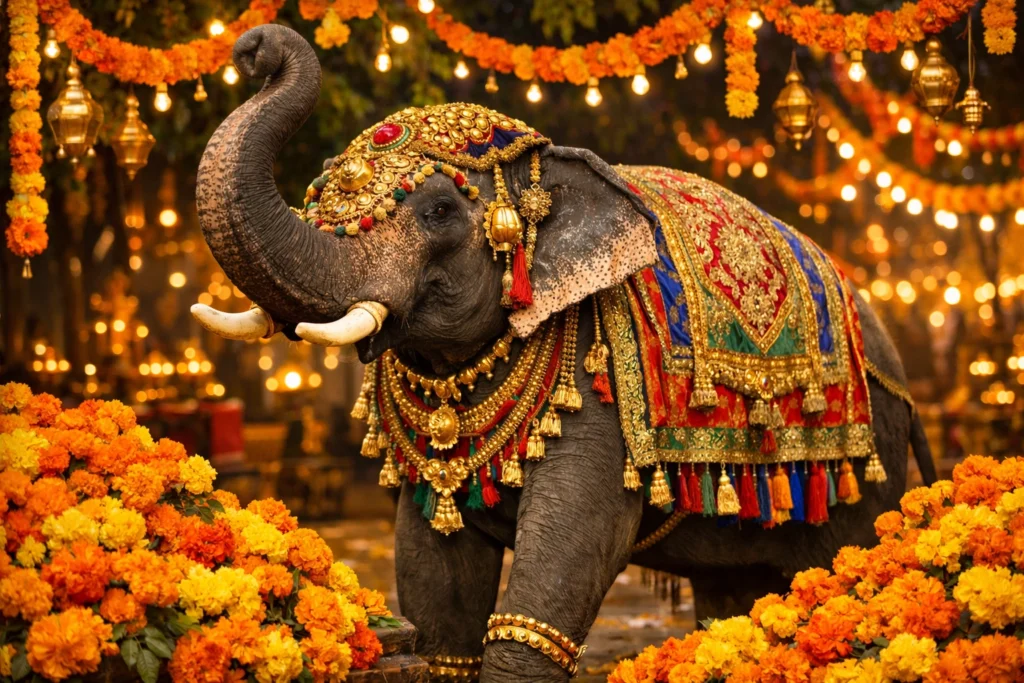
In multiple Asian traditions, particularly within Chinese culture, the elephant is a powerful symbol of good fortune, happiness, and stability. Decorative elephant figurines placed near doorways are a common practice in many households throughout Asia, intended to welcome positive energy and ward off misfortune.
In tattoo design, an elephant with its trunk raised is the most recognized symbol of good luck. The raised trunk is said to scatter blessings outward, drawing abundance toward the wearer. This belief is especially strong in Hinduism and Buddhism, but it has traveled far beyond those traditions and is now understood almost universally as an auspicious sign.
Spiritual Significance: Ganesha and the Divine Elephant
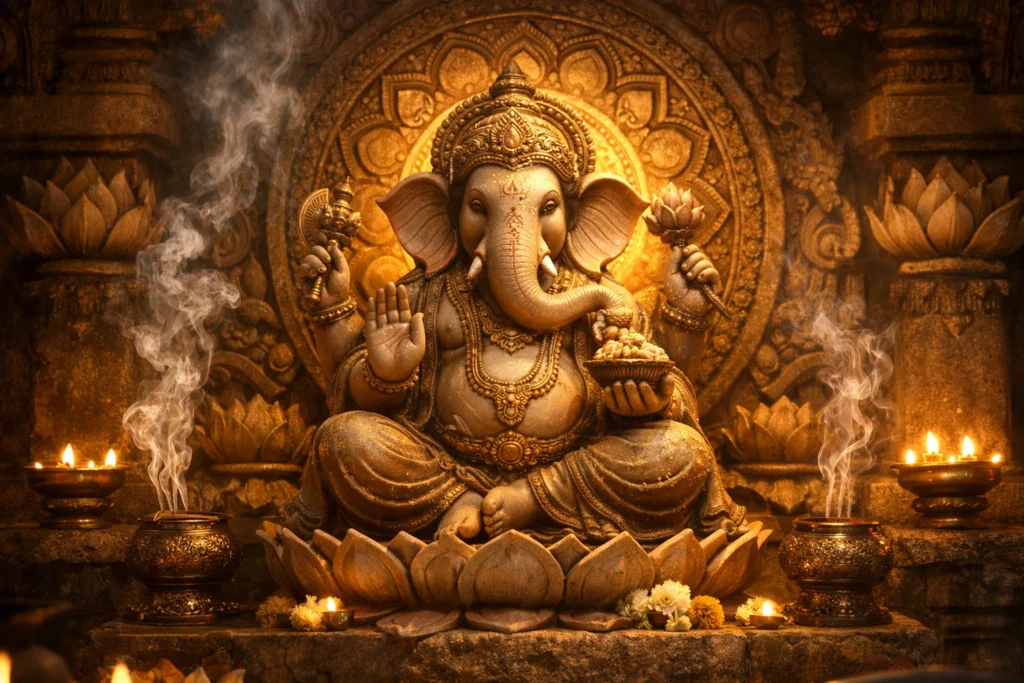
Perhaps no spiritual association is more well-known than Ganesha, the elephant-headed deity of Hinduism. Ganesha is one of the most widely worshipped figures in the Hindu tradition, revered as the remover of obstacles, the patron of new beginnings, and the lord of wisdom and knowledge. His elephant head symbolizes the combination of divine intellect and earthly power.
A Ganesha tattoo or an elephant inspired by Ganesha carries profound spiritual weight. It is often chosen by those navigating major life transitions, launching new ventures, or seeking divine protection on a challenging path. The imagery asks for blessings and signals a deep connection to spiritual practice. If you feel drawn to this design, take time to understand its cultural roots and approach the tattoo with the respect it deserves.
The White Elephant and Buddhist Symbolism
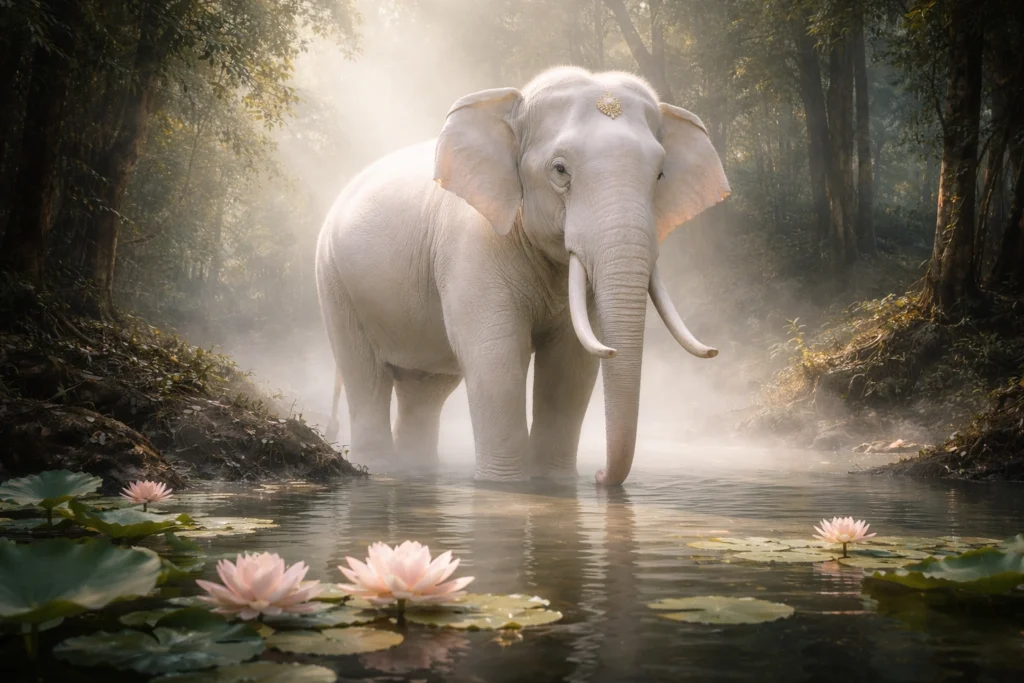
Within Buddhism, the white elephant holds a position of sacred reverence. According to tradition, Queen Maya, the mother of the Buddha, dreamed of a white elephant entering her womb before she conceived. This dream was interpreted as a divine omen heralding the birth of an enlightened being. As a result, white elephants became potent symbols of purity, spiritual power, and the Buddha’s arrival on Earth.
A white elephant tattoo, often rendered in soft lines or pale ink, appeals to those with a deep connection to Buddhist philosophy. It signals a commitment to the path of enlightenment, inner peace, and the release of ego. Paired with lotus flowers or meditation imagery, this design creates a spiritually cohesive piece with layered meaning.
Elephant with Trunk Up Tattoo
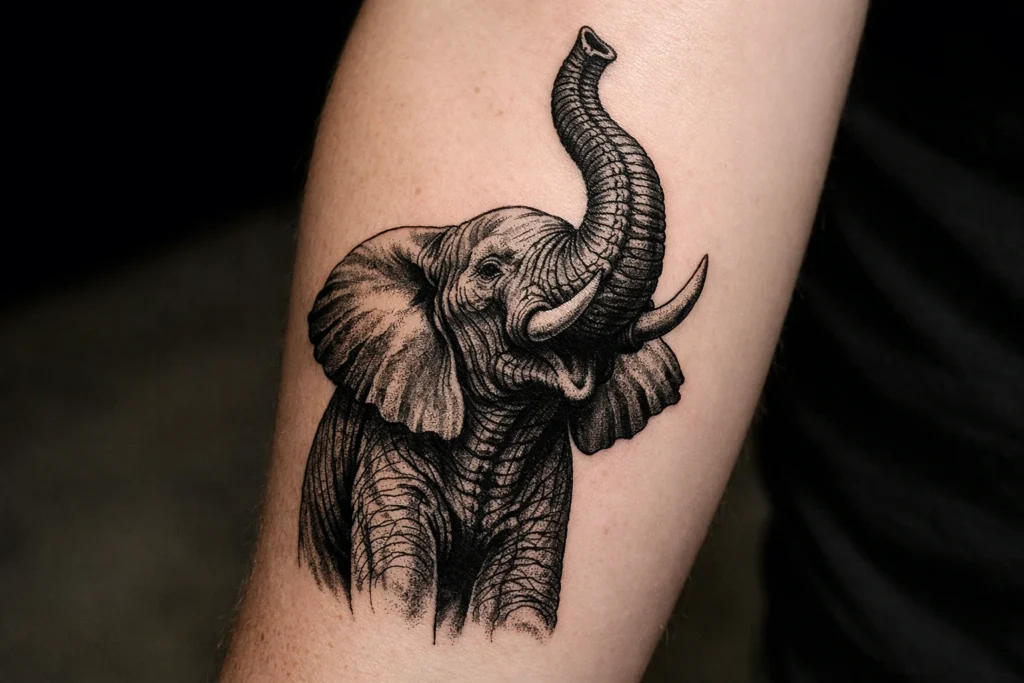
The position of the trunk in an elephant tattoo is one of the most discussed details among both artists and wearers. A trunk raised high is the universally accepted symbol of good luck and positive energy. Many people specifically request this feature to ensure their tattoo carries a prosperous meaning.
A trunk pointed downward or curled inward carries its own symbolism, sometimes associated with storing strength, grounding, or deep introspection. Neither position is inherently negative, but the raised trunk design remains far more popular for those seeking a tattoo rooted in optimism and fortune.
Elephant Mandala Tattoo
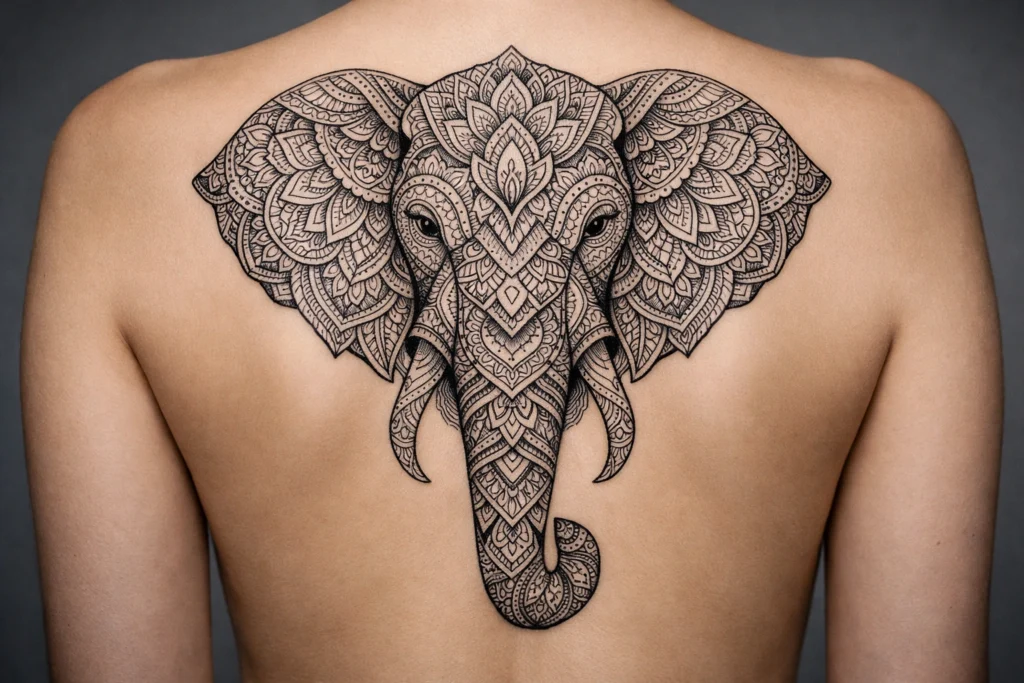
The mandala is a sacred geometric symbol representing the universe, wholeness, and the cyclical nature of existence. When combined with an elephant, these two powerful symbols enhance each other beautifully. The elephant provides the anchor of strength and wisdom, while the mandala wraps it in spiritual harmony and cosmic order.
Elephant mandala tattoos are frequently large, detailed pieces placed on the back, chest, or thigh. The intricate linework required for authentic mandala patterns demands a skilled artist, but the results are often breathtaking. This design is ideal for someone on a defined spiritual journey or someone who finds deep meaning in symmetry, balance, and the interconnectedness of all things.
Geometric Elephant Tattoo
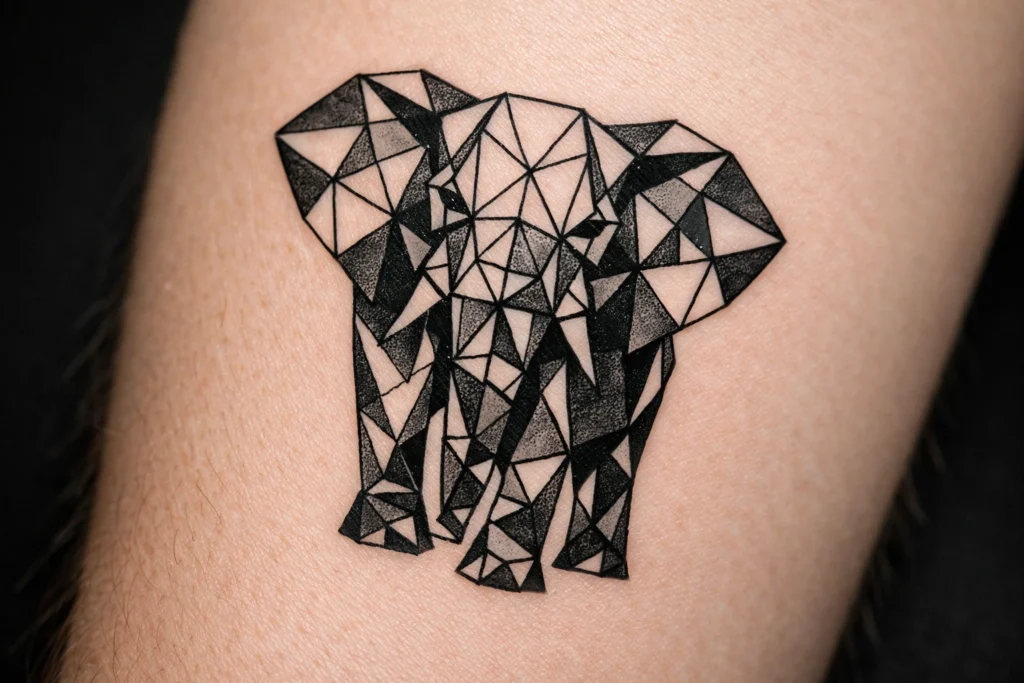
For those who appreciate modern aesthetics paired with timeless symbolism, the geometric elephant tattoo is an excellent choice. In this style, the elephant’s form is constructed entirely from polygons, triangles, lines, and abstract shapes. The result is a design that feels both contemporary and deeply intentional.
The geometric approach suggests a mind that values structure, precision, and clarity. It is a popular choice among architects, designers, engineers, and anyone who navigates the world through patterns and systems. Despite its angular, abstract appearance, the core meaning of the elephant remains intact. Strength, intelligence, and wisdom are simply expressed through a different visual language.
Realistic Elephant Tattoo
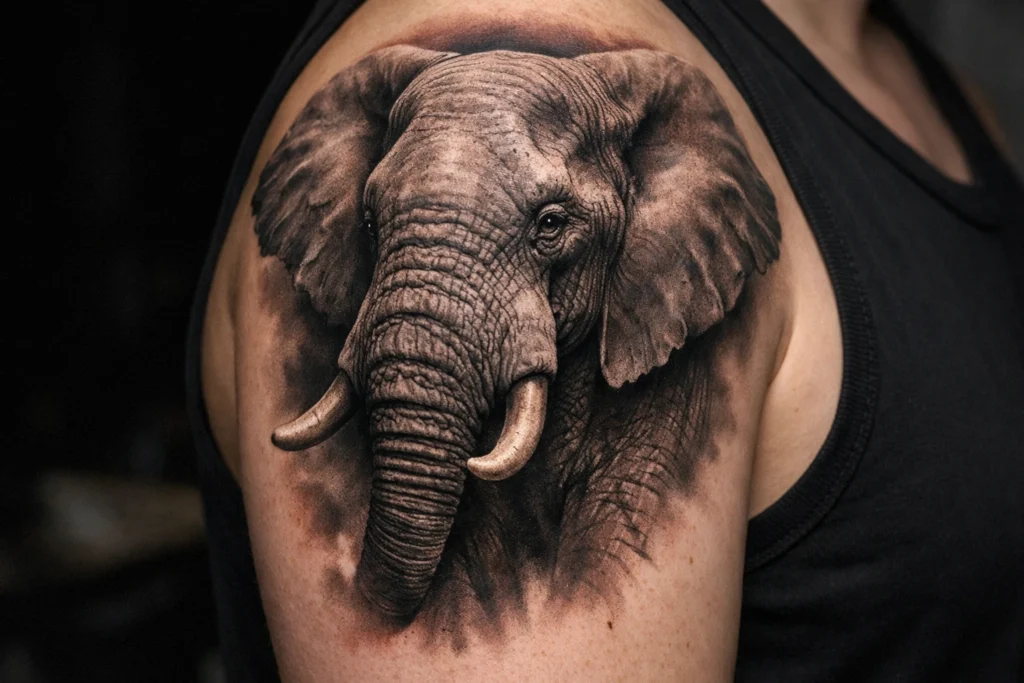
A photorealistic elephant tattoo is a masterclass in technical tattooing. Executed by a skilled realism artist, this design replicates the texture of the elephant’s wrinkled skin, the depth of its dark eyes, the movement of its ears, and the sheer scale of its presence. Nothing quite captures the power of this animal like seeing it rendered in lifelike detail on skin.
Realistic elephant tattoos work best on larger canvases such as the back, thigh, or upper arm. They take time, require multiple sessions for the most detailed pieces, and demand an artist with a strong portfolio in realism. The investment is considerable, but the result is a piece that commands attention and conveys genuine reverence for this remarkable creature.
Elephant and Lotus Flower Tattoo
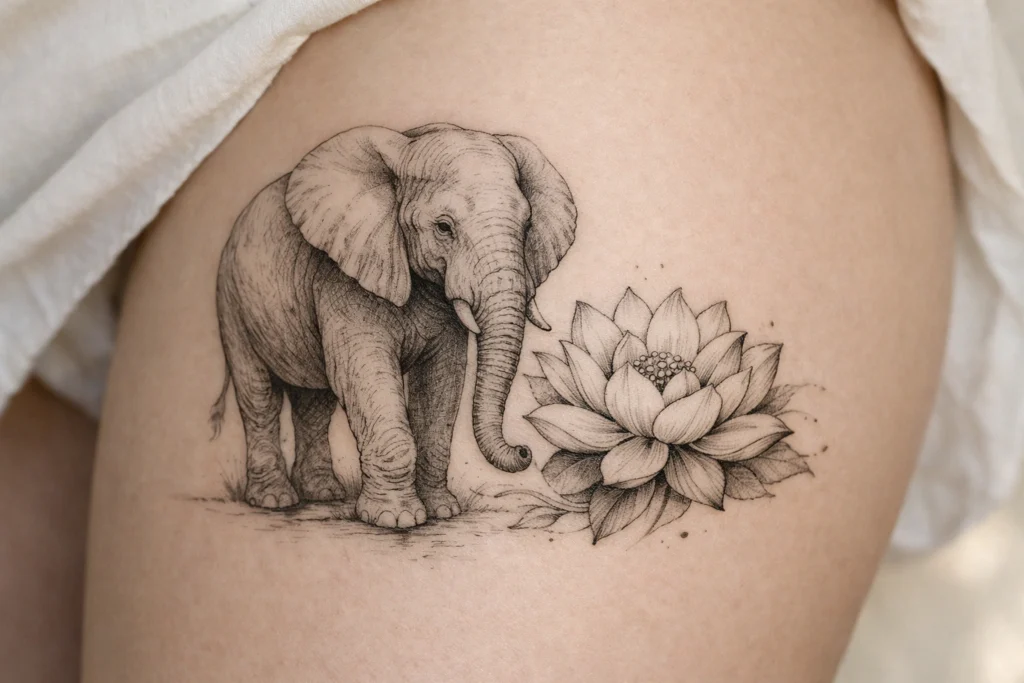
The lotus flower is one of the most symbolically rich plants in the world. In Buddhist and Hindu traditions, it represents purity, spiritual awakening, and the ability to rise above murky circumstances toward the light. The lotus grows through mud and still blooms beautifully, making it a powerful metaphor for resilience.
When paired with an elephant, the combination creates a tattoo that speaks to spiritual strength in the face of hardship. The elephant carries the wisdom and endurance. The lotus carries the promise of growth and renewal. Together, they form a message about rising through difficulty without losing grace. This pairing is particularly popular among those who have experienced personal transformation and want to honor both the struggle and the emergence.
Mother and Baby Elephant Tattoo
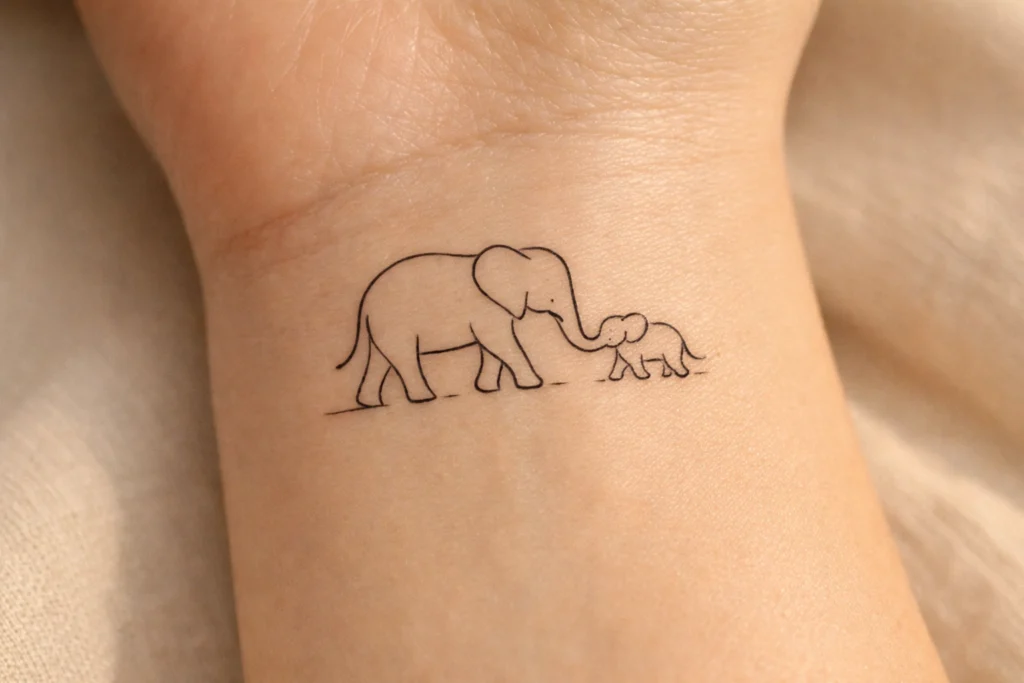
Of all the elephant tattoo designs available, the mother and baby pairing may be the most emotionally resonant. It captures the purest expression of parental love, protection, and the sacred bond between a caregiver and the life they have brought into the world.
This tattoo is a favorite among new mothers, people honoring a parent who shaped them, or anyone who wants to commemorate a relationship defined by unconditional love and fierce protection. The design can be executed in many styles, from a delicate minimalist outline to a detailed realistic portrait. The simplest version, a large elephant walking beside a small one, communicates everything without a single word.
Tribal Elephant Tattoo
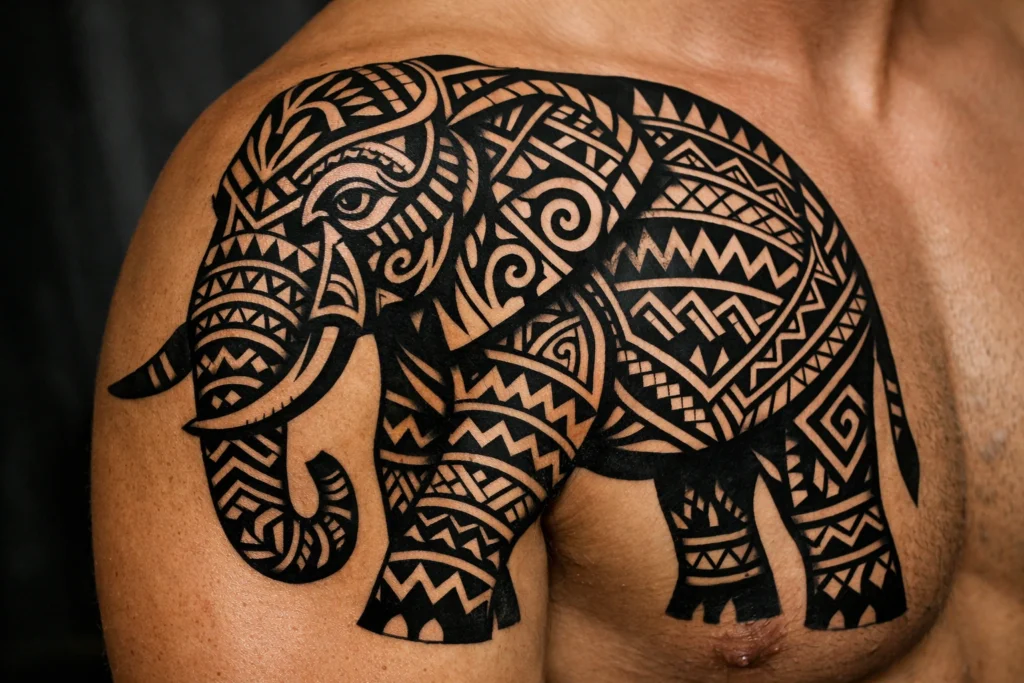
Tribal tattoo styles draw from the ancient artistic traditions of cultures across Africa, Southeast Asia, and the Pacific Islands. In the context of elephant tattoos, tribal designs often incorporate bold black lines, repetitive patterns, and symbolic motifs drawn from the traditions of the Maori, various African kingdoms, or the indigenous peoples of South and Southeast Asia.
A tribal elephant tattoo speaks to ancestral connection, cultural pride, and a sense of roots that run deep. It is a design for someone who wants their tattoo to feel ancient, earned, and connected to a lineage larger than themselves. If the tribal style draws from a specific cultural tradition outside your own background, approach the design with curiosity and respect, and consider collaborating with an artist who understands the heritage behind the patterns.
Watercolor Elephant Tattoo
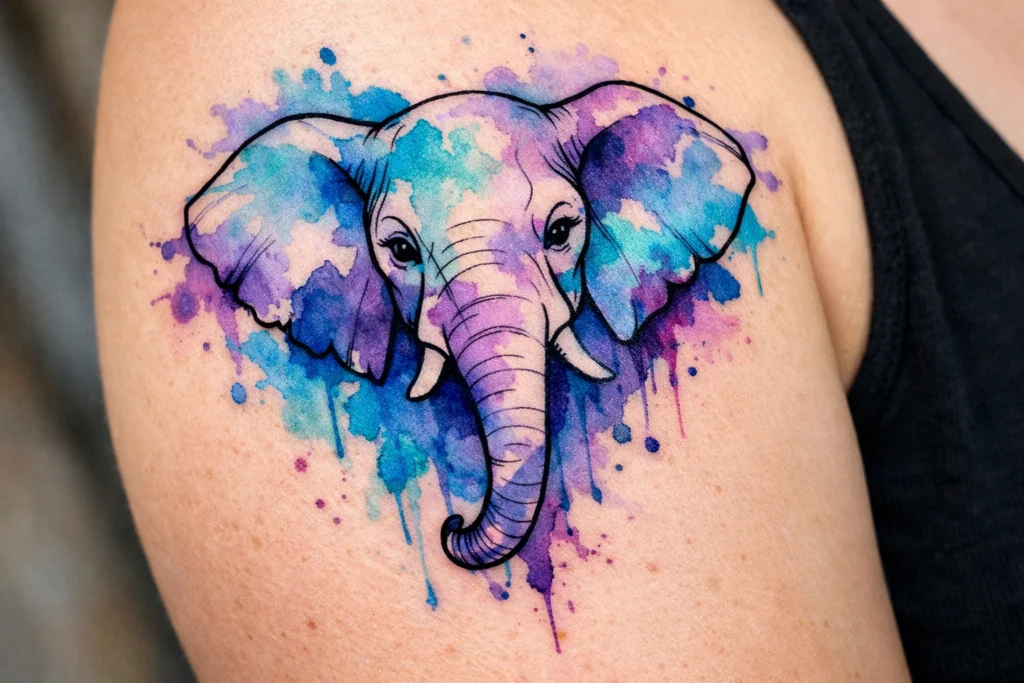
The watercolor tattoo style mimics the soft washes, color bleeds, and expressive brushstrokes of watercolor paintings. Applied to an elephant subject, this technique transforms a creature known for its weight and solidity into something surprisingly delicate and dream-like.
Watercolor elephant tattoos often feature a crisp black outline of the elephant filled or surrounded by flowing bursts of color. The contrast between the defined form and the loose, painterly color creates visual tension that feels both structured and free. This style suits people with an artistic temperament, those who live at the intersection of logic and emotion, and anyone who wants their tattoo to look less like a traditional piece and more like wearable art.
Elephant and Moon Tattoo
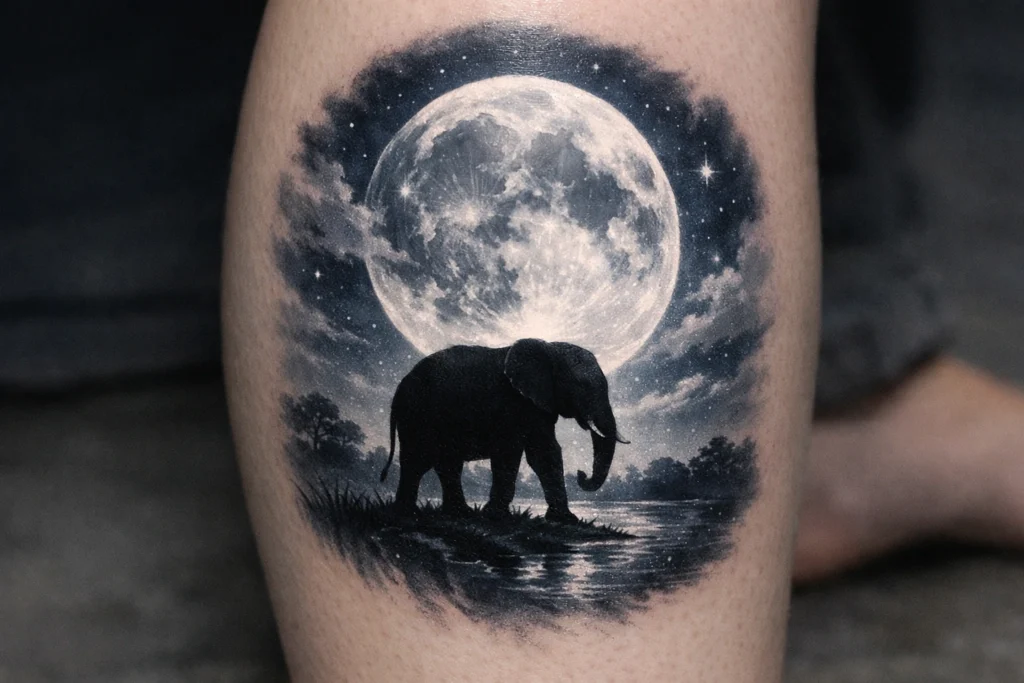
The moon has long represented cycles, intuition, femininity, and the passage of time in tattoo symbolism. When combined with an elephant, the design speaks to a mind that grows continuously, absorbing new knowledge and wisdom as life progresses through its natural rhythms.
An elephant silhouetted against a full moon suggests meditative intelligence. An elephant carrying a crescent moon on its back or walking beneath a moonlit sky suggests a spiritual connection to the universe and its larger patterns. This combination appeals to people who feel aligned with lunar energy, who value reflection and inner knowing, and who see wisdom as something that deepens quietly over time rather than arriving all at once.
Minimalist Elephant Tattoo
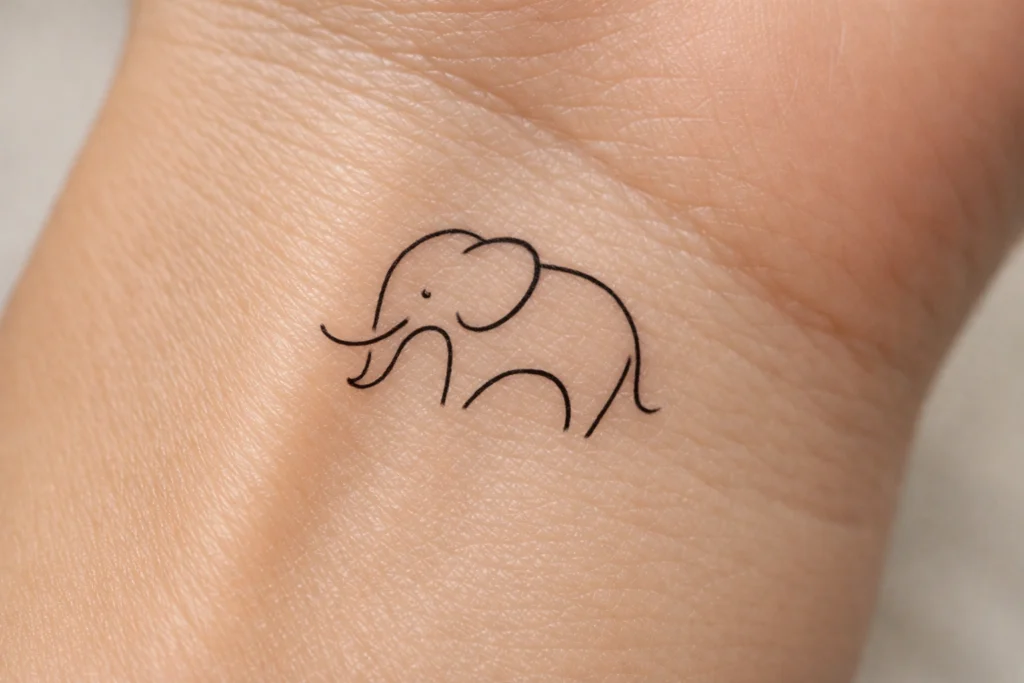
Not every meaningful tattoo needs to be large or complex. The minimalist elephant tattoo proves that a single clean line, a small silhouette, or a simple geometric shape can carry enormous emotional weight when placed with intention.
Minimalist designs are popular on the wrist, inner forearm, ankle, behind the ear, or on the collarbone. They suit first-time tattoo recipients, people who prefer subtle personal symbols over bold statements, and anyone who wants a daily reminder of the elephant’s qualities without announcing it to the world. A tiny elephant outline on the wrist, barely an inch tall, can serve as the most private and powerful talisman imaginable.
Where to Place Your Elephant Tattoo
Placement shapes how a tattoo is experienced, both by the wearer and by those who see it. Large, detailed elephant designs thrive on the back, thigh, or chest, where the skin provides enough real estate for intricate work. Medium-sized pieces work well on the upper arm, shoulder, or calf. Small and minimalist designs belong on the wrist, ankle, behind the ear, or along the collarbone.
Beyond size, placement can carry its own meaning. A tattoo on the spine may represent carrying one’s story through life. One over the heart emphasizes love and family. A placement on the forearm keeps the symbol visible, a constant reminder of the values it represents.
Choosing the Right Style and Artist
The most important decision after choosing your design is choosing your artist. Every tattoo style requires a different set of technical skills. Realism demands an artist with a strong portfolio of lifelike portraiture. Geometric work requires precision and a solid understanding of line quality. Watercolor needs an artist who understands how color moves on skin over time. Mandala work calls for someone with experience in intricate linework and symmetrical composition.
Before committing, study portfolios carefully, ask questions, and choose an artist whose existing work looks like what you want on your body. A well-executed elephant tattoo will carry meaning for a lifetime. A poorly executed one will simply carry.
Conclusion
The elephant tattoo is one of the most enduring and meaningful choices in the entire vocabulary of tattoo art. It holds space for strength without aggression, wisdom without arrogance, loyalty without possessiveness, and spiritual depth without pretension. Whether you choose a sacred Ganesha, a tender mother and calf, a modern geometric design, or the quietest minimalist line, the elephant speaks a language that transcends borders, generations, and belief systems.
Choose your design with care. Understand what it means to you personally. Find an artist whose skill matches your vision. And carry this majestic animal with you as a permanent testament to the qualities you most want to embody in your own life.
You may also like this post: 12 Tattoo Artist Quotes That Capture the Spirit of Ink and Art
Frequently Asked Questions
What does an elephant tattoo mean in general?
An elephant tattoo most commonly represents strength, wisdom, family loyalty, good luck, and spiritual connection. The specific meaning depends on the design elements chosen, the cultural references included, and what the individual wearer intends it to symbolize.
Does an elephant tattoo with the trunk up mean good luck?
Yes. In many cultures, particularly in Chinese, Hindu, and Buddhist traditions, a raised trunk on an elephant tattoo is considered a symbol of good fortune, prosperity, and positive energy being scattered outward.
Is an elephant tattoo cultural appropriation?
Certain elephant designs, particularly those featuring Ganesha or tribal patterns tied to specific indigenous traditions, carry significant cultural and religious meaning. Researching the origins of your chosen design and approaching it with genuine respect rather than as pure aesthetics is always the right approach. Many tattoo artists are happy to help navigate these considerations thoughtfully.
What is the best placement for an elephant tattoo?
The ideal placement depends on the size and complexity of the design. Large detailed pieces work best on the back, thigh, or chest. Medium designs suit the upper arm or shoulder. Small minimalist versions are well-suited to the wrist, ankle, or behind the ear.
What tattoo style works best for an elephant design?
All major tattoo styles work well with elephant subjects. Realism captures the animal’s physical grandeur. Geometric and mandala styles emphasize structure and spirituality. Watercolor adds an expressive, painterly quality. Minimalist designs convey meaning through simplicity. The best style is the one that matches your personal aesthetic and the skill set of your chosen artist.
1 Comment