
Introduction
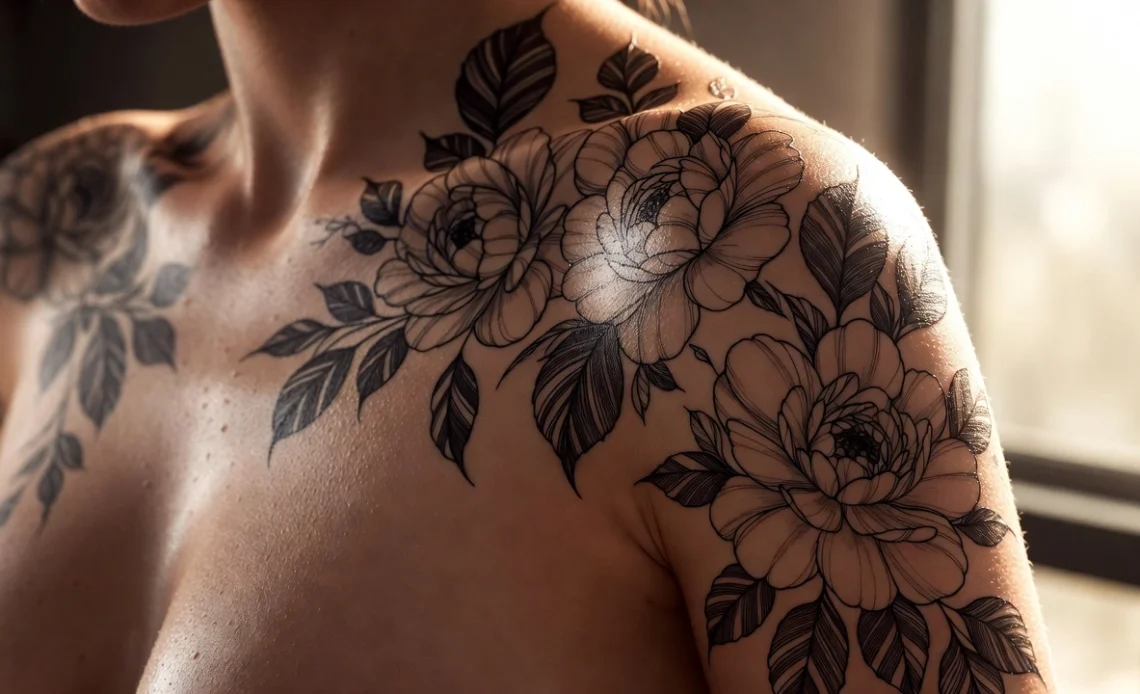
Flower tattoos have endured as one of the most universally beloved forms of body art for centuries. Across cultures, traditions, and tattooing styles, floral designs carry a depth of symbolism that few other subjects can match. A rose speaks of passion and beauty. A lotus carries themes of spiritual growth and rebirth. A peony suggests abundance, and a cherry blossom honors the fragile, fleeting nature of life itself. But choosing the right bloom is only half the story. The placement of a flower tattoo shapes everything about how it reads on the body, how it interacts with your natural contours, how visible or private it remains, and how gracefully it ages over time.
Whether you are drawn to delicate fine-line florals, bold neo-traditional blooms, or richly detailed botanical realism, the placement you choose will define the tattoo’s relationship with your body as much as the design itself. This guide explores eighteen of the most inspiring flower tattoo placement options, covering what makes each one work visually, what to expect in terms of pain and longevity, and which floral styles translate most beautifully to each location. From the most visible canvases to the most intimate ones, there is a perfect placement for every style and every story.
Forearm Flower Tattoo Placement
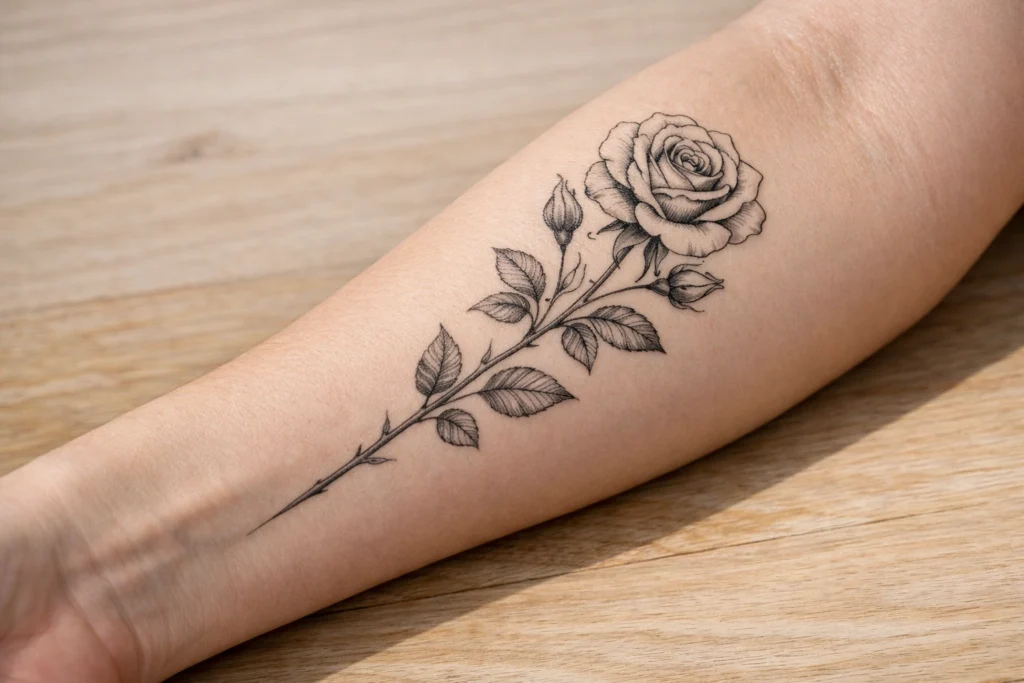
The forearm is one of the most consistently popular flower tattoo placements across all experience levels and design styles. It offers a long, relatively flat surface that accommodates everything from a single fine-line stem to a full botanical sleeve segment. Both the inner and outer forearm present distinct visual opportunities, and the choice between them often comes down to personal preference regarding who the tattoo is primarily for.
The inner forearm faces upward throughout the day, keeping the design visible to the wearer in a way that feels intimate and personally meaningful. The outer forearm is more outward-facing, creating more of a public display. Roses, peonies, wildflower arrangements, and single blooms with long stems all sit beautifully on the forearm. Pain levels here are generally mild to moderate, and the area heals reliably well, making it an excellent starting point for first-time tattoo recipients.
Styling and Longevity
The forearm is also one of the most stable placements in terms of long-term ink quality. The skin here experiences moderate sun exposure but is easy to protect with clothing or sunscreen. Designs placed on the forearm tend to maintain their definition and saturation longer than placements on the hands or feet.
Shoulder Flower Tattoo Placement
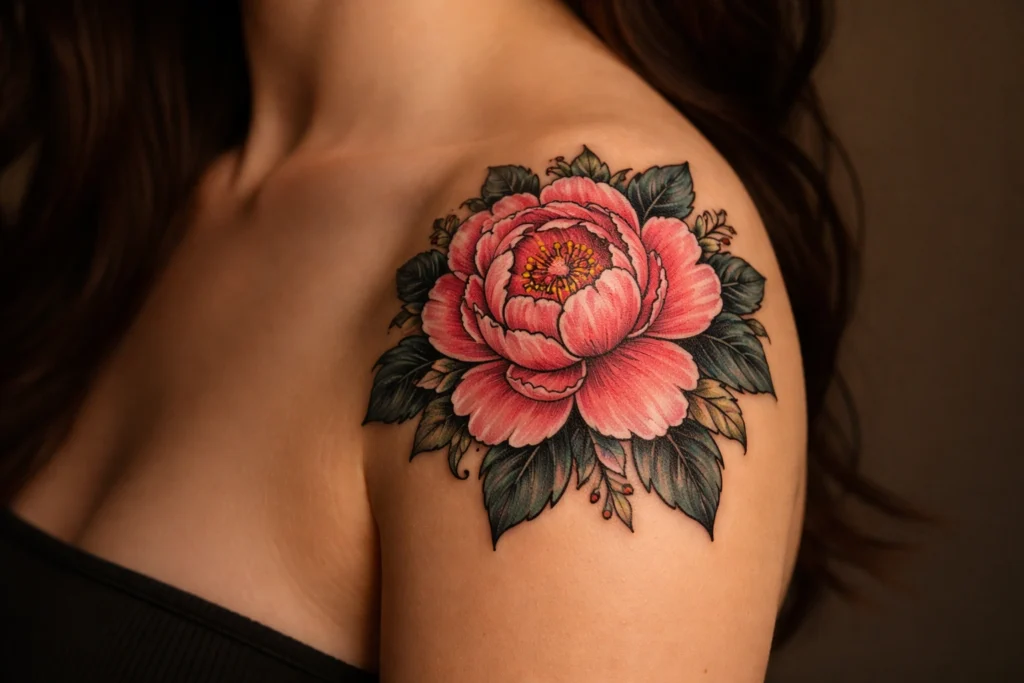
The shoulder is a placement that naturally suits floral designs because of the way the curved anatomy gives botanical compositions room to breathe and flow. A single large bloom centered on the shoulder cap creates a striking visual effect, while arrangements that extend down the upper arm or across toward the collarbone allow for more expansive storytelling.
This placement works for a wide range of floral styles. Traditional bold roses look powerful on the shoulder, while watercolor peonies carry a soft, painterly quality in the same location. Neo-traditional sunflowers and chrysanthemums take on a sculptural quality when wrapped around the shoulder’s natural curve. The shoulder is moderately painful to tattoo, with the outer area being more comfortable and the top of the shoulder closer to the bone being somewhat more intense.
Upper Back Flower Tattoo Placement
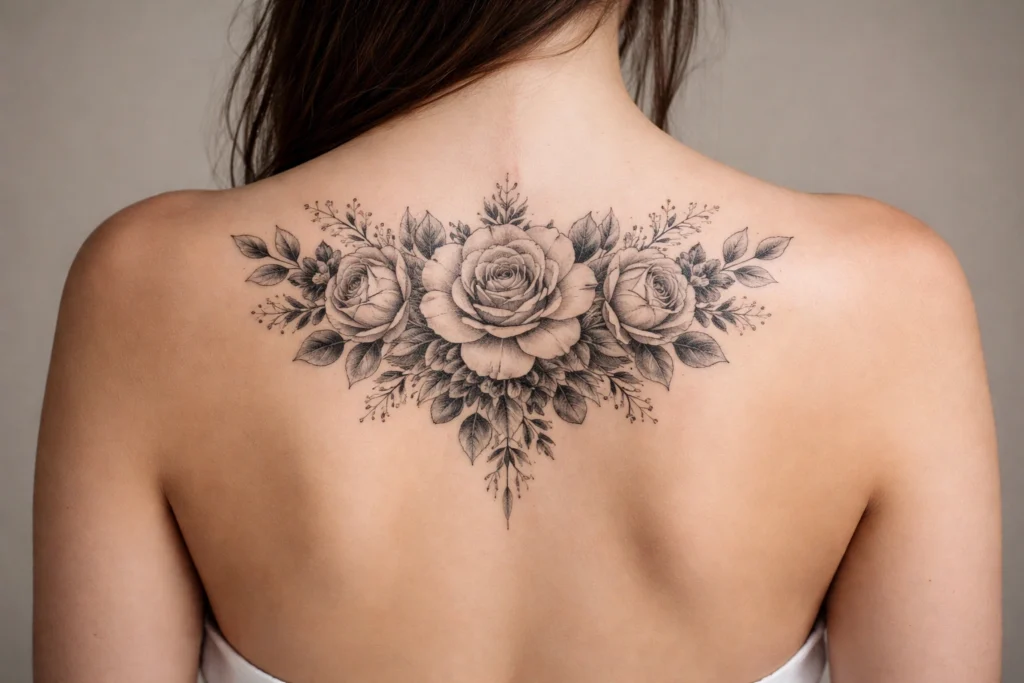
The upper back is one of the grandest canvases the body offers for floral tattoo work. Spanning the space between the shoulder blades, it accommodates large, symmetrical compositions with remarkable elegance. A full bouquet centered between the shoulder blades creates a focal point that reads beautifully when wearing open-back clothing. Designs that extend outward from a central bloom toward each shoulder blade take on a naturally balanced, wing-like quality.
The upper back is also one of the more comfortable areas to tattoo, particularly in the muscular region between the spine and the shoulder blades. Artists frequently recommend this placement to clients who want a larger, more detailed piece but have concerns about pain tolerance. Floral styles that involve significant shading and detail, such as realism and neo-traditional work, are particularly well-suited to the upper back.
Collarbone Flower Tattoo Placement
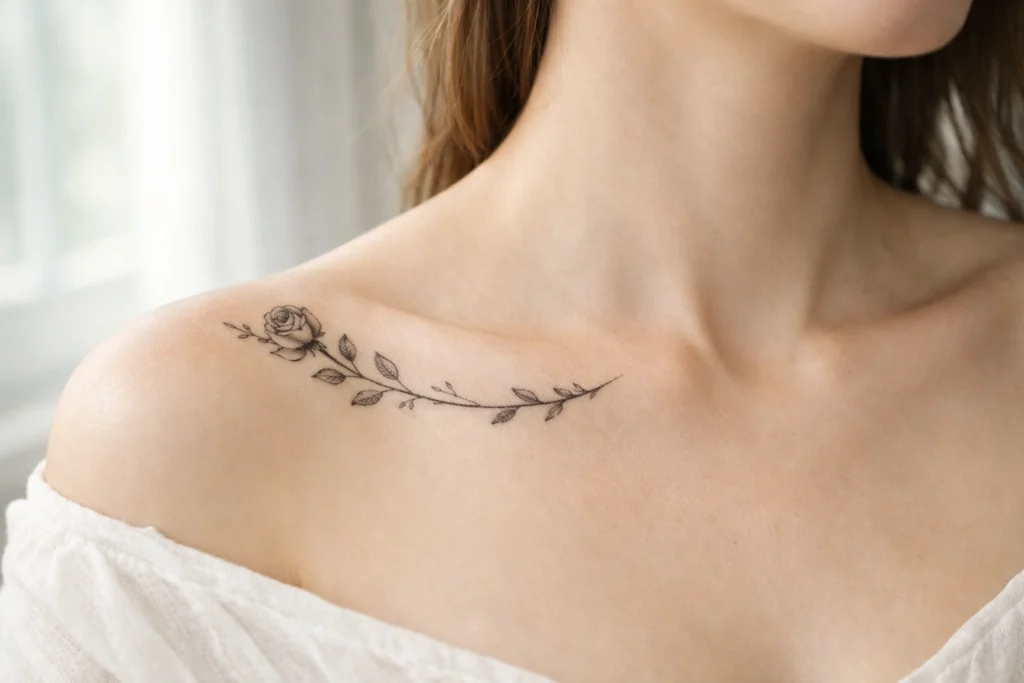
Few placements carry the same sense of delicate elegance as the collarbone. A floral design that follows the line of the collarbone functions like a piece of fine jewelry, drawing the eye across the upper chest in a way that feels both intentional and inherently graceful. Single blooms placed just below the collarbone, or small arrangements that trace the bone itself, both create beautiful results.
Fine-line florals are particularly well-matched to this placement. The refined, minimalist quality of fine-line work complements the subtle nature of the collarbone as a canvas. Small roses, lilies, cherry blossoms, and single botanical stems are among the most popular choices here. Pain levels vary depending on proximity to the bone, with placements directly on the bone being more intense and those just below considerably more manageable.
Ribcage Flower Tattoo Placement
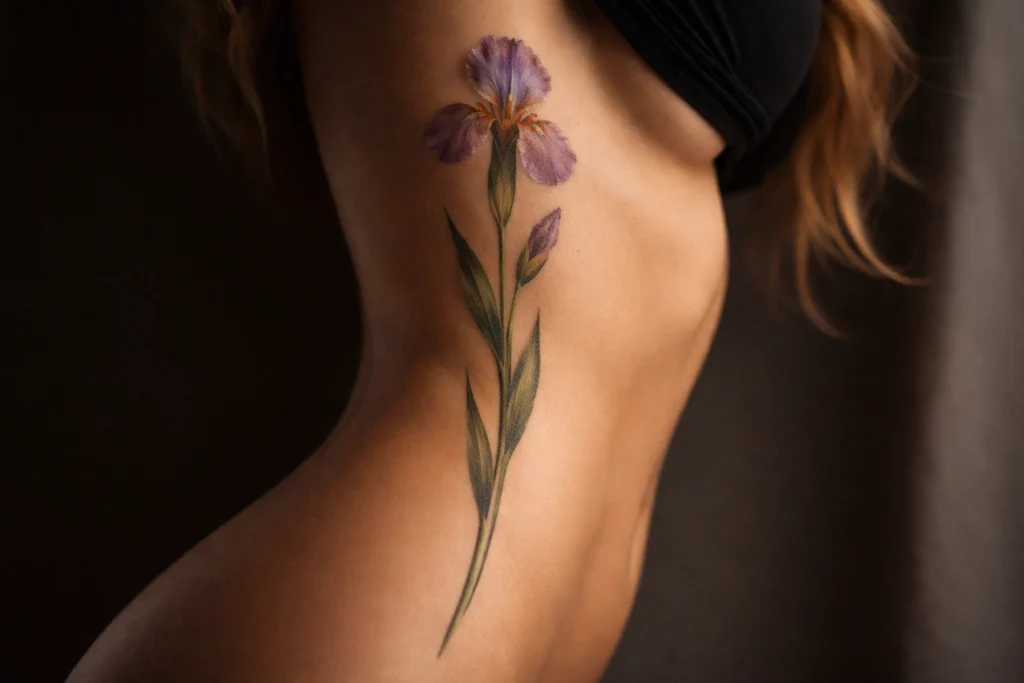
The ribcage is a placement that rewards courage with one of the most visually striking and emotionally resonant results in all of tattoo art. Long-stemmed flowers, climbing vines, vertical bouquet arrangements, and single large blooms all translate beautifully along the natural lines of the ribs. The vertical orientation of the ribcage particularly suits designs with height and flow, such as a tall iris, a cascading wisteria branch, or a rose with a long, curved stem and detailed foliage.
This is widely acknowledged as one of the more painful placement options due to the thin skin stretched over the ribs and the sensitivity of the area during extended sessions. However, the privacy and visual drama that the ribcage placement provides make it a consistently popular choice, particularly for designs that carry deep personal significance. The relative concealment of this area makes it ideal for those who prefer to keep their most meaningful pieces private.
Thigh Flower Tattoo Placement
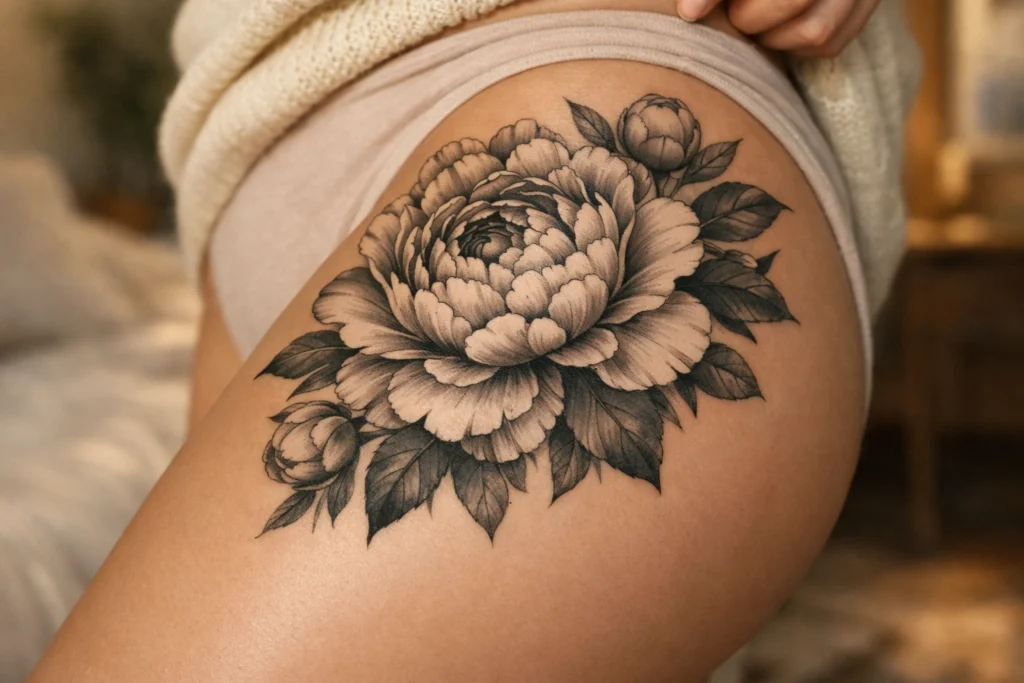
The thigh has become one of the most celebrated flower tattoo placements in contemporary tattoo culture, and for excellent reason. It provides a generous, relatively flat canvas that accommodates everything from oversized single blooms to elaborate bouquet compositions. The outer thigh in particular is known for being one of the least painful areas on the entire body to tattoo, making it accessible even for those with low pain tolerance.
Peonies, dahlias, and large garden roses look especially stunning on the thigh, where their full, layered petals can be rendered in rich detail. The thigh also provides excellent opportunities for compositions that wrap slightly around the leg or extend toward the knee or hip, creating a sense of movement and natural flow. Women and men alike have embraced the thigh as a placement that balances artistic ambition with personal discretion.
Inner Versus Outer Thigh
The outer thigh is the more public-facing option and is ideal for designs meant to be admired. The inner thigh is softer, more sensitive, and carries an inherently intimate quality, making it a popular choice for deeply personal floral pieces that are shared selectively.
Wrist Flower Tattoo Placement
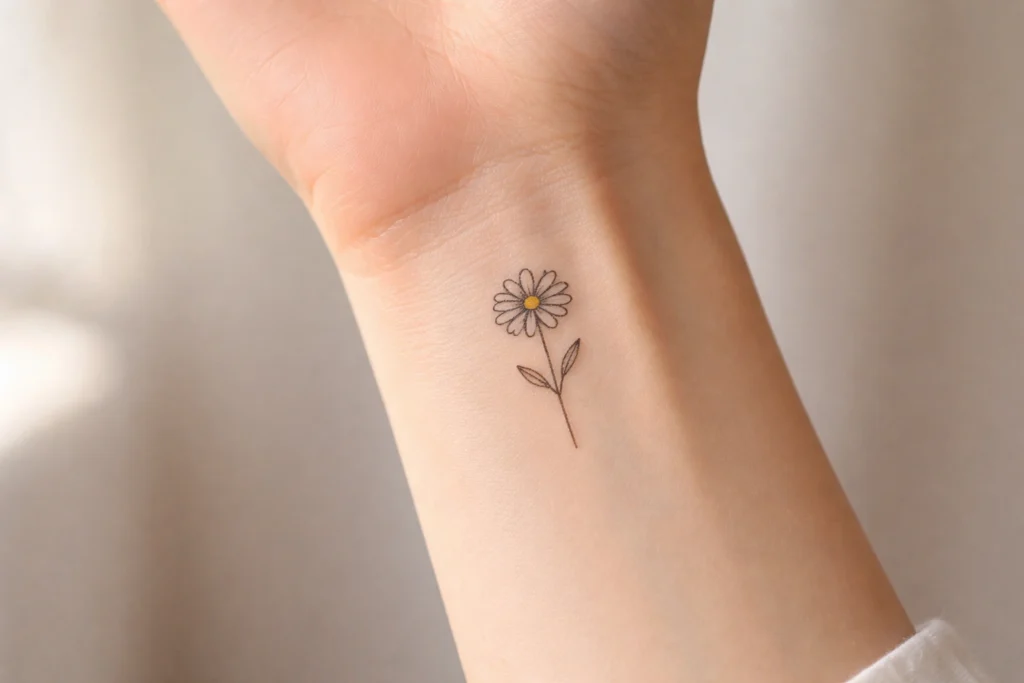
The wrist is a classic placement for small, refined flower tattoos. It occupies a position that the wearer sees throughout the day, making it a natural home for designs that carry personal significance. A single bloom, a delicate floral band that wraps the wrist, or a small botanical sprig all work beautifully in this location.
Fine-line work and minimalist black ink florals are particularly well-suited to the wrist because the scale of the placement naturally complements understated designs. Very detailed or large compositions may not translate cleanly at wrist scale, but simple, well-drawn floral designs can look extraordinarily refined here. The wrist is moderately painful, and designs on the inner wrist tend to be slightly more sensitive than those on the outer wrist.
Ankle Flower Tattoo Placement
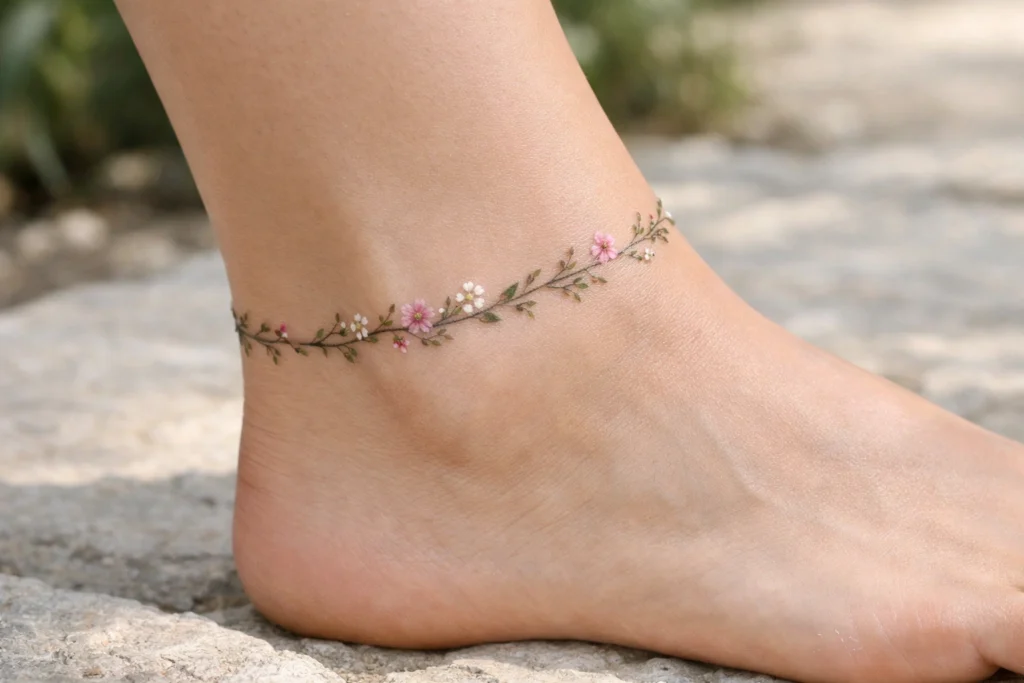
The ankle shares a similar visual sensibility with the wrist in that it functions like a natural accessory placement, evoking the effect of a delicate bracelet or anklet. Floral designs that wrap around the ankle, or single blooms placed just above the ankle bone, carry a timeless elegance that has made this one of the most enduring flower tattoo placements for women in particular.
Healing on the ankle requires attentive aftercare because the area is in near-constant contact with socks and footwear during the recovery period. The skin here is relatively thin and sits close to the bone, which contributes to moderate pain levels during the tattooing process. Despite these practical considerations, the ankle remains a beloved placement for its elegance, its visibility in warmer months, and its easy concealment in cooler weather or professional settings.
Spine Flower Tattoo Placement
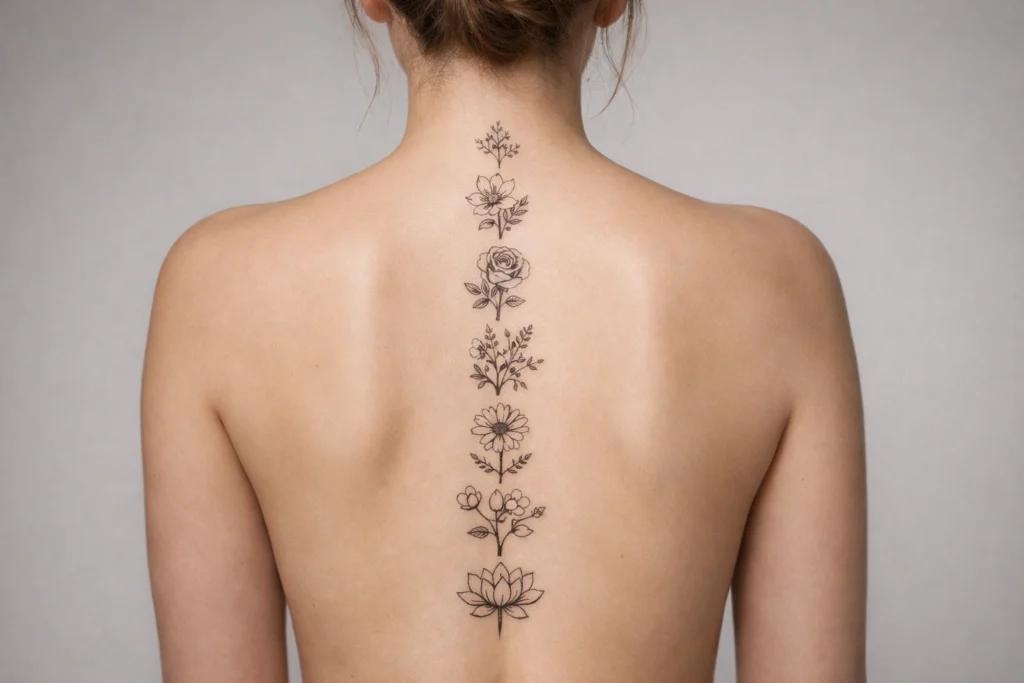
The spine is a dramatic and architecturally striking placement that suits floral designs with vertical orientation or sequential composition. A single long-stemmed rose running from the nape of the neck toward the lower back creates a bold, elegant statement. A series of individual blooms spaced along the length of the spine produces a more rhythmic, decorative effect. Climbing vines with scattered flower heads are another popular approach that takes full advantage of the spine’s natural length.
Pain along the spine varies considerably based on the specific area being worked on. The middle back tends to be more manageable, while areas closer to the cervical spine at the top and the lower lumbar region at the base are generally more sensitive. The visual payoff of a well-executed spine piece is exceptional, and floral designs are among the most naturally suited compositions for this unique vertical canvas.
Sternum Flower Tattoo Placement
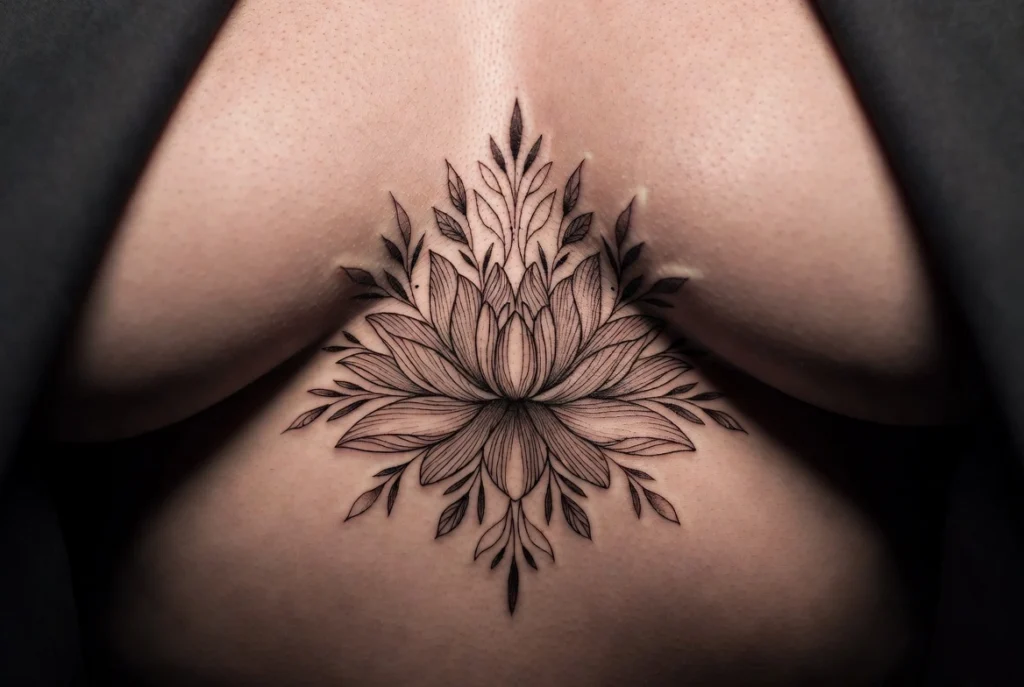
The sternum has emerged as one of the most sought-after placements in contemporary tattoo art. Centered on the chest between the collarbones and the navel, it occupies the most symmetrical and structurally significant axis of the upper body. Floral designs placed here often radiate outward from a central bloom, creating a mandala-like composition that follows and enhances the body’s natural lines.
A single large lotus, a symmetrical arrangement of roses flanking the sternum, or an underboob floral garland are all approaches that have become iconic in this placement. The sternum is a moderately painful area due to the thin skin directly over the bone, and sessions in this region can require frequent breaks. The result, however, is one of the most visually powerful placements a floral tattoo can occupy.
Hip Flower Tattoo Placement
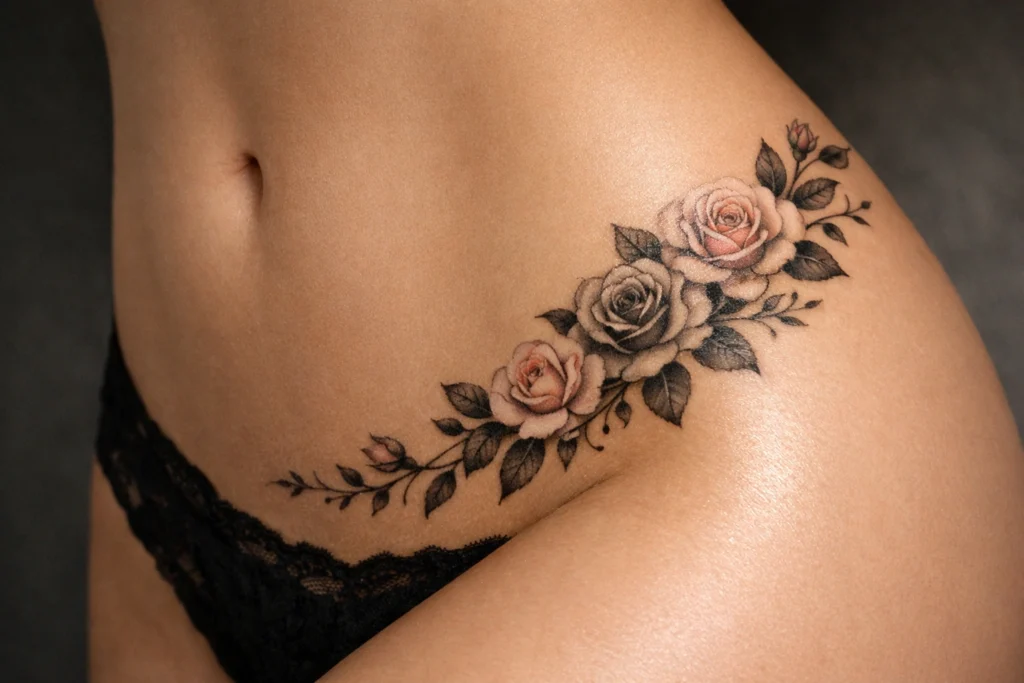
The hip is a placement that invites curved, flowing floral compositions that feel as though they grew there naturally. Designs can sit along the hip bone itself, wrap from the lower back toward the front, or begin at the waistband and trail downward. The curved anatomy of the hip suits organic, asymmetrical floral arrangements rather than rigidly structured compositions.
This placement offers excellent concealment in most everyday contexts, being fully covered by standard clothing and revealed only in swimwear or deliberate display. Many women find that the hip placement carries a personal, almost secret quality that adds to its appeal. Small to medium-sized floral compositions work especially well here, though larger designs that extend onto the lower back or upper thigh can create spectacular results.
Upper Arm Flower Tattoo Placement
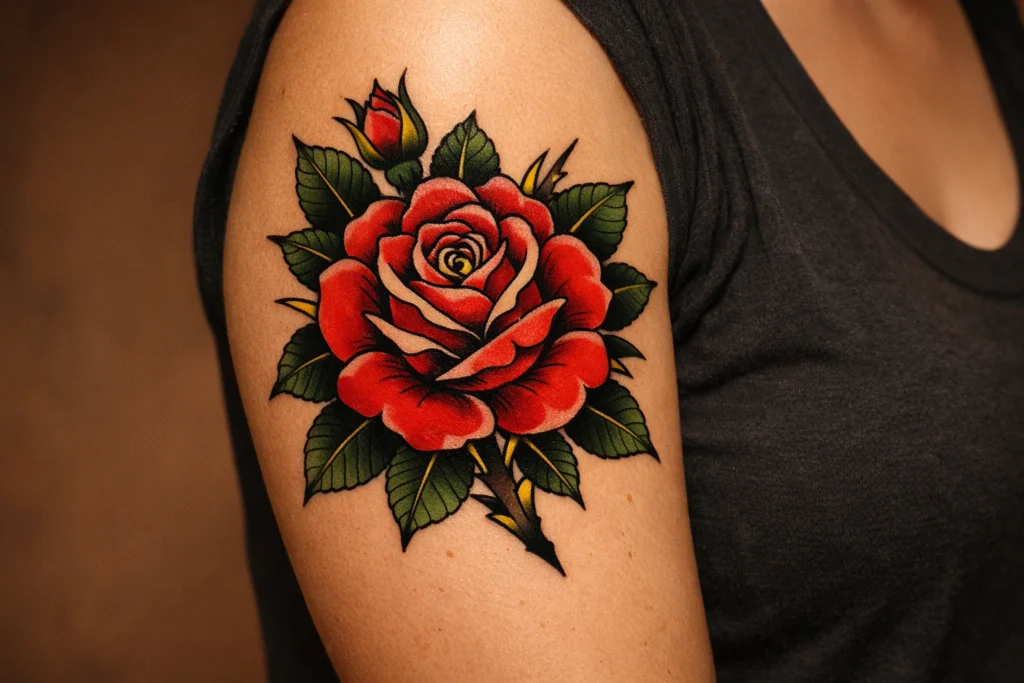
The upper arm is a timeless tattoo placement with a long history across virtually every tattoo tradition in the world. For floral designs, it provides a well-rounded canvas that suits both bold, saturated compositions and softer, more illustrative approaches. A single bloom on the outer bicep makes a clean, confident statement. An arrangement that wraps around the arm creates a sense of dimension and movement.
The upper arm is also one of the most stable placements for long-term ink quality. The skin here is generally thick, less prone to significant change over time compared to areas like the abdomen, and well-protected from sun exposure in most everyday contexts. Women building toward a floral sleeve frequently use the upper arm as the anchoring element from which the rest of the composition expands.
Behind the Ear Flower Tattoo Placement
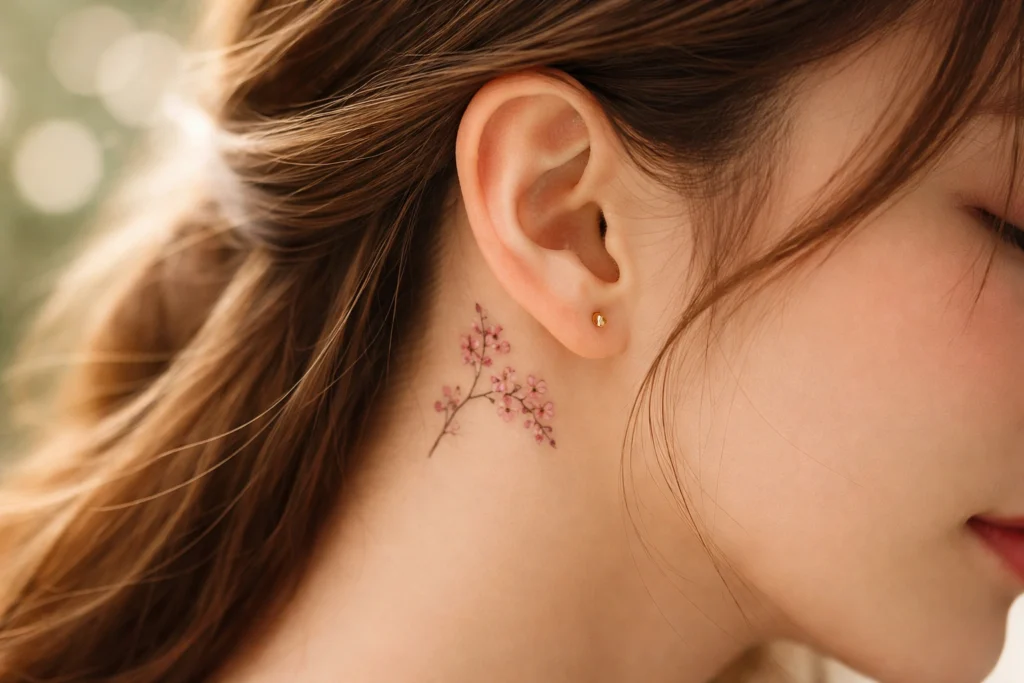
Tucked just behind the ear, small floral tattoos occupy a placement that sits somewhere between entirely private and intermittently visible. A tiny rose, a single cherry blossom, a sprig of lavender, or a minimalist daisy becomes a quiet discovery when hair is swept back or pinned up. This quality of selective revelation is a significant part of what draws people to this placement.
The curved, narrow surface behind the ear limits design options to compact, simple florals. Fine-line and minimalist approaches work best here. Very intricate designs with fine detail may blur over time due to the limited surface area and the movement of the skin in this region. A skilled artist will size and position the design to suit the individual anatomy of the placement and ensure the lines remain clean for as long as possible.
Neck Flower Tattoo Placement
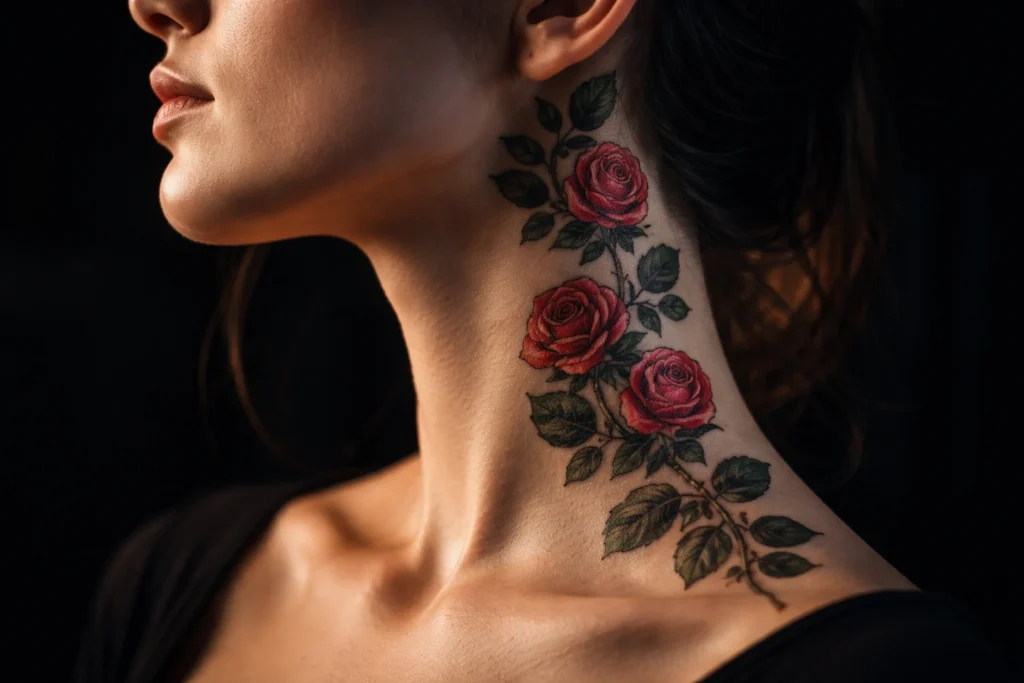
The neck is a high-impact placement that has gained significant mainstream acceptance in recent years. Floral designs on the side of the neck or at the nape create a visible, confident statement that is impossible to miss when the tattoo is displayed. A climbing rose vine on the side of the neck, a single large bloom at the base, or a delicate floral arrangement at the nape all produce strikingly different effects despite occupying similar territory.
Career and lifestyle considerations remain relevant for this placement, as the neck is one of the few areas that is almost impossible to conceal in most professional environments. For those whose lifestyle accommodates visible tattooing, the neck is a uniquely powerful placement for floral work. The nape of the neck, tucked below the hairline, offers a more private version of the neck placement that can be easily covered with longer hair.
Hand Flower Tattoo Placement
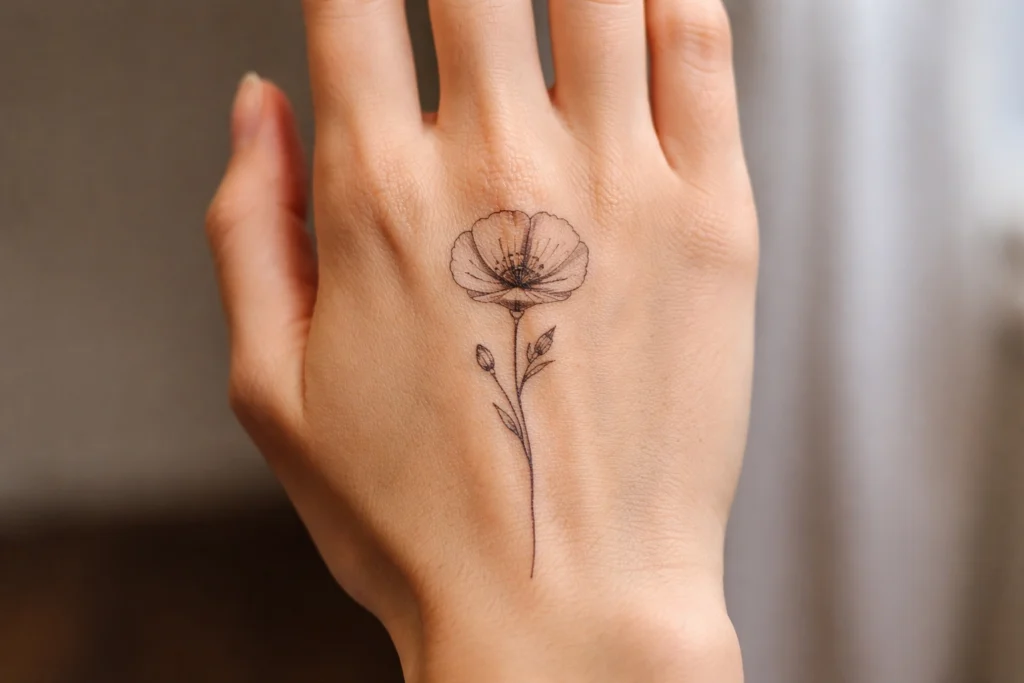
Hand flower tattoos make a bold, unmistakable statement. The top of the hand in particular provides a visible, relatively flat canvas that suits small to medium floral designs. A single bloom centered on the back of the hand, a floral arrangement that extends from the wrist onto the hand, or individual petals scattered across the fingers all create striking visual results.
The practical limitations of hand tattoos are well documented. The skin on the hands experiences constant friction, frequent washing, and significant sun exposure, all of which accelerate ink fading compared to more protected placements. Most hand tattoos require a touch-up within the first few years, and very fine detail or thin linework may spread or blur more quickly than on other areas of the body. For clients who accept these realities, the hand is a uniquely expressive and continuously visible home for a floral design.
Lower Back Flower Tattoo Placement
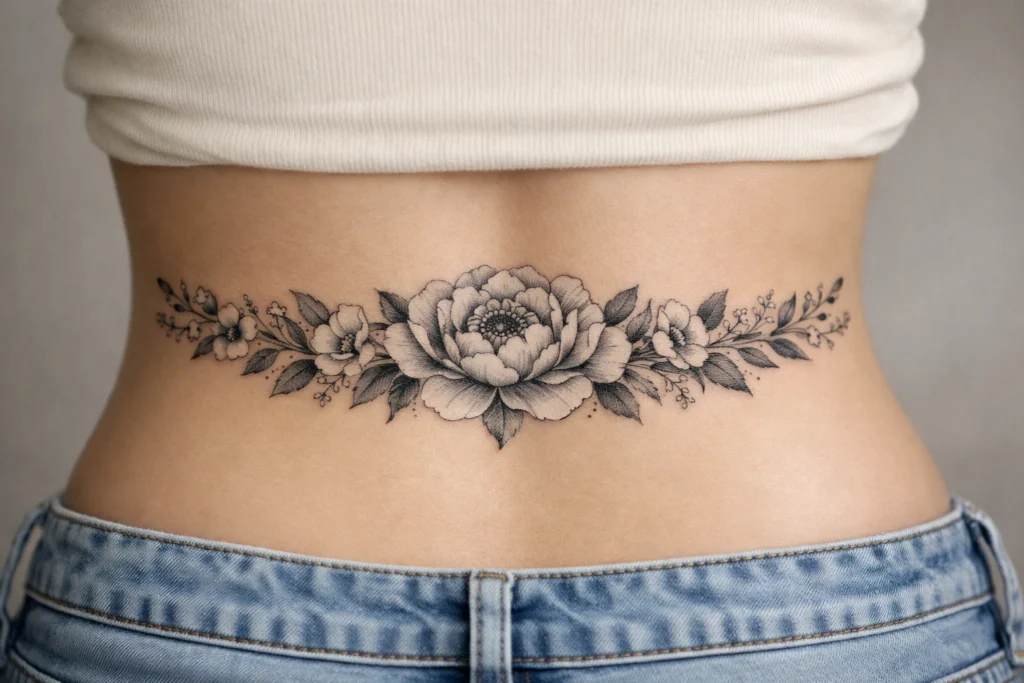
The lower back is a placement with a rich history in tattoo culture and a resurgent appeal in contemporary body art. Centered compositions that span the width of the lower back suit symmetrical floral arrangements beautifully, while off-center designs that extend toward the hip or lower ribcage feel more organic and modern. A large peony centered on the lower back, a horizontal floral garland, or a botanical composition that anchors a larger back piece are all approaches that work naturally in this location.
The lower back provides a reasonably comfortable tattooing experience in the muscular areas flanking the spine, with greater sensitivity as the needle approaches the lumbar vertebrae directly. Visibility is high in low-rise clothing and swimwear, and the placement is fully concealed by most everyday outfits, giving it a satisfying versatility for those who want the option to display or conceal at will.
Foot Flower Tattoo Placement
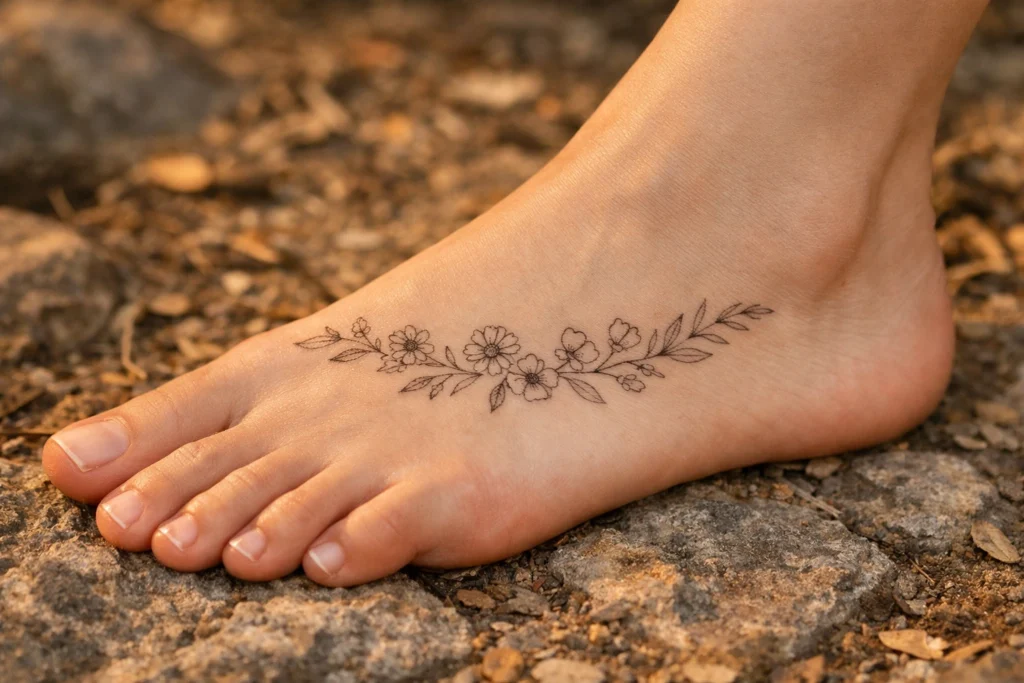
Foot flower tattoos carry an enduring symbolism rooted in the idea of movement, journey, and the ground beneath one’s steps. A floral design on the top of the foot, across the arch, or wrapped around the ankle and foot in a combined composition creates a result that is visible barefoot or in sandals but completely hidden in most footwear.
The foot is among the more challenging areas to tattoo and to heal. The thin skin, the proximity of bones and tendons, and the density of nerve endings in the foot contribute to a more intense tattooing experience. Healing requires careful attention to keeping the area clean and moisturized while minimizing friction from socks and shoes during the recovery period. Small to medium floral designs are most practical here, as very large or highly detailed compositions may be difficult to execute cleanly on the curved surface of the foot.
Full Sleeve Flower Tattoo Placement
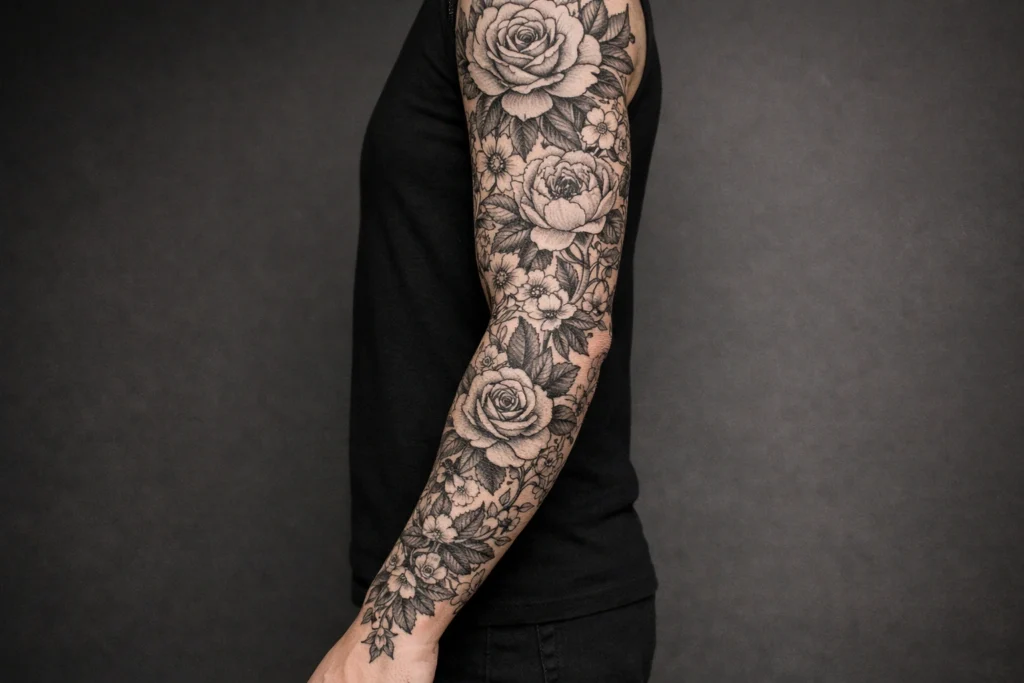
A full floral sleeve represents the ultimate expression of botanical tattoo art. Wrapping the entire arm from wrist to shoulder in an interconnected composition of flowers, foliage, vines, and botanical detail, a floral sleeve is one of the most ambitious and visually commanding tattoo projects a person can undertake. Every element must be considered in relation to the whole, and the composition must flow naturally around the cylindrical surface of the arm without awkward gaps or visual breaks.
Planning a floral sleeve is a collaborative process between the client and a highly skilled artist. It typically requires multiple sessions spread across several months or longer, with each session adding new elements and refining transitions between areas. The reward for this investment is a wearable work of art that transforms the entire arm into a living botanical garden, one that tells a layered story through every bloom, leaf, and stem.
Planning a Floral Sleeve
The best floral sleeves are planned from the beginning rather than accumulated piecemeal. Starting with a clear concept, choosing a consistent stylistic approach, and working with an artist who specializes in large-scale floral work will produce a result that feels unified and intentional rather than assembled from disconnected individual pieces.
Conclusion
Flower tattoo placement is a deeply personal decision that sits at the intersection of aesthetics, anatomy, lifestyle, and meaning. The eighteen locations covered in this guide represent the full spectrum of what is possible, from the quiet intimacy of a bloom behind the ear to the sweeping ambition of a full botanical sleeve. Each placement offers its own visual language, its own practical considerations, and its own relationship to the body it inhabits.
The best flower tattoo placement is not the one that is trending or the one that looks most impressive on someone else. It is the one that feels right for your body, your story, and the life you lead. Take time to explore each option, consult with an experienced artist whose floral work inspires you, and trust that the right placement will reveal itself when the design and the location come together in a way that feels genuinely, unmistakably yours.
You may also like this post: 17 Butterfly Tattoo Meaning Explained: Inspiration and Symbolic Designs
Frequently Asked Questions
What is the best flower tattoo placement for someone getting their first tattoo?
A: The forearm, outer thigh, and upper arm are widely considered the most beginner-friendly placements. They offer relatively low to moderate pain levels, heal reliably well, and provide enough surface area to accommodate both simple and moderately detailed floral designs. All three are also easy to care for during the healing process, which makes them practical choices for first-time recipients.
Which flower tattoo placements age the best over time?
A: Placements on the upper arm, outer thigh, upper back, and shoulder blade tend to age most gracefully. These areas have thicker, more stable skin, experience less friction and sun exposure than the hands or feet, and are less subject to the kind of significant physical change that can distort designs over time. Regular sunscreen application on any exposed placement will significantly extend the crispness and vibrancy of the ink.
Can a small flower tattoo work on a large placement like the back or thigh?
A: Yes, though the design needs to be considered carefully in relation to the scale of the canvas. A small floral design placed on a large area like the back can look intentional and elegant if it is well-positioned, such as centered between the shoulder blades or placed deliberately at a specific point on the thigh. Where it tends to look less effective is when it simply drifts in the middle of a large expanse of skin without a clear compositional anchor.
How do I choose between a color flower tattoo and a black and grey one?
A: The choice largely depends on your personal aesthetic preference, your skin tone, and the longevity you are hoping for. Color flower tattoos are vibrant and visually immediate but require more consistent sun protection to prevent fading, particularly for lighter shades like yellow, pink, and white. Black and grey florals tend to age more gracefully and work beautifully across a wide range of skin tones. Many artists who specialize in botanical realism and fine-line work prefer black and grey for the tonal depth and longevity it provides.
Do flower tattoos have universal symbolic meanings?
A: Different flowers carry different symbolic associations that vary across cultures and personal contexts. Roses traditionally represent love and beauty, lotus flowers symbolize spiritual growth and resilience, cherry blossoms evoke the transience of life, and sunflowers are associated with warmth and vitality. That said, symbolic meaning in tattooing is ultimately personal. Many people choose a flower for its visual qualities alone or because it connects to a specific memory or person rather than its traditional symbolism. Your tattoo means what you want it to mean.