
Introduction
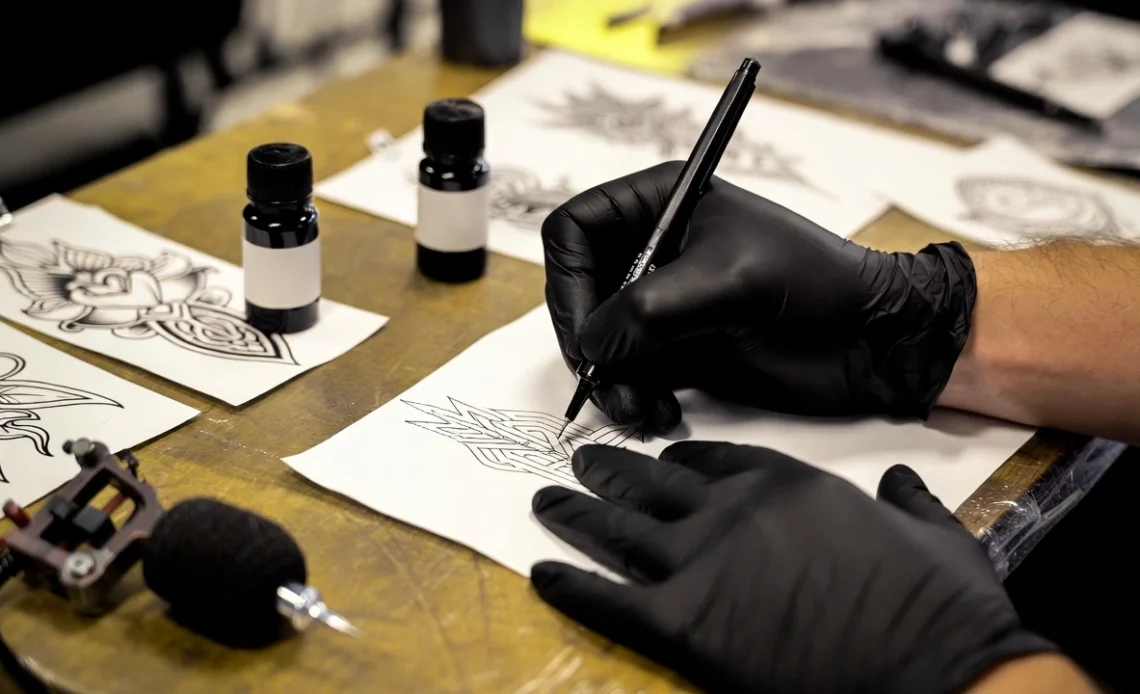
Getting your first tattoo is one of the most personal decisions you will ever make about your body. It is permanent, it is visible, and it will tell a story about who you are for the rest of your life. Yet most first-timers find themselves overwhelmed before they even walk through the studio door. There are thousands of styles, hundreds of artists, and an almost infinite number of designs to consider. The pressure to choose something perfect can feel paralyzing.
The good news is that picking a tattoo does not have to be a guessing game. With the right approach, a little self-reflection, and some practical knowledge about the tattooing process, you can walk into a studio with complete confidence. This guide covers every stage of the decision-making process, from understanding why you want a tattoo to choosing the exact placement that suits your lifestyle. Whether you are drawn to bold traditional imagery or delicate fine-line work, the principles here will help you land on a design you will be proud to wear for decades.
Understand Why You Want a Tattoo

Before you think about design, think about intention. People get tattoos for many different reasons. Some mark a milestone, such as a graduation, a loss, or the end of a difficult chapter. Others simply appreciate body art as a form of self-expression. Some want to honor a person, a culture, or a belief system.
Your reason matters because it directly shapes what you should get. A tattoo rooted in deep personal meaning tends to age well emotionally, even if trends change. A tattoo chosen purely because it looked cool on someone else has a higher chance of feeling hollow later on. Take a few days to sit with the question: what do I want this tattoo to say about me, and will I feel the same way about that message in ten or twenty years?
Research Tattoo Styles Before You Commit
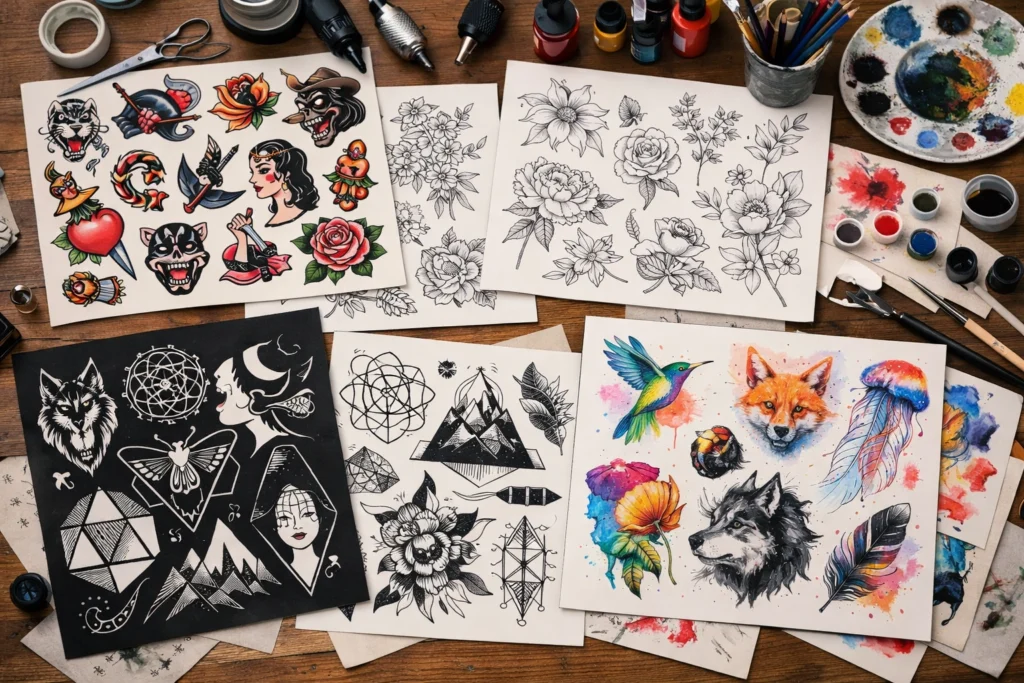
Tattoo art spans a remarkably wide range of visual styles, and each has its own technique, aesthetic, and longevity characteristics. Knowing the major categories puts you in a far better position to communicate with an artist and choose something that matches your vision.
Traditional tattoos use bold black outlines and a limited, saturated color palette. They are known for their durability because the strong lines hold up well over time. Neo-traditional work builds on that foundation but introduces more color variation, depth, and illustrative detail. Realism aims to replicate photographs or lifelike imagery on skin, which demands exceptional technical skill from the artist. Fine-line tattooing has surged in popularity and uses thin, precise lines to create minimalist or intricate designs, though it requires more careful aftercare. Blackwork relies entirely on black ink and often draws from geometric, tribal, or illustrative traditions. Watercolor tattoos mimic the soft washes of painted watercolor and look striking when fresh, though they can require touch-ups to maintain vibrancy.
Spend time browsing each of these styles before settling on one direction. Save examples that speak to you and look for patterns in what you keep returning to.
Choose a Subject That Has Personal Meaning
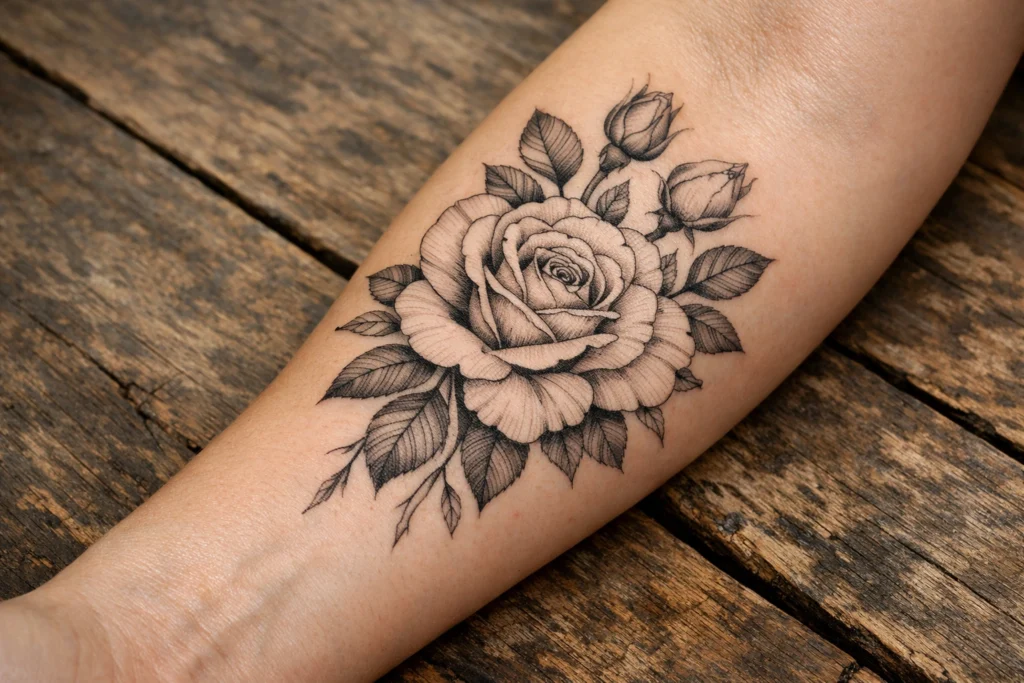
A tattoo subject is the central image or concept the design is built around. It might be a single object, a scene, a word, a symbol, or an abstract form. Choosing a subject with genuine personal meaning is one of the most reliable ways to ensure long-term satisfaction.
Consider what matters most to you right now and has mattered consistently over time. Family, music, nature, cultural heritage, literature, and personal philosophy are all common starting points. Animals carry rich symbolic meaning across cultures, and many people find that a particular creature resonates with qualities they admire or identify with. Botanical imagery, particularly flowers and plants, offers enormous design flexibility and layers of historical symbolism. Geometric patterns appeal to those who prefer abstraction over representation.
Avoid choosing a subject simply because it is trending. Trends in tattooing move quickly, and what feels fresh today can feel dated in three years. A subject that connects to something authentic in your life will always look intentional.
Think About Placement on Your Body

Where a tattoo sits on your body affects how it looks, how much it hurts to get, how easily it can be covered, and how it will age over time. Placement is a strategic decision, not just an aesthetic one.
High-visibility areas like the forearm, upper arm, and calf are popular because they are easy to display and relatively easy to care for. The chest and back provide large canvases for detailed or expansive work. Areas with thinner skin or less muscle, such as the ribs, the inner arm, and the foot, tend to be more painful during the tattooing process. Hands and necks are considered career-sensitive placements in many professional environments, so consider how visible your tattoo will be in your daily context.
Skin that experiences a lot of sun exposure or friction, such as the tops of hands or behind the knees, may fade faster and require more frequent touch-ups. Curved or muscular areas tend to distort designs less over time than areas prone to significant weight changes, such as the abdomen.
Consider the Size of Your Tattoo
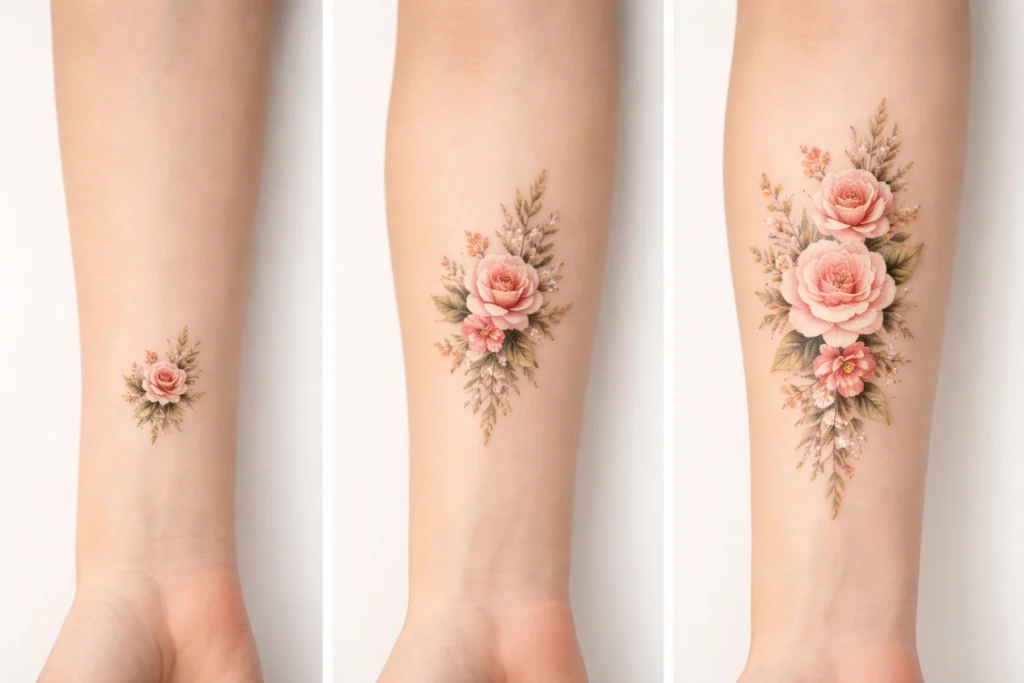
Size determines how much detail a design can realistically contain, how long the session will take, and how prominent the tattoo will be in your daily life. Getting the sizing right is one of the most practical aspects of the planning process.
Very small tattoos look elegant and subtle but limit the complexity of the design. Fine details like thin lettering or intricate line work in a tiny format can blur together as the skin ages and ink spreads slightly over the years. Medium-sized tattoos offer a good balance between visibility and detail. Large or full-piece tattoos make a bold statement and allow for rich, layered designs, but they require more time, cost more, and involve a longer healing process.
Ask your artist for a size recommendation once you have a design concept in mind. They will know what will translate well onto skin at different scales and can guide you toward proportions that will hold up over time.
Set a Realistic Budget

Tattoo pricing varies widely based on the artist’s experience, the size and complexity of the design, the geographic location of the studio, and the amount of custom work involved. Quality tattooing is not cheap, and treating it as a bargain purchase is one of the most common mistakes first-timers make.
Established artists with strong portfolios typically charge higher rates, and those rates are justified by the skill and longevity they bring to the work. A well-executed tattoo from a skilled artist will look better at age fifty than a poorly done tattoo from a cheaper alternative at age twenty-five. Think of your budget as an investment in something permanent.
Expect to pay a shop minimum for very small designs. Larger, custom, or multi-session pieces can run into several hundred or several thousand dollars. Factor in a tip, which is standard practice in the tattoo industry, typically in the range of fifteen to twenty percent.
Find the Right Tattoo Artist

Not every tattoo artist excels in every style, and matching your vision to an artist who specializes in that style is one of the most important steps in the entire process. An artist who produces outstanding traditional work may not be the right choice for photorealistic portraiture, and vice versa.
Start by looking at portfolios on social media platforms and artist websites. Look for consistent quality across multiple pieces, not just a few standout examples. Pay attention to line clarity, shading depth, color saturation, and how the finished work appears on healed skin versus fresh tattoos. Many artists share healed photos, which give you a more accurate picture of what the long-term result will look like.
Once you find an artist whose style aligns with your vision, reach out to schedule a consultation. A good consultation involves discussing your concept, looking at reference images, and hearing the artist’s perspective on what will and will not work. Artists with integrity will push back on ideas that will not translate well and offer constructive alternatives.
Look at Reference Images and Build a Mood Board
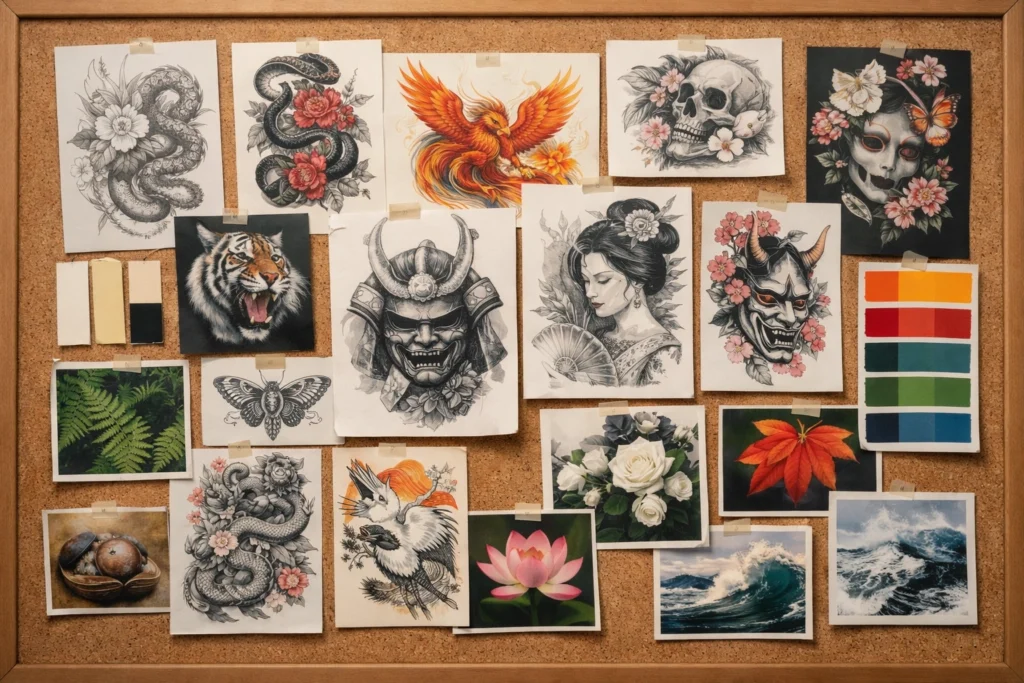
Reference images are one of the most effective communication tools you have when working with a tattoo artist. They take the abstract idea in your head and give it a visual form that can be discussed, refined, and built upon.
Gather a collection of images that capture different elements of what you want. These do not need to be tattoos. Photographs, illustrations, paintings, and graphic design samples can all serve as useful reference material for color, mood, composition, or subject matter. The goal is not to copy an existing tattoo but to convey the direction you are heading in.
Organize your references into a simple mood board, either digitally or on paper, and bring it to your consultation. The more clearly you can communicate your vision, the more accurately the artist can translate it into a custom design.
Think About Color Versus Black and Grey
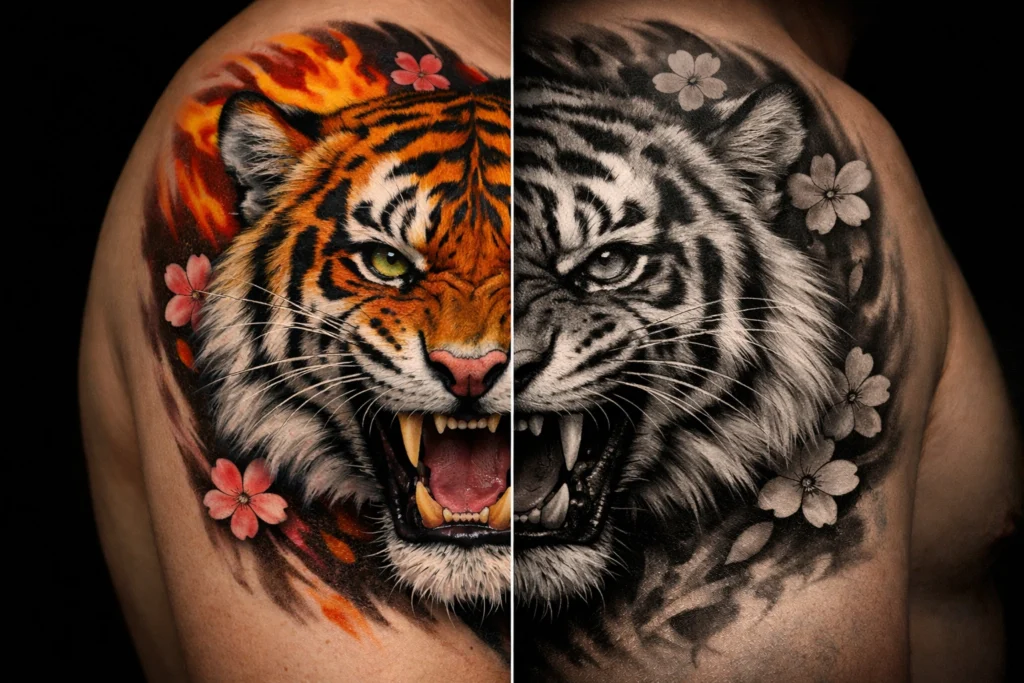
The decision to use color or stick with black and grey ink is one that affects the visual impact, the maintenance, and the long-term appearance of your tattoo. Both approaches have distinct advantages, and the right choice depends on your design and your personal preferences.
Color tattoos are vibrant and can create stunning visual contrast, but they require more careful sun protection to prevent fading. Certain colors, particularly lighter shades like yellow and white, fade faster than darker ones. Black and grey tattoos tend to age more gracefully, develop a refined, classic look over time, and work well across a broader range of skin tones. Many fine-line and realism artists work exclusively in black and grey because it allows for subtle tonal gradations that color can sometimes overpower.
Discuss the color question with your artist during the consultation. They will be able to advise you on what will work best given your skin tone, the style of the piece, and the placement you have chosen.
Avoid Copying Other People’s Tattoos Directly

There is an important distinction between using someone else’s tattoo as inspiration and copying it outright. Tattoo art is a creative medium, and many designs are deeply personal to the person wearing them. Copying a design without context strips it of its meaning and can be disrespectful both to the original wearer and to the artist who created it.
Instead of seeking to replicate something you admire, use it as a reference point for style, composition, or technique. Tell your artist that you love the linework quality of a particular piece or the way a certain design uses negative space. A skilled artist can incorporate those elements into a completely original design that is uniquely yours.
Custom tattoos not only carry more personal weight but tend to look more cohesive and intentional than copies or flash designs chosen without much thought.
Research Cultural and Symbolic Meaning
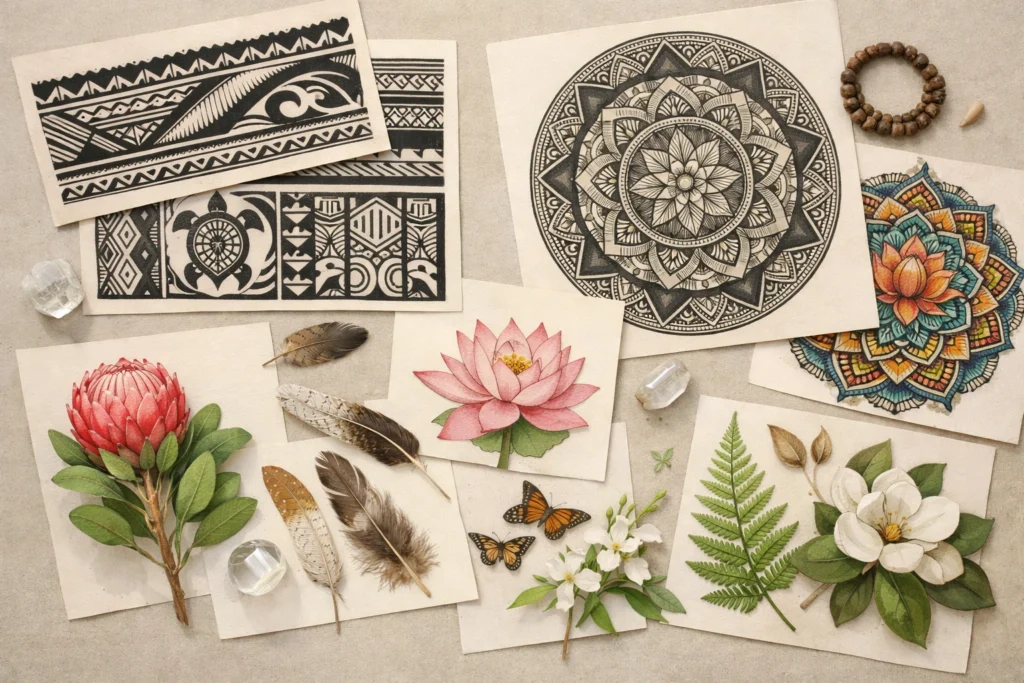
Many tattoo designs carry cultural or symbolic significance that extends far beyond their visual appearance. Before committing to a symbol, motif, or script from a culture that is not your own, it is worth researching its meaning and considering whether wearing it is appropriate.
Some symbols carry sacred or ceremonial significance in their original cultural context and may be considered disrespectful when used decoratively by outsiders. Traditional Polynesian patterns, certain indigenous symbols, and religious iconography from various traditions fall into this category. This is not about avoiding all cross-cultural design influences but about approaching the topic thoughtfully and with genuine respect.
Where relevant, consulting with practitioners or members of the culture in question can be illuminating. Many tattoo artists who specialize in culturally rooted styles will themselves raise these considerations during consultation and can guide you toward choices that are both visually powerful and culturally appropriate.
Consider Your Skin Tone
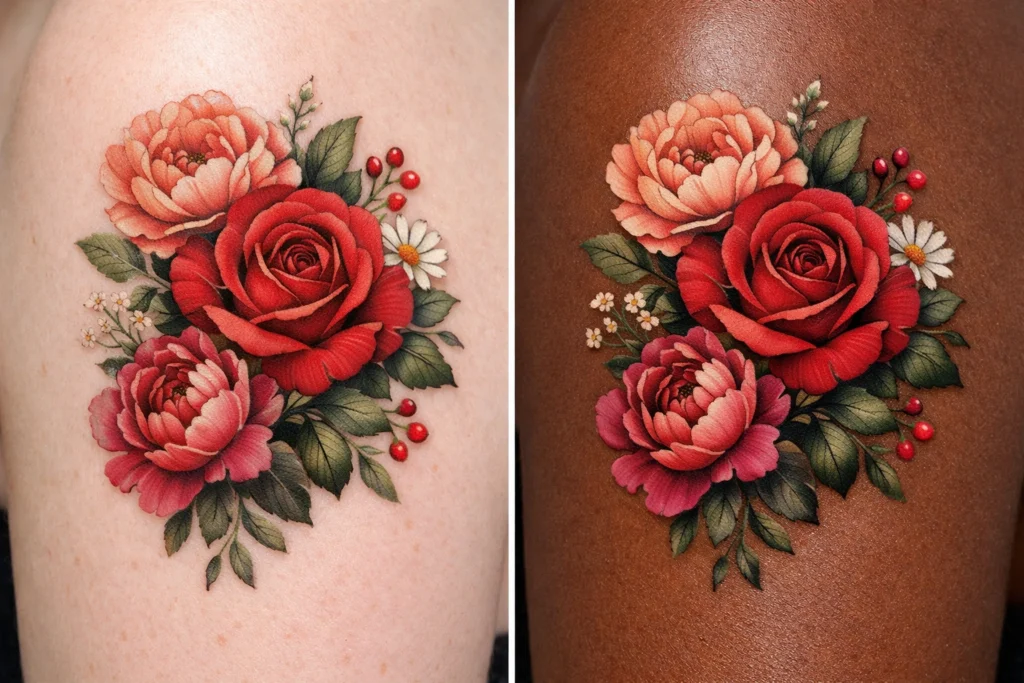
Skin tone plays a significant role in how tattoo colors and line weights appear on the skin. What looks vivid and high-contrast on very fair skin may appear muted or subtle on deeper skin tones, and not every artist has equal experience working across the full range of complexions.
Saturated colors like red, yellow, and orange tend to show up most vibrantly on lighter skin tones. On medium to deeper skin tones, bold black ink, deep blues, and greens often produce the most striking results. White ink, which is sometimes used for highlights or standalone designs, rarely shows up well on dark skin and is one of the fastest-fading ink colors overall.
When reviewing an artist’s portfolio, look specifically for examples of their work on skin tones similar to yours. This will give you a realistic sense of what to expect and whether their technique is well-suited to your complexion.
Take Time and Avoid Impulsive Decisions

One of the most consistent pieces of advice from experienced tattoo artists and people with extensive collections is simply this: take your time. The urgency you feel in a given moment does not need to translate into an immediate appointment.
Live with a design concept for at least a few weeks before committing to it. Print it out, tape it somewhere you will see it regularly, and observe how you feel about it over time. If your enthusiasm holds steady or grows, that is a good sign. If it starts to feel less compelling after a week, it may not be the right choice.
This is especially important for text-based tattoos, memorial tattoos, and designs that commemorate relationships. Text can be misquoted, misattributed, or misspelled. Relationship tattoos can become painful reminders if circumstances change. There is no harm in waiting until you feel genuinely certain.
Plan for the Healing Process
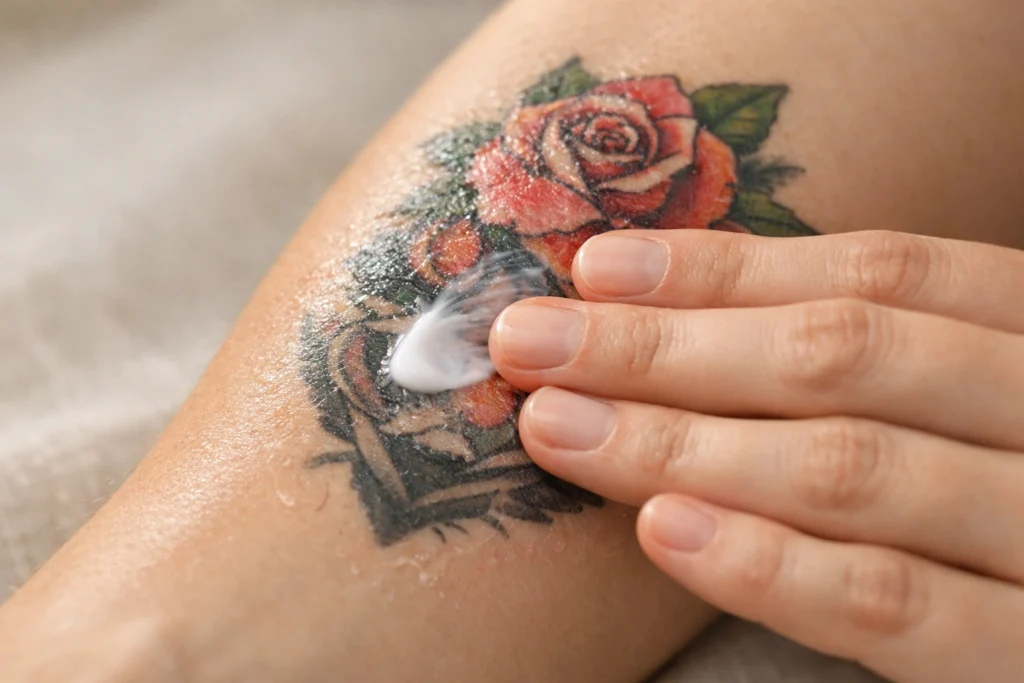
A tattoo is not finished the moment you leave the studio. The healing process takes several weeks, and how you care for a fresh tattoo directly affects how well the final result looks.
During the first few days, the tattooed area will be sensitive, slightly swollen, and will need to be kept clean and moisturized according to your artist’s aftercare instructions. Exposure to direct sunlight, soaking in water, and picking at peeling skin are all things to avoid during the healing period. Once healed, regular sunscreen application will protect the design from UV-related fading.
Factor the healing timeline into your schedule before booking an appointment. Avoid getting a tattoo immediately before a beach vacation, a major swimming commitment, or an event where you will be wearing clothing that rubs against the freshly tattooed area.
Ask About Touch-Ups in Advance
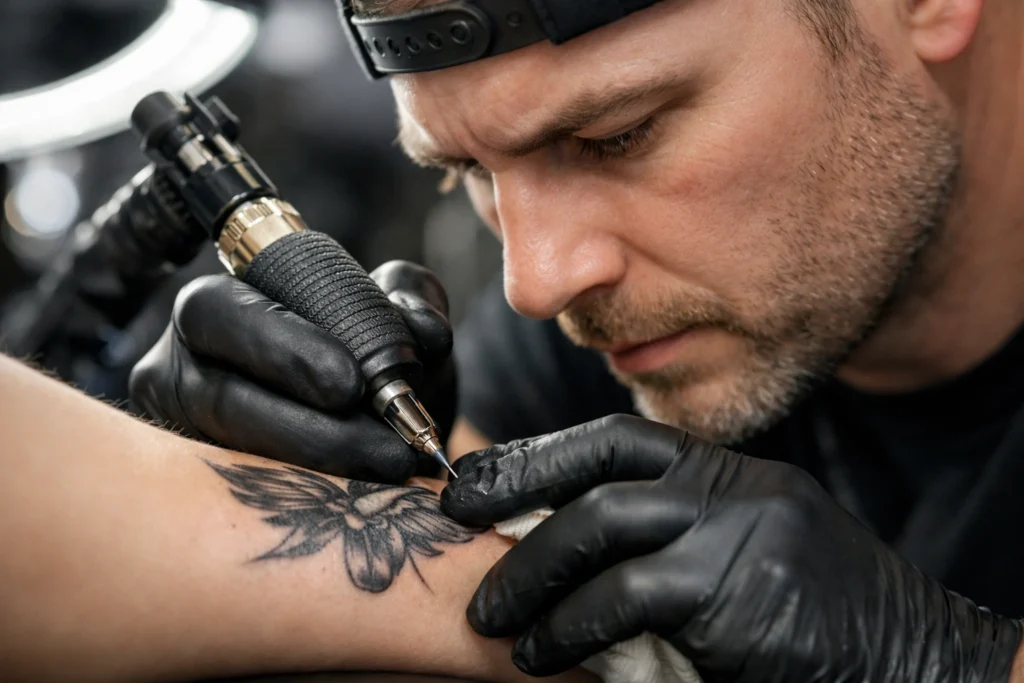
Even the best tattoos may require a touch-up after healing, particularly if any ink has settled unevenly, if fine lines have slightly blurred, or if color saturation has faded in certain areas. Many reputable studios offer one complimentary touch-up within a set period after the original session.
Ask about this policy before booking and understand what it covers. Touch-ups are also an opportunity to refine any element of the design that did not heal quite as expected. They are a normal part of the tattooing process and are nothing to be concerned about.
Visit the Studio Before Your Appointment

Before committing to a studio, visit in person if possible. The physical environment tells you a great deal about the standards the studio upholds. Cleanliness is non-negotiable. The studio should appear organized and sanitary, with clearly maintained workstations, sealed single-use needles, and gloves worn by artists during sessions.
Pay attention to how the staff interacts with you. A professional studio will welcome questions, take your concept seriously, and make you feel comfortable rather than rushed. If anything about the environment or the interaction feels off, trust that instinct and look elsewhere.
Communicate Clearly With Your Artist
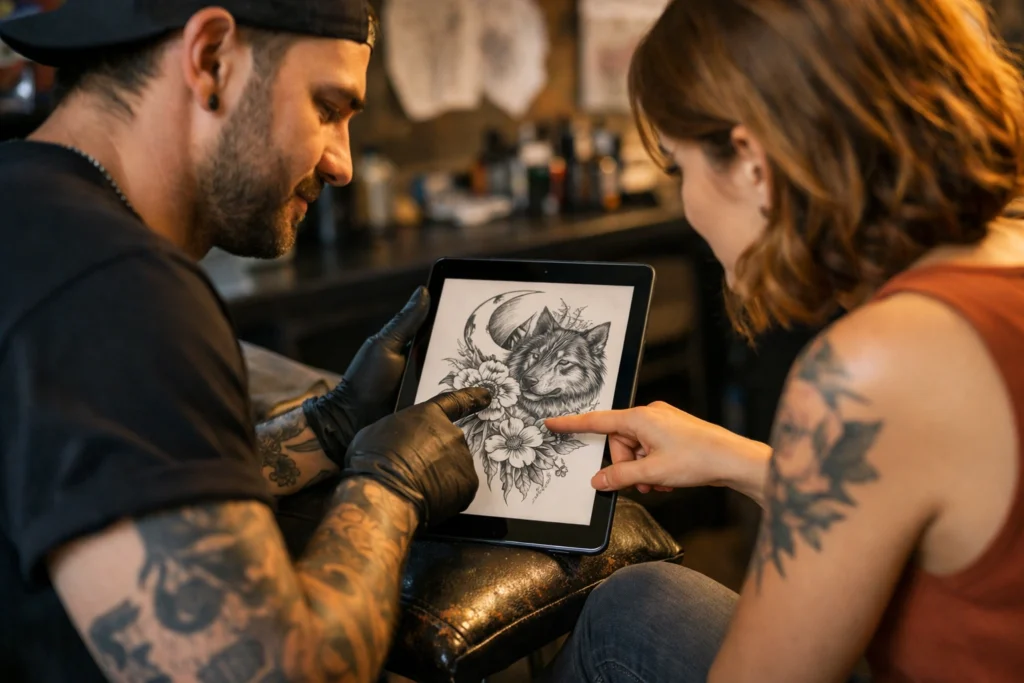
The relationship between a client and a tattoo artist works best as a genuine collaboration. Your job is to communicate your vision as clearly and specifically as possible. The artist’s job is to take that vision and execute it in a way that works on skin. Both sides of that equation matter.
Be honest about your budget, your pain tolerance, and any concerns you have. If the artist presents a sketch that is not quite right, say so respectfully and explain what you would like adjusted. Most artists genuinely want clients to be happy with the result and will welcome constructive feedback during the design phase.
Equally, be open to your artist’s expertise. If they recommend a size change, a composition adjustment, or a simplification of a complex design, there is almost certainly a technical reason behind that recommendation. Trust their experience while advocating for your own vision.
Embrace the Permanence

There is a quiet courage in choosing something permanent. Unlike fashion or hairstyles, a tattoo cannot be changed with the season. That permanence is not something to fear but something to embrace as part of what makes the medium meaningful.
People change over time, and some people worry that they will grow away from a tattoo they once loved. In practice, most people with tattoos find that even designs from earlier in their lives hold value as markers of who they were at a particular point in time. A tattoo does not need to represent who you are today in order to remain something worth keeping.
Choose with care, choose with intention, and choose something that honestly reflects a part of your story. That approach will serve you far better than chasing perfection or waiting for a design that feels completely risk-free. The best tattoos are the ones that were chosen bravely and worn proudly.
Conclusion
Picking a tattoo is a process that rewards patience, self-knowledge, and a willingness to do your homework. From understanding your personal motivation to selecting an artist whose skills match your vision, every step in this guide builds toward a result you can feel genuinely proud of. There is no universal formula for the perfect tattoo because the perfect tattoo is simply the one that is right for you. Take your time, ask good questions, invest in quality, and you will be well on your way to wearing a piece of art that tells your story for a lifetime.
You may also like this post: Top 18 Numbing Cream for Tattoos – The Ultimate Buying Guide
Frequently Asked Questions
How do I know if a tattoo design will look good on my specific body part?
A: The best way to get a sense of fit is to work with your artist during the consultation phase. They can use stencils to place a temporary outline of the design on the area you have chosen, letting you see how it sits before any ink is used. Additionally, reviewing your artist’s portfolio for pieces done in similar placements on similar body types will give you a realistic preview of the likely result.
Is it normal to feel nervous before getting my first tattoo?
A: Completely normal. Nearly every first-timer experiences some degree of anticipation or nerves before the appointment. The best antidote is preparation: knowing what to expect, having eaten a good meal beforehand, staying hydrated, and choosing an artist you trust will all help you feel grounded when you sit down in the chair.
How long should I wait before deciding on a tattoo design?
A: There is no fixed rule, but a general guideline is to live with the concept for at least two to four weeks before booking an appointment. If the design still excites you and feels personally meaningful after that period, it is likely a solid choice. Some people find it helpful to set a reminder on their phone for a month out and revisit the decision then.
Can I get a tattoo if I have sensitive skin or certain medical conditions?
A: Some skin conditions and medical factors may affect the tattooing process or the healing outcome. People with eczema, psoriasis, keloid scarring tendencies, or autoimmune conditions should consult a dermatologist before getting tattooed. It is also important to disclose any relevant medications to your artist, as blood thinners and certain other drugs can affect bleeding during the session. A reputable artist will ask about these factors and can advise accordingly.
What should I do if I regret my tattoo?
A: Tattoo regret is more common than many people admit, and the options for addressing it have expanded significantly in recent years. A skilled cover-up artist can often transform an unwanted design into something new entirely. Laser removal is also an effective option and has become more precise and accessible, though it typically requires multiple sessions and some discomfort. Rather than making a hasty decision about removal, consult with a specialist who can walk you through the realistic options based on the size, color, and placement of the existing tattoo.