
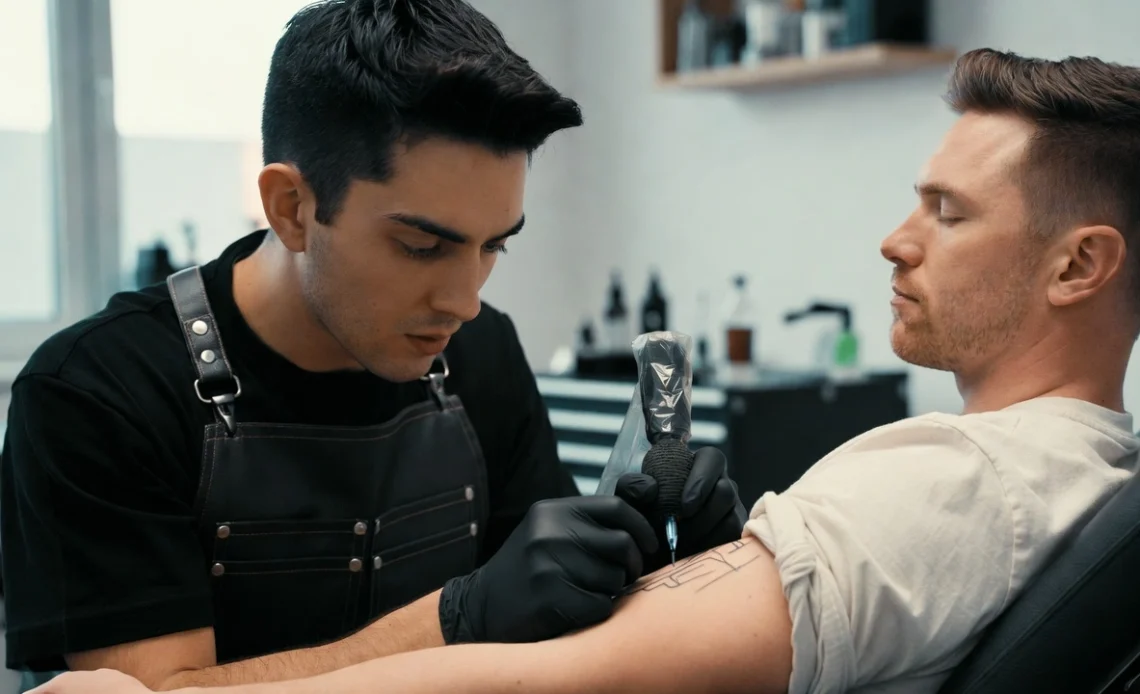
Getting a tattoo is one of the most personal decisions you will ever make. Whether it is a small symbol on your wrist or an elaborate sleeve wrapping your arm, the artwork you choose to wear forever carries deep meaning. But before you commit to the chair, one question rises above all others: how much is it going to hurt?
The truth is that tattoo pain is real, unavoidable, and varies significantly depending on where you place your ink. The good news is that not every part of your body feels the needle equally. Some locations are naturally cushioned with fat, protected by thick skin, and free of densely packed nerve endings. These areas offer a far more comfortable experience, especially for someone sitting in a tattoo artist’s chair for the very first time.
This guide breaks down 18 of the least painful places to get a tattoo, explaining why each location sits lower on the pain scale, what kinds of designs work best there, and what you can expect during and after your session. Whether you are a first-timer managing anxiety or a returning collector choosing your next placement strategically, this is the information you need before you book that appointment.
Understanding Why Some Spots Hurt More Than Others
Before diving into the 18 locations, it helps to understand what makes one area of the body more painful than another. Three key anatomical factors determine how much a tattoo will hurt.
The first is skin thickness. Thicker skin acts as a natural buffer between the needle and the sensitive layers beneath. Areas like the forearm and upper back have significantly thicker skin than places like the inner elbow or the top of the foot.
The second is nerve density. Your body is mapped with nerve endings that send pain signals to your brain. Regions where these nerves are tightly concentrated, such as the armpits, ribcage, and fingertips, produce intense sensations when a needle punctures the skin repeatedly. Conversely, areas with fewer nerve endings feel far more manageable.
The third is proximity to bone. When a tattoo needle works over a bony area with little flesh between skin and skeleton, the vibration and pressure transfer directly to the bone. This is why spots like the shin, collarbone, and elbow ditch are notoriously uncomfortable. Areas padded with muscle and fat absorb that impact instead.
Pain perception is also personal. Your age, hydration levels, overall health, menstrual cycle, sleep quality the night before, and natural pain threshold all play a role. Two people sitting in the same chair for an identical tattoo in the same location can walk away with completely different experiences.
Outer Shoulder
![Outer Shoulder Tattoo Placement]
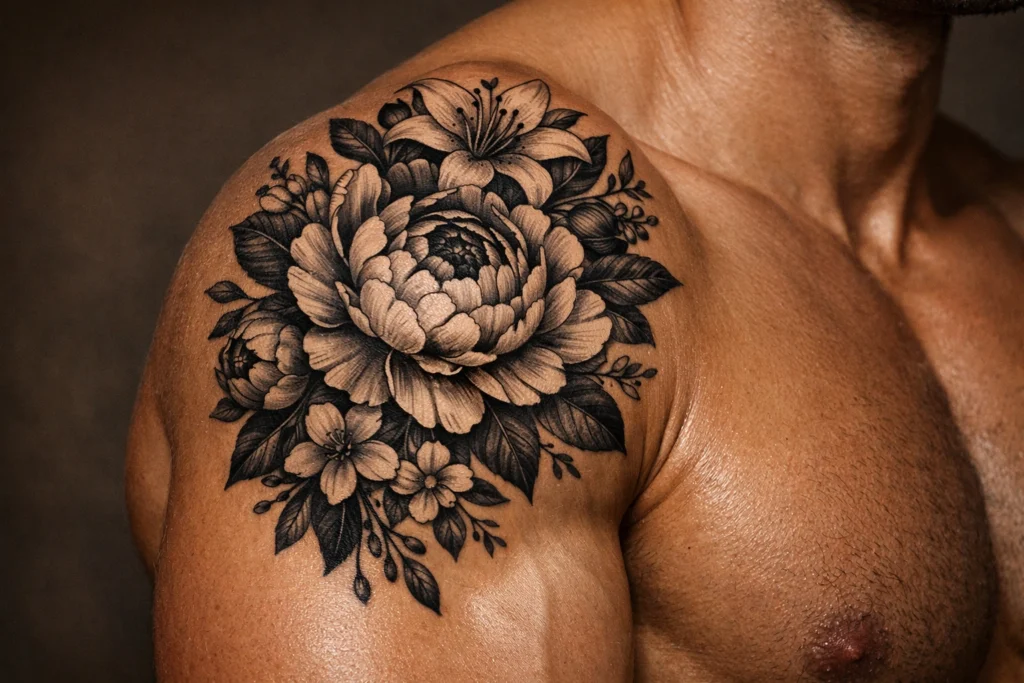
The outer shoulder is widely considered one of the gold standard locations for a first tattoo. It is dense with muscle, padded with a reasonable layer of flesh, and notably low in concentrated nerve endings. The skin here is also thick enough to buffer needle penetration effectively.
Artists love working on the outer shoulder because the surface is flat and stable, which makes it easier to produce clean, detailed work. It accommodates everything from small minimalist pieces to large geometric or floral compositions. Pain is typically described as mild pressure or a light scratching sensation.
Outer Forearm
![Outer Forearm Tattoo Placement]
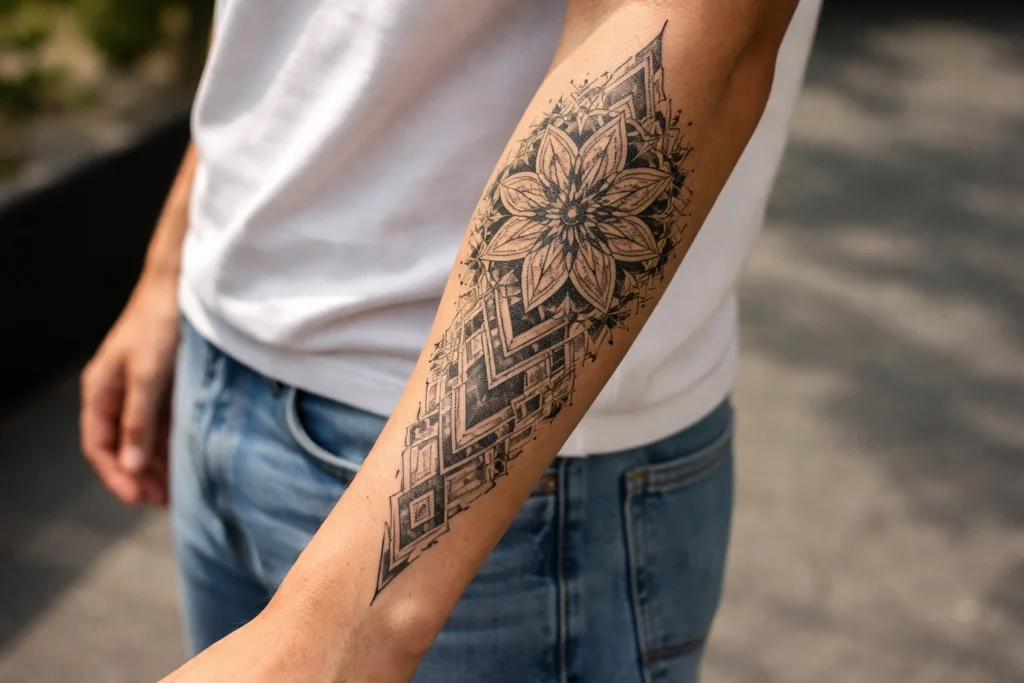
Ask any experienced tattoo artist which placement they recommend for beginners, and the outer forearm will almost always be at the top of the list. The muscle and dense skin in this region create a natural cushion. Nerve endings here are sparse compared to the inner arm, and the area is comfortably distant from bone.
The outer forearm is also one of the most visible placements, which is a bonus for those who want to show off their ink. Designs heal beautifully here, the area is easy to keep clean, and because the surface area is generous, your artist can work with precision throughout the session.
Outer Thigh
![Outer Thigh Tattoo Placement]
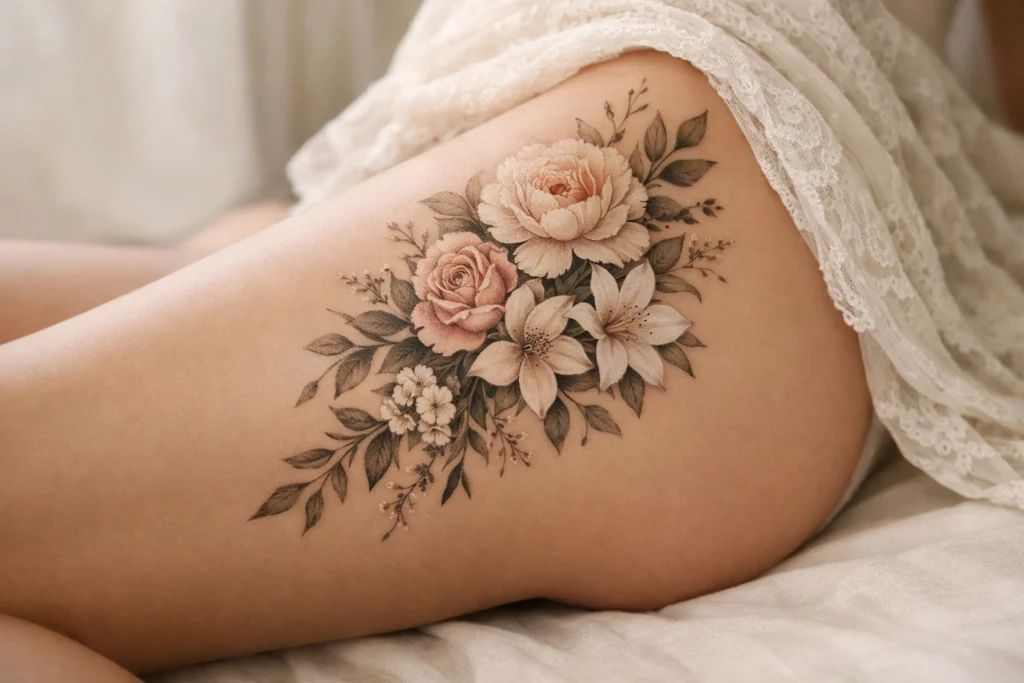
The outer thigh is a large, well-padded canvas with a combination of fat and muscle that places it firmly among the least painful tattoo locations. There are relatively few sensitive nerve clusters in this region, and the skin has enough thickness to make the tattooing process feel like mild background discomfort rather than sharp pain.
Beyond comfort, the outer thigh is ideal for medium to large designs. Floral sleeves, detailed portraits, and bold traditional pieces all sit beautifully on this surface. It is also easy to conceal when needed, which is a practical consideration for those in professional environments.
Upper Back
![Upper Back Tattoo Placement]
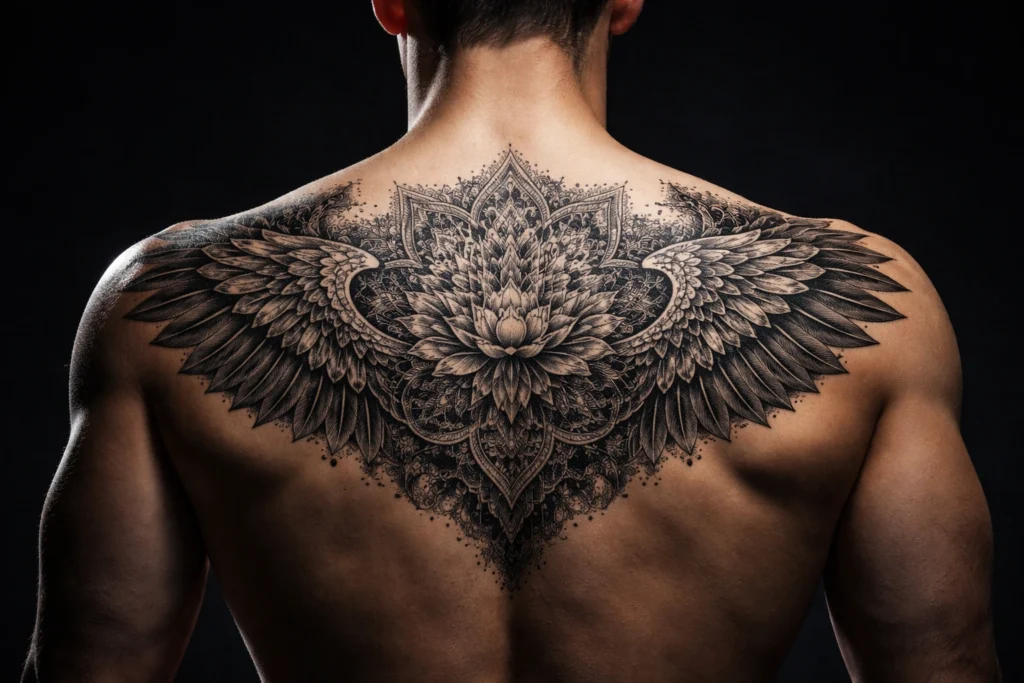
The upper back offers a broad, stable, and relatively low-pain surface for tattoo work. The skin is thick across this region, and the distance from the spine keeps nerve sensitivity at a manageable level. Artists appreciate the amount of room available, which makes the upper back a popular choice for elaborate back pieces, wing designs, and lettering.
Pain during an upper back session is most commonly described as a dull ache or mild scratching. The discomfort increases slightly as the needle approaches the spine or the shoulder blade, but the majority of the canvas remains comfortable throughout.
Outer Bicep
![Outer Bicep Tattoo Placement]
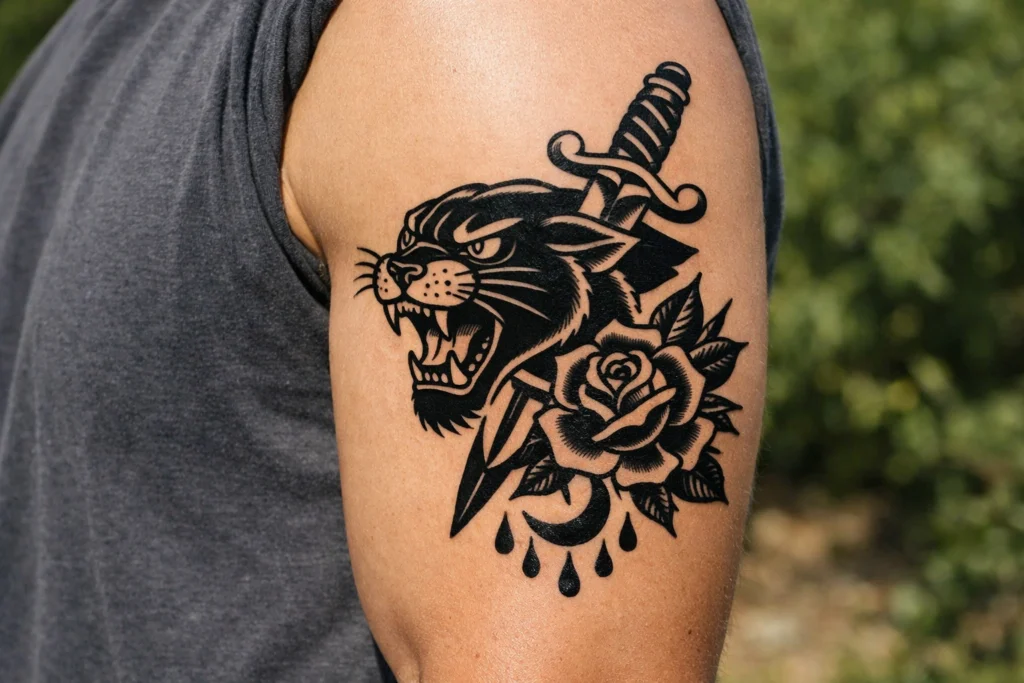
The outer bicep earns its place on every beginner-friendly list for good reason. The muscle mass in this area reduces pain dramatically, and the skin surface is thick enough to keep needle sensitivity low. This placement is distinct from the inner bicep, which has considerably thinner skin and more nerve activity.
The outer bicep is particularly well-suited for bold traditional tattoos, band designs, and smaller custom pieces. Healing is generally smooth, and visibility is excellent when wearing short sleeves.
Calf
![Calf Tattoo Placement]
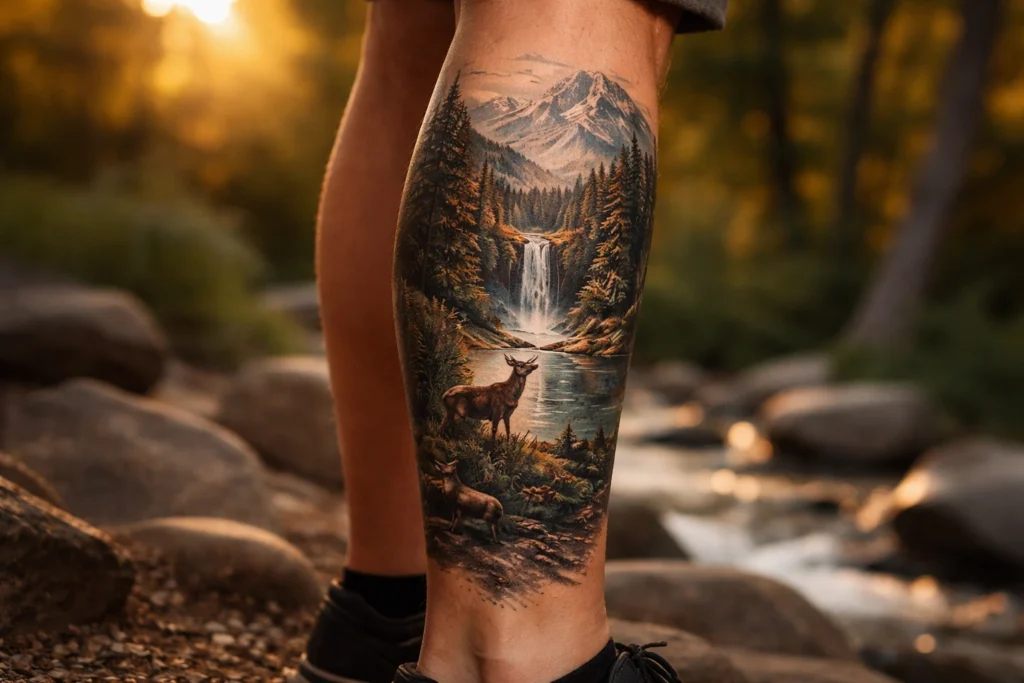
The calf is packed with muscle, and that muscle does exactly what you would want it to do during a tattoo session: absorb the impact. The skin here is tight and thick, and nerve endings are far less concentrated than in the shin or the back of the knee. Most people rate calf tattoos as surprisingly comfortable, often lower on the pain scale than they anticipated.
The calf is a versatile canvas that works well for both larger scenic pieces and smaller symbolic designs. The area is also simple to care for during healing and can be easily shown off or concealed depending on clothing choice.
Upper Chest (Away from Collarbone)
![Upper Chest Tattoo Placement]
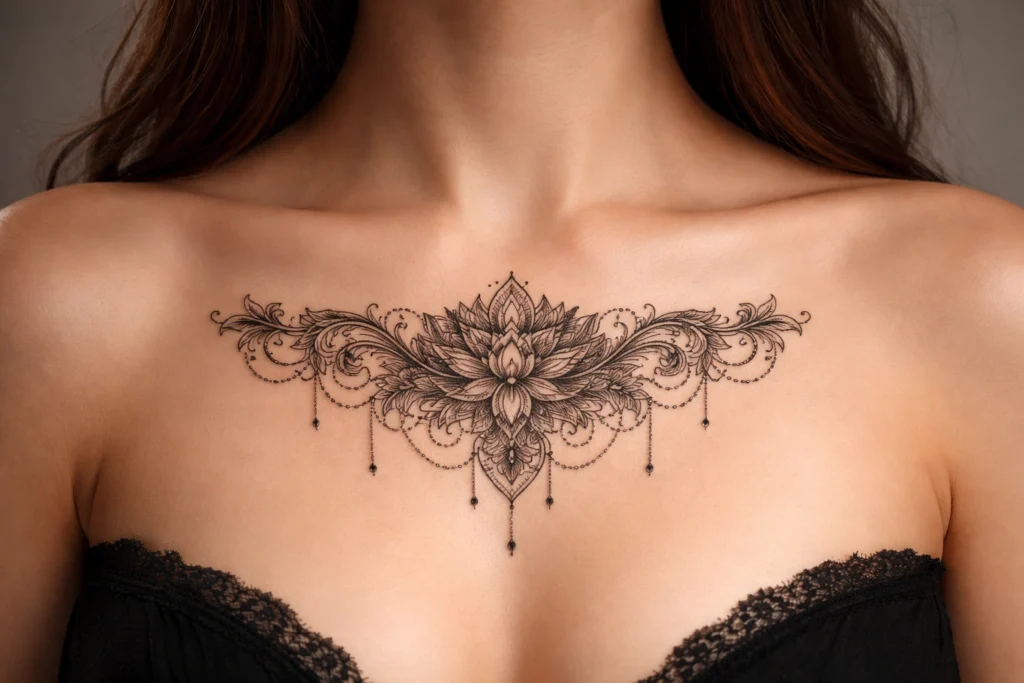
Placing a tattoo on the upper chest, away from the collarbone, results in a moderately comfortable experience for most people. The muscle and flesh in this central chest area provide enough cushioning to keep pain levels reasonable. The collarbone itself should be avoided if pain tolerance is a concern, as the bony ridge increases discomfort sharply.
Upper chest tattoos are powerful in presentation. They frame the neckline naturally and work exceptionally well with symmetrical designs, lettering, or pieces that complement the chest’s natural shape.
Lower Back
![Lower Back Tattoo Placement]
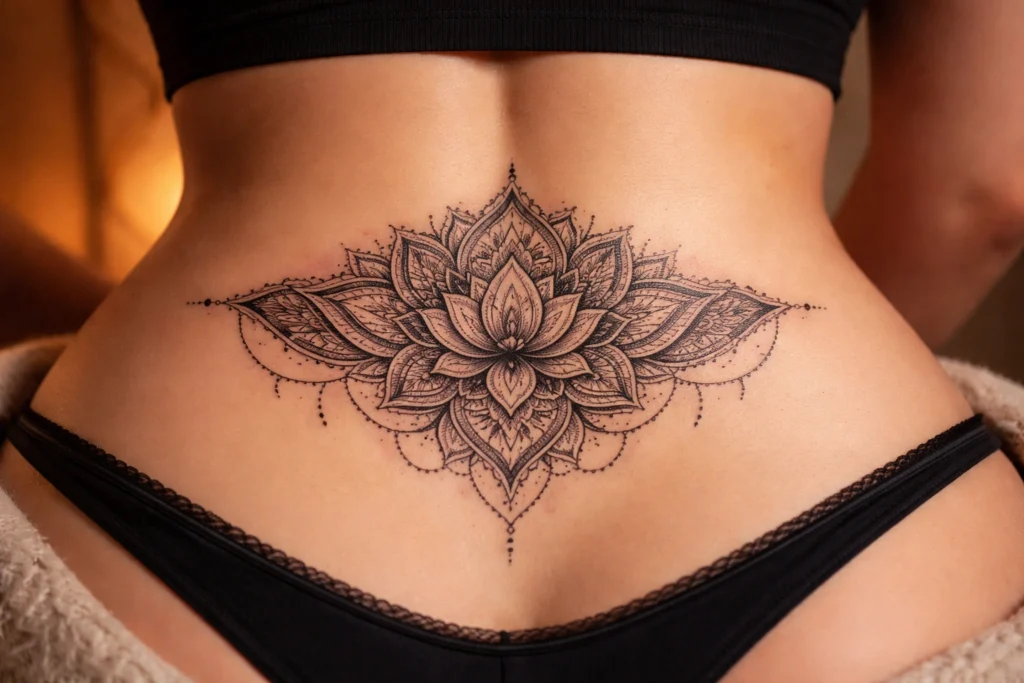
The lower back has a reputation that precedes it, but in terms of pain, it is actually one of the more manageable placements. The skin in this region is thick, and the muscle tissue beneath provides adequate cushioning. Pain only increases when the needle nears the spine or the hip bones.
A centered lower back design that avoids the bony extremities tends to feel like a steady dull pressure throughout the session. This placement works beautifully for symmetrical designs, mandala-style artwork, and script that follows the natural curve of the body.
Upper Outer Thigh (Front)
![Upper Outer Thigh Front Tattoo Placement]
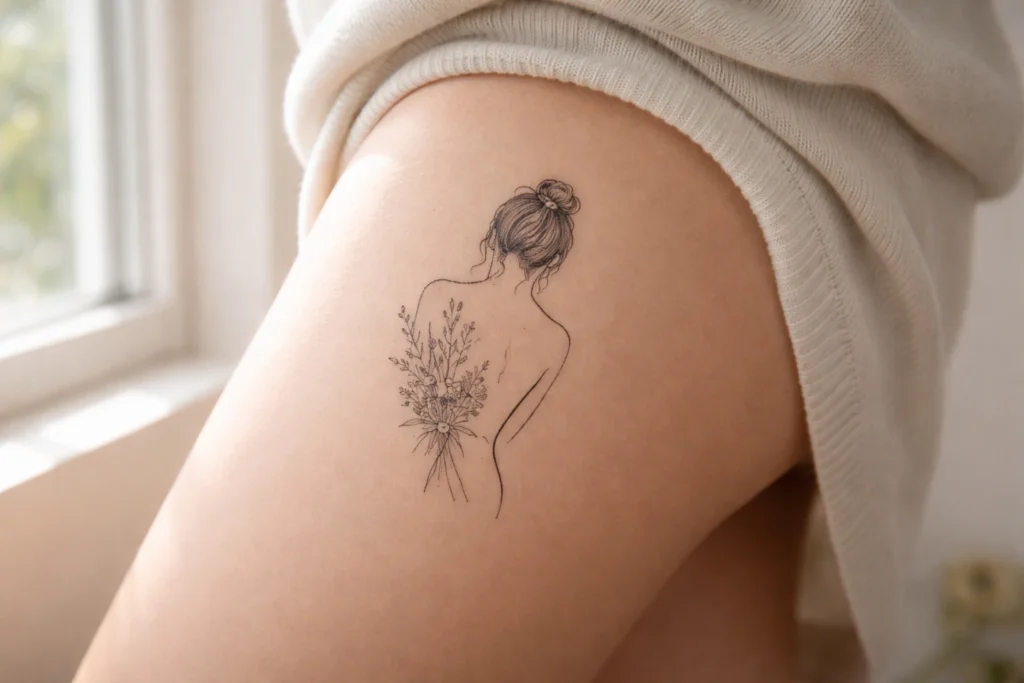
The front upper thigh, like the outer thigh, carries enough quadricep muscle to make tattooing in this zone genuinely comfortable. It is one of the more underrated placements for beginners because people often assume the front of the thigh is more sensitive than it actually is.
Designs on the front thigh tend to age well because the skin does not stretch dramatically over time. The area is also private enough for those who want ink they can choose to reveal or conceal, making it one of the more discreet beginner choices.
Shoulder Blade Area (Outer Edge)
![Shoulder Blade Outer Edge Tattoo Placement]
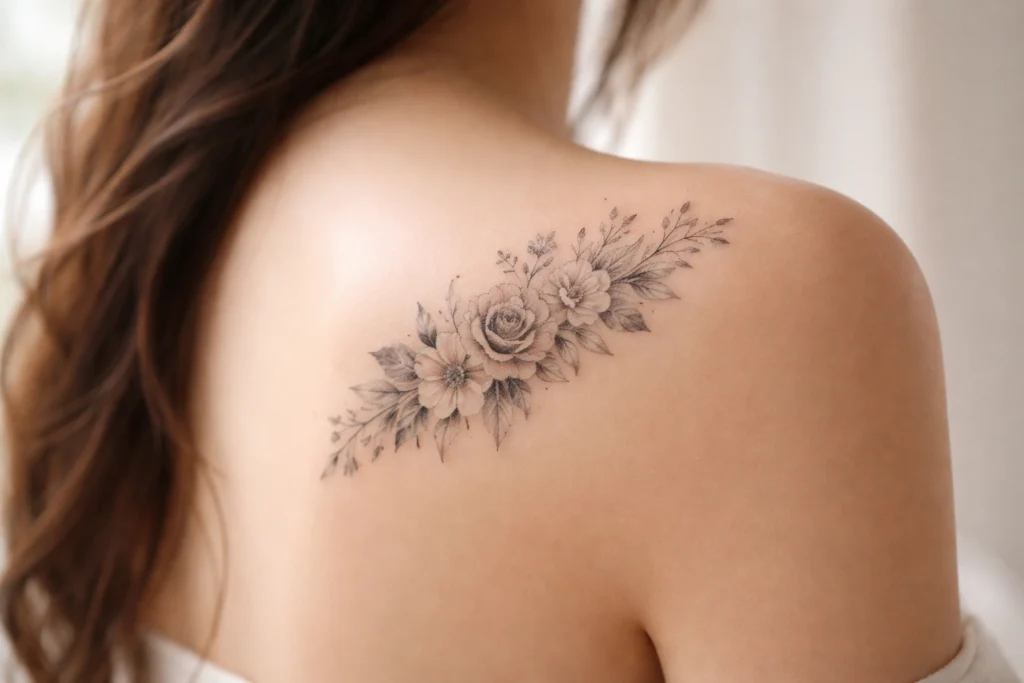
The outer edges of the shoulder blade region, away from the bone itself, are well-padded with muscle and offer a lower pain experience than the spine or the center of the blade. Many people who want back pieces use this area as a starting point before committing to more intense placements.
This location lends itself well to floral designs, geometric shapes, and placement-specific artwork that follows the natural line of the shoulder blade without sitting directly on it.
Buttocks
![Buttocks Tattoo Placement]
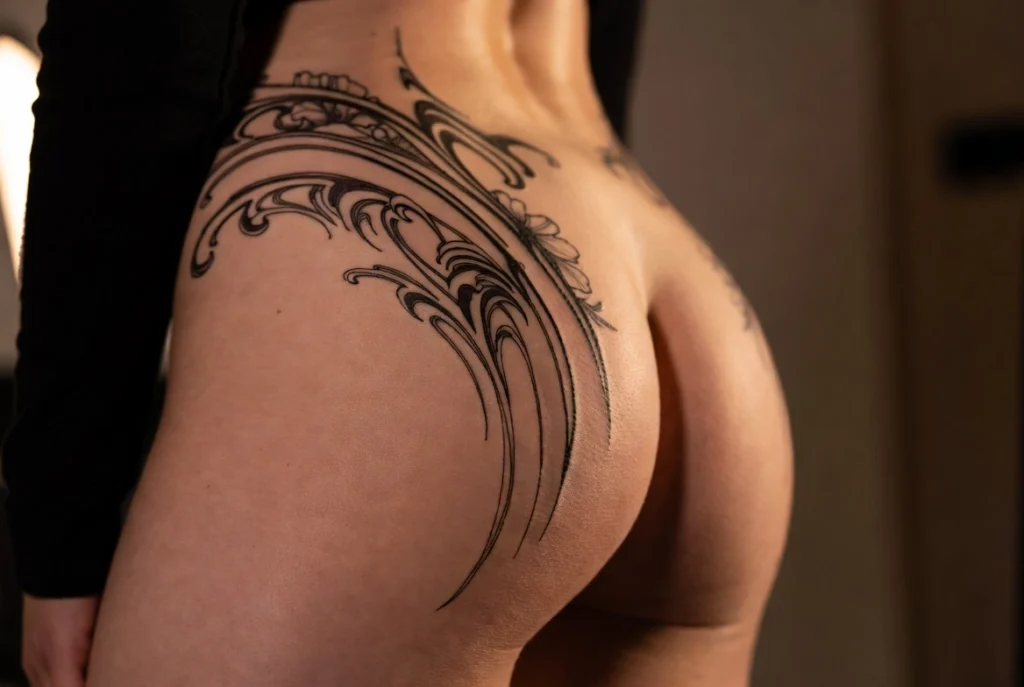
It might raise an eyebrow, but the buttocks is genuinely one of the least painful places to get a tattoo. The volume of fat and muscle in this region means the needle has to work through a significant cushion before reaching any sensitive tissue. Nerve endings here are minimal compared to areas like the inner thigh or the lower abdomen.
Tattoos in this location are almost entirely private, which suits those who want meaningful ink without workplace visibility concerns. The surface area is generous, making it suitable for large, detailed compositions.
Outer Hip (Fleshy Area)
![Outer Hip Fleshy Area Tattoo Placement]
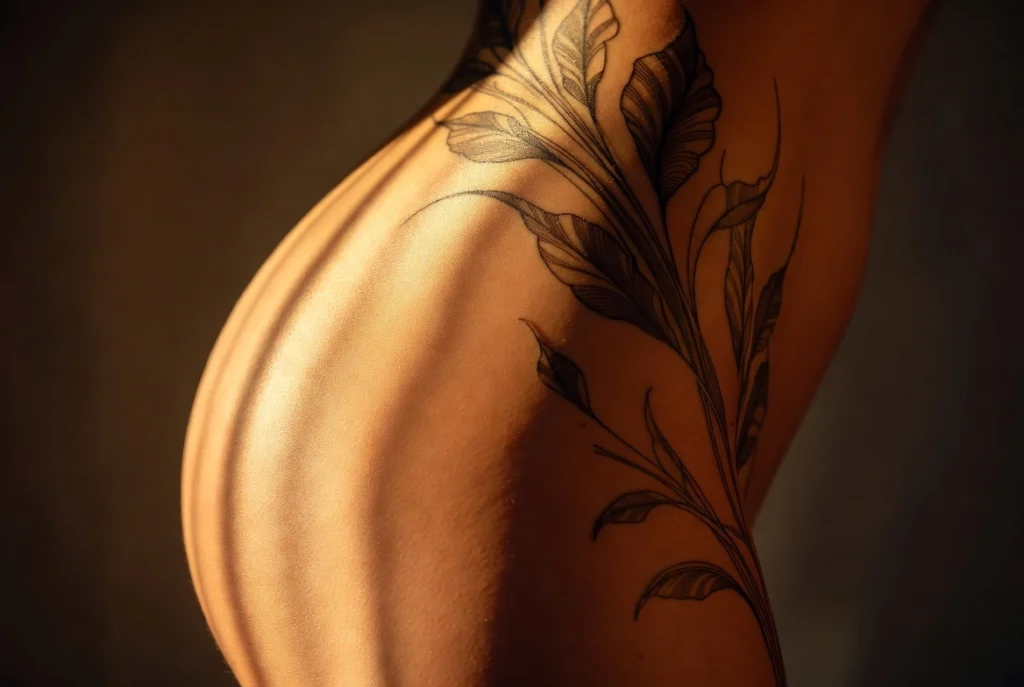
The outer hip, specifically the fleshy area away from the hip bone itself, carries enough fat and soft tissue to keep pain at a tolerable level. The moment the needle begins working near the actual hip bone, discomfort rises steeply. Keeping the design centered on the soft tissue avoids the worst of it.
Hip placements have become increasingly popular for flowing botanical designs and script work that follows the natural curves of the body.
Inner Wrist (Small Designs)
![Inner Wrist Small Tattoo Placement]
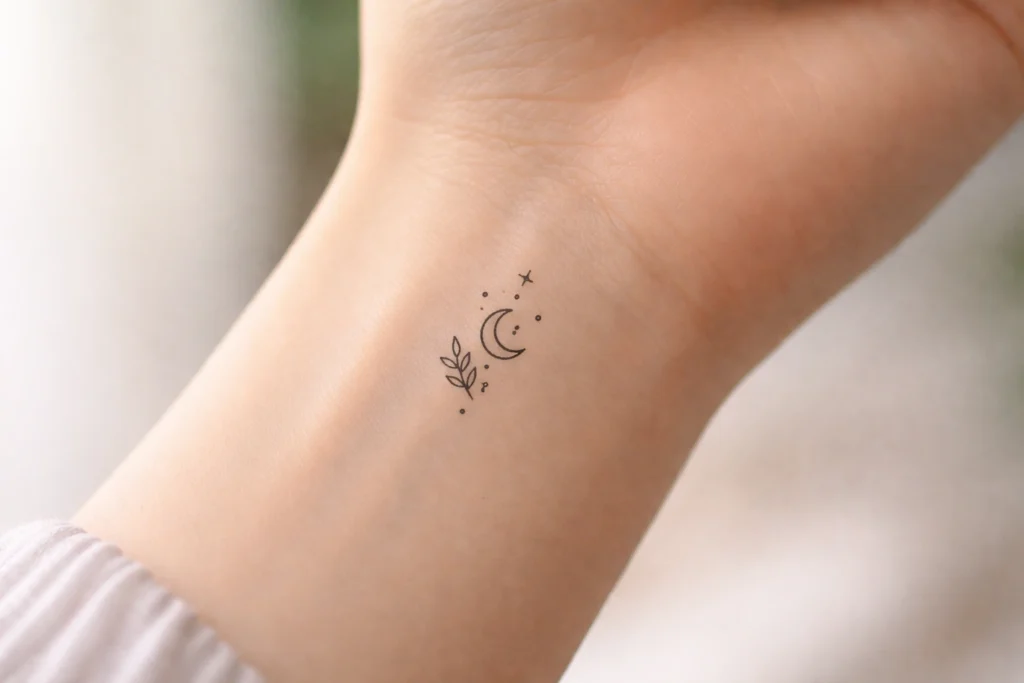
The inner wrist has a reputation for being sensitive because of the concentration of veins and tendons beneath the surface. However, for small, simple designs that do not require prolonged needle work, many people find it far more manageable than expected. The discomfort is typically a light stinging sensation rather than deep or burning pain.
Because the wrist is always visible, it is a meaningful location for minimalist tattoos, dates, coordinates, or symbols that hold personal significance.
Behind the Ear
![Behind the Ear Tattoo Placement]
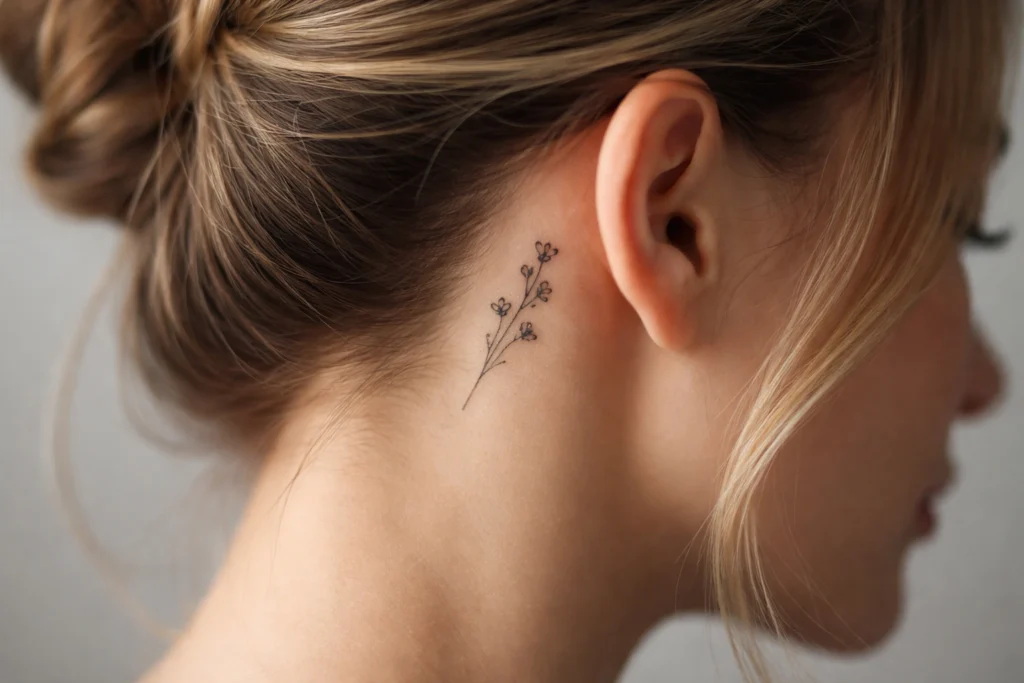
Small designs placed directly behind the ear tend to be quicker sessions, and the brevity itself helps keep the experience comfortable. The skin in this area is delicate, but because most behind-the-ear tattoos are small and minimalist by nature, the needle time is short. Most people describe it as a mild sting that passes quickly.
This placement is subtle and elegant, perfectly suited for tiny geometric shapes, small botanical motifs, or short meaningful words.
Upper Arm (Inner Bicep, Simple Designs Only)
![Upper Arm Inner Bicep Tattoo Placement]
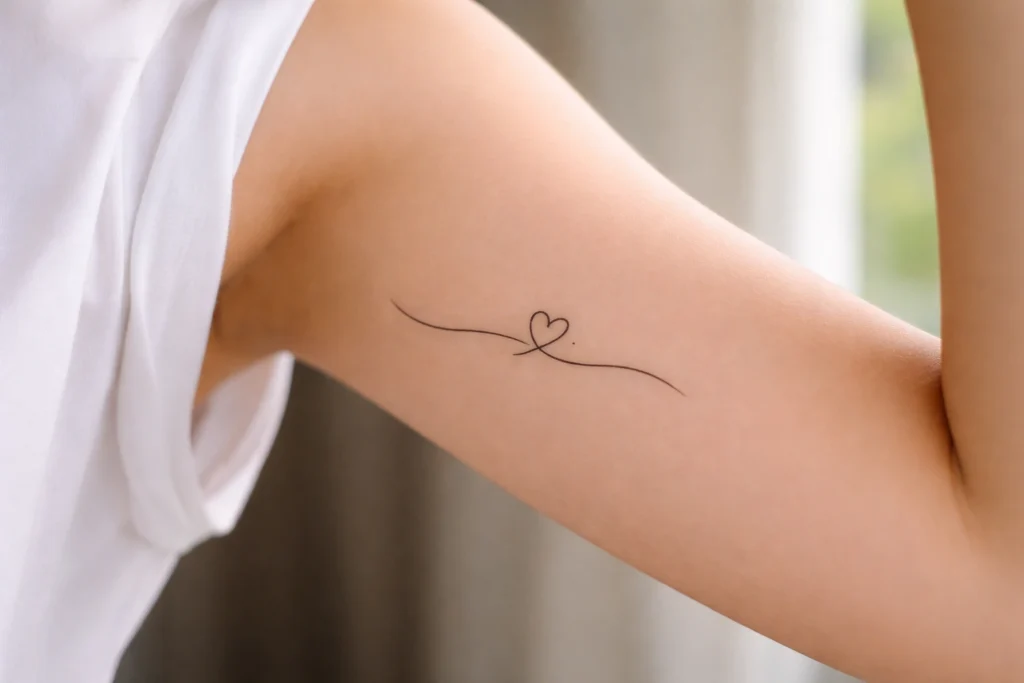
While the inner bicep can become uncomfortable for large, detailed work, small and simple designs placed here are generally tolerable. The thin skin means the sensation is sharper than the outer arm, but a short session with a skilled artist keeps the discomfort brief and manageable.
This location works particularly well for script, small symbols, or minimalist line art that does not require extended shading or fill work.
Ankle (Outer Side)
![Ankle Outer Side Tattoo Placement]
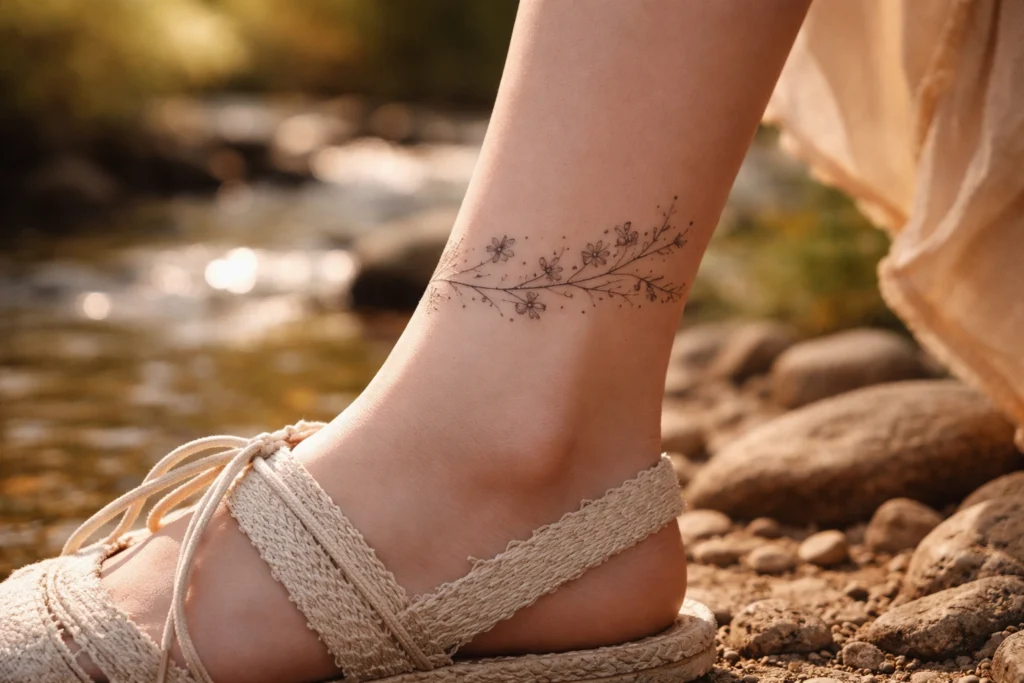
The outer ankle, where there is slightly more tissue than directly over the ankle bone, is a popular beginner choice despite the area’s thin skin. Designs placed slightly above the ankle bone and centered on the fleshy outer side reduce direct bone contact, which keeps the experience far more comfortable.
Ankle tattoos are undeniably charming and work beautifully with wrapping designs, botanical sprigs, or simple geometric work that follows the natural curve of the joint.
Ribcage (Lower Sides, Away from Bone)
![Ribcage Lower Sides Tattoo Placement]
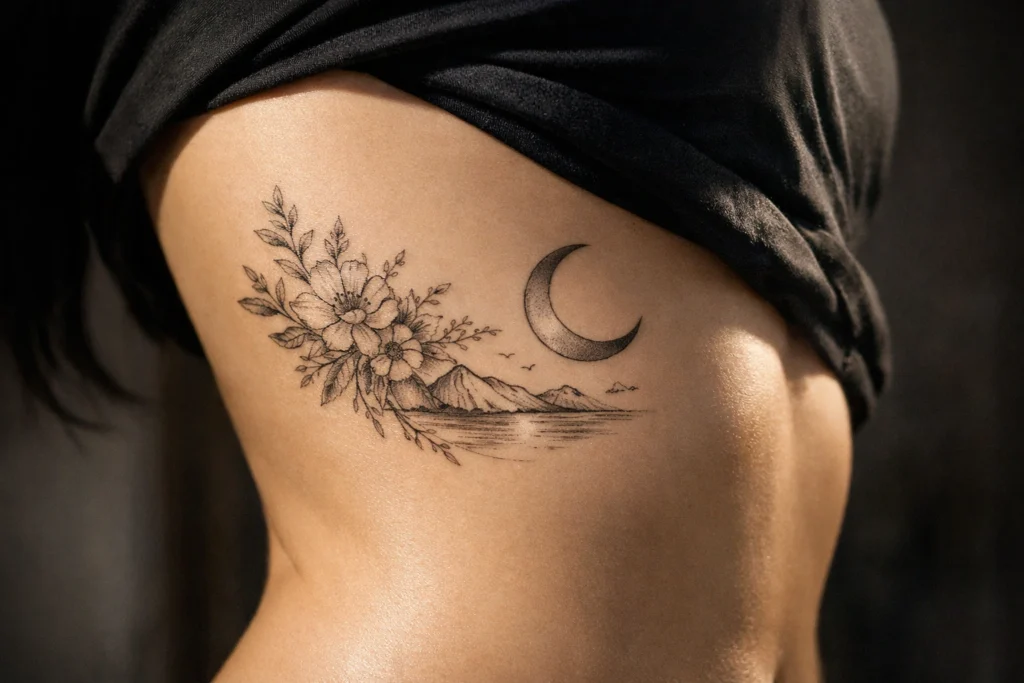
The ribcage has a fearsome reputation in the tattoo community, and placing a design directly over the ribs fully deserves that reputation. However, the lower sides of the torso, where there is more fatty tissue and the ribs are less prominent, create a softer experience. Designs that sit lower on the side of the torso, rather than riding directly over the visible ribs, fall into a comparatively manageable zone.
Breathing and movement during a session can make this area tricky, and artists will ask you to hold your breath or stay still at key moments, but the lower side placement remains one of the more accessible choices for those drawn to torso art.
Upper Arm Sleeve Start (Deltoid to Mid-Bicep)
![Upper Arm Sleeve Start Tattoo Placement]
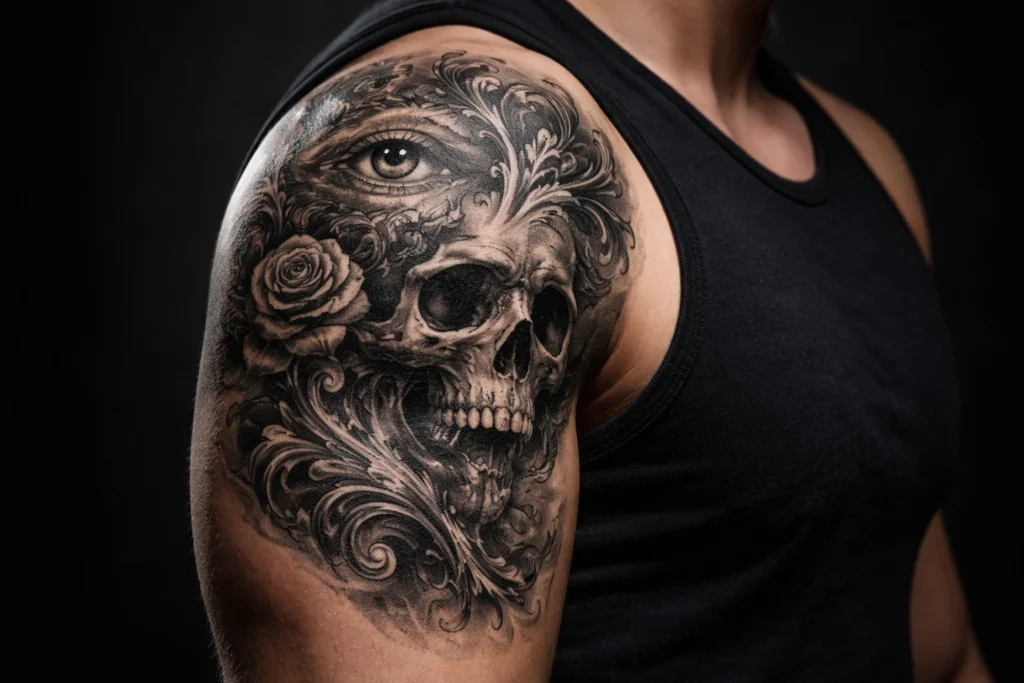
For those thinking about a sleeve, the optimal and least painful starting zone is the deltoid down through the mid outer bicep. This stretch of the arm combines the muscle mass and thick skin of both the shoulder and outer arm into a comfortable canvas. Artists often recommend beginning a sleeve here and working outward from this anchor point.
Pain is generally described as mild and consistent, making long sessions achievable for most people, even beginners.
How to Prepare for a Less Painful Tattoo Session
Choosing the right placement is the first step, but preparation matters equally. Getting a full night of sleep before your appointment keeps your pain threshold at its highest. Eating a substantial meal a few hours prior stabilizes blood sugar and helps you endure a longer session without feeling lightheaded or overly sensitive.
Staying well-hydrated in the days leading up to your appointment makes your skin more resilient and easier for your artist to work with. Avoid alcohol and caffeine for at least 24 hours beforehand, as both thin the blood and heighten skin sensitivity. If you are considering a topical numbing cream, discuss it with your artist first. Not all artists work with numbed skin because it can slightly alter the skin’s surface texture.
Wearing comfortable clothing that gives easy access to your chosen placement saves time and reduces stress on the day. Relaxing during the session, controlling your breathing, and communicating openly with your artist when you need a short break all contribute to a smoother experience.
Aftercare and Managing Post-Session Discomfort
The pain of getting a tattoo does not end the moment your artist puts down the machine. For the first few days following a session, the tattooed area will feel similar to a sunburn: warm, slightly swollen, and tender to the touch. This is a completely normal part of the healing process.
Keeping the area clean with mild, unscented soap, applying a thin layer of recommended tattoo aftercare ointment, and avoiding submerging the tattoo in water until it is fully healed are the fundamental steps. Direct sunlight should be avoided during healing because UV exposure can fade fresh ink and irritate healing skin.
Scratching or picking at peeling skin is one of the most common mistakes beginners make. Let the skin shed naturally. The discomfort fades within days, and with proper care, your tattoo will heal vibrant, crisp, and exactly as intended.
Conclusion
Getting your first tattoo does not have to be a white-knuckle experience. By choosing one of the 18 least painful locations covered in this guide, preparing your body properly, and working with a skilled and experienced artist, you can make your first ink session something to look back on with confidence rather than dread.
The placement you choose will live on your skin permanently, so take the time to think carefully about both the design and the location. Start somewhere comfortable, give yourself the chance to understand how your body responds to the process, and then build from there. Every collector started exactly where you are right now, and most of them look back on that first session as the beginning of something they genuinely love.
You may also like this post: Everything You Need to Know About Hummingbird 20 Tattoo Meanings and Symbolism
Frequently Asked Questions
What is the single least painful place to get a tattoo for a first-timer?
The outer shoulder and outer forearm are consistently ranked as the least painful locations for beginners. Both areas have thick skin, minimal nerve endings, and strong muscle padding that keeps the experience comfortable throughout the session.
Does tattoo size affect how much it hurts?
Size alone does not determine pain. A tiny tattoo placed directly over a bone or near a nerve cluster can hurt significantly more than a larger design placed on a well-padded, muscular area. Placement matters more than size.
Can numbing cream eliminate tattoo pain entirely?
Topical numbing creams can reduce sensation considerably, but they rarely eliminate pain completely. They are most effective for smaller designs and shorter sessions. Always consult your tattoo artist before using one, as some creams affect how the skin responds to ink.
Do color tattoos hurt more than black and grey tattoos?
The pain difference between color and black and grey tattoos has more to do with technique and time than the ink itself. Color tattoos often require more passes over the same area to achieve full saturation, which can increase overall discomfort. Placement and session length remain the primary pain factors.
How long does tattoo pain last after the session?
Most people experience mild soreness, warmth, and sensitivity for two to five days after a session. This feels similar to a moderate sunburn. The sensation fades quickly with proper aftercare, and by the end of the first week, most of the discomfort is gone entirely.