
Introduction
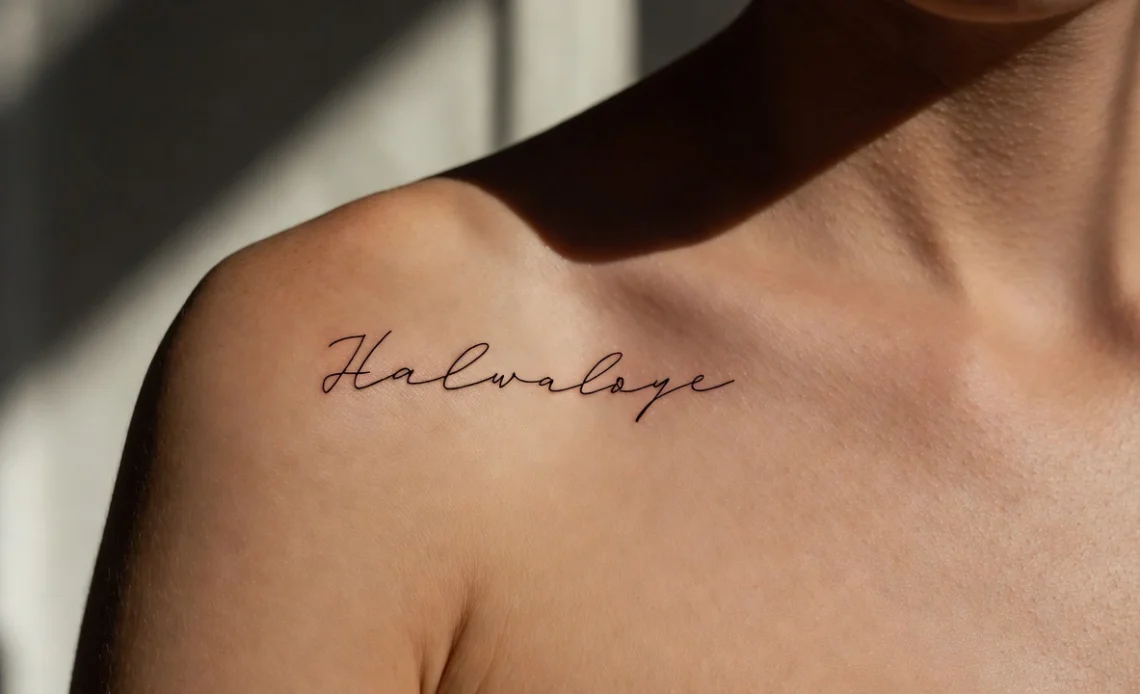
A name tattoo is one of the most intimate and enduring decisions a woman can make about her body. Whether it carries the name of a child, a parent, a partner, or your own identity, where that name lives on your skin matters just as much as how it looks. The right placement transforms a simple word into something that feels like it was always meant to be there. The wrong one can make even the most beautiful script feel disconnected from your body and your story.
Women today have more creative options for name tattoo placement than ever before. From the delicate curve of a collarbone to the hidden intimacy of a ribcage, every location carries its own visual energy, symbolic weight, and practical considerations. This guide walks through sixteen of the most meaningful and popular name tattoo placements for women, covering everything from pain level and visibility to longevity and styling potential. Whether you are a first-timer or adding to an existing collection, you will find the right placement here.
Inner Wrist Name Tattoo
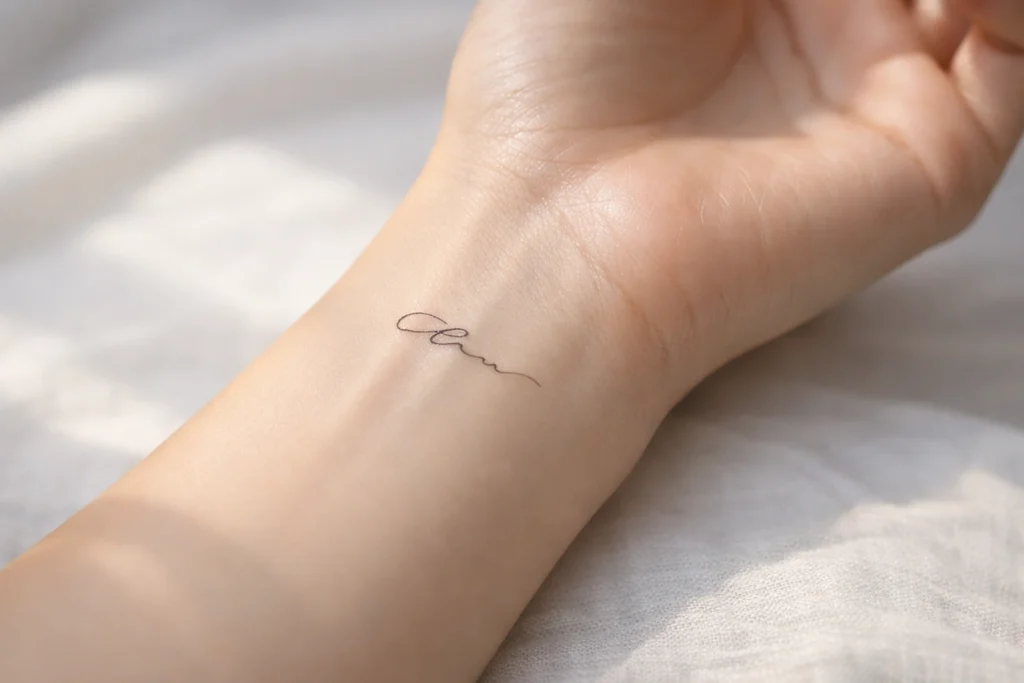
The inner wrist is one of the most beloved placements for name tattoos among women, and it is easy to understand why. It sits at eye level throughout the day, serving as a quiet, constant reminder of whoever or whatever the name represents. The relatively flat surface makes it ideal for clean script lettering in both cursive and print styles.
Because the space is limited, names work best here when kept short or written in a compact font. Single names, initials combined with a name, or a child’s first name all translate beautifully at this scale. The inner wrist is moderately painful to tattoo due to the thin skin and proximity to tendons, but most women describe the discomfort as very manageable. It heals well and remains visible unless intentionally covered by a sleeve or watch.
Why Women Choose It
The inner wrist placement has long been associated with personal meaning that the wearer keeps close. Many mothers choose this spot for a child’s name because it stays in their line of sight during daily life, from holding a cup of coffee to typing at a desk.
Collarbone Name Tattoo
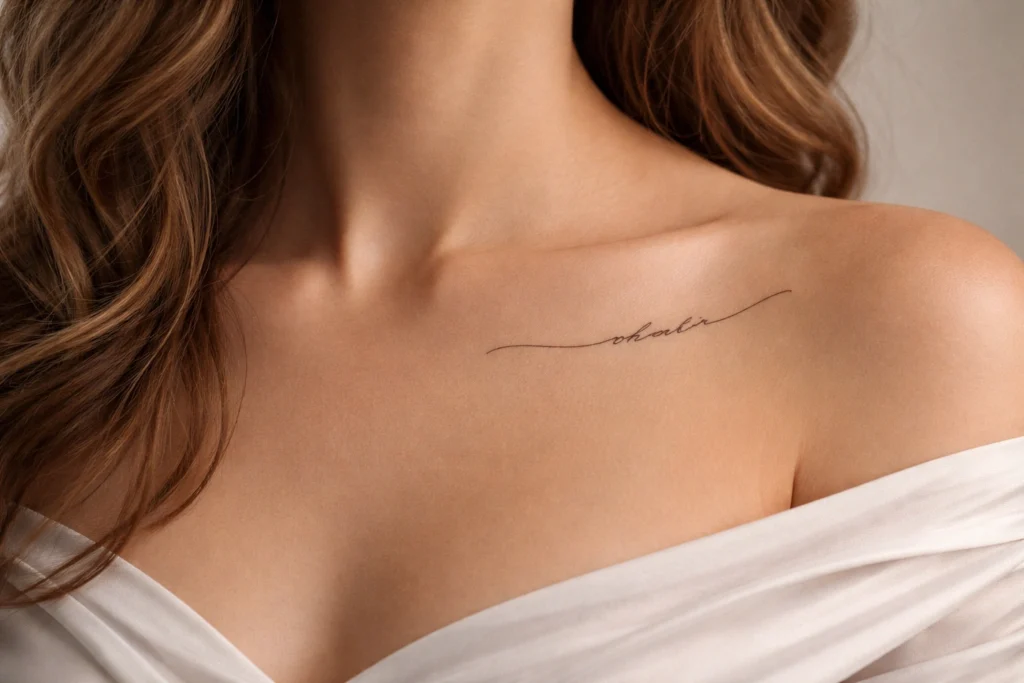
The collarbone is one of the most elegant name tattoo placements available to women. It follows the natural architecture of the body, creating a horizontal line that draws the eye across the chest in a way that feels both intentional and graceful. A name written along the collarbone carries the visual effect of a necklace, which gives it an inherent femininity without trying.
This placement works particularly well with fine-line or cursive script. Names with longer letter counts benefit from the generous horizontal span that the collarbone provides. Women with more prominent collarbones often find that the natural shadow created by the bone adds a sculptural quality to the tattoo that no other placement can replicate.
Pain and Visibility Considerations
The collarbone area ranges from moderately to quite painful depending on how close the needle gets to the bone itself. Designs placed directly on the bone tend to be more intense, while those positioned just below on the upper chest are somewhat more comfortable. Visibility is high in most necklines and completely concealable in a crew-neck top.
Behind the Ear Name Tattoo
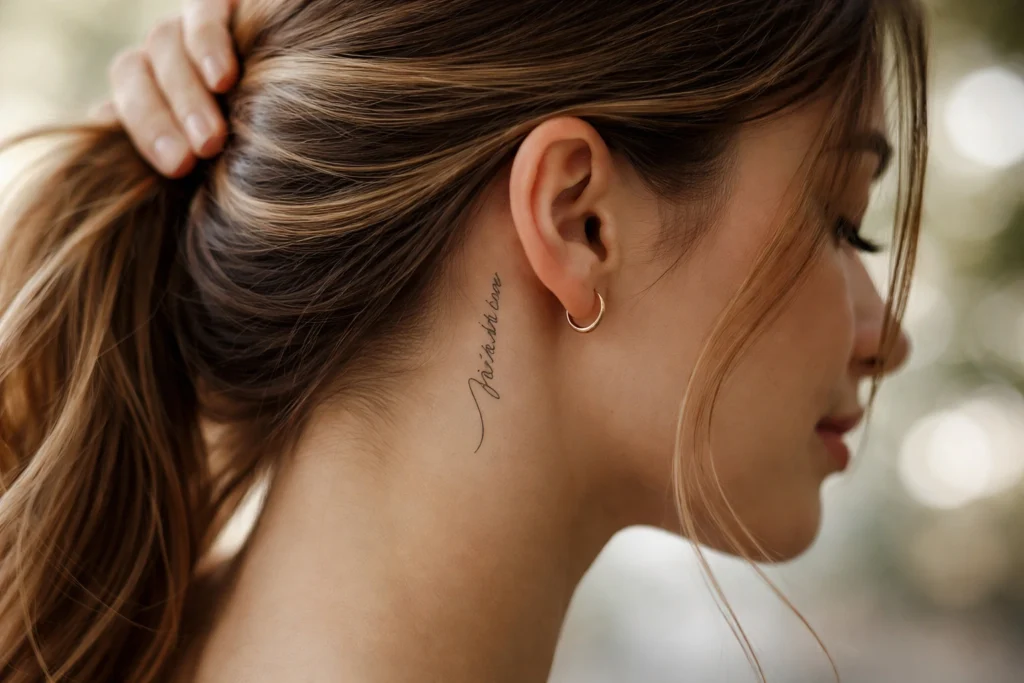
Behind the ear is a placement that sits somewhere between secretive and revealed, and that tension is precisely why so many women are drawn to it. A name tucked just behind the ear is invisible in most everyday contexts but becomes visible the moment hair is pulled back or swept aside. That quality of selective disclosure makes it feel deeply personal.
Short names and single words work best in this location. The curved surface behind the ear limits design width, so fonts need to be chosen carefully. Vertical lettering running from just below the earlobe downward is a particularly popular approach that suits the natural contour of the area.
Best Name Lengths for This Placement
Names of four to seven letters tend to fit most naturally. Anything longer risks crowding or requiring the letters to be reduced to a size that may blur over time. An experienced artist will steer you toward the right scale for your anatomy.
Forearm Name Tattoo

The forearm is one of the most practical and visually versatile name tattoo placements for women. It offers a long, relatively flat surface that accommodates a wide range of lettering styles, from bold serif fonts to flowing cursive scripts. Both the inner and outer forearm are popular, each with a slightly different aesthetic quality.
The inner forearm faces upward and is visible to the wearer throughout the day. The outer forearm is more visible to others and can contribute to a sleeve aesthetic over time. This placement is also one of the least painful options, making it a strong choice for first-time tattoo recipients who want a meaningful name piece without a high discomfort level.
Ribcage Name Tattoo
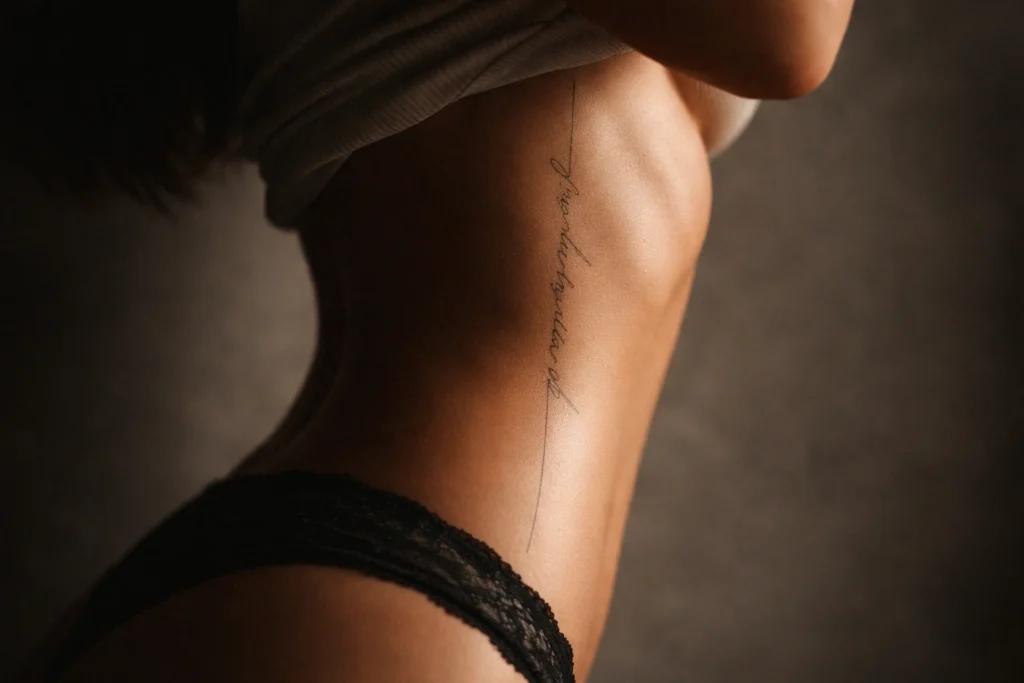
The ribcage is one of the most romantically charged name tattoo placements a woman can choose. It sits close to the heart, which gives it an emotional symbolism that resonates deeply with women who want to honor someone irreplaceable. The vertical orientation of the ribs naturally accommodates long names or even short phrases that accompany a name.
This is widely regarded as one of the more painful placement options due to the thin skin stretched over the bones and the sensitivity of the area. However, many women find that the meaning behind a ribcage name tattoo makes the temporary discomfort more than worthwhile. The result, once healed, is extraordinarily intimate, visible only when the wearer chooses to reveal it.
Shoulder Blade Name Tattoo
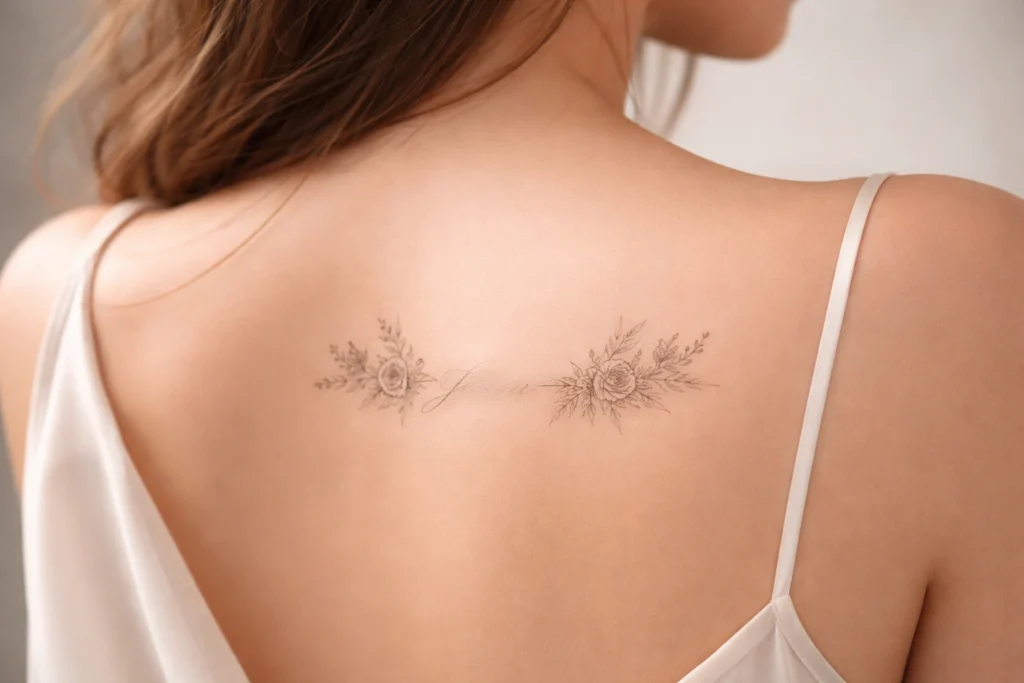
The shoulder blade provides a flat, broad canvas that is ideal for name tattoos that incorporate decorative elements alongside the text. A name written across or beneath a floral design, a delicate wing, or an abstract motif sits beautifully on the shoulder blade and creates a cohesive composition that larger placements like the back and ribcage allow.
Women who prefer their tattoos to remain private in professional settings find the shoulder blade to be an excellent balance between a meaningful placement and easy concealment. A standard crew-neck or high-back top covers it entirely, while a lower-cut or off-shoulder style reveals it with intention.
Ankle Name Tattoo
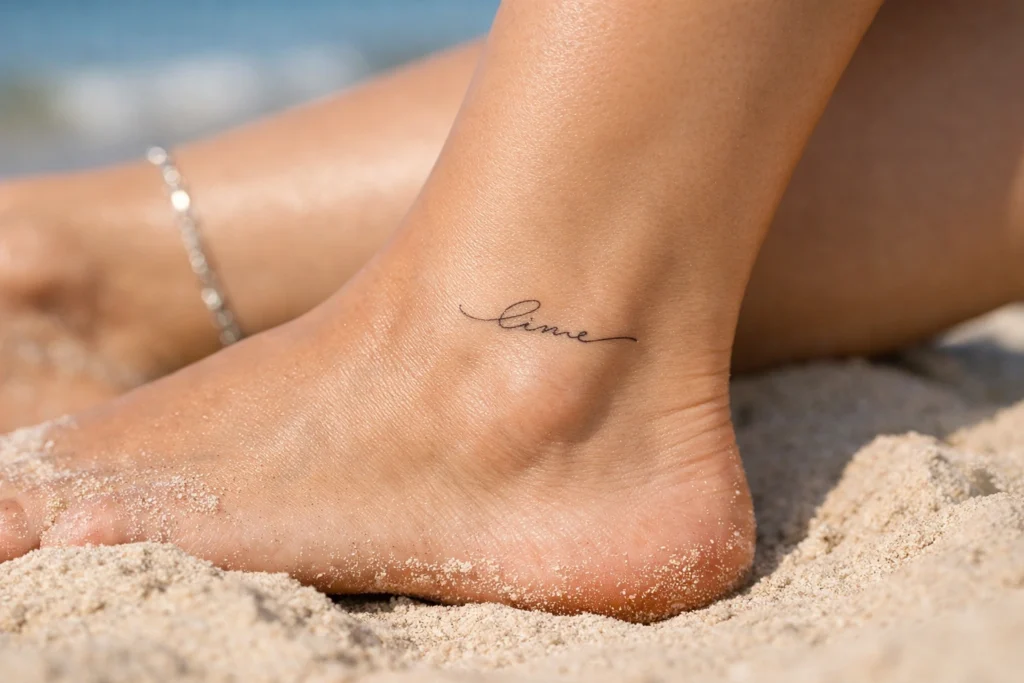
Ankle name tattoos carry an elegance similar to the effect of a fine anklet. They work well with delicate fonts and minimal sizing, and they sit at a height that is visible in warmer months but easy to cover with longer clothing or footwear during winter or formal occasions.
The ankle tends to be a moderately painful placement. The skin is thin and sits close to the bone, particularly around the outer ankle bone. Healing can take slightly longer than on meatier areas of the body because the foot and ankle experience consistent movement and contact with socks and footwear. Proper aftercare, including keeping the area moisturized and protected during healing, is especially important here.
Upper Arm Name Tattoo
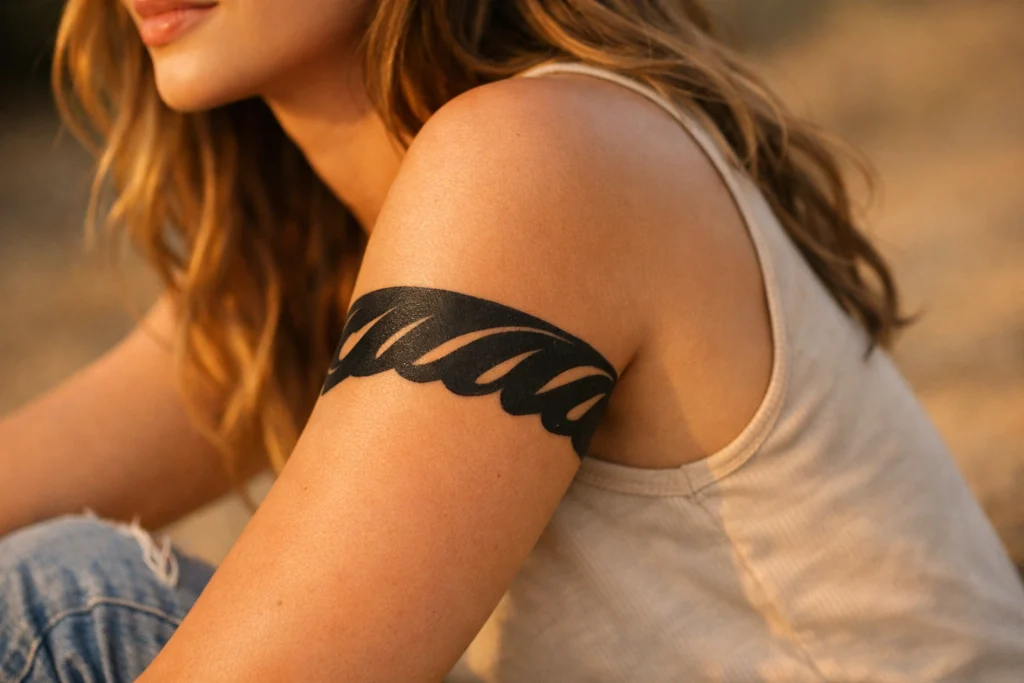
The upper arm is one of the most timeless and universally flattering name tattoo placements for women. It provides ample space for creative compositions, allows for the incorporation of decorative border elements, and ages well due to the relative stability of the skin in that area compared to zones more prone to significant change over time.
A name on the upper arm can be positioned horizontally across the outer bicep, wrapped slightly around the arm for a dynamic effect, or placed vertically along the inner arm for a more understated result. Women building toward a sleeve often begin with a meaningful name piece on the upper arm as the anchor element around which other designs are later added.
Spine Name Tattoo
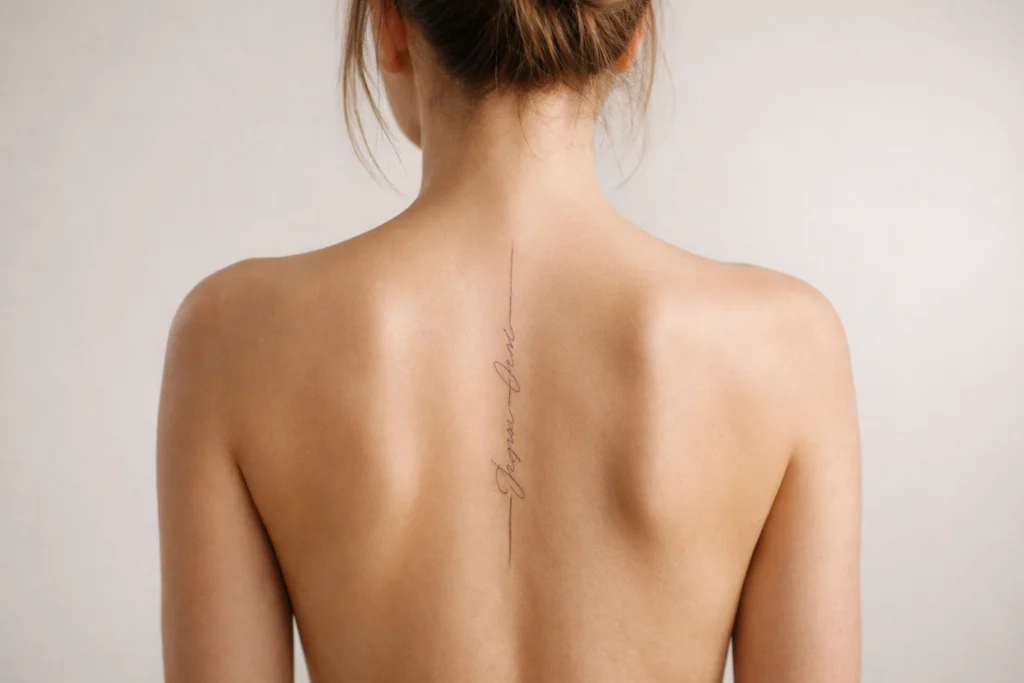
The spine is a dramatic and deeply personal placement that runs the full length of the back, offering a striking vertical canvas for name tattoos. A name tattooed along the spine reads downward from the nape of the neck toward the lower back, creating a sense of length and elegance that no horizontal placement can replicate.
Multiple names can be stacked vertically along the spine, making it a popular choice for mothers who want to honor two or more children in a single cohesive piece. The spacing between names can be customized to create breathing room or to incorporate small decorative elements between each one. Pain levels along the spine vary, with the areas closest to the vertebrae being the most intense.
Finger Name Tattoo
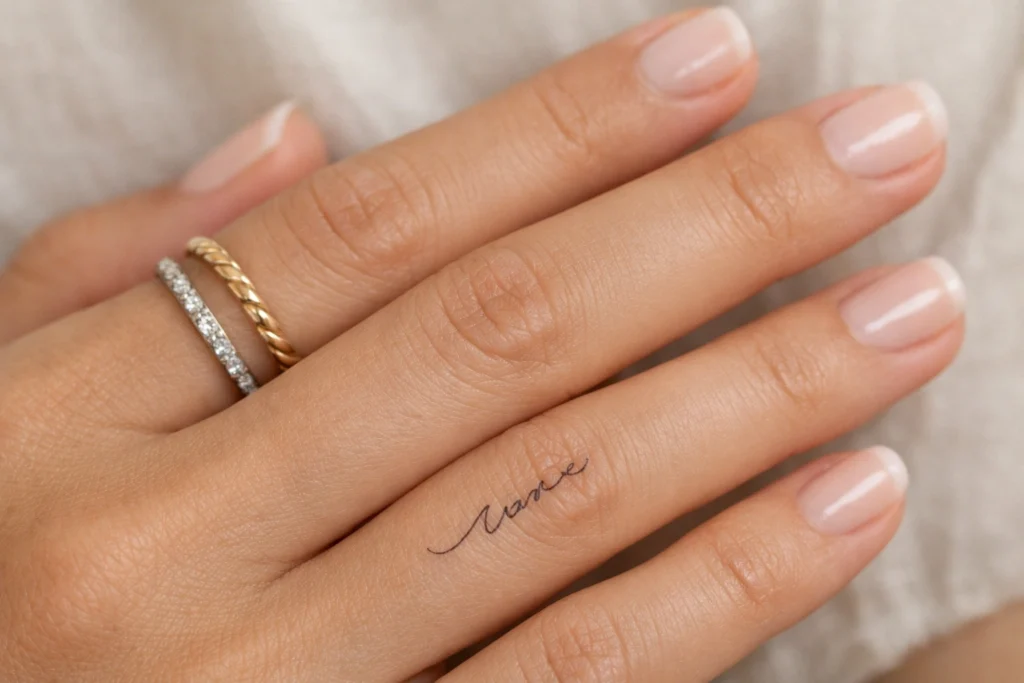
Finger name tattoos occupy a uniquely visible and delicate position in the world of body art. They are always in view, they catch the light naturally, and they carry an intimacy that mirrors the significance of wearing a ring. Many women choose to tattoo a name on the ring finger specifically, either as an alternative to or alongside a wedding band.
The limitation of finger tattoos is their tendency to fade faster than tattoos on most other areas of the body. Hands experience constant friction, sun exposure, and contact with water and chemicals, all of which accelerate ink breakdown. Most finger tattoos require a touch-up within a few years to maintain their clarity, and very detailed or thin lettering may spread slightly over time. Short names or initials work best in this placement.
Sternum Name Tattoo
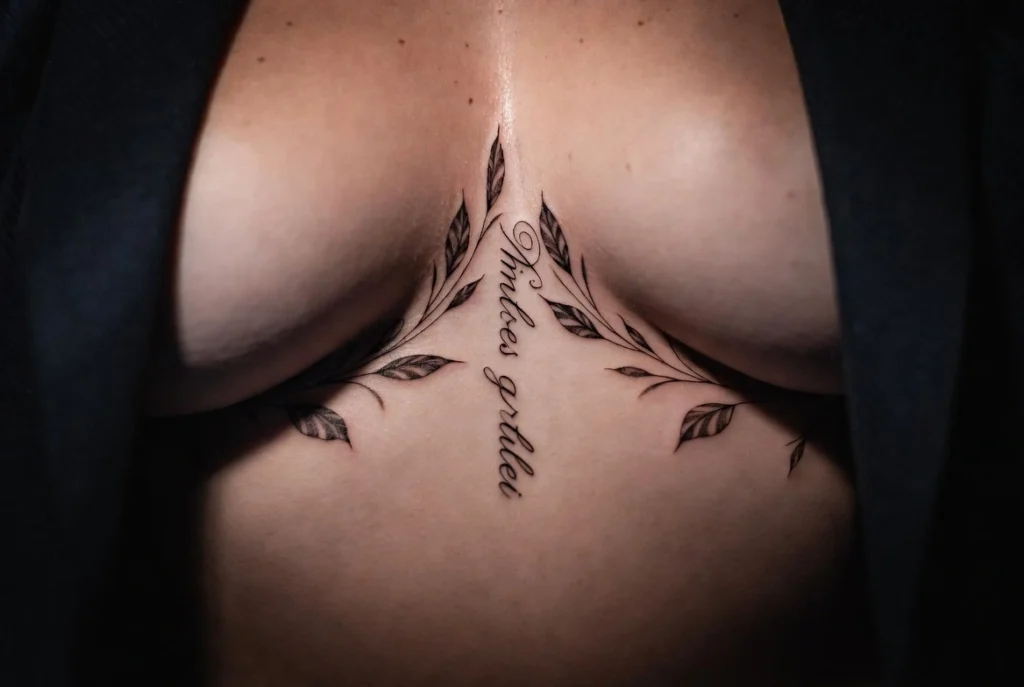
The sternum, or the center of the chest between the breasts, has become one of the most sought-after placements for women in recent years. A name tattooed here occupies the most central position on the body and carries an unmistakable sense of significance. It is intimate, powerful, and beautifully framed by the natural lines of a woman’s figure.
Sternum name tattoos are often surrounded by complementary floral or ornamental designs that radiate outward, turning the name into the centerpiece of a larger composition. A name written alone in a clean, elegant font can also stand beautifully without any additional imagery. This placement is of moderate to high pain intensity due to the thin skin over the sternum bone.
Back of the Neck Name Tattoo
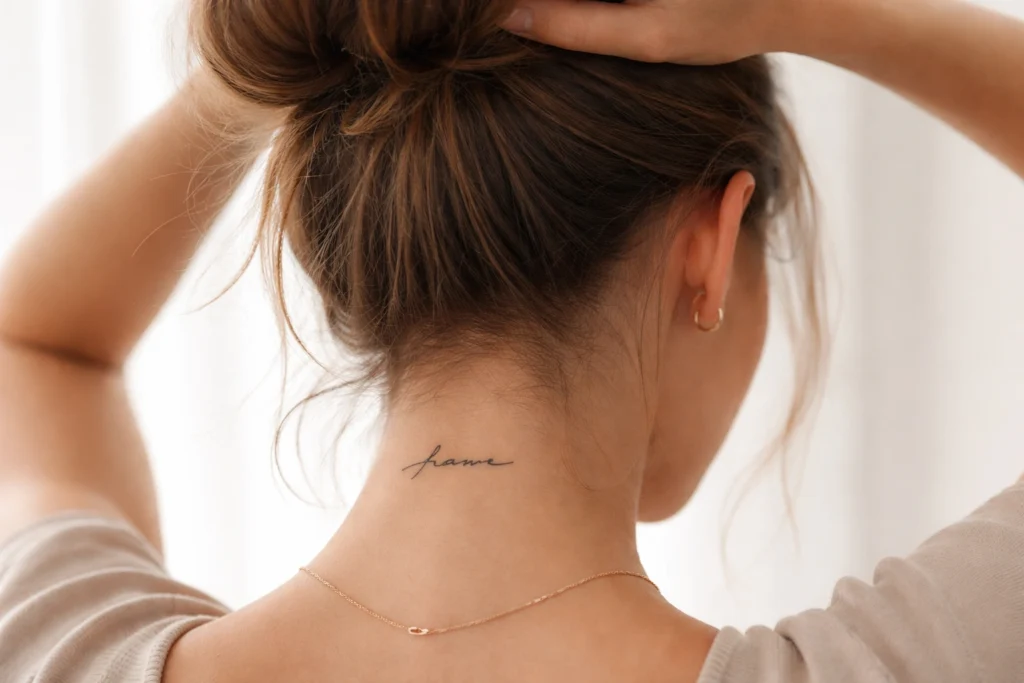
The back of the neck is a placement that carries a quiet, refined elegance. It sits at the nape, just below the hairline, and creates a discovery effect when the hair is lifted. In many ways, it mirrors the collarbone placement in its jewelry-like quality, except it faces away from the wearer and toward those around them.
This placement works best with compact fonts and short names. Longer names may need to be scaled down to fit neatly within the natural width of the neck, which can reduce legibility over time. The nape of the neck is a moderately sensitive area to tattoo, but the sessions are typically short given the small scale of most designs placed there.
Hip Name Tattoo
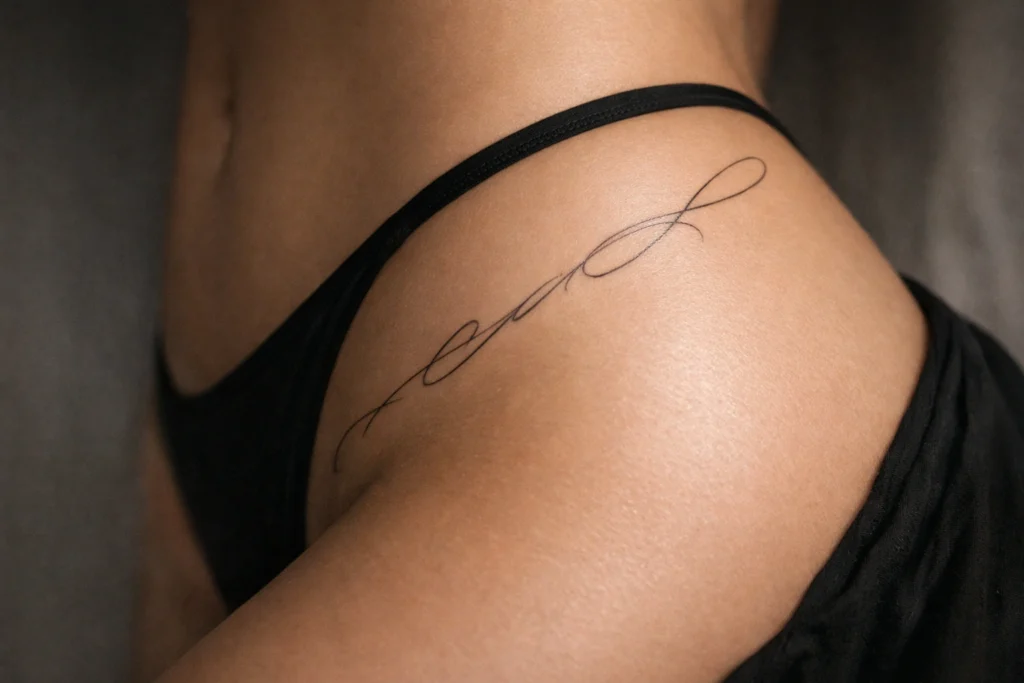
The hip is a placement that women choose when they want a tattoo that is deeply private yet visually connected to their sense of femininity. A name on the hip follows the natural curve of the body, giving it an organic flow that straight-line placements cannot achieve. It can sit along the hip bone itself, just above or below the waistband, or extend slightly onto the lower abdomen.
This placement is easily concealed in virtually any professional or social setting and is revealed only in swimwear or intimate contexts. The curved surface means that font design and letter spacing need to be adjusted slightly to account for the arc, which is something a skilled artist will handle automatically during the stenciling process.
Thigh Name Tattoo
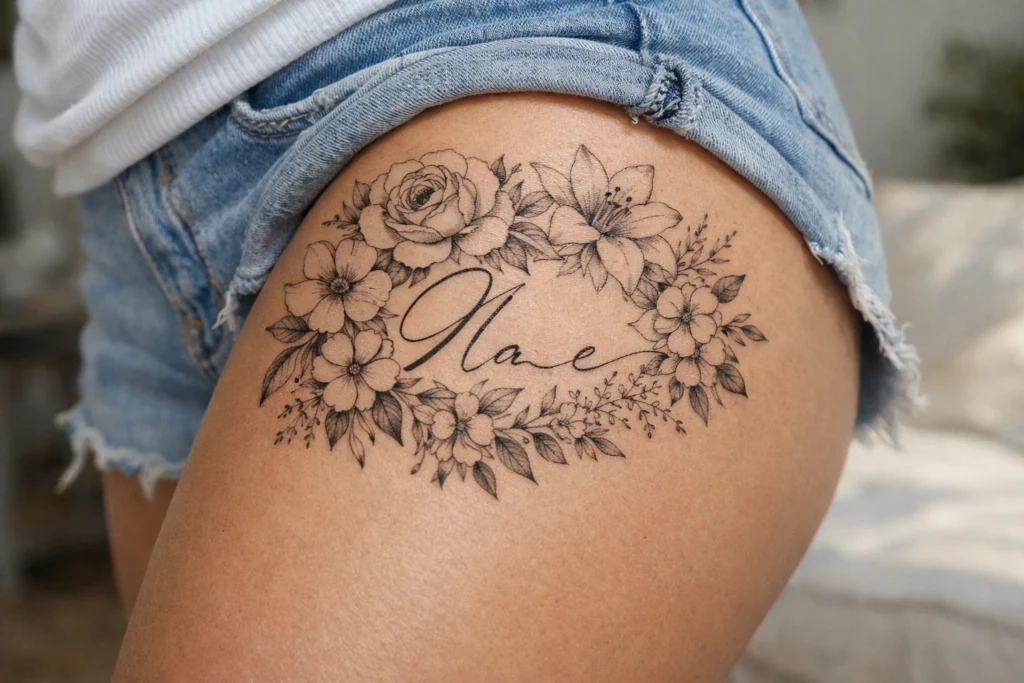
The thigh is one of the most generous canvases the body offers, and it has become an increasingly popular name tattoo placement for women who want room to create something visually rich. A name on the thigh can be incorporated into a larger floral bouquet, a portrait, or a botanical arrangement, turning a simple text piece into a complete artwork.
The outer thigh in particular is known for being one of the least painful placement options on the entire body. The thick muscle and skin in this area absorb the needle well, making longer sessions considerably more comfortable than on bony or thin-skinned areas. The inner thigh is softer and more sensitive but offers an even more private placement for something deeply personal.
Foot Name Tattoo
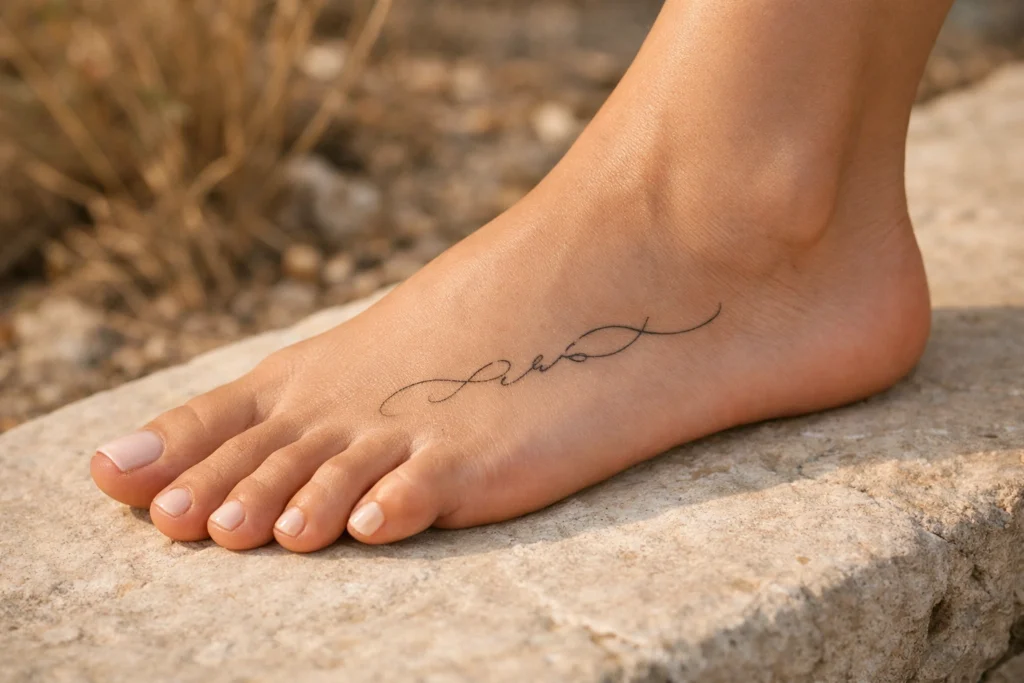
Foot name tattoos have a long history of popularity among women, largely because of their understated visibility and their association with the symbolism of journey and movement. A name written along the top of the foot or across the arch carries the idea that the person or memory being honored walks with you everywhere you go.
The foot is one of the more painful areas to tattoo due to the thin skin, the proximity to bones, and the density of nerve endings. Healing also requires extra care since feet are in near-constant contact with shoes and socks during daily life. Despite these challenges, the foot remains a meaningful and beautiful placement choice for women drawn to its symbolism.
Inner Bicep Name Tattoo
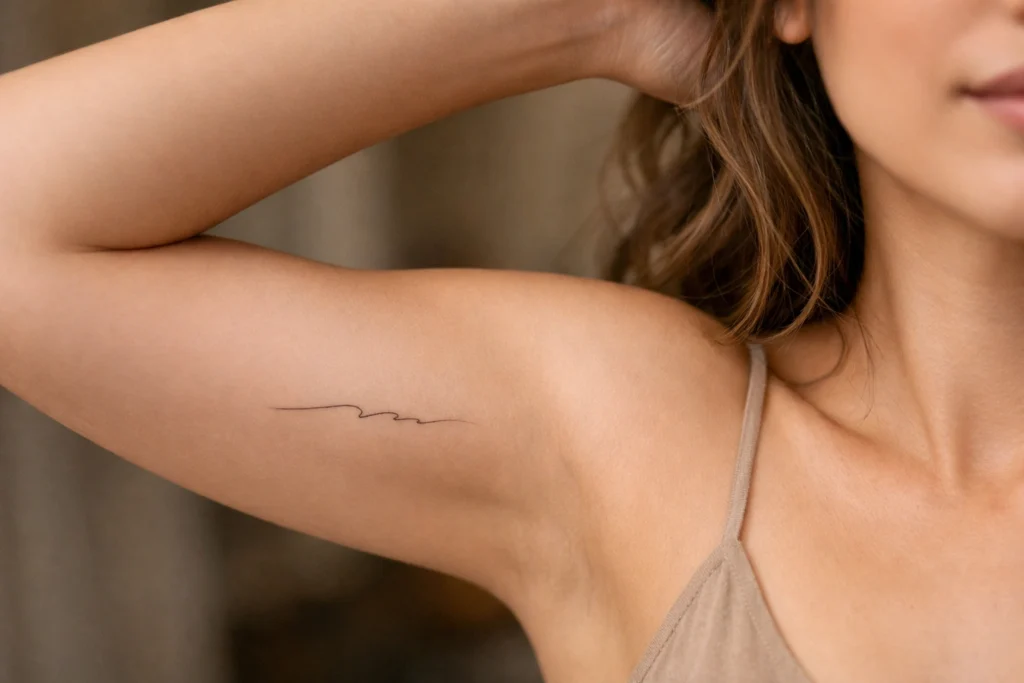
The inner bicep is a placement that has grown substantially in popularity among women seeking a name tattoo that feels personal without being constantly on display. The inner arm is visible when the arm is raised or extended outward but faces inward during everyday posture, creating a natural privacy that many women appreciate.
The skin on the inner bicep is soft and relatively receptive to tattooing, though the sensitivity of the area can make the experience more intense than the outer arm. The flat surface accommodates script beautifully, and the length of the inner arm gives options for both short and longer names without crowding. Women who want a name tattoo that feels like a personal secret rather than a public declaration consistently gravitate toward this placement.
Conclusion
Choosing the right name tattoo placement is as meaningful as choosing the name itself. Every location covered in this guide offers a different relationship between the design and the body, between the private and the visible, between the bold and the intimate. A name on the collarbone carries a different energy than a name on the ribcage or the spine, and only you can determine which of those energies aligns with what you want to express.
Take time to consider how each placement fits your lifestyle, your body, and the story you want the tattoo to tell. Consult with a skilled artist who can help you understand how the design will sit on your specific anatomy and how it will age over time. When the placement is right, a name tattoo does not just mark your skin. It becomes a permanent, living part of who you are.
You may also like this post: How To Pick A Tattoo: A Complete Guide 18 Ideas for First-Timers
Frequently Asked Questions
What is the best name tattoo placement for women who want to keep it hidden at work?
A: Placements that are easy to conceal in professional settings include the ribcage, inner bicep, hip, thigh, and shoulder blade. All of these are fully covered by standard business attire, allowing you to reveal the tattoo only when and where you choose.
How do I choose a font for a name tattoo?
A: Font choice should reflect both the meaning of the name and the placement you have chosen. Cursive and script fonts feel personal and feminine and work well on curved placements like the collarbone and wrist. Clean serif or sans-serif print fonts create a more structured, modern look and suit placements like the forearm or spine. Your tattoo artist can present several font options during the consultation phase.
Do name tattoos fade faster than other tattoos?
A: Name tattoos fade at a rate consistent with other tattoos in the same placement and style. Fine-line and thin script tattoos in high-friction areas like the fingers, hands, and feet will fade faster than bolder lettering on protected areas like the upper arm or thigh. Regular sunscreen application on exposed tattoos significantly slows fading.
Is it a good idea to get a partner’s name tattooed?
A: This is a personal decision that warrants careful thought. Many people choose to honor a spouse, partner, or significant relationship with a name tattoo and find deep satisfaction in it. It is worth considering a placement that could be incorporated into a cover-up or larger design if circumstances ever change, not out of pessimism but out of practical foresight. Placements like the ribcage, hip, or inner bicep offer this flexibility more naturally than highly visible areas.
How long does a name tattoo take to heal?
A: Most name tattoos heal within two to four weeks on the surface, though full deep healing can take up to three months. Healing time varies based on placement, with areas like the foot, finger, and inner arm taking slightly longer due to movement and friction. Following your artist’s aftercare instructions carefully throughout the healing period will produce the best long-term result.