
Introduction
There is something remarkable about the way a tattoo artist puts words to their craft. These professionals do not simply operate machines or trace stencils onto skin. They carry histories, emotions, and philosophies inside their fingertips. The phrases they speak and the ideas they hold tell us everything about why tattooing has endured for thousands of years as one of the most intimate and personal forms of human expression.
Tattoo artist quotes have become a cultural touchstone for anyone who has ever sat in that chair, watched the needle move, and understood that something permanent was being created. These are not just words. They are reflections of a philosophy rooted in permanence, identity, pain, beauty, and the deep human need to be seen and remembered.
Whether you are an artist building your studio, a collector adding to your canvas, or someone stepping into the world of ink for the first time, the quotes gathered in this article speak directly to the heart of what tattooing truly means. Each one carries a lesson, a truth, or a perspective worth sitting with long after the skin has healed.
Why Tattoo Artist Quotes Matter in the World of Body Art
Words and ink share a strange kinship. Both are used to record what we believe, what we have survived, and who we are becoming. Tattoo artists understand this better than most. Their daily work involves translating invisible feelings into visible marks that will stay on the body for a lifetime.
When a skilled artist speaks about their craft, they tend to reach for language that goes beyond technique. They talk about trust, storytelling, identity, and the sacred nature of skin. These quotes deserve attention not because they are decorative in a poetic sense, but because they are honest in a way that very few creative fields can claim.
The tattooing industry has grown considerably over the past two decades. What was once viewed as a subculture on the edges of society has become a mainstream art form practiced by millions of people across every walk of life. Within that cultural shift, the voices of tattoo artists have carried tremendous weight in shaping how the public understands and respects this work.
On the Permanence of Expression

“Tattooing is about personalizing the body, making it a true home and fit temple for the spirit that dwells inside it.”
This observation, widely attributed to tattoo writer and enthusiast Michelle Delio, captures something essential about why people get tattooed. The body is not simply a physical container. It is a living record. When someone marks it with ink, they are doing something deeply intentional. They are saying this is mine, this is me, and I want the world to know it.
Tattoo artists who work with this understanding approach each session differently than those who treat it as purely technical labor. They ask questions. They listen. They consider what the client is trying to say and how best the artwork can say it. The result is not just a tattoo. It is a collaboration between the artist’s skill and the client’s soul.
On the Body as Autobiography
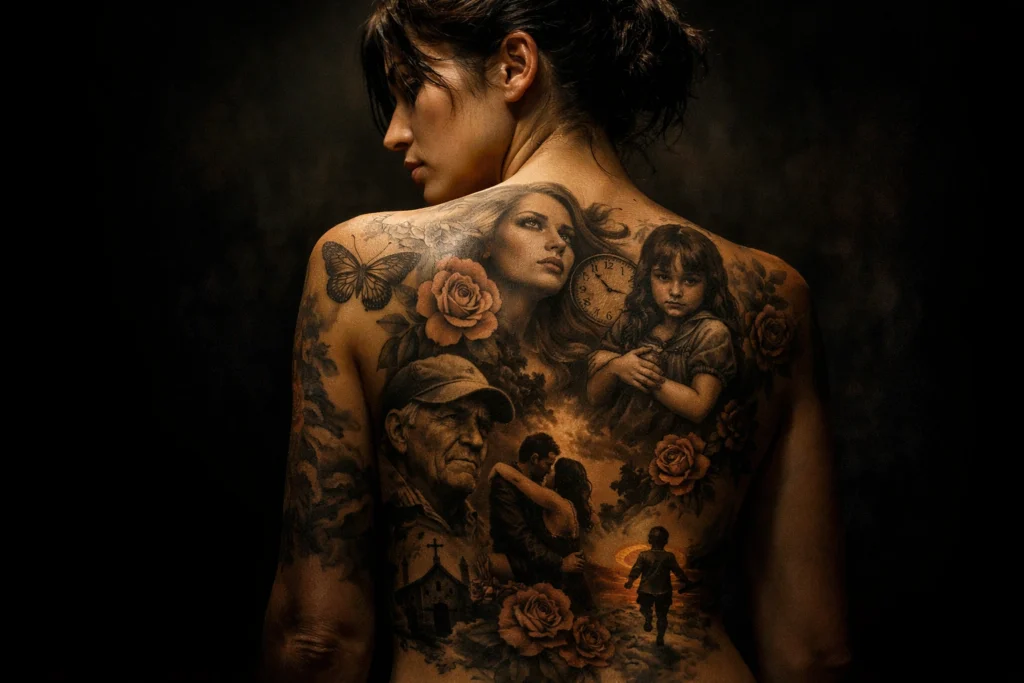
“I am a canvas of my experiences, my story is etched in lines and shading, and you can read it on my arms, my legs, my shoulders, and my stomach.”
These words from Kat Von D, one of the most recognized tattoo artists of her generation, speak to the idea of the body as autobiography. For many people who live heavily tattooed lives, each piece of art represents a chapter. The imagery on a person’s arm might reference a lost loved one, a city they once called home, or a year that changed everything.
The tattoo artist who understands this transforms their work from decoration into documentation. They become archivists of human experience, preserving in permanent ink what memory alone cannot always hold.
On Quality and Commitment to the Craft
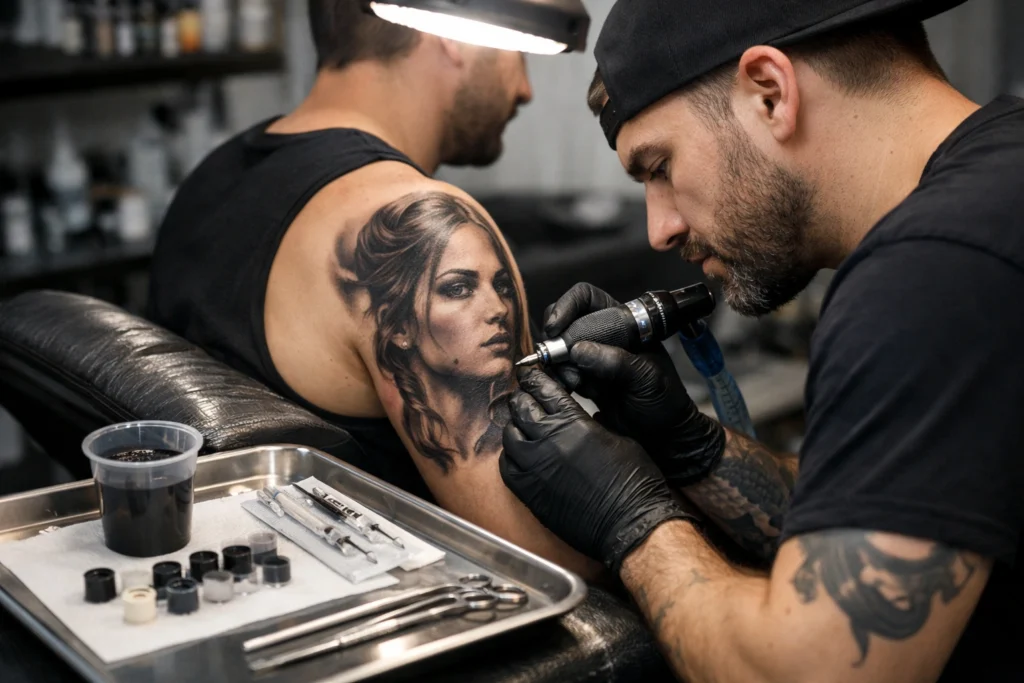
“Good tattoos are not cheap and cheap tattoos are not good.”
This saying has circulated through tattoo studios for generations because it is simply true. The work of a skilled tattoo artist reflects years of training, thousands of hours of practice, the cost of quality materials, and an intimate understanding of how ink behaves in different types of skin across decades of healing.
When someone cuts corners on a tattoo, they are not saving money in any meaningful sense. They are investing poorly in something they will carry every single day for the rest of their life. Artists who hold themselves to a high standard understand that their work is never truly finished. It walks out the door and keeps living.
On the Power of Ink as Symbol
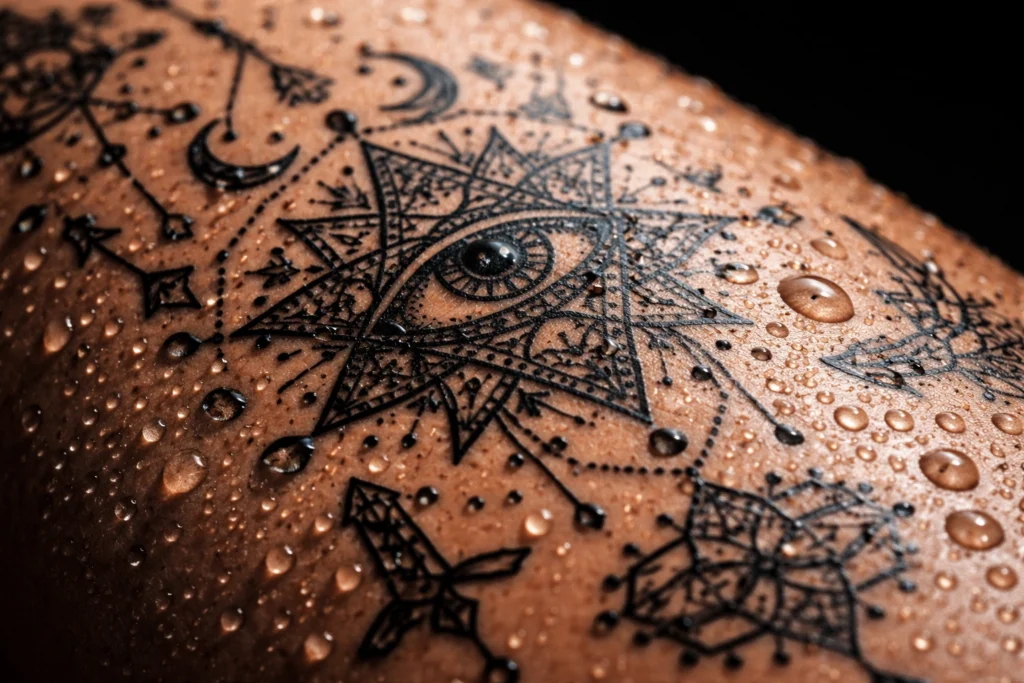
“Tattoos have a power and magic all their own. They decorate the body but they also enhance the soul.”
Also attributed to Michelle Delio, this quote points to something tattoo artists often witness firsthand. Clients who arrive nervous, uncertain, or even grieving sometimes leave looking lighter. The act of committing to a piece of art on the body can function as a ritual of transformation. Something was endured. Something was chosen. Something permanent was made from something that felt unbearable.
This is what separates tattooing from most other art forms. The canvas is not passive. It breathes, ages, moves, and feels. The relationship between the image and the person wearing it evolves over decades in ways no painting on a wall ever could.
On Telling Stories Through Skin

“Tattoos are like stories. They are symbolic of the important moments in your life.”
Pamela Anderson offered this reflection, and it resonates with what tattoo artists hear every day in their studios. Clients rarely walk in wanting a random image. They want something that means something. A date. A face. A phrase. A flower that connects them to someone no longer living.
The tattoo artist becomes a kind of translator in these moments. They take an idea that exists only in emotion and memory and render it into something visible and lasting. That responsibility is not taken lightly by the artists who take their work seriously.
On Wearing Your Insides on Your Outside

“For me, a tattoo is an art installation that I get to wear all the time. It is all about self-expression. You get to wear your insides on your outsides.”
Surfer and model Malia Jones said this, and it is a perspective that many tattoo artists share deeply. The act of getting tattooed is not about showing off. It is about alignment. When the imagery on the outside of a person reflects what they carry on the inside, there is a kind of wholeness to it that is difficult to find in any other form of personal expression.
Tattoo artists who create pieces that serve this purpose often describe their work as service. They are not making art for a gallery. They are making art for a living, breathing human being who will carry it into every room they enter for the rest of their life.
On the Written Body
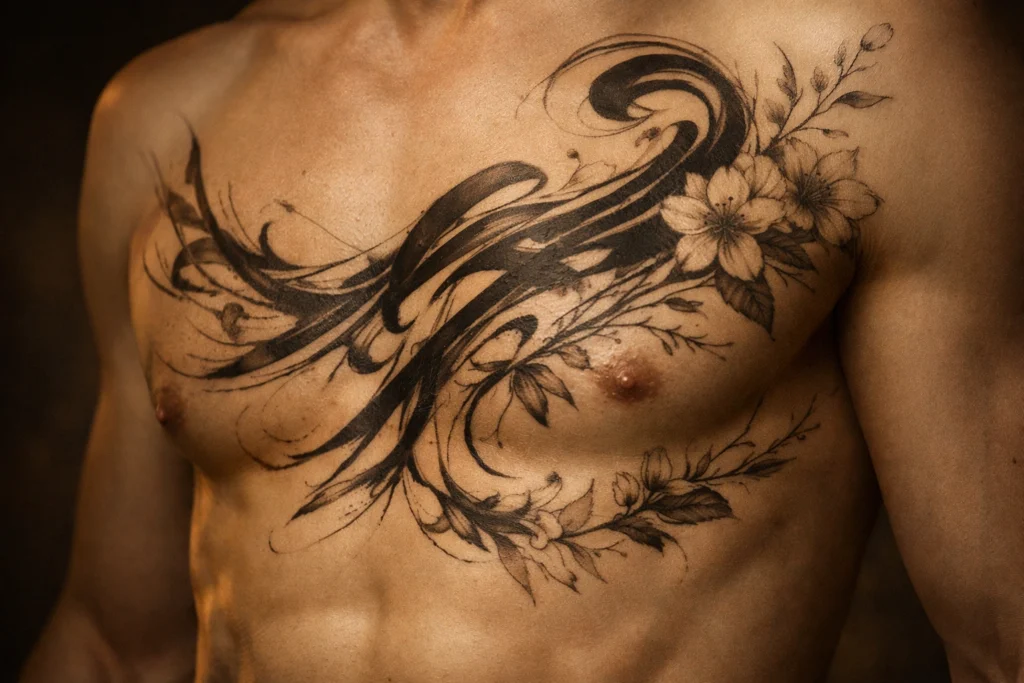
“Our bodies were printed as blank pages to be filled with the ink of our hearts.”
Michael Biondi’s metaphor here is one of the most elegant in the entire canon of tattoo-related thought. The comparison between the body and a blank page is obvious in hindsight, yet it reframes the entire act of tattooing as something literary. Every person is a manuscript in progress. Every tattoo is a sentence that cannot be unwritten.
This is why the consultation between artist and client matters so much. A good tattoo artist does not rush this part. They understand that what goes on the skin should reflect something true, something earned, and something the person will be proud to read about themselves many years from now.
On Ink as a Timeline
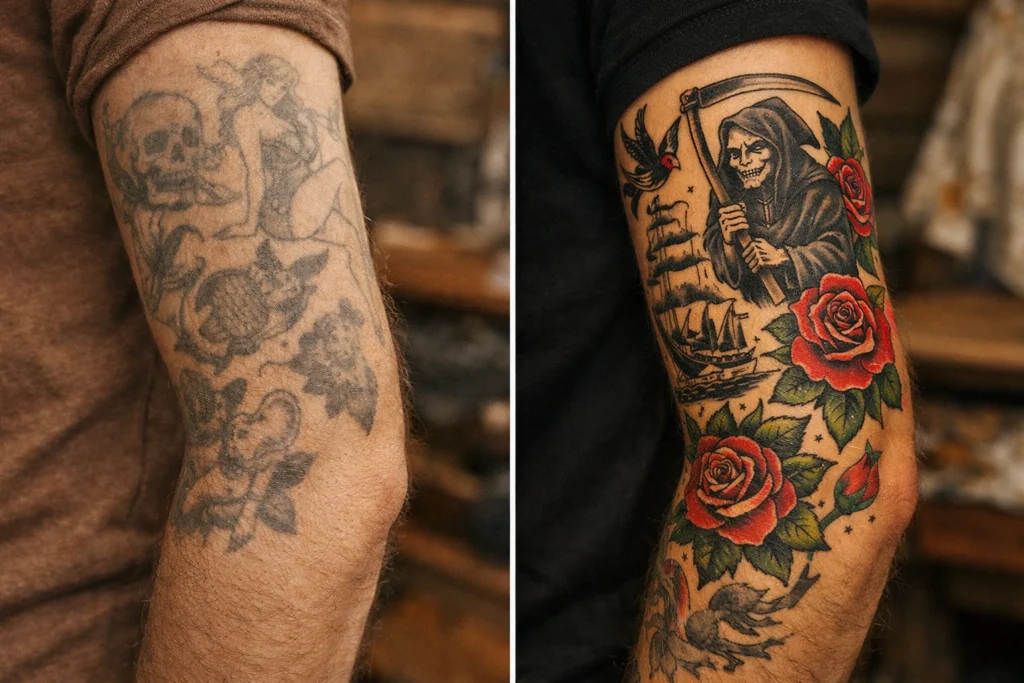
“Tattoos, for me, are like a timeline of my life. I could look at a certain tattoo and it reminds me of a certain time in my life and why I got that tattoo.”
Rapper Tyga articulated something here that many heavily tattooed people recognize immediately. Over time, the collection of ink on a person’s body becomes a kind of archaeological record. Earlier pieces reflect who they were. Newer ones show where they are headed. The skin becomes a map of growth.
Tattoo artists who work with long-term clients often have a unique relationship to this process. They watch a person change through the art they request. They see patterns. They see healing. They see joy and grief expressed in the imagery chosen year after year. It is a privilege few professions offer.
On Permanence as a Form of Commitment
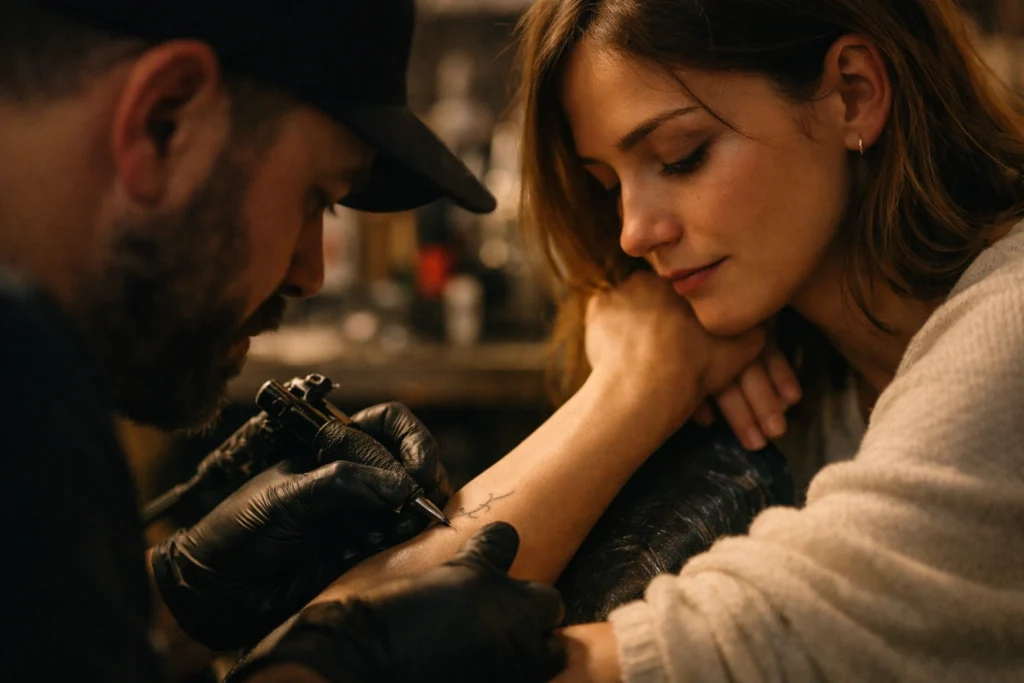
“Usually all my tattoos came at good times. A tattoo is something permanent when you have made a self-discovery or come to a conclusion about something.”
Angelina Jolie said this, and it strikes at the heart of what many people are really doing when they sit in a tattoo artist’s chair. They are marking a moment of clarity. They are saying I know something now that I did not know before, and I want to carry the evidence of it forward.
Tattoo artists who ask their clients about the meaning behind what they want are not being intrusive. They are being responsible. They understand that the right image, executed well, can serve as a daily reminder of something a person needs to remember. That is not decoration. That is medicine of a kind.
On Art That Stays
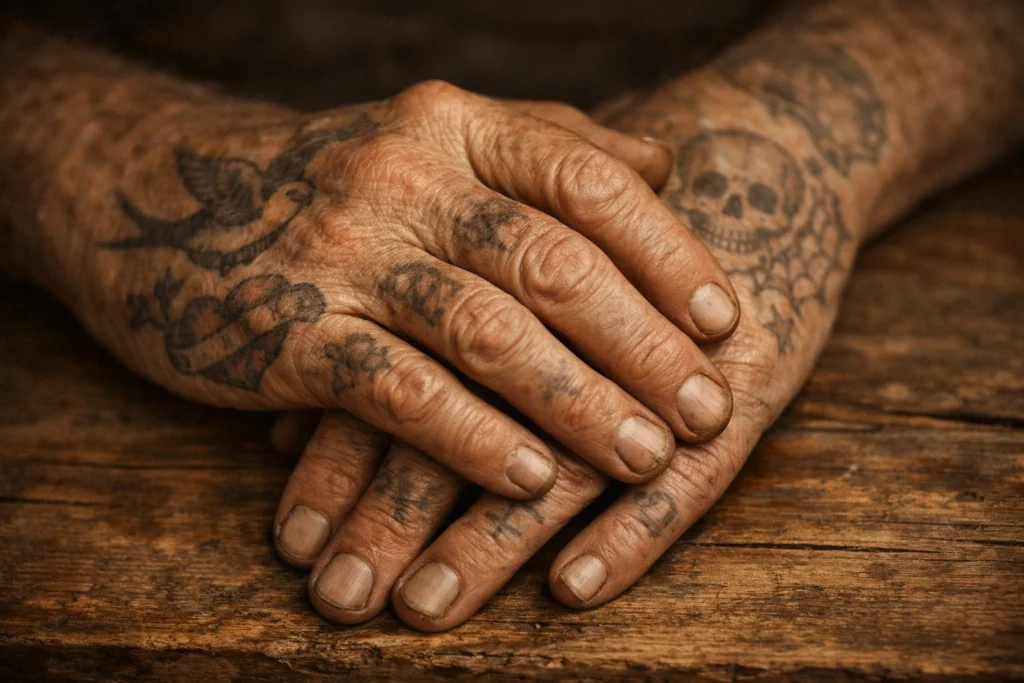
“A mind wanders, thoughts flee, and memories fade. But tattoos are forever.”
This quote speaks directly to why tattooing holds such appeal for people navigating grief, aging, or the ordinary erosion of memory that comes with a full and complicated life. We forget things. We lose people. We change in ways that sometimes sever our connection to who we used to be. A tattoo resists that erosion. It stays.
For tattoo artists, understanding this weight is part of the job. When someone brings them a photograph of a grandmother’s handwriting or a child’s first drawing to be permanently rendered in ink, they are not being asked to make something beautiful. They are being asked to make something that endures. That is a different assignment entirely, and the best artists know it.
On the Honesty of Ink
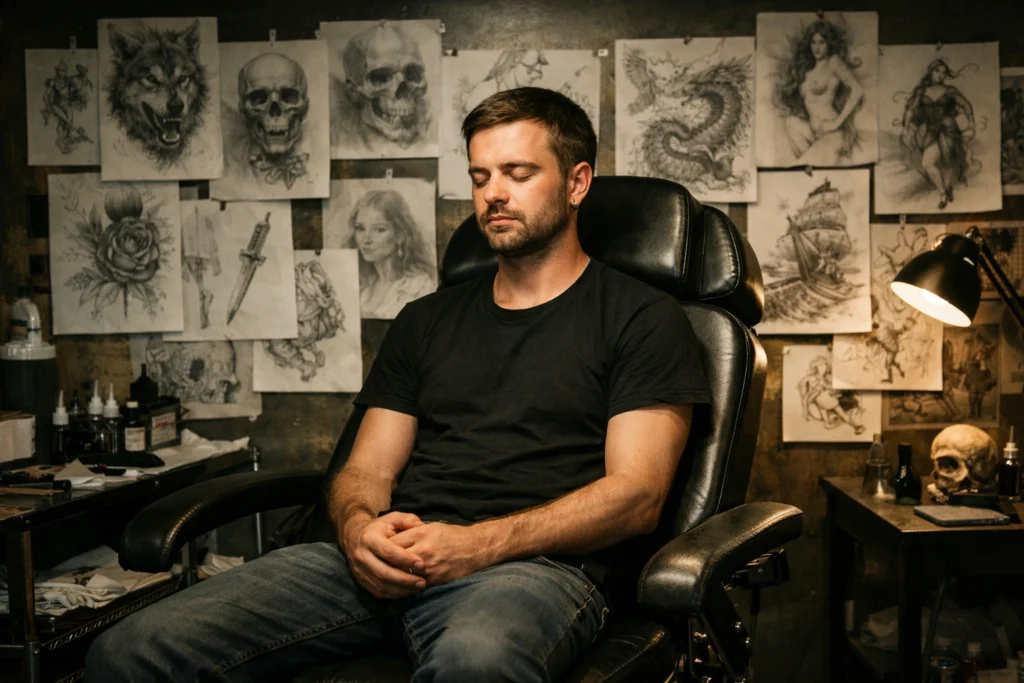
“If people are honest with themselves when they choose a tattoo, the art will represent them better than anything that will ever come out of their mouth.”
This insight, attributed to tattoo culture writer Troy Holloway, cuts to something important about the relationship between choice and identity. What a person decides to put on their body permanently, when that decision is made honestly, reveals more about their values and history than almost any conversation could.
Tattoo artists become witnesses to this honesty every day. They see what people choose when they are not performing for anyone. They see the images and words that people need close to them always. It gives them a remarkable understanding of human nature that few other professions provide.
On Ink as Self-Discovery

“Tattoos tell the world we have still got something to say.”
Journalist Liz Jones wrote this, and it lands differently depending on where a person is in their life. For a young person getting their first tattoo, it is a declaration. For someone in their sixties adding to a collection they started decades ago, it is a refusal to become invisible. Either way, the message is the same. I am here. I am still becoming. I am not done yet.
The tattoo artists who keep their studios open for decades understand this. Their work is not just about aesthetics or technique, though both matter enormously. Their work is about helping people say the thing they need to say in the language that suits them best. And for some people, that language has always been ink.
What These Quotes Reveal About the Philosophy of Tattooing
Taken together, these twelve quotes point toward a unified philosophy of tattooing that transcends any individual artist’s style or cultural background. At the center of that philosophy is a single idea: the body is not just a body. It is a document, a declaration, and a living work of art.
Tattoo artists who work with this philosophy tend to build deep and lasting relationships with their clients. They become trusted collaborators in one of the most personal creative acts a person can undertake. Their studios become places not just of technical execution but of genuine human connection.
The craft demands both precision and empathy. The needle must be guided by a steady hand and a compassionate understanding of what the person in the chair is asking for and why. That combination is rare and worth honoring.
The Relationship Between Artist and Client in Tattoo Culture
One theme that emerges repeatedly in tattoo artist quotes is the importance of the relationship between the person creating the work and the person wearing it. Unlike a painting or a sculpture, a tattoo cannot be separated from its owner. The art and the body are permanently joined. This means the collaboration that produces the work must be built on a foundation of trust.
Experienced tattoo artists often describe their most meaningful sessions not in terms of technical complexity but in terms of the conversations that took place before the needle ever touched skin. They talk about the moments when a client shared something vulnerable, and the artist responded not with judgment but with attention and care. These are the sessions that produce art worth carrying for a lifetime.
The quotes in this article reflect this relational dimension of tattooing again and again. Whether the speaker is a celebrated artist or a cultural figure who wears their story on their skin, the common thread is the recognition that tattooing is fundamentally about human beings choosing to be seen.
Why Tattoo Artist Quotes Continue to Inspire New Generations
Tattoo culture has never been static. It has evolved continuously from ancient Polynesian traditions to Japanese irezumi to the American traditional style of the early twentieth century to the hyperrealistic portraits and geometric fine line work of contemporary studios. Through all of those evolutions, the words that artists and collectors use to describe what tattooing means have remained remarkably consistent.
The language of permanence, identity, storytelling, pain, and beauty shows up across centuries and cultures because these are the elements that define what tattooing actually is. It is not a trend. It is not a fashion statement, though it can be used as one. At its core, tattooing is a practice of commitment. You are choosing to be changed in a way that cannot be undone. That takes a certain kind of courage, and it produces a certain kind of person.
New generations of tattoo artists carry this tradition forward with genuine reverence. They study the history of their craft. They apprentice under artists who themselves apprenticed under others. They understand that the needle in their hand is connected to a lineage that stretches back thousands of years. The quotes they offer reflect that awareness.
Conclusion
The twelve tattoo artist quotes gathered in this article do more than inspire. They illuminate. They show us what tattooing truly is when stripped of its commercial trappings and social associations: a practice of deep human self-expression carried out on the most intimate possible canvas.
Tattoo artists who speak about their craft with honesty and depth offer something rare in the creative world. They remind us that art does not have to hang on a wall to be powerful. Sometimes it walks through the world on a living body, aging and changing and continuing to mean something new every year.
If you are considering your first tattoo or your fiftieth, let these words guide your thinking. Choose work that is honest. Find an artist who listens. Trust the process of sitting with something until it feels right. The permanence of ink is not something to fear. It is an invitation to know yourself well enough to say something true with your own skin.
The spirit of ink and art lives in the hands of those who do the work and in the bodies of those who carry it forward. These quotes are proof that the people on both sides of the needle understand they are part of something that matters.
You may also like this post: How to Become a Tattoo Artist with Hugo Feist’s Online Course
Frequently Asked Questions
What do tattoo artist quotes teach us about the meaning of tattoos?
Tattoo artist quotes consistently reveal that tattooing is far more than decoration. They teach us that tattoos serve as personal records of growth, grief, identity, and transformation. At their best, tattoos are chosen acts of honesty, statements about who a person is and what they value. The words of experienced artists help clients and collectors approach the decision with the depth and intentionality it deserves.
Why do so many tattoo artists describe the body as a canvas?
The canvas metaphor captures the idea that the body is not passive but is instead an active surface for creative expression. Unlike a canvas in a gallery, the skin breathes, ages, and moves through the world. Tattoo artists use this comparison to emphasize that the work they do is living art. It continues to exist and evolve in a way that no static medium can replicate.
How should a first-time tattoo client prepare for their session?
First-time clients benefit most from spending time reflecting on what they truly want and why. The best tattoo artists will ask questions and encourage honest conversation before any design is finalized. Clients should research artists whose style aligns with their vision, be open to the artist’s creative input, and approach the session with patience rather than rushing toward a result. A tattoo worth carrying for life is worth taking time to get right.
Do famous tattoo artists have a different philosophy than studio artists?
The philosophy tends to be consistent across both groups. Whether an artist is internationally recognized or works quietly in a small local studio, the best ones share a commitment to the relationship between art and meaning. They take the responsibility of permanence seriously, invest in their clients as individuals, and approach each piece with both technical rigor and genuine care. Fame changes visibility but not the values that make great tattooing great.
Can tattoo artist quotes be used as inspiration for new tattoo ideas?
Absolutely. Many people find that reading deeply about the philosophy of tattooing helps them clarify what they actually want to put on their own body. When a quote resonates strongly, it often points toward a deeper theme that can be translated visually. Rather than arriving at a studio with a specific image, arriving with a feeling or an idea often produces more personal and meaningful results. A skilled artist can take a concept and help build something that truly belongs to the person who will wear it.
1 Comment