

Choosing where to place a tattoo matters just as much as choosing the design itself. A tiny floral sprig on the right spot can look like fine jewelry. That same design in the wrong place? It disappears or distorts entirely. Dainty tattoo placement ideas are less about trend-chasing and more about understanding your own body as a canvas. Every curve, ridge and contour your body offers is an opportunity to make small ink feel intentional and magnetic.
Why the Placement of a Dainty Tattoo Matters More Than the Design Itself
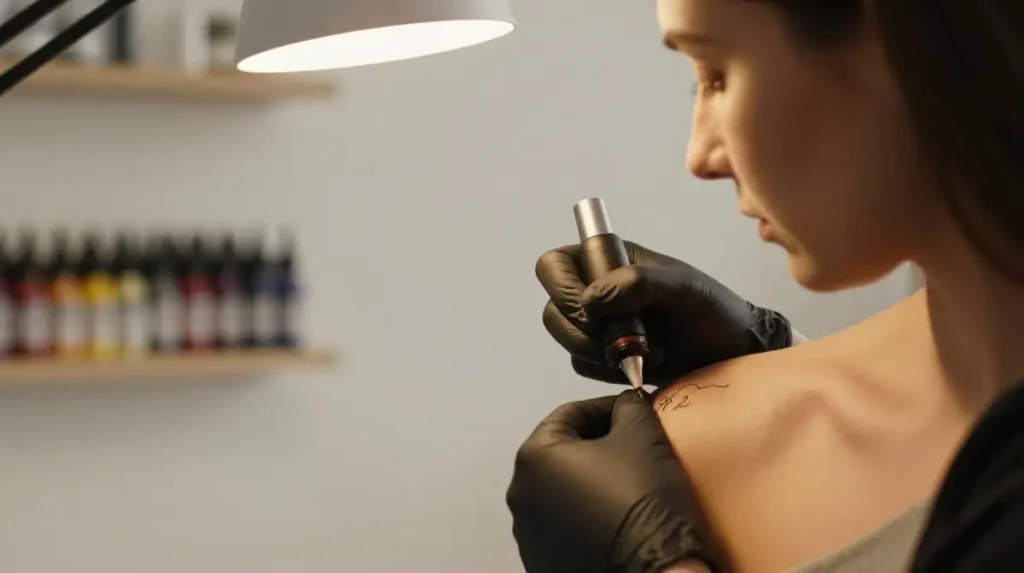
Placement is the silent architect of every great tattoo. You could choose the most exquisite botanical illustration or the most graceful cursive script but if it lands on the wrong body zone, the entire visual narrative collapses. Dainty tattoo placement ideas begin with understanding how the body’s natural topography — its curves, creases, and contours — either amplifies or diminishes a small design’s impact.
Think of your skin as a living canvas that breathes, stretches, and moves. Skin texture and tattoo placement share an inseparable relationship. A delicate feather etched along a flat, smooth zone reads with crisp clarity while the same design crammed into a high-friction fold loses definition within months. Placement isn’t cosmetic. It’s structural.
The Collarbone Area Turns Even the Simplest Fine Line Into Pure Elegance
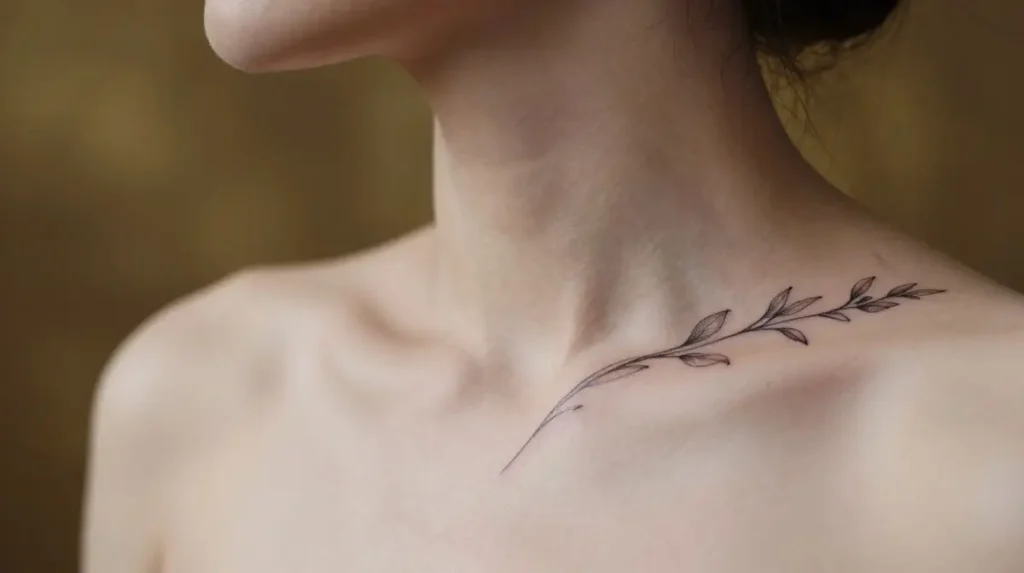
Few body zones carry the architectural grace of the collarbone. This horizontal ridge of bone creates a natural frame that elevates even the most minimalist script or fine line tattoo on collarbone into something that looks intentional and couture. American tattoo artists consistently rank it among the most requested spots for delicate feminine work.
The collarbone tattoo thrives because of visual contrast — soft ink against prominent bone structure creates immediate drama without effort. Color retention in small tattoos placed here remains strong because the area experiences minimal sun exposure and low mechanical friction. A single-stem flower or a coordinates script along this ridge? Genuinely unforgettable.
How the Inner Wrist Became the Signature Spot for Delicate Ink Lovers
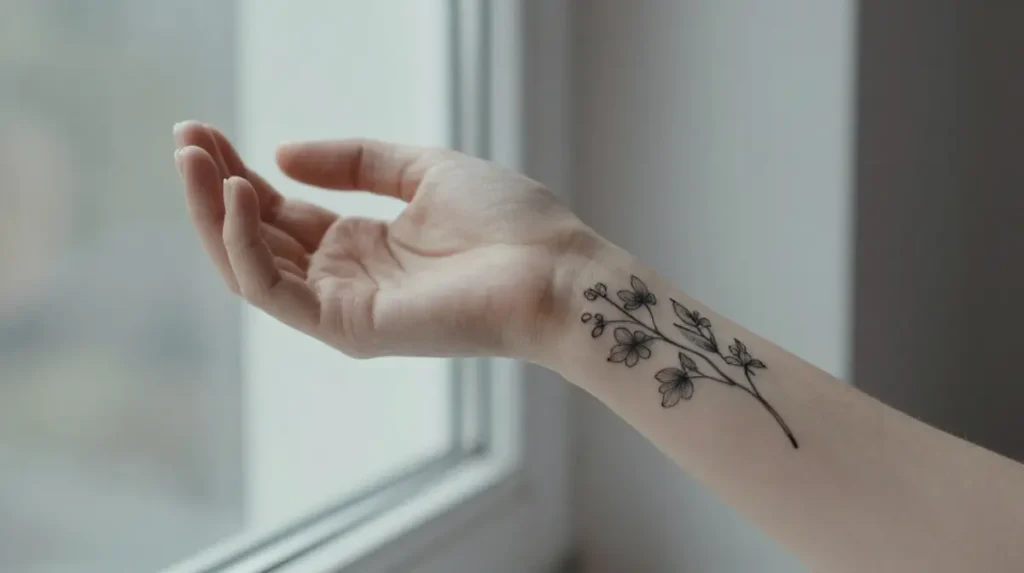
The inner wrist carries decades of symbolic weight in tattoo culture. It’s visible, intimate and perpetually on display — making wrist tattoo ideas for women one of the most searched placement queries across the United States. The smooth skin here accepts fine line tattoo spots with remarkable precision and the design remains readable across all skin tones.
Inner wrist tattoo designs work beautifully because the wrist’s slight curvature wraps tiny motifs like a bracelet, giving them dimensionality. However, tattoo fading in high-friction areas is a legitimate concern here since sleeve cuffs and daily movement do accelerate wear. Choose a skilled artist who works with deliberate needle depth and your small tattoo placement will hold for years.
Behind the Ear Tattoo Placement That Feels Like a Whispered Secret
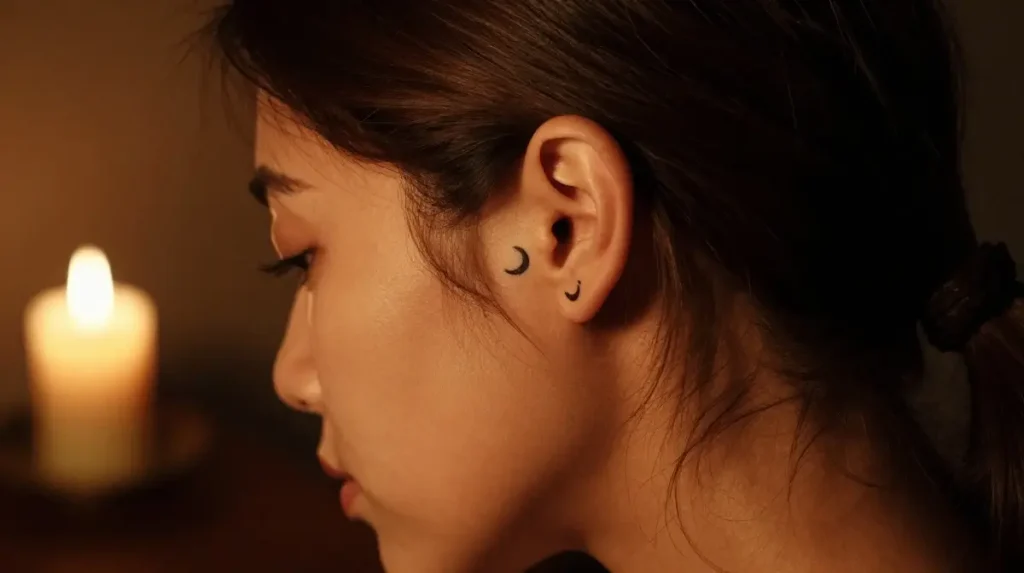
There’s something almost conspiratorial about ink you don’t immediately reveal. The behind the ear tattoo occupies a uniquely intimate geography — tucked just far enough to stay hidden under loose hair yet perfectly visible the moment you pull it back. It communicates confidence without announcement. That duality is precisely why it captivates.
Small tattoo behind the ear designs tend to be minimal by necessity — the space demands restraint. Tiny moons, single leaves, Roman numerals and minimalist stars dominate this zone. Tattoo sizing for delicate designs here is critical. Anything too large looks crowded and anything too small risks blurring as dainty tattoo aging over time compresses fine details in such a compact area.
Spine Tattoos and Why Delicate Designs Come Alive Along the Vertebrae
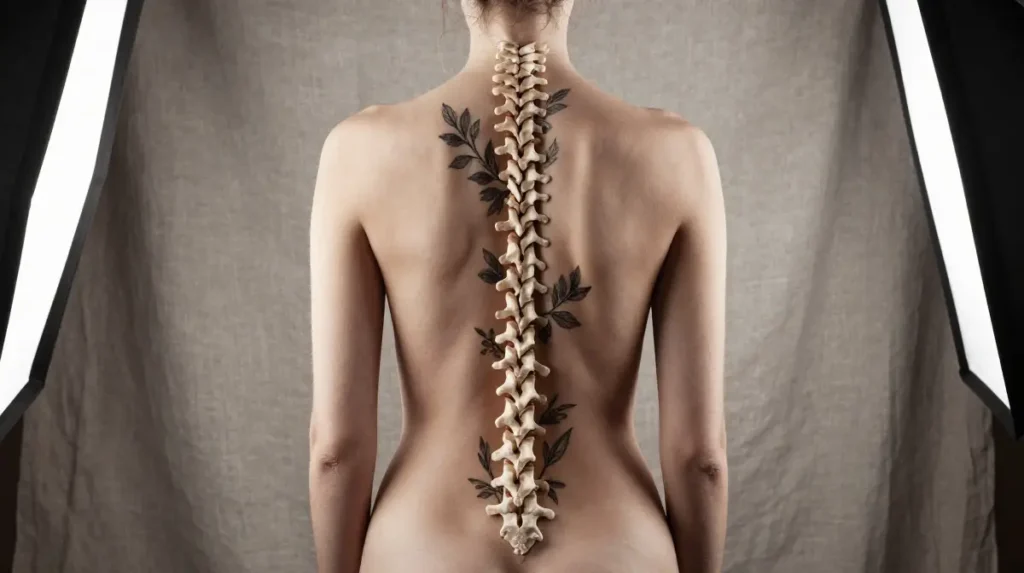
The spine is a runway. It runs vertically along the body’s central axis giving spine tattoo for delicate designs an elongating, almost architectural quality that no other placement replicates. Floral vines, cascading dots, geometric sequences and botanical chains all find their most powerful expression when they travel along this corridor of bone and muscle.
Body contour and tattoo flow matter enormously here. A well-placed spine tattoo follows the body’s natural symmetry and creates an illusion of height and elegance. Tattooing over bone versus muscle produces different texture results — the spine’s bony prominence means the needle works against a firm surface, yielding crisp linework that makes delicate ink placement genuinely sing.
The Sternum as a Canvas for Soft Floral and Geometric Fine Line Work
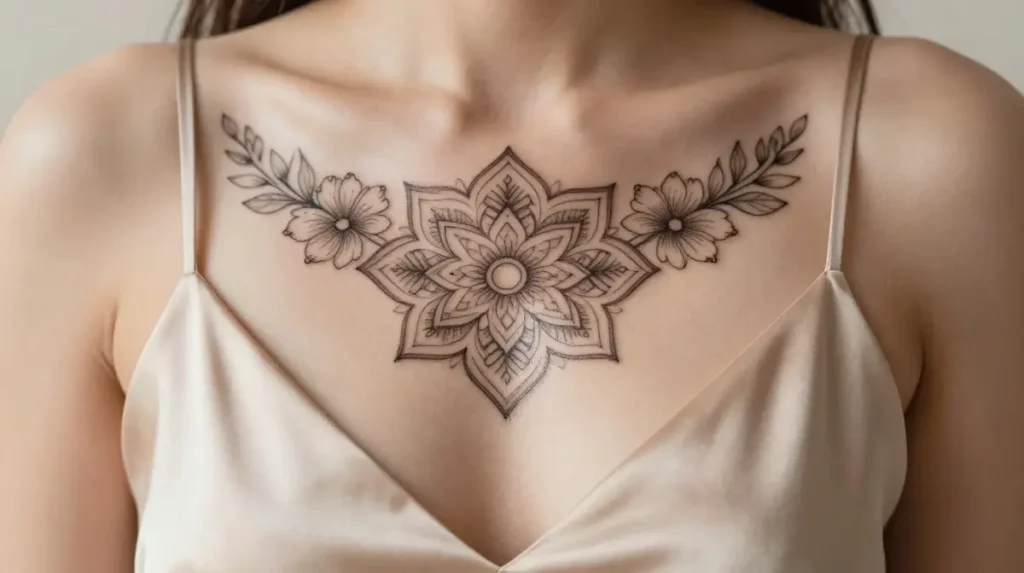
The sternum placement has surged in popularity across American tattoo studios. It sits at the center of the chest creating a focal point that draws the eye inward. Sternum tattoo placement suits elongated motifs — mandalas, hanging florals, symmetrical geometric forms — designs that mirror the body’s bilateral structure and feel harmonious rather than arbitrary.
Best skin for fine line work is typically found in areas of low sun damage and minimal movement and the sternum delivers both. Concealment options for small tattoos placed here are also excellent — a standard neckline covers everything effortlessly. Yet in a plunging neckline or a swimsuit, the design transforms into a statement that commands rooms without a single word spoken.
Ankle Placement Ideas That Add Subtle Charm to Every Step You Take
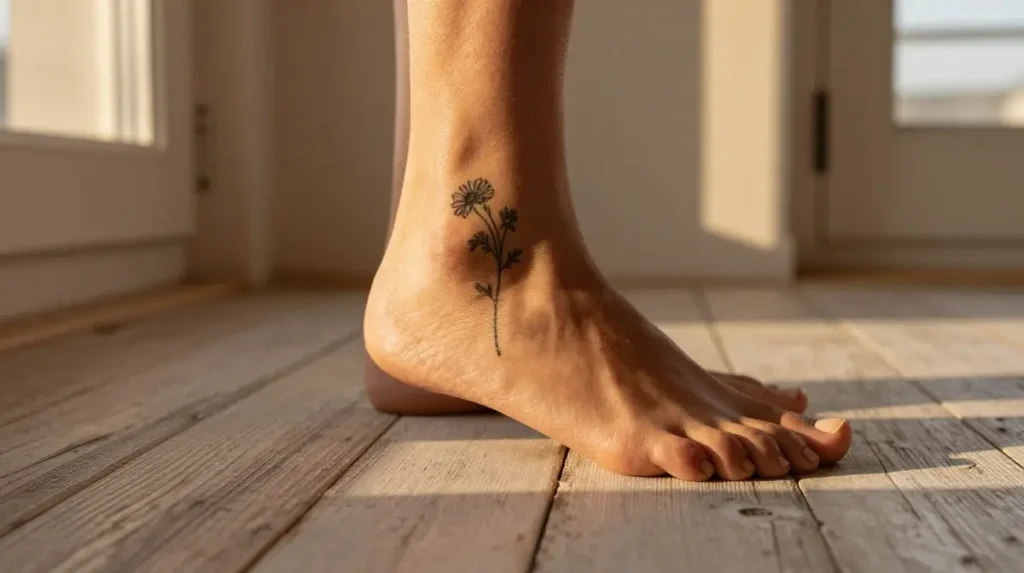
The ankle operates as a kind of punctuation mark on the body — small, precise and surprisingly impactful. Ankle tattoo placement guide recommendations consistently emphasize the outer ankle as the prime zone since the flat surface there provides a stable canvas for delicate ink placement without the distortion risks that come from inner ankle curves and tendons.
you may also like this:22 Quote Tattoo Ideas for Men Meaningful Bold Ink
An ankle tattoo pairs instinctively with barefoot moments, strappy sandals and cropped trousers. Tiny botanical wraps, single-word scripts and minimalist celestial motifs thrive here. Tattoo longevity by body location studies suggest the outer ankle retains ink particularly well compared to the inner ankle and foot sole where friction and flexion degrade designs faster.
Shoulder Blade Tattoos That Peek Through Every Low-Back Outfit You Own

Shoulder blade placement understands fashion deeply. It operates on reveal — concealed under everyday clothing yet dramatically visible the moment you wear a backless dress, an open-back swimsuit or an off-shoulder top. Shoulder blade tattoo ideas work especially well for medium-scale delicate pieces that need breathing room to unfold.
The shoulder blade tattoo benefits from a broad, relatively flat surface with consistent skin texture — ideal for fine line tattoo visibility since there are few creases or contour interruptions. Body placement for small tattoos that need room to grow slightly larger over time lands perfectly on this zone. Artists often recommend it for clients who want dainty work now with space for expansion later.
Dainty Tattoo Placement Ideas That Work Best for a Professional Lifestyle

Navigating corporate America with visible tattoos still carries friction in many industries. Smart dainty tattoo placement ideas for professionals prioritize zones that standard business attire naturally covers — upper back, ribcage, upper thigh, sternum and inner bicep. Subtle tattoo placement for professionals isn’t compromise. It’s strategic self-expression.
Discreet tattoo placement allows you to carry deeply personal ink without workplace scrutiny. The inner upper arm, just below the sleeve line, has become especially popular among professional women across New York, Chicago and Los Angeles. Hidden tattoo placement for women in these zones means your identity and your career coexist without collision.
Finger Tattoos Done Right — Placement Tips to Make Delicate Ink Last Longer
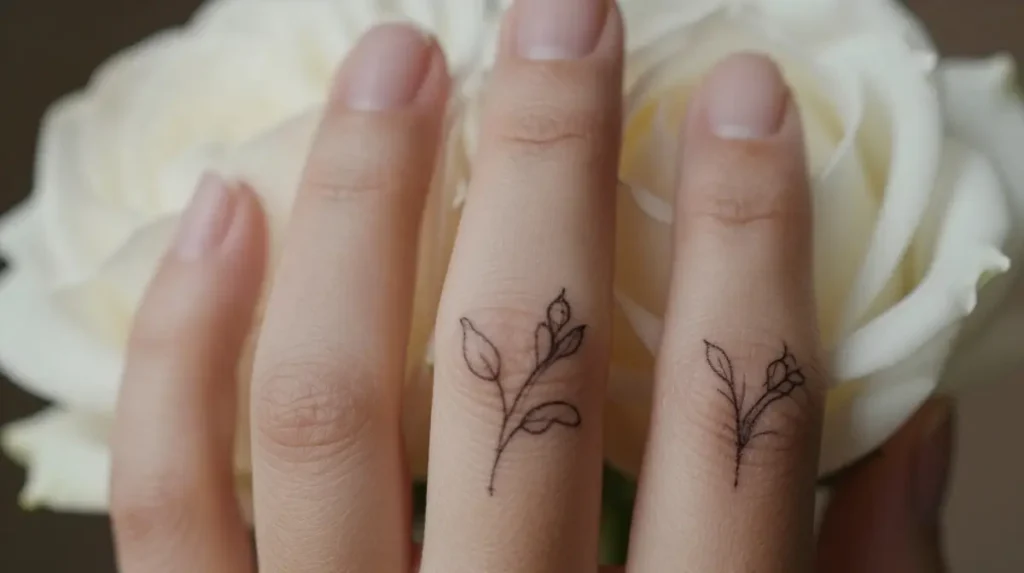
Finger tattoos are seductive and punishing in equal measure. They look extraordinary on day one and they demand serious maintenance commitment to stay that way. Dainty finger tattoo ideas work best on the outer finger edge or just below the knuckle where skin movement is slightly less aggressive than directly on the knuckle crease itself.
Tattoo fading in high-friction areas hits hardest on fingers because you use your hands constantly — washing, gripping, typing and sun exposure all conspire against longevity. Placement guide for small tattoos on fingers should always include an honest artist consultation about touch-up expectations. Plan for at least one refresh within the first two years and your finger tattoo will remain pristine.
The Inner Arm Reveals Soft Designs in the Most Unexpectedly Intimate Way

The inner arm is where vulnerability and aesthetics intersect. This soft, thin-skinned surface sits protected from the sun for most of the day and experiences relatively low friction making it a genuinely excellent zone for inner arm tattoo ideas with fine linework. The skin here also tends to age gracefully keeping designs sharper for longer.
Forearm placement for fine line tattoos on the inner surface creates a quiet intimacy — the design faces you as much as the world. It’s the placement you notice during a slow morning coffee or a quiet moment of reflection. Soft ink placement along the inner forearm suits botanical sketches, single-word affirmations and loose geometric forms that feel more like jewelry than tattoo art.
Ribcage Placement for Those Who Want Their Ink Reserved for Only the Right Eyes
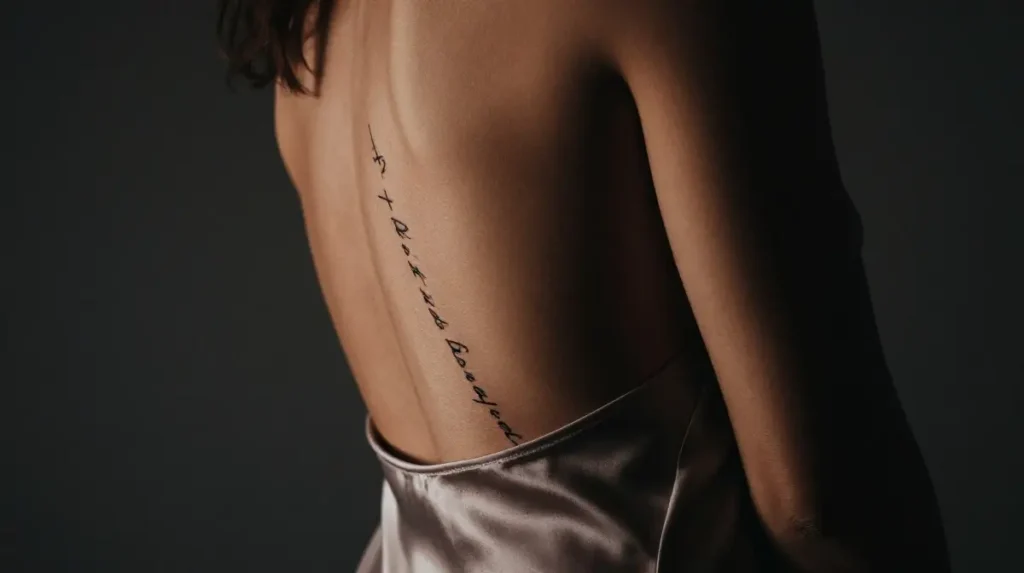
The ribcage is the ultimate curated reveal. Almost nobody sees it without your permission making it one of the most emotionally significant subtle tattoo locations on the entire body. Americans choosing minimalist tattoo on ribcage placements often select deeply personal imagery — birth flowers, coordinates, memorial scripts — because the intimacy of the location matches the weight of the meaning.
Pain level by tattoo placement is highest at the ribcage due to thin skin over hard bone and proximity to the lungs. Breathing itself creates micro-movement during the tattooing process. Despite this, the ribcage tattoo delivers extraordinary visual results. The skin here is relatively unexposed to UV light meaning color retention in small tattoos placed on the ribcage significantly outperforms more exposed zones.
How Hip Bone Placement Gives Small Tattoos a Sensual and Flowing Dimension
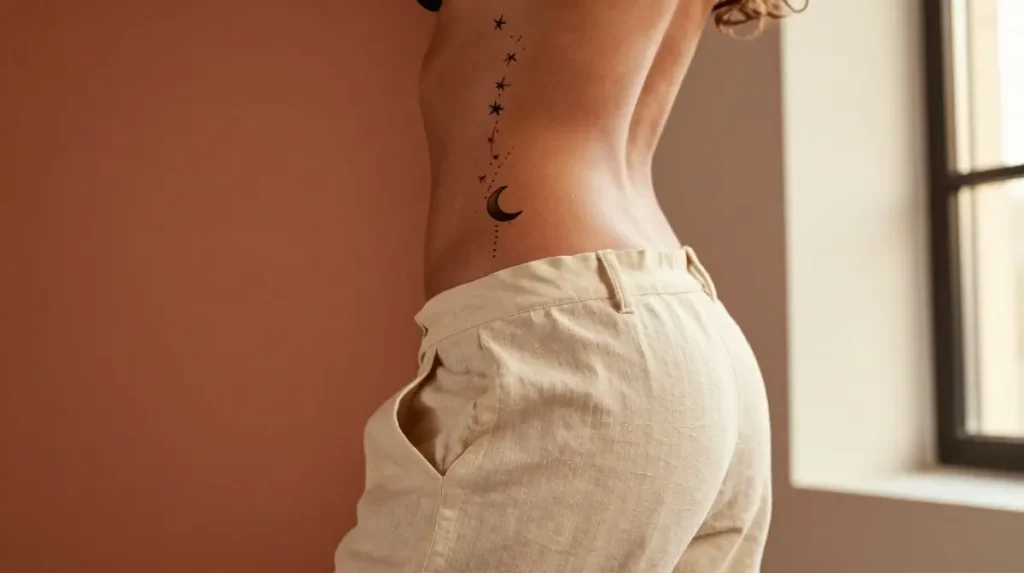
Hip bone placement occupies a fascinating middle ground between visibility and concealment. It’s intimate but not hidden and hip bone tattoo placement suits designs that follow the body’s natural curvature — crescent shapes, trailing florals, wave forms and abstract line work that bends with the hip’s organic arc. It moves with you rather than sitting static on flat skin.
A hip tattoo placed just above the hip crest catches light differently depending on posture creating a living dynamism that flat placements can’t replicate. Body contour and tattoo flow become almost choreographic here. Most flattering tattoo placement for women consistently includes the hip zone because it accentuates natural body curves rather than competing with them.
The Nape of the Neck — Where Dainty Ink Commands Quiet Attention
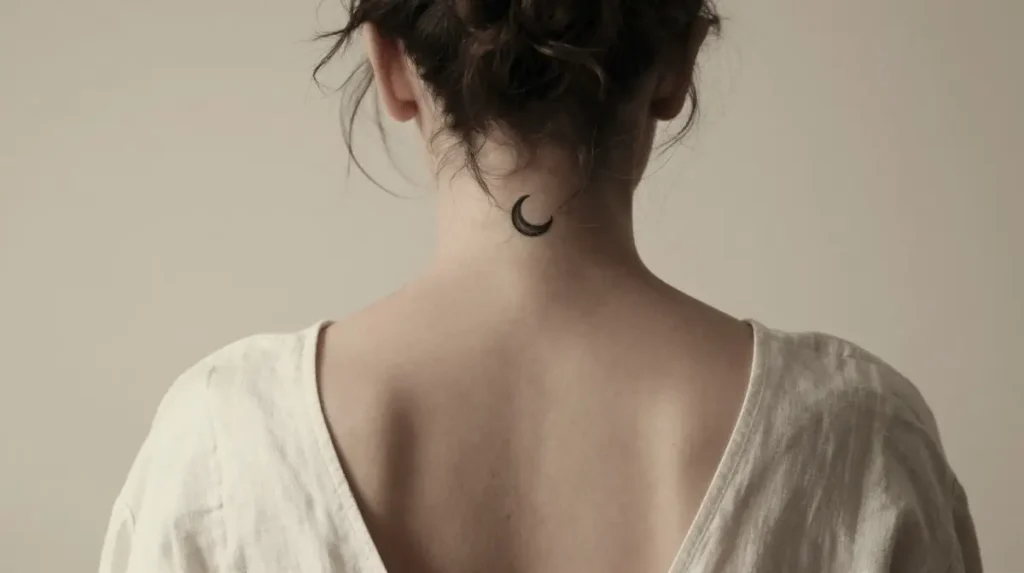
The nape is a masterclass in understated power. It’s invisible in most social settings yet devastatingly visible when hair is pinned up or pulled forward. Nape of neck tattoo ideas typically favor symbols with strong silhouettes — crescent moons, single arrows, small mandalas and botanical sprigs — because the nape’s limited real estate demands visual efficiency.
Nape tattoo placement carries cultural resonance across multiple American subcultures from ballet dancers who frequently choose nape placements to fashion editors who’ve made it a signature of elevated personal style. Understated tattoo spots don’t come more poetic than this. The nape whispers rather than shouts and that restraint is precisely what makes it magnetic.
Foot and Toe Tattoo Placements That Reward the Ones Who Notice Details
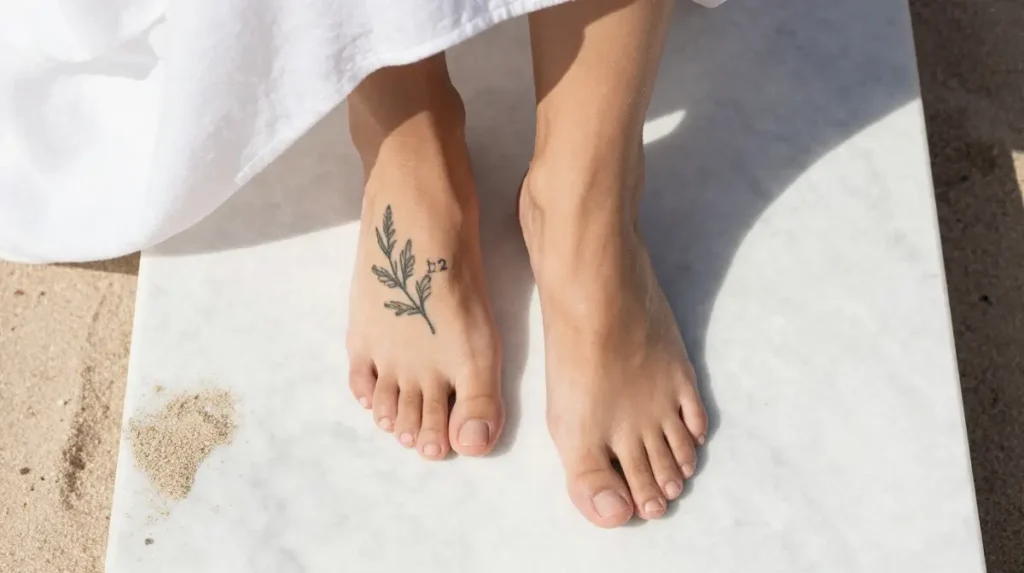
Foot tattoos are a reward for the observant. Most people will never notice them without proximity making foot tattoo placement inherently intimate and personal. The top of the foot near the arch provides the most stable canvas for tiny tattoo placement since the skin is relatively smooth and the surface flat enough for fine detail work.
Tattoo longevity by body location analysis consistently flags the foot as a high-maintenance zone. Tattoo fading in high-friction areas is aggressive here due to shoe pressure, sock friction and constant flexion. However, an artist experienced in placement guide for small tattoos on feet can mitigate this with proper needle depth. Summer sandal season makes foot ink one of the most visually rewarding choices you can make.
Décolletage Placement That Transforms a Minimal Design Into a Style Statement
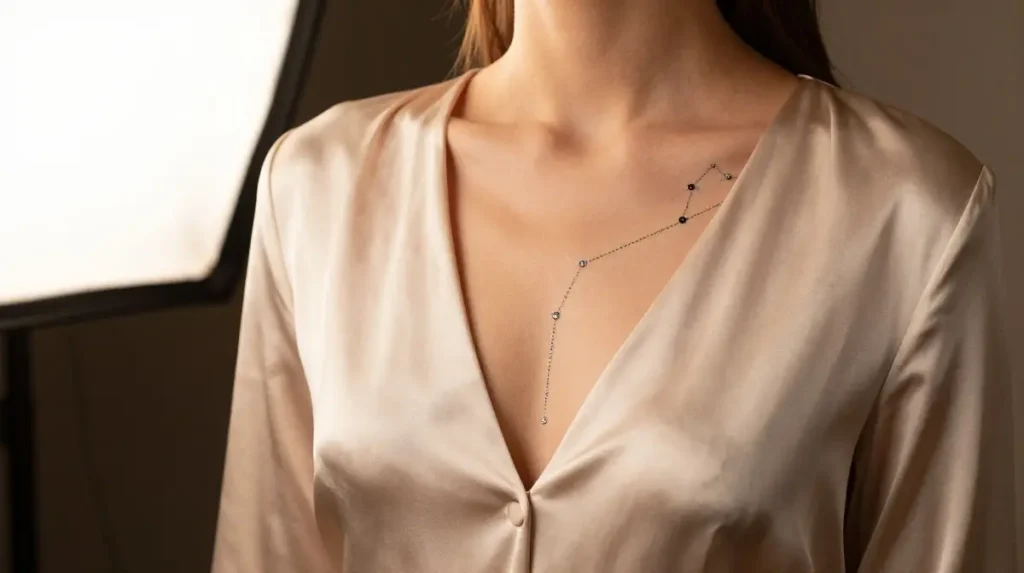
The décolletage occupies one of fashion’s most celebrated zones. A décolletage tattoo placed along the upper chest or just below the clavicle merges body art with the visual language of fine jewelry. Think of it as permanent adornment — a delicate chain of dots, a trailing botanical, a constellation mapped across the sternum’s upper reach — it looks less like ink and more like ornamentation.
Elegant tattoo positions in the décolletage zone benefit from the area’s natural visibility in everyday American fashion — V-necks, scoop necks and open collars all frame this placement beautifully. Fine line tattoo visibility is exceptional here due to relatively consistent skin tone and low sun damage compared to forearms or shoulders. This is where minimalist artistry becomes genuinely luxurious.
How Skin Texture and Body Contour Should Guide Your Final Placement Decision
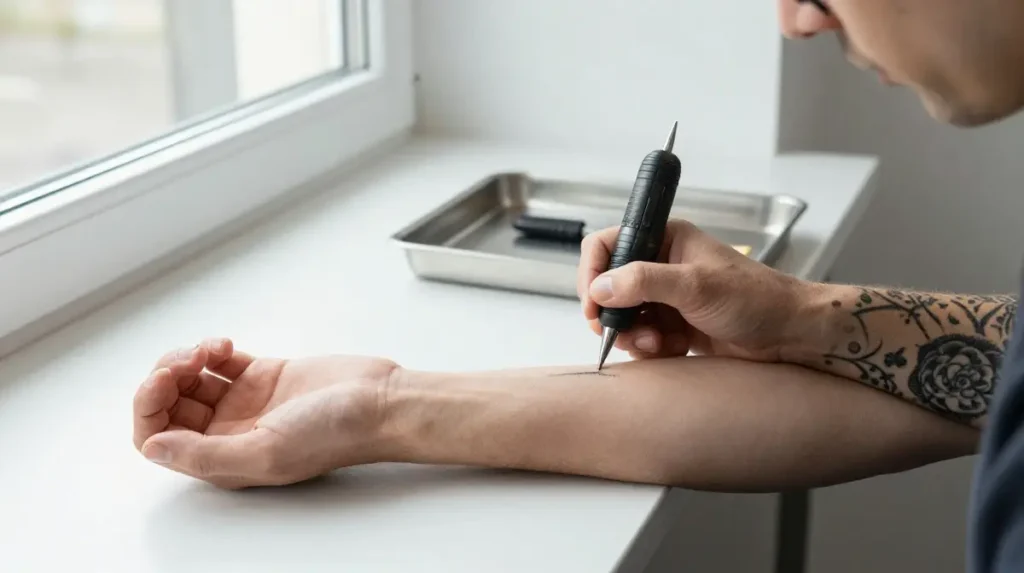
Skin isn’t uniform and ignoring that fact produces tattoo regret. Skin texture and tattoo placement compatibility should be the first conversation you have with your artist. Rough, textured or heavily pored skin diffuses fine lines making micro-detail work blurry over time. Smooth, even-toned skin with consistent elasticity holds fine line tattoo spots with far superior fidelity.
Body contour and tattoo flow require thinking three-dimensionally. A design that looks perfect on a flat reference photo may curve, elongate or compress when wrapped around a rounded body zone. Experienced artists always sketch placement on your actual body before touching a needle. Tattoo sizing for delicate designs must account for how the design reads in motion not just in a mirror.
Pain Levels by Body Zone — What Nobody Tells You Before Your First Dainty Tattoo
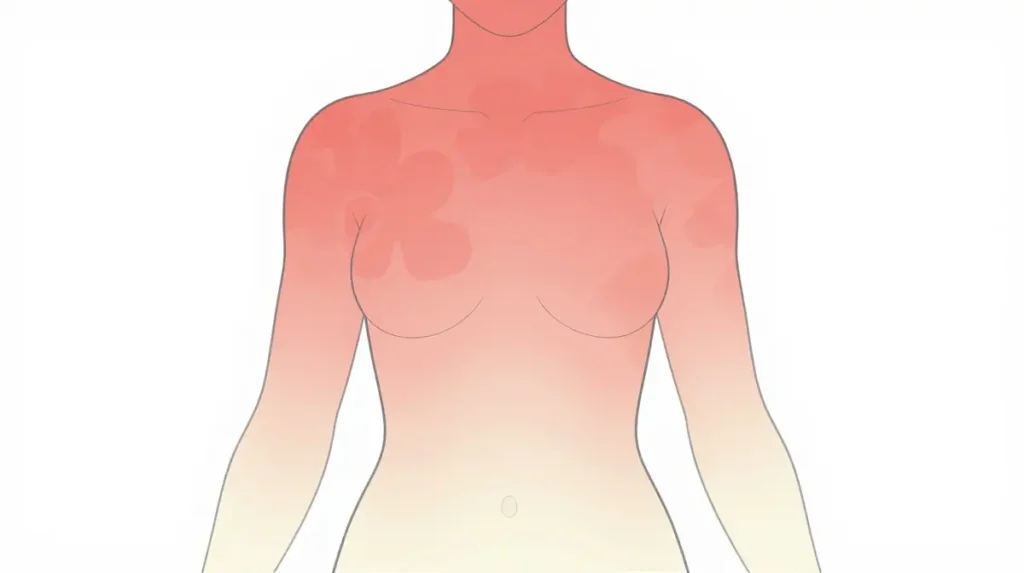
Pain is relative but placement-dependent patterns are real and documented. Pain level by tattoo placement follows a consistent anatomical logic — bony areas with thin skin coverage like the ribcage, spine, collarbone and ankle hurt significantly more than fleshy muscular zones like the outer thigh or upper arm. Knowing this before you commit saves a great deal of mid-session distress.
Tattooing over bone versus muscle produces distinctly different sensations. Bone proximity creates a vibrating, buzzing pressure that many clients describe as uniquely intense while muscular zones absorb needle impact with more cushioning. For first-time clients exploring dainty tattoo placement ideas, the outer forearm, upper shoulder and calf consistently receive the lowest pain ratings from American tattoo studios nationwide.
Fine Line Tattoo Fading by Placement and How to Choose for Maximum Longevity
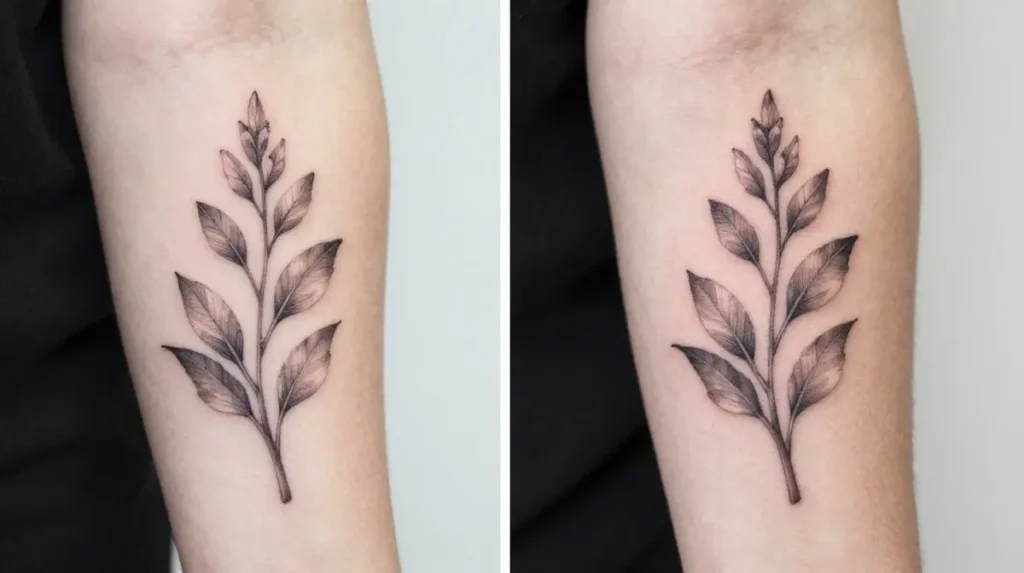
Longevity is the conversation most tattoo content conveniently avoids. Fine line tattoo visibility degrades faster in certain zones regardless of artist skill or aftercare discipline. Tattoo longevity by body location data points clearly to high-UV, high-friction areas — hands, feet and inner elbows — as the zones with the fastest fade rates for delicate linework.
Dainty tattoo aging over time is most graceful in protected, low-friction zones like the upper back, sternum, inner bicep and nape. These areas experience minimal sun exposure and mechanical stress. Placement impact on tattoo healing also influences long-term retention — zones that heal cleanly without scabbing or inflammation anchor ink more permanently. Ask your artist about their tattoo artist recommendations for placement before finalizing anything.
Behind-the-Knee and Elbow Crease Placements for the Truly Unconventional Soul

Some placements exist purely for those who refuse the predictable. The back of the knee and the inner elbow crease both sit in flexion zones — areas that fold and unfold thousands of times daily. This constant movement makes them genuinely challenging for delicate ink placement but the visual payoff for those willing to commit is unlike anything a conventional spot delivers.
Placement impact on tattoo healing is particularly demanding in these crease zones since the constant flexion disrupts the skin’s ability to form stable scar tissue around ink particles. Concealment options for small tattoos here are perfect — both locations disappear completely in everyday clothing. Artists experienced with petite tattoo areas in these zones recommend simplified bold-ish fine line designs over hyper-detailed micro work.
How Body Movement and Muscle Flex Affect the Shape of Small Tattoos Over Time
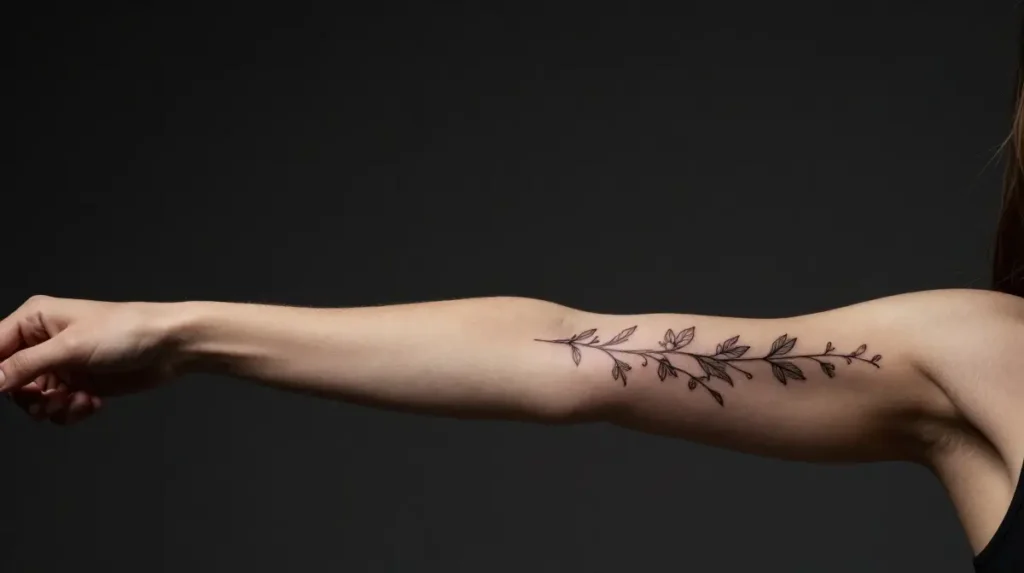
Your body is not a static sculpture. It contracts, expands, flexes and shifts with every breath and movement. Dainty body art placement must account for this kinetic reality because a design that looks balanced at rest may distort dramatically under muscular engagement. This is especially relevant for small feminine tattoo zones near joints, along the forearm and across the shoulder complex.
Placement guide for small tattoos near high-flex zones should prioritize designs with organic rather than geometric forms since organic shapes tolerate slight distortion more gracefully. A perfectly symmetrical geometric mandala on a bicep may read as irregular when the muscle flexes. Best body areas for tiny tattoos that remain dimensionally consistent include the upper back, sternum, nape and shin — zones with minimal muscular engagement during daily movement.
What Your Tattoo Artist Wishes You Knew About Placement Before Your Appointment

Artists carry placement wisdom that most clients never think to ask for. The most consistent tattoo artist recommendations for placement center on one principle — design and location must be chosen together not sequentially. Selecting a design and then hunting for a spot is backwards. The body’s natural geometry should inspire the design’s shape, scale and orientation from the very beginning.
How to choose tattoo placement correctly also involves thinking about your future self. Weight fluctuations, pregnancy, aging and lifestyle changes all affect different body zones differently. Placement impact on tattoo healing varies by skin type, age and aftercare consistency. Bring reference images but stay open to your artist’s repositioning suggestions. They’re not being difficult. They’re protecting the longevity of work they’ll be proud to have created.
Frequently Asked Questions
What is the best placement for a dainty tattoo that stays sharp over time
The upper back, sternum, nape and inner bicep consistently deliver the best long-term sharpness for delicate work. These zones experience minimal UV exposure and low mechanical friction which are the two primary forces that degrade fine line tattoo visibility over time.
Which body areas are least painful for small delicate tattoos
The outer forearm, upper outer arm, calf and upper shoulder are widely considered the least painful zones. These areas sit over substantial muscle mass which cushions the needle’s impact compared to bony areas like the ribcage or spine.
Can fine line tattoos be placed anywhere on the body
Technically yes but practically not all zones deliver equal results. Fine line tattoo spots require smooth stable skin for precise needle deposit. High-friction areas like palms, inner fingers and foot soles degrade fine detail rapidly making them poor long-term choices for intricate delicate work.
How does tattoo placement affect how professional or visible the ink looks
Placement entirely controls professional visibility. Subtle tattoo placement for professionals in zones covered by standard business attire — upper back, ribcage, inner arm — allows complete concealment during work hours. Wrist, forearm and neck placements remain visible in most professional environments regardless of clothing choice.
Do small tattoos on fingers and hands fade faster than other placements
Yes significantly. Tattoo fading in high-friction areas is most aggressive on hands and fingers due to constant washing, UV exposure and mechanical contact. Most dainty finger tattoo ideas require touch-up work within one to two years to maintain visual crispness.
Conclusion
The Best Dainty Tattoo Is the One Placed Exactly Where It Was Always Meant to Live
Dainty tattoo placement ideas are never just logistical decisions. They’re acts of self-knowledge. The right placement turns a simple design into a permanent piece of personal architecture — something that belongs to your body’s geography as naturally as a birthmark or a curve. Every zone covered in this guide offers a genuinely distinct visual and emotional experience. The collarbone elevates. The spine elongates. The nape whispers. The ribcage protects. Your body already knows where the ink belongs. The task is simply learning to listen to it and then finding an artist skilled enough to honor that instinct with precision, care and craft.
1 Comment