
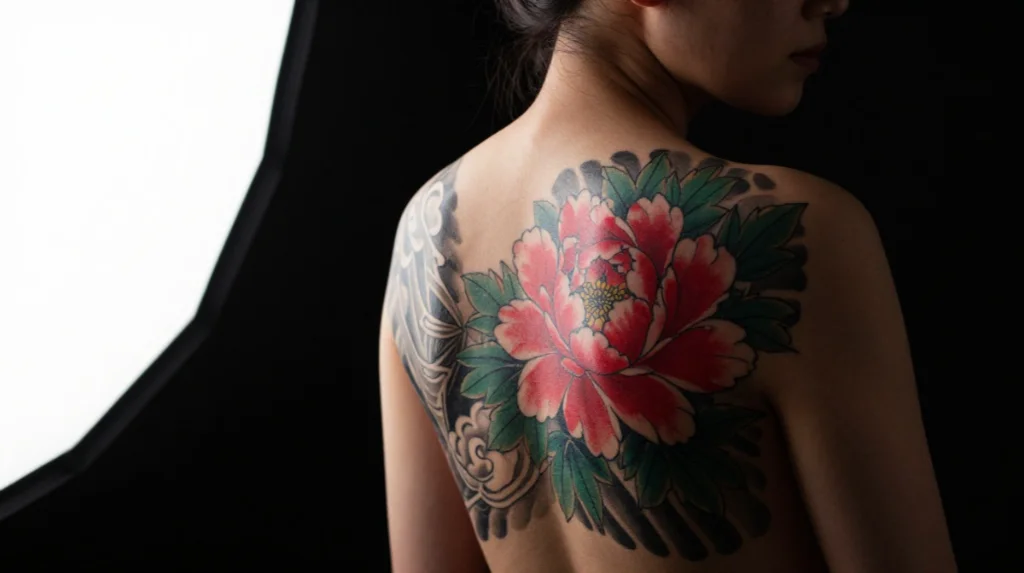
Few tattoo subjects carry the combined weight of artistic complexity, cultural depth, and raw visual power that the Japanese peony commands. This isn’t a trend. It’s a tradition that stretches back centuries through the irezumi lineage — a visual language spoken in crimson ink, bold black outlines, and the particular kind of beauty that only comes from understanding what a flower actually means. If you’re considering a peony tattoo in the Japanese tradition, you’re not just choosing a design. You’re stepping into a conversation that warriors, artists, and outlaws have been having for over three hundred years.
The Flower That Warriors Wore: Peony Symbolism in Japanese Culture
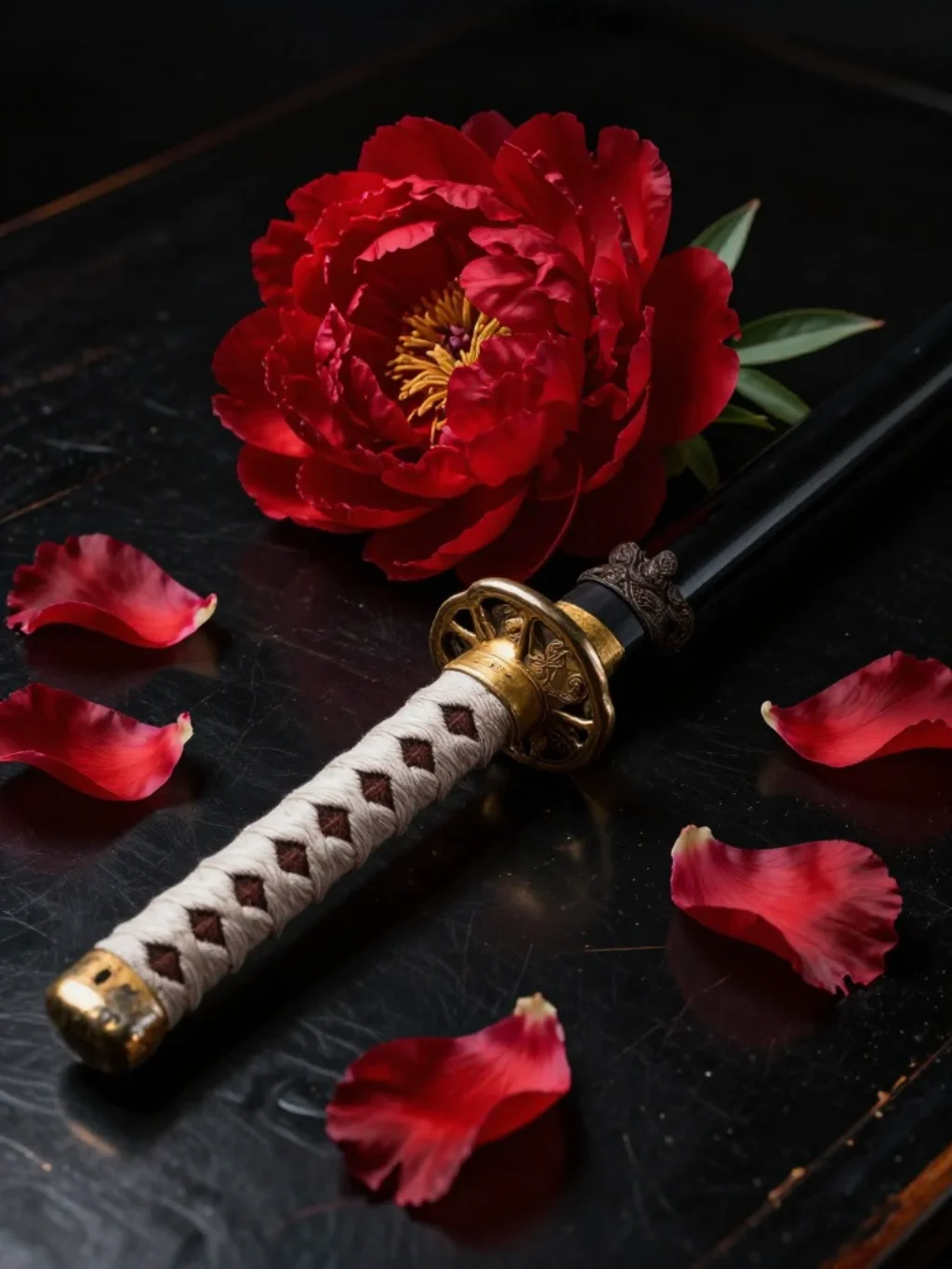
The peony entered Japanese visual culture from China during the Nara period — roughly 710 to 794 AD — carried along the Silk Road as both a botanical import and a symbolic one. In Japanese, the peony is called botan and it carries the title “king of flowers” — hana no o — a designation that reflects its position at the apex of the floral hierarchy. Peony tattoo meaning in the Japanese context encompasses honor, bravery, good fortune, and a specifically Japanese concept of beauty that includes the acceptance of impermanence. The samurai class adopted the peony as a symbol of their particular aesthetic — fierce, luxuriant, and aware of its own transience.
What does a peony tattoo mean in japanese culture goes deeper than decorative choice. The botan represented the willingness to live fully and beautifully while accepting that nothing lasts — a philosophy deeply embedded in the bushido code that governed samurai conduct. It stood alongside the cherry blossom as a meditation on beauty and mortality but with an added dimension of material abundance and aristocratic power. Traditional eastern floral body art bearing the peony communicated both spiritual attainment and worldly confidence — a combination that made it irresistible to the ruling classes who first codified Japanese aesthetic traditions.
Japanese Peony Tattoos and the Irezumi Tradition That Made Them Iconic
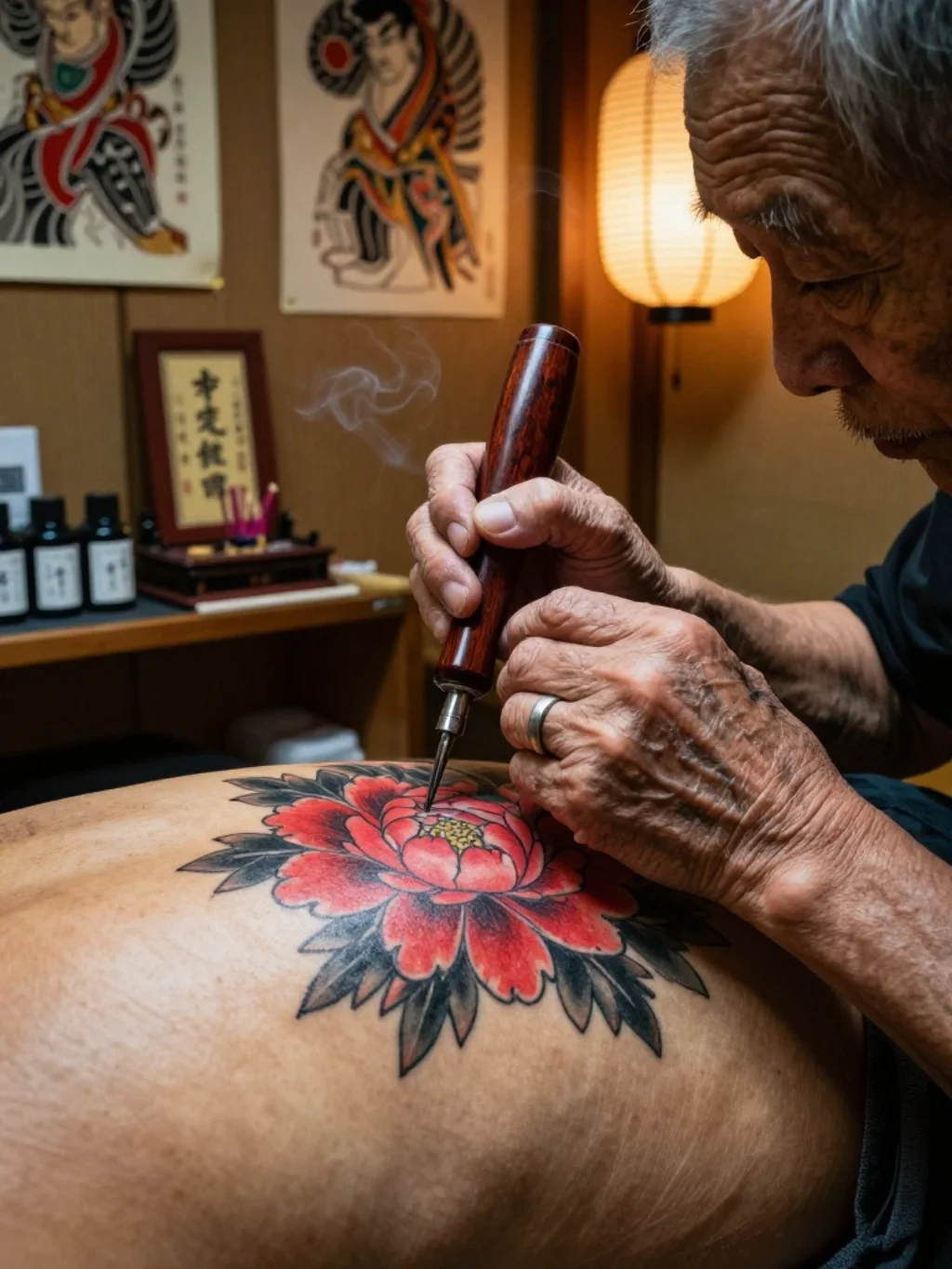
Traditional irezumi peony tattoo history begins in the Edo period (1603–1868) when tattooing shifted from a punitive practice — criminals were marked with tattoos as brand-style punishment — to a sophisticated art form embraced by craftsmen, firefighters, and eventually the yakuza. The irezumi peony design became one of the foundational motifs of this emerging tradition precisely because it offered artists the opportunity to demonstrate their full technical range: bold outline work, complex shading, layered color, and the integration of a single motif into larger narrative compositions. Irezumi Traditions exhibition collections housed in major Japanese museums trace the peony’s centrality to this artistic evolution across hundreds of documented examples.
Traditional irezumi peony tattoo history connects directly to the Ukiyo-e woodblock print influence — the floating world art movement that produced masters like Hokusai floral art influence and Hiroshige nature prints tattoo inspiration. These printmakers depicted peonies with an explosive visual energy that tattoo artists translated directly to skin. The peony in irezumi isn’t a botanical illustration — it’s a dramatic interpretation of the flower at its most emotionally charged moment, petals fully open and trembling at the edge of falling. Tebori japanese tattooing technique — the hand-poked method using a wooden or metal handle with needles attached — was the original technology through which these designs were realized, producing a softer ink distribution that differs subtly but perceptibly from machine tattooing.
Crimson Petals and Black Ink: The Color Language of the Japanese Peony
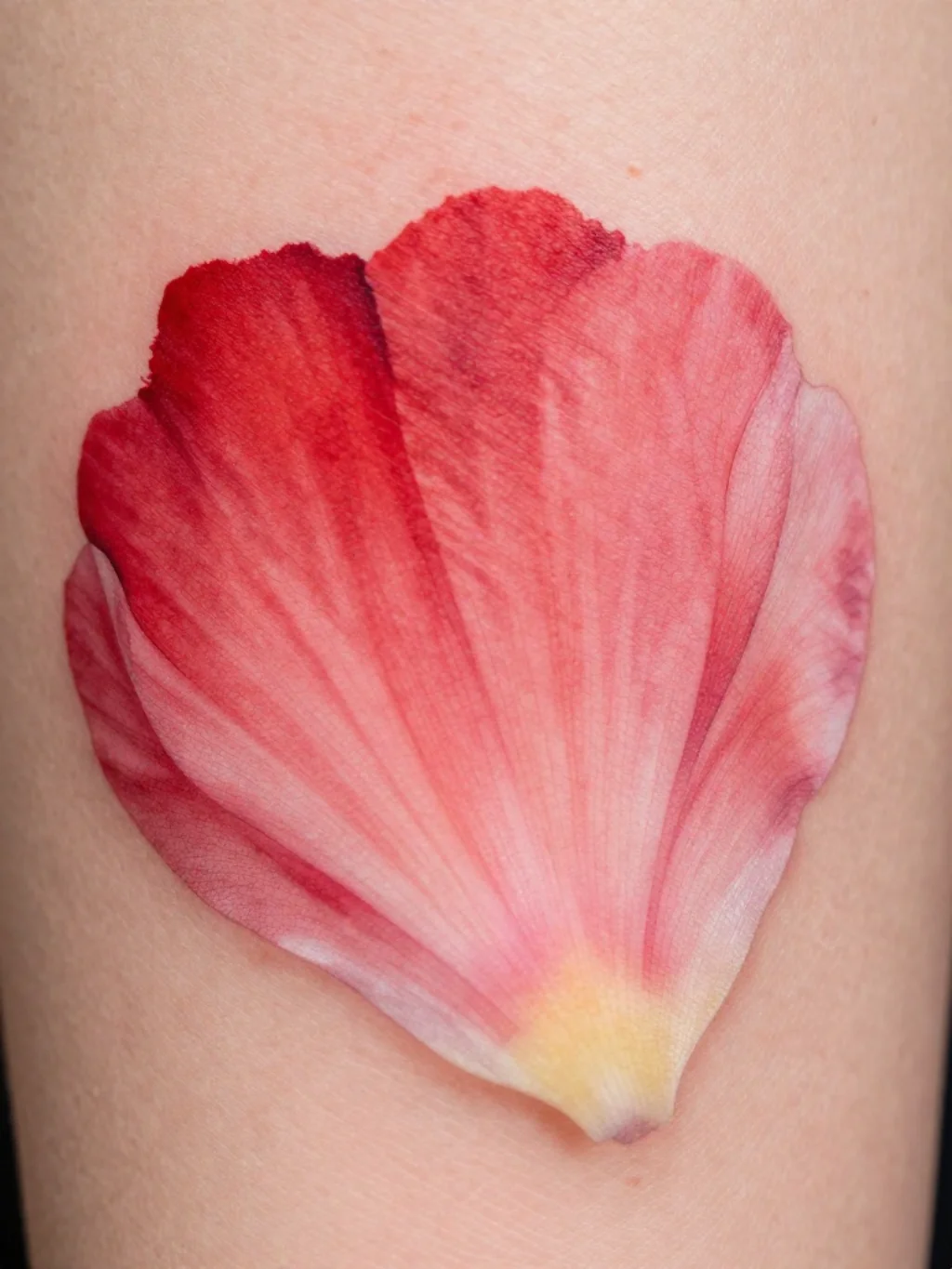
Japanese peony tattoo color combinations built on the traditional palette center on red as the dominant emotional register — specifically a deep crimson rather than a bright primary red. This particular red, called beni in Japanese color terminology, carries associations with vitality, passion, and protective power. It’s the red of shrine gates, of celebratory kimono, of the most auspicious objects in Japanese material culture. Against the heavy black outlines that define the irezumi aesthetic, this crimson creates the high-contrast visual drama that makes japanese peony tattoos instantly recognizable across cultures. Colored peony tattoo work in the traditional Japanese mode uses this red as the foundation and builds layered complexity through secondary colors — deep greens for leaves, warm golds for stamens, and purple-pink gradients in petal shading.
Peony tattoo color saturation in Japanese tattooing reaches levels that most Western tattoo traditions don’t attempt. The red areas in a fully realized traditional Japanese peony aren’t just colored — they’re built in multiple passes over multiple sessions until the pigment achieves an almost lacquer-like depth and richness. Peony tattoo ink brand recommendation among professional Japanese tattoo artists tends toward Intenze, Eternal, and Kuro Sumi for their saturation capacity and long-term stability. Japanese peony tattoo red pigment fade over time is a genuine concern — red pigments are historically the most prone to ultraviolet degradation, which is why experienced Japanese tattoo artists often advise clients to protect red work with SPF 50+ whenever the tattoo is sun-exposed. A healed Japanese peony tattoo properly cared for should retain its chromatic intensity for fifteen to twenty years before requiring a refresh.
Placement Decoded: Where This Bloom Lives Best on the Human Body
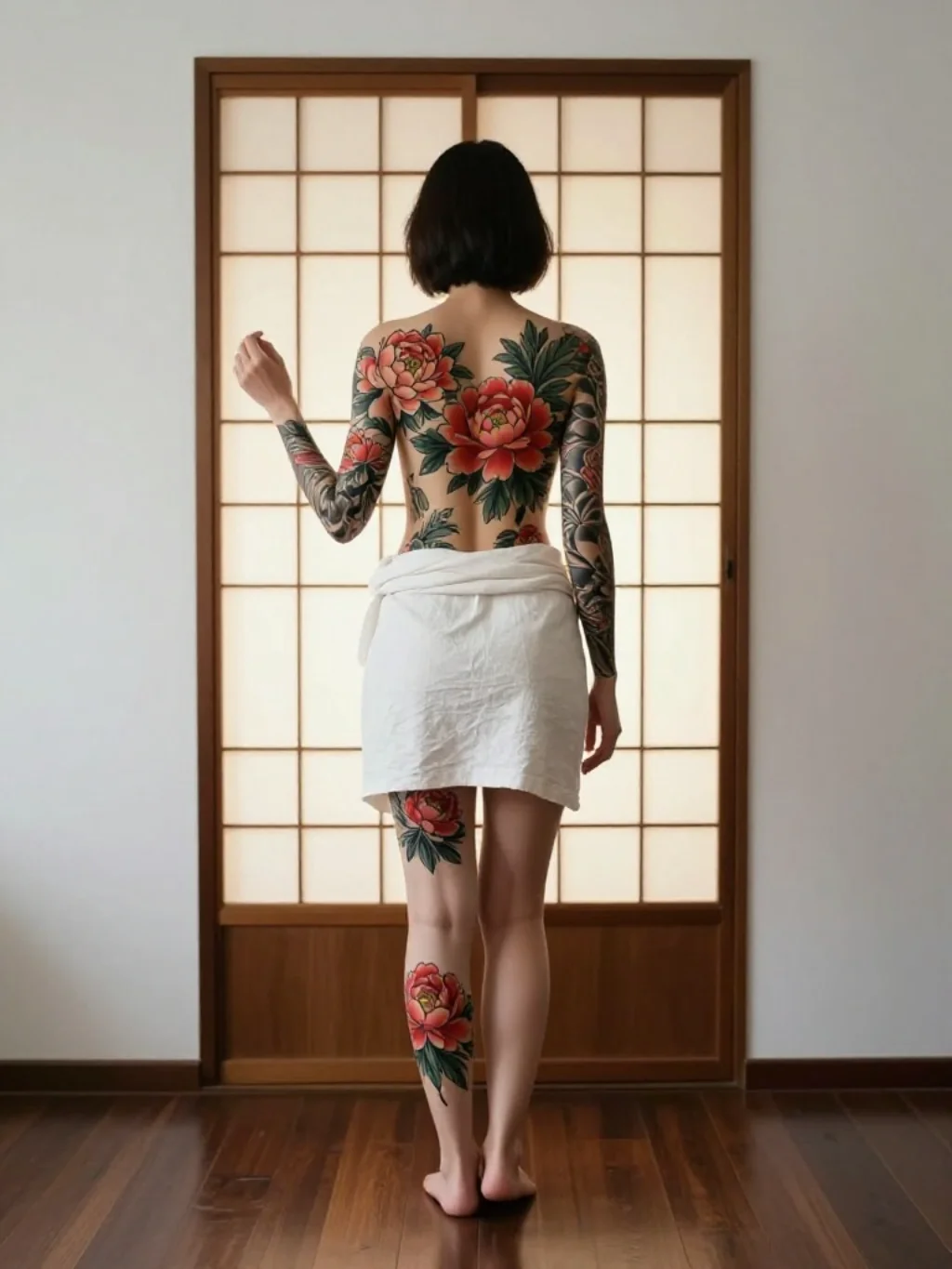
Best placement for japanese peony tattoo selection requires understanding both the flower’s visual architecture and the body’s own topographic logic. The peony is a large, complex design — its layered petals, leaves, and background elements demand significant real estate to breathe and read clearly. Japanese peony back tattoo placement is the gold standard for large-scale single-piece compositions precisely because the back offers the largest continuous canvas the human body provides. A full back piece centered on a peony motif, surrounded by wind bars, clouds, and secondary botanical elements, is one of Japanese tattooing’s most classically ambitious undertakings.
Japanese peony tattoo placement for women tends toward the upper back, shoulder, and thigh as the three most popular choices. Japanese peony shoulder tattoo compositions typically originate at the shoulder blade and extend either down the arm into a sleeve or across the upper back to meet additional design elements. Japanese peony forearm tattoo placement works exceptionally well for single-bloom studies — one large, fully detailed peony at the proper scale for a forearm canvas reads with the complete visual impact of a much larger piece. Japanese peony chest tattoo placement in the traditional full-suit style sits as one of the most powerful single-placement choices — the chest’s broad flat surface allows the peony to expand to its natural scale with nothing constraining its outermost petals.
| Placement | Best For | Recommended Size | Session Count |
|---|---|---|---|
| Full back | Large narrative composition | 40cm+ | 8–15 sessions |
| Shoulder | Sleeve integration | 20–30cm | 4–7 sessions |
| Forearm | Single bloom study | 15–20cm | 2–4 sessions |
| Chest | Traditional suit element | 25–35cm | 5–8 sessions |
| Thigh | Standalone large piece | 25–40cm | 4–8 sessions |
| Calf | Vertical composition | 15–25cm | 3–5 sessions |
The Dragon and the Peony: When Power Meets Delicate Beauty
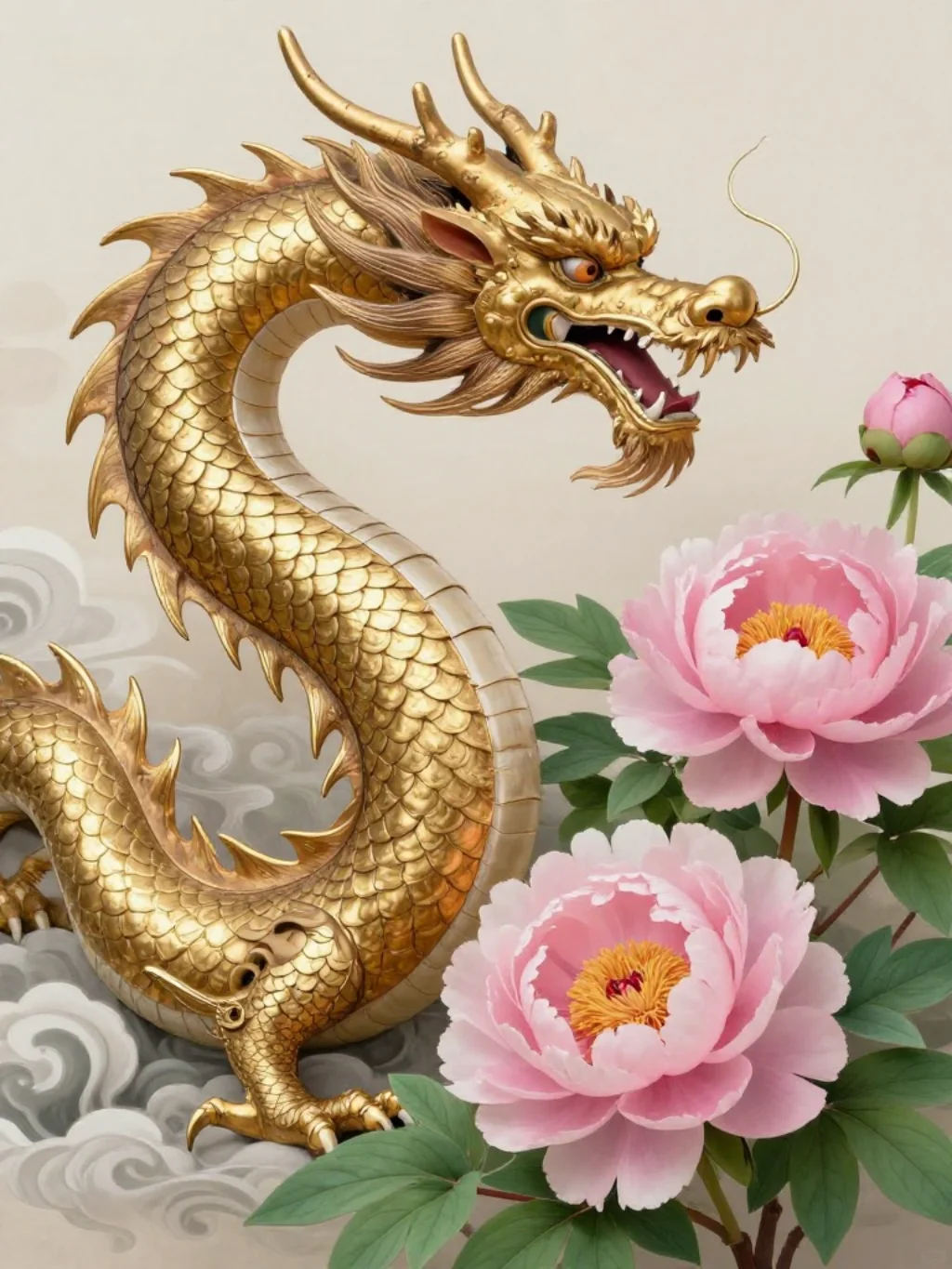
Japanese peony and dragon tattoo meaning operates through deliberate visual tension. The dragon in Japanese iconography — ryū — represents elemental power, wisdom, and the forces of nature in their most amplified form. The peony represents beauty, prosperity, and the particular grace of things that bloom fully and completely before they fall. Placing these two motifs together creates a composition about the relationship between raw power and cultivated beauty — not opposing forces but complementary ones, each making the other more visible by contrast. Peony and dragon tattoo compositions in the irezumi tradition typically show the dragon emerging from or coiling around the peony, the flower’s crimson petals framing the dragon’s scales in a color echo that unifies the two elements visually.
Peony and dragon tattoo placements tend toward the back and full sleeve because both motifs require significant spatial territory to develop their full visual complexity. A dragon without enough room reads as cramped and diminished. A peony at the wrong scale loses its layered petal detail. When both motifs are given proper spatial allocation — the dragon’s body spiraling through the full sleeve length while peony clusters anchor the compositional punctuation points — the result is one of Japanese tattooing’s most commanding visual achievements. Horiyoshi III japanese tattoo master has produced some of the most cited dragon-and-peony compositions in the contemporary irezumi canon — his work demonstrating how these two subjects achieve their maximum individual impact precisely by sharing compositional space.
Bokashi Shading and the Technical Mastery Behind Every Petal Layer
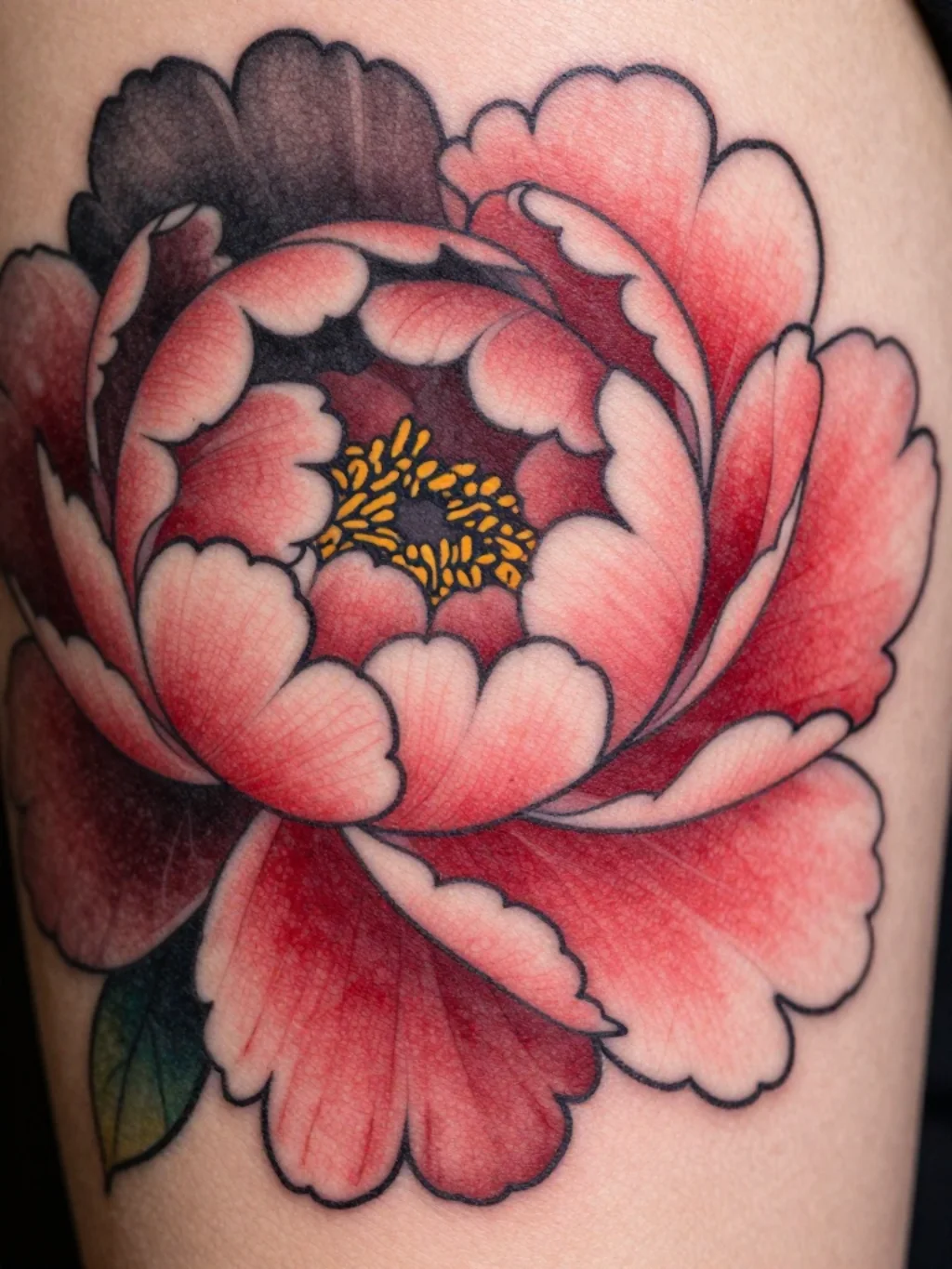
Bokashi shading japanese peony is the technical heart of what makes a traditionally rendered Japanese tattoo flower so distinct from any other tattoo style’s approach to floral subjects. Bokashi — from the Japanese verb bokasu, meaning to blur or diffuse — describes a shading technique where pigment transitions from full saturation to transparent skin tone without a visible boundary. In peony work, this technique creates the sense that each petal exists in three-dimensional space — the shadow well at the petal’s base fully saturated, the outer edge catching light and dissolving into bare skin. Peony tattoo shading technique of this kind requires both the right needle configuration and the right hand pressure applied consistently across dozens of overlapping passes.
Peony petals layering technique tattoo demands that the artist work in a specific sequence — innermost petals first, working outward — so that each successive petal layer can be shaded against the completed layer below it. This inside-out construction mirrors the peony’s actual botanical architecture and produces the convincing three-dimensionality that distinguishes master work from competent work. Japanese peony stippling technique creates a variation on this approach using individual dot placements to build tonal value — a slower, more laborious method that produces a texture quality unlike any brush-stroke shading equivalent. Horitomo irezumi artist demonstrates this technical range across his documented portfolio — the distinction between his innermost petal shadow work and his outermost petal highlights spans a tonal range that few tattoo artists achieve in any subject matter.
Japanese Peony Tattoos for Women: Bold Femininity Rooted in Ancient Art
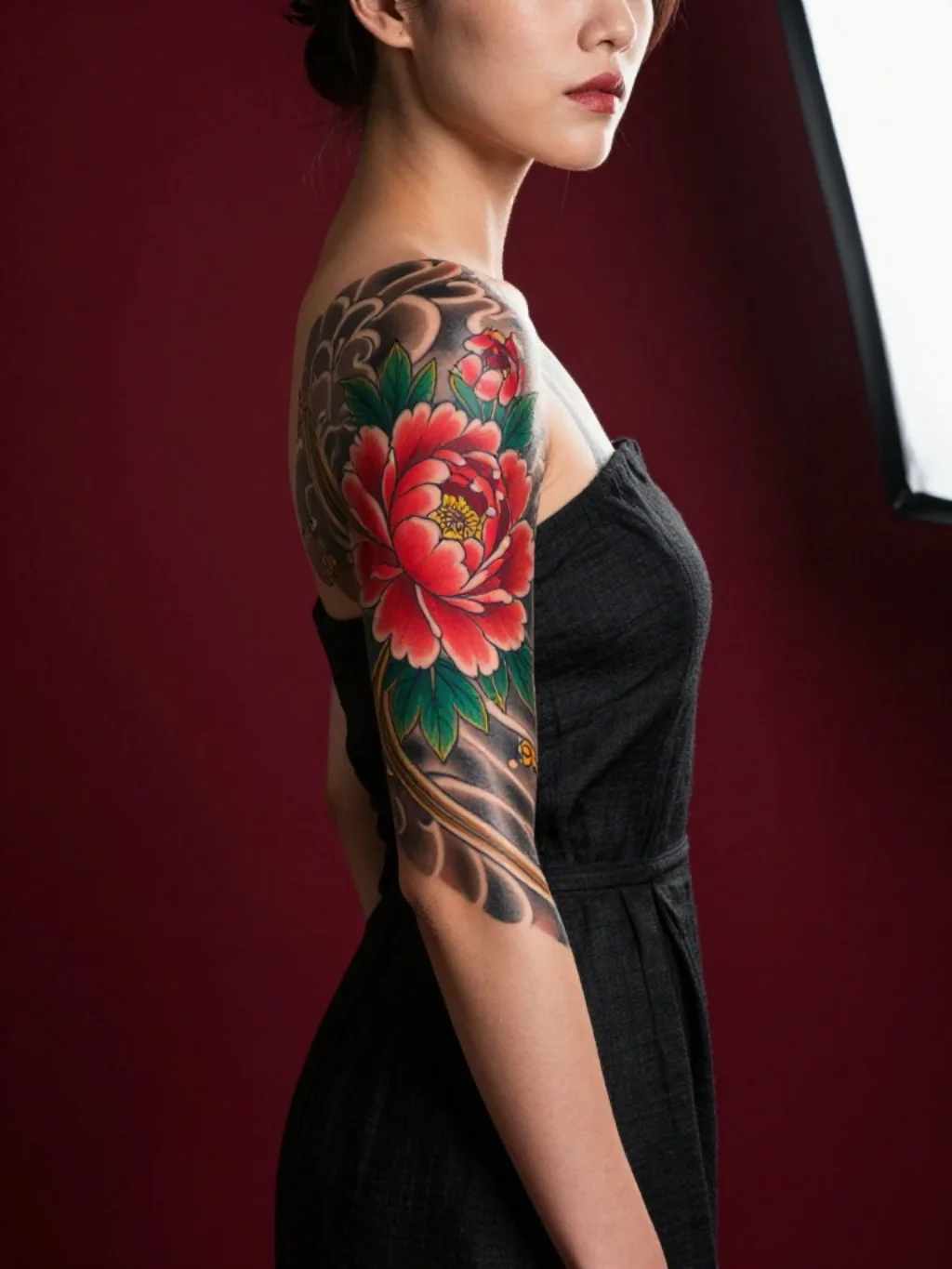
Japanese peony tattoo design ideas for women draw on a specific current within the irezumi tradition that has always carried explicitly feminine power. The botan was associated in Japanese literary and artistic culture with the empress-class of female power — not delicate or deferential femininity but the commanding, abundant kind that radiates from a fully opened bloom at peak vitality. Peony tattoo for women in the Japanese mode communicates this particular quality of feminine authority — decorative on the surface, formidably grounded underneath. It’s the flower that doesn’t apologize for taking up space.
you may also like this:22 Angel Wings Tattoo Ideas for Beautiful Symbolic Ink
Japanese peony tattoo placement for women choices in contemporary American studios most frequently center on the thigh, upper arm, and back — placements that allow the design to be revealed or concealed according to the wearer’s preference. Japanese peony tattoo design ideas for women at their most sophisticated integrate the bloom with secondary feminine motifs from the Japanese iconographic tradition — butterflies (chō), cranes (tsuru), and fans (sensu) — creating compositions that read as complete visual statements rather than single-element designs. Feminine power through floral ink expressed through the traditional Japanese peony doesn’t borrow its authority from the flower’s prettiness. It borrows it from three hundred years of artistic tradition that understood the peony as the visual embodiment of power that has chosen beauty as its expression.
Sleeves Backs and Full Body Suits: The Scale That Changes Everything

Traditional japanese peony tattoo sleeve ideas transform the arm into a unified narrative canvas where the peony functions as an anchor motif rather than a standalone design. Japanese tattoo sleeve peony compositions in the traditional irezumi format typically organize multiple peonies at different bloom stages — bud, half-open, fully opened — alongside supporting botanical elements like leaves and stems, all embedded in a background of clouds, wind bars, or water. Large scale japanese peony work at sleeve scale requires a compositional plan that accounts for the arm’s cylindrical form — designs that read well on a flat reference image sometimes lose coherence when wrapped around a three-dimensional limb.
Large japanese peony tattoo ideas at full back scale represent the apex of the form. A Japanese peony back tattoo at this scale might spend three or four sessions just establishing the outline and composition before color work begins. Japanese peony back tattoo compositions in the traditional style typically place the largest, most fully opened bloom at the upper center of the back — the visual focal point — and build outward and downward with progressively smaller elements toward the lower back and flanks. The irezumi background filler japanese peony treatment — the clouds, water, and wind that fill the negative space around the primary motif — takes as much technical skill and session time as the peony itself. Great background work elevates a good foreground motif. Mediocre background work diminishes even the finest peony rendering.
Koi Fish and Peony: The Pairing That Defines Japanese Tattoo Culture
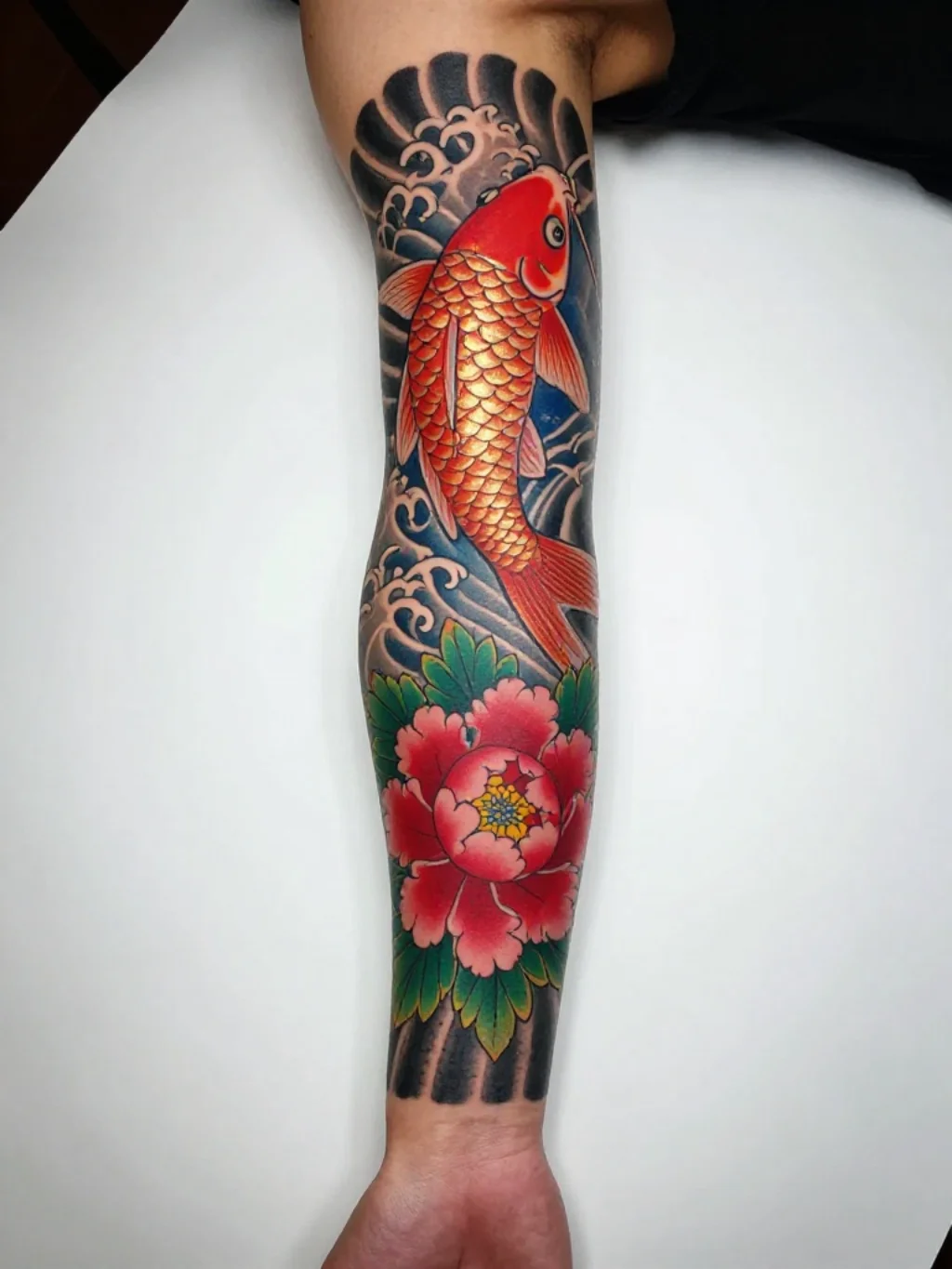
Peony tattoo japanese style with koi fish is one of the most harmonically complete pairings in the entire irezumi motif library. The koi — nishikigoi in Japanese, literally “brocaded carp” — shares the peony’s layered surface complexity, its association with perseverance and transformation, and its comfort in compositions built on water movement. Peony and koi tattoo compositions naturally flow along the body’s vertical axis — the koi ascending through water above and the peony anchoring the composition below, or the two elements intertwined in a spiraling compositional relationship that takes full advantage of sleeve or leg placement.
Peony and wave tattoo composition extends the koi-and-peony pairing into its full environmental context — the koi swimming through water rendered in the specific Japanese wave tradition, the peony emerging above the waterline as if growing from the water itself, the whole composition unified by the visual language of water as both subject and background. Peony and maple leaf tattoo japanese brings a seasonal dimension to the pairing — the autumn maple leaf (momiji) beside the botan suggests the transition from the peony’s summer abundance into the melancholy beauty of autumn’s decline. Both pairings draw on the Japanese concept of mono no aware — the bittersweet awareness of beauty’s impermanence — and express it through the specific visual vocabulary that irezumi developed over centuries.
Choosing Your Artist: The Non Negotiable Skills a Peony Tattoo Demands
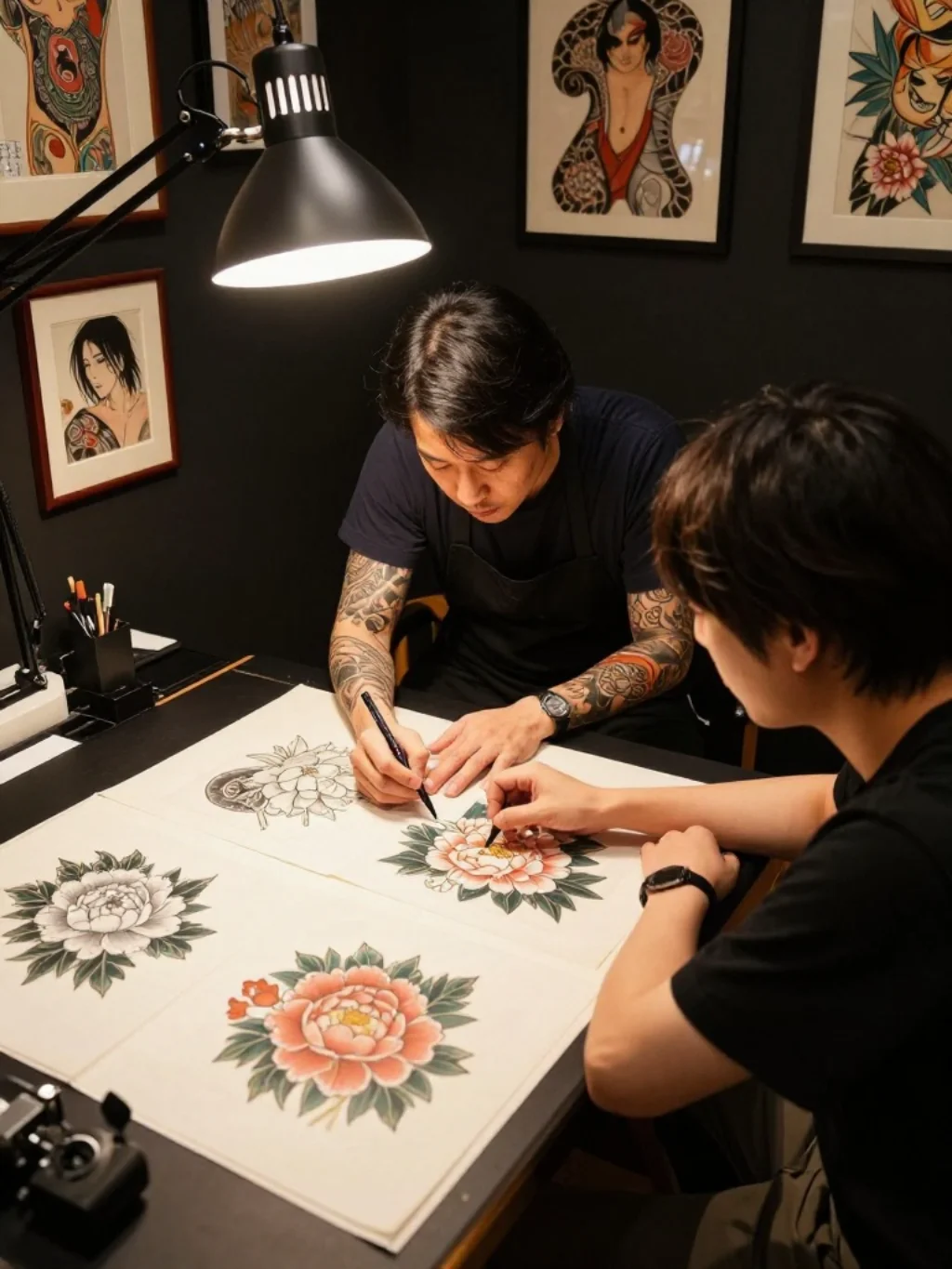
Japanese peony tattoo artists near me searches will surface a range of skill levels so wide that the results can be genuinely misleading. A Japanese peony tattoo executed with inadequate technical preparation — specifically a misunderstanding of bokashi shading or an inability to maintain consistent line weight through complex curved outlines — will show its deficiencies clearly at the healed six-month mark even if the fresh result looked acceptable. How to choose a japanese peony tattoo design process must begin with choosing the right artist and the right artist must be selected through a rigorous review of specifically relevant healed work.
Look for portfolios on Tattoodo japanese peony gallery, Instagram japanese tattoo community, and Reddit r/tattoos japanese peony specifically filtering for healed pieces rather than fresh work. Three Tides Tattoo Osaka and Invisible NYC japanese tattoo studio represent studio standards worth using as benchmarks when evaluating potential artists outside these specific studios. Booksy tattoo appointment booking platforms let you compare artist portfolios and pricing before reaching out — useful for initial research but always followed by direct consultation before committing. The consultation itself reveals as much as the portfolio — an artist who asks questions about how you plan to wear the piece and how it integrates with future work demonstrates the compositional thinking that separates tattoo artists from tattoo technicians.
Black and Grey Versus Full Color: A Decision That Lasts a Lifetime
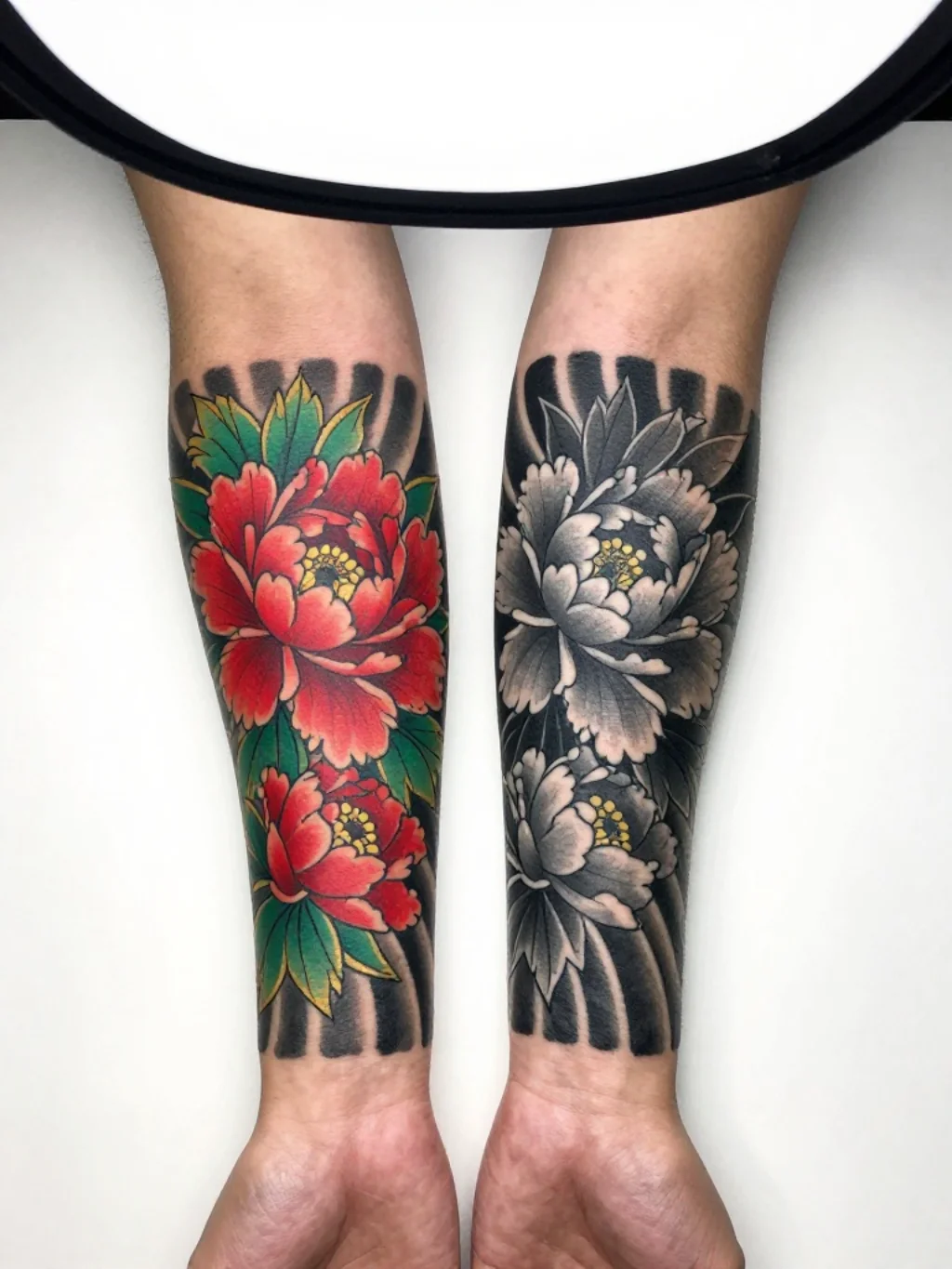
Japanese peony tattoo black and grey versus color is one of the most consequential decisions you’ll make in the planning process and it should be made with full understanding of what each approach delivers over time. Black and grey peony tattoo in the Japanese style uses the full range of grey tones — from near-black to the palest wash that barely reads against skin — to model the peony’s three-dimensional form without the chromatic saturation of color work. The result is a composition of extraordinary tonal sophistication that often reads as more classical and architecturally refined than its colored equivalent.
Colored peony tattoo in the traditional Japanese mode delivers an emotional impact that black and grey simply can’t replicate — the crimson blooms carry a visceral vitality that no grey-scale equivalent approaches. Japanese peony tattoo color combinations beyond the classic red include pink-to-white gradients for a softer reading, deep purple for a more mysterious register, and white peony with yellow-gold center detail for a composition that reads almost monochromatic until you study it closely. Peony tattoo skin tone compatibility is a genuine technical variable — certain reds and pinks read very differently against light, medium, and dark skin tones, and an experienced artist will adjust pigment selection accordingly. Healed japanese peony tattoo result at five years tells the full truth about the color decision — red holds relatively well with proper UV protection, while pinks and purples fade most aggressively without consistent aftercare.
Wind Bars Waves and Clouds: The Background Elements That Complete the Story
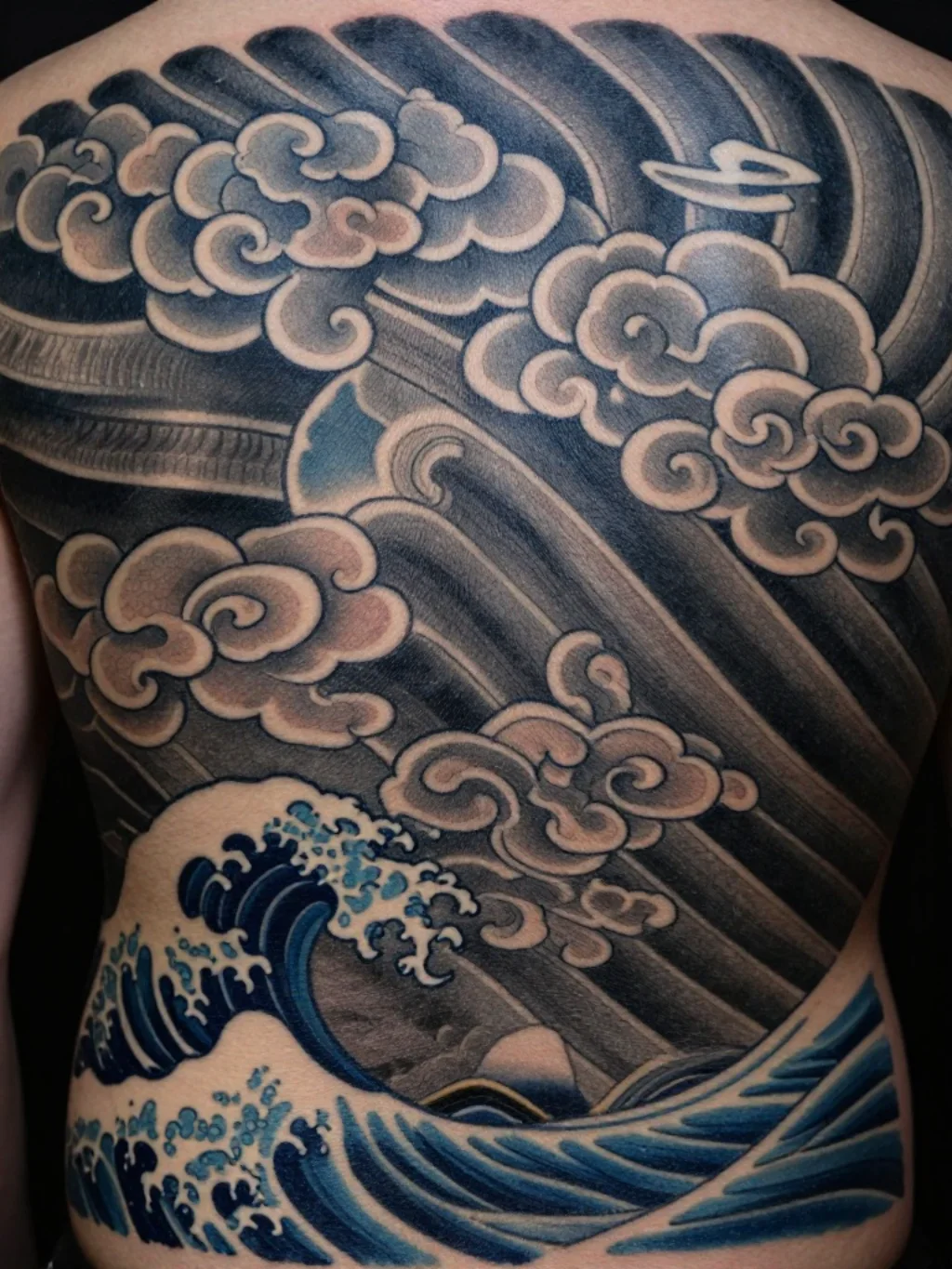
Japanese peony tattoo with waves and wind background elements aren’t decorative filler — they’re structural and symbolic participants in the tattoo’s total narrative. Wind bars — fūjin-bō in the traditional iconographic vocabulary — represent the movement of invisible forces through the world, the sense that the peony is not static but exists within a dynamic environment of elemental energy. They also solve a genuine compositional problem: they fill the negative space between primary motifs in a way that guides the eye rather than confusing it. Japanese peony tattoo combining nature elements into a unified background is one of the most technically demanding aspects of large-scale Japanese tattoo composition.
Irezumi background filler japanese peony traditions include clouds (kumo), water (mizu), and the specific stylized rocks (iwa) that appear throughout ukiyo-e compositional vocabulary. Each filler type creates a different environmental register — clouds suggest the celestial and the transient, water suggests depth and transformation, rocks suggest permanence and endurance. Japanese peony tattoo with waves and wind composition produces a sense of the peony existing in genuine climatic reality — not a studio flower but a bloom at the mercy of forces larger than itself. This vulnerability is integral to the Japanese aesthetic philosophy and makes the background not a supporting element but an equal compositional partner to the peony itself.
Hannya Mask and Peony: The Dark Contrast That Commands Every Room
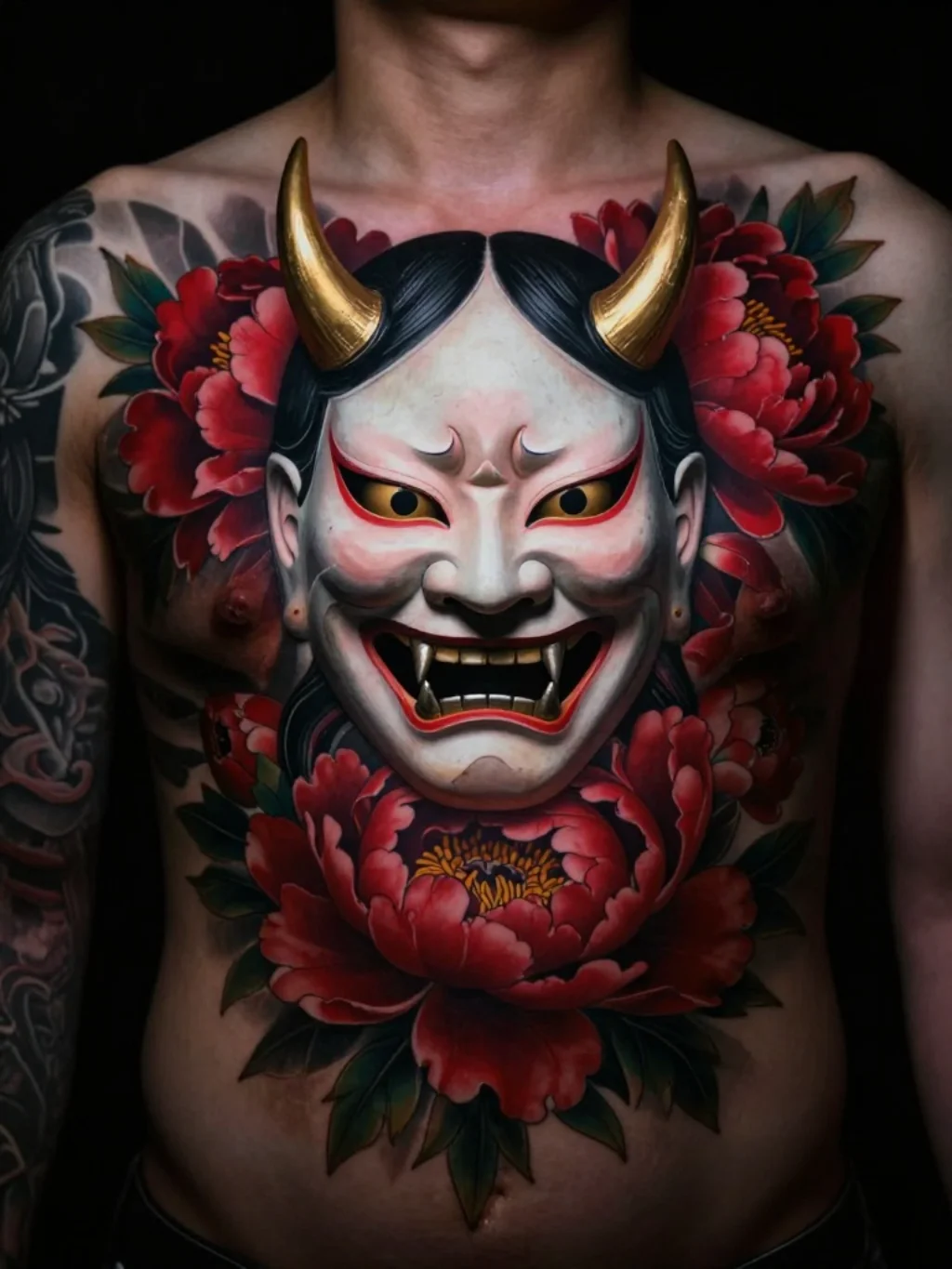
Peony and hannya mask tattoo pairing produces the most psychologically complex composition in the traditional Japanese tattoo vocabulary. The hannya mask — the demon face of a woman consumed by jealousy and obsession in Noh theater tradition — represents the destructive extreme of passionate love. The peony represents love’s beautiful, abundant face. Together they describe love’s full spectrum — the bloom and the damnation, the opening and the consuming. Dark feminine tattoo aesthetic in the Japanese mode rarely achieves the philosophical completeness of this particular pairing. It’s not simply a dark design — it’s a visual argument about the dual nature of desire.
Peony and hannya mask tattoo compositions in the irezumi tradition typically position the hannya above or behind the peony — the mask emerging from the flower or presiding over it from the compositional high point. Japanese American tattoo history shows this pairing as one of the most consistently popular requests in American Japanese tattoo studios since the 1970s — a testament to how readily its symbolic content translates across cultural contexts. The contrast between the hannya’s angular, distorted features and the peony’s rounded, layered softness creates the visual tension that drives the composition’s power. An artist who understands this tension will use it intentionally — an artist who doesn’t will produce a hannya and a peony that merely coexist rather than conversing.
The Tiger and the Bloom: Raw Strength Softened by Floral Grace
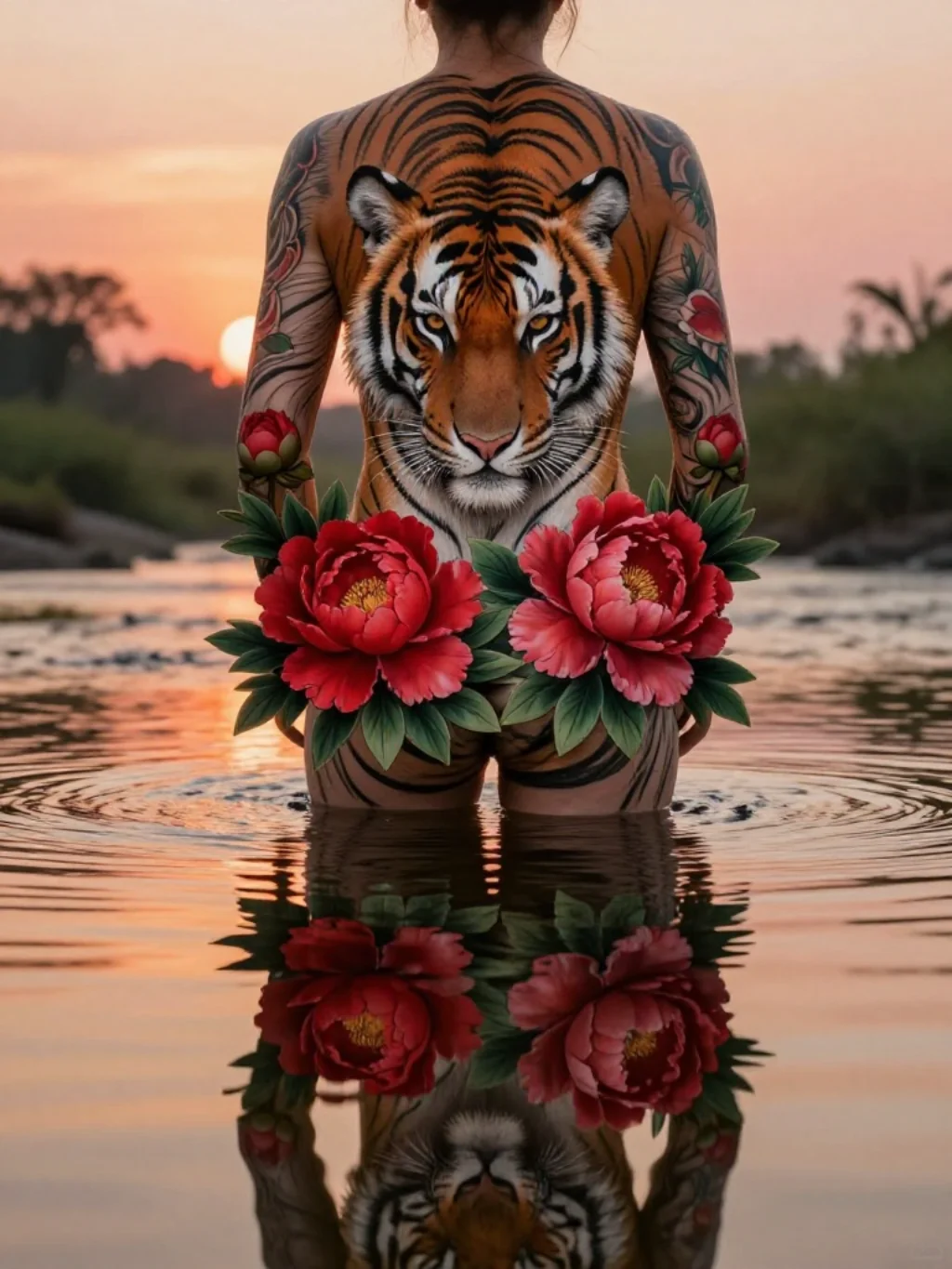
Peony and tiger tattoo japanese compositions are among the oldest recorded pairings in the irezumi motif library. The tiger — tora — entered Japanese visual culture from China and India, where it held associations with bravery, military strength, and protection against evil spirits. In Japanese tattooing, the tiger became one of the four sacred creatures (shijin) and a symbol of the warrior spirit at its most primal. Japanese botanical tattoo tradition placed the tiger within natural environments — bamboo groves, mountain settings, and flowering gardens — and the pairing with peony emerged naturally from this environmental contextualization.
Peony and tiger tattoo japanese compositions use the same visual logic as the dragon-and-peony pairing: the animal’s raw power balanced and humanized by the flower’s cultivated beauty. The tiger’s striped body creates a natural geometric counterpoint to the peony’s rounded, layered form. Its orange-black-white coloration echoes and contrasts the peony’s crimson-green-gold palette in a way that feels visually inevitable once you see it done well. Balance and harmony in tattoo design in the Japanese tradition doesn’t mean symmetry — it means the compositional equilibrium of different energies resolving into a unified whole. Tiger and peony achieve this equilibrium through contrast rather than similarity.
Japanese Peony Tattoos for Men: Reclaiming Floral Art as Masculine Power
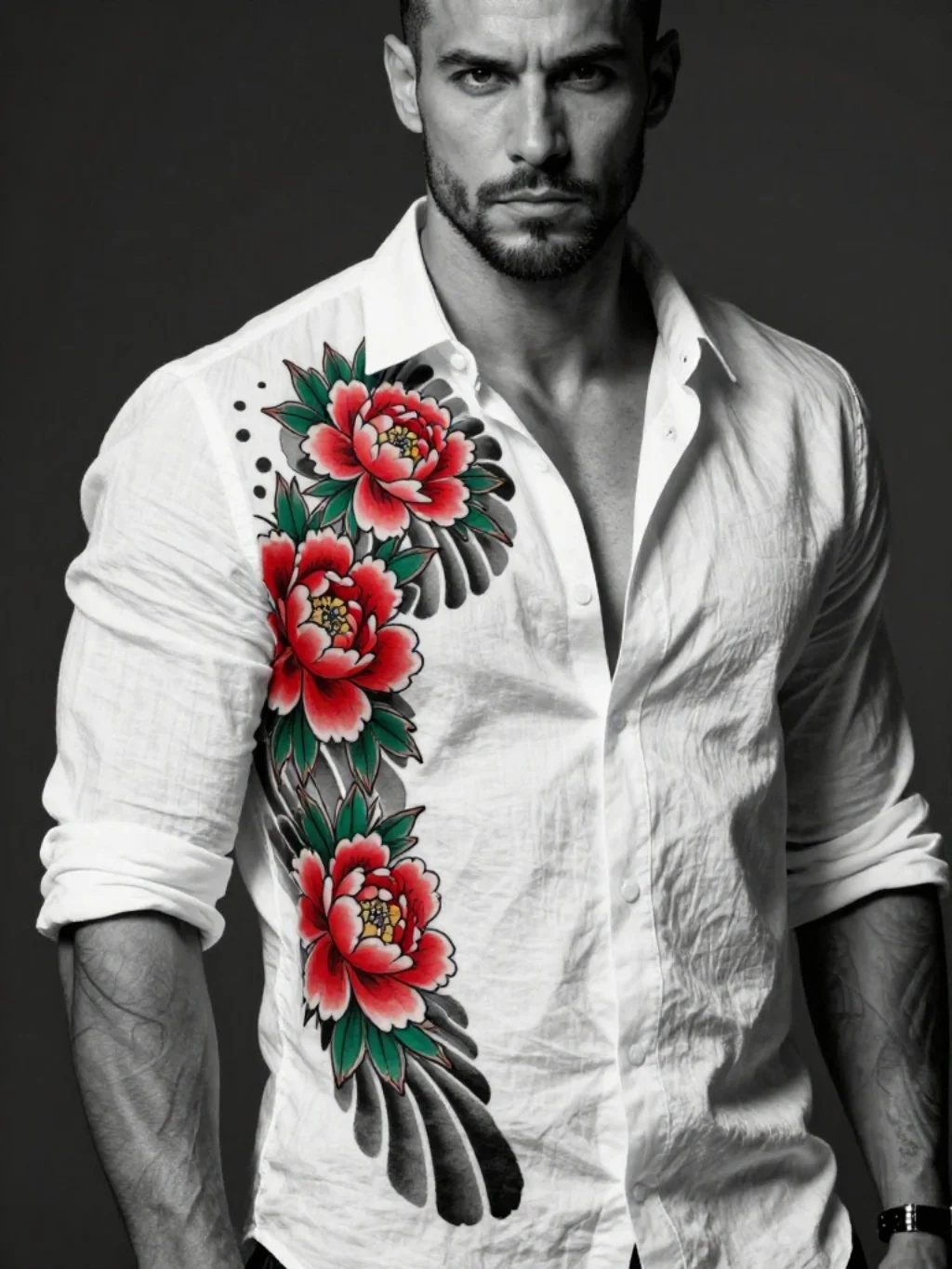
Japanese peony forearm tattoo ideas for men push against a Western cultural assumption that floral tattoos occupy feminine space — an assumption that Japanese tattoo tradition simply doesn’t recognize. The botan was worn by samurai, by yakuza, by the craftsmen and firefighters who developed the irezumi tradition’s visual language. Masculinity in Japanese tattoo culture has never required the exclusion of beauty — rather, the ability to appreciate and embody the beautiful was seen as evidence of a cultivated, formidable character. Bold peony tattoo design for men in the traditional Japanese mode reads as strength precisely because it demonstrates the confidence to wear something gorgeous without apology.
Japanese peony forearm tattoo for men in contemporary American studios most frequently appears as part of a sleeve composition — the peony anchoring the forearm while additional Japanese motifs extend up the arm. Standalone peony forearm pieces for men tend toward the bold peony tattoo design approach — heavier outlines, deeper shadow wells, and more saturated color than the versions typically requested by female clients. Irezumi cultural symbolism of the peony for male wearers carries an additional layer: the warrior who cultivates flowers demonstrates that he has earned the right to both destroy and create — a mature power rather than merely a forceful one.
Minimalist Japanese Peony: When Less Line Delivers More Impact
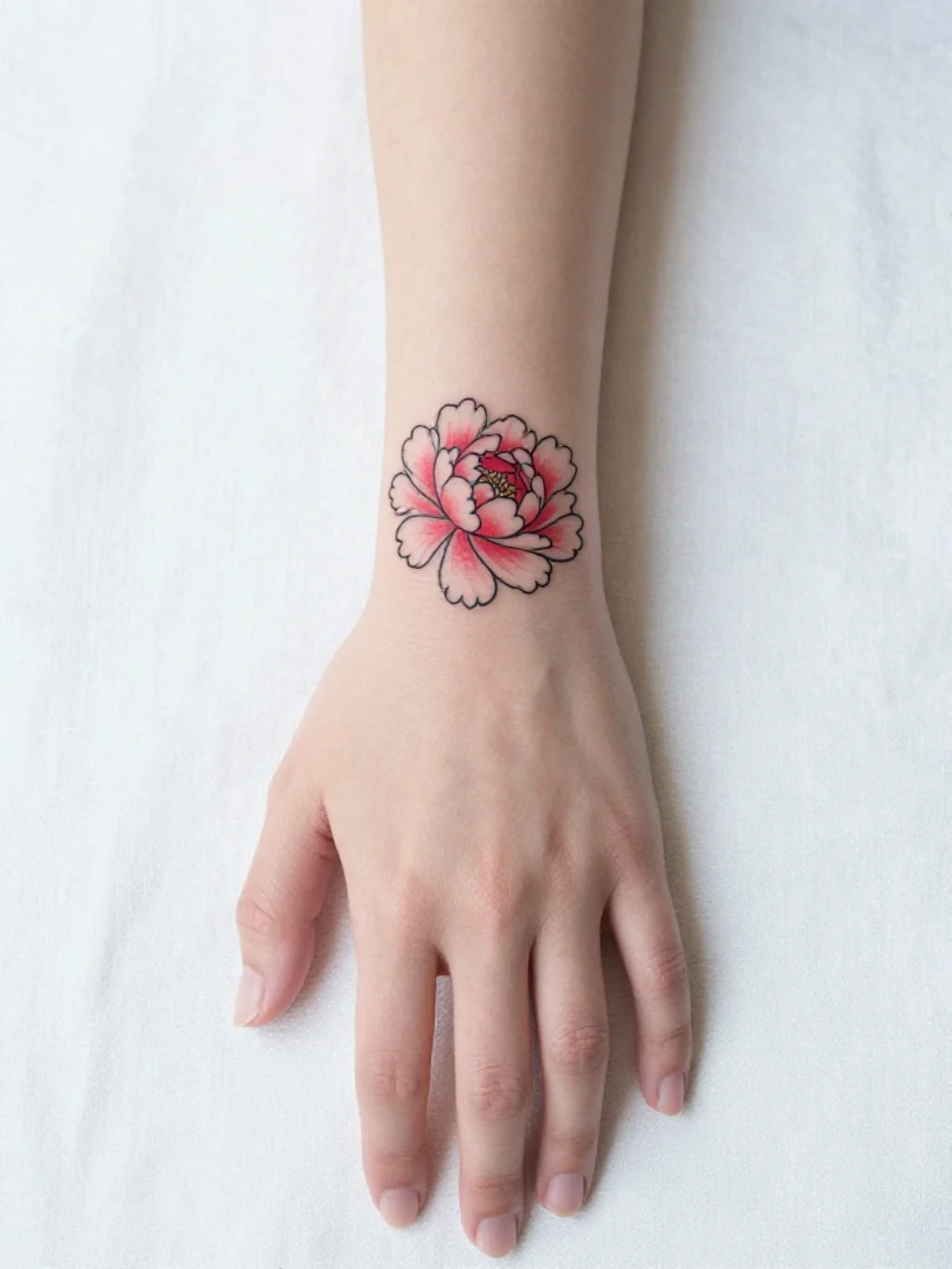
Minimalist japanese peony tattoo ideas occupy a genuinely contested space within the Japanese tattoo tradition. Purists argue that the irezumi aesthetic is inherently maximalist — that its power comes from dense, fully realized compositions rather than sparse suggestion. This is historically accurate. However, the contemporary tattoo landscape has produced a hybrid approach that takes the Japanese peony’s essential visual vocabulary — its characteristic outline weight, its specific approach to petal construction, its color palette — and renders it with a deliberate restraint that removes the background elements without diminishing the motif itself.
Fine line peony tattoo in the Japanese stylistic mode uses the tradition’s characteristic curved line language but executed at a reduced weight that allows the skin to participate in the composition rather than being completely covered. Minimalist japanese peony tattoo ideas work most successfully on smaller placements — the inner wrist, the ankle, the nape — where the reduced scale makes full irezumi density impractical regardless of stylistic preference. Small japanese peony tattoo ideas in this mode still require an artist with genuine Japanese tattoo knowledge — the difference between a Japanese-informed minimalist peony and a generic fine-line flower rendered with a Japanese aesthetic pretense is significant and visible to any educated eye.
Snake and Peony Tattoo: The Tension That Produces Unforgettable Art
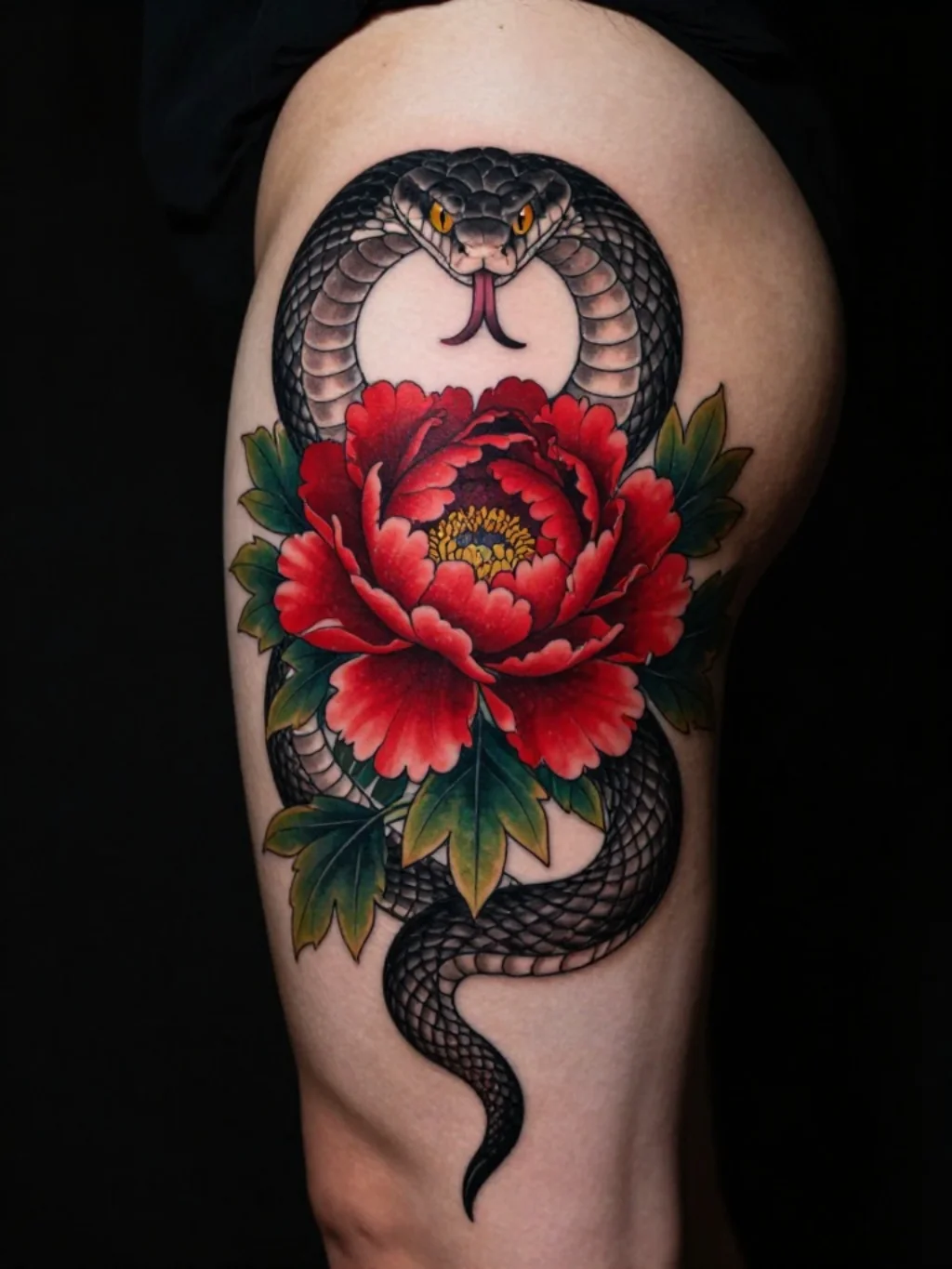
Peony and snake tattoo design in the Japanese tradition generates its power from the same fundamental tension that animates all the great predator-and-flower pairings in irezumi — the meeting of danger and beauty in a single compositional frame. The snake (hebi) in Japanese symbolic tradition carries associations with jealousy, transformation, and the dangerous power of suppressed desire. Coiled around or emerging from a peony, the snake creates a visual narrative about beauty that conceals danger — or danger that reveals itself through beauty. The ambiguity is deliberate.
Peony and snake tattoo design compositions use the snake’s sinuous body to solve compositional problems that rigid subjects can’t address — the serpent can spiral around the sleeve, thread through the peony’s leaves, and extend to fill compositional spaces that would otherwise require background filler. Japanese peony tattoo combining nature elements with the snake produces a design ecosystem rather than a single motif — the snake and the flower share a visual environment that makes both more legible and more powerful than either would be alone. Storytelling through body art in the Japanese tradition almost always involves this kind of symbolic dialogue between motifs, and the snake-and-peony pairing is one of its most eloquent expressions.
Peony and Cherry Blossom Together: The Dual Seasonal Narrative on Skin
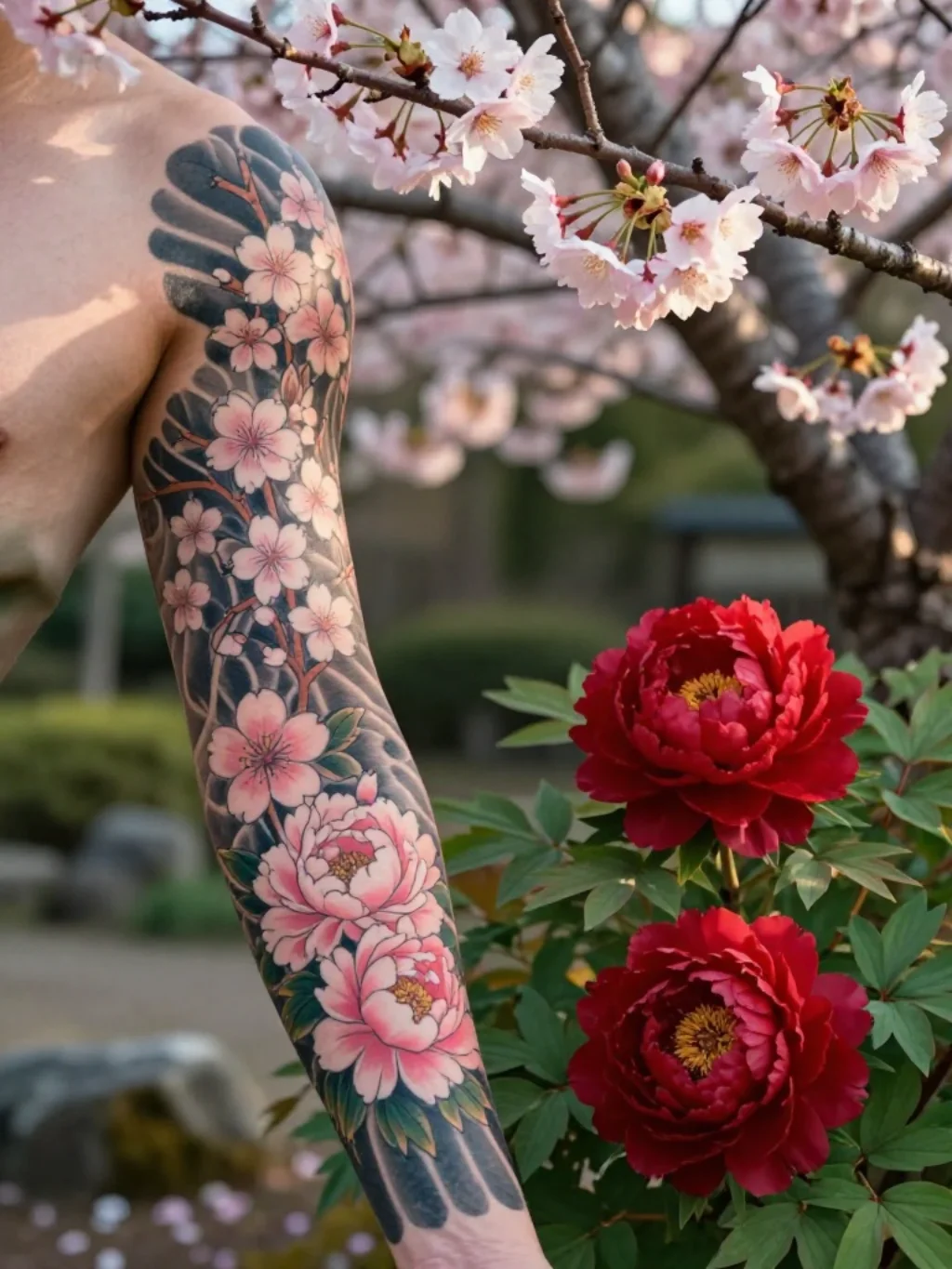
Peony and cherry blossom tattoo compositions juxtapose the two most symbolically loaded flowers in Japanese culture — a pairing that compresses the Japanese year’s entire emotional cycle into a single image. The cherry blossom (sakura) represents spring’s transient perfection — beauty that lasts for days before falling completely. The peony represents summer’s opulent abundance — beauty that unfolds slowly and holds its peak before a more gradual decline. Together they describe a seasonal arc from delicate impermanence to rich, sustained presence. Seasonal symbolism in japanese tattoos rarely achieves this completeness with any other botanical pairing.
Peony and cherry blossom tattoo in the contemporary American tattoo context appears most frequently in sleeve compositions where the two flowers can occupy distinct zones of the arm while being unified by shared background elements — clouds, wind bars, or the specific Japanese compositional device of sumi (solid black areas) that creates visual breathing room between complex motifs. Japanese peony tattoo combining nature elements at this level of symbolic layering requires an artist who understands not just the visual execution but the cultural logic — which flower belongs compositionally where, why the cherry blossom occupies the upper arm while the peony anchors the forearm, and how the background transitions between the two motifs without creating a visual seam that breaks the composition’s unity.
Sitting for a Japanese Tattoo: Session Length Pain and the Long Game
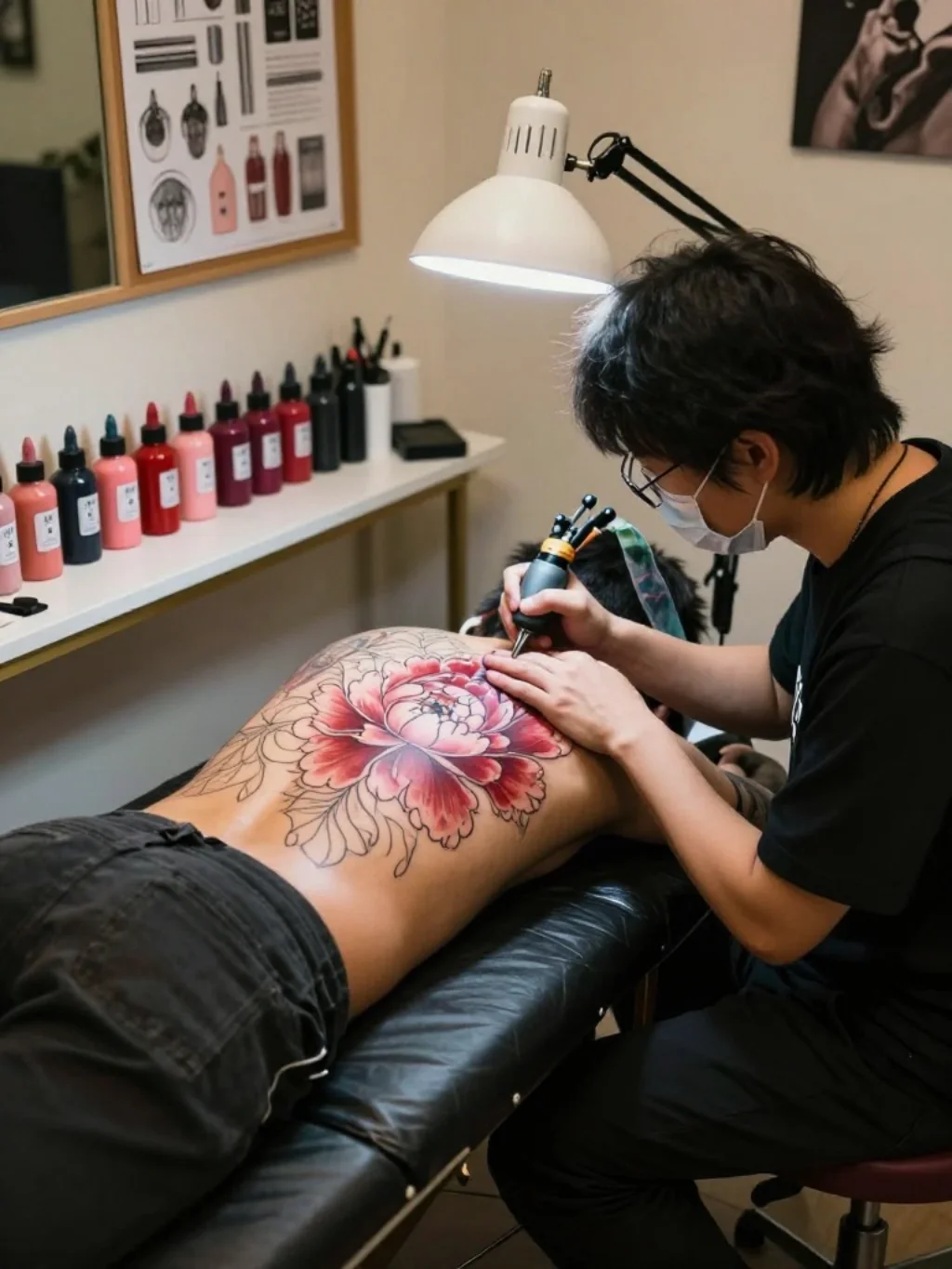
Japanese peony tattoo session length for large-scale work ranges from three to six hours per session with most experienced artists structuring their sessions around client tolerance rather than a fixed endpoint. The large, dense coverage that traditional Japanese tattooing requires — heavy saturation over significant surface area — is among the most physically demanding tattoo work that exists. Japanese peony tattoo healing and aftercare begins immediately after the session ends and the first seventy-two hours establish the conditions for everything that follows in the healing process.
Japanese peony tattoo healing and aftercare protocol for traditional work with heavy color saturation involves keeping the area clean and moisturized without over-treating it. Aquaphor for the first three to five days, then unscented lotion twice daily through the peeling phase, and strict UV avoidance for the first three months while the skin completes its full dermal healing cycle. Japanese peony tattoo touch up sessions typically occur at the three to six month mark after the initial work is complete — the artist assesses the healed result and addresses any areas where pigment settled unevenly or where the skin rejected ink during the healing process. Large-scale Japanese tattooing should always include touch-up sessions in the budgeted cost and timeline.
Healed Results and Longevity: Protecting the Investment in Your Peony Ink
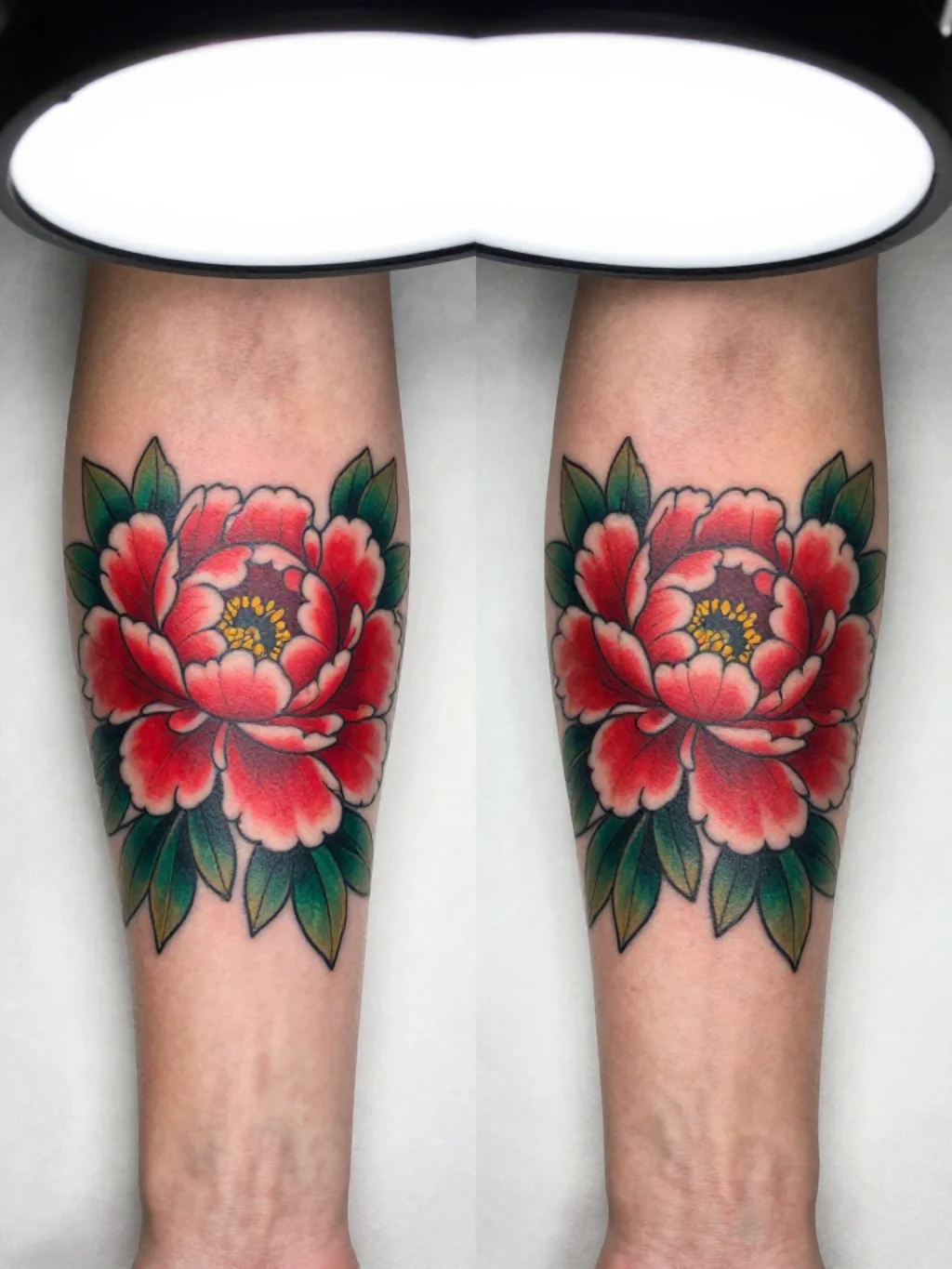
Healed japanese peony tattoo result at twelve months tells a categorically different story than the fresh tattoo photographed immediately after the session. The sharp, vivid fresh result softens somewhat — outline weight relaxes by approximately 10%, colors lose some of their surface luminosity as the ink settles deeper into the dermis, and the overall composition acquires the quieter, more integrated quality that experienced collectors call “settled.” This settling is not degradation — it’s the tattoo achieving its permanent state. Japanese peony tattoo red pigment fade mitigation begins at day one with proper SPF protection and continues as a lifelong practice for serious collectors.
Peony tattoo skin tone compatibility and long-term maintenance are inseparable considerations. Darker skin tones show certain red and pink pigments less clearly than lighter tones — an experienced artist working with darker skin clients adjusts pigment selection toward higher-saturation versions that compensate for the skin’s natural pigment absorption. Luxury tattoo aesthetic in the Japanese peony tradition is inherently a long-game investment — the total commitment of time, money, and physical endurance across multiple sessions produces a result that improves with proper care over decades rather than peaking at the fresh stage and declining from there. Regular quality assessments at the five and ten-year marks, followed by targeted touch-up work where needed, maintain the investment’s visual value indefinitely.
The Phoenix Rising Through Peonies: Rebirth Rendered in Floral Fire
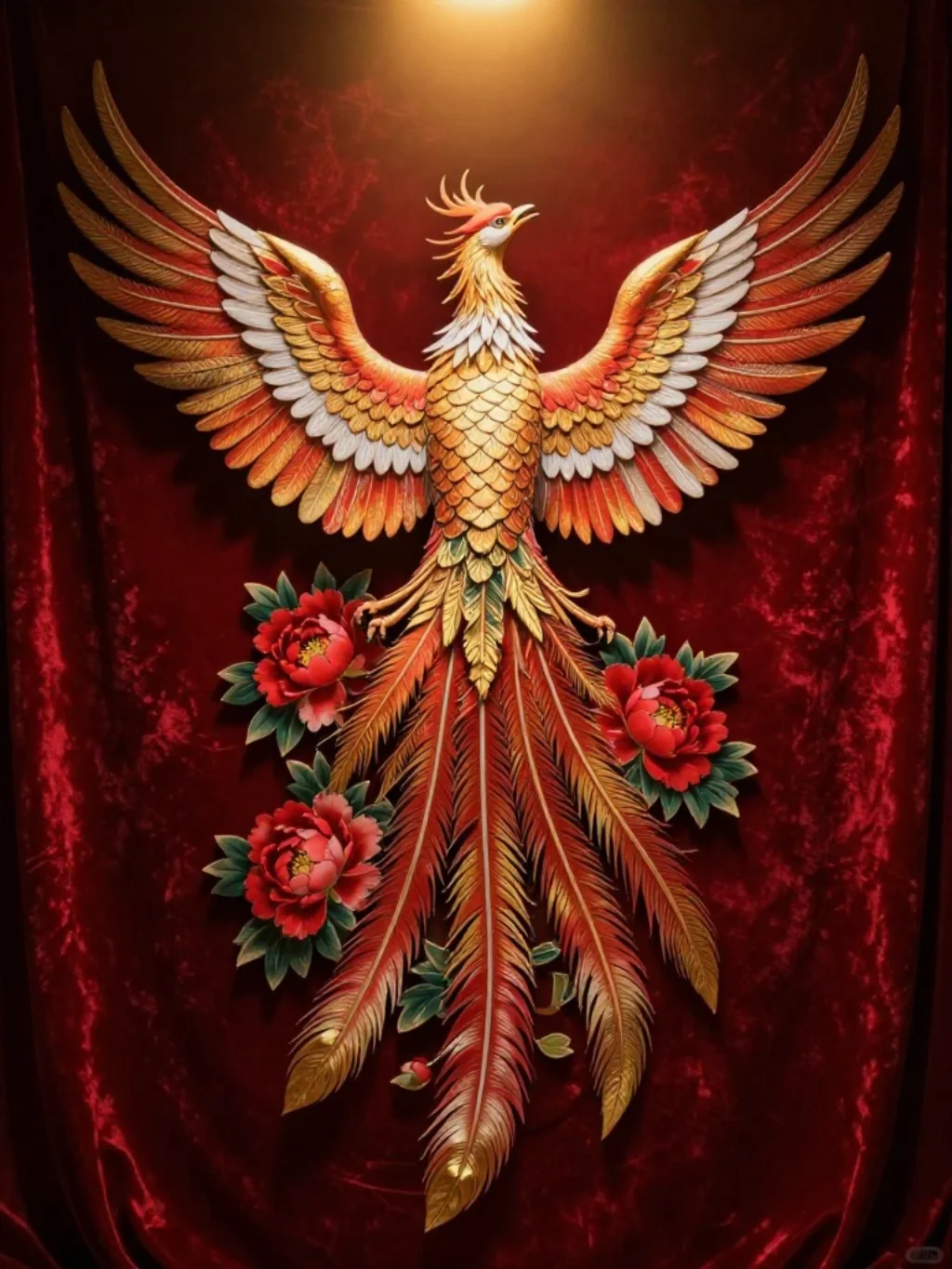
Japanese peony tattoo with phoenix design is the most symbolically complete composition available in the traditional Japanese motif library. The phoenix (hō-ō in Japanese, distinguishable from its Chinese cousin by its specific iconographic features) represents death, transformation, and rebirth — the cycle of destruction and renewal compressed into a single creature. Surrounding this creature with peony blooms amplifies and refines its central symbolism: the peony representing the abundant beauty that follows from transformation, the new life that emerges from the fire’s aftermath. Spiritual meaning of flowers in tattoo achieves its most complete expression in this pairing — the flower as evidence of the phoenix’s successful transformation.
Japanese peony tattoo with phoenix design compositions work most powerfully at back-piece scale where the phoenix can achieve its full wingspan spread — typically fifteen to twenty centimeters of wing extension on each side — while the peony clusters frame the composition at its lower reaches and anchor points. The phoenix’s traditional color palette — gold, orange, red, and white feathering — creates a natural chromatic dialogue with the peony’s crimson and green. Ancestral ink tradition in the irezumi context treats the phoenix-and-peony pairing as one of the most auspicious combinations available — a design that communicates not just personal meaning but a relationship with larger forces of transformation and renewal.
Neo Traditional Japanese Peony: Honoring Heritage While Breaking New Ground
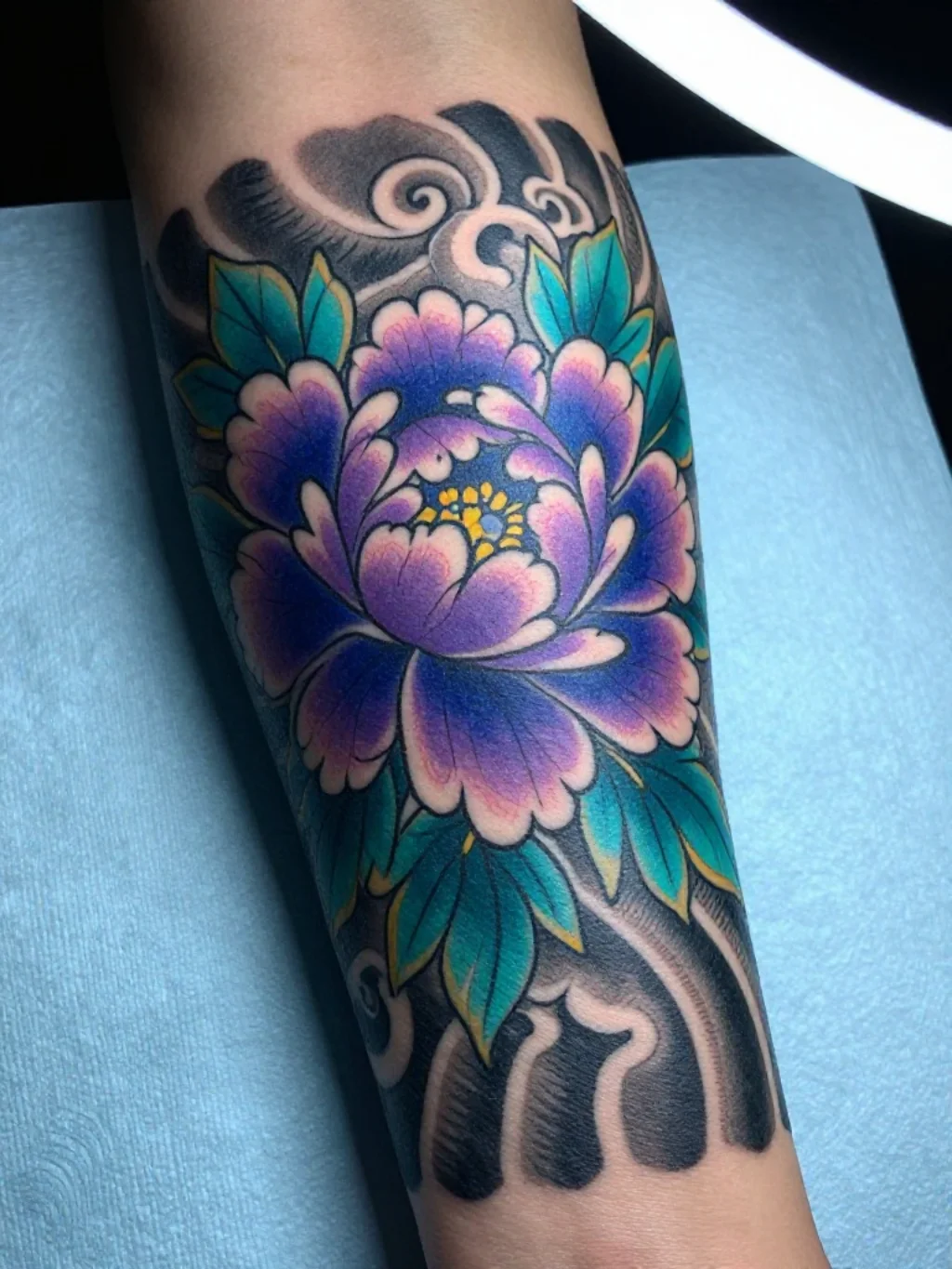
Neo traditional peony tattoo in the Japanese aesthetic mode represents the current generation’s attempt to honor the irezumi lineage while developing a visual language that reflects contemporary tattoo culture rather than simply replicating historical precedent. Neo traditional japanese peony work retains the tradition’s characteristic bold outlines and heavy color saturation but introduces a wider color palette, more dynamic compositional approaches, and occasional departures from the strict motif vocabulary that traditional irezumi follows. The results, when executed by artists with genuine traditional knowledge, produce work that feels simultaneously rooted and current.
Geometric japanese peony tattoo ideas occupy a related space — applying geometric compositional frameworks to traditionally organic motifs in ways that create a visual tension between the mathematical and the natural. A peony rendered within a mandala-like geometric framework, or with geometric line elements integrated into the traditional background treatment, produces a hybrid aesthetic that Instagram japanese tattoo community has documented extensively over the past five years as one of the dominant trends in Japanese-influenced contemporary tattooing. Watercolor peony tattoo with Japanese stylistic elements represents the softest hybrid — loose watercolor washes used for color areas within traditional Japanese outline structures — producing a result with irezumi’s compositional logic but a completely different surface quality.
Frequently Asked Questions
Q1. What does a japanese peony tattoo symbolize in traditional irezumi culture?
Japanese peony tattoo meaning and symbolism in the irezumi tradition centers on honor, bravery, good fortune, and the Buddhist-influenced acceptance of impermanence. The botan was adopted by the samurai class as a symbol of the warrior’s aesthetic — fierce vitality combined with the awareness that all beauty is temporary. What does a peony tattoo mean in japanese culture extends to wealth and aristocratic refinement — the “king of flowers” designation reflected its association with the ruling class and its use in the most prestigious decorative contexts of Edo-period Japan.
Q2. What is the best placement for a large japanese peony tattoo on the body?
Best placement for japanese peony tattoo at large scale is the back — the body’s largest continuous canvas — followed by the thigh and the upper arm-into-sleeve configuration. Japanese peony back tattoo compositions have the most room to develop the full complexity of the motif at proper scale. Japanese peony shoulder tattoo placement works well for designs intended to extend into sleeve compositions over multiple sessions. Japanese peony chest tattoo placement suits the traditional irezumi full-suit approach where the chest serves as the composition’s upper focal point.
Q3. How long does a full sleeve japanese peony tattoo take to complete?
Japanese peony tattoo full sleeve design completion typically requires between twenty and forty billable hours depending on the design’s complexity and the client’s healing speed between sessions. Most artists recommend sessions of three to five hours with minimum four-to-eight-week intervals between sessions to allow proper healing. At this pace, a full sleeve might take one to three years of regular appointments. Traditional japanese peony tattoo sleeve ideas of the highest complexity — dense background work, multiple primary motifs, full color saturation — trend toward the higher end of this timeline.
Q4. Should a japanese peony tattoo be done in color or black and grey?
Japanese peony tattoo black and grey versus color ultimately comes down to two factors: personal aesthetic preference and long-term commitment. Colored peony tattoo in the traditional Japanese mode delivers maximum visual impact but requires greater maintenance investment — specifically UV protection for red and pink pigments — and periodic touch-up sessions to maintain chromatic integrity. Black and grey peony tattoo ages more gracefully over time, develops a patina that many collectors find more beautiful than the original, and requires less active maintenance. Neither is categorically superior — both require exceptional artist skill to achieve their respective potentials.
Q5. How do I find a qualified artist for a traditional japanese peony tattoo?
Japanese peony tattoo artists near me searches are the starting point but never the ending point of artist selection. Review healed work specifically — not fresh pieces. Look for consistent line weight across complex curved outlines and smooth bokashi shading transitions in the peony petal work. Tattoodo japanese peony gallery and Instagram japanese tattoo community let you research artists globally and then identify those within commutable distance. Don’t limit your search geographically if the closest excellent artist is three hours away — this tattoo will last your lifetime and the distance is worth it.
Conclusion
Japanese peony tattoos ask something significant of both the person wearing them and the artist making them. They ask for patience — across multiple sessions, across years of planning and healing and revisiting. They ask for cultural literacy — an understanding of what the botan has meant across three hundred years of Japanese artistic tradition before you decide what it will mean for you. And they ask for the particular kind of commitment that comes from understanding that you’re not simply choosing a design but entering a visual lineage that has been developing its vocabulary since the Edo period.
The flower has always rewarded that commitment. The irezumi peony design that takes forty sessions to complete on a full back piece achieves a depth and integration that no faster process can produce. The traditional japanese tattoo approach to the peony — its specific line weight, its bokashi shading, its compositional logic — exists because centuries of artists refined it toward exactly this result. You’re not imitating something old when you choose it. You’re participating in something that is still developing, still being extended by the generation of artists working right now in studios from Tokyo to Brooklyn. The peony is still blooming.
1 Comment