
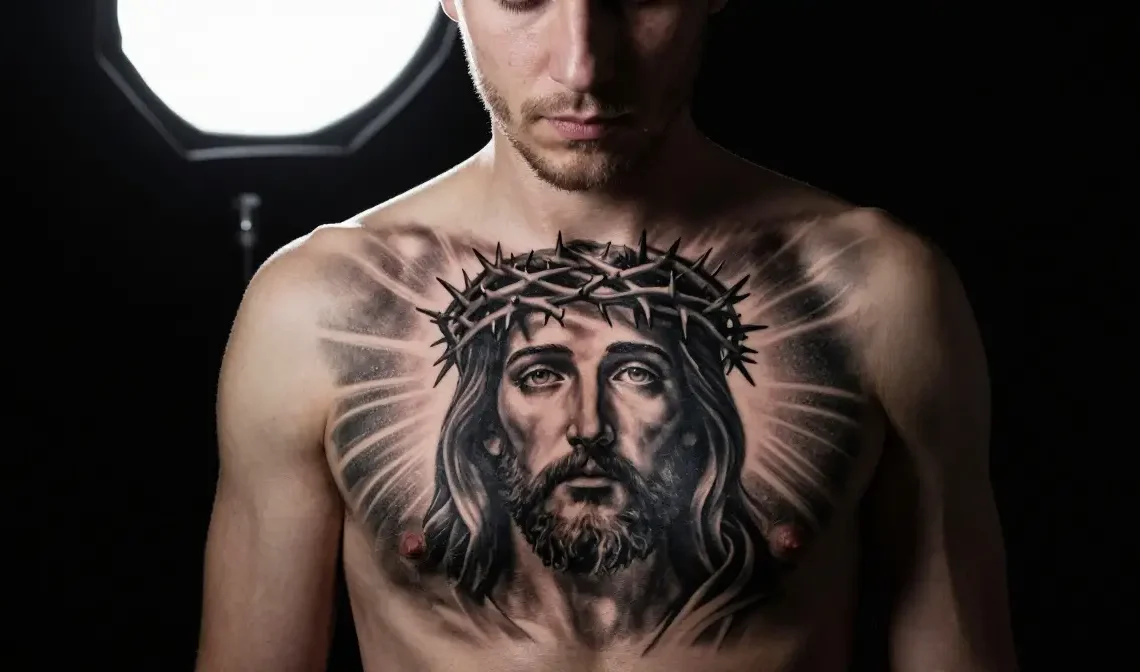
Jesus tattoos occupy a unique position in all of body art. They aren’t simply aesthetic choices. They’re theological declarations made in the most permanent medium available to a human being — ink pressed into skin that will carry that declaration into every room, every relationship and every moment of the wearer’s remaining life. When you choose to tattoo Christ onto your body you aren’t decorating yourself. You’re testifying. And that distinction changes everything about how the decision should be made and how the design should be executed.
Faith Etched in Skin — the Ancient Tradition of Jesus Tattoo Devotion
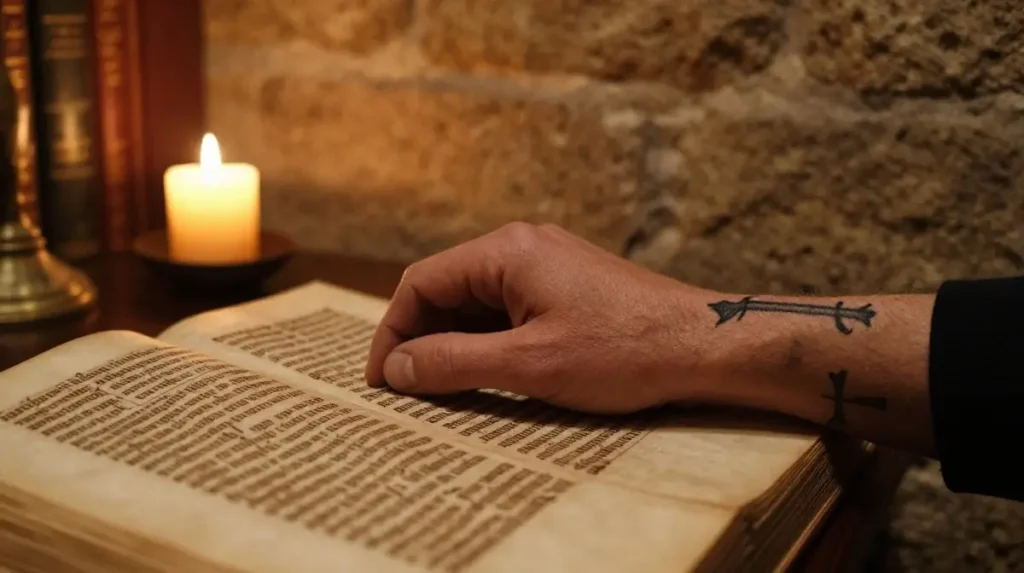
Tattooing the sacred onto skin is not a modern idea. Coptic Christians in Egypt have tattooed crosses and Christ imagery onto their wrists since the 6th century as permanent markers of faith in communities where conversion meant social death or worse. Christian faith tattoo art carries that same weight of conviction today — the decision to mark the body with the divine is never casual and never has been.
Jesus tattoos exist at the intersection of the most personal and the most universal impulse in religious life — the desire to carry your faith somewhere it cannot be removed, forgotten or left at home. Devotional tattoo body art in the Christian tradition functions identically to the medieval pilgrim’s badge or the scapular worn against the skin — a physical object of faith that travels with the believer into every room, every moment and every encounter their life produces.
The Portrait Perfection — Realism Jesus Tattoos That Look Alive on Skin
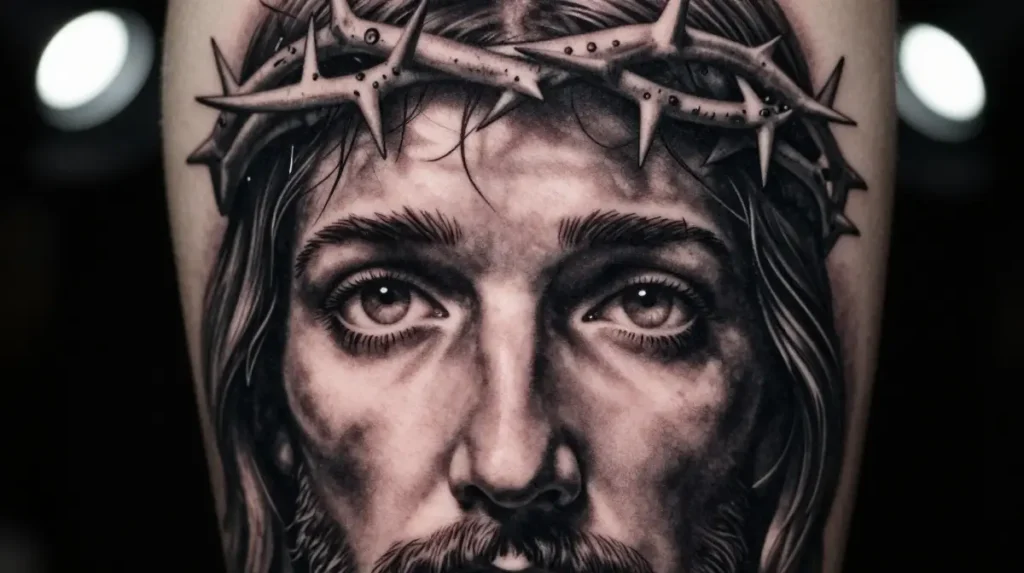
Realistic jesus tattoo designs represent the summit of religious tattooing. A portrait of Christ rendered with photographic accuracy — light catching the eyes with genuine optical depth, hair strands individually defined, expression capturing the specific quality of compassionate authority that two millennia of artistic tradition has attributed to this face — creates a piece of body art that crosses into something devotional.
Jesus tattoo portrait realism demands an artist operating at the absolute peak of their technical capability. Jesus face tattoo ideas executed in black and grey realism use tonal graduation from deep charcoal through every grey value to brilliant highlight — creating genuine three-dimensional form that appears to breathe. Jesus tattoo shading technique in portrait realism requires an understanding of facial anatomy, light behavior and the specific challenges of rendering skin-on-skin — the tattooed face on the wearer’s skin — with convincing optical accuracy.
Jesus Tattoos That Carry the Full Weight of Sacred Art History
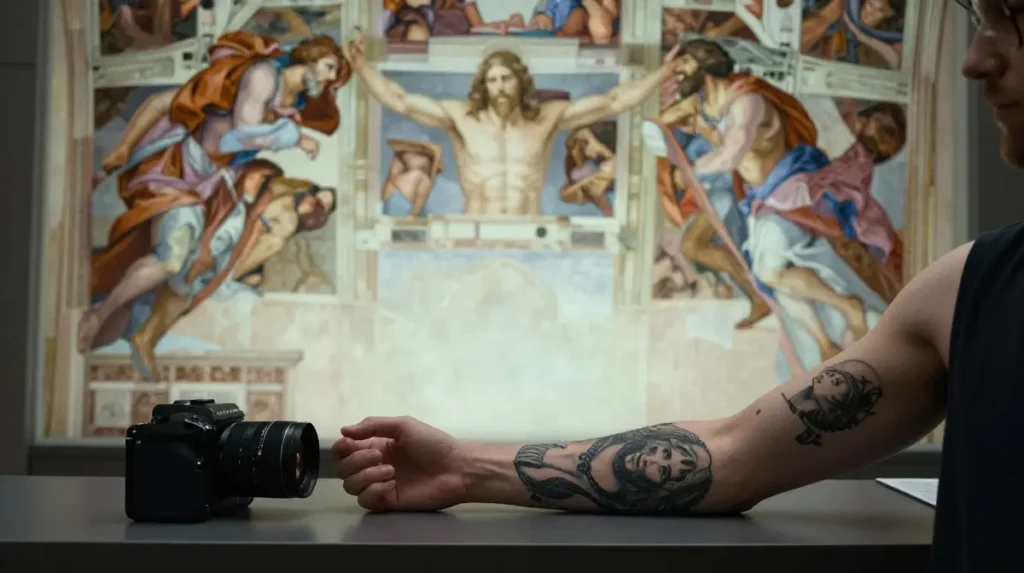
Two thousand years of Christian art constitute the richest visual tradition in Western civilization and jesus tattoos that draw from it consciously carry that inheritance on human skin. Michelangelo Jesus tattoo inspiration from the Sistine Chapel ceiling. Da Vinci Jesus tattoo art referencing the Salvator Mundi or the Last Supper. El Greco Jesus tattoo art with its elongated Byzantine-influenced figures and supernatural color. Each source brings centuries of artistic intention into the tattoo.
Renaissance Christ portrait tattoo designs currently dominate American religious tattooing studios because the technical demands of realism align naturally with Renaissance painting’s own obsession with anatomical accuracy and dramatic light. Baroque Jesus tattoo inspiration — Caravaggio’s extreme chiaroscuro, Rubens’ muscular physicality, Rembrandt’s compassionate realism — offers a different visual vocabulary that suits jesus tattoo designs black and grey particularly well. Christian iconography tattoo built on art historical awareness produces pieces that carry intellectual and spiritual depth that purely decorative religious designs simply cannot match.
The Crown of Thorns — a Single Image That Says Everything About Suffering
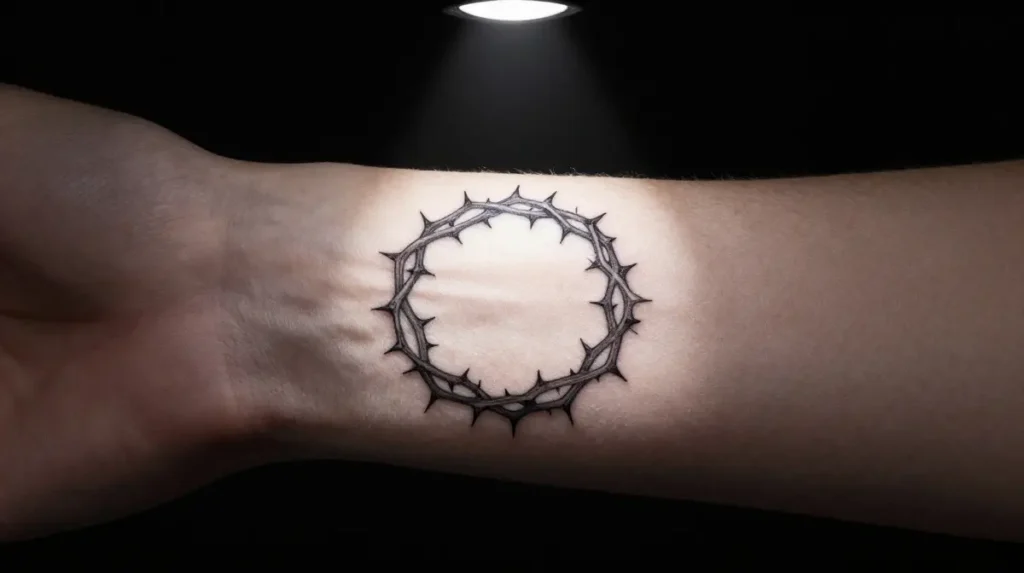
Crown of Thorns tattoo designs compress the entire theological narrative of Christ’s passion into a single image — the Roman soldiers’ mockery transformed by Christian tradition into the most potent symbol of redemptive suffering in the Western world. A circle of thorns needs no explanation, no supporting text and no secondary imagery. It arrives complete. Jesus crown of thorns tattoo ideas work as standalone pieces or as elements within larger compositions with equal power.
Jesus tattoo sacred symbolism in crown of thorns work carries meaning that operates on multiple levels simultaneously — the historical torture instrument, the theological symbol of taking human sin’s burden and the personal statement that the wearer understands suffering as something to be borne rather than avoided. Christian martyrdom tattoo symbolism finds its purest single-image expression in this motif and jesus tattoo ideas with meaning don’t come more semantically loaded than a thorned crown rendered in precise blackwork around a wrist or forearm.
Sacred Heart Jesus Tattoos and the Burning Symbol That Never Goes Cold
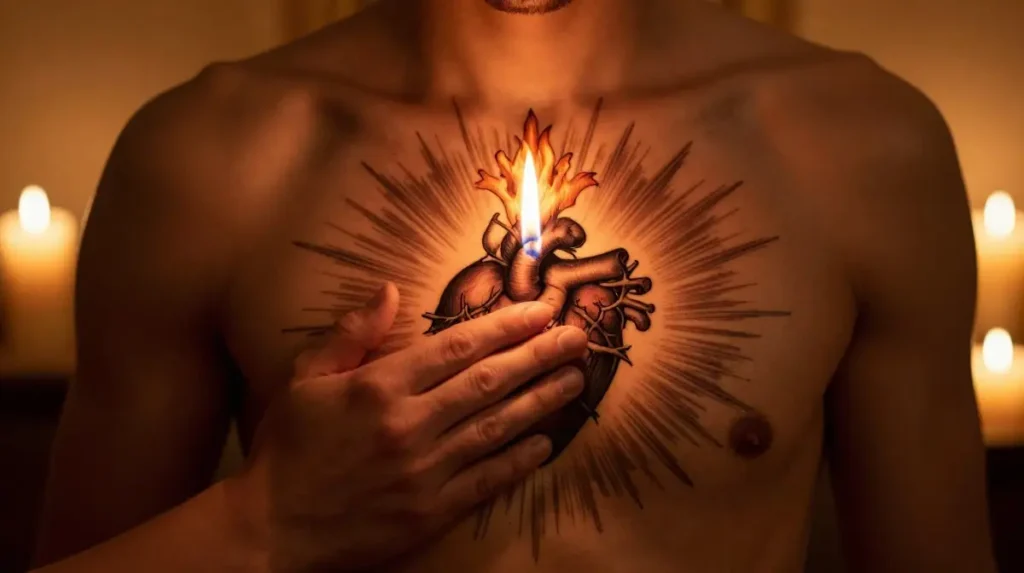
Sacred Heart of Jesus tattoo imagery carries one of Catholicism’s most visually complex symbols — a flaming heart encircled by a crown of thorns, pierced by a sword and radiating divine light simultaneously. The iconography developed from 17th-century French mystic St. Margaret Mary Alacoque’s visions and spread across Catholic devotional culture worldwide producing one of the most recognizable religious images in the Western tradition.
Jesus sacred heart tattoo ideas suit the chest placement with particular theological logic — the sacred heart positioned above the wearer’s own physical heart creates a compositional and devotional alignment that gives the placement genuine symbolic meaning beyond aesthetic preference. Catholic devotional Jesus tattoo culture in the USA has embraced sacred heart imagery across every tattoo style from traditional American to neo traditional to fine line realism. Sacred imagery tattoo design built around the sacred heart also integrates naturally with Jesus and Mary tattoo compositions where the Immaculate Heart of Mary mirrors the Sacred Heart of Christ in bilateral chest arrangements.
Fine Line Christ Tattoos That Render the Divine in Impossible Delicacy
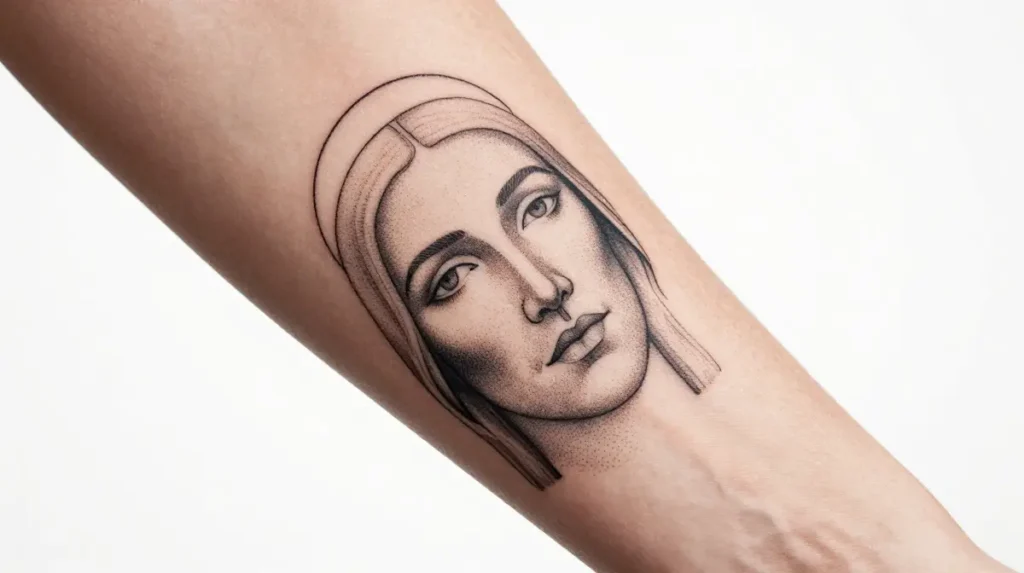
Jesus tattoo ideas fine line work approaches the sacred with a precision that feels almost paradoxically appropriate — using the thinnest possible marks to render the most significant possible subject. A fine line Christ face tattoo where every hair strand is individually defined, every facial line rendered in a single hair-thin stroke and shadow created entirely through micro-stipple dot-work creates a piece of extraordinary technical and devotional beauty.
Jesus tattoo line work detail in fine line execution demands an artist whose needle control is absolute and whose understanding of facial anatomy is genuinely sophisticated. Fine line skeleton hand tattoo principles applied to sacred portraiture — reducing complex imagery to its essential linear components — produce Christ portraits that read as simultaneously minimalist and complete. Jesus tattoo aging and longevity concerns in fine line work are real and significant — the hand’s demanding surface aside, fine line portraits on any placement require more frequent jesus tattoo touch up schedule maintenance than bold traditional work.
Blackwork Jesus Tattoos Built From Shadow Faith and Absolute Conviction
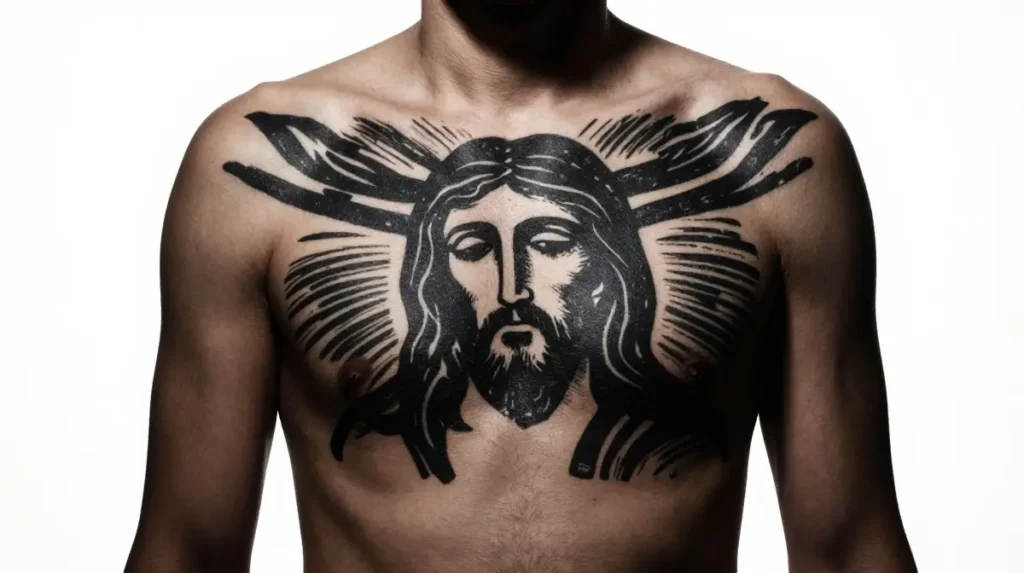
Jesus tattoo designs black and grey and full blackwork Christ tattoos approach the sacred through tonal mastery — using the full spectrum from absolute black through every grey to skin-tone white to create portraits and symbols of extraordinary depth. Blackwork Jesus tattoo work strips away color entirely and forces the composition to communicate through value contrast alone — which is precisely how the most powerful sacred imagery has always worked.
you may also like this:22 Hand Tattoo Ideas for Guys Bold and Stylish Ink
Jesus tattoo color vs blackwork decisions for religious portraiture almost always favor black and grey among serious collectors and experienced artists alike. Color introduces variables — fading, shifting pigment chemistry, skin tone interaction — that pure monochromatic work avoids. Jesus tattoo fading prevention is significantly simpler with black and grey because black ink holds its structural integrity longer than any color pigment across every placement. Shroud of Turin tattoo inspiration — the mysterious monochromatic face impression on the burial cloth — translates naturally into black and grey realism creating Christ portraits with a haunting authenticity that color work rarely achieves.
The Crucifixion Tattoo — Carrying the Cross on Your Own Body Forever
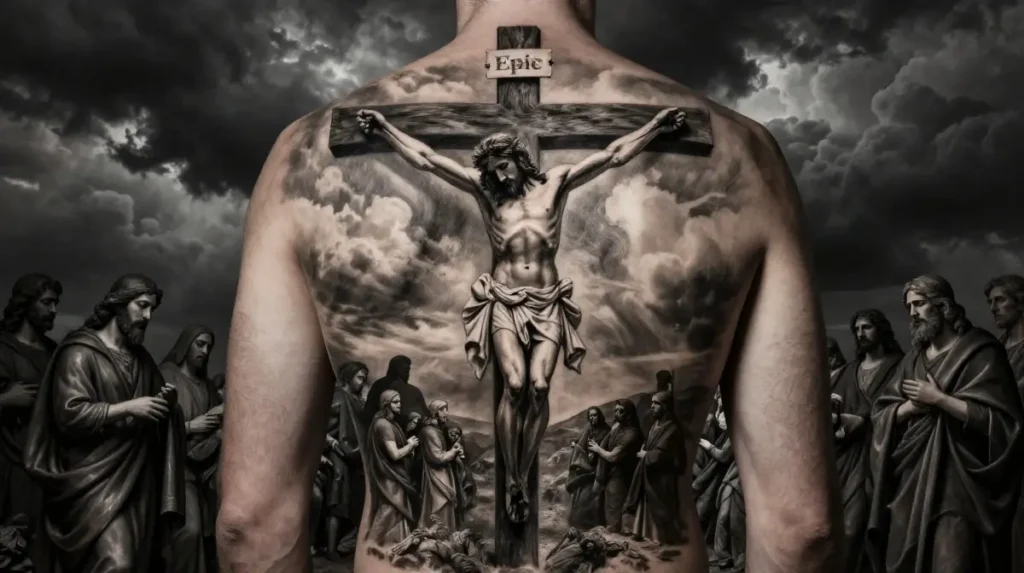
Crucifixion tattoo art places the central event of Christian theology permanently on the body of the believer. A full crucifixion scene — Christ on the cross against a darkened sky, the hill of Golgotha beneath, the gathered mourners below — constitutes one of the most ambitious narrative tattoo compositions in all of religious body art. Salvation tattoo symbolism reaches its most complete visual expression in this single image that contains sacrifice, love, suffering and hope simultaneously.
Jesus tattoo on back placements suit full crucifixion compositions because the back’s largest flat surface area accommodates the vertical axis of the cross and the surrounding narrative elements with room for genuine compositional development. Jesus tattoo back placement for crucifixion scenes typically positions the cross vertically along the spine with the horizontal beam across the shoulder blades — using the body’s own skeletal structure as part of the composition’s architecture. Redemption tattoo body art at this scale becomes genuinely monumental — a complete theological statement worn on the body’s largest canvas.
Jesus Tattoos for Men — Masculine Devotion Worn Without Apology
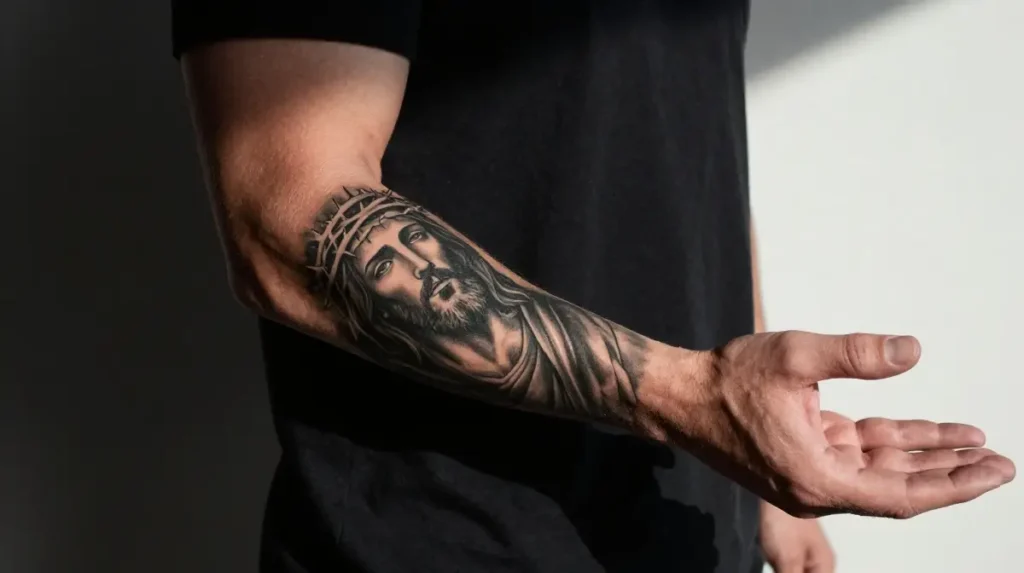
Jesus tattoos for men that communicate genuine masculine faith don’t soften the subject or add decorative elements that dilute the theological core. The most powerful masculine Christ tattoos approach the divine with the same directness that serious men bring to any deeply held conviction — without apology, without irony and without the need for external validation. Jesus of Nazareth tattoo work in bold blackwork or realism on the chest, back or sleeve communicates exactly this quality.
Jesus tattoo on arm and jesus forearm tattoo placements suit men who want their faith visible during daily life — extended during handshakes, visible during physical work and present in every gesture. Jesus tattoo sleeve ideas built around gospel narratives — the baptism, the transfiguration, the passion sequence — create complete biblical narrative tattoo designs that turn the arm into a devotional manuscript. Faith testimony tattoo art in masculine body art never carries more weight than when the subject is Christ rendered with the technical seriousness the subject deserves.
Feminine Jesus Tattoos That Reframe Sacred Beauty for Modern Women
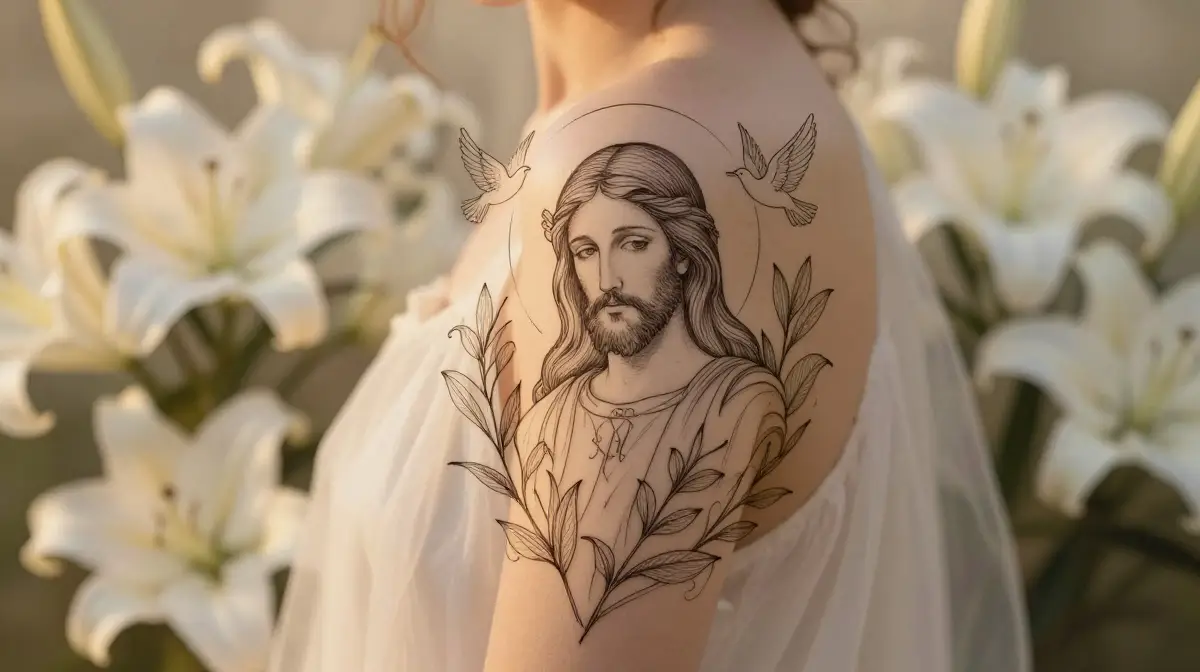
Jesus tattoos for women that achieve genuine spiritual and aesthetic impact reframe the sacred through a feminine lens without diminishing its theological weight. Jesus tattoo ideas fine line work suits feminine Christ tattoos particularly well — delicate line work rendering the divine with a precision and intimacy that bold traditional approaches can’t access. A fine line Christ face surrounded by botanical elements, lily flowers or dove imagery creates compositions of extraordinary spiritual beauty.
Jesus tattoo ideas watercolor treatments applied to sacred imagery create feminine Christ tattoos where divine light bleeds into color washes of gold, ivory and rose — the tattoo appearing to glow from within. Meaningful jesus tattoo ideas for women frequently incorporate Jesus and Mary tattoo elements where maternal and divine love are held in a single composition. Divine grace tattoo design in feminine religious tattooing finds some of its most beautiful contemporary expression through artists who approach the sacred with the same seriousness that Renaissance masters did — as the highest possible creative subject.
The Resurrection Tattoo — Ink That Celebrates Victory Over the Grave
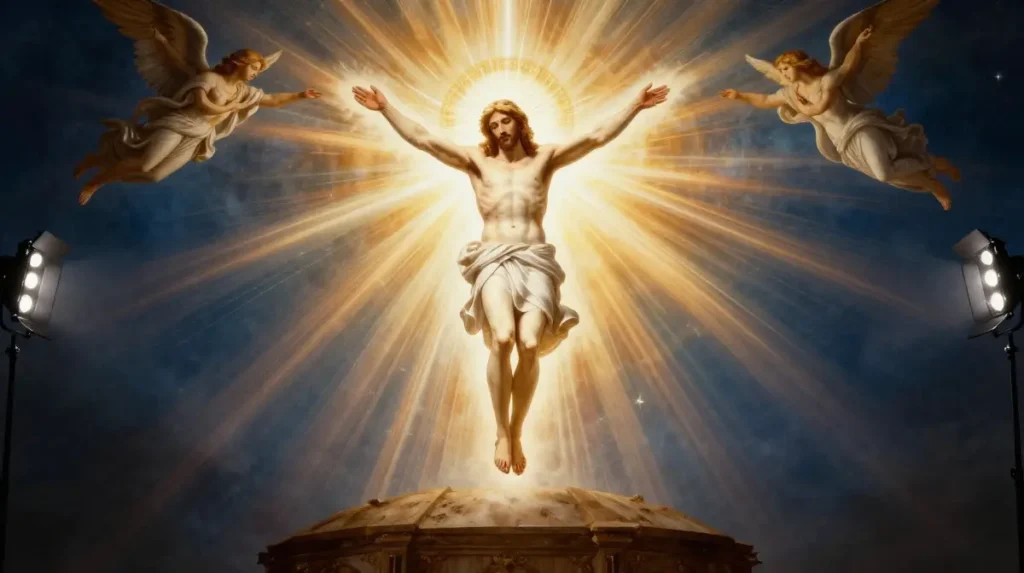
Resurrection of Christ tattoo designs approach Christianity’s defining theological claim — that Christ rose bodily from death — with imagery that radiates triumph rather than mourning. An ascending Christ figure surrounded by light, angels and the opened tomb creates a compositional energy that moves upward and outward — the visual grammar of victory rather than sacrifice. Jesus resurrection tattoo designs suit the back and chest placements where vertical space accommodates ascending composition naturally.
Jesus tattoo ideas spiritual built around resurrection imagery suit believers who want their body art to emphasize hope and triumph over suffering and sacrifice. Jesus resurrection tattoo work in full color — brilliant whites, gold and celestial blues — creates some of the most visually spectacular religious tattoos in American body art. Jesus light tattoo elements surrounding the resurrected figure amplify the theological meaning — the divine light radiating from Christ’s glorified body is itself a theological statement about the nature of resurrection that great tattoo artists render with genuine luminosity.
Byzantine and Orthodox Icon Jesus Tattoos Rooted in Sacred Tradition
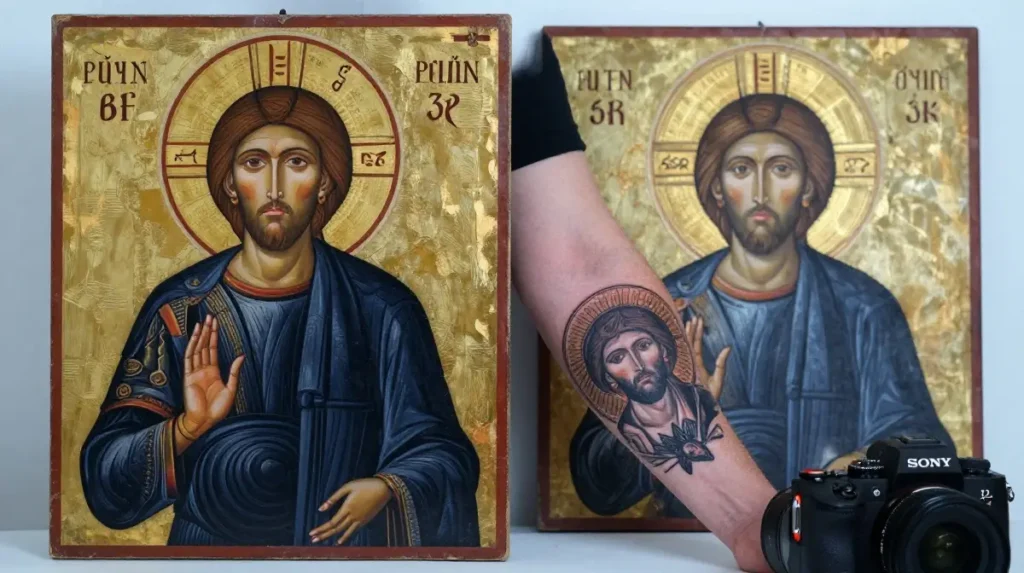
Byzantine Christ tattoo design work draws from the oldest continuous Christian artistic tradition still in active use. Byzantine iconography follows strict theological rules — the Pantocrator composition, the gold halo with Greek inscriptions, the specific hand blessing gesture, the dual nature of Christ suggested through both human and divine facial characteristics. These aren’t aesthetic conventions. They’re theological statements encoded in visual form.
Orthodox icon Jesus tattoo and Eastern Orthodox Christ tattoo designs suit collectors who understand that Byzantine iconography isn’t simply a style choice but an engagement with a theological visual language developed over fifteen centuries. Coptic Christian tattoo art represents the oldest surviving Christian tattoo tradition — Egyptian Coptic communities have tattooed the cross and Christ imagery continuously since the early Christian centuries. Jesus tattoo cultural meaning in Orthodox and Byzantine traditions carries communal and liturgical weight that Western Christian tattoo culture is only beginning to fully appreciate and engage with.
Watercolor Jesus Tattoos Where the Divine Bleeds Into Living Color
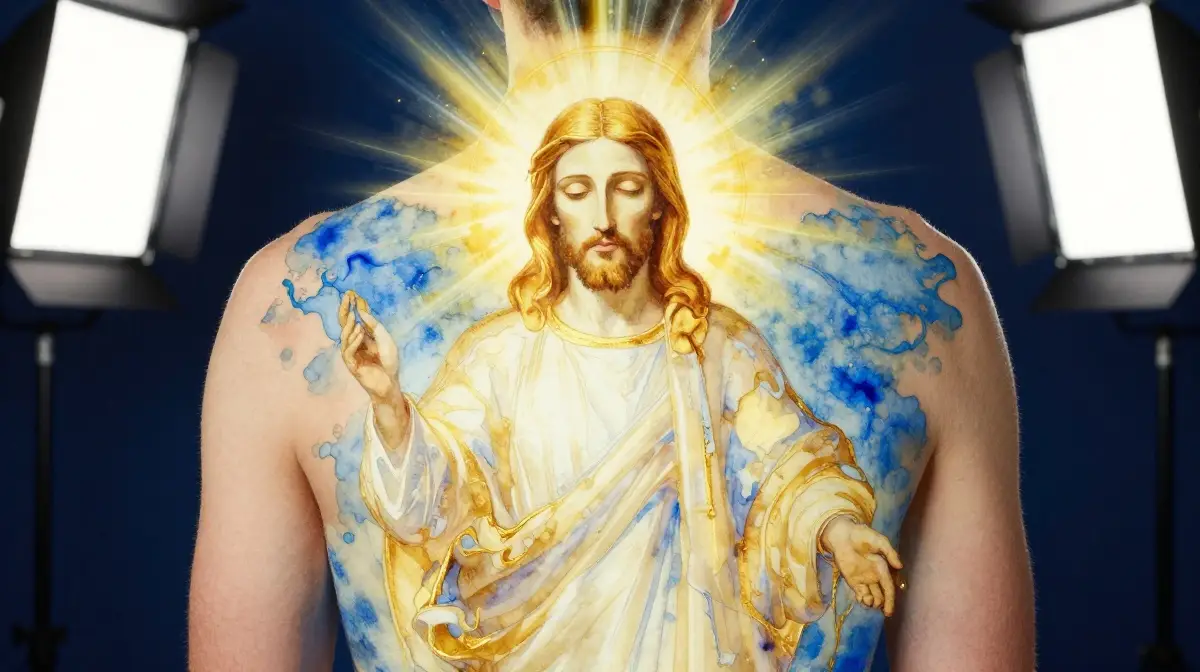
Jesus tattoo ideas watercolor treatments create Christ imagery where divine light appears to bleed outward from the figure in organic color washes — gold, ivory, celestial blue and rose spreading beyond any outline into the surrounding skin. The effect suggests the divine presence exceeding its own containment — light that cannot be bounded by outline because its nature is to overflow. Watercolor Jesus tattoo work creates some of the most visually moving religious tattoos currently being produced in American studios.
Jesus tattoo color vs blackwork in watercolor treatment requires an artist with both theological sensitivity and advanced color theory skills. Jesus tattoo skin tone matching matters significantly in watercolor religious work — the gold and ivory tones that create luminosity in Christ portrait watercolors interact differently with various skin tones and an experienced jesus tattoo artist selection process should specifically examine the artist’s healed watercolor portraiture work. Divine love tattoo expression at its most visually complete lives in the watercolor Christ portrait where technical skill and genuine devotional feeling produce something that transcends mere decoration.
Jesus Sleeve Tattoos That Build an Entire Gospel Across the Arm
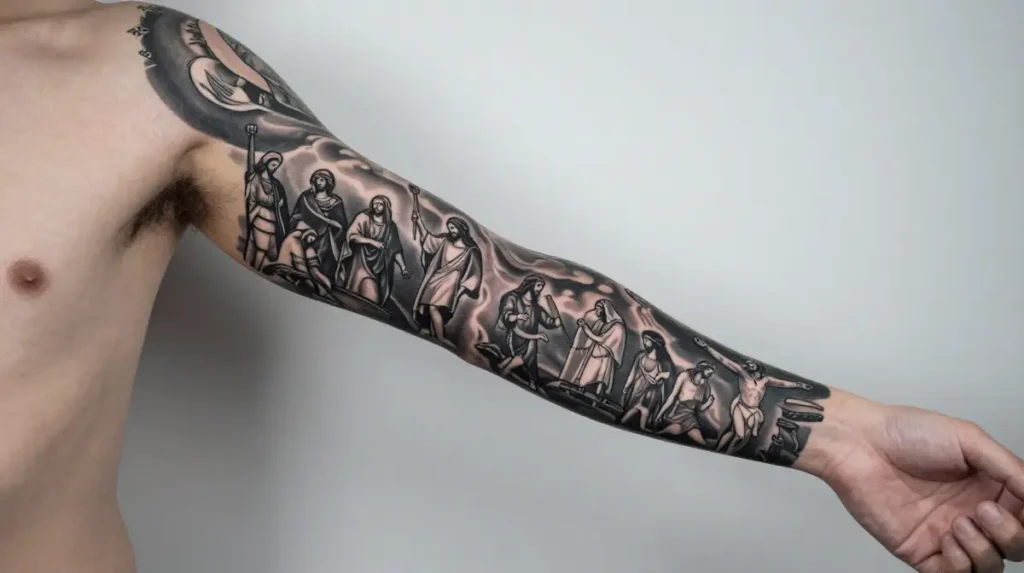
Jesus sleeve tattoo compositions treat the arm as a narrative scroll — the complete arc of the gospel story unfolding from shoulder to wrist in a unified visual sequence. The nativity at the shoulder, the ministry scenes across the upper arm, the passion sequence at the forearm and the resurrection or ascension at the wrist creates a complete theological biography worn permanently on the body.
Jesus tattoo sleeve integration planning requires an artist capable of thinking simultaneously about individual scene quality and overall compositional flow across the entire arm. Jesus tattoo flow and composition across a full sleeve must account for how elements transition between scenes — connecting tissue of architectural elements, landscape backgrounds or symbolic motifs that unify the narrative without interrupting the individual scenes’ integrity. Biblical narrative tattoo design at this scale is among the most ambitious undertaking in American religious tattooing and rewards collectors who invest in the planning process with the same seriousness they bring to their faith.
The Back as Cathedral — Jesus Tattoos That Command the Body’s Largest Canvas
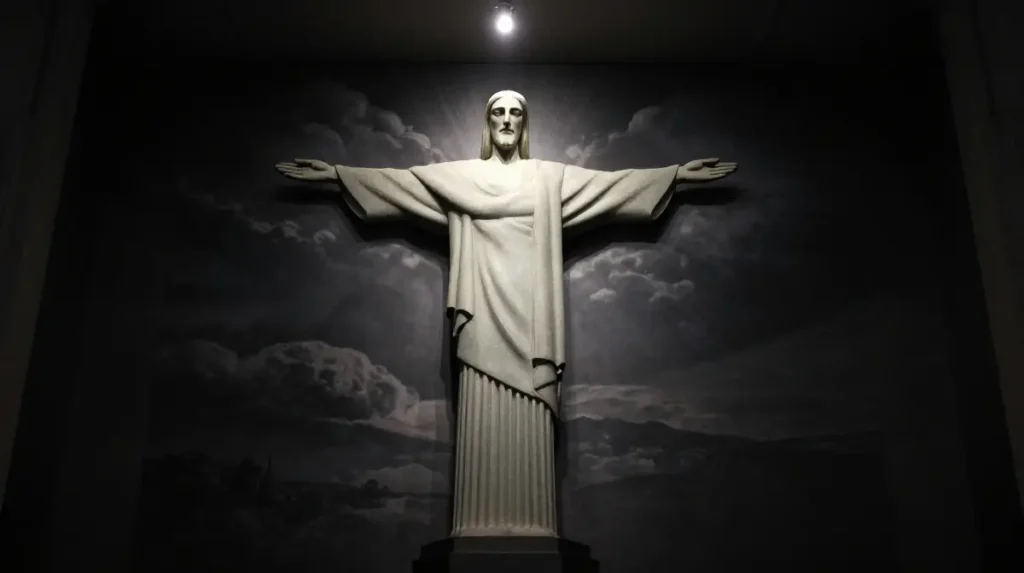
Jesus tattoo on back compositions treat the back’s vast uninterrupted surface as sacred architecture — a cathedral wall receiving its defining devotional image. The back accommodates a full-scale Christ portrait from shoulder to waist, a complete crucifixion scene with surrounding narrative elements or an ascending resurrection composition with genuine atmospheric depth and scale. No other body placement offers this combination of size, flatness and visual impact.
Jesus tattoo back placement suits the most ambitious and devotionally serious Christ compositions in tattooing. Jesus Agony in Garden tattoo scenes with their complex multi-figure compositions and detailed landscape elements require the back’s spatial generosity to develop properly. Jesus Sermon on Mount tattoo designs similarly benefit from the back’s ability to accommodate crowds, landscape and the central figure simultaneously. Jesus tattoo size recommendations for back placements typically suggest filling at least two-thirds of the available surface to avoid the isolated quality that undersized designs take on against the back’s expansive skin.
Chest Jesus Tattoos That Place the Sacred Closest to the Beating Heart
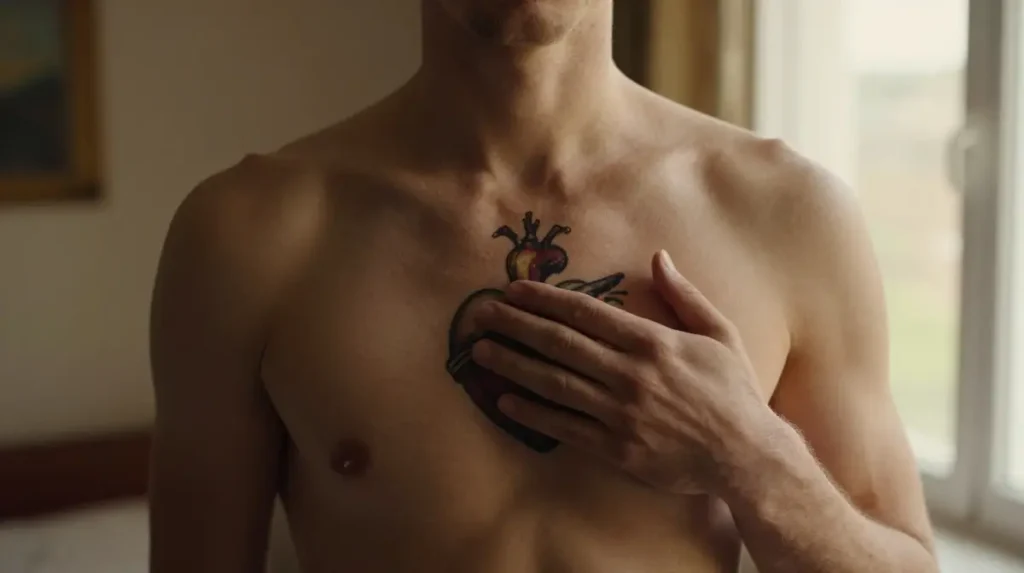
Jesus tattoo on chest placement carries theological logic that no other location replicates — placing the sacred figure directly above the physical heart creates a devotional alignment between bodily and spiritual reality that believers find genuinely meaningful. The chest is where the life force is most palpably felt and placing Christ imagery there creates a permanent proximity between the divine and the physical seat of emotion.
Jesus tattoo chest placement accommodates both centered compositions — a Christ portrait or sacred heart directly over the sternum — and bilateral arrangements where Jesus and Mary tattoo pairs mirror each other across the left and right chest. Sacred Heart of Jesus tattoo placed on the left chest directly over the heart creates the most theologically precise placement available — the sacred heart positioned at the exact anatomical location it symbolically represents. Jesus tattoo flow and composition on the chest must account for the pectoral musculature’s three-dimensional curvature and how the design appears in both relaxed and tensed positions.
Small and Minimalist Jesus Tattoos That Hold Enormous Faith in Little Space
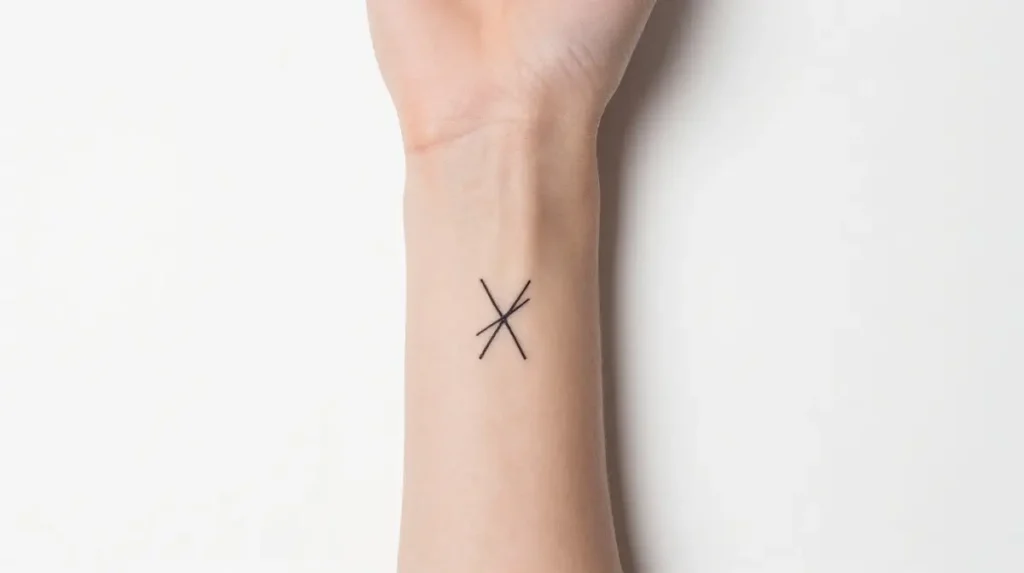
Small jesus tattoo ideas prove that scale and devotional depth are entirely independent variables. A micro-scale Christ face rendered in three ink strokes. A single crown of thorns in pure outline no larger than a coin. The ichthus fish symbol in one unbroken fine line. Jesus tattoo ideas minimalist designs strip sacred imagery to its essential visual core and discover that the theological content survives reduction completely intact.
Jesus fish tattoo and Jesus dove tattoo designs in minimalist execution suit believers whose professional environment limits visible tattoo expression and those who understand that the most profound faith is often expressed with the most economy of means. Jesus lamb tattoo imagery in minimalist fine line creates pieces of extraordinary symbolic density in minimal visual space — the Lamb of God is one of Christianity’s most theologically loaded images compressed into some of its simplest graphic forms. Jesus tattoo negative space in minimalist work is as devotionally significant as the ink itself — the unmarked skin surrounding a simple Christ symbol becomes part of the composition’s meaning.
The Last Supper Tattoo — Leonardo’s Vision Reborn on Human Skin
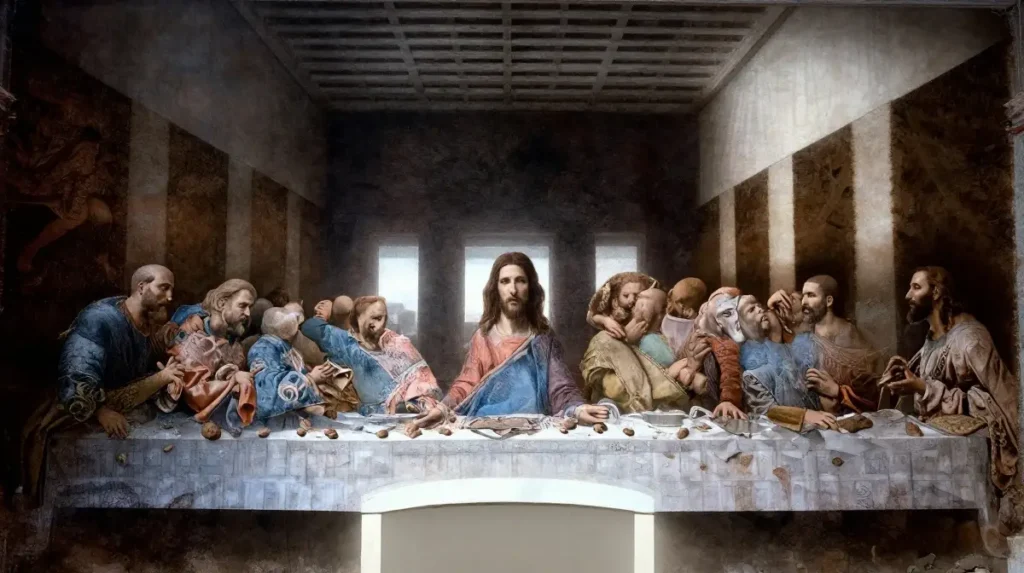
Last Supper tattoo design based on Leonardo da Vinci’s 1495 mural is one of the most requested and most technically demanding compositions in all of religious tattooing. The horizontal format — thirteen figures arranged across a long table with Christ at the center — presents compositional challenges that only the back and chest offer sufficient horizontal space to resolve properly. Da Vinci Jesus tattoo art in this format requires an artist who has studied the original composition with genuine scholarly attention.
Jesus tattoo design consultation for Last Supper compositions typically requires multiple sessions — the compositional complexity, the number of individual portrait-quality figures and the architectural background elements demand planning that cannot be compressed into a single meeting. Jesus tattoo background elements in the Last Supper scene — the perspectival ceiling, the landscape views through the windows, the table arrangement — are as important to the composition’s success as the figures themselves. Biblical narrative tattoo design doesn’t get more compositionally ambitious or more culturally loaded than this specific image which carries two thousand years of sacred and secular significance simultaneously.
Geometric and Abstract Jesus Tattoos That Deconstruct the Sacred Form
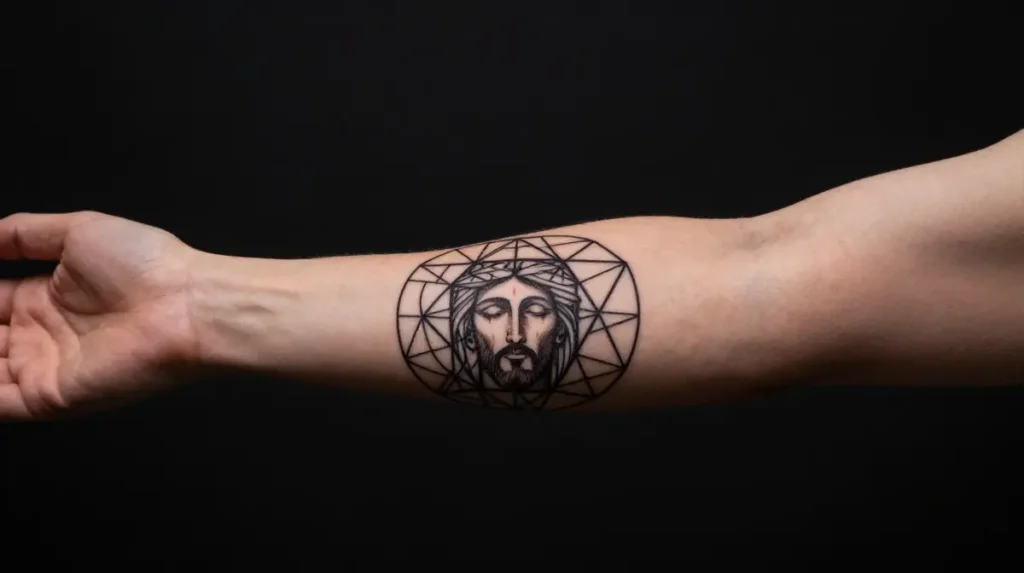
Jesus tattoo ideas geometric designs approach the divine through mathematics — sacred geometry providing a structural framework within which Christ imagery is simultaneously deconstructed and elevated. A Christ face built from interlocking triangles. The sacred heart rendered as a Fibonacci spiral. The crucifixion composition reduced to pure geometric abstraction while retaining complete theological recognizability.
Jesus tattoo ideas dark in the geometric tradition create compositions that feel simultaneously ancient and futuristic — connecting the sacred geometry of Gothic cathedral rose windows to contemporary tattoo aesthetics through a visual language that crosses cultural boundaries. Christian mythology tattoo symbolism filtered through geometric abstraction reaches collectors who want their faith represented through intellectual sophistication rather than straightforward representation. Jesus tattoo ideas spiritual in this style suit believers who find the divine most powerfully expressed through the mathematical order underlying all creation.
Jesus and Mary Tattoos — the Dual Devotion That Doubles the Meaning
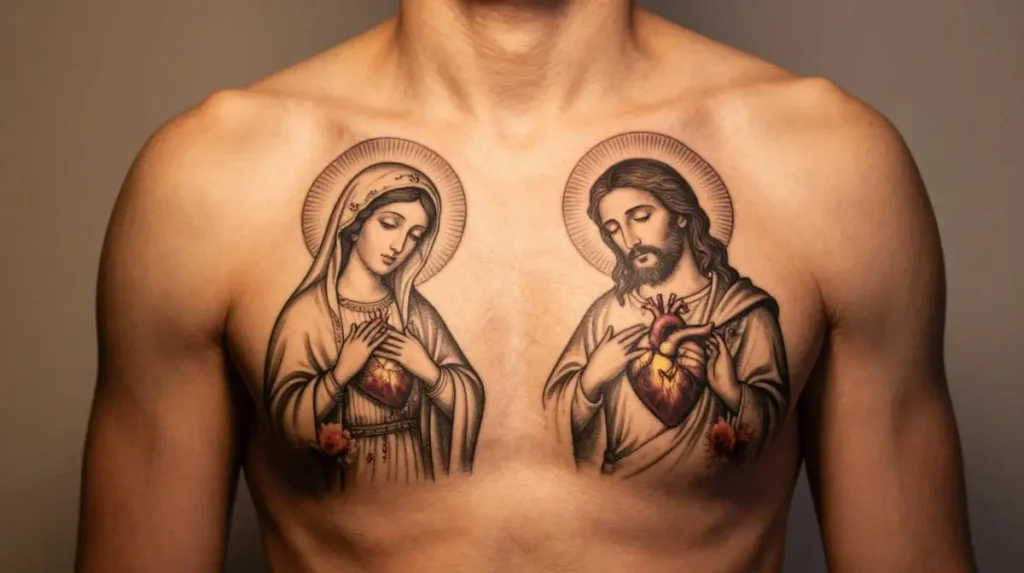
Jesus and Mary tattoo compositions hold Christianity’s two most devotionally significant figures in a single unified design — the divine son and his human mother creating a theological conversation about incarnation, love and the relationship between heaven and earth. Catholic devotional Jesus tattoo culture particularly embraces this dual imagery where the Sacred Heart of Jesus tattoo and the Immaculate Heart of Mary mirror each other in bilateral chest or arm compositions.
Jesus tattoo ideas for believers built around mother-and-son imagery carry personal resonance that extends beyond pure theology into human emotional experience — the love between mother and child as a reflection of divine love creates meaning accessible to believers and non-believers simultaneously. Jesus praying hands tattoo elements incorporated into Jesus and Mary compositions add a third devotional motif creating compositions of layered theological meaning. Latin American Jesus tattoo and Mexican Jesus tattoo devotional culture has produced some of the most visually spectacular Jesus and Mary compositions in contemporary tattooing — a tradition worth studying before any dual devotion design consultation.
Choosing the Right Artist for a Jesus Tattoo That Honors the Subject
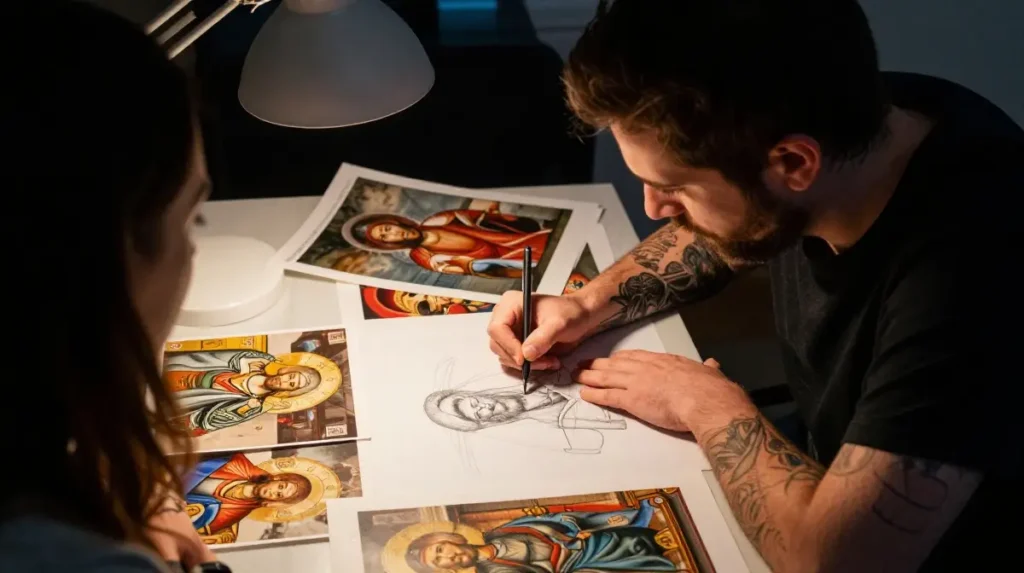
Jesus tattoo artist selection is the most consequential decision in the entire process and the stakes are higher than in non-religious tattooing. A poorly executed Christ portrait doesn’t just disappoint aesthetically — it potentially misrepresents a figure of profound sacred significance to the person wearing it. You owe the subject your most rigorous artist selection process. Jesus tattoo design consultation should include direct conversation about the artist’s experience with religious portraiture specifically.
Jesus tattoo portrait realism requires an artist whose portraiture portfolio demonstrates genuine mastery — look for healed examples not just fresh work. Examine how the artist handles eyes in portrait work — eyes are the most technically demanding and devotionally critical element in any Christ portrait. Jesus tattoo placement guide decisions should be made collaboratively between you and your chosen artist — a great religious portrait artist will have strong opinions about which placements serve which compositions and those opinions deserve serious weight. Jesus tattoo aging and longevity considerations should be part of every consultation — discuss which style choices will serve the piece best across decades not just in the weeks after the session.
| Placement | Best Composition | Pain Level | Longevity | Visibility |
|---|---|---|---|---|
| Back | Full crucifixion, Last Supper | Moderate | Excellent | Low |
| Chest | Sacred Heart, Portrait | Moderate | Very Good | Medium |
| Sleeve Arm | Gospel narrative | Moderate to High | Good | High |
| Forearm | Crown of Thorns, Portrait | Low to Moderate | Good | High |
| Wrist | Minimalist, Ichthus | Low | Moderate | High |
| Shoulder | Single figure portrait | Low | Very Good | Medium |
Jesus Tattoos and the Cultural Conversation They Start Without a Word

Jesus tattoo cultural meaning in American society operates in complex social territory. The USA carries the highest percentage of self-identified Christians of any developed nation and jesus tattoos visible in public spaces generate immediate cultural recognition and varied response. Some viewers see devotion. Some see cultural identification. Some see art. The tattoo doesn’t control its reception — but it consistently starts conversations that purely decorative body art never generates.
Jesus tattoo religious significance communicates differently across American subcultures. In Latino communities where Mexican Jesus tattoo devotional and Latin American Jesus tattoo traditions run deep, visible Christ imagery signals specific cultural and family heritage alongside personal faith. In predominantly Protestant communities a Protestant Jesus tattoo design communicates evangelical conviction and personal relationship with Christ. Jesus tattoo professional concerns vary by regional culture and industry — the American South generally receives visible religious body art more positively than coastal urban professional environments where tattoo content of any kind reads differently.
Frequently Asked Questions
Is it disrespectful to get a Jesus tattoo
Across most Christian denominations in the USA getting a jesus tattoo is considered a personal expression of faith rather than disrespectful. Some conservative Protestant traditions cite Old Testament prohibitions on body markings though most contemporary Christian theologians view these passages as contextually specific to ancient Israelite culture. Catholic devotional Jesus tattoo culture specifically embraces religious body art with deep historical roots. The most important question is whether the design treats the subject with genuine reverence.
What tattoo style works best for a realistic Jesus portrait
Jesus tattoo portrait realism in black and grey produces the most consistently powerful results for Christ portrait work. The tonal range available in black and grey — from deep shadow through every grey value to brilliant highlight — creates the dimensional depth that sacred portraiture requires. Jesus tattoo color vs blackwork decisions almost always favor monochromatic work for portrait realism because color introduces fading variables that undermine long-term portrait integrity.
Where is the best placement for a Jesus tattoo
Jesus tattoo placement guide recommendations depend entirely on the composition’s scale and format. Full narrative scenes suit the back. Portrait compositions suit the chest and upper arm. The jesus tattoo chest placement carries the most theological logic for sacred heart and portrait work. Jesus tattoo back placement accommodates the most ambitious compositional scales. Forearm placements suit medium-scale portraits and symbolic designs.
Do Jesus tattoos require more touch ups than other designs
Jesus tattoo touch up schedule follows the same general principles as any portrait tattoo — bold blackwork requires touch-ups every eight to ten years while fine line and watercolor work may need refreshing every three to five years. Jesus tattoo healing process runs approximately three to six months for complete dermal stabilization. Proper jesus tattoo aftercare tips followed consistently during healing significantly reduces the frequency of required touch-up work.
Can a Jesus tattoo be incorporated into a full sleeve
Absolutely. Jesus tattoo sleeve integration works most powerfully when the entire sleeve is planned as a unified biblical or devotional narrative from the beginning. Jesus tattoo flow and composition across a full sleeve should be designed as a complete artistic vision rather than assembled incrementally. Working with an artist who has experience in jesus tattoo sleeve ideas and understands how individual compositions connect across the arm produces dramatically more cohesive long-term results.
Conclusion
Faith has always needed a body to inhabit. It has never been content to remain abstract. The entire history of Christian art — from the catacombs of Rome through the Byzantine mosaics of Ravenna through Michelangelo’s Sistine ceiling through Caravaggio’s chiaroscuro masterpieces — is the history of believers insisting that the divine deserves the most skilled, most serious, most beautiful visual expression human hands can produce. Jesus tattoos continue that tradition in the most intimate possible medium — the body of the believer rather than a cathedral wall. Whether you choose a realism jesus tattoo portrait that stops people cold, a fine line skeleton hand tattoo delicate enough to be mistaken for a medical illustration or a minimalist Jesus fish tattoo that holds an entire faith in a single unbroken line — every Christ tattoo made with genuine devotion and genuine craft honors a tradition two thousand years deep. Choose your design with the seriousness it deserves. Choose your artist with absolute rigor. And wear whatever you choose with the full understanding that you’re not simply decorating skin — you’re continuing one of the longest and most profound artistic conversations in human history.
1 Comment