
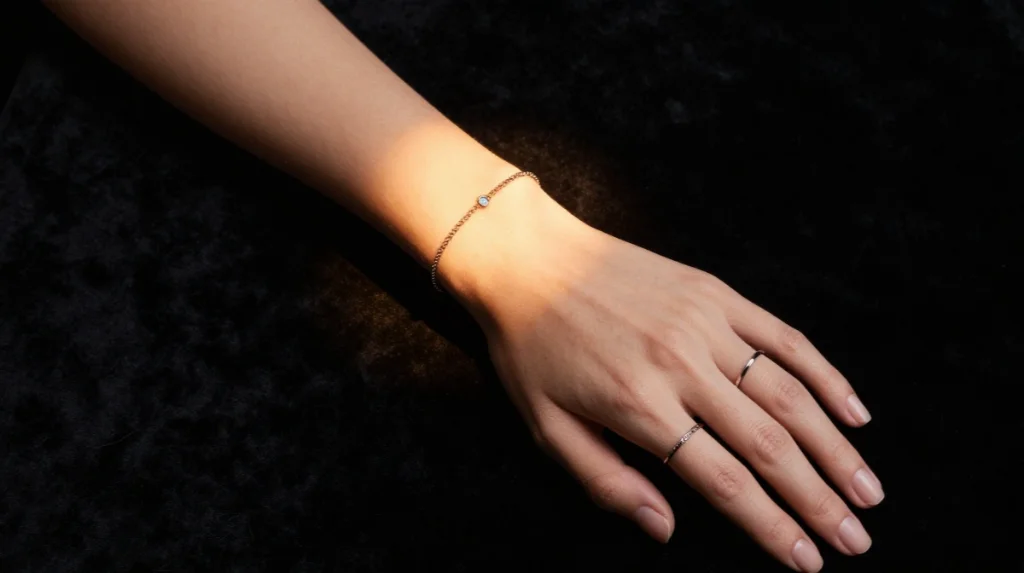
Skin has always been humanity’s first canvas. Before metal was forged into rings or shells were strung into necklaces, the body itself was the original adornment surface. Jewelry tattoos represent the most sophisticated contemporary evolution of that ancient impulse — the desire to decorate the body not with objects that can be removed, lost, or forgotten but with permanent marks that belong to the skin forever. These are not tattoos that happen to reference jewelry. They are jewelry — rendered in ink, designed with the same precision and luxury intention as the finest pieces at any jeweler’s counter, and worn without the weight, the tangling, or the ever-present risk of loss. This guide covers every dimension of this extraordinary category from ancient cultural roots to the finest contemporary techniques, so you arrive at your artist’s studio with complete understanding and complete confidence.
The Ancient Human Obsession With Adorning Skin That Never Stopped Evolving
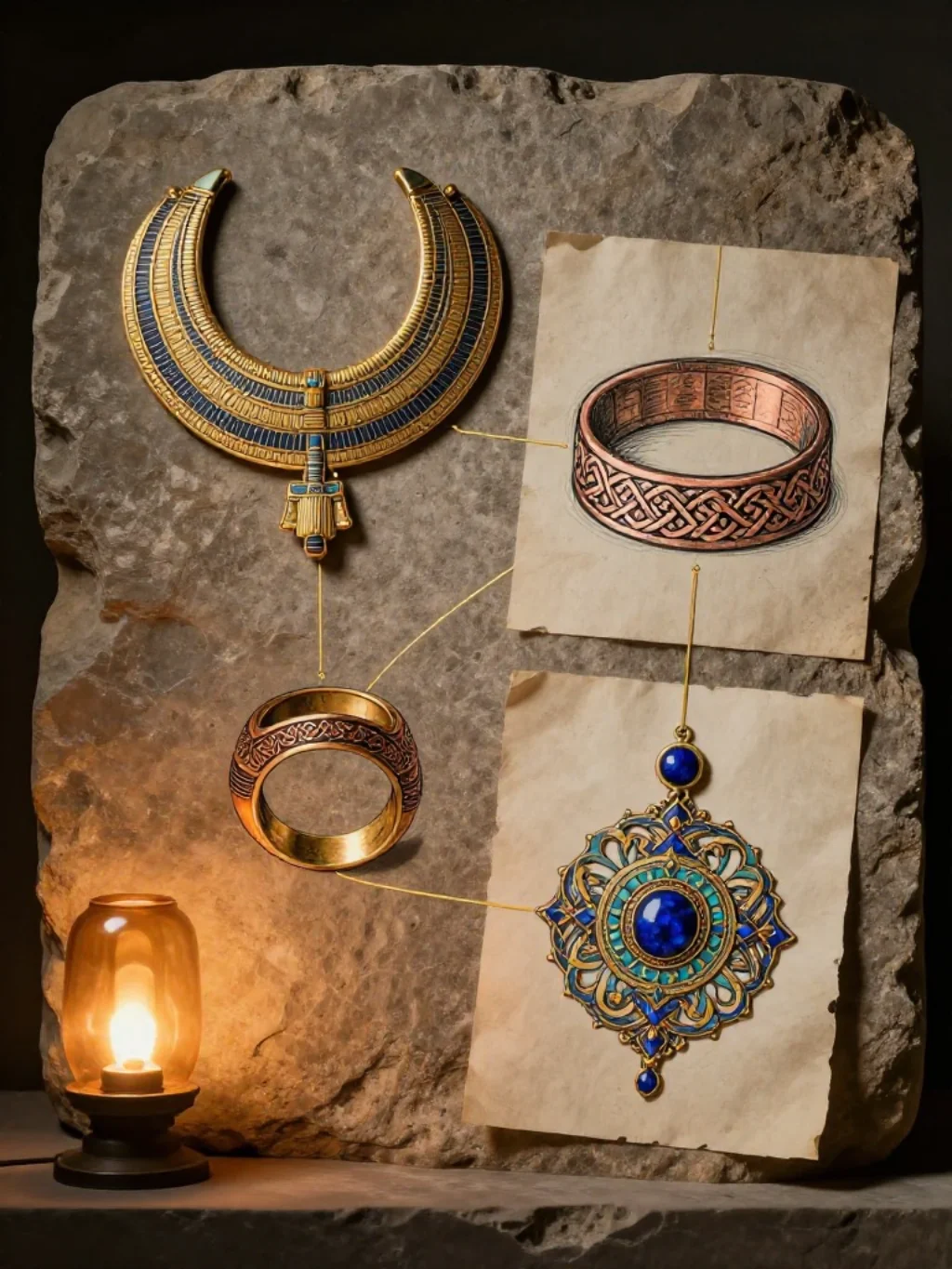
Body decoration through tattooing is older than agriculture, older than writing, older than most of what we consider civilization. Ötzi the Iceman — the 5,300-year-old mummy discovered in the Alps — carried 61 tattoo marks on his body, positioned with apparent therapeutic logic over acupuncture-adjacent points. Ancient Egyptian mummies show tattoo patterns that correspond closely to the positions of their era’s most popular jewelry — bracelets at the wrists, collars at the neck, ornamentation at the ankles. The boundary between jewelry and tattoo didn’t always exist as a conceptual category. Adorning the body was adorning the body regardless of the medium.
Permanent adornment through ink has followed human civilization’s trajectory with extraordinary faithfulness. Every culture that developed sophisticated jewelry traditions also developed sophisticated tattooing traditions. The Hindu temple jewelry tattoo art tradition and the ancient body decoration practices of the subcontinent share the same visual vocabulary of intricate geometric ornamentation. The Egyptian jewelry tattoo inspiration tradition reflects the same aesthetic sensibility as the gold collars and beaded pectorals found in pharaonic tombs. Wearable art through permanent ink isn’t a modern invention — it’s a return to a practice so ancient it predates the distinction between the two art forms that contemporary culture treats as separate categories.
Jewelry Tattoos and the Permanent Accessory Revolution Changing Modern Beauty
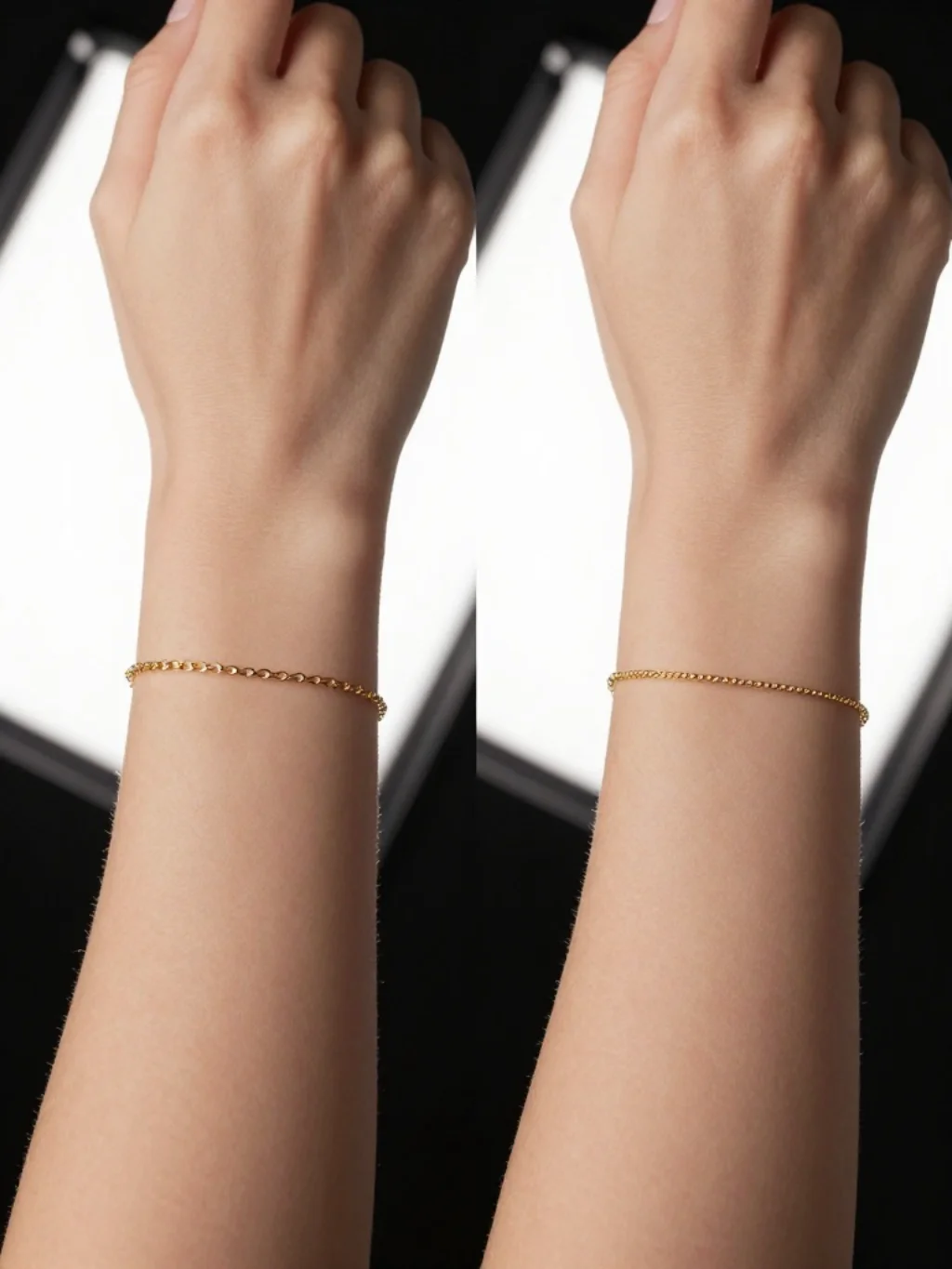
What are jewelry tattoos in the contemporary context? They’re tattoos designed specifically to replicate, reference, or replace the visual effect of actual jewelry — rings, bracelets, necklaces, anklets, earrings, chains — rendered in ink with sufficient realism, delicacy, or artistic precision that the result reads as adornment rather than simply decoration. Jewelry tattoo meaning and symbolism extends beyond the visual replication of precious objects into something more philosophically significant: the transformation of the body itself into the jewel, rather than the container for jewelry. When you wear a diamond ring, your finger carries the ring. When you wear a realistic diamond ring tattoo on finger design, your finger is the ring.
Permanent accessory body art has experienced a remarkable surge in demand over the past decade and the cultural forces driving that surge are both practical and philosophical. Practically: jewelry can be lost, stolen, or damaged; a tattoo cannot. Many workplaces, sports, and social contexts require the removal of physical jewelry; a jewelry tattoo travels with you invisibly through every context. Philosophically: the skin as jewelry canvas concept appeals to a generation that increasingly values permanence, intentionality, and the idea that identity should be expressed through the body itself rather than through removable objects that reflect purchasing power. Accessory free permanent styling through tattooing is the most authentic form of self-decoration available — it costs nothing to wear after the initial session and it never needs to be taken off.
The Trompe Loeil Mastery That Makes Ink Look Like Gold Sitting on Skin
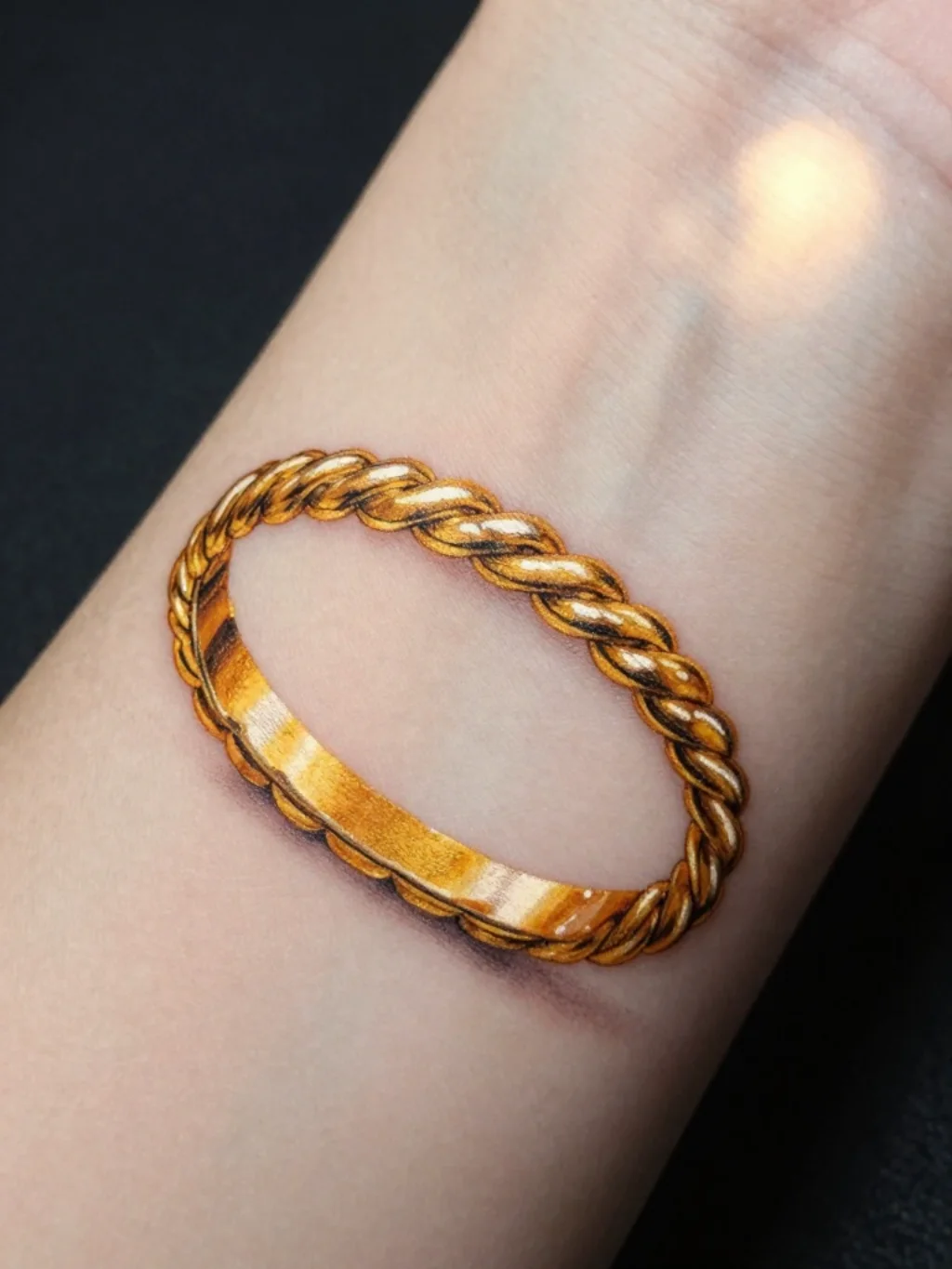
Trompe loeil jewelry tattoo art — from the French phrase meaning “deceives the eye” — is the technical pinnacle of jewelry tattoo designs. A trompe loeil tattoo doesn’t simply represent jewelry. It replicates it so convincingly that observers genuinely question whether what they’re seeing is ink or metal. Achieving this illusion requires a tattooist who understands not just how to draw jewelry but how to understand the physics of light on metallic surfaces — the specific quality of a specular highlight on polished gold, the way reflected light bounces into the shadow side of a curved silver surface, the precise tonal relationship between the brightest point on a gemstone and its darkest internal shadow.
Luxury body art jewelry designs rendered in the trompe loeil tradition operate on the same optical principles as classical still-life painting — the Dutch masters who made paint look like silk, velvet, and gold in the 17th century were solving exactly the same artistic problem that contemporary tattoo artists face when rendering a realistic gold bracelet tattoo on wrist design. The difference is the medium. The optical logic is identical. Fine jewelry inspired tattoo art at the trompe loeil level requires an artist who understands material-specific light behavior — gold reflects differently from silver, which reflects differently from platinum, which reflects differently from the internal fire of a faceted gemstone. Each material demands a distinct rendering approach and the most accomplished jewelry tattoo artists have mastered all of them.
Diamond Ring Tattoos and the Finger Placement That Outshines Every Real Stone
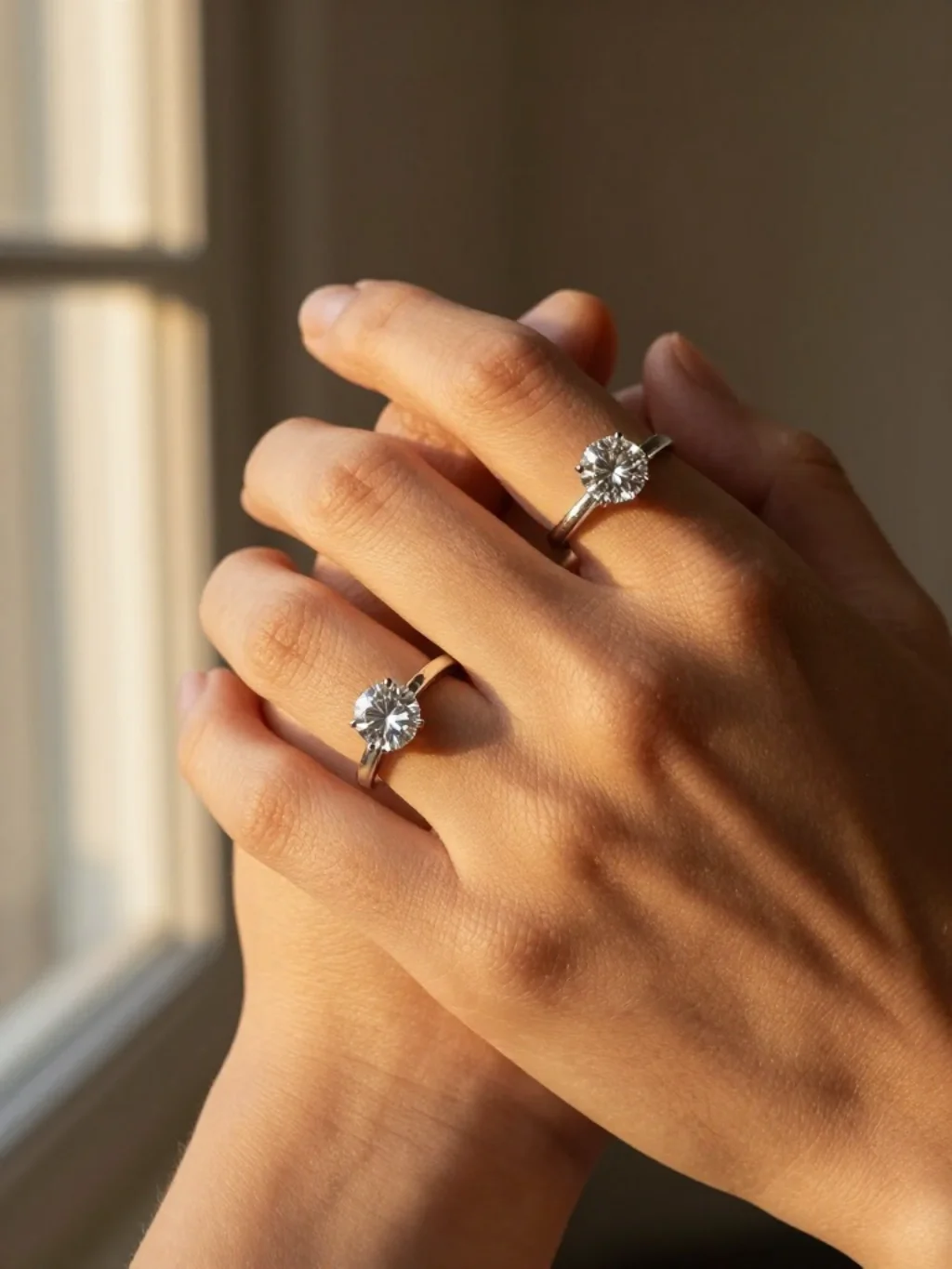
Realistic diamond ring tattoo on finger design sits at the intersection of the most technically demanding and the most symbolically loaded category in all of jewelry tattoo art. The finger is a challenging canvas — small, curved, constantly in motion, subject to significant sun exposure, and prone to ink migration and fading faster than most other placements. Yet the finger ring tattoo carries a symbolic weight that no other placement can replicate, because ring-wearing on the fingers — particularly the left fourth finger — is one of humanity’s most universally understood visual languages for commitment, love, and permanent bond.
Jewelry tattoo on finger meaning varies significantly by which finger carries the design. The fourth finger of the left hand carries the weight of engagement and marriage traditions stretching back to the ancient Roman belief in the vena amoris — the “vein of love” believed to connect that specific finger directly to the heart. A minimalist ring tattoo on finger ideas piece on this finger communicates relationship permanence more powerfully than a removable ring ever can because it cannot be slipped off during arguments, forgotten at the gym, or lost at the beach. Finger ring tattoo designs on the index finger carry associations with leadership and authority. On the middle finger, visual boldness and defiance. On the thumb, willpower and personal strength. The choice of finger is as significant as the design itself.
| Finger Placement | Traditional Symbolism | Best Design Style | Longevity Consideration |
|---|---|---|---|
| Left fourth finger | Love, commitment, marriage | Minimalist band, diamond solitaire | Moderate — sun exposure |
| Index finger | Authority, leadership | Bold band, statement gem | Lower — high friction |
| Middle finger | Boldness, defiance | Geometric, blackwork band | Moderate — high motion |
| Thumb | Willpower, strength | Thick band, ornamental | Lower — significant friction |
| Right fourth finger | Independence, self-love | Delicate fine line | Moderate |
| Pinky | Affiliation, promise | Thin fine line, minimal | Moderate — less friction |
Bracelet Tattoos — the Wrist Adornment That Never Tangles Never Tarnishes
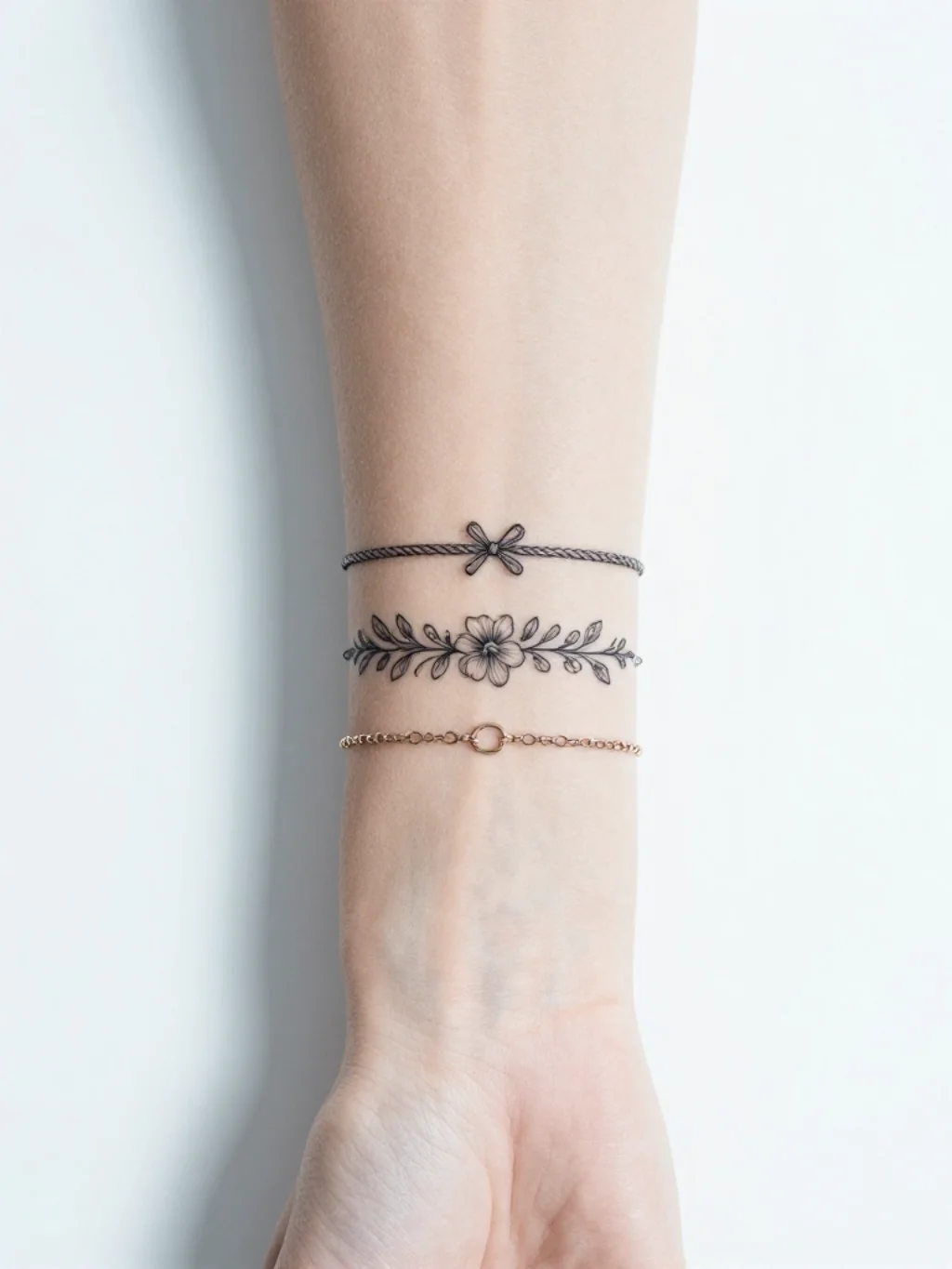
Bracelet tattoo ideas circle the wrist with permanent visual authority that no physical bracelet can match for pure daily convenience and symbolic continuity. A bracelet tattoo wrist design with floral elements — fine-line botanicals wrapping the wrist in an unbroken circle — reads as simultaneously delicate and determined: delicate because of the rendering style, determined because it will never come off. The Cartier love bracelet tattoo design — one of the most famous inspirations in this category — draws on the iconic screw-closure bracelet design that Cartier intended to be worn permanently. A tattoo version makes that permanence literal.
Permanent bracelet tattoo art at its most sophisticated operates as a complete compositional system that uses the wrist’s circular topology to create designs that have no beginning and no end — just as a bracelet itself is a continuous object. Stacked bracelet tattoo ideas on wrist collection take this concept further by layering multiple bracelet-reference designs at slightly different positions along the wrist and lower forearm, mimicking the stacked bracelet trend that has been consistent in jewelry fashion for decades. Wrist jewelry tattoo designs in the contemporary moment range from the razor-thin single-line band of maximalist minimalism to the elaborate multi-element compositions of Van Cleef and Arpels inspired tattoo work — intricate floral and geometric elements arranged in the characteristically lush Van Cleef visual vocabulary.
Chain Necklace Tattoos That Drape the Collarbone Like a Designer Original
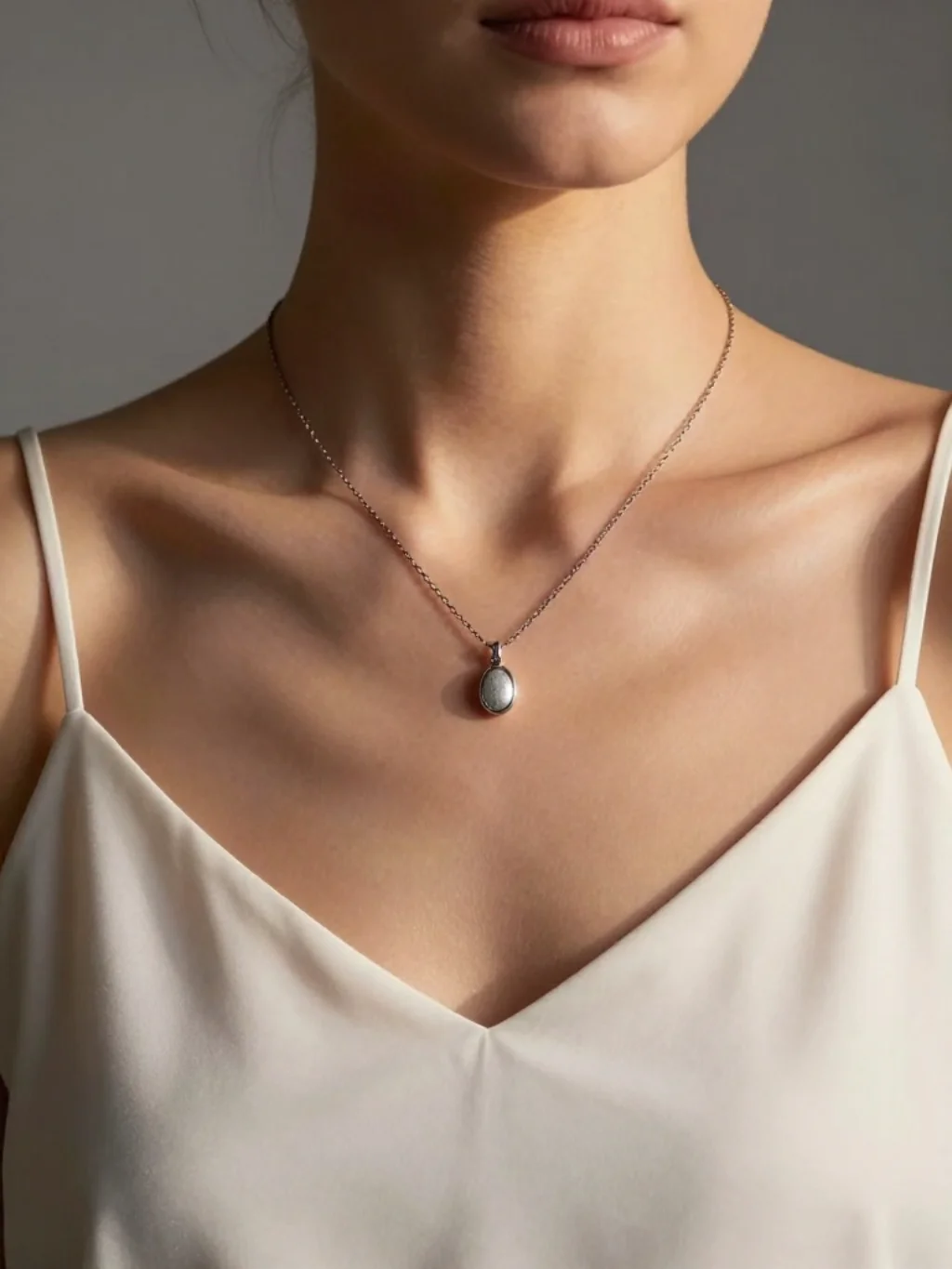
Delicate chain necklace tattoo on collarbone designs represent the most photographically celebrated category in contemporary jewelry tattoo art. The collarbone’s natural horizontal prominence creates an ideal architecture for necklace-reference tattoos — the design follows the bone’s own line, appearing to rest on the surface of the skin exactly as a physical necklace would. Fine line jewelry tattoo on wrist or collarbone pieces in this category consistently rank among the most shared tattoo imagery on platforms like Instagram and Pinterest, where the collarbone’s photogenic quality in portrait photography gives these pieces extraordinary visual reach.
Layered necklace tattoo design on chest and collarbone extends this concept beyond a single chain reference into the elaborate multi-chain compositions that contemporary jewelry culture has popularized. Jewelry tattoo ideas on collarbone can range from the simplest representation — a single delicate fine-line chain with one pendant — to elaborate compositions that incorporate multiple chain types, gemstone pendants, botanical charms, and biographical elements like initials or birth dates. Necklace tattoo ideas in the Art Nouveau jewelry tattoo art tradition incorporate flowing organic forms, feminine figural elements, and botanical motifs in the style of the late 19th and early 20th century jewelry movement that treated natural forms as the highest inspiration for decorative art.
Pearl Necklace Tattoos and the Quiet Elegance Making a Thunderous Comeback
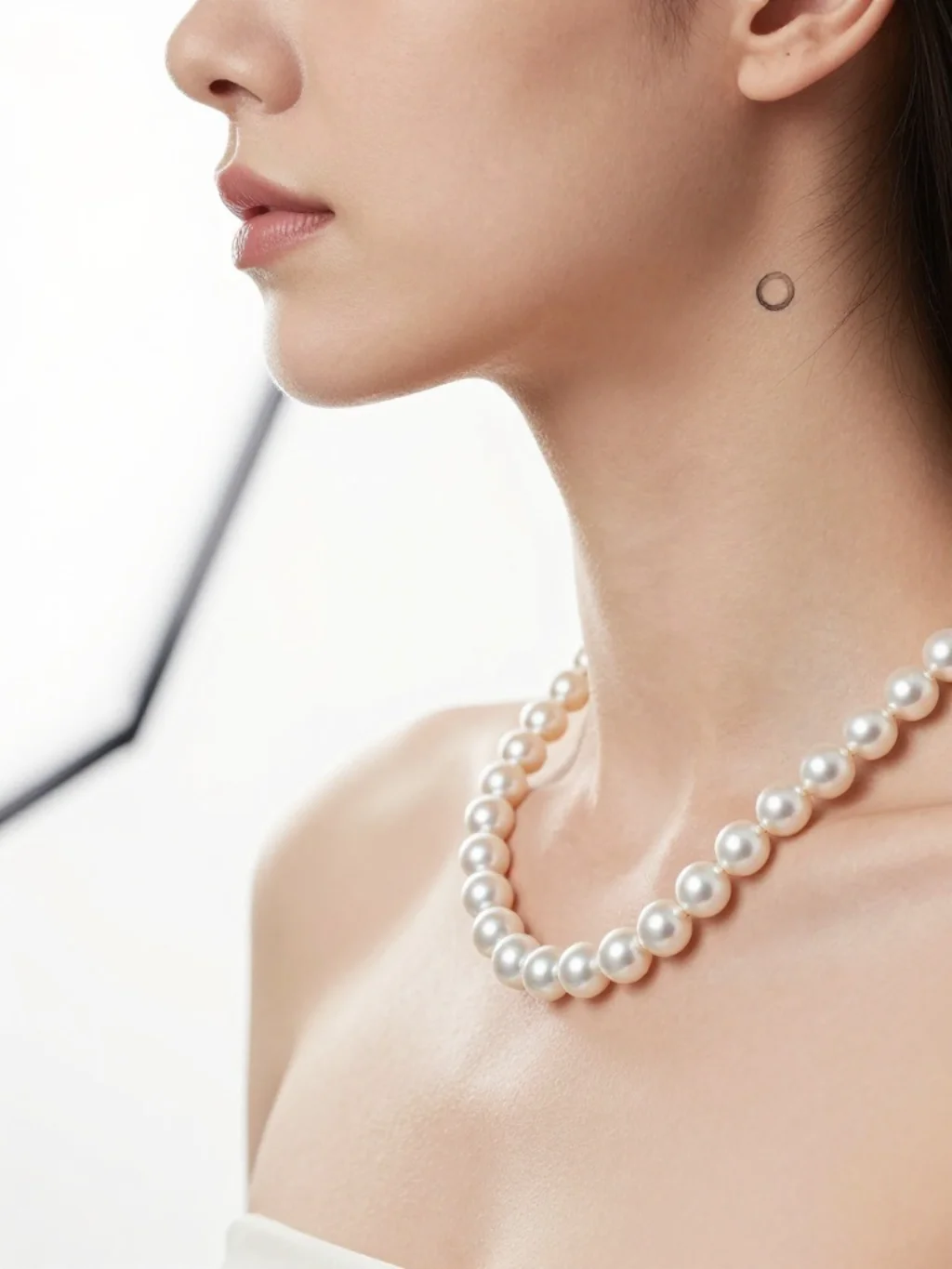
Pearl tattoo ideas have experienced a cultural renaissance that mirrors the broader revival of pearl jewelry itself in contemporary fashion. Pearls — long associated with old-fashioned formality — have been reclaimed by younger generations as symbols of understated luxury, feminine power, and the value of things that form through time and pressure rather than through manufacturing. Pearl necklace tattoo design with fine line detail brings this reclaimed symbolism into permanent form, creating a piece that references one of the most historically loaded objects in jewelry history while positioning it within the contemporary fine line aesthetic.
you may also like this:22 Seraphim Angel Tattoo Ideas for Divine Inspired Ink
Chanel pearl necklace tattoo design and Mikimoto pearl tattoo inspiration are two of the most consistently referenced brand aesthetics in pearl jewelry tattoo design — the former for its layered, multi-strand approach that Coco Chanel made iconic; the latter for its single-strand perfection that represents the apex of traditional pearl presentation. Pearl tattoo ideas in fine line rendering require an artist who can suggest the perfect spherical form of a pearl — its specific diffused highlight, its subtle translucency, the way adjacent pearls reflect each other’s surfaces — in minimal strokes without losing the visual lightness that makes pearl jewelry so distinctive. Heavy rendering kills the pearl’s essential quality. Restraint creates it.
Ankle Jewelry Tattoos — the Underrated Canvas Every Artist Should Know About
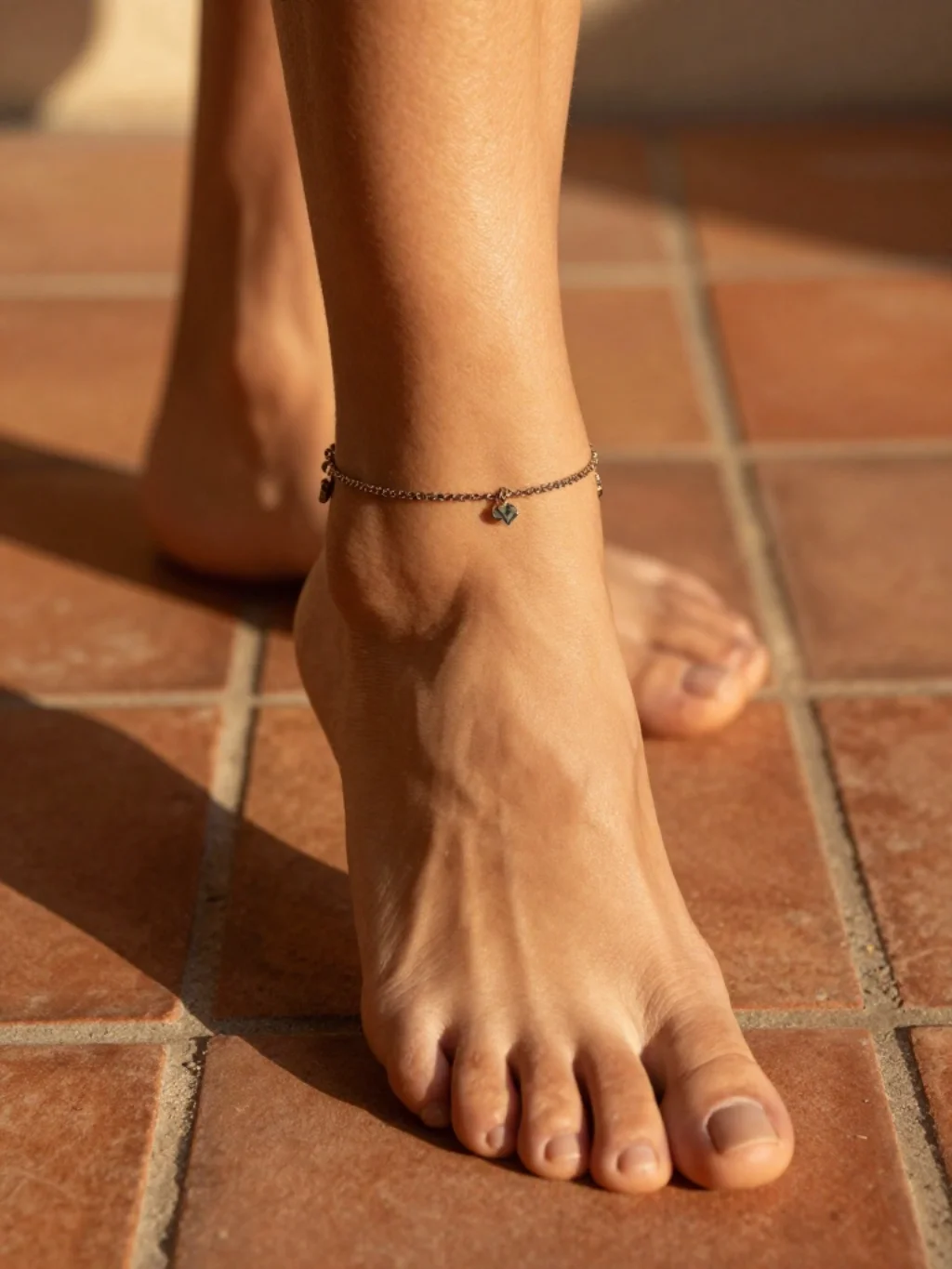
Ankle bracelet tattoo designs occupy one of the most historically rich and cross-culturally significant jewelry placements on the human body. In South Asian traditions — particularly across India, Pakistan, and Nepal — ankle jewelry carries profound cultural significance. The payil or payal, the traditional silver ankle bells worn by women, announce presence through sound as much as sight and carry associations with femininity, auspiciousness, and social identity. Ankle jewelry tattoo with chain and charm details designed within these cultural frameworks reference an entire tradition of adorned feminine presence that stretches back millennia.
Jewelry tattoo on ankle ideas in the contemporary Western context range from the delicately minimalist — a single fine-line chain tattoo that circles the ankle at exactly the position a delicate anklet would rest — to the elaborately composed, incorporating charms, gemstones, botanical elements, and biographical details within the anklet’s circular framework. The ankle’s position at the body’s lowest visible point creates a specific viewing context: ankle tattoos are discovered rather than immediately noticed, seen when the wearer sits, crosses their legs, or wears sandals. That discovery quality gives anklet tattoo designs an intimate, personal dimension that higher-visibility placements don’t possess.
Behind the Ear and Along the Hairline — the Secret Garden of Jewelry Tattoos
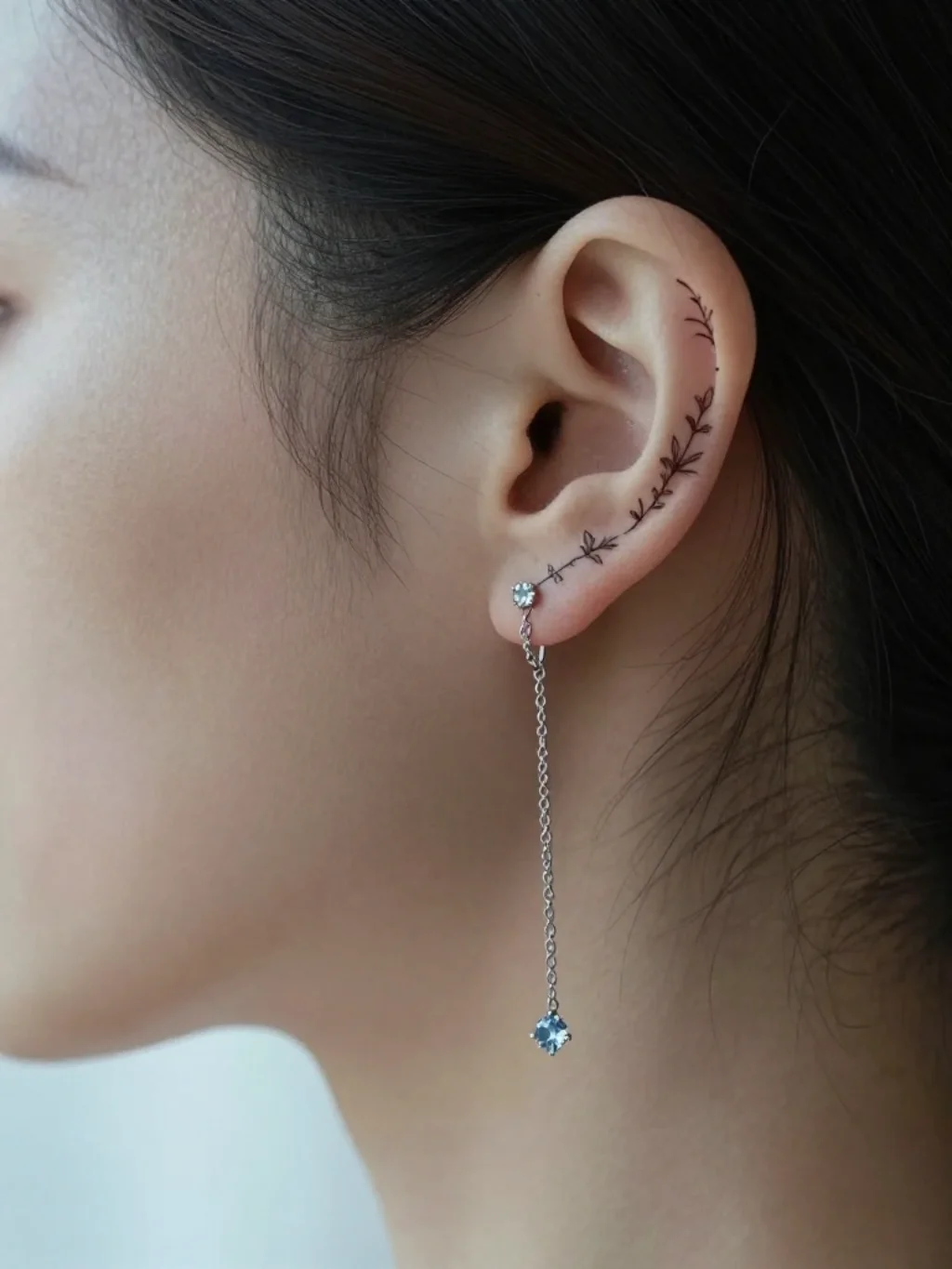
Fine line ear jewelry tattoo behind ear design exists in perhaps the most secretive placement available in body art. Behind the ear is a placement that the wearer rarely sees themselves — it’s designed for moments of discovery by those physically close enough to notice it. This intimate visibility creates a powerful social dynamic: the behind-ear tattoo is a piece shared with people in your most intimate physical proximity. Ear jewelry tattoo designs that reference earrings, ear cuffs, or cascading ear chain jewelry in this location create the illusion that the wearer is perpetually wearing an extraordinary earring that never needs to be changed or removed.
Jewelry tattoo designs that follow the hairline or curve around the ear structure can create stunning trompe loeil effects when the hair is worn up. A fine-line chain design that appears to emerge from behind the earlobe and cascade along the jaw references the ear chain jewelry pieces that have appeared consistently in high fashion editorial contexts. Body jewelry tattoo art in this category requires an artist with exceptional fine-motor precision and genuine understanding of how the ear’s complex three-dimensional topography interacts with the tattoo design’s two-dimensional rendering. The ear’s curves, peaks, and hollows create both compositional opportunities and technical challenges that only the most skilled artists navigate successfully.
Gem and Gemstone Tattoos That Capture Light in Ways Real Jewels Envy
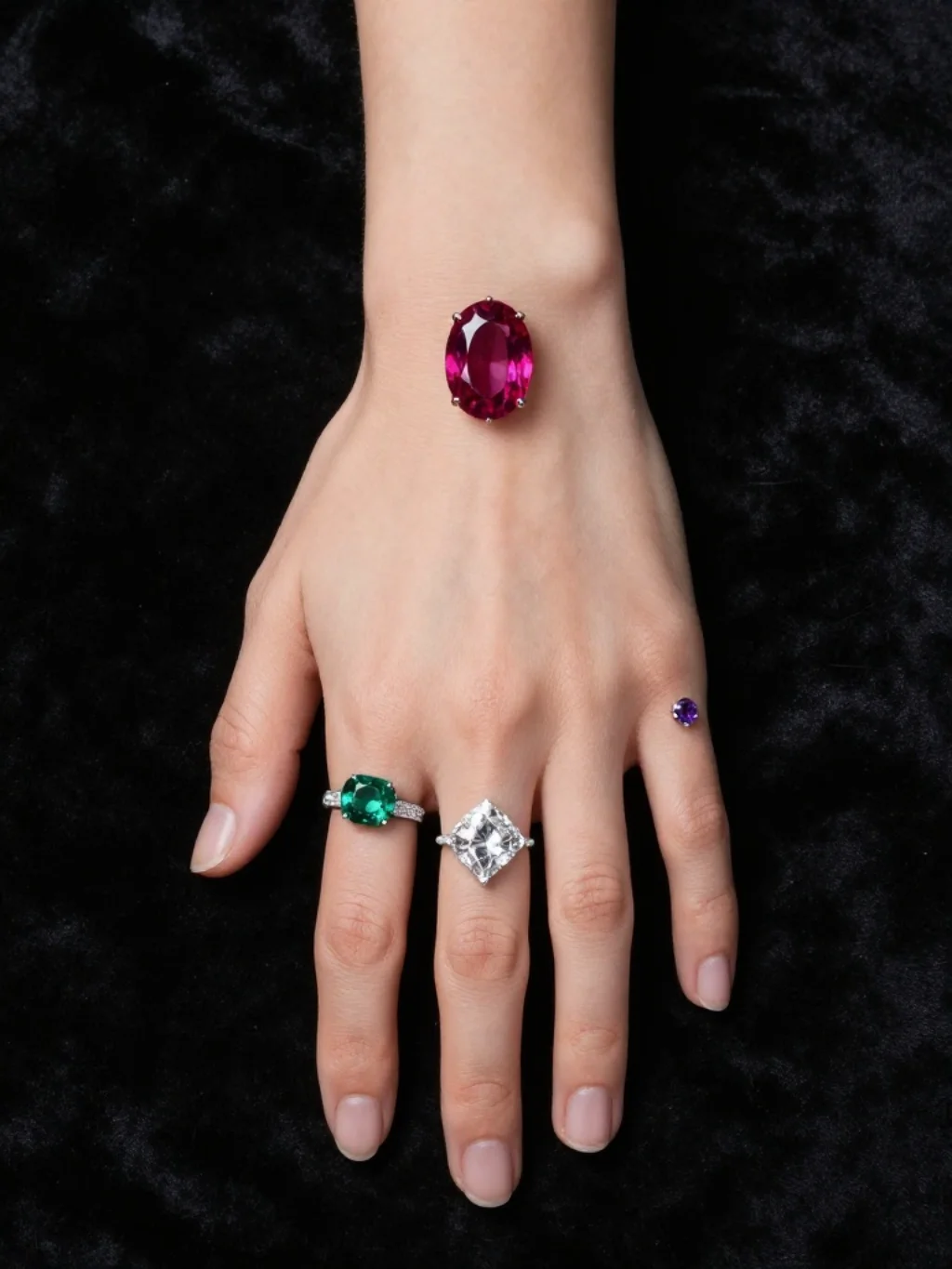
Gem tattoo designs represent one of the most technically ambitious categories in the entire jewelry tattoo universe. A genuine gemstone — a ruby, an emerald, a sapphire, a diamond — works through the physical interaction of light with crystalline structure, producing fire, brilliance, and scintillation through actual optical physics. Replicating this visual experience in tattooed ink on skin requires a completely different approach: creating the impression of light interaction through careful tonal arrangement, strategic use of white ink highlights, and an understanding of how the human visual system interprets small areas of extreme tonal contrast as luminosity.
Jewelry tattoo incorporating birthstone gem design represents the most personally meaningful application of gemstone tattooing — incorporating the specific color, cut, and visual character of a birthstone into a design that carries permanent biographical significance. Jewelry tattoo ideas with gemstones span the full spectrum of precious and semi-precious stone references: the deep pure blue of a sapphire, the intense verdant green of an emerald, the warm bloody red of a ruby, the cold clear brilliance of a diamond, the mysterious blue-green of aquamarine. Watercolor jewelry tattoo with gemstone color effects approaches the gemstone challenge differently — using watercolor technique’s loose, luminous color washes to suggest the internal color and light of a gemstone without attempting photorealistic crystallographic rendering.
Fine Line Jewelry Tattoos That Make the Collarbone a Gallery Wall
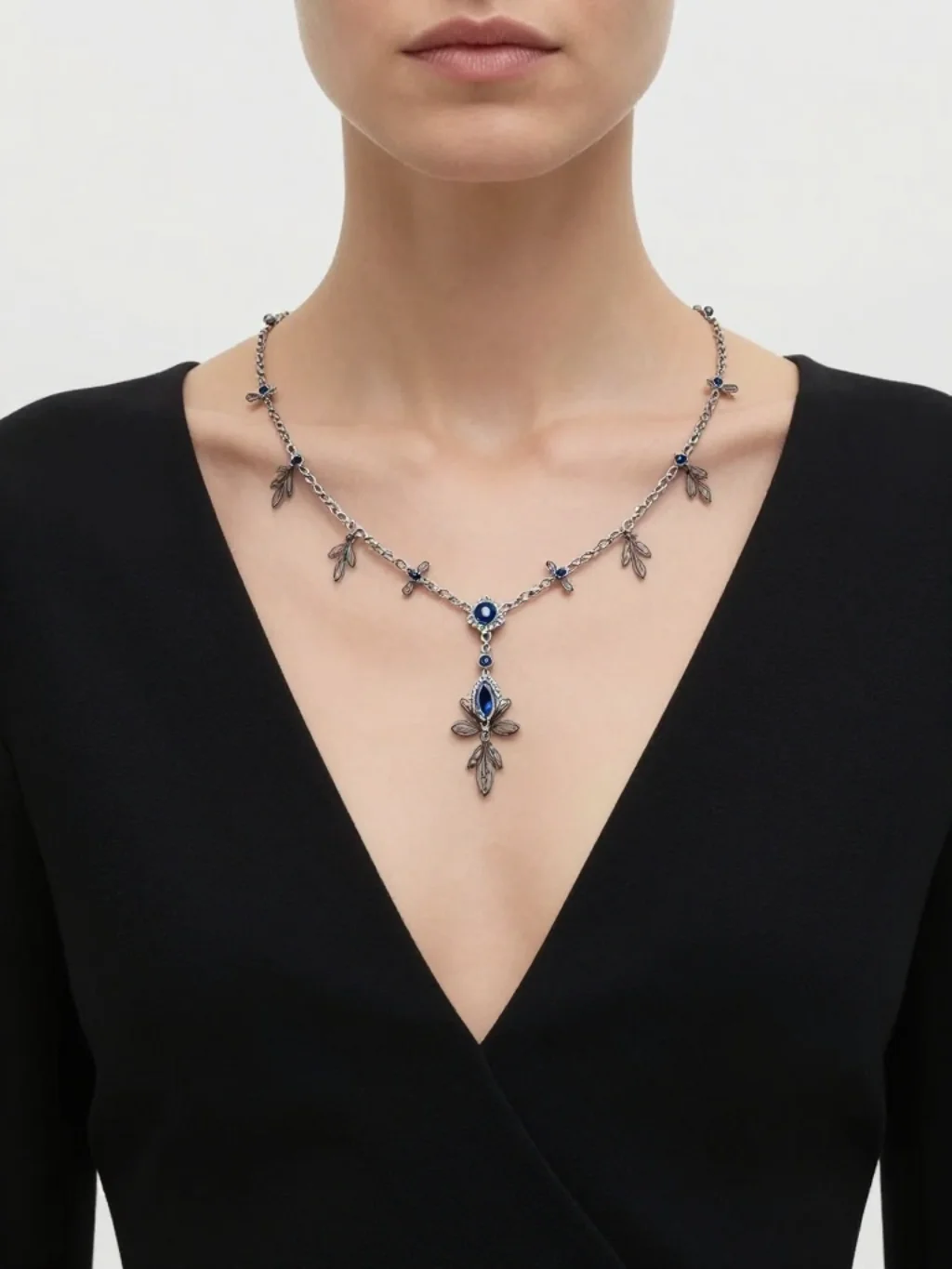
Fine line jewelry tattoo designs have transformed the collarbone into contemporary body art’s most coveted gallery space. The collarbone’s horizontal prominence, its proximity to the face, and its visibility in the necklines of most contemporary clothing makes it an ideal architectural feature for jewelry-reference tattoos that want maximum visual impact from minimum ink. Fine line ornamental body art on the collarbone operates at the boundary of visibility — pieces so delicate they require close inspection to fully appreciate yet substantial enough to read clearly from conversational distance.
Dainty jewelry tattoo designs on the collarbone consistently produce some of the most widely shared tattoo content on social media because the placement photographs magnificently in portrait orientation — the standard format for social media imagery. A delicate chain necklace tattoo on collarbone in single-needle fine line work photographs as if the wearer is perpetually adorned by something impossibly beautiful. Jewelry tattoo ideas on collarbone at the most elaborate end of the spectrum create gallery-quality compositions that treat the entire collarbone-to-sternum area as a unified canvas: a central pendant element flanked by symmetric chain arrangements, botanical accents, and perhaps gemstone details in strategically placed color accents.
Ornamental Sleeve Tattoos Built From Chains Gems and Cultural Jewelry Heritage
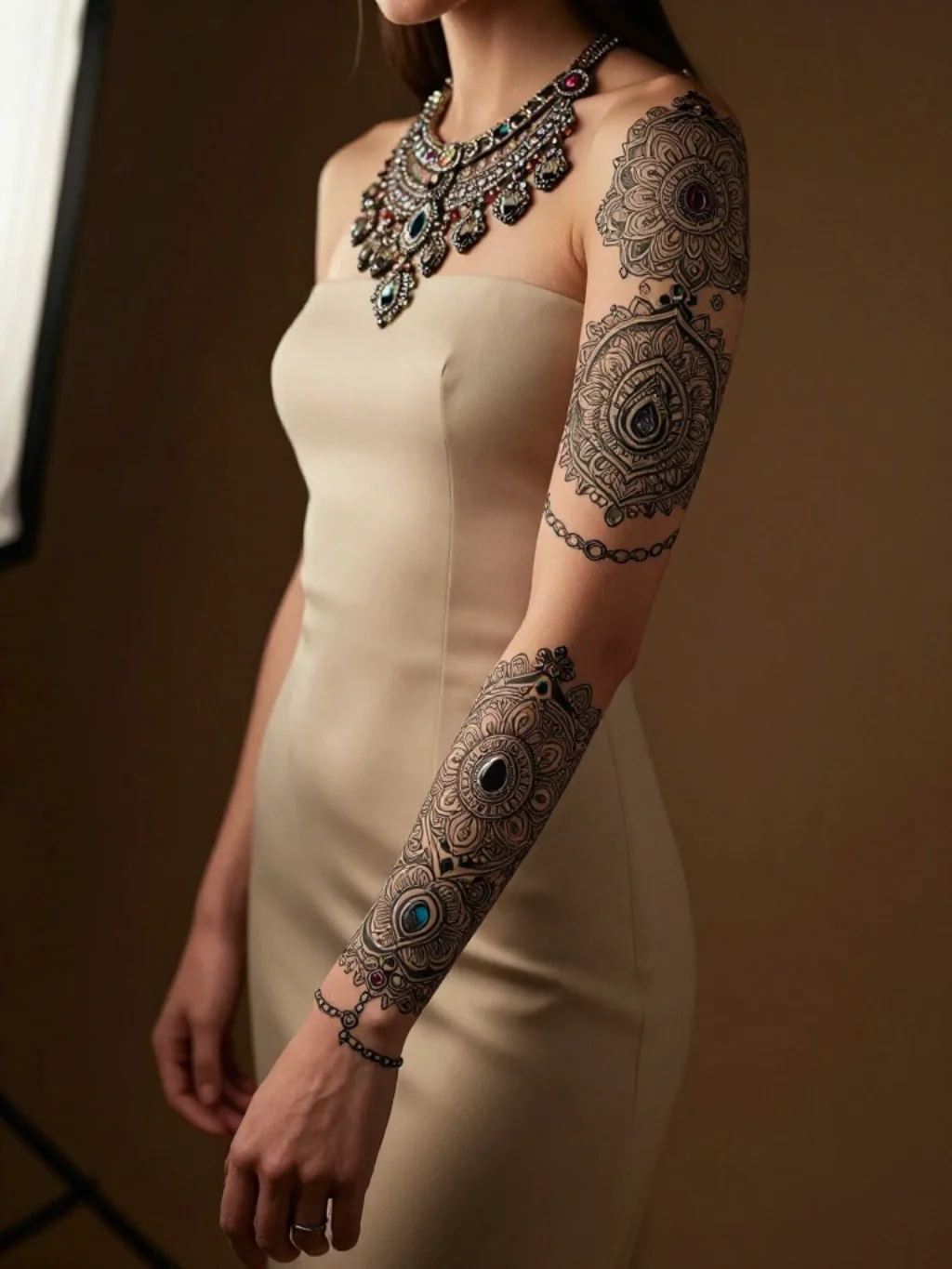
Jewelry tattoo sleeve incorporating gemstones and chains represents one of the most ambitious compositional undertakings in contemporary body art. A full arm sleeve built from jewelry-reference elements — chains that link compositionally across the entire arm’s length, gemstone focal points at anatomically appropriate positions, bracelet-reference bands at the wrist, ring-reference designs at the finger bases, and elaborate ornamental compositions filling the upper arm and shoulder — creates a complete wearable jewelry wardrobe rendered in permanent ink from fingertip to shoulder.
Ornamental tattoo designs in the sleeve format draw from the richest possible range of cultural jewelry traditions to create compositions of extraordinary depth and visual complexity. An ornamental jewelry tattoo with mandala elements sleeve might incorporate Mughal jewelry tattoo inspiration at the shoulder — the elaborate floral and geometric motifs of Mughal court jewelry — transitioning to Byzantine jewelry tattoo inspiration in the mid-arm — the dense, mosaic-like complexity of Byzantine enamel and gold work — and arriving at a clean fine-line chain composition at the wrist. Each cultural aesthetic contributes its own visual language while the composition’s careful planning maintains coherence across the full arm’s length.
The Cultural Archive — Ancient Jewelry Traditions Reborn as Permanent Body Art
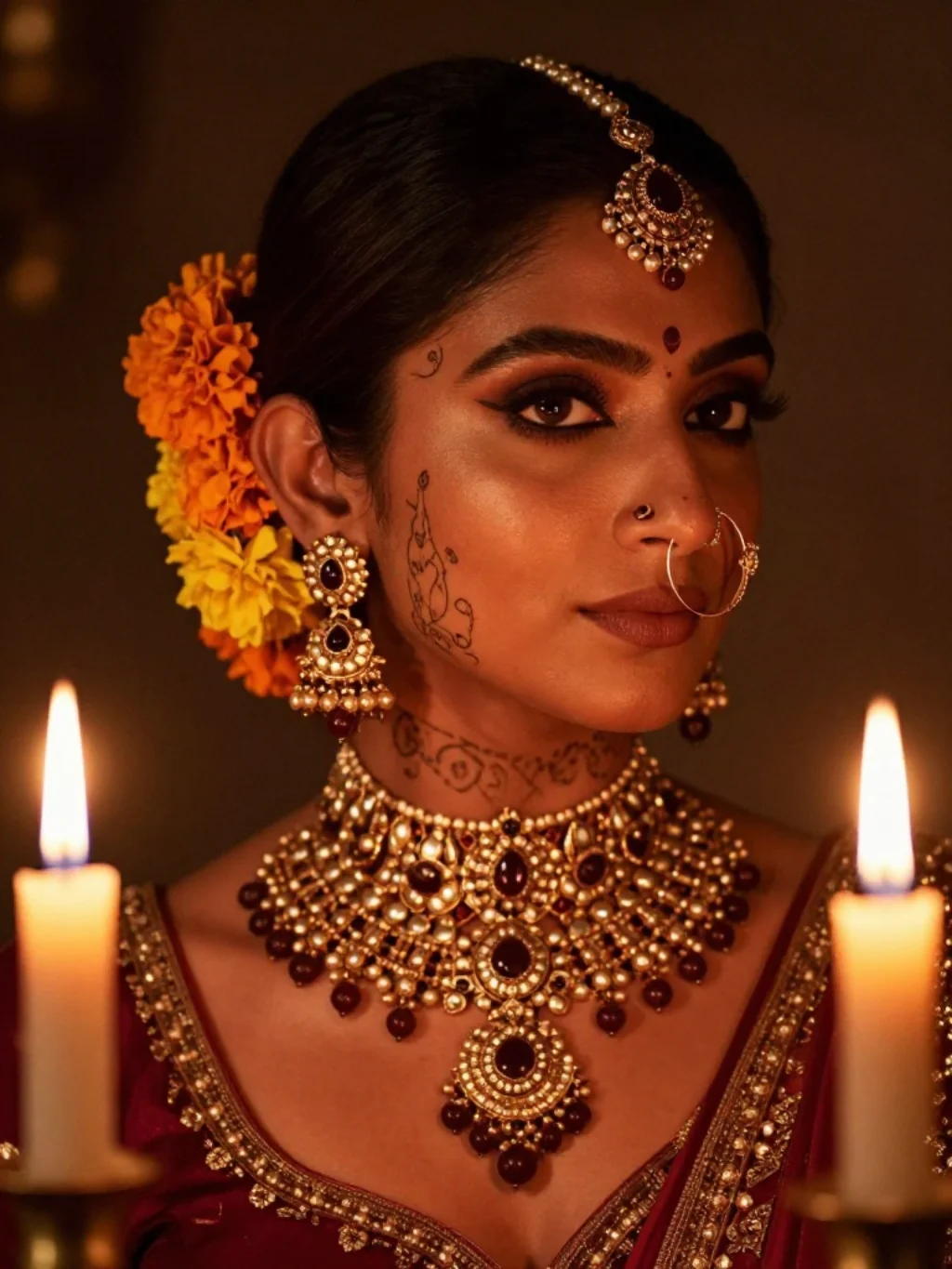
Jewelry tattoo combining cultural and heritage symbols performs a function that purely decorative tattoo work cannot: it preserves and transmits cultural identity through the permanent medium of body art. For members of diaspora communities whose physical access to cultural jewelry traditions has been disrupted by migration, assimilation, or the generational loss of material culture, a jewelry tattoo referencing ancestral adornment traditions becomes an act of cultural reclamation. The Indian maang tikka tattoo design — the forehead ornament worn at the center parting of the hair, traditionally at weddings and religious ceremonies — carries an entire cultural grammar of feminine identity, auspiciousness, and familial belonging.
Egyptian jewelry tattoo inspiration draws from one of the most visually distinctive and historically documented jewelry traditions in human history — the gold collars, lapis lazuli scarabs, faience beaded pectorals, and elaborate head ornaments found in pharaonic burial contexts. Greek jewelry tattoo art and Roman jewelry tattoo designs reference the classical antiquity that has influenced Western jewelry design continuously for two millennia. Celtic jewelry tattoo designs draw from the intricate knotwork and La Tène style spirals of Iron Age Celtic metalwork. Japanese kanzashi jewelry tattoo references the elaborately decorated hair ornaments of traditional Japanese aesthetic culture. Each of these traditions contains a complete visual vocabulary that provides extraordinary richness to jewelry inspired body decoration.
Mandala and Sacred Geometry Jewelry Tattoos That Carry Civilizational Weight
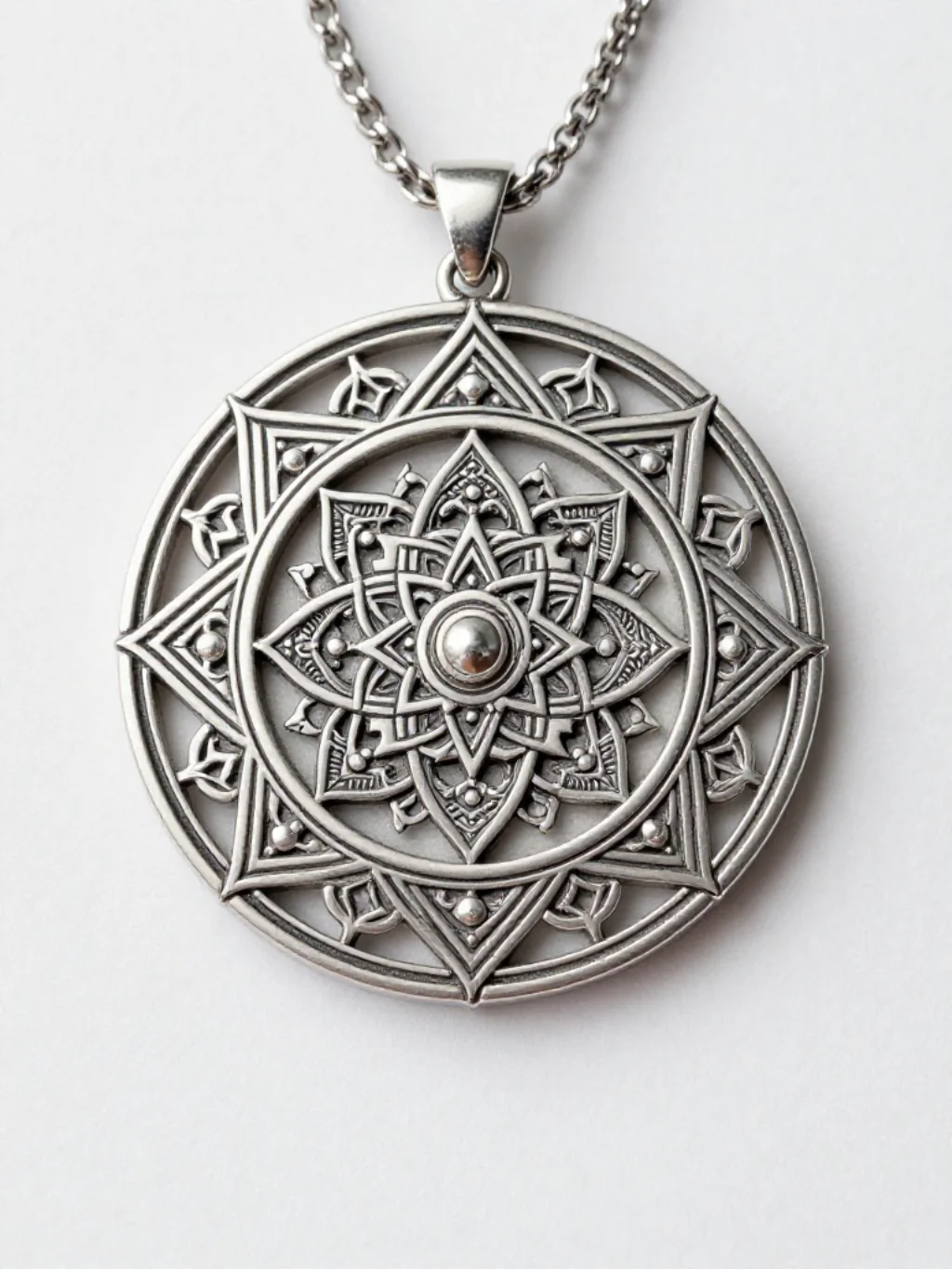
Mandala jewelry tattoo ideas merge two of the most symbolically loaded categories in all of body art into a single design tradition. The mandala — a Sanskrit word meaning “circle” — appears in virtually every visual culture that has produced sophisticated decorative art, from the yantra diagrams of Hindu ritual practice to the rose windows of medieval European cathedrals to the sand paintings of Tibetan Buddhist tradition. Applied to jewelry tattoo design, mandala principles produce circular compositions of extraordinary geometric complexity that reference the radially symmetrical structure of the most elaborate jewelry forms — the brooch, the pendant, the medallion, the royal seal.
Geometric jewelry tattoo with sacred geometry elements takes this mandala-jewelry relationship into more explicitly mathematical territory — incorporating the Flower of Life, the Metatron’s Cube, the Sri Yantra, the Platonic solids, and other sacred geometry frameworks as the structural armature of jewelry-reference designs. Ornamental jewelry tattoo with mandala elements that draws from Hindu temple jewelry tattoo art specifically references the extraordinary decorative elaboration of South Indian temple jewelry — the massive gold necklaces, the jeweled crowns, the ankle ornaments — whose radially symmetrical design principles mirror mandala structure with remarkable precision. These compositions don’t just look beautiful. They carry the weight of centuries of human spiritual mathematical thought.
Watercolor Gemstone Tattoos That Turn Skin Into a Stained Glass Window
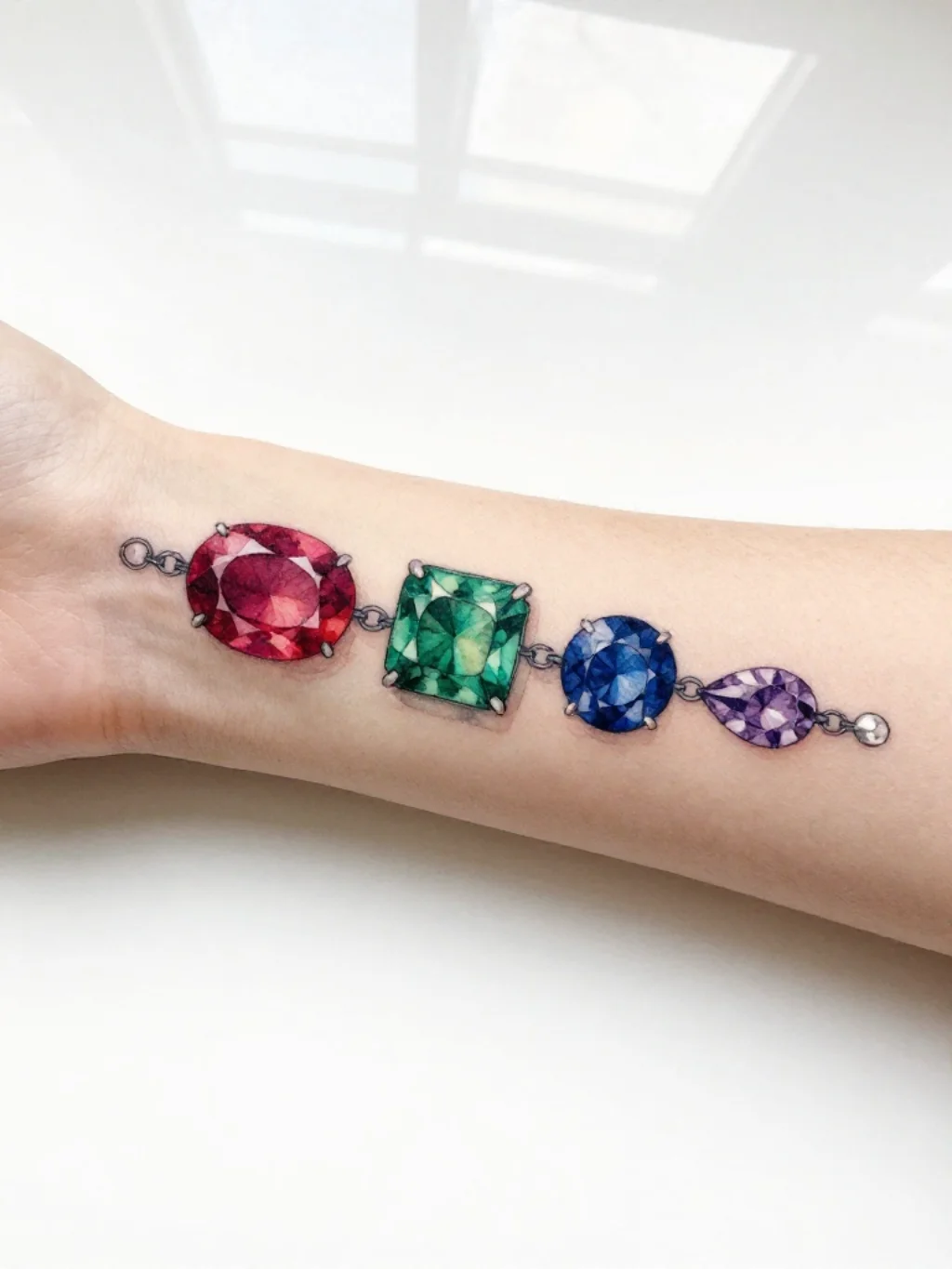
Watercolor jewelry tattoo with gemstone color effects achieves something that no other tattoo technique can accomplish: it captures the quality of light passing through a colored gemstone rather than reflecting off its surface. The watercolor technique’s translucent, layered color washes — deep blue bleeding into lighter blue at the edges, intense emerald green softening into yellow-green at the perimeter — perfectly mimics the way light behaves inside a faceted colored stone. The result is a tattooed gemstone that appears to glow with internal color rather than simply displaying surface pigment.
Watercolor gemstone tattoos work best when the gemstone form itself is defined by a precise fine-line or blackwork outline that contains and gives structure to the loose watercolor internal fills. Without that structural outline, the watercolor bleeds unpredictably across the skin and loses the gemstone’s essential geometric character. With the outline, the contrast between the precise faceted geometry and the painterly internal color produces one of the most visually distinctive effects in contemporary tattooing. Jewelry tattoo ideas 2025 in the watercolor gemstone category increasingly incorporate multiple stones in a single composition — a pendant-reference design where three differently colored watercolor gems hang from a fine-line chain, creating a complete layered necklace tattoo design on chest and collarbone in a single unified piece.
Blackwork Jewelry Tattoos and the Bold Graphic Power of Pure Dark Ornament
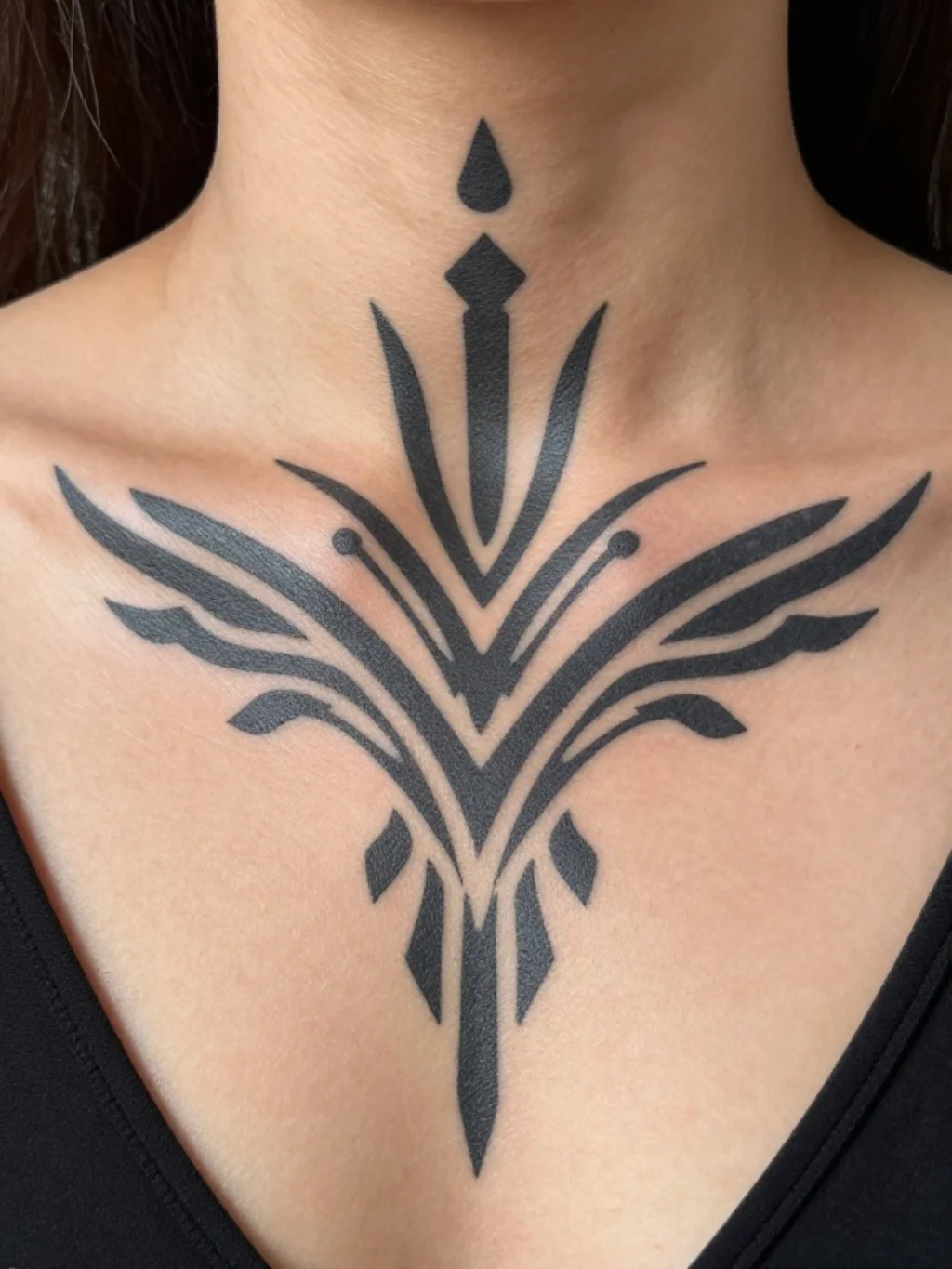
Blackwork jewelry tattoos occupy a completely different aesthetic space from the delicate fine-line and watercolor approaches that dominate jewelry tattoo discussion but achieve equally powerful results through completely different visual means. Where fine-line jewelry tattoos whisper their beauty in hairline strokes, blackwork jewelry designs declare it in bold, saturated, uncompromising darkness. Ornamental body ink designs in the blackwork tradition draw from the dense, geometric complexity of historical decorative traditions — Islamic geometric art, Byzantine mosaic patterns, Art Deco graphic jewelry design — to create compositions of extraordinary visual density.
Decorative skin art jewelry in the blackwork tradition frequently references the boldest historical jewelry forms: the chunky pectoral collars of ancient Egypt, the massive repoussé gold work of pre-Columbian cultures, the bold geometric silver jewelry of Berber and Moroccan traditions. Moroccan jewelry tattoo designs in blackwork specifically reference the characteristic geometric complexity of Amazigh silver jewelry — dense geometric patterns in silver wire and enamel that translate directly into blackwork tattooing’s visual vocabulary. Jewelry tattoo negative space technique design within blackwork creates additional visual sophistication — the untattooed skin becomes the metal element of the jewelry design while the surrounding black field represents space, producing a jewel that appears to float luminously against a dark ground.
Realistic Gold and Silver Jewelry Tattoos That Fool Every Second Glance
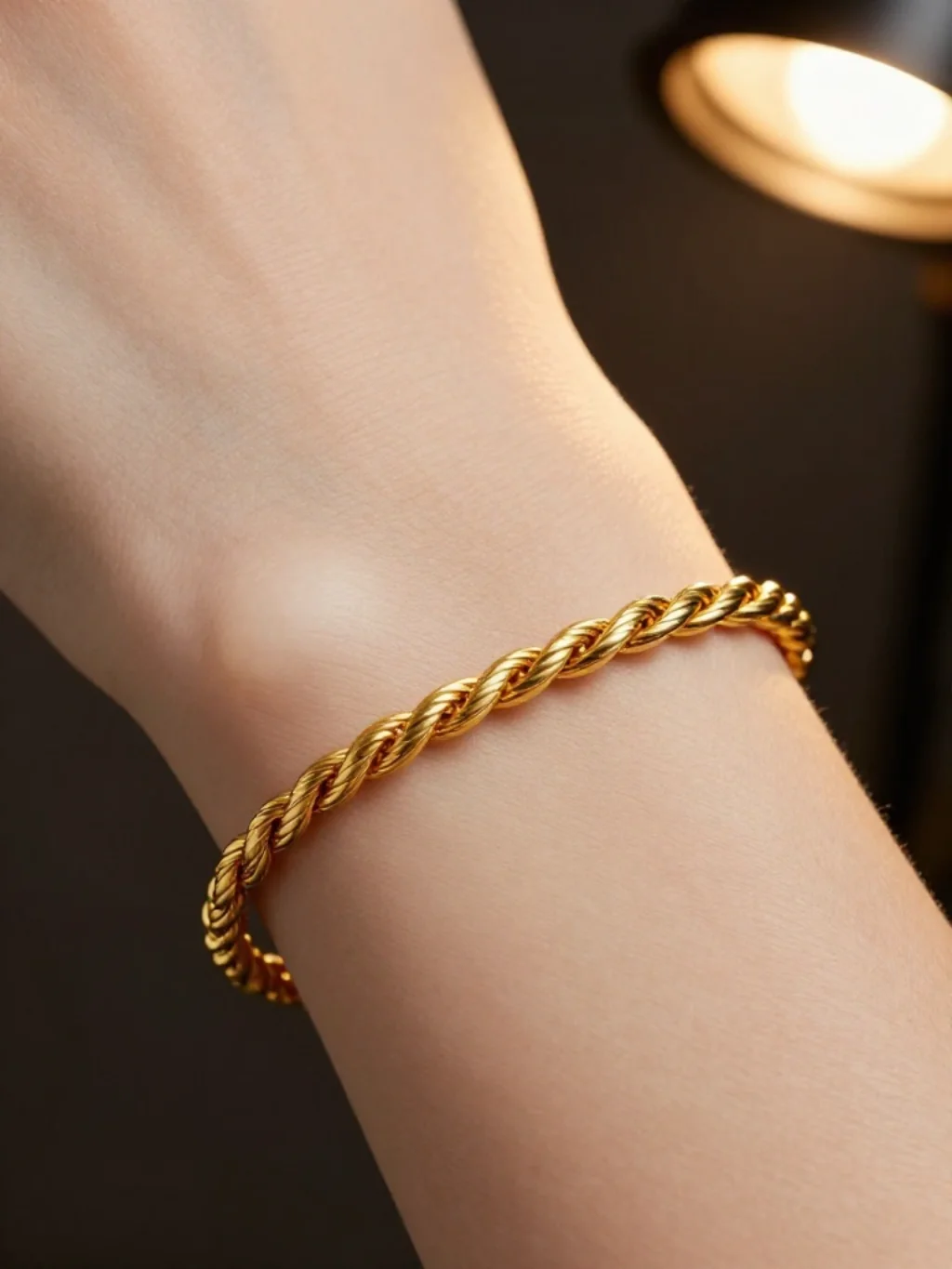
Gold jewelry tattoo and silver jewelry tattoo realism represent the technical mountain of the entire jewelry tattoo category. Replicating the specific visual quality of polished precious metal in tattooed ink requires mastery of a rendering approach that differs fundamentally from any other tattooing subject. Metal’s surface behaves unlike skin, unlike fabric, unlike botanical forms — it reflects the environment, producing a specular highlight so bright it approaches white and deep shadows that may be darker than the surrounding space. The transition between these extremes is what creates the impression of metallic surface.
Realistic jewelry tattoo ideas in the gold register require working within the yellow-orange chromatic range of gold while creating sufficient tonal contrast to suggest the metal’s surface behavior. White ink highlights must be placed with precise understanding of where light would actually strike a curved gold surface. Jewelry tattoo that looks real at the silver register operates in a cooler, more neutral chromatic palette — the grey-to-white range of polished silver — with equally precise highlight placement. Jewelry tattoo on hand designs in the realistic gold or silver tradition, particularly those referencing specific pieces like the Bulgari serpenti bracelet tattoo art or the Tiffany and Co inspired jewelry tattoo, require artists who have genuinely studied the specific design language of these pieces rather than working from generic jewelry reference.
Memorial Jewelry Tattoos That Honor Loved Ones in Permanent Precious Form
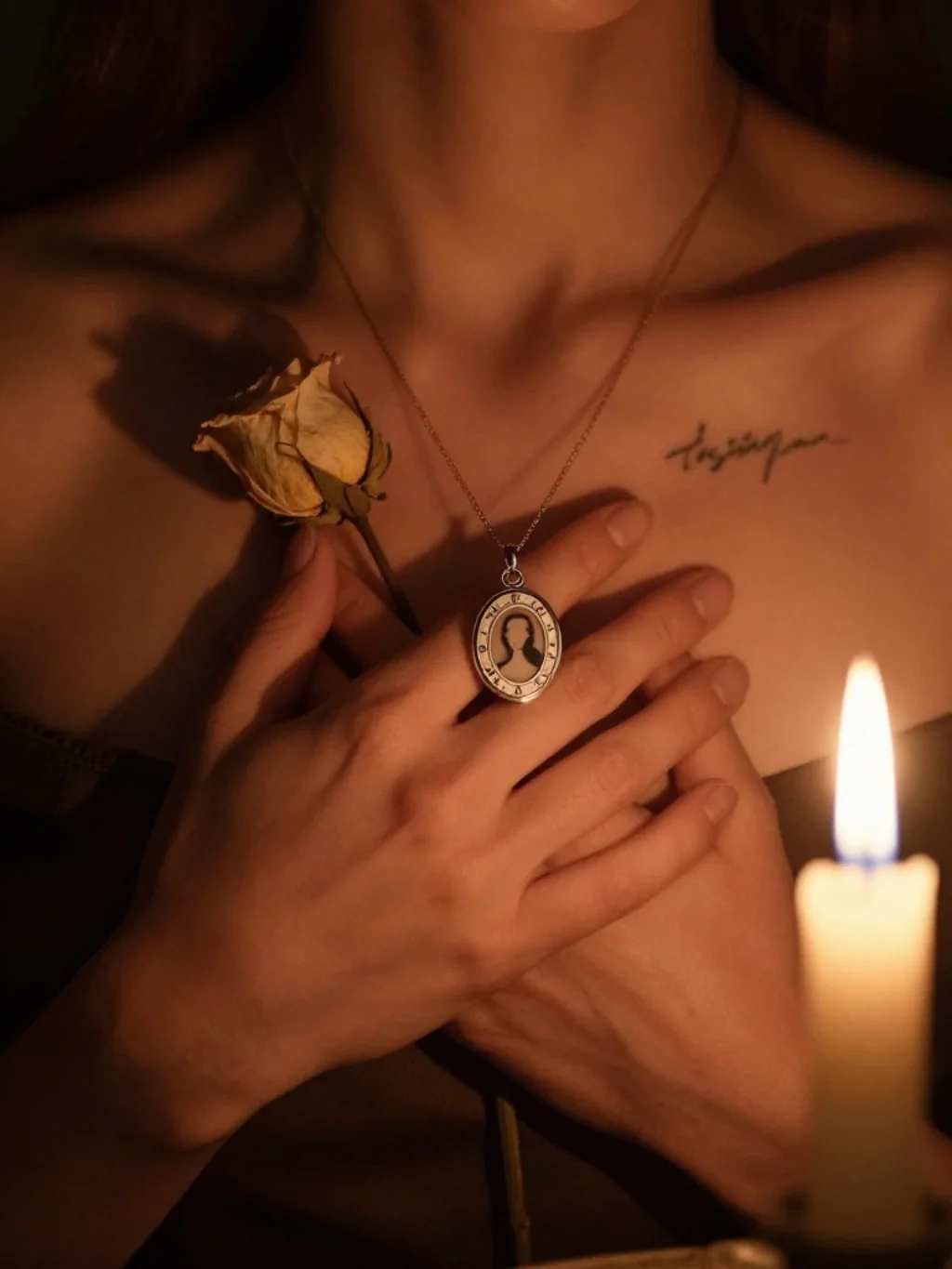
Jewelry tattoo honoring loved one with initials transforms the decorative function of a jewelry-reference tattoo into something with profound emotional depth. A bracelet tattoo that incorporates a loved one’s initials in the style of an engraved gold bangle, a pendant tattoo that replicates the specific jewelry piece worn by a deceased parent, a ring band tattoo that references a grandmother’s wedding ring — these pieces function simultaneously as ornamental body art and as permanent memorials that make loss visible, tactile, and enduring.
Memorial jewelry tattoos draw particular power from the permanent fashion accessory tattoo concept: unlike a physical piece of inherited jewelry, which can be lost or damaged, a tattooed representation of that piece cannot be separated from the body. It travels everywhere the wearer goes, appears in every photograph, and remains visibly present throughout every significant life moment. Jewelry tattoo meaning and symbolism at the memorial level exceeds decoration entirely — it becomes a form of perpetual tribute that declares the importance of the honored person with every glance at the tattooed skin. Harry Winston diamond tattoo art and similar luxury-jewelry-reference memorial pieces honor loved ones through the visual language of precious objects that carry personal association.
Matching Jewelry Tattoos for Couples and the Bond They Seal Without Metal
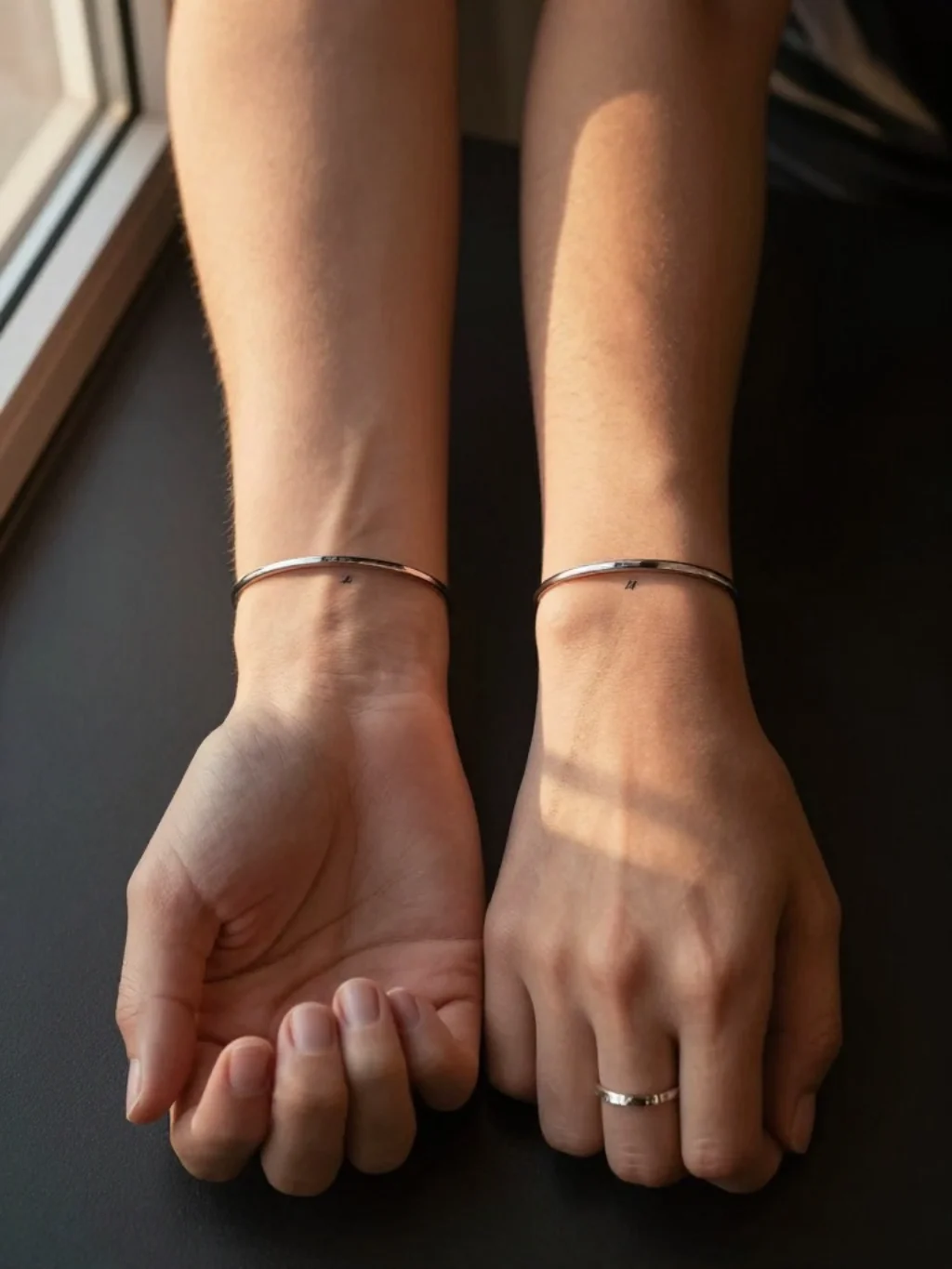
Jewelry tattoo ideas for couples represent the most intimate application of the matching tattoo tradition. Where conventional matching couple tattoos might feature identical symbols or complementary designs, matching jewelry tattoos for couples operate through the visual language of actual jewelry — the communication system humans have used to declare partnership for millennia. A matching fine-line ring band tattoo on both partners’ fourth fingers communicates commitment in the most direct possible visual language while adding the permanence that removable rings inherently lack.
Jewelry tattoo designs for couples beyond the obvious ring band formula include complementary bracelet designs that share a visual element — a lock on one partner’s wrist, a key on the other’s; a broken chain that, when the wrists are held together, assembles into a complete piece. Dainty jewelry tattoo designs for couples work particularly well when the designs are identical in style and placement but slightly different in detail — perhaps the same thin band design with one partner’s birthstone gem and the other’s, creating a matched pair that reads as singular from a distance and biographical in close inspection. Jewelry tattoo placement ideas for couples should consider how the two pieces relate spatially when the partners are together versus apart.
Jewelry Tattoos for Dark Skin Tones — the Techniques That Make Them Shine
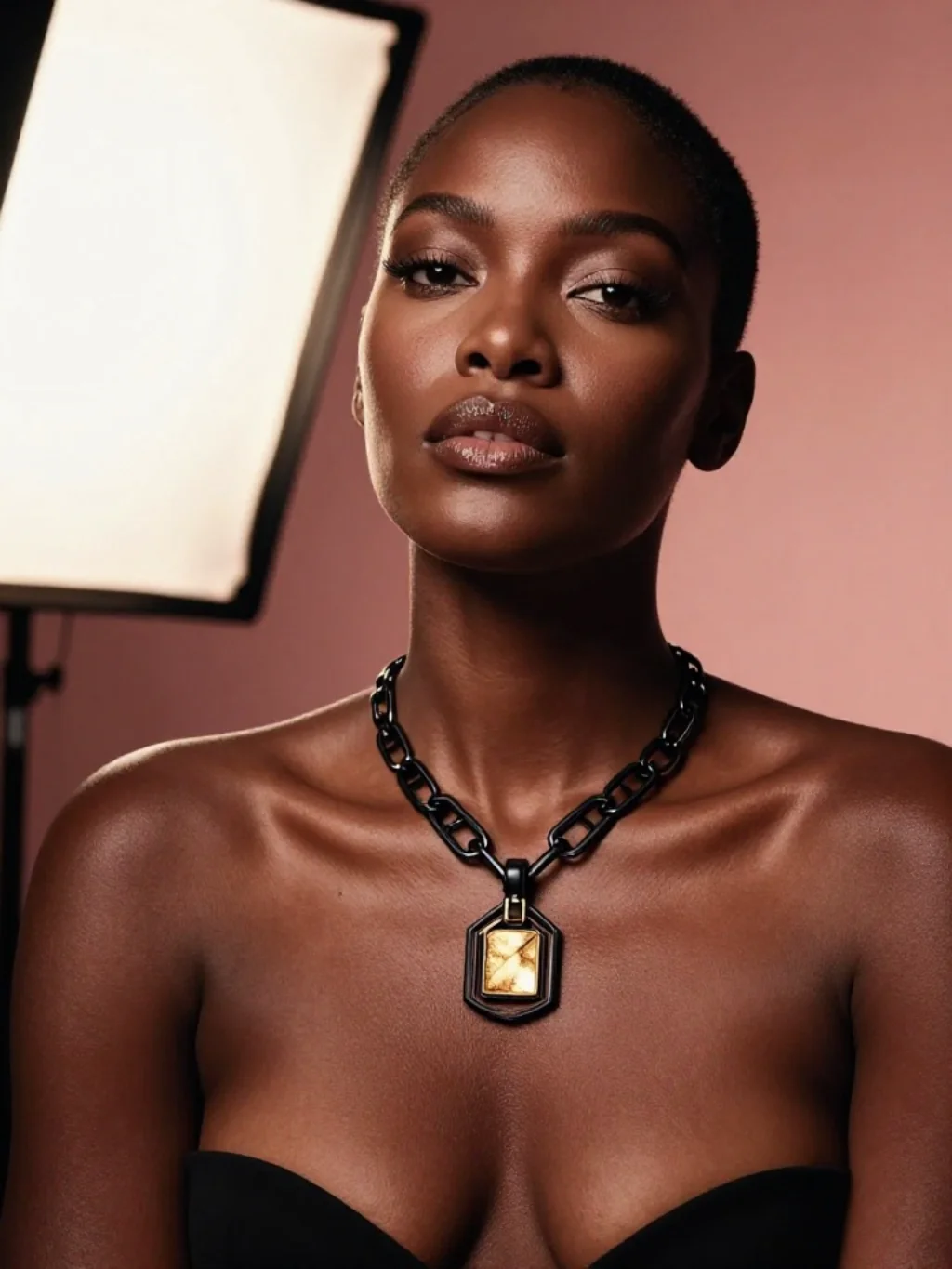
Jewelry tattoo execution on darker skin tones requires technical approaches that differ significantly from the techniques that produce optimal results on lighter skin. This isn’t a limitation — it’s a design intelligence challenge that, when met with genuine skill and understanding, produces results of extraordinary beauty. The primary technical consideration is contrast: on dark skin tones, the subtle grey gradations of fine line work that create tonal depth on lighter skin may not provide sufficient contrast to read clearly. Fine line jewelry tattoo designs on darker skin often need to be executed with slightly heavier line weights and more deliberate use of white ink to achieve the visual delicacy of equivalent designs on lighter skin.
Skin jewelry artistry concepts for dark skin tones benefit enormously from design approaches that use contrast strategically rather than apologetically. Blackwork jewelry tattoos can be extraordinarily powerful on dark skin precisely because the bold saturation of blackwork creates strong contrast regardless of skin tone. Gold jewelry tattoo designs on dark skin create a visual synergy that lighter skin cannot match — the warm undertones of melanin-rich skin and the warm yellow of gold ink exist in natural chromatic harmony. Jewelry tattoo ideas 2025 increasingly feature dark skin tone examples in major tattoo publications and social media — a welcome cultural correction that helps artists and clients alike understand that jewelry tattooing’s full expressive range is available to every skin tone.
The Artist Search — Finding the Hand Skilled Enough for Your Permanent Jewel
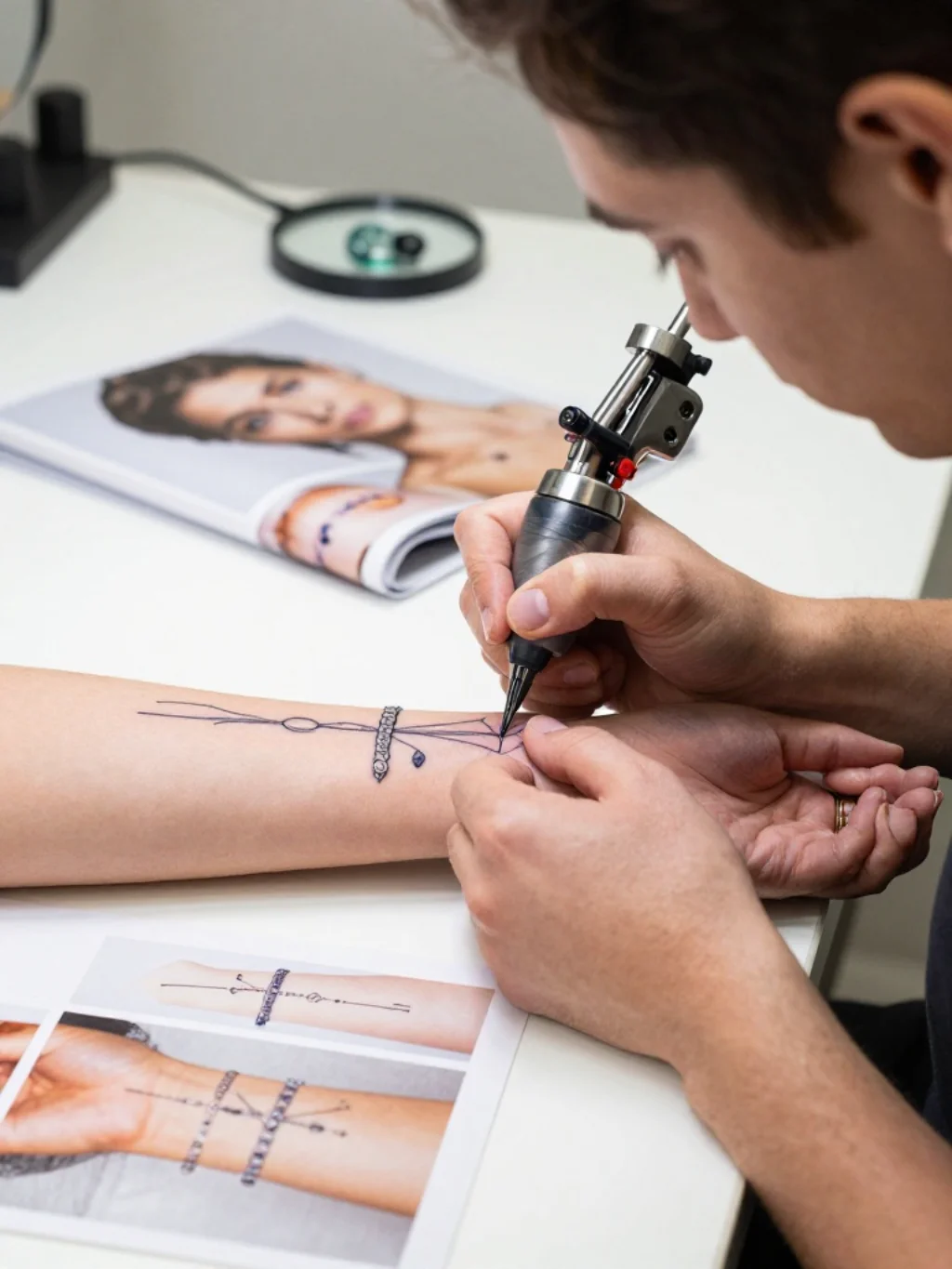
Finding the right artist for jewelry tattoo designs requires a specific and educated portfolio evaluation process. The technical demands of jewelry-reference tattooing — trompe loeil realism, fine line precision, gemstone color rendering, metallic surface simulation — are genuinely specialized skills that not every accomplished tattoo artist possesses. An artist who excels at botanical illustration may not have the metallic rendering vocabulary required for a realistic gold bracelet tattoo. An artist celebrated for bold blackwork may not have the delicate fine-line control needed for a pearl necklace tattoo design with fine line detail.
Best jewelry tattoo designs emerge from artists whose existing portfolios demonstrate specific technical competencies relevant to your chosen design. Look for healed examples rather than fresh work — fresh ink always looks sharper than it will at twelve months. Examine how the artist handles the tonal relationship between highlights and shadows in any metallic or gem reference in their portfolio. Look for consistency of line weight in fine-line pieces — uneven line weight in fine-line jewelry work produces visual instability that will bother you permanently. Jewelry tattoo placement ideas should also be discussed in detail during consultation — the best placement for the design you want may not be the placement you initially assumed.
Aftercare That Preserves the Sparkle of Your Jewelry Tattoo Through Decades
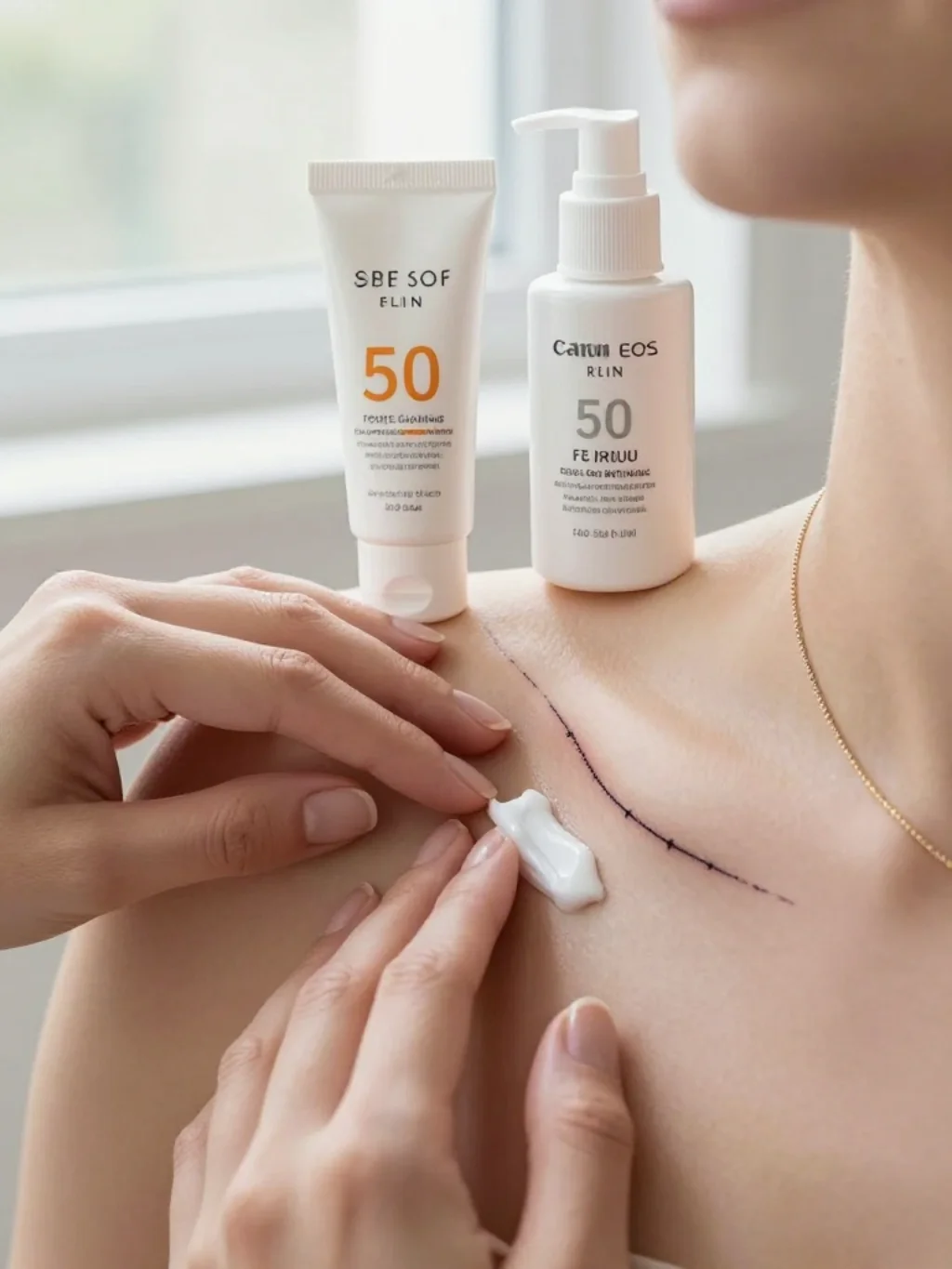
Delicate jewelry tattoo preservation begins immediately after the session ends and the discipline required to maintain fine-line jewelry tattoo work through decades of skin life is significant. The first two weeks determine everything: keep the area clean with fragrance-free antimicrobial soap applied gently with clean fingertips twice daily, apply a thin layer of unscented, alcohol-free moisturizer three times daily, keep the piece entirely out of direct sunlight during the healing window, and never submerge the healing tattoo in water. Fine line ornamental body art is more vulnerable to healing-phase disruption than bold work because the lines are too thin to survive incomplete healing gracefully.
Long-term preservation of wearable jewelry through ink — particularly fine-line pieces on high-visibility, high-sun-exposure placements like the collarbone, wrist, and hand — depends almost entirely on lifetime UV protection. Ultraviolet radiation breaks down tattoo pigment at a molecular level that no topical treatment can reverse. Permanent bracelet tattoo art on the wrist and fine line jewelry tattoo on wrist or collarbone pieces receive among the highest cumulative UV exposure of any tattoo placement because these areas are frequently uncovered and face upward toward the sky. Apply minimum SPF 50 to every exposed tattooed area every morning without exception and your permanent jewels will retain their sparkle through decades of daily wear. Neglect this single discipline and the finest work will fade and blur in years rather than decades.
Frequently Asked Questions
What does a jewelry tattoo symbolize beyond decoration?
Jewelry tattoo meaning and symbolism extends far beyond surface decoration into deep territory of identity, commitment, cultural heritage, and permanent self-definition. Permanent ring tattoo symbolism on the fourth finger communicates relationship commitment in its most unambiguous form. Permanent bracelet tattoo art on the wrist can reference personal history, cultural heritage, grief, love, or transition. Skin adornment tattoo concepts built around jewelry reference communicate that the wearer values permanence, intentionality, and the idea that their most meaningful adornment belongs to the body itself rather than existing as a removable object.
Can a jewelry tattoo actually look like real jewelry on skin?
Yes — at the highest level of execution. Trompe loeil jewelry tattoo art and realistic jewelry tattoo ideas executed by artists with genuine mastery of metallic surface rendering, gemstone light behavior, and precise fine-line control can produce results that genuinely fool observers into questioning whether what they’re seeing is ink or metal. Jewelry tattoo that looks real requires both an artist with the specific technical vocabulary to render precious materials convincingly and a client who understands that placement, scale, and adequate size all contribute to the realism effect.
Which placement works best for a realistic jewelry tattoo?
Jewelry tattoo placement ideas for maximum realism benefit from placements where the tattoo occupies the same position that actual jewelry would occupy — the fourth finger for rings, the wrist for bracelets, the collarbone for necklaces, the ankle for anklets. These positions create an immediate visual logic that reinforces the jewelry illusion. Placements that deviate significantly from jewelry’s natural positions on the body undermine the trompe loeil effect. Fine line jewelry tattoo on wrist or collarbone specifically benefits from the natural horizontal prominence of these anatomical features, which provide architectural support for the jewelry reference design.
Are jewelry tattoos suitable for dark skin tones?
Absolutely — with the right technical approach. Jewelry tattoo work on darker skin tones benefits from design choices that prioritize contrast: blackwork jewelry tattoos that create bold contrast regardless of skin tone, gold jewelry tattoo designs that harmonize warmly with melanin-rich skin’s undertones, and fine line jewelry tattoo designs executed with slightly heavier line weights to ensure visual clarity. An artist with genuine experience tattooing a range of skin tones and a portfolio that demonstrates beautiful results across the full spectrum is essential for this work.
Can jewelry tattoos include actual names dates or gemstone colors?
Absolutely. Jewelry tattoo honoring loved one with initials designs incorporate biographical text within the jewelry’s design language — initials engraved on a band, dates inscribed along a chain link, names incorporated into a pendant’s central element. Jewelry tattoo incorporating birthstone gem design adds specific gemstone color references through watercolor technique or carefully chosen color ink to encode biographical information through chromatic symbolism rather than explicit text. Jewelry tattoo meaning and symbolism deepens significantly when biographical elements are incorporated — the piece becomes simultaneously ornamental and archival.
Conclusion
Jewelry tattoos represent the most sophisticated and philosophically coherent category in contemporary body art precisely because they resolve the oldest tension in human adornment: the desire to be perpetually adorned versus the practical impossibility of wearing physical jewelry through every moment of life. A tattooed bracelet travels with you into every context, every water body, every environment where metal would be prohibited, removed, or lost. A tattooed ring communicates commitment without the symbolism of removal that every physical ring carries implicitly. A tattooed necklace drapes the collarbone with permanent elegance that no clasp can replicate.
Every decision in your jewelry tattoo process — the design reference, the technique, the placement, the artist — is an opportunity to create something genuinely unrepeatable. Your body’s specific topography, your skin tone’s specific qualities, your biographical history embedded in initials and birthstones and memorial references, and the specific cultural jewelry traditions that speak to your heritage all combine to produce a piece that belongs to no one else on earth. The jeweler who made your grandmother’s ring is long gone but the hand that inks your permanent jewel gives it the same permanence — and the same capacity to carry meaning forward through time. Wear it with the understanding of everything it represents. It will outlast every piece of metal you ever owned.
1 Comment