
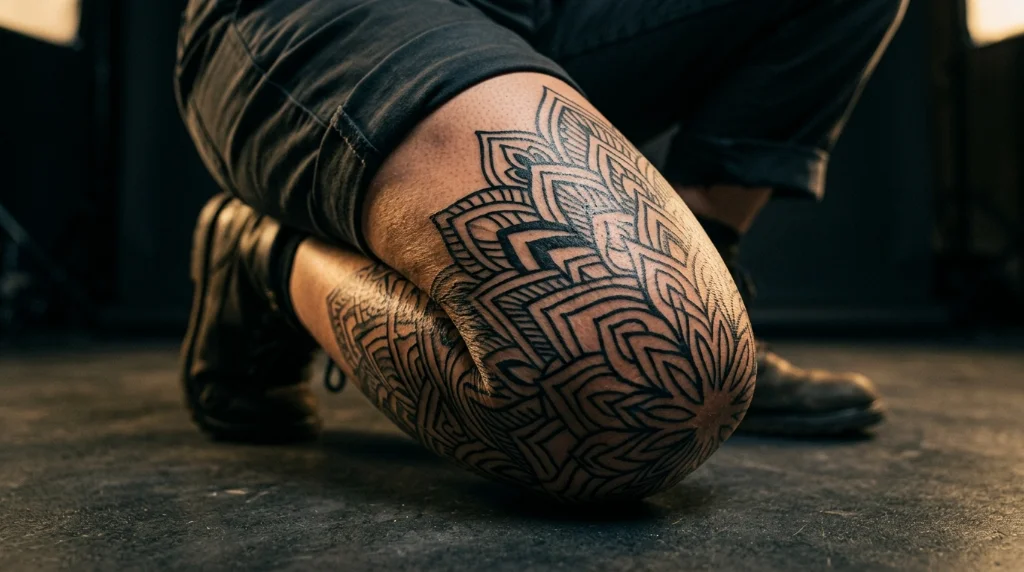
Some placements test an artist’s skill more than others. Knee framing tattoos sit right at that edge, where bold creativity meets tricky anatomy. This joint bends, folds, and stretches constantly. Getting ink to survive that motion takes real technique, not luck.
This guide breaks down everything behind knee tattoo design choices, healing timelines, and pain levels. You’ll learn why some designs age beautifully while others crack and fade. Let’s walk through what actually makes this placement work.
The Anatomical Puzzle Every Artist Faces Below the Kneecap
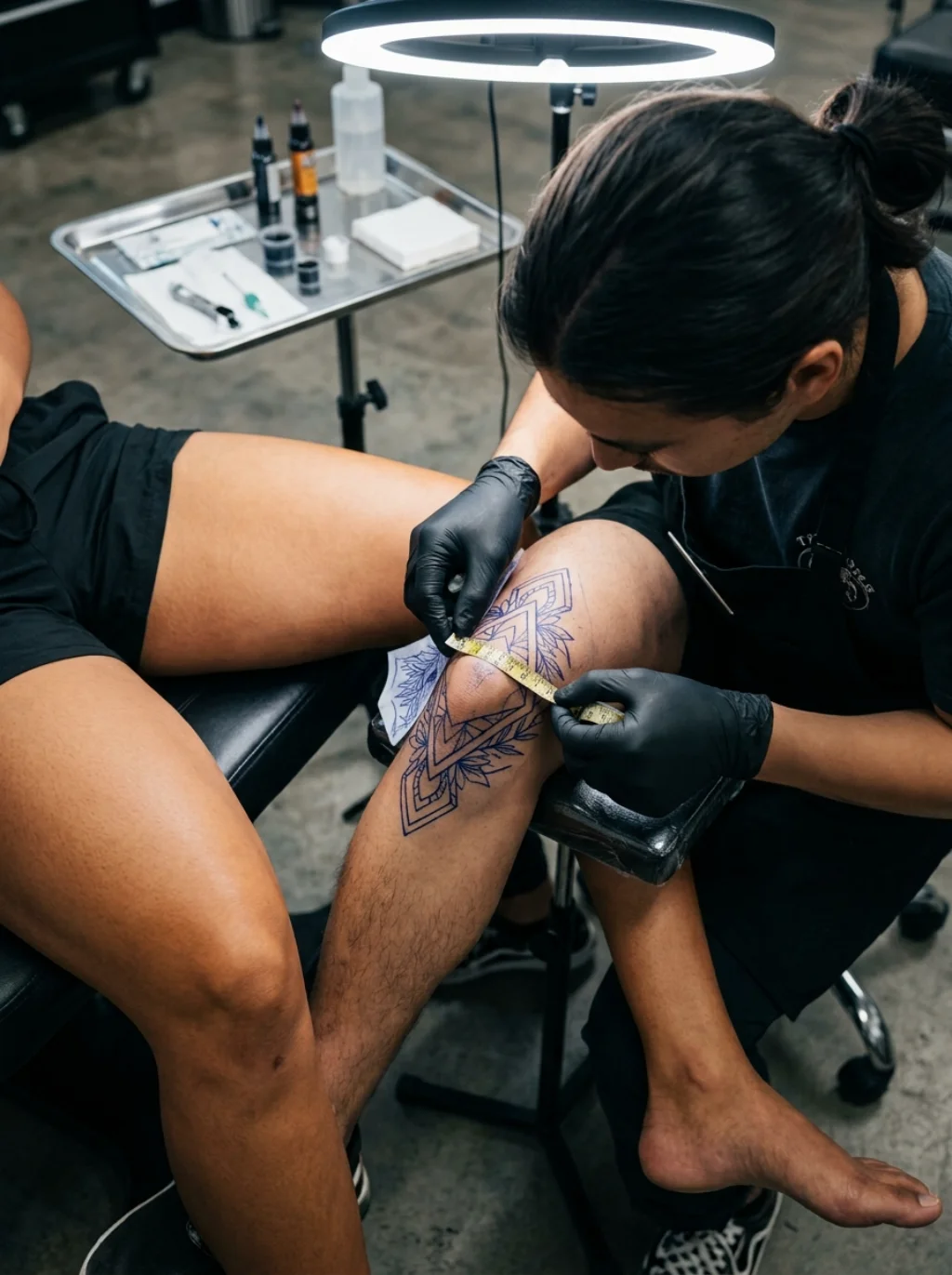
The knee isn’t flat like a shoulder or calf. It curves, bends, and shifts with every step you take. This creates a real puzzle for artists attempting anatomical tattoo framing across such an unpredictable surface.
Bone sits close to skin here too, which changes how ink settles. A skilled tattoo artist knee specialist studies this structure before ever picking up a machine. Getting the curve wrong means the design distorts the moment you bend your leg.
Why This Body Joint Terrifies and Excites Tattoo Artists Equally
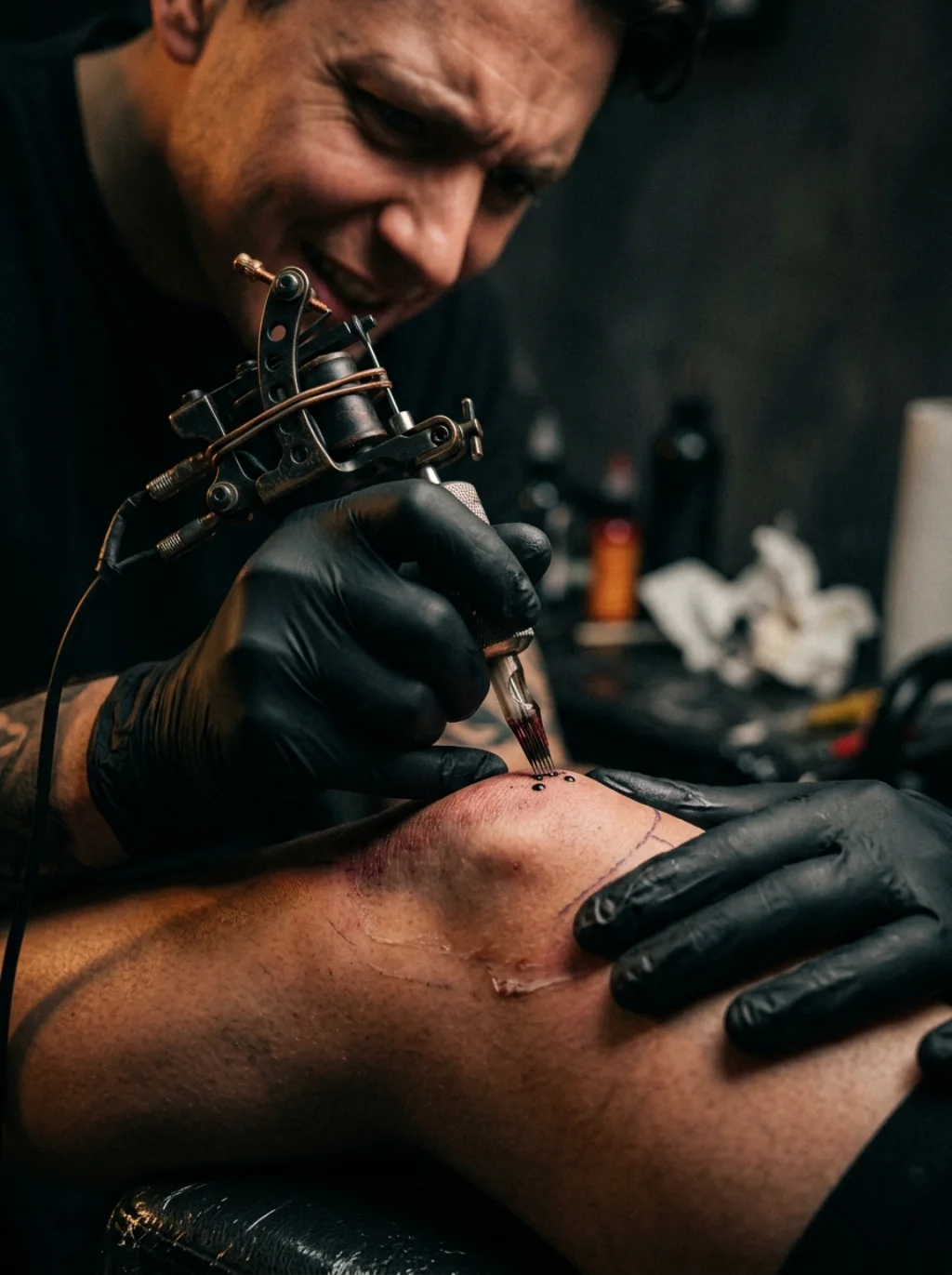
Ask any tattooer about knee work, and you’ll likely hear a mix of dread and excitement. It’s a joint that punishes sloppy planning but rewards careful tattoo framing technique with genuinely striking results. Few placements offer that much contrast.
This tension is exactly why knee joint tattoo art attracts experienced artists looking for a challenge. It separates true craftsmanship from guesswork almost instantly. A poorly planned piece here becomes obvious within weeks, not years.
The Painful Truth Nobody Tells You Before Sitting in the Chair
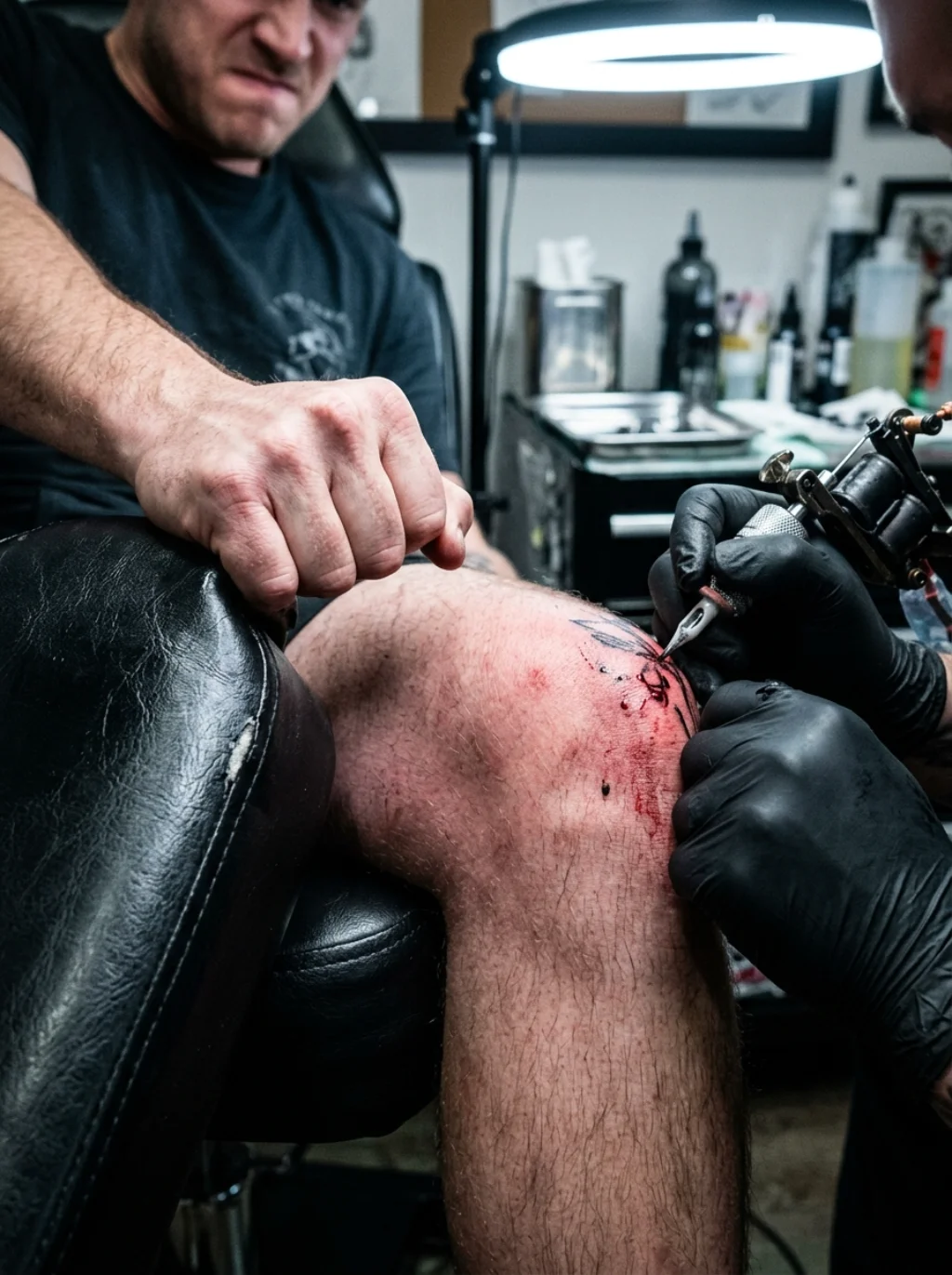
Let’s be honest. This spot hurts. Thin skin sits directly over bone, nerve clusters, and very little cushioning fat. That combination pushes knee tattoo pain level noticeably higher than fleshier areas like the thigh or upper arm.
However, pain doesn’t last the whole session evenly. Sharp sensations spike near the kneecap itself, then ease slightly around the sides. Comparing knee tattoo pain compared to other areas, most clients rank it among the top five toughest spots.
A Design Trick That Makes Bent Legs Look Effortlessly Seamless
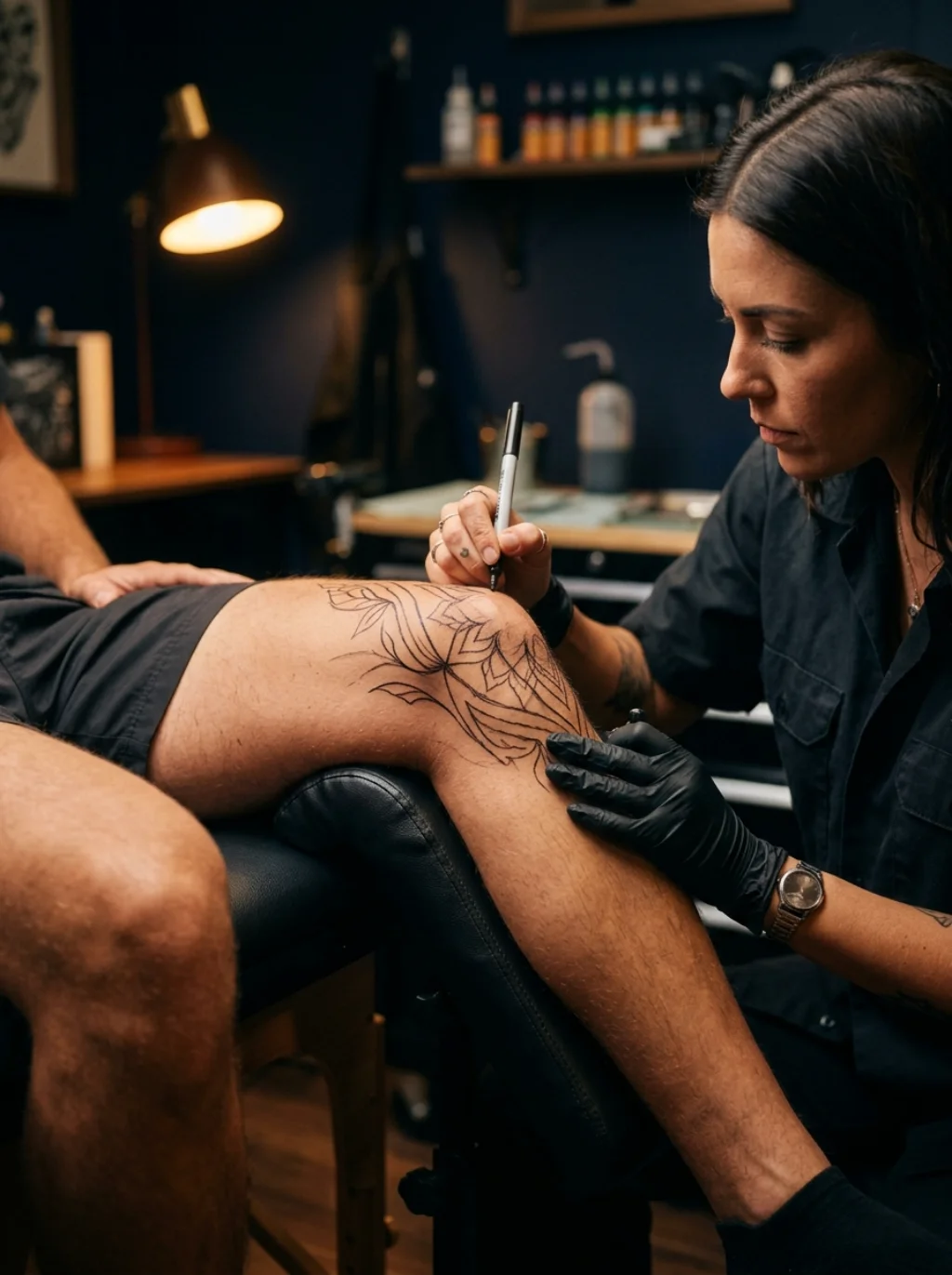
Here’s a clever trick experienced artists rely on constantly. They design the piece while your leg is bent, not straight. This ensures the artwork reads correctly during actual movement, not just while standing still in the mirror.
This approach solves a huge problem behind tattoo flow around joints. Lines that look perfect on a straight leg often warp awkwardly once you sit or crouch. Planning for motion from the very first sketch prevents that visual headache entirely.
The Symmetry Secret Hidden Inside Every Flawless Framing Design
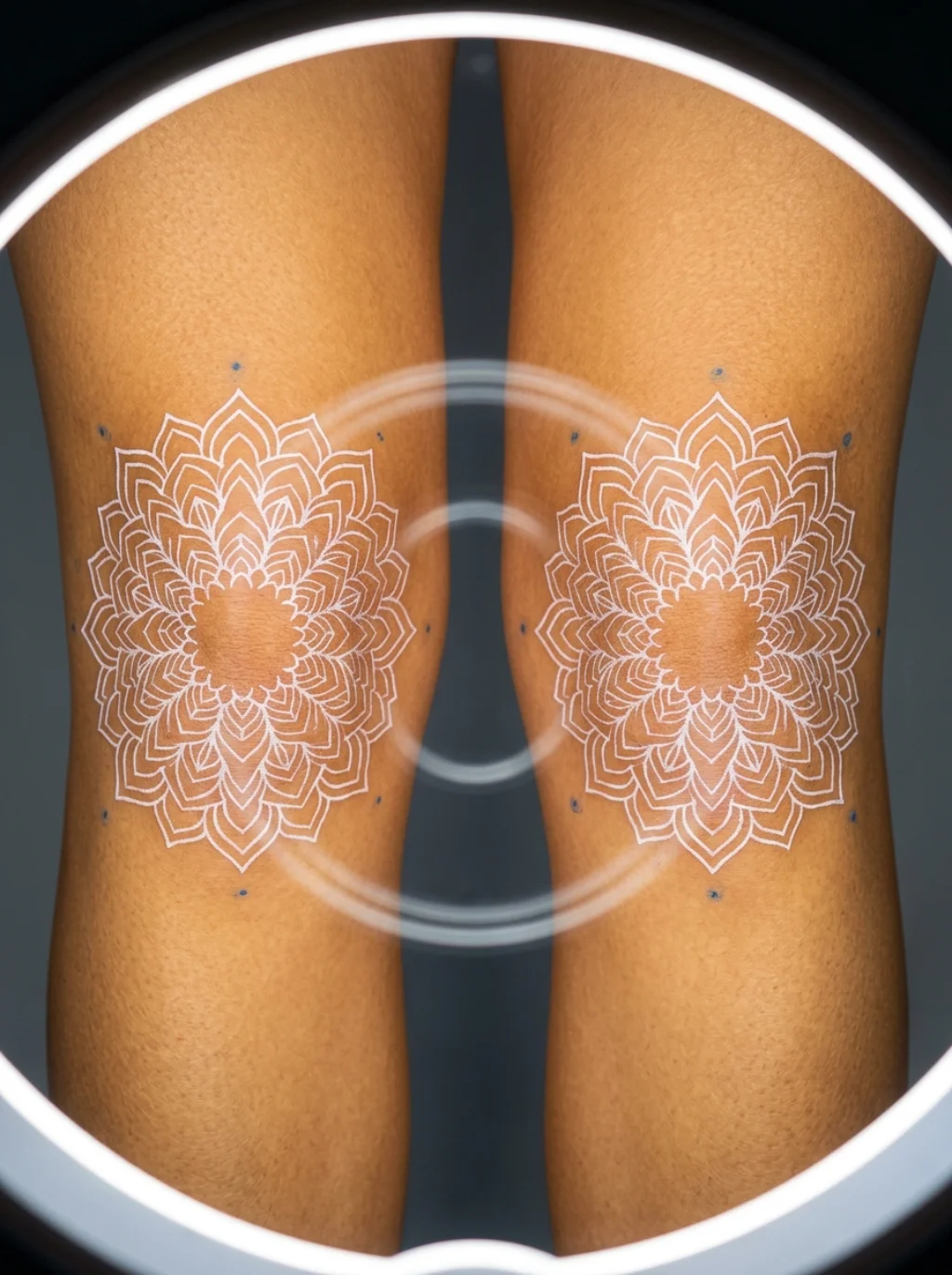
Symmetry isn’t just aesthetic preference here. It’s structural necessity. Since knees curve unevenly on each side, achieving genuine knee tattoo symmetry requires careful measurement and repeated stencil placement checks before the needle even touches skin.
Many artists use mirrored reference points around the kneecap to balance the design visually. This technique keeps tattoo border design elements aligned even when your leg naturally sits slightly asymmetrical, which almost everyone’s does.
When Skin Stretches, This Ink Placement Reveals Its True Genius
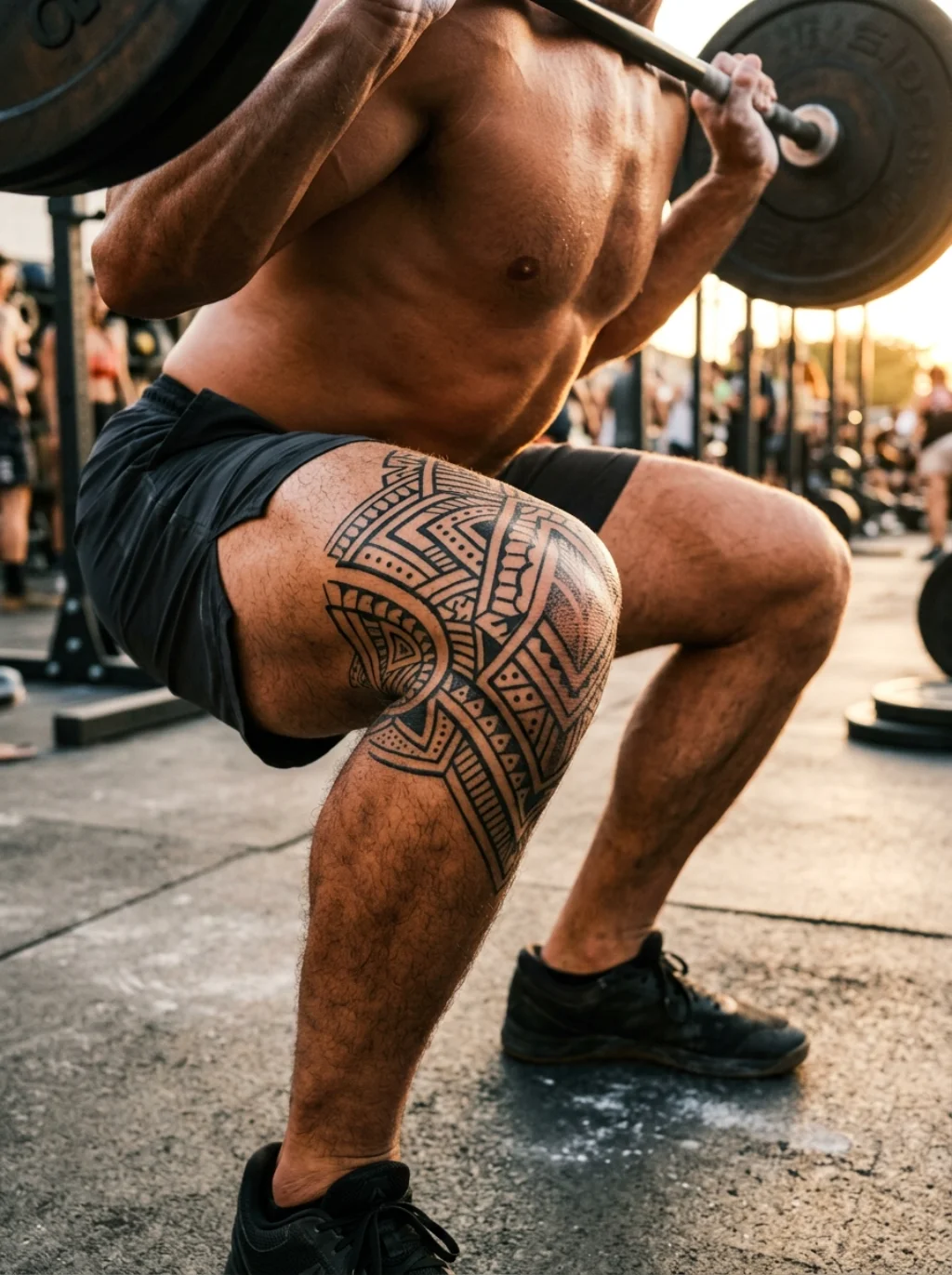
Skin around the knee stretches dramatically during simple movements like squatting or climbing stairs. This constant motion tests every tattoo’s structural integrity in ways flatter body areas never experience. It’s a genuine stress test for ink.
Good tattoo curve adaptation anticipates this stretching from day one. Lines are drawn slightly thicker in high-stretch zones to prevent them from thinning out later. This foresight is what separates lasting art from ink that quietly fades.
The Overlooked Detail That Decides If Your Tattoo Ages Gracefully

Most people focus entirely on the design and forget aftercare planning. Yet how knee tattoos age over time depends heavily on early healing habits. Sun exposure, tight clothing friction, and poor moisturizing all speed up premature fading.
you may also like this:22 Upper Arm Tattoo Ideas for Women That Are Stylish and Timeless
This overlooked detail matters more here than almost anywhere else on the body. Consistent knee tattoo aftercare routines protect linework from blowing out prematurely. Skipping this step often shows up as blurred edges within just a year or two.
Inside Knee Framing Tattoos: Where Bold Art Meets Fragile Anatomy
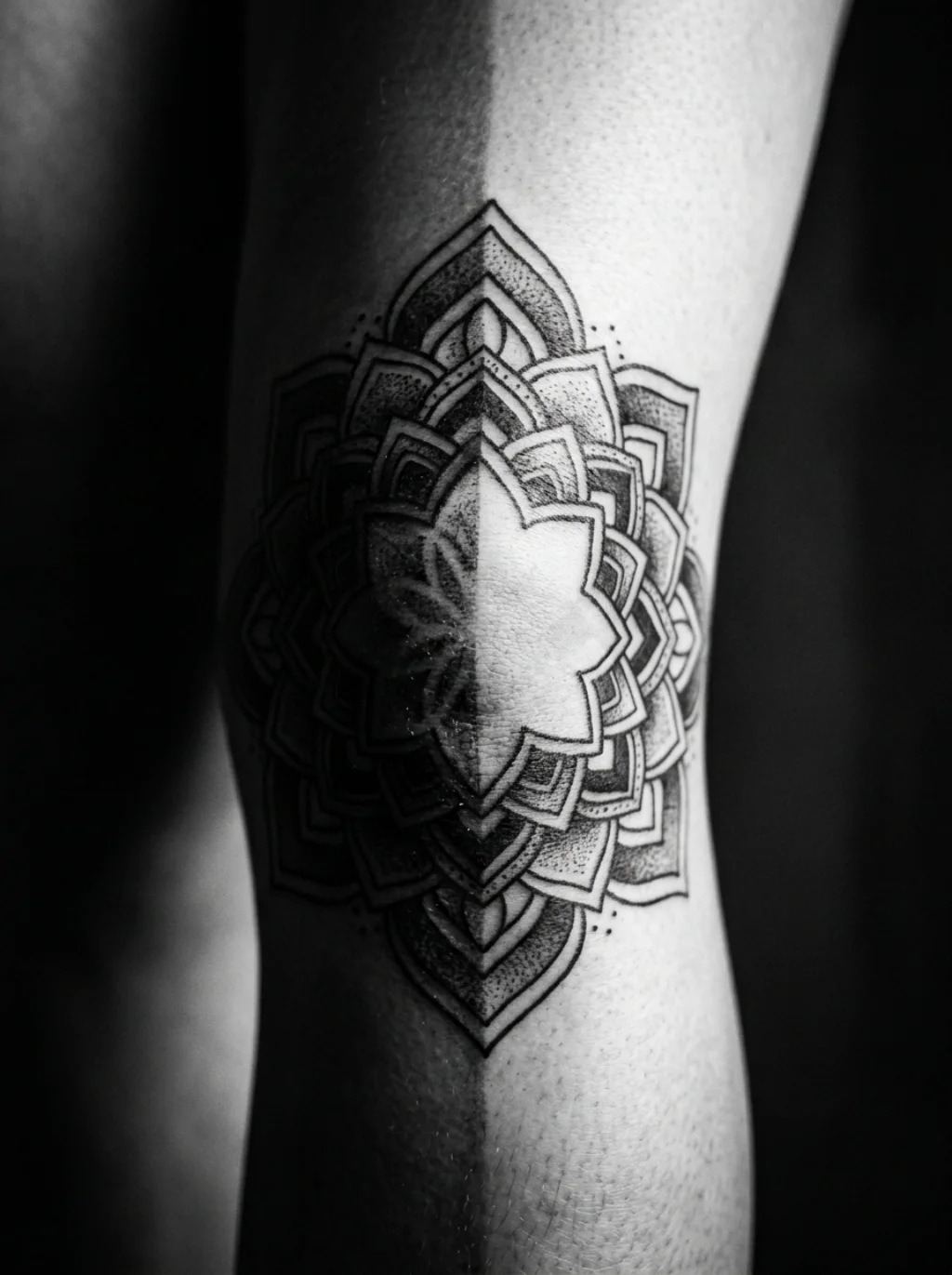
At its core, this placement represents a fascinating contradiction. Knee framing tattoos demand bold, confident linework, yet they sit atop one of the body’s most fragile, frequently moving joints. That tension defines everything about this style.
Balancing boldness with anatomical respect requires real expertise. Artists must understand both artistic composition and joint mechanics simultaneously. This dual demand is exactly why what makes a good knee framing tattoo rarely comes down to design alone.
A Curious Reason Mandalas Dominate This Unconventional Canvas
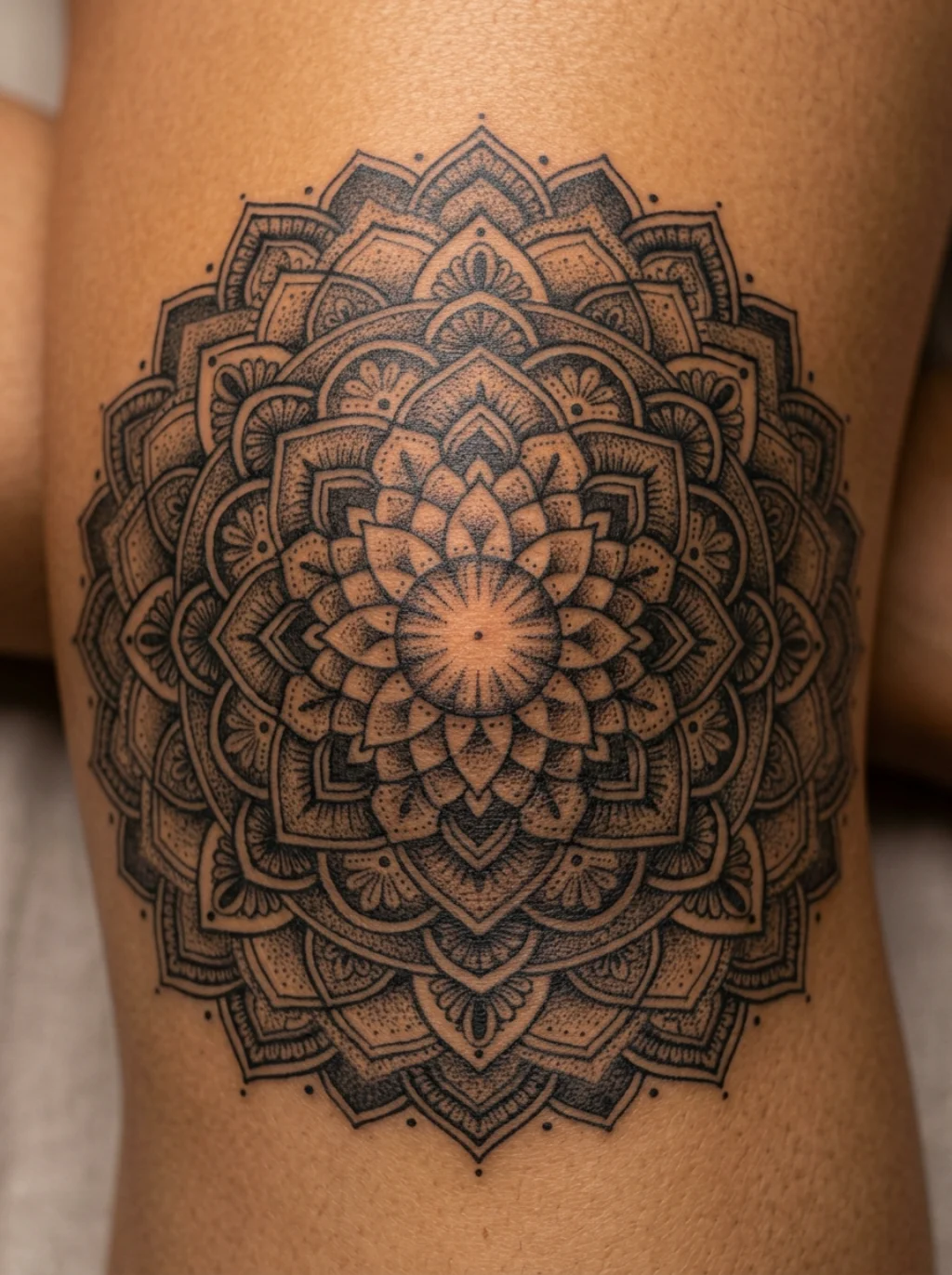
Walk into any studio’s knee tattoo portfolio, and mandalas appear constantly. There’s a practical reason behind this trend beyond simple aesthetics. Circular patterns naturally complement the kneecap’s rounded shape without fighting its curvature.
This is why mandala knee tattoo designs remain consistently popular across studios nationwide. The radial symmetry hides minor asymmetries in the joint itself. Meanwhile, geometric knee tattoo patterns offer a sharper, more structured alternative for those wanting cleaner lines.
The Hidden Risk Lurking Beneath Every Bony, Shifting Surface
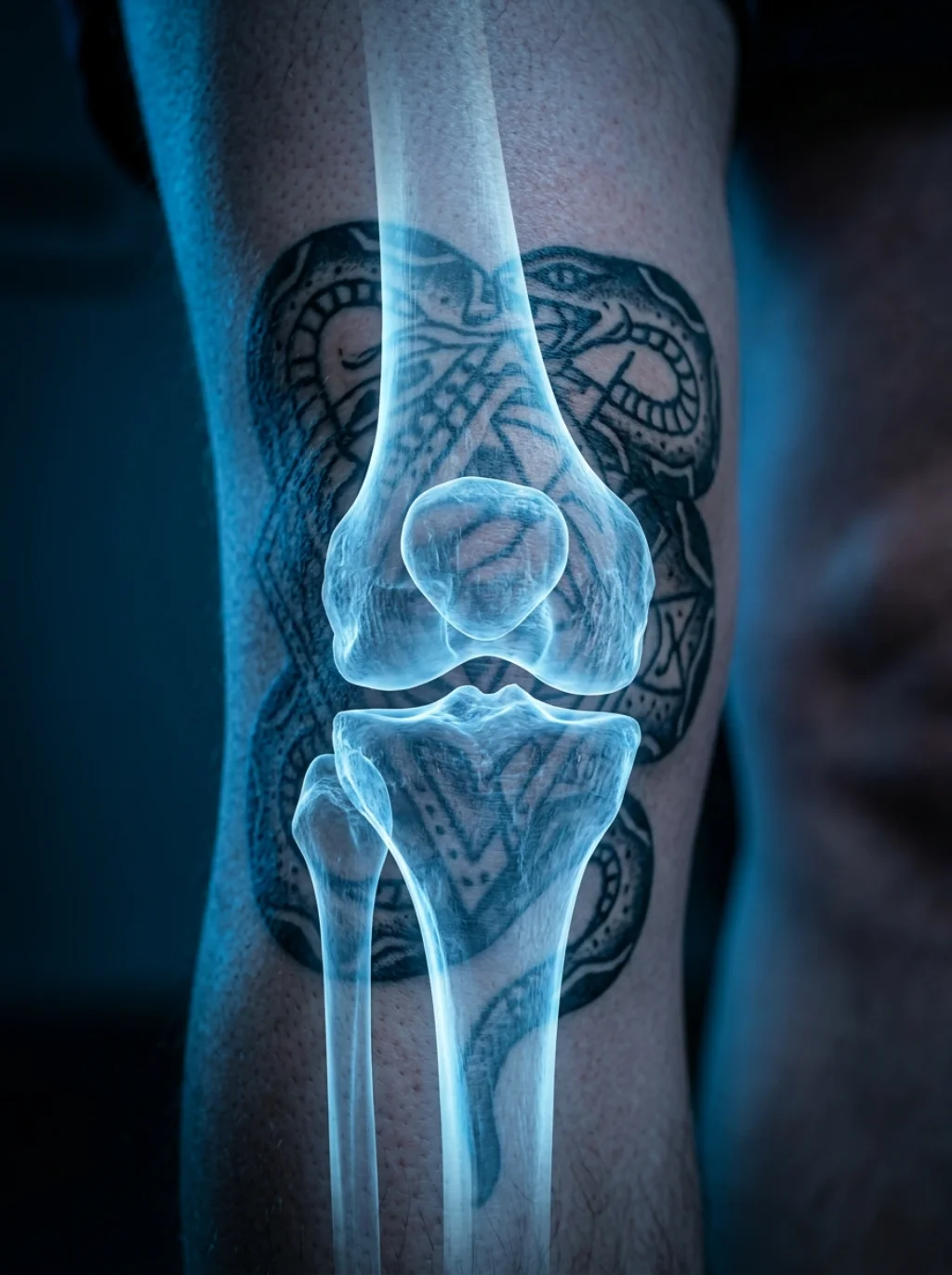
Bone proximity creates a risk most clients never consider beforehand. Thin tissue over the patella means ink can migrate slightly during the healing process, leading to blurred or spread-out linework nobody anticipated.
This hidden risk connects directly to tattoo negative space knee planning. Artists often leave slightly wider gaps between fine details here than they would elsewhere. That extra breathing room prevents lines from merging together as skin settles.
Why Geometric Patterns Refuse to Break Under Constant Movement
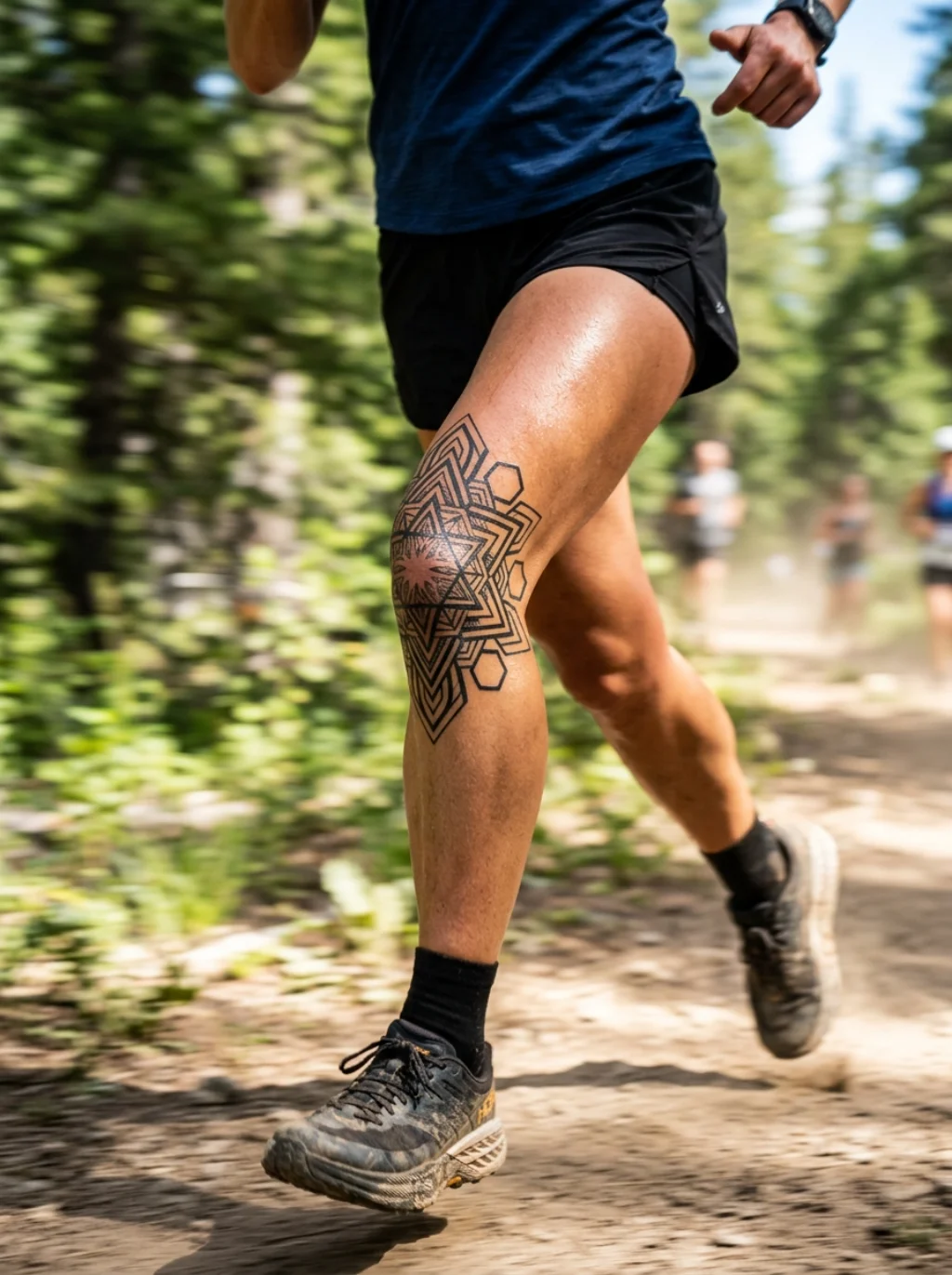
Sharp geometric shapes handle joint movement surprisingly well compared to delicate scriptwork. Straight lines and repeated angles distribute stretching stress more evenly across the skin’s surface, reducing the chance of visible distortion later.
This durability explains why geometric styles remain a favorite choice for framing tattoo elements around this joint. Combined with solid leg tattoo continuity, these patterns often connect seamlessly into a larger thigh-to-calf sleeve design.
The Quiet Rivalry Between Blackwork Boldness and Fine Line Grace
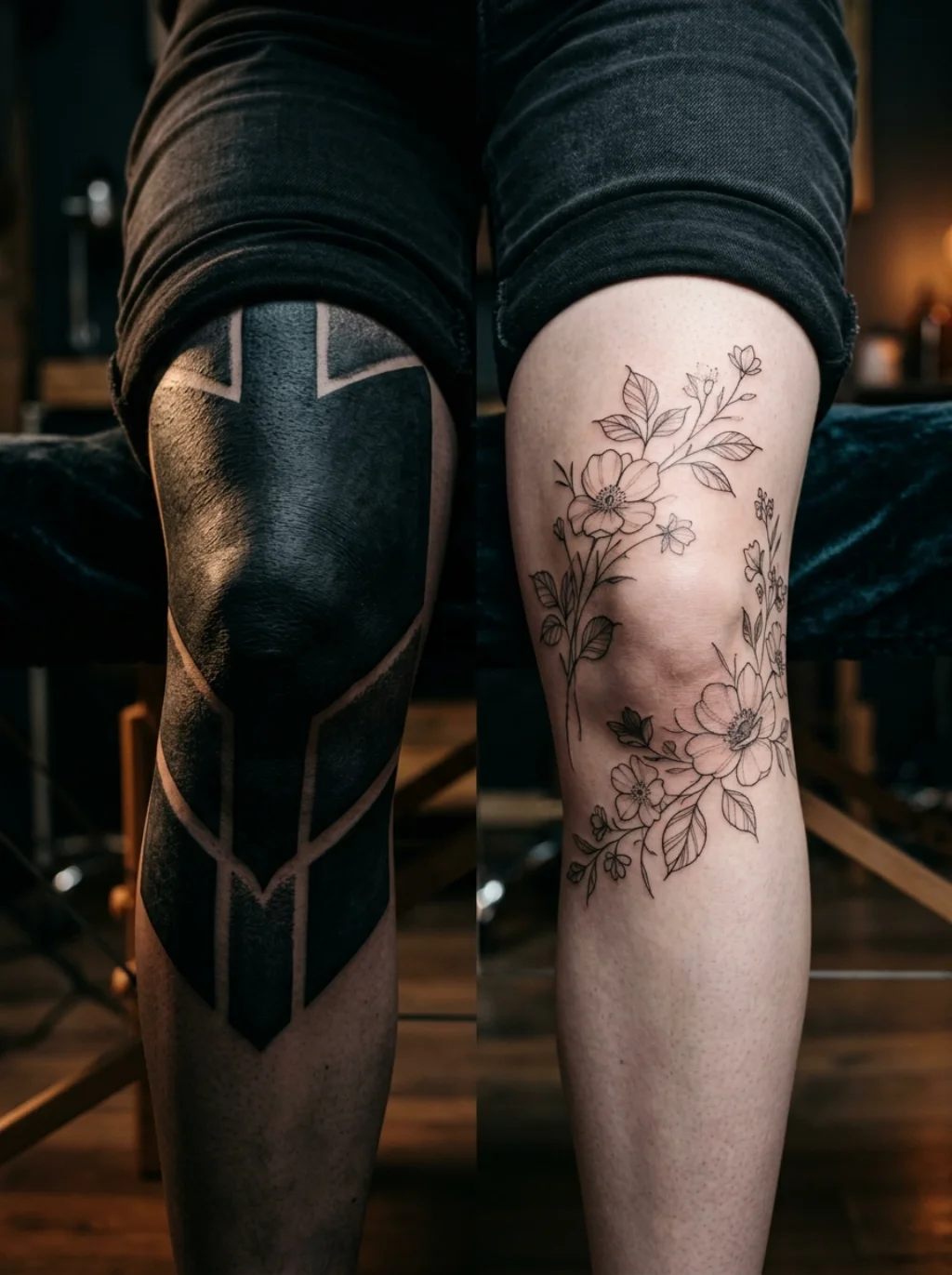
Two competing philosophies dominate knee tattoo choices. Blackwork delivers striking, high-contrast boldness that survives fading exceptionally well. Fine line work, meanwhile, offers delicate elegance but demands far more precision from the artist involved.
Choosing between them depends heavily on lifestyle and skin type. Active individuals often lean toward wraparound knee tattoo blackwork designs for durability. Others prioritize subtlety, accepting the higher maintenance that fine line artwork inevitably requires.
A Forgotten Factor That Determines How Long Your Ink Survives
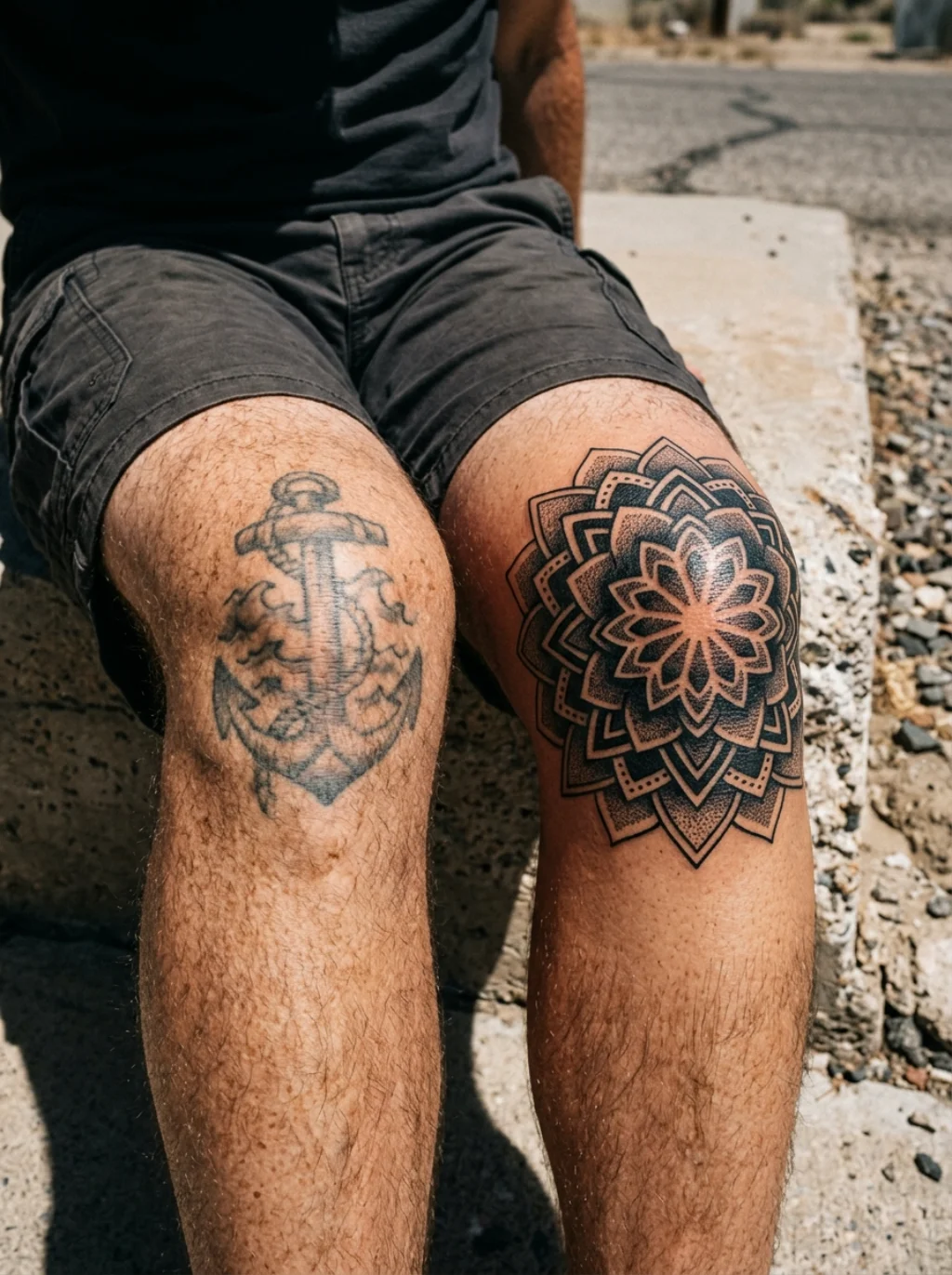
Longevity depends on more than just design choice. Skin elasticity, sun habits, and even your job’s physical demands all quietly influence how well ink holds up here. Few clients consider these factors before booking their appointment.
This is exactly why researching knee tattoo longevity tips beforehand saves future disappointment. Simple habits like consistent sunscreen use dramatically slow fading. Skipping this preparation often shortens a tattoo’s vibrant lifespan by several years.
The Sitting Position That Changes Everything an Artist Can Draw
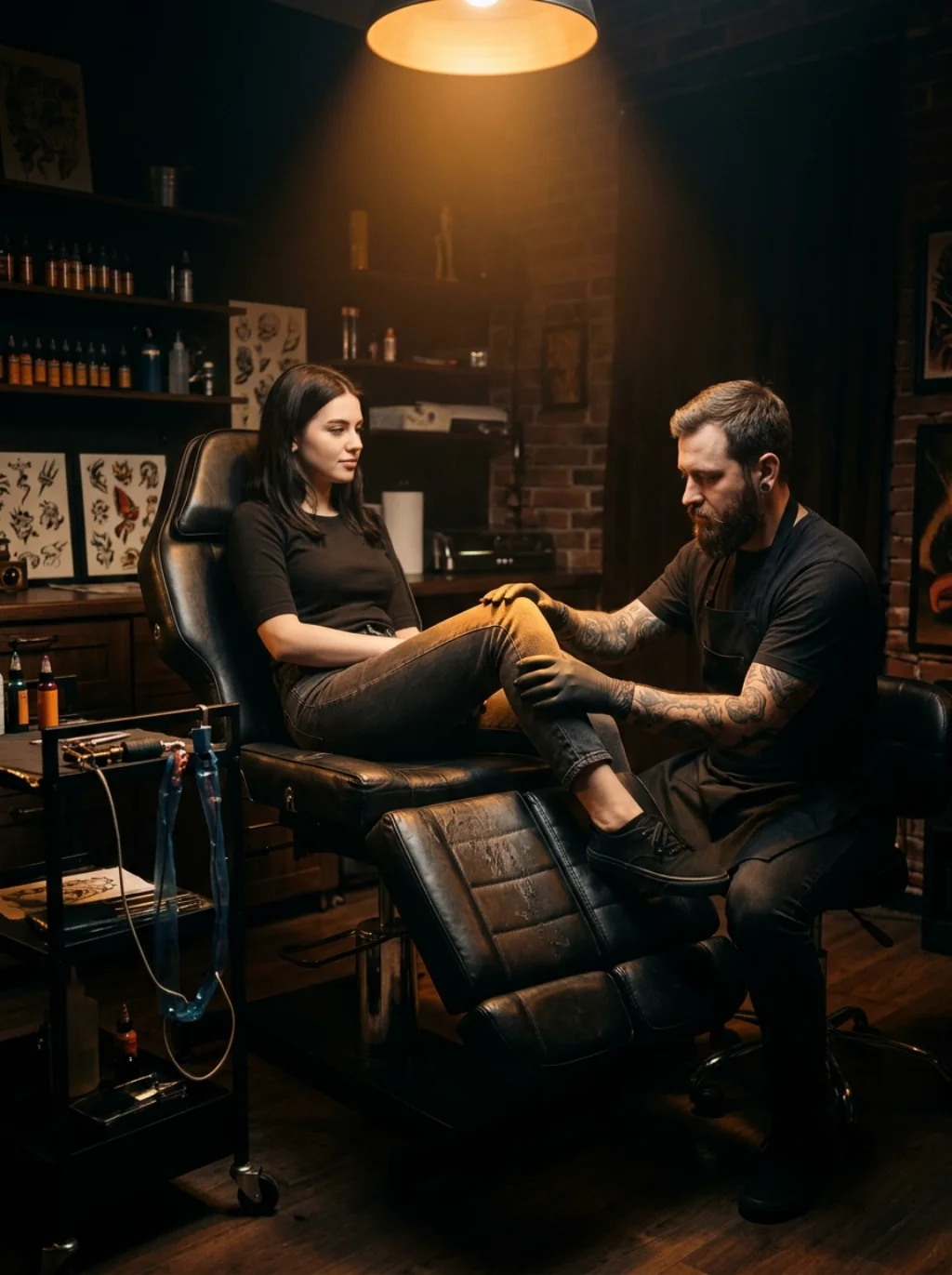
How you sit during the session genuinely shapes the final outcome. Artists typically ask clients to bend the knee at roughly ninety degrees, mimicking natural walking posture rather than a fully extended, resting position.
This positioning directly affects tattoo stretching and movement concerns discussed during consultation. Designing on a bent joint ensures lines won’t appear stretched or distorted once you return to normal daily movement after the session ends.
Why Negative Space Becomes a Weapon in Skilled Artistic Hands
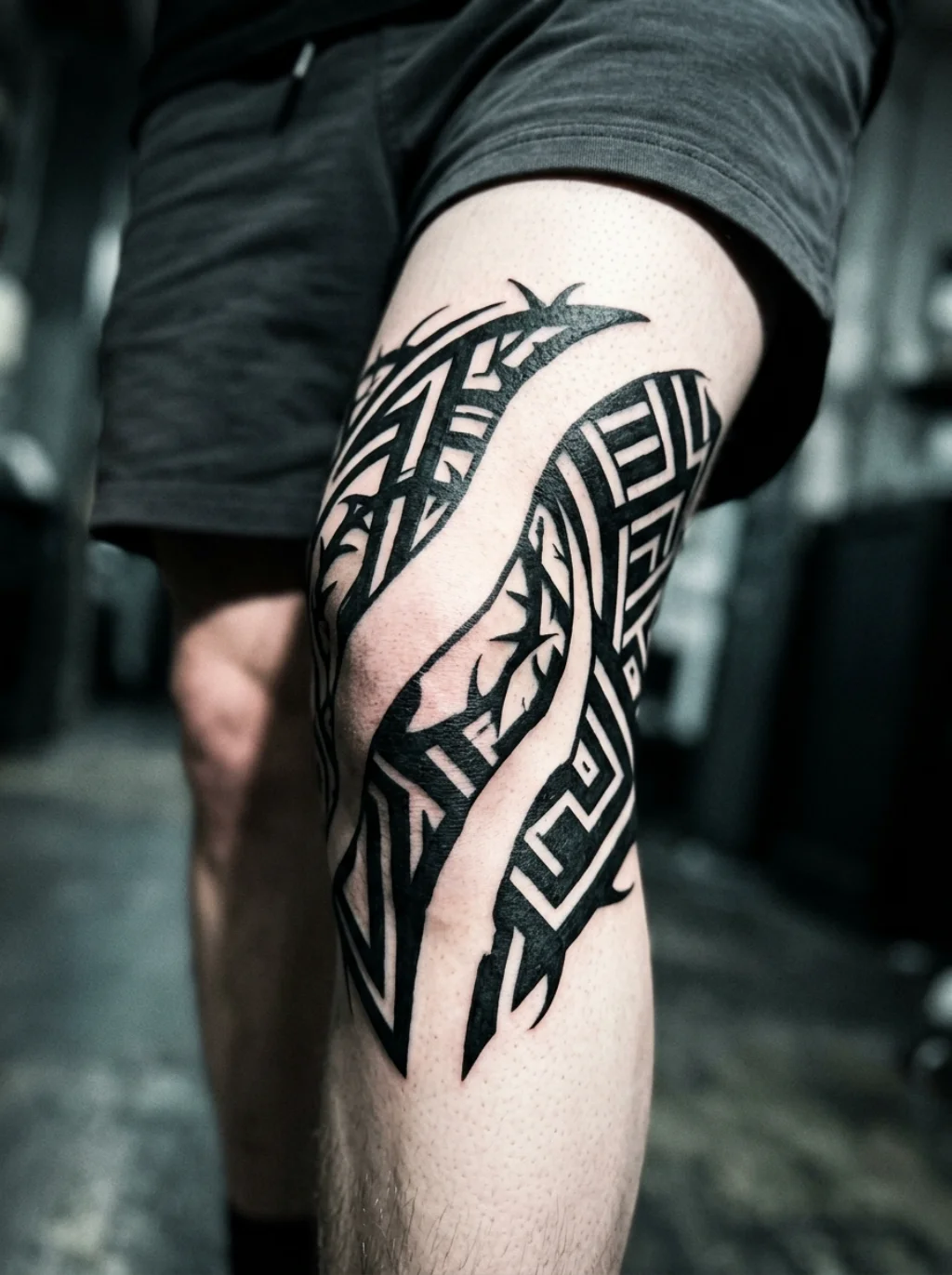
Empty space isn’t wasted space in skilled hands. Strategic gaps between design elements create visual breathing room while also protecting against ink bleeding into unwanted areas as skin naturally shifts and stretches over time.
This technique turns tattoo composition around knee work into something genuinely three-dimensional looking. Negative space also highlights knee cap tattoo focal points, drawing the eye exactly where the artist intends without unnecessary visual clutter.
The Surprising Way Tribal Roots Shaped This Modern Placement Trend

Tribal tattoo traditions actually pioneered joint-area placements long before modern studios embraced them. Many indigenous cultures used bold, symbolic patterns around knees and elbows to mark status, strength, or significant life milestones within their communities.
Modern tattoo artist consultation for knee piece discussions often reference this history for inspiration. Contemporary designs borrow tribal boldness while blending it with modern precision, creating a style that feels both ancient and freshly current.
Knee Framing Tattoos and the Illusion of Perfect Leg Continuity
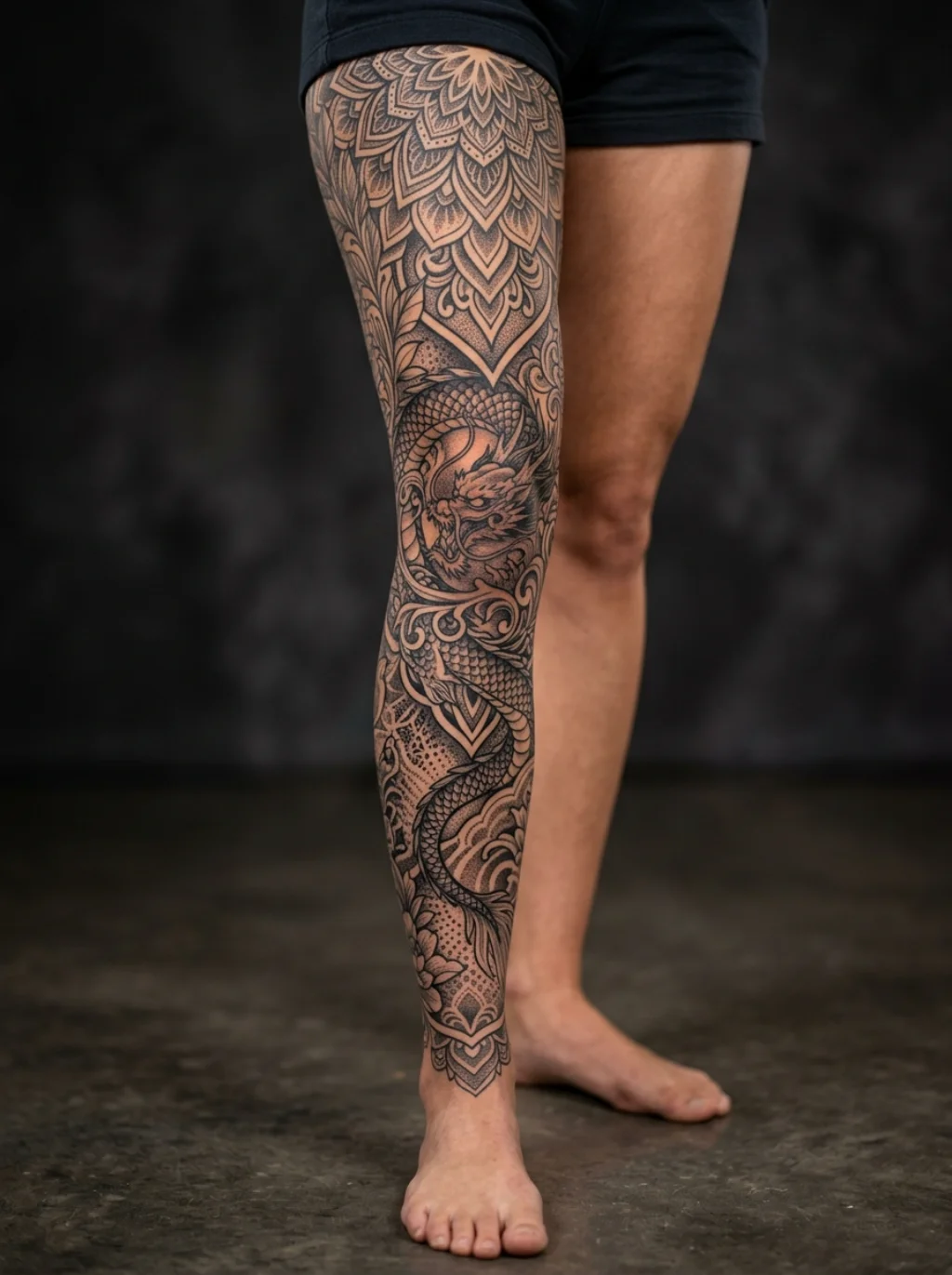
One underrated benefit involves visual illusion. Well-executed knee framing tattoos create the impression of one continuous artwork flowing from thigh to calf, even when they’re technically separate sessions completed months apart.
Achieving this requires careful planning around tattoo flow from thigh to knee to calf transitions. Matching line weight and color saturation across sessions keeps the illusion intact, making the entire leg appear as one cohesive, deliberate piece.
A Healing Timeline That Tests Even the Most Patient Clients
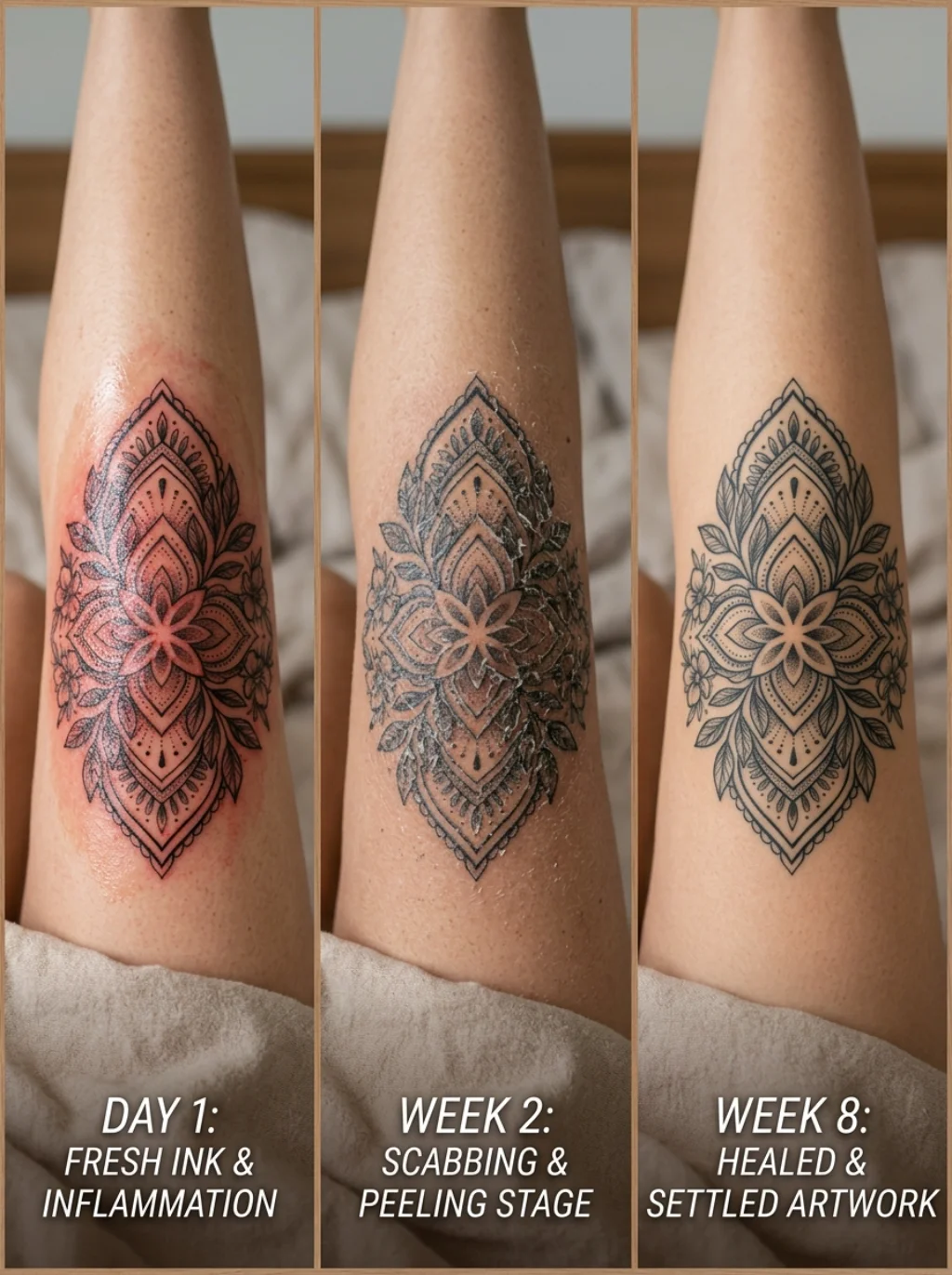
Healing here takes patience most clients underestimate going in. Initial surface healing wraps up within roughly two weeks, but deeper tissue settling continues for a full month or longer given constant joint movement.
Understanding knee tattoo healing process explained properly prevents frustration during this stretch. Redness, peeling, and mild swelling are completely normal. Rushing back into intense physical activity too soon often disrupts this delicate healing timeline unnecessarily.
The Consultation Question Most People Forget to Ask Their Artist

Most clients focus consultation time entirely on design choices. Yet asking about the artist’s specific experience with joint placements matters just as much, if not more, than picking the perfect pattern beforehand.
When choosing a tattoo artist for knee work, request portfolio examples specifically from this placement. General sleeve experience doesn’t guarantee comfort with knee anatomy. This overlooked question often prevents costly, painful revision work later.
Why Bold Borders Turn a Simple Joint Into a Statement Piece
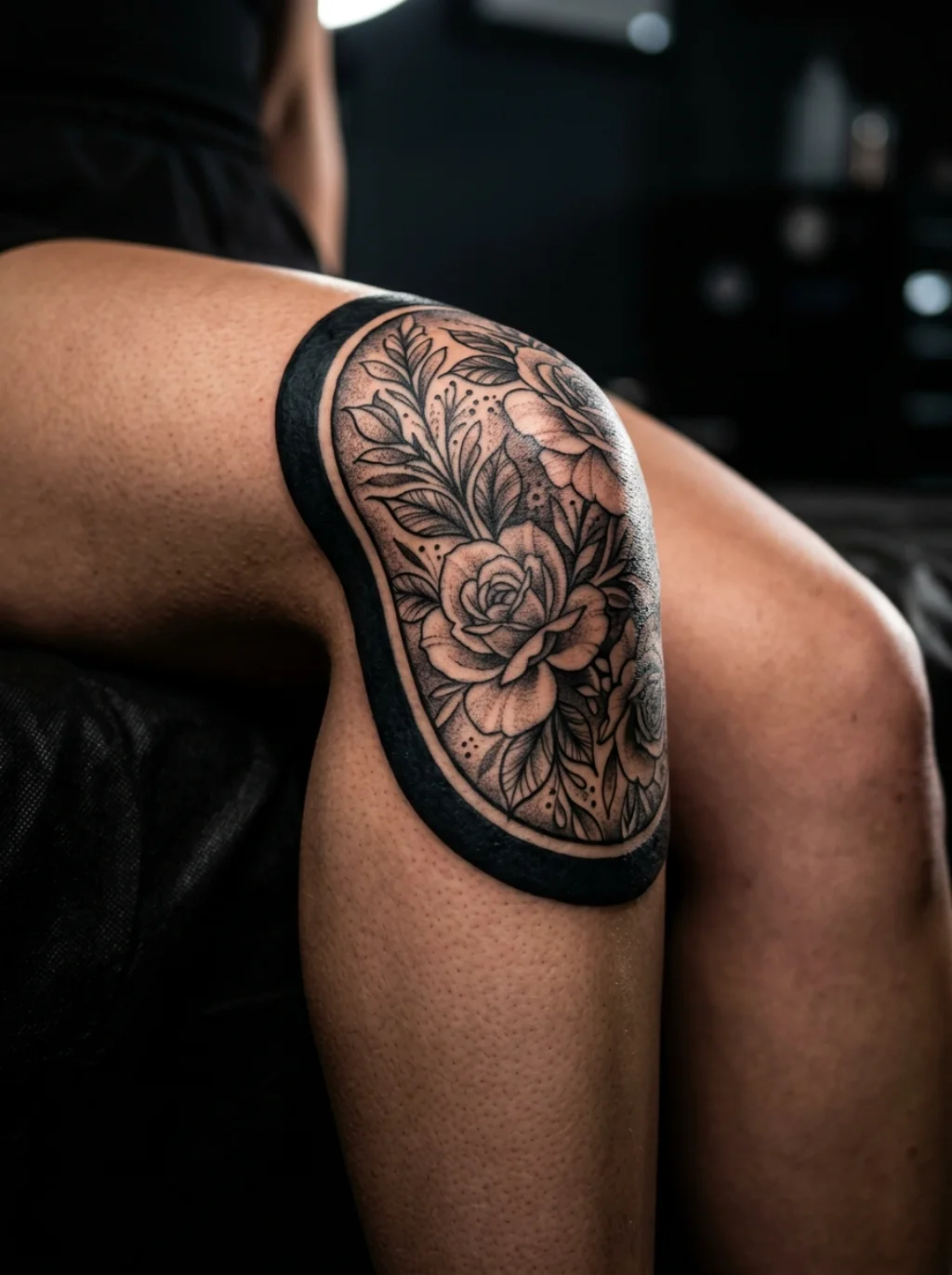
A strong border transforms simple linework into something genuinely commanding. Thick, confident outlines frame the kneecap like a picture frame highlights fine art, giving even minimalist designs real visual weight and presence.
This is where tattoo border design truly shines as a standalone element. Combined with floral knee framing tattoo patterns, bold borders create striking contrast between soft botanical details and structured, confident framing lines.
The Blowout Danger That Separates Skilled Hands From Reckless Ones
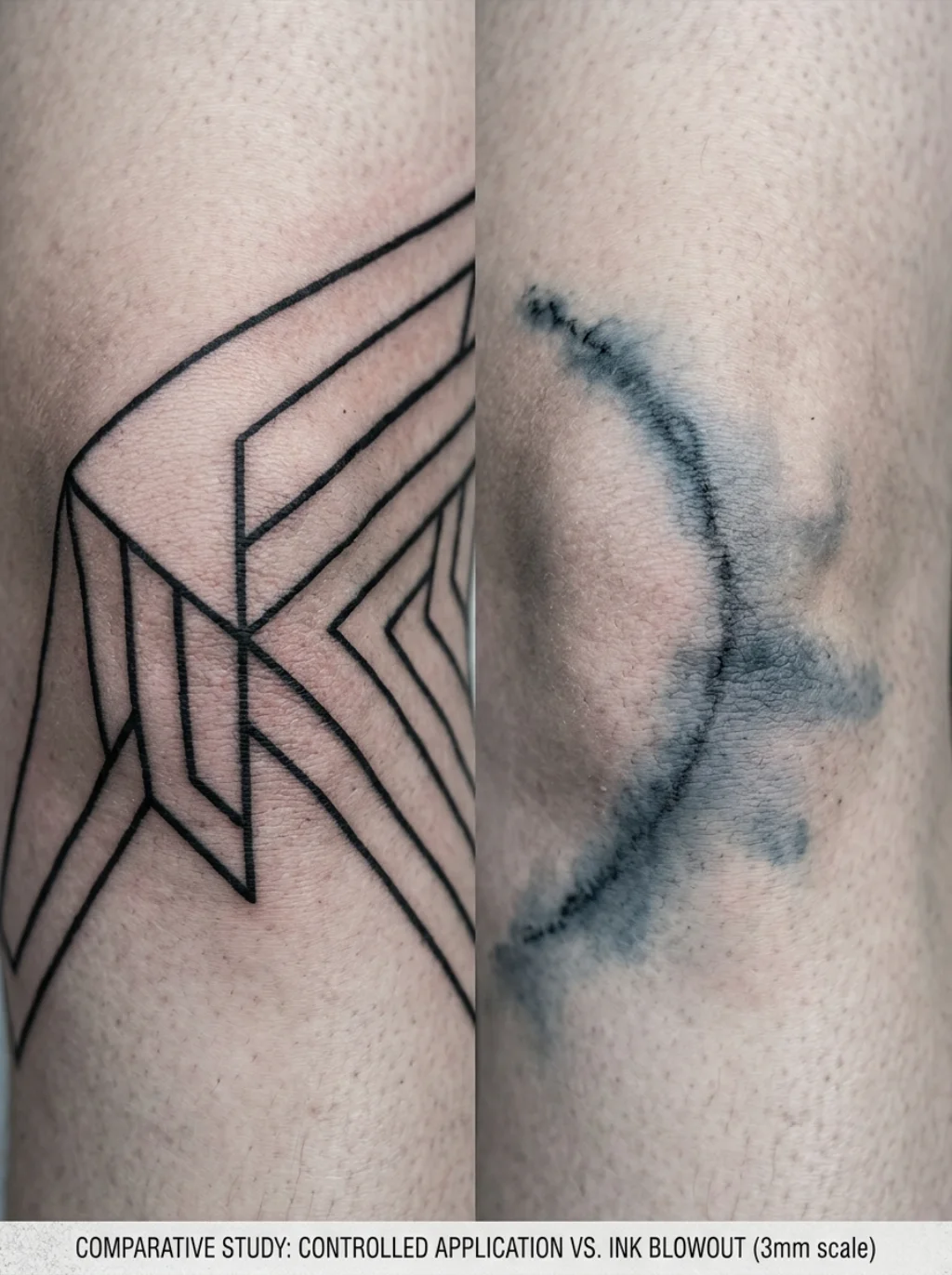
Blowout happens when ink gets pushed too deep into loose tissue, spreading beyond its intended lines. This joint’s thin skin and constant flexing make it particularly vulnerable compared to flatter, more stable body areas.
Understanding knee tattoo blowout risk helps clients choose experienced artists over cheaper, less qualified options. Skilled hands adjust needle depth specifically for this area, dramatically reducing tattoo fading on knee joint and blurred linework down the road.
A Design Philosophy Where Movement Becomes Part of the Artwork
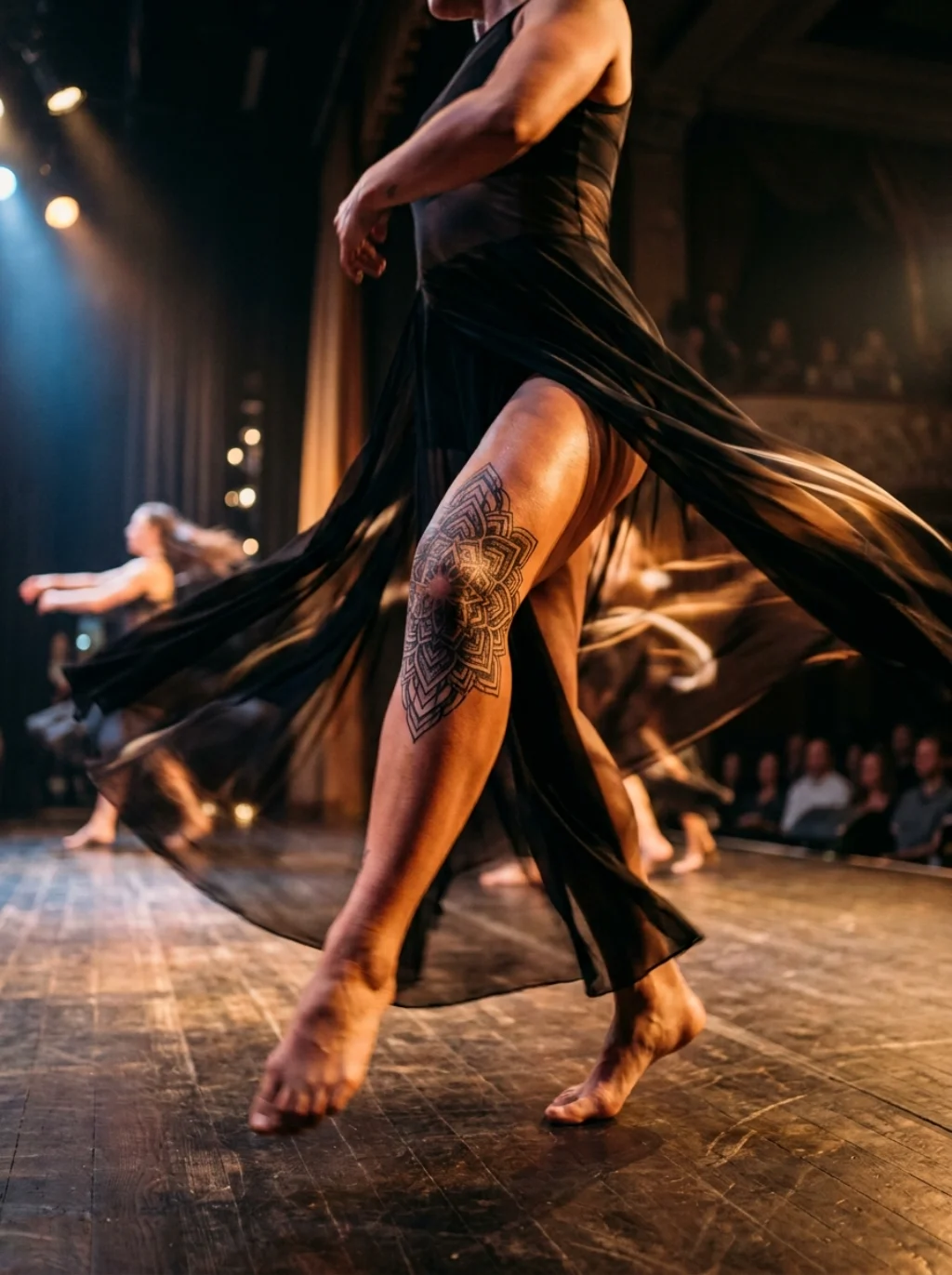
Rather than fighting the knee’s constant motion, forward-thinking artists embrace it entirely. They design pieces that actually look more dynamic and alive when the leg bends, turning limitation into genuine creative opportunity.
This philosophy reshapes how people approach knee tattoo placement guide planning from the very start. Instead of avoiding movement, the artwork celebrates it, making every step a subtle performance of the design itself.
Frequently Asked Questions
How painful are knee framing tattoos compared to other body areas?
This placement ranks among the more painful spots due to thin skin and close bone proximity. Expect sharper sensations directly over the kneecap compared to fleshier areas like the thigh or forearm.
How long does it take for a knee tattoo to fully heal?
Surface healing typically finishes within two weeks. Deeper tissue settling can take a full month or longer, especially given how frequently this joint bends and stretches during normal daily activity.
Do knee tattoos distort or crack when the leg bends?
Well-designed pieces account for bending from the start, minimizing distortion significantly. Poorly planned designs, however, can appear stretched or warped once the knee flexes during walking or sitting.
What tattoo styles work best for framing the knee area?
Mandala, geometric, and blackwork styles tend to perform exceptionally well here. Their structured or radial patterns naturally complement the joint’s curvature while resisting stretching-related distortion over time.
How much does a knee framing tattoo typically cost?
Pricing varies based on size, detail level, and artist experience. Expect higher rates than average placements, since specialized technique and extra session time are usually required for lasting, quality results.
Conclusion
Knee framing tattoos sit at a rare intersection of bold artistry and anatomical challenge. Choosing this placement means trusting a skilled artist to work with movement, curvature, and skin tension rather than against it. Done right, a knee framing tattoo becomes more than decoration. It becomes a striking, permanent statement that moves fluidly with the body itself.
1 Comment