
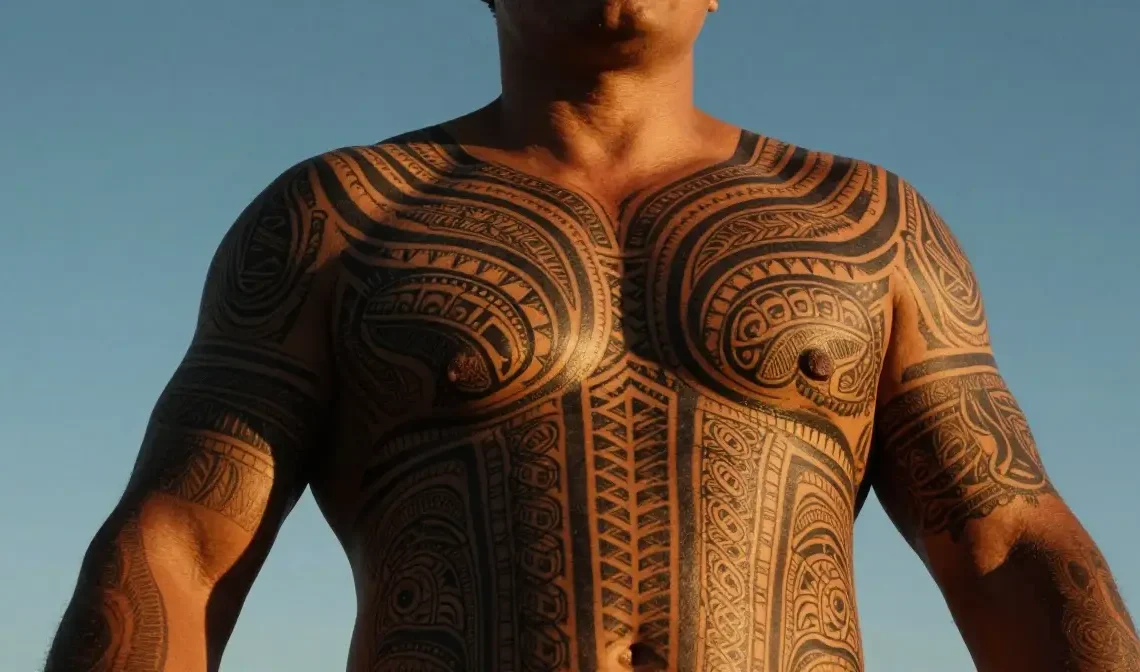
Some things don’t need reinvention. They arrive complete — tested across centuries, refined through lived experience and encoded with meanings so dense that modern design theory is still catching up. Tribal tattoos belong to this category entirely. They predate paper, predate cities and predate every written alphabet currently in use. They were the first permanent record humans kept and they kept it on the most personal surface available — their own bodies. This guide covers every major tradition, every placement decision and every cultural consideration worth understanding before you bring ancient practice into permanent contact with your modern skin.
Ink That Predates Every Written Language by Several Thousand Years
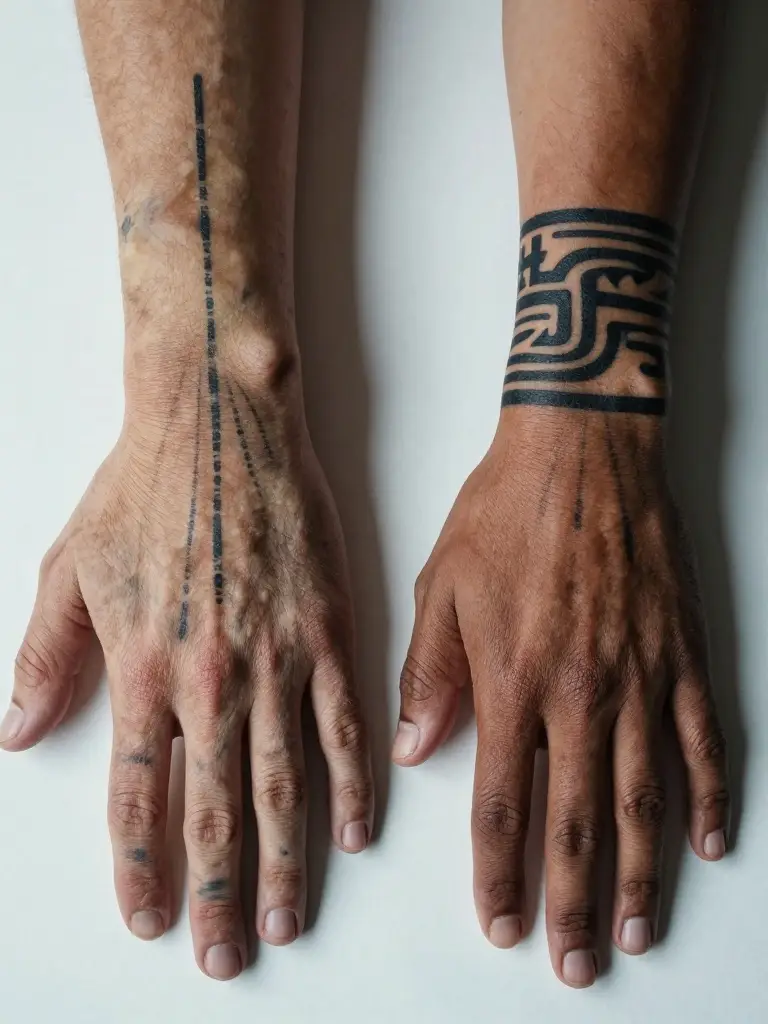
The oldest confirmed tattooed human remains belong to Ötzi the Iceman — a Copper Age man discovered preserved in Alpine ice whose body carries 61 tribal tattoo patterns in carbon black ink dating to approximately 3300 BCE. These aren’t decorative marks. Analysis suggests therapeutic or acupuncture-adjacent placement over arthritic joints — evidence that ancient tattoo ritual practice carried functional purpose beyond symbolism from its earliest documented appearance. Ceremonial skin marking tradition was never merely aesthetic.
Ancestral body art tradition appears independently across every inhabited continent — the Polynesian tattoo cultures of the Pacific, the African tribal tattoo traditions of sub-Saharan communities, the Borneo tattoo practices of Dayak peoples and the mummified tattooed remains of ancient Egyptian and South American cultures all developed sophisticated skin marking systems without contact with each other. That independent convergence isn’t coincidence — it’s evidence that tribal tattoo symbolism responds to something fundamental in human psychology that transcends geography and culture.
Tribal Tattoos and the Sacred Lineage Encoded in Every Bold Black Line
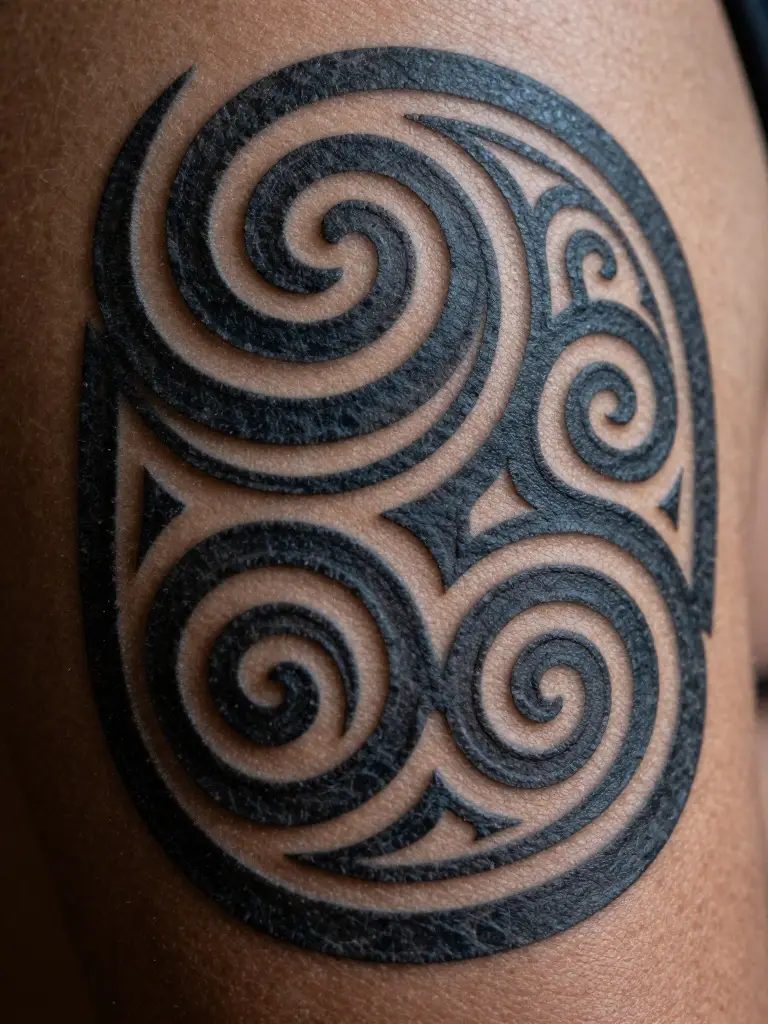
Every bold line in a tribal tattoo design meaning system encodes specific information — genealogical data, social rank, spiritual protection, life achievement, community belonging or navigational knowledge depending on the specific tradition. These aren’t aesthetic decisions applied to a neutral surface. They’re a writing system using the body as its medium. Tribal tattoo cultural symbolism understood in its full context reveals that what appears as pattern to the uninitiated reads as biography, declaration and prayer to anyone fluent in the tradition’s visual language.
Lineage and ancestry tattoo theme drives the most personally meaningful tribal tattoos across virtually every tradition that has produced them. A Maori tattoo carries the wearer’s whakapapa — their genealogical connection to specific ancestors — encoded in spiral patterns unique to their family line. A Samoan tattoo records the wearer’s village, their family position and their personal achievements. Generational tattoo knowledge system understanding reveals that these marks weren’t chosen from a flash sheet — they were assigned, negotiated and earned through processes that could span years of community deliberation.
Polynesian Patterns That Map an Entire Life Story Across the Body
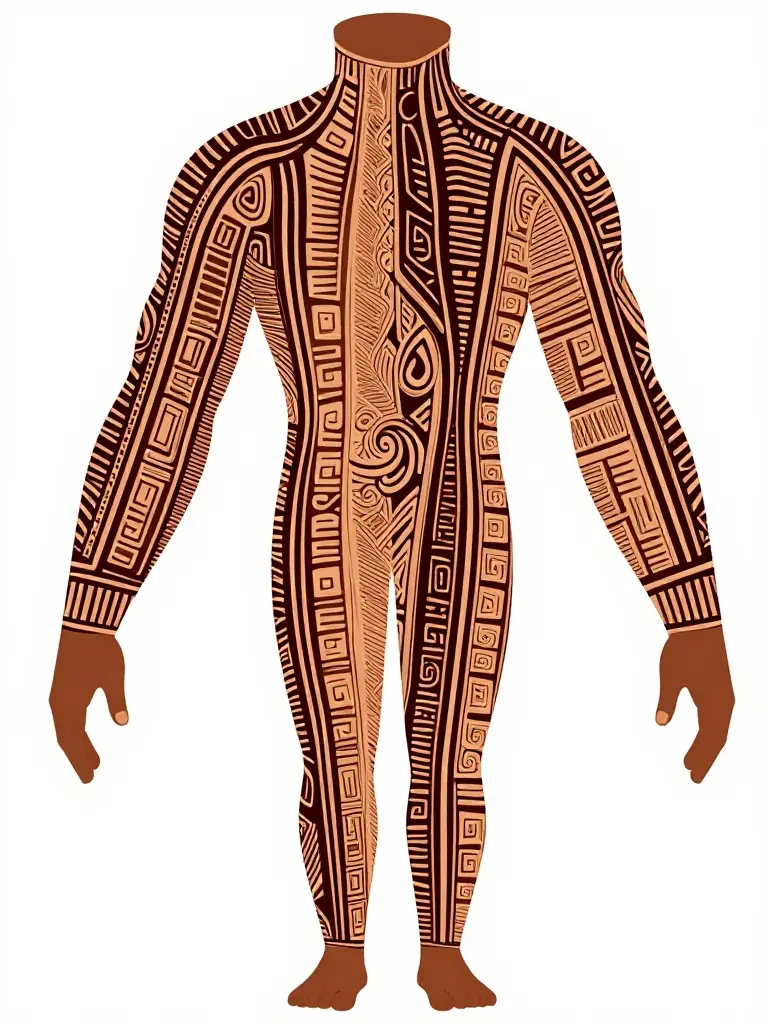
Polynesian tribal tattoos encompass a family of related traditions — Marquesan, Tahitian, Tongan and Samoan among others — that share a visual vocabulary of geometric pattern work, bold blackwork filling and specific symbolic motifs while maintaining distinct regional identities and meaning systems. Polynesian tribal tattoo meaning built from this tradition treats the body as a navigational and biographical map where specific placement zones carry specific categories of information about the person being marked.
Polynesian body art aesthetic uses specific recurring motifs that each carry documented meanings — the shark teeth pattern tattoo represents strength and protection, the turtle shell pattern tattoo symbolizes health, longevity and family, the enata figure tattoo represents people and relationships in the wearer’s life and the sun and wave tribal tattoo combination communicates guidance, eternity and the ocean’s central role in Pacific Island cosmology. Pacific Island tattoo tradition compositions build these motifs into unified body narratives where no single element exists in isolation from the others it shares the composition with.
Maori Ta Moko and the Identity System Older Than New Zealand Itself
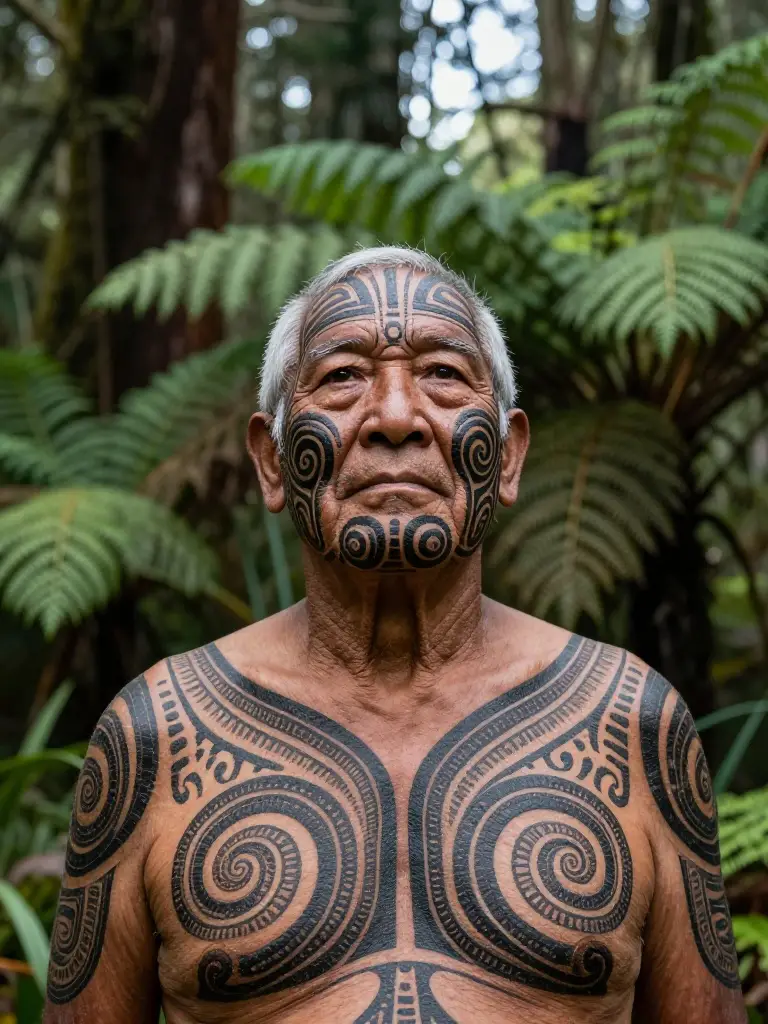
Maori tribal tattoos — ta moko specifically — represent one of the world’s most sophisticated cultural identity body marking systems. Unlike most tattoo traditions that place design on the skin’s surface, traditional ta moko was carved into the skin using chisels rather than needles, creating grooved channels that held pigment — a distinction that makes the marks literally part of the skin’s topography rather than applied to it. The face was the primary canvas because Maori culture recognized the face as the seat of personal identity and mana.
Maori tribal tattoo design ideas in authentic ta moko tradition are not transferable between individuals because each design encodes specific genealogical information unique to one person’s whakapapa. Koru spiral tattoo elements represent new life, growth and peace — the unfurling fern frond that appears across the New Zealand landscape in spring. Tribal tattoo cultural appropriation conversations around ta moko are particularly serious because the Maori people have explicitly stated through tribal councils that ta moko belongs to specific individuals and families and cannot be ethically worn by those without the genealogical connection the design encodes.
Samoan Pe’a — the Tattoo That Demands More Courage Than Most Can Give
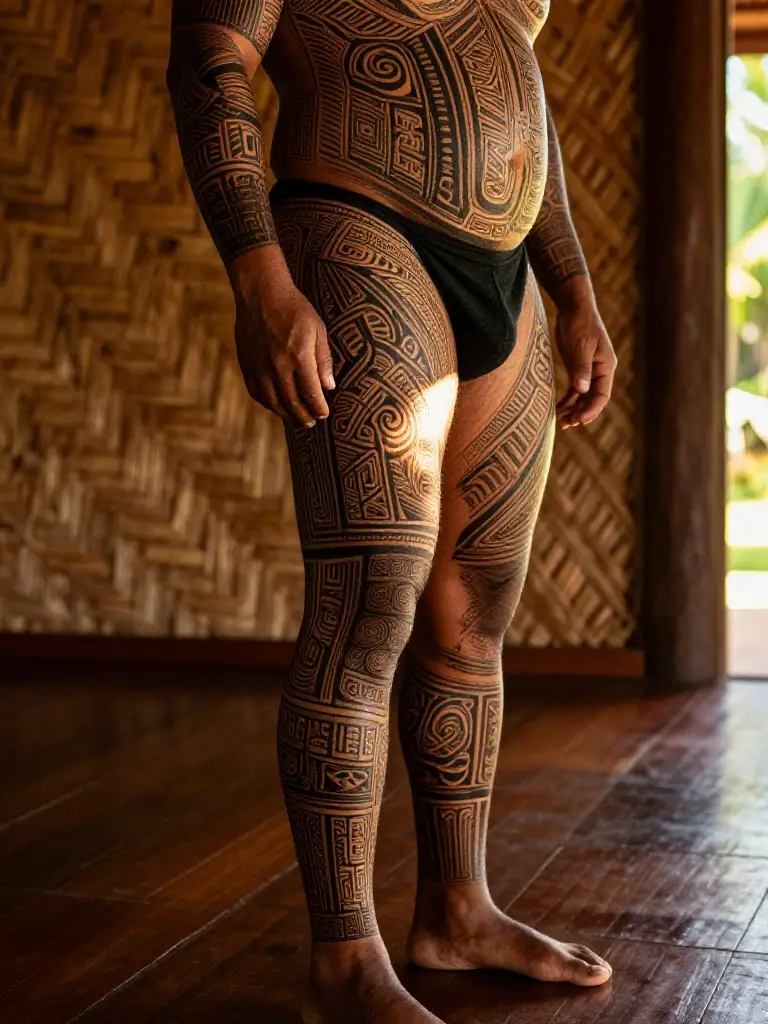
The Samoan tattoo pe’a — the traditional full body tattoo covering the torso and legs from waist to knee — is among the most physically demanding tattooing processes still practiced anywhere on earth. Applied using traditional tools over multiple sessions spanning days or weeks, the pe’a requires the recipient to remain still through prolonged pain that has caused modern recipients with high conventional tattoo tolerance to describe as categorically different from needle tattooing. The pe’a isn’t chosen impulsively. It’s a rite of passage tattoo concept that carries lifelong social consequence.
Samoan tribal tattoo meaning encoded in the pe’a is comprehensive — it records the wearer’s family connections, their place within their aiga (extended family) and their commitment to Samoan cultural values through the act of endurance itself. An incomplete pe’a carries social stigma in traditional Samoan communities because leaving the process unfinished suggests a failure of the character the mark is meant to demonstrate. Tribal tattoo ideas for dark skin particularly suit Samoan designs because the bold blackwork tradition achieves maximum chromatic contrast and pattern legibility on darker skin tones where the design’s visual logic is most dramatically expressed.
Hawaiian Kakau Designs That Carry the Spirit of the Pacific Into Modern Ink
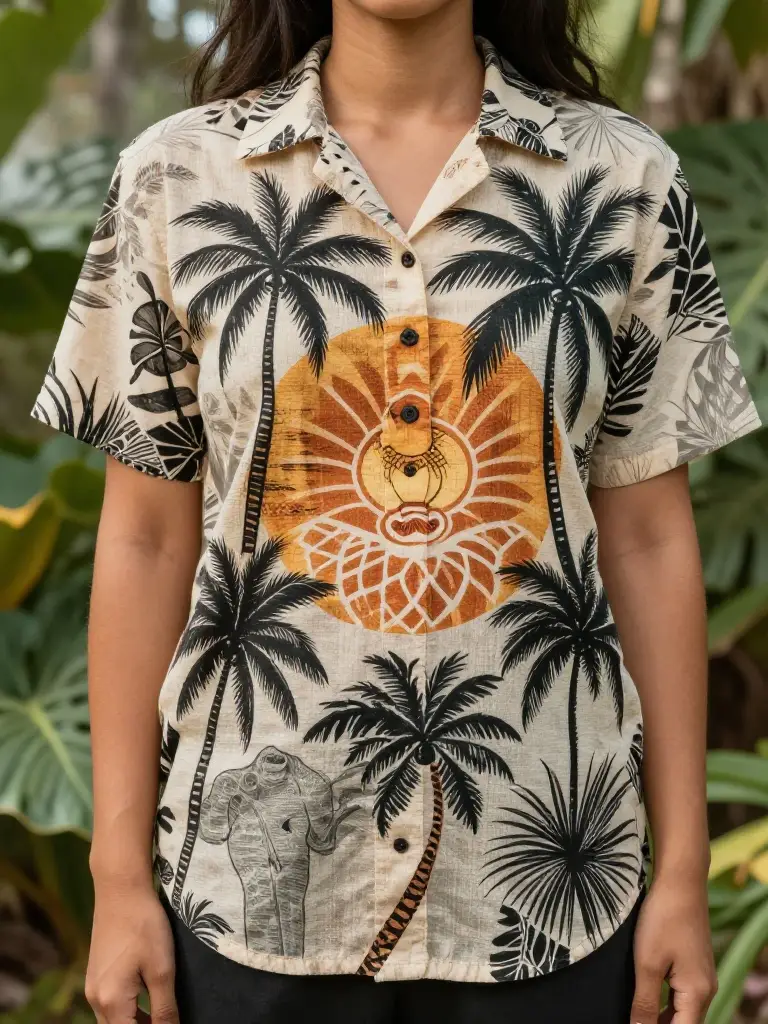
Hawaiian tribal tattoos — kakau — nearly disappeared completely during the 19th century Christian missionary period when tattooing was discouraged and in some cases actively suppressed across the Hawaiian Islands. The tradition’s survival into the contemporary era came through deliberate cultural reclamation by Hawaiian artists and scholars who worked to reconstruct the design vocabulary from museum collections, archival photographs and the few surviving practitioners who maintained the knowledge across the suppression period. Hawaiian tribal tattoo meaning carries this survival narrative as an additional layer of significance.
Hawaiian Kakau designs use specific motifs that connect the wearer to aumakua — ancestral guardian spirits — and to specific Hawaiian cosmological concepts including the cycles of natural phenomena critical to Pacific navigation and agriculture. Tribal tattoo ideas inspired by culture in the Hawaiian tradition specifically require working with practitioners who carry legitimate knowledge of the kakau system rather than aesthetic approximations of Hawaiian visual culture. The generational tattoo knowledge system in Hawaii is now actively taught through cultural programs that treat kakau as living heritage rather than historical artifact.
Aztec Tribal Patterns That Survived Colonization and Still Speak in Symbols
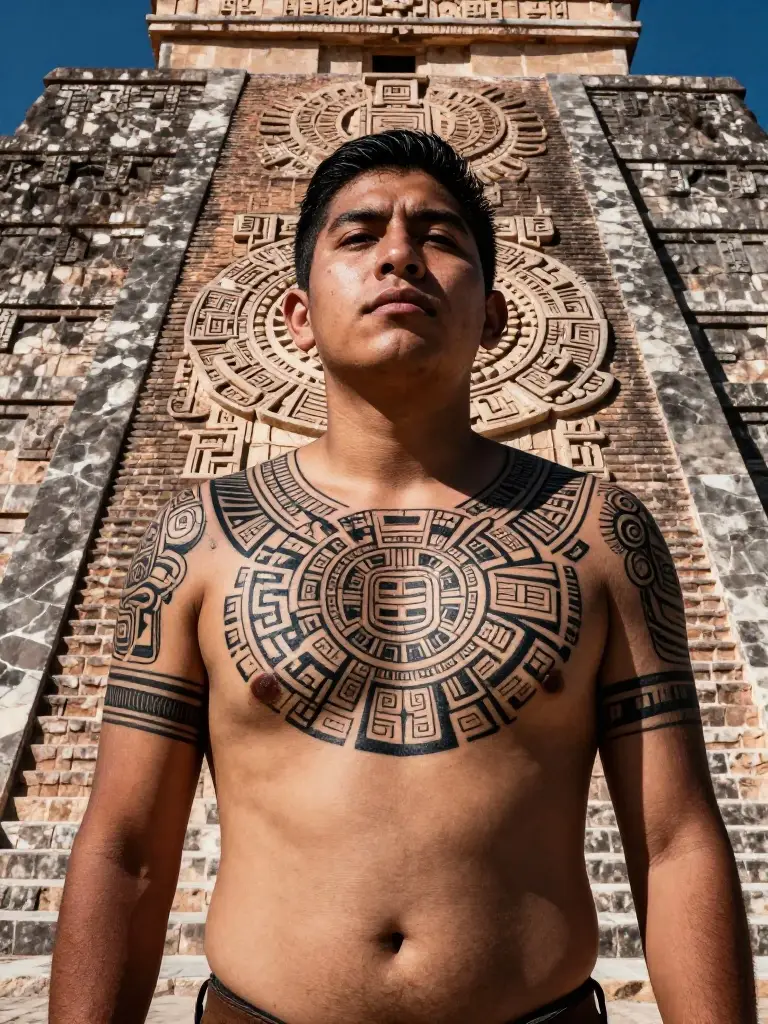
Aztec tribal tattoos carry one of history’s most extraordinary survival stories — a visual culture so thoroughly suppressed by Spanish colonization that much of its tattooing knowledge was lost for centuries, yet whose symbolic vocabulary proved so culturally persistent that it has re-emerged in the 21st century through the work of Indigenous Mexican scholars, artists and cultural reclamation movements. Aztec tattoo designs that circulate in contemporary tattooing draw from codex manuscript illustrations, stone carving traditions and ceramic art because the living tattooing practice itself was largely interrupted during colonization.
you may also like this:22 Thigh Tattoo Ideas for Men Bold and Masculine Designs
Aztec tribal tattoo design ideas built from authentic source material — the Tonalpohualli (ritual calendar), deity iconography, solar symbols and warrior rank insignia — carry mythological tribal art concept depth that purely aesthetic Aztec-adjacent designs lack. The spearhead tribal tattoo appears across multiple Mesoamerican traditions including Aztec visual culture as a marker of warrior status. Tribal tattoo mythology meaning in the Aztec system is inseparable from a cosmological worldview where specific deities governed specific days, directions and life domains — knowledge that gives each design element a context that modern decorative use rarely acknowledges.
Filipino Batok Tattoos Reclaimed by a Generation Who Almost Lost Them
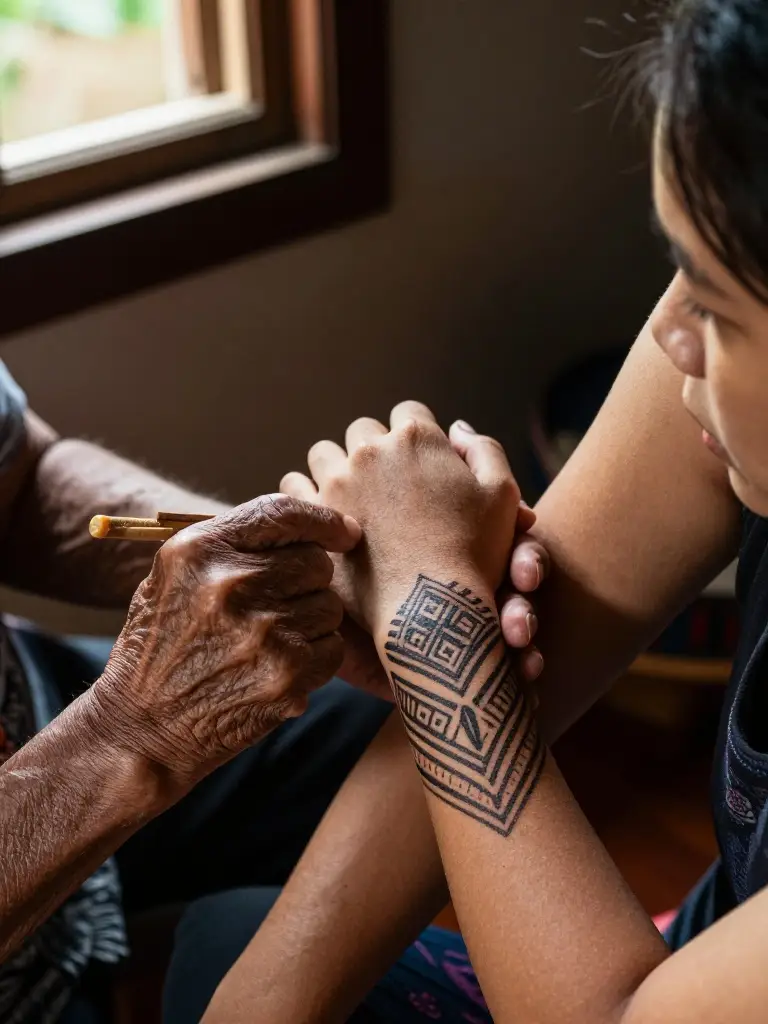
Filipino tribal tattoos — batok in the Kalinga tradition of northern Luzon — represent one of contemporary tattooing’s most remarkable cultural reclamation stories centered on a single living practitioner. Whang-Od Oggay, born in 1917 and still tattooing in her village of Buscalan, is the last traditional mambabatok (tattoo artist) trained in the original method — hand-tapping designs using a pomelo thorn and ink made from charcoal and water. Her work sparked an international pilgrimage of Filipino diaspora seeking ancestral connection through her needle.
Filipino tribal tattoo meaning in the Kalinga tradition originally marked headhunting achievements, life transitions and family identity using specific geometric patterns unique to individual villages and lineages. Indigenous tattoo symbolism concept in batok work uses patterns that encode specific biographical and social information readable to others within the same cultural context. The ancestral body art tradition being reclaimed through batok tattooing by young Filipino-Americans represents something larger than aesthetic choice — it’s a deliberate act of cultural reconnection by a diaspora generation seeking tangible links to heritage nearly severed by colonization and assimilation pressure.
Celtic Pattern Work That Carries Iron Age Intelligence Into Living Skin Art
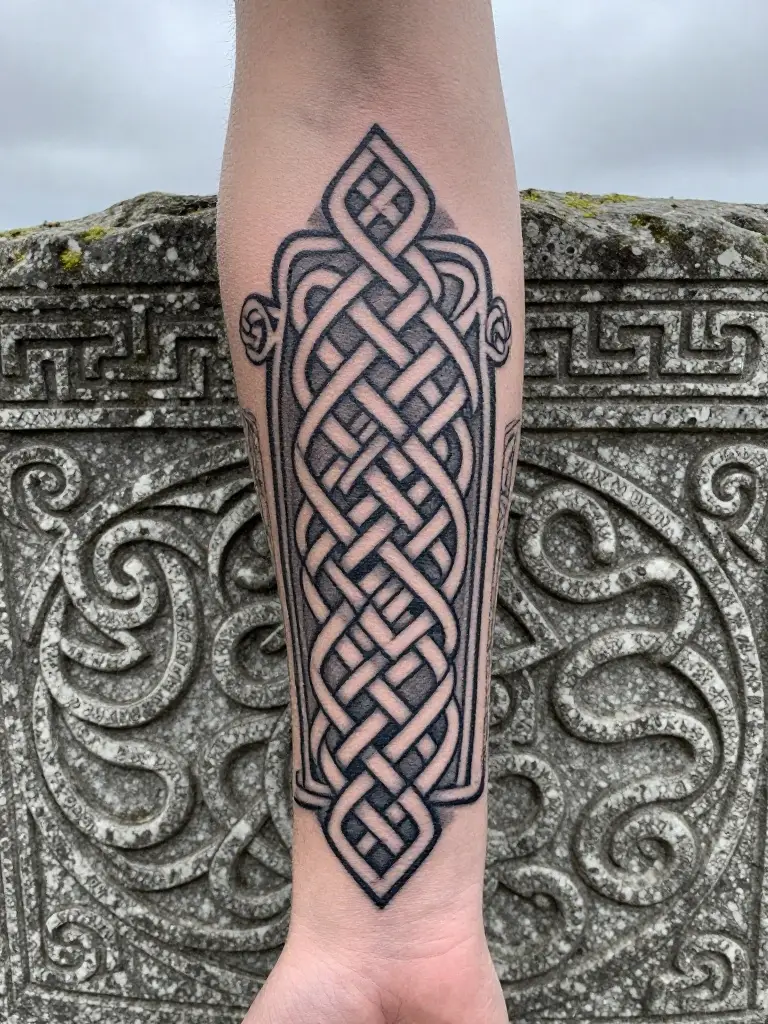
Celtic tribal tattoos draw from a visual tradition spanning roughly 700 BCE to 400 CE — the La Tène artistic period that produced the characteristic spiral, triskele and knotwork patterns now globally recognized as Celtic visual culture. Celtic knotwork tattoo designs in particular carry a philosophical concept embedded in their structure — continuous interlacing lines with no visible beginning or end that express ideas about eternity, the interconnection of all things and the cyclical nature of existence that Celtic cosmology consistently emphasized.
Celtic tribal tattoos exist at an interesting intersection of documented archaeological record and romantic reconstruction — much of what contemporary culture calls Celtic tattooing is actually informed by the Insular manuscript tradition of early medieval Irish monasteries rather than Iron Age tattooing practice for which direct evidence is limited. Tribal tattoo ideas that look authentic in the Celtic tradition require studying actual La Tène period metalwork, stone carving and manuscript illumination rather than commercially simplified knotwork patterns. Cultural heritage tattoo design in the Celtic context is most authentically expressed through geometric complexity and the specific proportional systems that characterize genuine La Tène artistic production.
Native American Tattoo Traditions Far Deeper Than Any Pinterest Board Shows
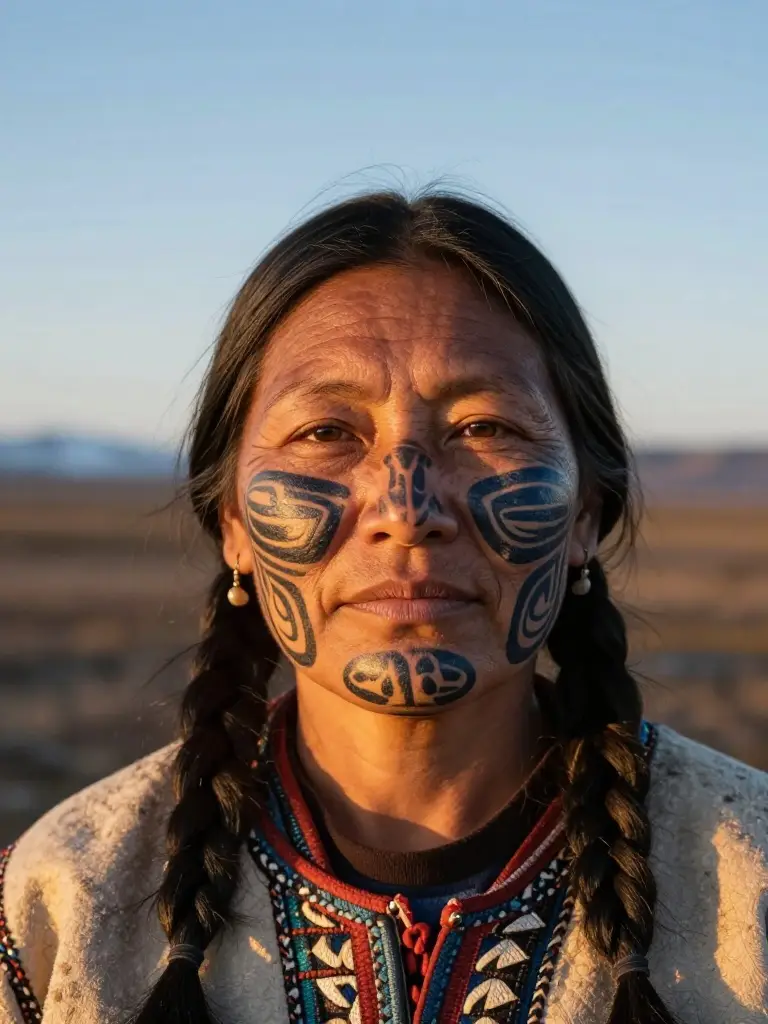
Native American tribal tattoos encompass hundreds of distinct traditions across as many distinct nations — each with its own specific tattooing practice, meaning system and cultural protocol around who could receive which marks under what circumstances. Reducing this extraordinary diversity to a single aesthetic category called Native American tribal tattooing is itself a form of cultural flattening that these traditions actively resist. Native American tattoo ideas pursued with genuine respect begin with identifying the specific nation whose visual culture you’re engaging and researching that tradition’s specific contemporary relationship with outsider interest in their marks.
Indigenous cultural tattoo motif work across specific Native American nations includes the Iroquois tradition of face tattooing as spiritual protection, the Crow and Lakota traditions of marking battle achievements on the body and the Haida formline art tradition of the Pacific Northwest — a sophisticated two-dimensional design system with specific rules governing the depiction of specific animal and supernatural beings that has been extensively documented and is actively practiced today. Tribal tattoo ideas with deep meaning from Native American traditions require engagement with Native artists and cultural authorities rather than the appropriation pipeline that has historically extracted indigenous visual culture without acknowledgment or compensation.
The Bold Black Line and the Reason It Has Outlasted Every Other Tattoo Style
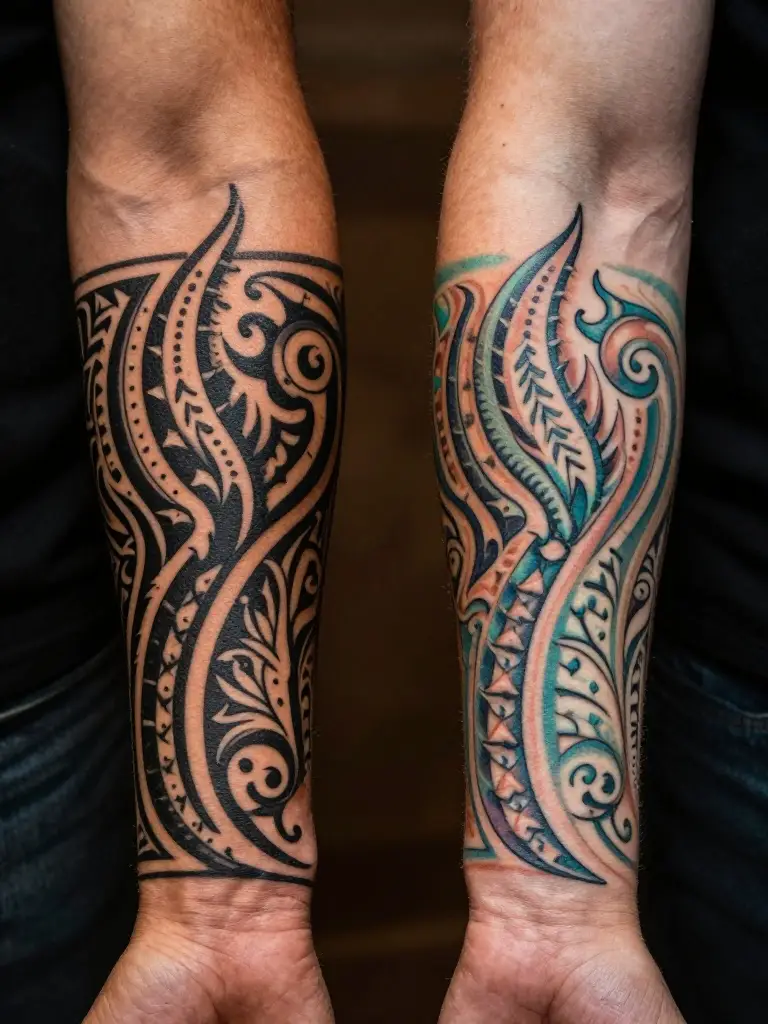
Tribal tattoo black ink style has survived as the dominant mode of tribal tattooing across virtually every tradition for one straightforward practical reason — black carbon-based ink is the most stable pigment available for permanent skin marking and the bold line weight typical of tribal work means that age-related spreading and softening at line edges maintains compositional legibility for decades longer than fine detail work in other colors. Tribal tattoo aging quality built on bold blackwork fundamentals consistently outperforms color work and fine line work across 20 and 30 year comparative studies.
Bold blackwork pattern tattoo traditions also develop a specific patina quality as they age that many collectors consider more beautiful than fresh ink — the absolute black softens slightly into a warm charcoal depth while the skin’s natural tone integrates into the composition’s lighter areas creating a unity between ink and skin that fresh tattoos haven’t yet achieved. Tribal tattoo ideas that age well most consistently share bold structural black elements, adequate spacing between pattern components to prevent fill-in as lines spread and placement on body surfaces with lower friction and sun exposure. Dark bold pattern body art on darker skin tones ages with particular grace because the contrast relationship between ink and skin tone remains strong even as the ink softens over decades.
Tribal Tattoos Scaled Across the Back in Compositions That Command Silence
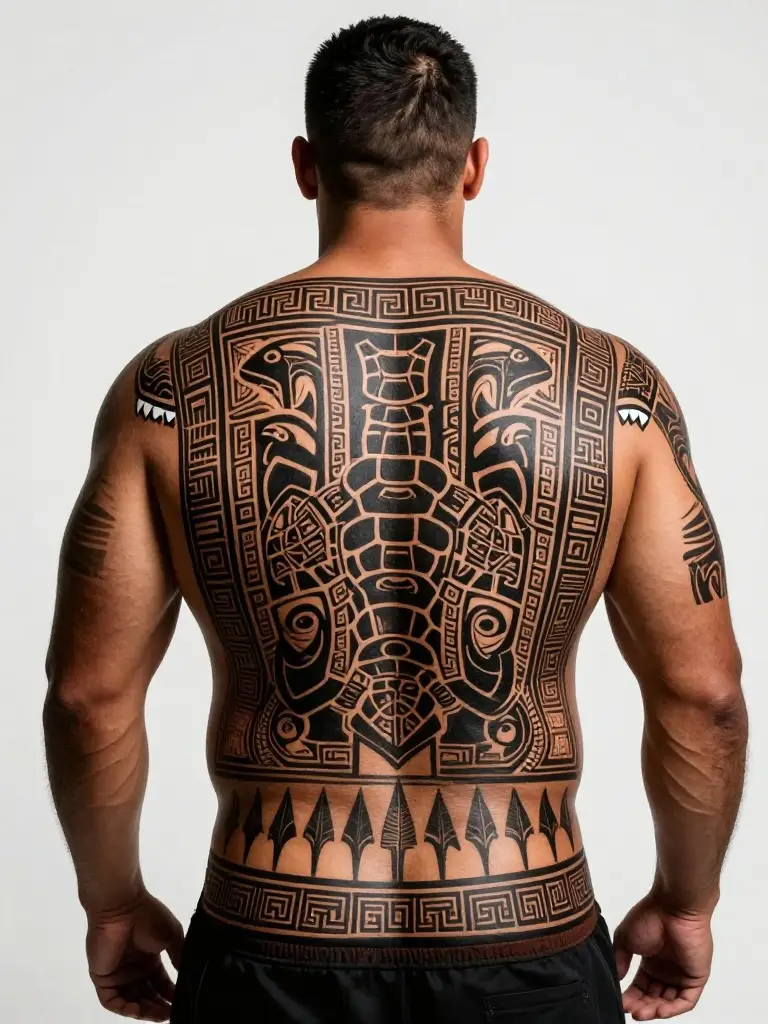
Large tribal tattoo back piece compositions offer the most generous canvas available on the human body — a surface large enough for genuine design complexity, narrative depth and the kind of pattern scale that communicates the tradition’s visual ambition at its fullest expression. Tribal tattoo back piece composition planning should begin with understanding the back’s anatomical topography — the spine as a central axis, the shoulder blades as bilateral focal points and the lumbar region as a natural compositional boundary that most back pieces either honor or deliberately cross.
Tribal back tattoo designs that treat the entire back as a unified composition — rather than multiple adjacent pieces assembled over time — consistently produce more visually powerful results. A Polynesian tattoo back piece built as a single planned artwork with consistent pattern weight, deliberate negative space distribution and anatomically aware placement of focal motifs creates an entirely different visual experience than the same design accumulated incrementally. Tribal tattoo size and scale decisions for back pieces should account for the viewing distance at which the design will most commonly be experienced — a back piece reads from 6 to 10 feet in most social contexts and should be designed for legibility and impact at that distance specifically.
Sleeve Designs That Build a Complete Cultural Narrative From Shoulder to Wrist
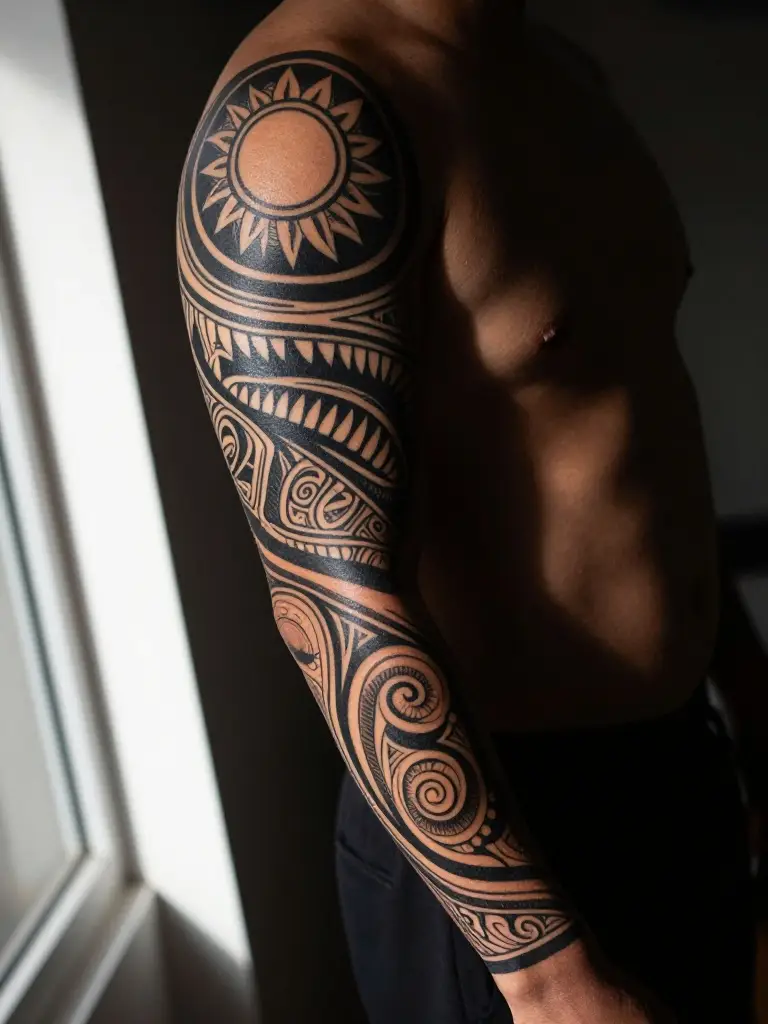
Tribal sleeve tattoo design ideas at their most ambitious build a complete cultural narrative across the entire arm — not simply repeating pattern elements down the limb but developing a compositional progression where different zones communicate different aspects of a unified story. Tribal tattoo sleeve design planning requires understanding the arm’s cylindrical form and how patterns designed for flat presentation must be adapted to wrap a three-dimensional surface without distortion in the transition zones between visible faces.
Sleeve tattoo compositions in tribal traditions typically establish a compositional hierarchy — a primary focal motif at the shoulder cap, secondary pattern work through the upper arm, a transition element at the elbow and tertiary filling work completing the forearm. Tribal arm tattoo design ideas using Polynesian tribal tattoo conventions might place enata figure tattoo elements at the shoulder communicating family relationships, shark teeth pattern tattoo bands through the upper arm for protection and strength and koru spiral tattoo elements completing the forearm. Tribal tattoo composition tips for sleeve work consistently emphasize planning the complete composition before beginning any section rather than building section by section without a governing visual logic.
Chest and Sternum Tribal Compositions That Sit Closest to the Human Heart
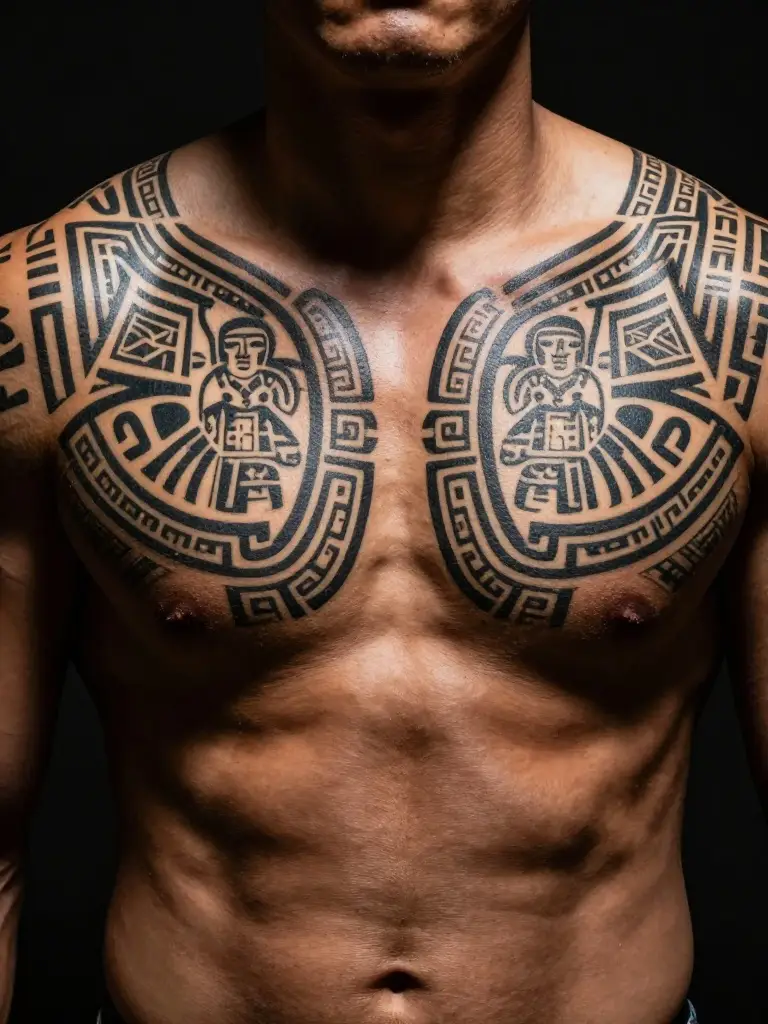
Tribal chest tattoo placement carries specific cultural weight across multiple traditions precisely because of its proximity to the heart — the organ that most cultures across history have identified as the seat of courage, identity and emotional truth. Tribal chest tattoo design ideas in Polynesian conventions specifically use chest placement to communicate a person’s core values and primary identity rather than biographical details that appear on limb placements. The chest declares who you are at center rather than what you have done or where you belong.
Tribal tattoo ideas for men on the chest and sternum create bilateral compositions that echo the body’s own symmetry — patterns extending outward from a central sternum axis toward both pectoral areas create a visual echo of warrior breastplate armor that multiple traditions explicitly reference. Warrior identity tattoo concept built through chest placement in Hawaiian tattoo, Samoan tattoo or Aztec tattoo conventions creates compositions with a specific protective symbolism — the marks physically covering the heart communicating spiritual armor as much as identification. Chest tattoo compositions in tribal traditions also benefit from the pectoral muscle’s three-dimensional form which gives bold pattern work a sculptural quality that flat surface placements cannot replicate.
Shoulder and Upper Arm Patterns That Echo Ancient Warrior Armor in Ink
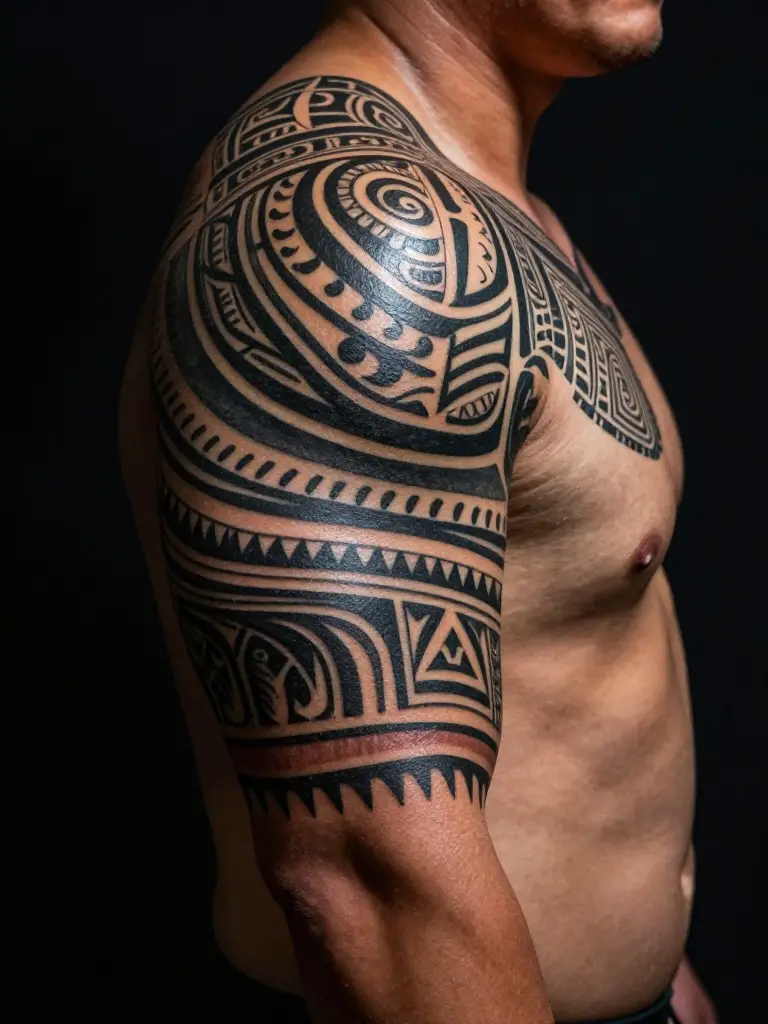
Tribal shoulder tattoo and upper arm designs occupy the placement zone most strongly associated with warrior identity across the broadest range of tribal traditions globally. Ancient warrior marking tradition specifically concentrated tattoo marks on the arms and shoulders because these were the body parts most visible during combat, most associated with strength and most prominently displayed in the hierarchical social contexts where warrior status mattered most. Tribal tattoo shoulder design inherits this association whether the wearer consciously invokes it or not.
Tribal tattoo ideas for shoulder in specific traditional contexts include the Samoan tattoo pe’a shoulder section which communicates family status, the Hawaiian tattoo shoulder placement associated with ancestral guardian spirits and the Native American tattoo arm traditions of specific nations where upper arm marks recorded battle achievements. Tribal shoulder tattoo in contemporary practice benefits from the deltoid’s three-dimensional rounded form which gives bold pattern work a sculptural quality — patterns that appear two-dimensional in the design phase wrap the shoulder’s surface and develop apparent dimensionality that flat placements cannot produce. Tribal tattoo ideas for shoulder that account for this three-dimensional wrapping produce significantly more visually satisfying results than flat designs applied without compositional adaptation.
Geometric Tribal Fusion Designs That Honor Tradition Without Copying It
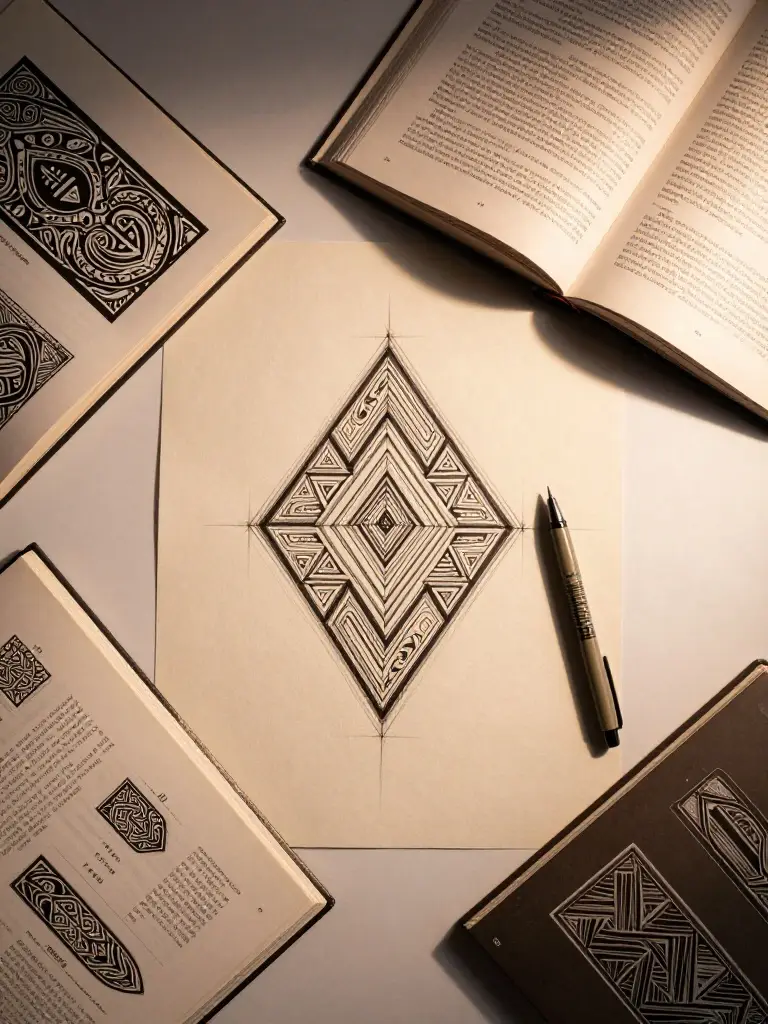
Geometric tribal tattoo design ideas represent one of contemporary tattooing’s most intellectually honest approaches to tribal visual culture — building new compositions from the geometric logic and compositional principles that underlie multiple traditions without directly copying specific cultural marks that carry encoded personal meaning belonging to specific individuals and communities. Sacred geometry tribal design fusion work uses the mathematical intelligence embedded in traditional patterns — the proportional systems, the pattern generation rules, the negative space conventions — rather than the specific designs that encode specific cultural information.
Geometric tribal tattoo compositions in this fusion register create designs that carry the visual authority and bold graphic power of traditional tribal work while remaining compositionally original rather than culturally extracted. Tribal tattoo modern interpretation approaches that build from geometric first principles — understanding how Polynesian pattern systems generate their forms, how Celtic knotwork follows specific intersection rules and how Native American formline art uses specific line weight conventions — produce designs with genuine structural depth rather than superficial tribal aesthetic applied to otherwise conventional compositions. Cross cultural tattoo influence acknowledged honestly in fusion work creates stronger artistic outcomes than hidden borrowing.
The Cultural Appropriation Conversation Every Serious Collector Must Have
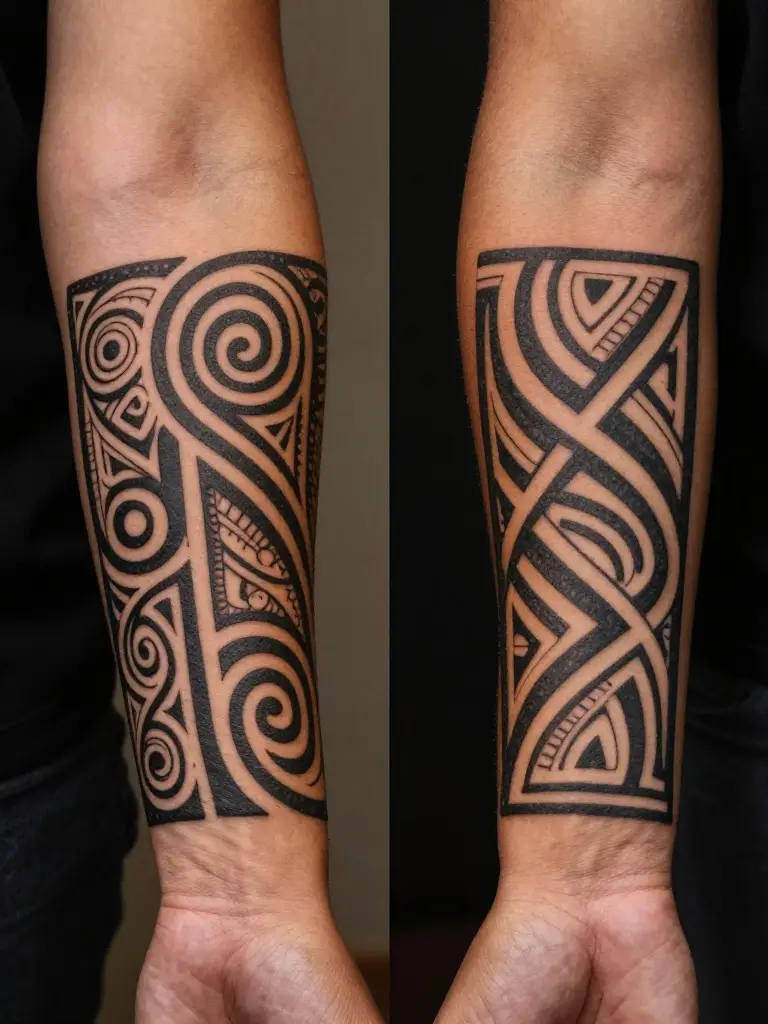
Tribal tattoo cultural appropriation is not a simple conversation with a simple answer — it operates on a spectrum from unambiguous appropriation to genuine cultural engagement with extensive nuance between those poles. Wearing a Maori tattoo ta moko design that encodes another person’s genealogy is unambiguous appropriation that the Maori people have explicitly and repeatedly identified as harmful. Wearing a design by a Maori artist who has created a contemporary work informed by ta moko principles but not encoding specific genealogical information sits in a very different ethical position.
Tribal tattoo spiritual meaning embedded in specific designs belongs to the communities that developed those meaning systems and the people whose biographical information those designs encode. Community belonging tattoo theme marks in particular — designs whose entire meaning is membership in a specific community — carry the most serious ethical concerns when worn by outsiders because they claim membership that doesn’t exist. Ceremonial tattoo design tradition marks used in active spiritual practice deserve the highest level of engagement before adoption. Research the tradition, engage with artists from within it, ask direct questions about what is appropriate for outsiders and accept the answer you receive even when it’s restrictive.
Tribal Tattoos for Women Rooted in Traditions That Always Honored Female Ink
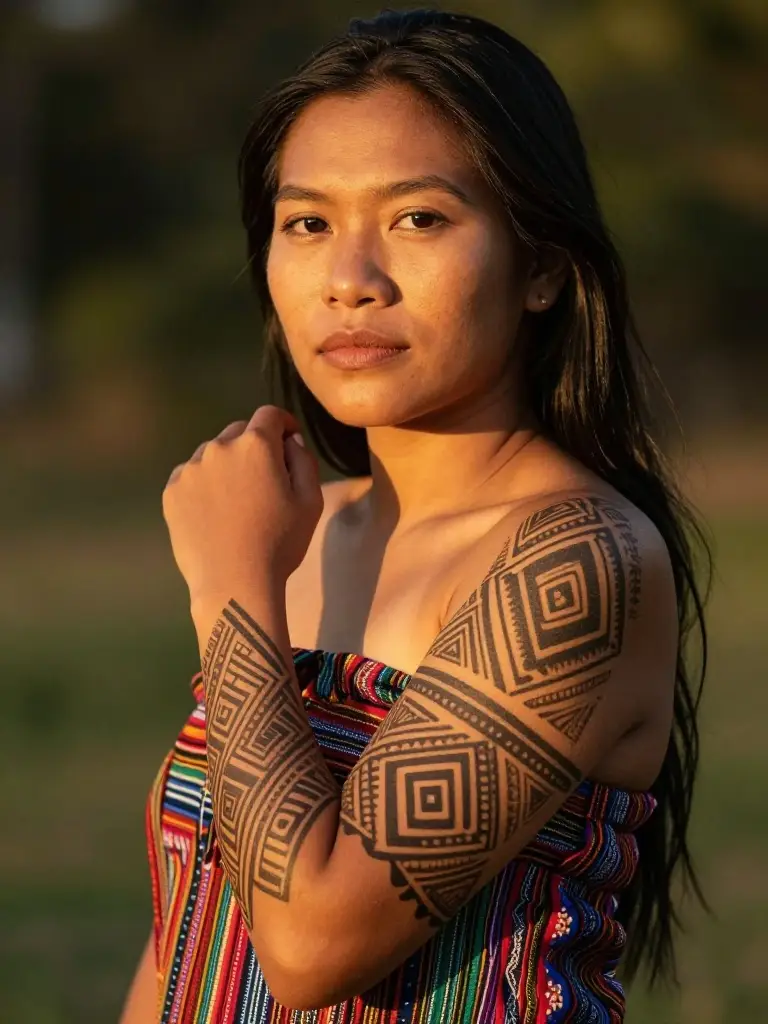
Tribal tattoo for women exists within rich historical precedent across most of the world’s tattooing traditions — the romantic notion that tribal tattooing was exclusively masculine is simply inaccurate as documented history. Tribal tattoo ideas for women in the Kalinga tradition of the Philippines were actually applied more commonly to women than men — batok tattoos on women marked beauty, marriageability and social status in ways that made them integral to feminine identity rather than masculine. Women in the tradition were the primary recipients of the most elaborate designs.
Tribal tattoo for women in the Maori tattoo tradition included specific moko kauae — chin and lip tattoos — that were exclusively worn by women of high status and encoded their genealogical information with the same precision as male facial ta moko. Feminine body art in Native American tattoo traditions across various nations included chin tattoos among Inuit women, arm tattoos among Haudenosaunee women and specific geometric marks among Plains nations women. Tribal tattoo ideas for women that engage honestly with these traditions find a history of female-centered tattooing practice far richer and more sophisticated than the male-dominated narrative of tribal ink that dominates contemporary popular culture.
Modern Tribal Designs That Fuse Multiple Cultural Vocabularies Responsibly
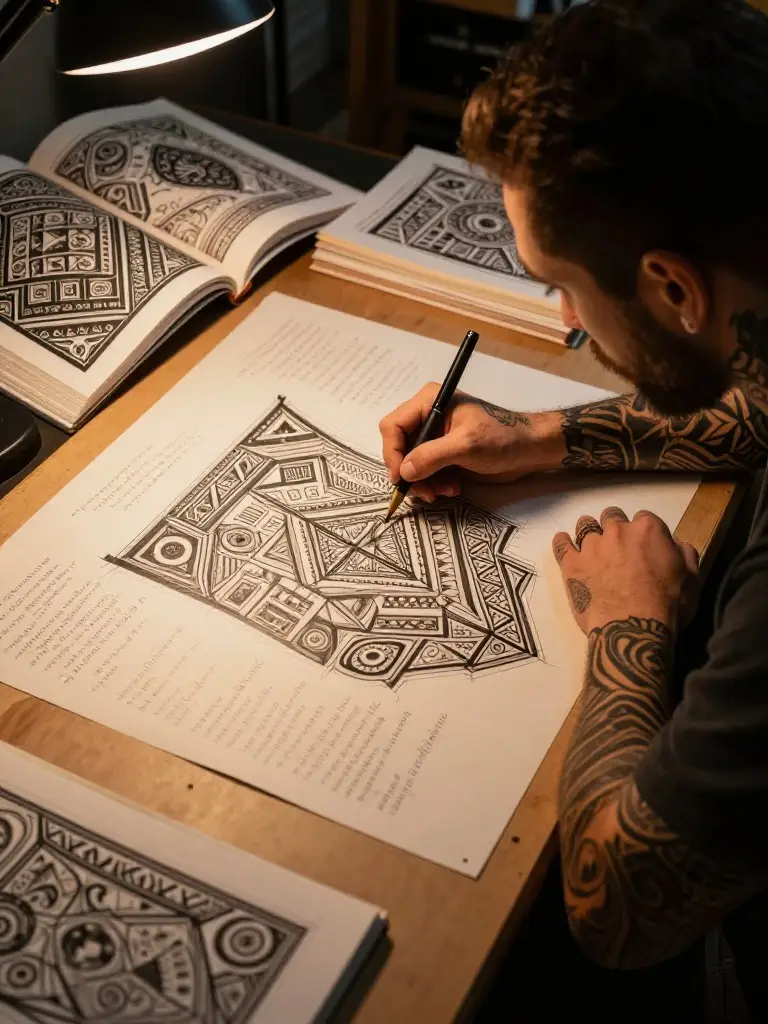
Modern tribal tattoo designs that responsibly fuse multiple cultural vocabularies acknowledge their sources, work with artists from within those traditions and build compositions from the geometric and philosophical principles underlying multiple traditions rather than extracting specific meaning-encoded marks from any single one. Tribal tattoo combined with modern elements executed responsibly creates designs with genuine visual innovation and personal meaning rather than cultural ventriloquism — speaking in a voice borrowed from someone else’s tradition without permission or understanding.
Tribal tattoo modern interpretation at its most successful creates work that a collector can describe honestly — the geometric system informing this section comes from documented Polynesian pattern logic, this element references the proportional conventions of Celtic La Tène metalwork, this compositional approach draws from Haida formline principles — rather than claiming cultural membership or identity the work doesn’t represent. Small tribal tattoo ideas in fusion registers particularly suit contemporary collectors entering tribal tattoos for the first time who want to engage with the visual tradition without making large-scale cultural claims before they have the knowledge to make them responsibly.
Blackwork Tribal Compositions That Age Into Something Even More Powerful
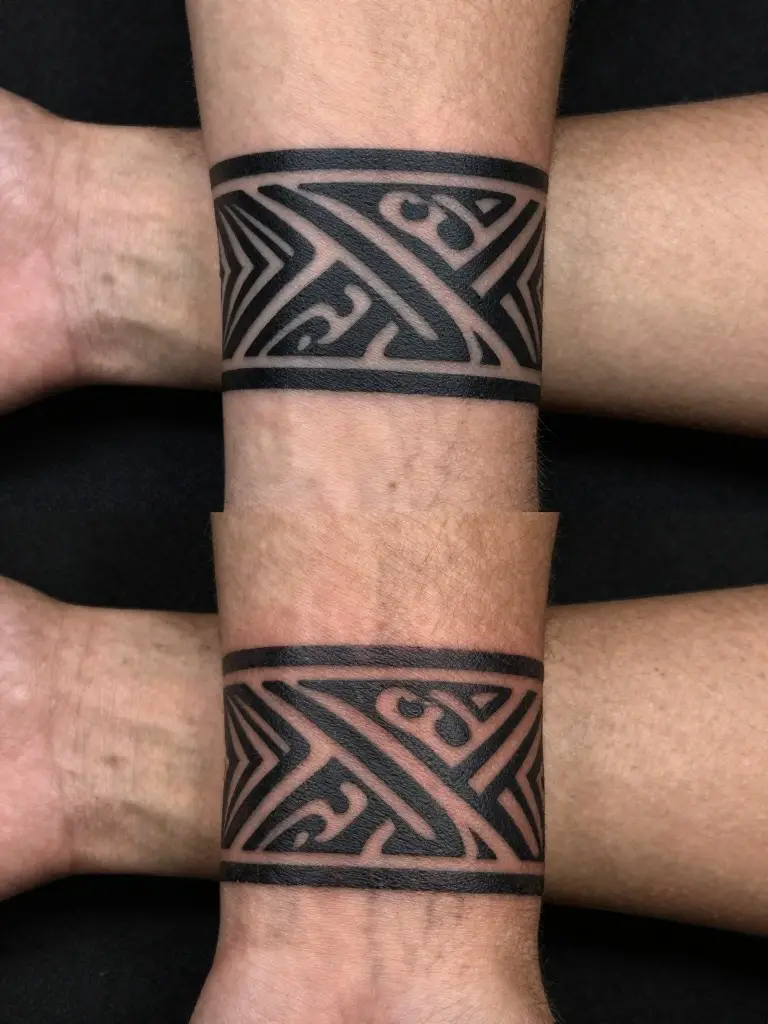
Blackwork tattoo in tribal traditions doesn’t simply maintain its quality over time — it frequently improves. The specific aging dynamics of deeply saturated black carbon ink in the dermis involve a gradual softening of absolute black into a warm rich charcoal depth while the skin’s own melanin and collagen structure integrates around the ink particles creating a unity between pigment and skin surface unavailable in fresh work. Tribal tattoo aging quality in bold blackwork traditions consistently produces 20-year-old pieces that experienced collectors describe as more beautiful than their fresh state.
Tribal tattoo color vs blackwork comparison consistently demonstrates that black ink outperforms color across every measurable long-term quality metric — line retention, pattern legibility, contrast maintenance and structural integrity all favor black ink over color at the 10-year mark and the advantage grows significantly at 20 and 30 years. Tribal tattoo touch up guide recommendations for blackwork tribal pieces are significantly less demanding than for color work — a well-executed bold blackwork tribal piece on an appropriate placement may require no touch-up work at all across a 15-year period. Bold blackwork pattern tattoo executed with proper technique and adequate ink saturation develops a patina over time that makes the piece appear to have been part of the wearer for their entire life.
Placement Science That Gives Tribal Pattern Its Maximum Visual Authority
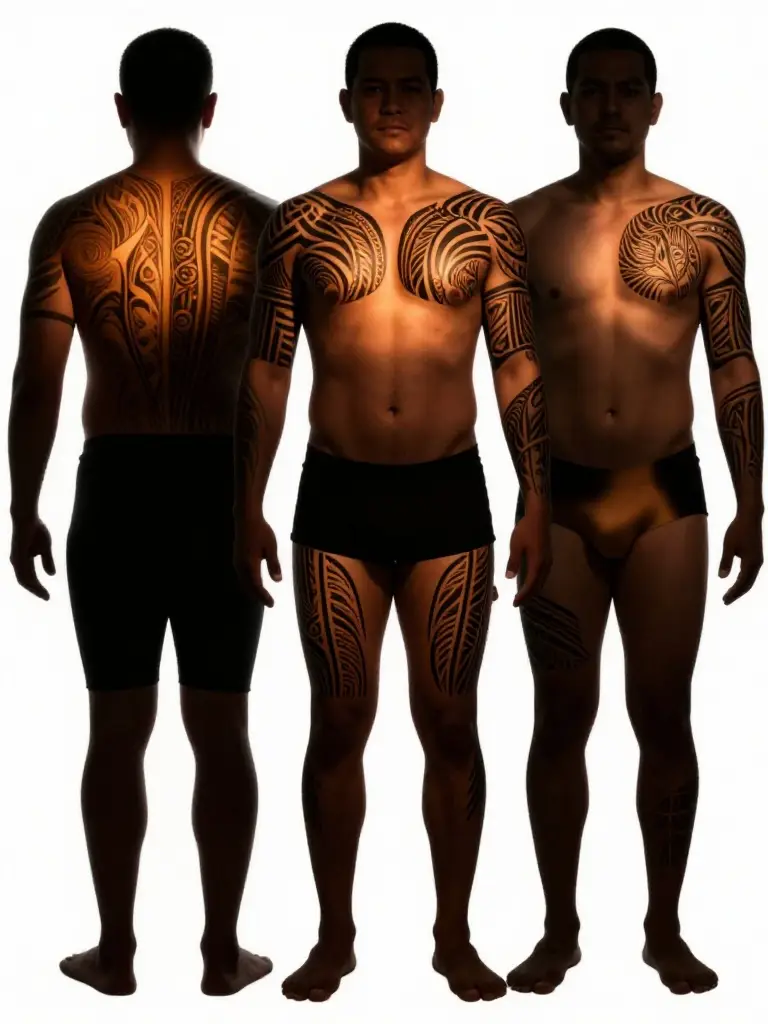
Tribal tattoo placement guide decisions affect both the immediate visual impact of a piece and its long-term quality maintenance. Tribal tattoo pain and placement considerations intersect because the placements that offer the best compositional logic for large tribal work — back, chest, thigh — also tend to offer moderate pain levels with generous flat surface area and lower friction than extremity placements. Tribal tattoo size and scale decisions should drive placement choice rather than the reverse — select placement based on the composition size your design requires and then research the pain and practicality considerations for that specific location.
Tribal tattoo placement ideas across different composition types follow a practical logic worth understanding before any session begins. Tribal leg tattoo and thigh placements suit large single-figure or narrative compositions where long vertical format aligns with the limb’s own axis. Armband tattoo placements in tribal traditions carry specific cultural associations — the armband as a marker of rank or achievement appears across Polynesian, Celtic and Native American traditions and creates a compositionally complete piece in a single session that reads clearly at social viewing distances. Tribal tattoo ideas for dark skin particularly benefit from larger scale placements where the bold pattern has sufficient size to achieve its maximum contrast and visual authority against richer skin tones.
Choosing an Artist Who Carries Cultural Knowledge Not Just Technical Skill
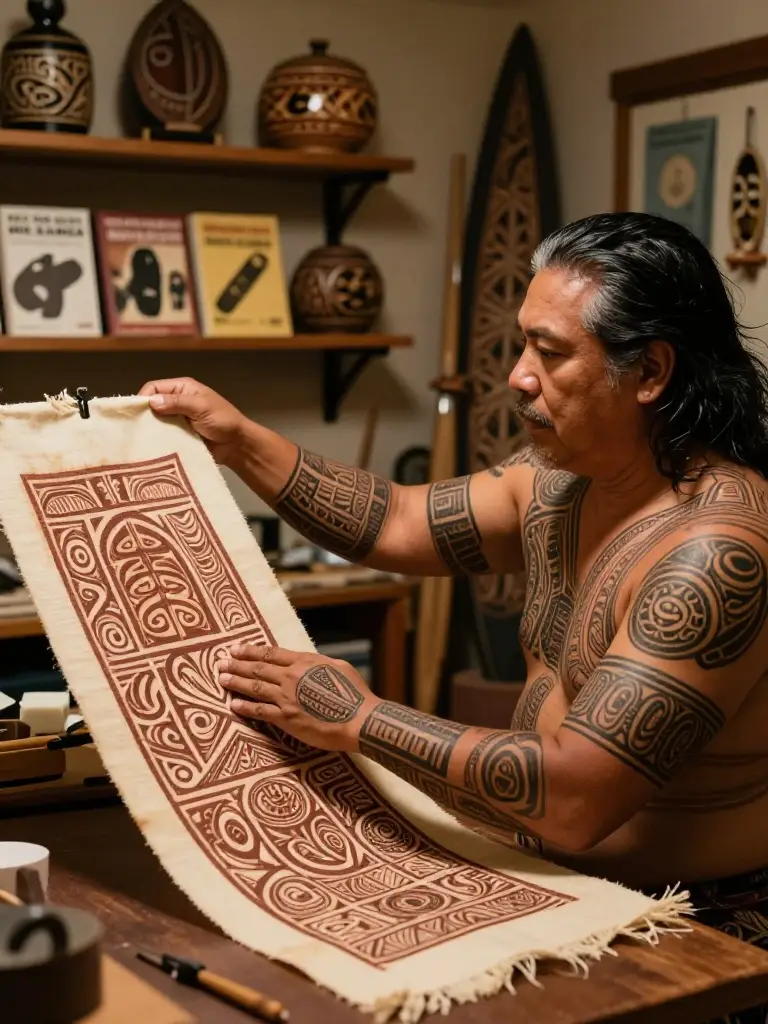
Tribal tattoo artist selection requires a fundamentally different evaluation process than selecting an artist for photorealism or fine line work. Technical skill in bold blackwork execution is necessary but entirely insufficient — an artist executing traditional tribal tattoo art without cultural knowledge produces technically competent work that misuses or misrepresents the tradition’s visual language regardless of how cleanly the lines are applied. Tribal tattoo artist selection should prioritize demonstrated cultural knowledge, direct connection to the traditions being executed and the ability to explain the meaning of specific design choices in their historical and cultural context.
Tribal tattoo aftercare guide requirements for heavy blackwork tribal compositions include the same basic protocol as other tattoo work but with specific attention to the healing dynamics of heavily saturated black areas — keep work moisturized with fragrance-free lotion during the two-week acute healing period, avoid sun exposure for at least four weeks on fresh work and apply SPF 30 sunscreen year-round on any sun-exposed placement. Tribal tattoo touch up guide recommendations suggest reassessment at the six-month mark when ink has fully settled into the dermis — heavy blackwork areas occasionally show minor unevenness that a single touch-up session resolves permanently. Choosing an artist who will support the piece through the healing process and be available for touch-up consultation makes the long-term outcome significantly better than working with artists who treat the session as a completed transaction.
Frequently Asked Questions
Do tribal tattoos have specific cultural meanings I should know before getting one?
Tribal tattoo cultural symbolism is specific, documented and meaningful across every tradition that has produced tribal tattooing. Tribal tattoo design meaning varies dramatically by tradition — a Polynesian tattoo motif communicates specific biographical and social information, a Maori tattoo ta moko design encodes genealogical data belonging to a specific person and Aztec tattoo iconography references specific deities, calendar positions and social ranks. Research the specific tradition before engagement. Meaningful tribal tattoo designs chosen with cultural awareness produce work that carries genuine depth rather than aesthetic approximation.
Which tribal tattoo tradition has the most complex symbolic system?
Maori tribal tattoo design ideas in the ta moko system represent arguably the most complex symbolic encoding in any tattooing tradition — each design is unique to one individual and encodes their complete genealogical identity. Polynesian tribal tattoo meaning systems run a close second in complexity with documented motif vocabularies numbering in the hundreds. Samoan tribal tattoo meaning in the pe’a tradition also carries extraordinary complexity. Tribal tattoo mythology meaning depth across all three of these Pacific Island traditions reflects the sophistication of the cultures that developed them rather than simple decorative impulse.
Do tribal tattoos age better than other tattoo styles?
Yes consistently and measurably. Tribal tattoo aging quality benefits from bold blackwork fundamentals — strong black structural elements maintain compositional legibility as ink softens and spreads with age in ways that fine line detail cannot. Tribal tattoo black ink style using deep carbon black pigment remains more stable over decades than color pigments. Tribal tattoo ideas that age well share bold line weight, adequate spacing between pattern elements and appropriate placement on body surfaces with lower sun exposure and friction. A 20-year-old bold blackwork tribal piece frequently outperforms a 10-year-old fine line color piece in visual quality.
Can someone outside a culture get a tribal tattoo respectfully?
Tribal tattoo cultural appropriation exists on a spectrum and the answer genuinely depends on the specific tradition, the specific design and the specific engagement process. Some traditions have explicitly welcomed respectful outsider engagement with non-encoded designs while others have explicitly stated that their marks should not be worn by non-community members regardless of intent. Tribal tattoo spiritual meaning embedded in specific ceremonial marks warrants the most caution. Work with artists from within the tradition, ask directly about what is appropriate, defer to the community’s own statements about their marks and accept boundaries without negotiation.
What body placements suit large tribal tattoo compositions best?
Tribal tattoo placement guide recommendations for large compositions consistently favor the back for maximum scale, the chest for bilateral compositions, the thigh for single-figure or narrative work and the full arm sleeve tattoo for sequential narrative compositions. Large tribal tattoo back piece work benefits from the back’s flat surface area and bilateral symmetry. Tribal tattoo back piece composition planning should treat the spine as a central organizing axis. Tribal tattoo size and scale decisions should drive placement selection — choose the body surface that fits the composition’s natural dimensions rather than compressing or expanding a design to fit an already-chosen placement.
Conclusion
Tribal tattoos carry more weight per square inch of ink than almost any other category of body art — weight accumulated across thousands of years of human practice, dozens of distinct cultural traditions and the specific lived experiences of every individual who has ever worn these marks through the contexts that gave them meaning. The contemporary collector engaging with this tradition participates in something ancient whether they recognize it or not. That participation is most rewarding — and most respectful — when it’s informed. Research the tradition deeply. Engage with artists from within it. Understand what you’re choosing to carry and why it has carried meaning for the generations before you. The bold black line is patient. It has been waiting on human skin for ten thousand years and it will wait a little longer for you to arrive prepared.
1 Comment